

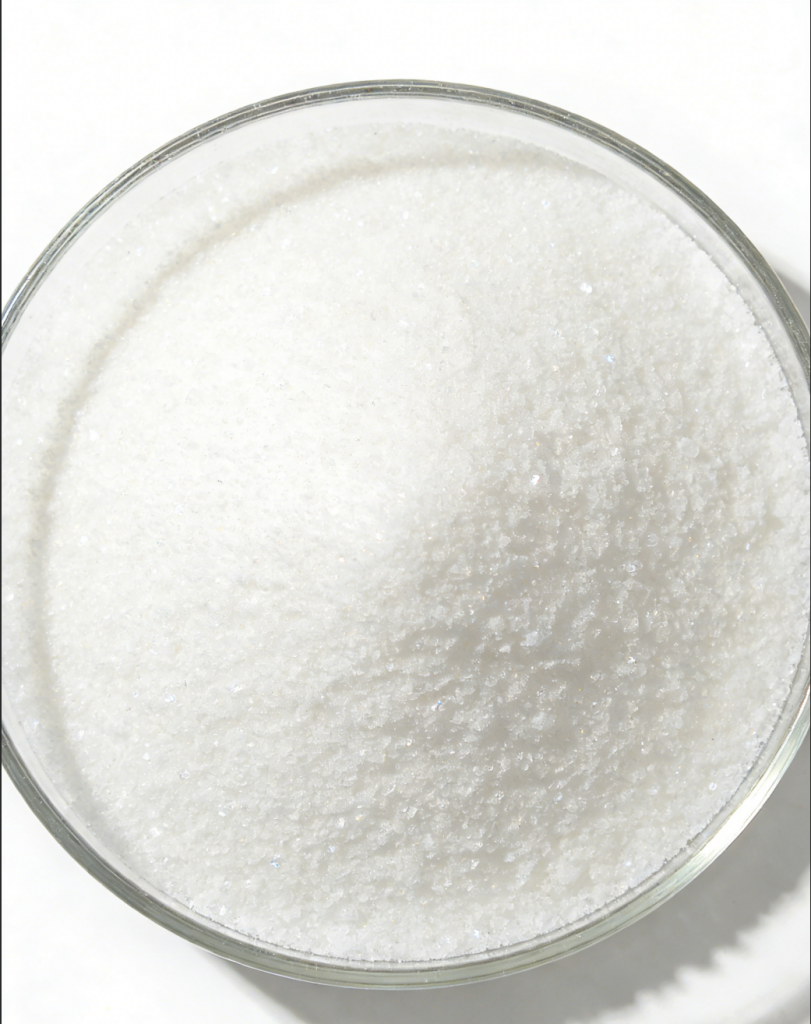
Pharmaceutical manufacturers use excipients as inactive ingredients to improve tablet manufacturing efficiency, stability, dissolution, and drug delivery performance.
In modern pharmaceutical manufacturing, cellulose-based pharmaceutical excipients play the most important role in tablet production. Specifically, Microcrystalline Cellulose (MCC), Hydroxypropyl Methylcellulose (HPMC), and Carboxymethyl Cellulose (CMC) are essential materials in direct compression tablets, sustained-release systems, oral suspensions, and film coating applications.
Generally speaking, these excipients improve several key aspects: tablet hardness, compression efficiency, drug release control, flowability, suspension stability, and manufacturing consistency.
Therefore, this guide explains how pharmaceutical excipients work, how MCC, HPMC, and CMC differ, and how to select the correct excipient for your formulation. Furthermore, cellulose excipients are widely studied in pharmaceutical formulation science. Indeed, a substantial body of PubMed research focuses on cellulose excipients, highlighting their importance in drug development. PubMed research on cellulose excipients
| Excipient | Main Function | Best Application |
|---|---|---|
| MCC | Tablet binder + disintegrant | Direct compression tablets |
| HPMC | Controlled drug release | Sustained-release tablets |
| CMC | Viscosity and suspension stability | Oral liquids and syrups |
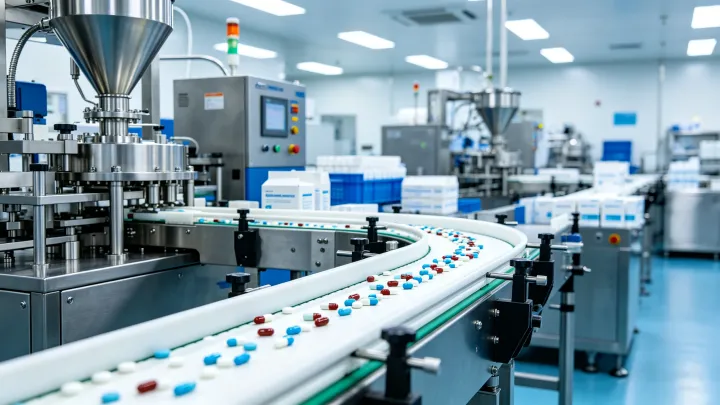
Pharmaceutical manufacturers use excipients as functional materials added to drug formulations to support manufacturing and dosage performance.
Although excipients are pharmacologically inactive, they directly affect tablet quality and patient experience.
Therefore, the correct excipient system improves:Tablet strength,Disintegration speed,Dissolution profile,Blend uniformity,Stability during storage,Moisture resistance
In modern pharmaceutical manufacturing, excipient selection is often as important as API selection.
However, poor excipient selection can cause:Tablet capping,Lamination,Low hardness,Slow dissolution,Poor flowability,Stability failure
As a result, pharmaceutical manufacturers carefully optimize excipient systems before commercial production.
CCellulose-based pharmaceutical excipients are preferred because they combine excellent functionality with strong regulatory acceptance.
Moreover, manufacturers use MCC, HPMC, and CMC across pharmaceutical and nutraceutical industries.
Their advantages include:Excellent compressibility,Good biocompatibility,Low toxicity,Stable processing behavior,Wide API compatibility,Global pharmacopoeia acceptance
In addition, cellulose excipients are chemically inert and stable across broad pH conditions.
This makes them suitable for oral solid dosage forms, liquid suspensions, and controlled-release systems.
Pharmaceutical excipients comply with international standards such as USP (United States Pharmacopeia) and European Pharmacopoeia regulations.
Microcrystalline Cellulose is one of the most important pharmaceutical excipients in tablet manufacturing.
Microcrystalline Cellulose is one of the most important pharmaceutical excipients in tablet manufacturing. So, what is MCC in pharmaceuticals? Pharmaceutical manufacturers widely use MCC as a tablet binder and direct compression agent.
In direct compression systems, manufacturers rely on MCC because it delivers excellent compressibility and binding performance. It improves tablet quality by enhancing tablet hardness, improving powder flow, supporting direct compression, and promoting fast disintegration. Consequently, manufacturers use MCC in immediate-release tablets, chewable tablets, nutritional supplements, and high-speed tablet production.
Manufacturers use MCC in:Immediate-release tablets,Chewable tablets,Nutritional supplements,High-speed tablet production.
In direct compression tablet systems, MCC improves tablet hardness and enhances powder flow.
At the same time, it supports rapid tablet disintegration, which ensures consistent drug release behavior.
As a result, manufacturers achieve high-speed production with fewer processing steps.
Different MCC grades are selected based on particle size and flow behavior.
For example, MCC PH-101 has a fine particle size and high surface area, making it suitable for wet granulation. In contrast, MCC PH-102 offers better flowability and is preferred for direct compression. Meanwhile, MCC PH-200 consists of large spherical particles, delivering excellent high-speed tableting performance.For high API loading formulations, MCC PH-102 is often the preferred choice.
Explore our MCC excipient products here:
Microcrystalline Cellulose Products
Pharmaceutical manufacturers use HPMC in tablets for controlled drug release and sustained-release systems.
In sustained-release formulations, formulators use HPMC because it forms a hydrophilic gel layer after hydration.
This gel layer controls drug diffusion and enables stable release over time.
Furthermore, HPMC is applied in film coating and capsule systems where moisture protection is required.
Key benefits include:Controlled drug release,Improved stability,Moisture protection,Flexible formulation design
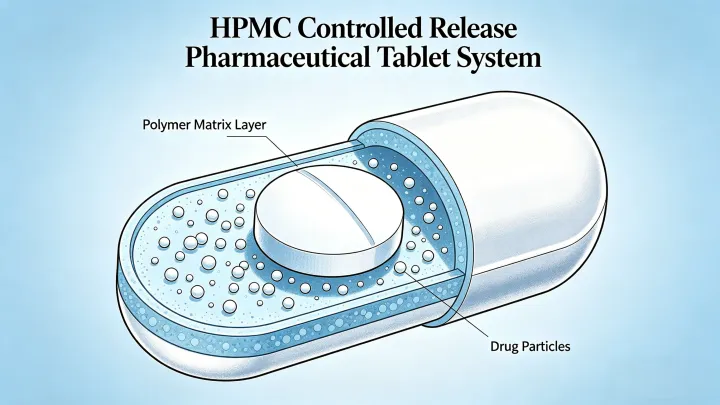
HPMC grades are selected based on viscosity.Higher viscosity grades usually provide slower drug release.
| Grade | Typical Application |
|---|---|
| HPMC E5 | Film coating |
| HPMC K4M | Moderate sustained release |
| HPMC K15M | Extended-release tablets |
| HPMC K100M | Very slow drug release |
For 12-hour sustained-release tablets, K15M and K100M are common starting points.
View our HPMC excipient range here:HPMC Pharmaceutical Products
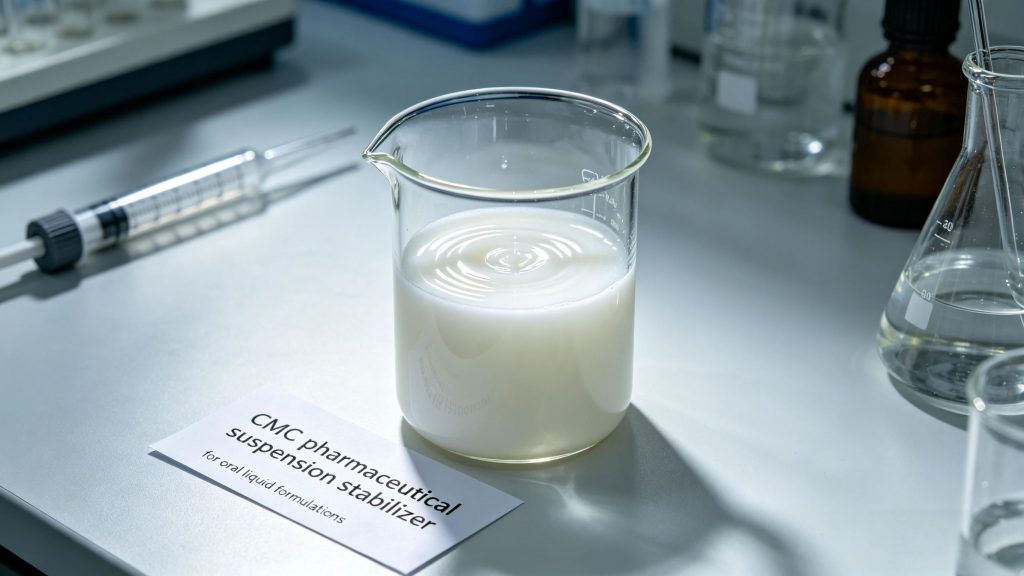
Pharmaceutical formulators use CMC in pharmaceuticals as a viscosity modifier and suspension stabilizer in oral liquids and semi-solid dosage forms. Specifically, CMC dissolves in water to form a stable viscous system that prevents particle sedimentation and maintains uniform dispersion. This property makes CMC especially suitable for oral suspensions, syrups, and topical gel formulations, where long-term stability is required.
Moreover,it also improves viscosity control and ensures uniform dosing throughout storage and administration.
Formulators use CMC in:Oral suspensions,Pediatric syrups,Topical gels,Liquid drug formulations.
CMC improves:Suspension stability,Viscosity control,Pourability,Uniform dosing
CCMC grade selection depends on viscosity requirements:For thin oral liquids and easy-pour syrups, low viscosity CMC is the appropriate choice.
For standard suspensions and general oral formulations, medium viscosity CMC is suitable.
For topical gels and thick suspension systems, high viscosity CMC works best.
It is important to note that CMC viscosity is affected by pH and ionic strength. Therefore, final testing should always be performed in the complete formulation system.
Explore our CMC excipient products here:Sodium CMC Products
Selecting the correct pharmaceutical excipient depends on formulation goals. Here is a quick reference:
| Requirement | Recommended Excipient |
|---|---|
| Direct compression tablet | MCC |
| Sustained-release tablet | HPMC |
| Film coating | HPMC |
| Oral suspension | CMC |
| Fast tablet disintegration | MCC |
| Viscosity control | CMC |
| Moisture barrier coating | HPMC |
Quick selection guideline:For a quick selection guideline: Opt for MCC when compressing solid tablets; select HPMC when you need controlled release; and choose CMC for liquid-based systems.
Tablet manufacturing generally uses two methods:
MCC is one of the best direct compression excipients because of its excellent compressibility and powder flow.
Manufacturer usesHPMC and CMC in wet granulation systems and sustained-release applications.
The correct excipient depends on:API properties,Moisture sensitivity,Dissolution target,Compression force,Manufacturing speed
How do you choose the right pharmaceutical excipient? The selection depends on dosage form, API properties, and release requirements. To do this effectively, follow these steps:
First, manufacturers define the dosage form (e.g., tablet, capsule, or liquid). Next, they evaluate API solubility, stability, and compressibility. Then, they determine the required release profile (immediate or controlled). Finally, they confirm compatibility through stability and dissolution testing before production.
Pharmaceutical excipients require strict quality control before commercial use.
Important testing parameters include:Particle size distribution,Bulk density,Moisture content,Viscosity,Heavy metals,Microbiological limits
Consistent excipient quality improves:Tablet hardness consistency,Dissolution stability,Production efficiency,Batch reproducibility
ACTA Biotechnology supplies cellulose-based pharmaceutical excipients to manufacturers worldwide.
We support pharmaceutical manufacturers with:Batch-specific Certificate of Analysis (CoA),Technical Data Sheets (TDS),Safety Data Sheets (SDS),Sample evaluation support,Export logistics coordination,Technical formulation assistance.
Our MCC, HPMC, and CMC excipients are supplied to customers across Asia, Europe, and North America.
ACTA Biotechnology supplies cellulose-based pharmaceutical excipients for global pharmaceutical manufacturers.
Our production and QC system supports:Batch-to-batch consistency,Viscosity control testing,Particle size monitoring,Heavy metal analysis,Moisture content testing,Export documentation support
Our cellulose excipients are supplied to customers across Asia, Europe, the Middle East, and North America.
Microcrystalline Cellulose (MCC) is one of the most widely used pharmaceutical excipients because of its excellent compressibility and direct compression performance.
Manufacturers use MCC in tablets as a binder and direct compression agent. It improves tablet hardness, compressibility, and disintegration performance.
Formulators use HPMC in sustained-release tablets and film coating systems. It forms a hydrophilic gel layer that controls drug release during dissolution.
Manufacturer uses CMC as a viscosity modifier and suspension stabilizer in oral liquid and semi-solid formulations. It helps maintain uniform dispersion of active ingredients during storage.
Manufacturers widely use MCC as the most common excipient for direct compression tablets. It provides excellent compressibility and stable tablet formation without wet granulation.
Our technical team supports pharmaceutical manufacturers with:
Excipient selection,Direct compression optimization,Controlled-release formulation support,Sample evaluation,Technical documentation,Export supply coordination
Contact ACTA Biotechnology for pharmaceutical excipient recommendations and sample support.