

Food suspension agents are used to prevent sedimentation in drinks by maintaining uniform particle distribution in liquid systems. Unlike standard thickeners, they provide structural stability rather than just viscosity.
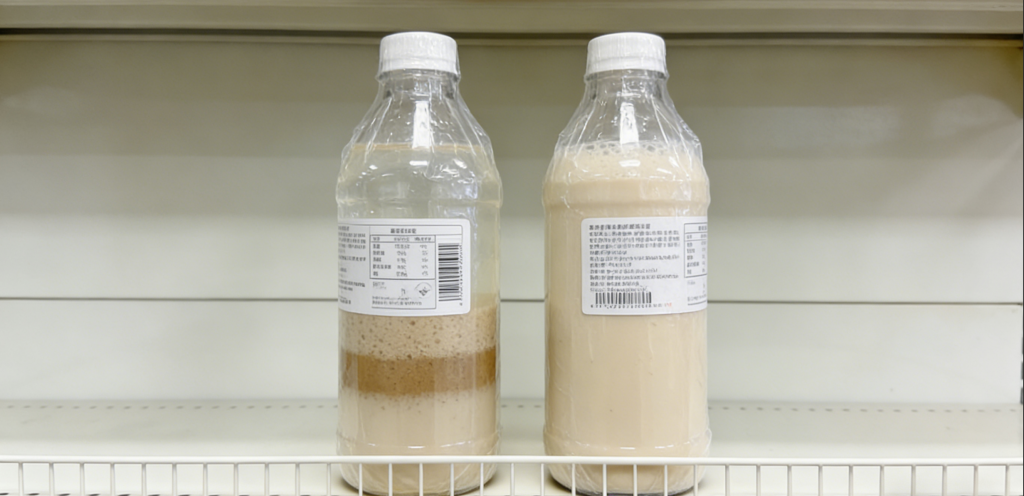
Suspension agents are widely used in dairy beverages and plant-based drinks. They are also used in cocoa products, nutritional formulations, and pharmaceutical suspensions. These applications require long-term physical stability.
As a professional supplier of cellulose-based ingredients, we provide industrial-grade suspension solutions including Microcrystalline Cellulose (MCC), MCC Gel (Colloidal MCC), Carboxymethyl Cellulose (CMC), Hydroxypropyl Methylcellulose (HPMC), and modified starch systems — each engineered to meet the demands of modern food production.
A food suspension agent prevents solid particles from settling in liquid products. In industrial formulation, manufacturers select suspension agents specifically to maintain uniform particle distribution and ensure long-term physical stability — without relying solely on viscosity.
These functional ingredients work through two primary mechanisms: increasing resistance to particle movement, or building structural networks that physically support dispersed components throughout the product.
Suspension agents are, furthermore, indispensable in products containing proteins, dietary fibers, minerals, or cocoa particles. Without stabilization, these ingredients settle to the bottom of a bottle or carton within hours of production
It is important to distinguish suspension agents from simple thickeners. Thickeners increase viscosity. Suspension agents maintain particle distribution. Thickeners increase bulk viscosity. Suspension agents go further: they maintain uniform particle distribution over time, across temperature fluctuations, and through the mechanical stress of processing and transport. A product can have adequate viscosity and still fail completely in suspension — which is why formulation choice matters enormously.
What Is the Difference?A food suspension agent prevents solid particles from settling in liquid products. Manufacturers select suspension agents to maintain uniform particle distribution and ensure long-term physical stability — without relying solely on viscosity.
These ingredients work through two mechanisms: increasing resistance to particle movement, or building structural networks that physically support dispersed components.
Suspension agents are furthermore indispensable in products containing proteins, fibers, minerals, or cocoa particles. Without stabilization, these ingredients settle to the bottom of a bottle or carton within hours.
In practice, the most effective formulations use both: a suspension agent to provide structural stability, and a thickener such as CMC to fine-tune viscosity and mouthfeel for the target product experience
Understanding the mechanism behind suspension is the foundation of successful formulation. Food suspension agents operate through three primary mechanisms, which can be used independently or in combination depending on the application.This mechanism is critical for maintaining stability in any liquid suspension system, particularly in beverages with complex particle compositions.
The simplest approach to suspension is increasing the viscosity of the continuous phase. As the liquid becomes more resistant to flow, particle movement slows and sedimentation is delayed. Agents such as standard starches and basic hydrocolloids rely primarily on this mechanism. However, viscosity alone has real limits — in low-viscosity beverages like dairy drinks or nutritional shakes, this approach is rarely sufficient for long shelf-life stability.
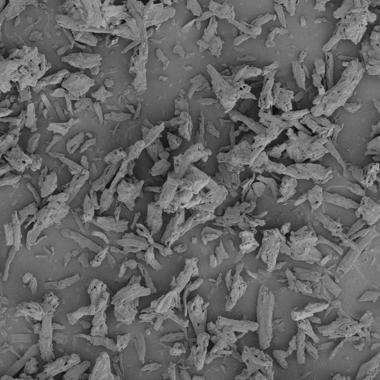
The most effective suspension agents work not by thickening the liquid, but by building a physical structure within it. MCC Gel, forms a three-dimensional cellulose network. This structure physically holds particles in place, similar to a microscopic scaffold.This network activates under low shear. It collapses under high shear, such as shaking or pouring. It then reforms once the shear force is removed.. This thixotropic behavior is what gives MCC Gel-stabilized beverages their superior shelf stability without feeling thick or heavy in the mouth.
Certain hydrocolloids interact directly with suspended particles — proteins, fibers, or mineral complexes — through electrostatic or steric effects. These interactions reduce aggregation, improve dispersion, and prevent the clumping that accelerates sedimentation. CMC, for example, interacts with casein proteins in acidic dairy beverages to stabilize the system at a molecular level, making it a preferred choice for fermented drinks and acidified milk products.
In sophisticated formulations, all three mechanisms may work in concert, often in combination with food stabilizers to achieve full system stability across processing and storage conditions.. A combination of MCC Gel and CMC, for instance, provides network structure, viscosity modulation, and protein interaction simultaneously.
What is a suspension agent in food?
A food suspension agent keeps solid particles evenly distributed in a liquid, preventing sedimentation.
What is the best suspension agent for beverages?
Formulators regard MCC Gel as the best suspension agent for beverages.
How do you prevent sedimentation in drinks?
Use a structural-support suspension agent, not just viscosity, to prevent sedimentation in drinks
Is CMC a suspension agent?
Yes. Carboxymethyl Cellulose (CMC) functions as both a thickening agent and a suspension aid, depending on concentration and formulation context. It is particularly effective in acidic beverage systems, where it interacts with protein particles to prevent aggregation and maintains viscosity across a wide pH range.
Cellulose-based systems represent the most effective and versatile category of suspension agents for modern food applications. They combine strong stabilization performance with excellent safety profiles and increasing alignment with clean-label consumer demands.
Microcrystalline Cellulose (MCC) MCC is a refined, partially depolymerized cellulose derived from plant sources. In its dry powder form, it serves as an anti-caking agent and texturizer. When fully dispersed and hydrated, it forms colloidal particles that contribute to network structure and suspension stability. MCC is widely used in pharmaceutical tablets and food systems requiring particulate stabilization.
MCC Gel (Colloidal MCC) MCC Gel is a co-processed combination of MCC and CMC that forms a stable colloidal dispersion in water. Unlike powdered MCC, MCC Gel activates quickly in aqueous systems and produces a robust, thixotropic three-dimensional network. It is the industry benchmark for suspension in beverages, offering superior performance at low use levels, excellent UHT heat resistance, and clean mouthfeel. For most beverage applications requiring long-term suspension without excessive viscosity, MCC Gel is the optimal choice.
Carboxymethyl Cellulose (CMC) Carboxymethyl Cellulose (CMC) is widely used in acidic beverage systems due to its excellent pH stability and consistent viscosity control. CMC functions by increasing solution viscosity and interacting with protein particles to prevent aggregation — particularly important in yogurt drinks, acidified milk beverages, and juice-based products. It is also frequently used in combination with MCC Gel to enhance overall system stability.
Hydroxypropyl Methylcellulose (HPMC) Hydroxypropyl Methylcellulose (HPMC) is ideal for thermal processing applications because of its unique reverse gelation behavior — it gels upon heating and dissolves upon cooling. This property makes it valuable in products that undergo UHT or retort processing, where thermal stability of the suspension system is critical.
Modified starches are a cost-effective, widely available category of suspension aids suited to standard food applications. Modified starch systems provide basic suspension and viscosity in cost-sensitive applications where high-performance long-term stability is not required. They are most effective in products with shorter shelf life or where refrigerated storage limits sedimentation risk.
The primary limitation of starch-based systems is their susceptibility to retrogradation (texture change over time), shear thinning without recovery, and instability under extreme pH or temperature conditions.
Hydrocolloids such as xanthan gum, guar gum, and carrageenan are commonly used in food systems for thickening and, in some cases, basic suspension. Xanthan gum in particular forms a weak gel network at rest that can support light particle suspension. However, these agents are generally less effective than structured cellulose systems in long-term stability applications, particularly in UHT-processed beverages or products with fine, high-density particles.
Hydrocolloids are best used as secondary stabilizers to complement a primary cellulose-based suspension system, rather than as the sole suspension mechanism.
In dairy and plant-based beverages, MCC Gel is widely used as a primary suspension agent due to its ability to prevent sedimentation while maintaining a clean mouthfeel..In many beverage formulations, a beverage suspension stabilizer is required to maintain uniform distribution and prevent sedimentation in drinks during storage and transportation. MCC Gel is widely adopted in this category because it provides long-term suspension stability without the excessive viscosity that can make beverages feel heavy or unpleasant. It maintains a smooth, consistent drinking experience from the first sip to the last drop, even after extended shelf storage.

Sports drinks, meal replacements, and dietary supplements often contain vitamins, minerals, protein powders, and bioactive fibers that resist dispersion. These particles are frequently dense and coarse, making them among the most challenging suspension applications in food science. MCC Gel combined with CMC delivers both structural suspension stability and a clean mouthfeel, making them the preferred solution for premium nutritional beverage formulations.
Cocoa particles are hydrophobic, relatively dense, and highly prone to settling. In drinking chocolate products and cocoa-based beverages, suspension agents prevent particle sedimentation and phase separation during storage. Without effective stabilization, these products will show visible sediment within days — a quality defect that damages consumer perception significantly. A combination of MCC Gel and CMC provides robust, lasting suspension of cocoa particles even in ambient-temperature retail distribution.
In sauces, gravies, dressings, and other liquid food products, suspension agents ensure that solid ingredients and starches remain uniformly distributed throughout the product. CMC ensures stable viscosity and uniform distribution in sauces and emulsions, preventing the separation that occurs when products are stored or transported. The result is a consistent appearance and texture that meets commercial quality standards across the full shelf life of the product.
Not all suspension challenges are identical, and selecting the wrong agent for your specific application is one of the most common — and costly — formulation errors in beverage development. The particle type, processing conditions, target pH, and shelf-life requirements of your product all point toward a different solution.
In complex formulations where more than one of these conditions applies, combination systems consistently outperform single-agent approaches. MCC Gel paired with CMC, for example, covers both structural network formation and acidic protein stabilization — making it the most robust solution for premium beverage applications where shelf life, pH, and processing conditions all place simultaneous demands on the suspension system.
In many cases, failure occurs because the chosen system is not designed for a stable liquid suspension system, especially under industrial processing conditions.Understanding the root causes of suspension failure is the most direct path to selecting the right stabilizer system. The four most common failure modes in beverage and liquid food systems are:
When no three-dimensional network is present, gravity acts on every particle continuously. Even high-viscosity systems will eventually show sedimentation if no physical support structure is formed. The rate of sedimentation follows Stokes’ Law — proportional to the square of the particle radius and the density difference — meaning that denser or larger particles will fail first.
Many formulators attempt to solve suspension by increasing overall product viscosity. This approach fails for two reasons. First, consumers reject beverages that feel too thick or syrupy. Second, the viscosity required to fully prevent sedimentation of dense particles in thin beverages would make the product undrinkable. Structural network formation is the only viable path to suspension in low-viscosity beverage matrices.
High-shear homogenization, pump transfer, and UHT processing can destroy the three-dimensional networks formed by weak hydrocolloids. If the network cannot reform after shear, the suspension system effectively fails the moment it leaves the production line. Cellulose-based systems, especially MCC Gel, are specifically engineered for thixotropic recovery — they reform their network structure rapidly after shear forces are removed.
Many thickening and suspension agents are unstable under acidic conditions. In products with pH below 4.5 — common in dairy-based drinks, juice-enhanced beverages, and fermented products — standard hydrocolloids degrade rapidly, losing their functional effectiveness. CMC and MCC Gel are both engineered with pH stability as a core performance characteristic, making them the appropriate choice for acidic systems.
Cellulose-based systems such as MCC Gel solve these problems by forming a physical suspension network rather than relying exclusively on viscosity — making them robust against shear, heat, and pH stress simultaneously.
Sedimentation is not a random quality defect — it is a predictable physical process that follows well-established scientific principles, and formulators can prevent it entirely once they understand its root causes. At its core, sedimentation occurs because solid particles suspended in a liquid are denser than the surrounding continuous phase. Gravity, therefore, acts on every particle continuously, pulling it downward at a rate governed by Stokes’ Law: the larger and denser the particle, the faster it settles. In practical terms, this means that protein aggregates, cocoa particles, mineral complexes, and dietary fiber all actively migrate toward the bottom of a bottle or carton — often within hours of production — unless a properly designed stabilizer system physically prevents them from doing so.
Several specific factors accelerate sedimentation in commercial beverage systems. First, particle size and density directly determine settling velocity: coarse or heavy particles — such as those found in high-protein nutritional drinks or cocoa-based beverages — settle far more rapidly than fine, low-density particles. Second, temperature fluctuations during cold chain distribution cause repeated cycles of particle movement that progressively compact sediment, making it increasingly difficult to redisperse. Third, pH instability destabilizes protein particles in acidic beverage systems — particularly in yogurt drinks and acidified milk beverages below pH 4.5 — causing casein to aggregate and accelerate flocculation-driven sedimentation. Finally, shear stress during UHT processing and high-pressure homogenization can destroy weak structural networks, leaving particles unsupported the moment the product leaves the production line.
Understanding these mechanisms is, consequently, the most direct path to selecting the right suspension agent. A formulator who addresses only viscosity — without building a physical support structure — will consistently encounter sedimentation before the product reaches its shelf-life endpoint. As a result, modern beverage manufacturers increasingly turn to structured cellulose systems that actively counteract each of these failure drivers simultaneously.
MCC Gel and CMC prevent sedimentation through fundamentally different — yet highly complementary — mechanisms, and understanding both is essential for designing a suspension system that performs reliably across the full shelf life of a beverage product.
Colloidal MCC (MCC Gel) prevents sedimentation not by thickening the liquid, but by actively constructing a three-dimensional cellulose network within the aqueous phase of the beverage. Specifically, when manufacturers disperse MCC Gel under high shear during processing, the cellulose microparticles distribute evenly throughout the liquid and, upon relaxation of shear forces, self-assemble into an interconnected structural matrix. This matrix physically holds suspended particles — proteins, cocoa, minerals, fiber — in place, functioning as a microscopic scaffold that counteracts gravitational settling at rest.
Critically, this network is thixotropic: it collapses under shear — allowing free-flowing pourability during dispensing and consumption — and then actively reforms once shear forces are removed. This behavior is what gives MCC Gel-stabilized beverages their defining performance advantage: superior long-term particle retention without the heavy, viscous mouthfeel that consumers reject in drinking products. Furthermore, MCC Gel’s cellulose-based structure is inherently resistant to both UHT thermal processing and acidic pH environments, making it the most robust primary suspension agent available for modern beverage manufacturing.
CMC (Carboxymethyl Cellulose / E466) operates through a distinct and equally important mechanism. When dissolved in the aqueous phase of a beverage, CMC actively increases the viscosity of the continuous phase, thereby slowing the rate of particle movement and reducing the driving force for sedimentation. However, CMC’s most critical function in beverage systems goes beyond viscosity: it creates an electrostatic barrier around suspended particles — particularly casein proteins in acidic dairy beverages — that prevents particle-to-particle aggregation and the flocculation events that trigger rapid sedimentation in low-pH systems.
In acidic beverages below pH 4.5, where most hydrocolloids degrade and lose effectiveness, CMC maintains consistent viscosity and protein stabilization across the full acidic range. Consequently, it serves as the industry-standard stabilizer for yogurt drinks, acidified milk beverages, and juice-enhanced protein formulations where pH stability is a non-negotiable performance requirement.
In premium beverage formulations, combining MCC Gel with CMC delivers suspension performance that neither ingredient achieves independently. MCC Gel provides the structural network and thixotropic recovery; CMC adds viscosity modulation, protein interaction, and acid stability. Together, therefore, this combination simultaneously addresses structural support, molecular-level particle stabilization, and pH resilience — the three performance parameters that determine whether a suspension system succeeds or fails across real-world storage and distribution conditions. For manufacturers targeting premium retail or export markets, this dual-mechanism approach is the formulation standard that consistently outperforms single-agent alternatives.
Choosing the wrong suspension agent is one of the most common — and costly — formulation mistakes in beverage manufacturing. The table below provides a direct reference for matching the right agent to your specific application need.
For most premium beverage applications, MCC Gel — used alone or combined with CMC — delivers the broadest performance across stability, mouthfeel, heat resistance, and label positioning.
Protein drinks (sports, meal replacement, dairy, plant‑based) pose the industry’s toughest suspension challenge.
Protein particles sediment easily because they are dense, coarse, and chemically reactive.
They aggregate under heat, flocculate at low pH, and compact into hard sediment during storage.
Thus, selecting the right suspension agent determines whether a protein drink passes its shelf‑life test.
MCC Gel: The Primary Suspension Agent for Protein Beverages
Colloidal MCC (MCC Gel) is the industry benchmark suspension agent for protein drinks.
At 0.3%–0.6% of formula, MCC Gel forms a 3D cellulose network that holds protein particles in uniform suspension.
It adds no digestible calories, alters no flavor, and avoids the heavy mouthfeel consumers reject.
MCC Gel’s thixotropic network collapses during shaking and reforms during storage.
Its resistance to UHT and high‑shear homogenization suits industrial protein‑beverage production.
CMC: Essential for Acidic Protein Systems
For protein drinks below pH 4.5 (acidified whey, fermented, juice‑protein hybrids), CMC at 0.2%–0.4% provides pH stability and protein interaction that MCC Gel alone cannot.
Specifically, CMC forms an electrostatic barrier around protein particles, preventing casein aggregation and flocculation‑driven sedimentation.
CMC also maintains consistent viscosity across the acidic range, keeping the suspension stable throughout ambient shelf life.
| Product Type | Primary Agent | Dosage | Secondary Agent | Dosage |
|---|---|---|---|---|
| Full-dairy protein drink (neutral pH) | MCC Gel | 0.3%–0.5% | CMC | 0.1%–0.2% |
| Acidified whey / protein + juice (pH < 4.5) | CMC | 0.2%–0.4% | MCC Gel | 0.2%–0.3% |
| Plant-based protein drink (oat, pea, almond) | MCC Gel | 0.4%–0.6% | CMC | 0.2%–0.3% |
| High-protein meal replacement shake | MCC Gel + CMC | 0.3%+0.2% | E1442 Modified Starch | 0.5%–1.0% |
| UHT-processed protein beverage | MCC Gel | 0.3%–0.5% | HPMC | 0.1%–0.2% |
Plant-based protein drinks need a stabilizer system to compensate for lack of dairy proteins and plant fibers.
MCC Gel (0.4–0.6%) plus CMC (0.2–0.3%) provides structural network, viscosity, and stabilization for plant protein matrices.
Adding E1442 modified starch (0.5–1.0%) improves body, mouthfeel, and freeze-thaw stability, creating a reliable three-component system.
ACTA Biotechnology supplies food-grade MCC Gel, CMC, and Modified Starch with Halal/Kosher certification and provides formulation support for protein beverage manufacturers.
Selecting the correct suspension agent is a formulation decision that depends on several intersecting variables: the nature and density of the particles being suspended, the target product viscosity, the processing conditions, the pH of the system, and the cost and label requirements of the product.
The following framework provides practical guidance for most applications:
| Application Requirement | Recommended Agent |
|---|---|
| Long-term particle suspension in beverages | MCC Gel |
| Acidic beverage systems (pH < 4.5) | CMC |
| UHT or retort thermal processing | HPMC |
| Cost-sensitive, short shelf-life products | Modified Starch |
| Clean-label or natural positioning | Microcrystalline Cellulose / MCC Gel |
| Premium beverages requiring both stability and mouthfeel | MCC Gel + CMC combination |
For most premium beverage applications — where shelf life, product appearance, and consumer experience all matter — MCC Gel is the optimal primary suspension agent, used alone or combined with CMC for enhanced performance in acidic or protein-containing systems.
Working with an experienced ingredient supplier is strongly recommended for complex formulations. Suspension is a system-level challenge, and the interactions between ingredients, processing conditions, and packaging all affect the final result. A supplier with deep formulation expertise can help identify the optimal combination of ingredients and processing parameters for each specific application.
Among all available systems, MCC Gel stands out as the most effective suspension agent due to its unique network-forming mechanism and superior stability performance.MCC Gel does not rely on viscosity to achieve suspension. Instead, it actively forms a stable three-dimensional cellulose network that physically supports particles in place — a structural matrix, not a thickened fluid.
This mechanical difference delivers four direct performance advantages:
Superior suspension stability. The network physically holds particles in place rather than simply slowing them. As a result, the product shows measurably less sedimentation across its full shelf life — even under ambient storage and temperature cycling.
Low viscosity with high functional performance. MCC Gel achieves suspension structurally, not rheologically. Consequently, MCC Gel-stabilized beverages maintain very low perceived viscosity — critical for consumer acceptance — while still delivering excellent particle retention.
Excellent UHT and acid resistance. MCC Gel is specifically engineered to withstand the thermal and chemical stress of UHT processing and acidic formulation environments. Its cellulose-based structure is inherently more stable under these conditions than starch or standard hydrocolloid alternatives.
Clean mouthfeel and natural label positioning. The thixotropic, shear-thinning behavior of MCC Gel provides a clean, water-like mouthfeel in beverages despite its stabilizing function. Additionally, MCC Gel is derived from plant cellulose and aligns well with consumer demand for recognizable, natural ingredients.
For modern beverage manufacturers balancing stability performance, sensory quality, processing robustness, and label positioning, MCC Gel is the most complete solution currently available.
Our team brings over 10 years of specialized experience in food hydrocolloids, suspension technology, and cellulose-based ingredient systems. We support manufacturers across dairy beverages, plant-based drinks, nutritional formulations, and pharmaceutical suspensions.
Every solution we develop targets large-scale industrial production — including UHT processing, high-shear homogenization, and aseptic filling. We provide formulation support, stability testing guidance, and application-level technical assistance at every stage.
All products meet food-grade and pharmaceutical-grade standards. We also supply full regulatory documentation to support market entry across all major global markets.
A thickener increases the viscosity of the continuous phase, which indirectly slows particle movement. A suspension agent, however, actively maintains uniform particle distribution over time — either by building structural networks or by interacting directly with particles to prevent settling. Consequently, a product can have adequate viscosity and still fail suspension entirely if the wrong agent is selected.
Yes — and in many formulations, combining agents actively delivers better results than relying on a single ingredient. Specifically, pairing MCC Gel with CMC produces the most effective system for premium beverages: MCC Gel builds the structural network and thixotropic behavior, while CMC adds viscosity modulation and protein stabilization, particularly in acidic dairy and plant-based drinks.
Yes. Regulatory authorities including the FDA (GRAS status) and the European Food Safety Authority (EFSA) actively approve MCC, MCC Gel, CMC, and HPMC as safe food additives. Furthermore, these ingredients carry well-established safety profiles backed by decades of use across commercial food and pharmaceutical products worldwide.
Contact our formulation team to discuss suspension challenges in your specific product and process. We provide technical support, trial samples, and application development guidance for manufacturers at every scale.