

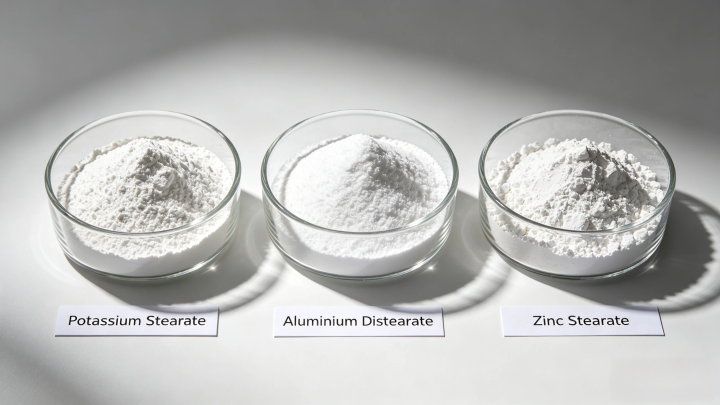
Metal stearates are metallic salts of stearic acid — a long-chain fatty acid.
This page covers three core metal stearate products: Zinc Stearate, Aluminium Distearate, and Potassium Stearate — their chemistry, functional properties, applications, and selection guidance.
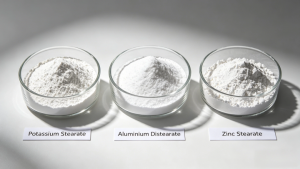
Manufacturers form metal stearates by reacting stearic acid with a metal base or salt. Consequently, the resulting compound combines the properties of both an organic fatty acid and an inorganic metal salt — giving metal stearates functional characteristics that neither component alone can provide.
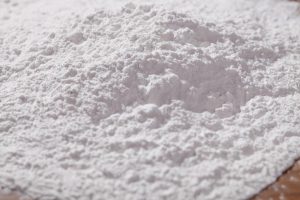
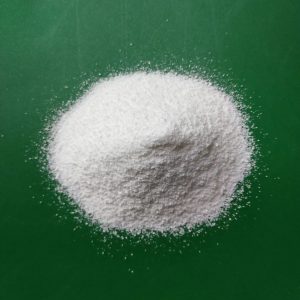
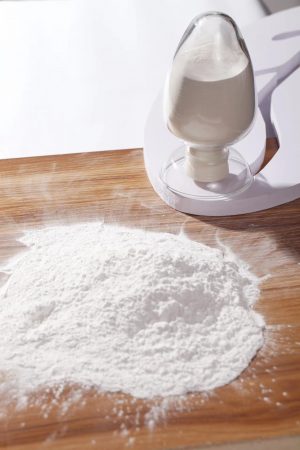
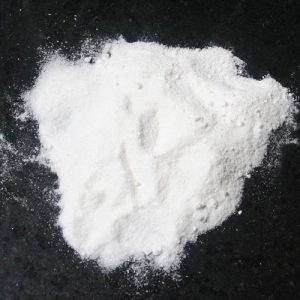
Metal stearates are metallic salts of stearic acid — a long-chain fatty acid. They appear as white, fine powders with a slight fatty odor. For detailed chemical background, see metallic soaps explanation .
They are classified as metallic soaps. Specifically, all three products covered here share a common base structure but differ significantly in their metal cation, which determines their solubility, thermal behavior, and functional role in formulations.
Key shared properties across metal stearates include:
Looking for metal stearate suppliers?
✔ Zinc Stearate / Aluminium Distearate / Potassium Stearate
✔ Stable quality & factory pricing
✔ Technical support for your application
Zinc stearate is the zinc salt of stearic acid. Industry considers it one of the most widely used metallic soaps in industrial applications, primarily valuing it for its excellent lubricating and mold-release properties. In contrast, zinc laurate corresponds to the zinc salt of lauric acid (C12), and manufacturers use it where shorter-chain fatty acid characteristics are required.
CAS Number (Zinc Stearate): 557-05-1 Molecular Formula: Zn(C₁₇H₃₅COO)₂ Appearance: White fine powder Melting Point: 120–130°C
| TEST ITEMS | YGSX101 |
| lead, % | <0.001 |
| arsenic.% | <0.0005 |
| heavy metal,(in Pb)% | <0.002 |
| fitness,% | 325 mesh passing≥99.0 |
| loss on drying,% | ≤1.0 |
| ignition residue(sulfate), % | 28.0-33.0 |
| iodine value | <1.0 |
| acid value | ≤1.5 |
| free acid | <2.1 |
| zinc oxide content,% | 16.5-19.5 |
| TEST ITEMS | AYX101 | AYX105 | AYX106 |
| Grade | plastic | pharm | pharm |
| Zinc content,% | 10.3-11.3 | 10.0-13.0 | |
| Acid value | 195-215 | ||
| chloride, ppm | <250 | ||
| Lead,PPM | <25 | ||
| loss on drying,w/% | ≤1.0 | ||
| heavy material,ppm | <10 | ||
| Sulphate,% | <0.7 | ||
| arsenic, ppm | ≤1.6 | ||
| cadmium, ppm | <5 | ||
| fitness | 320 mesh ≥99.5% |
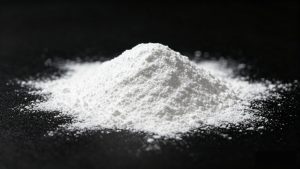
Zinc stearate is the standard internal and external lubricant in PVC and rubber processing. It reduces friction between polymer chains and between the compound and mold surfaces, preventing sticking and improving surface finish.
In PVC processing, zinc stearate acts as a co-stabilizer because it neutralizes hydrochloric acid (HCl) released during thermal degradation, thereby extending the processing window and improving long-term stability.
Hydrophobicity Zinc stearate is strongly water-repellent. It is used to impart water resistance to paper, textiles, and building materials.
Gelling and Thickening In coatings and inks, zinc stearate provides thickening and anti-settling effects by coating pigment particles and reducing agglomeration.
Plastics and Rubber Processing Used as an internal lubricant, external mold release agent, and co-stabilizer in PVC, polyolefins, and rubber compounds. Typical dosage: 0.3%–1.5%.
Cosmetics and Personal Care Approved for use in powder cosmetics including face powders, eyeshadow, blushers, and body powders. Provides slip, adhesion, and silky texture. Also used in lipstick and foundation formulations.
Coatings and Inks Prevents pigment settling, improves leveling, and provides anti-blocking properties in paints, varnishes, and printing inks.
Pharmaceuticals Used as a tablet lubricant and anti-caking agent in solid dosage forms.
Paper and Textiles Applied as a surface treatment for water resistance and anti-blocking in paper coatings and textile finishing.
Zinc stearate delivers measurable performance improvements across virtually every major plastic processing method — and understanding its specific roles helps formulators select the right grade and dosage for each application.
In PVC processing, zinc stearate serves two distinct and equally important functions simultaneously. First, as an internal lubricant, it reduces friction between polymer chains at the molecular level, lowering melt viscosity so that the compound flows more freely through the processing equipment. Second, as a co-stabilizer, it neutralizes hydrochloric acid released during thermal degradation of PVC, thereby preventing the chain reaction that causes discoloration and structural breakdown. Because both functions operate at the same time during compounding and extrusion, zinc stearate effectively extends the processing window, reduces the risk of scorching, and improves the surface quality of the finished profile or sheet.
In polyolefin processing — including polyethylene and polypropylene — zinc stearate functions primarily as an external lubricant and mold release agent. During injection molding and blow molding, it migrates toward the surface of the melt and forms a thin lubricating layer between the polymer and the mold wall. As a result, this migration behavior reduces demolding force, prevents surface sticking, and eliminates defects — drag marks, micro-tears, and surface roughness — that occur when the polymer adheres to mold surfaces during ejection. Consequently, the result is faster cycle times, lower scrap rates, and consistently better surface aesthetics on finished parts.
In rubber processing, zinc stearate reduces compound viscosity during mixing and calendering, which allows processors to run equipment at higher speeds without generating excessive heat. In addition, it prevents the green rubber compound from sticking to mixing rolls, calenders, and mold surfaces, thereby maintaining dimensional accuracy and reducing manual cleanup time between production runs.
In powder coating and masterbatch manufacturing, zinc stearate acts as a dispersion aid. Specifically, its hydrophobic surface coats pigment and filler particles, thus reducing agglomeration and improving the uniformity of particle distribution throughout the polymer matrix. Consequently, this produces masterbatches with more consistent color strength, reduces the mixing energy required to achieve homogeneous dispersion, and prevents fish-eye defects caused by undispersed pigment clusters in the final compound.
Typical effective dosage ranges from 0.3% to 1.5% by weight, depending on the polymer system, processing temperature, and the specific balance of lubrication and stabilization required. Because zinc stearate interacts with other additives in the formulation — particularly calcium stearate, which provides complementary long-term thermal stability — most formulators use it as part of a synergistic stabilizer system rather than as a standalone additive.
Furthermore, for applications where regulatory compliance matters — particularly in medical devices, food-contact plastics, and pharmaceutical packaging — pharmaceutical-grade zinc stearate with tightly controlled heavy metal limits is required. Accordingly, ACTA supplies both plastic-grade and pharmaceutical-grade zinc stearate with full batch traceability and documentation to support customer quality audits.
Compounds that disperse more readily reach their target quality faster, which allows compounders to reduce mixing cycle times, lower mixer temperatures, and increase throughput without compromising quality.
These efficiency benefits are directly tied to the purity of the zinc stearate used. High-purity zinc stearate with consistent zinc content, low free acid levels, and fine uniform particle size performs predictably from batch to batch. Inconsistent or contaminated grades introduce variability — in melt viscosity, in stabilization efficiency, in surface appearance — that erodes the efficiency gains and forces processors to compensate with wider operating margins, lower production speeds, and higher reject rates.
ACTA supplies zinc stearate with tightly controlled zinc content (10.3%–11.3% for plastic grade), acid value within specification, and particle fineness of 320 mesh passing 99.5% — ensuring that the lubrication and stabilization performance delivered in your pilot trials is the same performance you receive in every production shipment.
Looking for Zinc Stearate specifications and pricing? 👉 Contact us for details
Aluminium distearate is the aluminum salt of stearic acid where two of the three aluminum valences are occupied by stearate anions, with the remaining charge balanced by a hydroxyl group. It is the most commercially important grade of aluminum stearate, offering a unique combination of gelling strength, water repellency, and transparency.
CAS Number: 300-92-5 Molecular Formula: Al(OH)(C₁₇H₃₅COO)₂ Appearance: White to off-white fine powder Solubility: Insoluble in water; soluble in hot mineral spirits, vegetable oils, and hydrocarbon solvents

Gelling and Thickening
Aluminium distearate dissolves in vegetable and mineral oils on heating. Then, when cooled at sufficient concentration, it forms a transparent gel. As a result, this makes it one of the most effective oil-phase gelling agents available for non-aqueous systems.
Pigment Suspension
Aluminium distearate coats the surface of pigment particles, preventing settling and reducing oil absorption. Specifically, a concentration of approximately 2% by weight in oil is sufficient to significantly alter pigment surface behavior, keeping particles in suspension and reducing agglomeration.
Water Repellency
Aluminium distearate is highly hydrophobic. Consequently, aluminium di- and tri-stearate are used as waterproofing agents in construction materials, textiles, leather, and rope.
Synergistic Performance
Aluminium distearate shows synergistic gelling and stabilization effects when used in combination with zinc stearate or calcium stearate. Therefore, this allows formulators to optimize both performance and cost.
Paints, Varnishes, and Inks Used at 0.5%–2% to thicken oil-based paints and varnishes, prevent pigment settling, and improve paint body and consistency. At appropriate concentrations, it can gel the oil phase without perceptible dilution of pigment color.
Greases and Lubricants Used as a thickener and consistency modifier in specialty lubricating greases and cutting compounds.
Cosmetics and Personal Care Used in lipsticks, foundations, eyeshadow, mascara, and other anhydrous cosmetic systems as a thickener, emulsion stabilizer, and viscosity modifier.
Pharmaceuticals Used as an anticaking agent, emulsion stabilizer, and viscosity increasing agent in pharmaceutical preparations. Used to form gels in pharmaceutical packaging systems.
Construction and Building Materials Used as a waterproofing and hydrophobic treatment in cement formulations and building materials, imparting durable water repellency.
Ceramics Used in ceramic slurry systems to control rheology and pigment distribution.
Need Aluminium Distearate for coatings or cosmetics? 👉 Request a quote
Potassium stearate is the potassium salt of stearic acid. Unlike zinc and aluminium stearates which are hydrophobic, potassium stearate is water-soluble and functions primarily as an emulsifier, surfactant, and thickener in aqueous systems. Furthermore, it is one of the oldest and most widely used soap-based emulsifiers.
CAS Number: 593-29-3 Molecular Formula: KC₁₈H₃₅O₂ Appearance: White to off-white waxy flakes or powder Solubility: Soluble in hot water; forms stable emulsions
Emulsification Potassium stearate is an effective oil-in-water emulsifier. Its potassium soap structure allows it to reduce surface tension between oil and water phases, enabling stable emulsion formation in personal care and cosmetic systems.
Thickening and Texture In aqueous systems, potassium stearate contributes to viscosity and provides a smooth, creamy texture. It is widely used to build the consistency of cleansers, shaving creams, and body washes.
Foam Stabilization As a soap-based surfactant, potassium stearate generates and stabilizes foam in cleansing products.
pH Adjustment Compatibility Potassium stearate functions most effectively in mildly alkaline to neutral formulations (pH 7.5–9.5). It is compatible with other anionic and nonionic surfactant systems.
Personal Care and Cosmetics Used in shaving creams, facial cleansers, body washes, and creams as an emulsifier, thickener, and foam booster. Approved for use in cosmetics and personal care products by the CIR Expert Panel and EU Cosmetics Regulations.
Textile and Paper Industry Used as a softener, waterproofing agent, and sizing agent in textile finishing and paper coating.
Rubber and Plastics Used as an emulsifier in emulsion polymerization processes for synthetic rubber and latex production.
Pharmaceuticals Used as an excipient and emulsifying agent in pharmaceutical topical preparations and ointments.
Food Industry The FDA has approved potassium stearate and related fatty acid salts as indirect food additives and processing aids in appropriate grades.See the official FDA Food Additives Database for regulatory information.
For Potassium Stearate samples and technical data, 👉 get in touch
| Property | Zinc Stearate | Aluminium Distearate | Potassium Stearate |
|---|---|---|---|
| Water solubility | Insoluble | Insoluble | Soluble (hot water) |
| Primary function | Lubrication / mold release | Gelling / waterproofing | Emulsification / thickening |
| Key industry | Plastics, rubber, cosmetics | Coatings, cosmetics, pharma | Personal care, textiles |
| Oil-phase gelling | Moderate | Excellent | Not applicable |
| Synergistic with | Calcium stearate | Zinc stearate, calcium stearate | Nonionic surfactants |
| Regulatory status | FDA GRAS; CIR approved | CIR approved; pharma listed | FDA approved; CIR approved |
All three metal stearates covered here have established regulatory acceptance across major jurisdictions.
The CIR Expert Panel has evaluated and concluded that Zinc Stearate, Aluminium Distearate, and Potassium Stearate are safe for use in cosmetics and personal care products. Detailed safety assessments are available from the Cosmetic Ingredient Review (CIR) ProgramThe FDA has approved suitable grades of fatty acid salts including zinc, aluminum, and potassium stearates as indirect food additives. Lithium Stearate, Ammonium Stearate, Potassium Stearate, and Sodium Stearate are approved for use in cosmetics marketed in the EU under the EU Cosmetics Directive. Zinc and aluminum stearates are approved as coloring agents in cosmetics under EU Annex IV.
The FDA has approved suitable grades of fatty acid salts as indirect food additives. See official information at FDA website .
Manufacturers use both as lubricants and stabilizers in PVC processing, but they serve different roles. Specifically, zinc stearate acts as a more effective HCl scavenger and provides better initial stabilization, whereas calcium stearate provides longer-term thermal stability. Consequently, manufacturers commonly use them together in synergistic stabilizer systems.
No. Aluminium stearate is a general term covering mono-, di-, and tri-stearate grades. Notably, aluminium distearate (CAS 300-92-5) is the specific di-substituted grade with one hydroxyl group retained, and is the most widely used commercial grade due to its superior gelling properties and clarity in oil systems.
Potassium stearate and related fatty acid potassium salts have FDA approval as indirect food additives in appropriate grades. For direct food additive applications, always verify the specific grade and use level with regulatory documentation from your supplier.
Chemists call metal stearates and similar fatty acid metal salts “metallic soaps” because they share the basic chemistry of conventional soaps (fatty acid + base) but use metals other than sodium or potassium. However, the term does not imply any cleaning function — rather, it refers to the chemical family.
Yes. Zinc stearate and calcium stearate are commonly used together in PVC stabilization because they offer complementary heat-stabilizing functions. Furthermore, aluminium distearate demonstrates synergistic gelling performance when used alongside zinc stearate. By contrast, potassium stearate is primarily used in aqueous systems where hydrophobic stearates such as zinc stearate and aluminium distearate cannot dissolve. As a result, potassium stearate is rarely combined with these stearates in practical formulations.
Related Cellulose & Additives
We also supply a full range of cellulose stabilizers and functional additives:
– Microcrystalline Cellulose (MCC)
– Carboxymethyl Cellulose (CMC)
– Hydroxypropyl Methyl Cellulose (HPMC)
– Hydroxyethyl Methyl Cellulose (HEMC)
Colloid microcrystalline cellulose
Cellulose-based additives are widely used in multiple industries. Learn more about cellulose from Encyclopaedia Britannica .
Contact us for detailed specifications, samples, and customized solutions for your application.
Reviews
There are no reviews yet.