

Cellulose stabilizers are widely used across food, pharmaceutical, and industrial sectors to improve texture, stability, and formulation performance. These cellulose stabilizers play a critical role in modern formulations by acting as thickening agents, suspension stabilizers, and functional excipients in both liquid and solid systems.
According to the U.S. Food and Drug Administration (FDA), cellulose-based ingredients are widely recognized as safe for use in food applications. Learn more from FDA food ingredient guidelines.
The European Food Safety Authority confirms the safety and functionality of cellulose derivatives in food systems. See details at EFSA food safety standards.
Qingdao Acta Biotechnology Co., Ltd. specializes in the manufacturing and supply of five core cellulose and starch derivatives: Microcrystalline Cellulose (MCC), Carboxymethyl Cellulose (CMC), Hydroxypropyl Methylcellulose (HPMC), Hydroxyethyl Methylcellulose (HEMC), and Modified Starch. These functional ingredients are trusted by formulators across the food, pharmaceutical, and construction industries for their proven performance, regulatory compliance, and consistent quality.
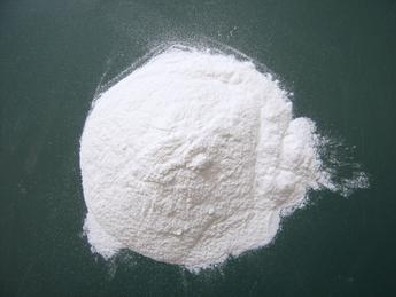
Cellulose stabilizers are a class of functional ingredients derived from natural cellulose — the structural fiber found in plant cell walls. Through controlled chemical and physical processing, cellulose is transformed into highly versatile derivatives including Microcrystalline Cellulose (MCC), Carboxymethyl Cellulose (CMC), Hydroxypropyl Methylcellulose (HPMC), Hydroxyethyl Methylcellulose (HEMC), and Modified Starch. These ingredients are widely adopted across the food and pharmaceutical industries because of their ability to modify texture, control viscosity, stabilize emulsions, and support formulation integrity under a broad range of processing conditions.
As food stabilizers, cellulose derivatives play a central role in modern food manufacturing. CMC in food systems prevents phase separation and improves mouthfeel. It maintains consistent viscosity in sauces, dairy beverages, plant-based milk, and ice cream. HPMC uses in food include emulsification, water retention in bakery products, and fat replacement in low-calorie formulations. MCC gel modifies texture in reduced-fat dairy and stabilizes suspensions in protein drinks. It forms a colloidal network that keeps particles evenly distributed throughout shelf life. Modified starch complements cellulose-based systems with thickening, binding, and moisture control. This is especially relevant in heat-processed and frozen food products.
Beyond food, these same materials function as critical pharmaceutical excipients in drug manufacturing. In pharma, MCC serves as a binder, diluent, and disintegrant in tablet production. It is one of the most widely used excipients in the USP, EP, and JP pharmacopoeias. CMC and HPMC are used in oral suspensions, controlled-release tablets, and topical gels. Their viscosity-building and film-forming properties enable precise control over drug release.
Explore the application categories below to find the right ingredient for your formulation needs.。
| Ingredient | Function | Application |
|---|---|---|
| MCC | Thickening | Dairy, tablets |
| CMC | Stabilizing | Beverages |
| HPMC | Film forming | Pharma |
Research on cellulose-based stabilizers shows their effectiveness in improving suspension stability and rheological properties in complex systems. Refer to scientific studies on cellulose systems for more technical insights.
MCC, CMC, and Modified Starch are core functional ingredients in modern food manufacturing. They provide thickening, stabilization, emulsification, suspension, and texture improvement across a wide range of food and beverage products.Modified starch is often combined with cellulose stabilizers. Learn more about modified starch applications.
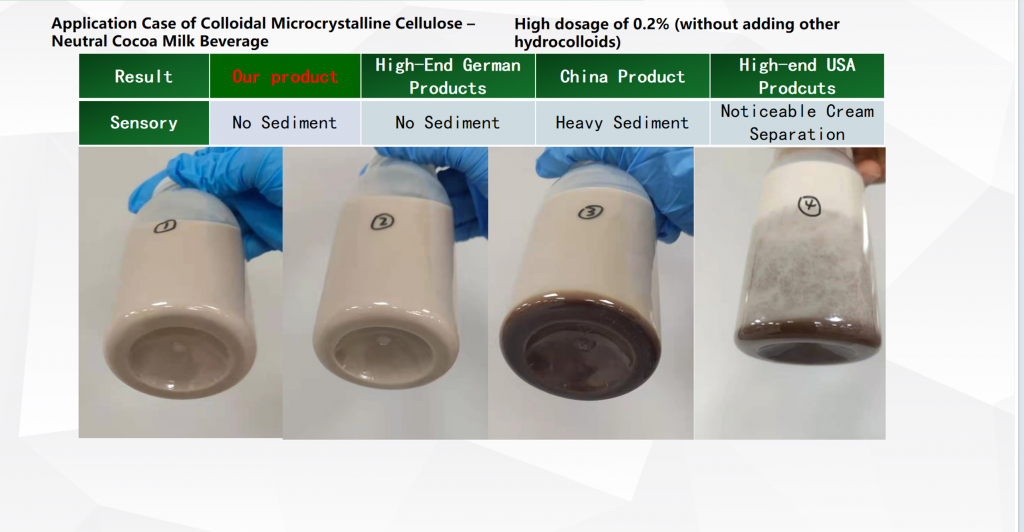
In dairy alternatives, plant-based milk stabilizershelp maintain suspension and improve mouthfeel.
Plant-based beverages like oat milk, almond milk, soy milk, and rice milk need a robust stabilizing system. This prevents sedimentation, controls viscosity, and delivers a smooth, creamy mouthfeel.
Colloidal MCC acts as the primary suspension agent. It forms a three-dimensional network that keeps plant proteins and insoluble particles evenly distributed throughout shelf life. CMC contributes to viscosity control and improves the overall mouthfeel. Modified Starch adds body and supports emulsion stability, particularly in heat-treated UHT beverage systems.
Together, these three ingredients form a complete stabilizer system for plant-based dairy alternatives — clean-label compatible and effective across a wide pH range.
Key functions: suspension, viscosity control, mouthfeel improvement, phase separation prevention Recommended ingredients: Colloidal MCC, CMC, Modified Starch

In frozen desserts, ice cream stabilizers control ice crystal growth and enhance texture.
In ice cream and frozen dessert production, the main formulation challenges are ice crystal control, emulsion stability, and texture consistency through freeze-thaw cycles.
MCC gel slows ice crystal growth during freezing and storage, resulting in a smoother texture and reduced grittiness. CMC improves overrun stability and enhances melting resistance, extending the product’s quality life in the cold chain. In reduced-fat ice cream formulations, Colloidal MCC provides fat-mimicking properties that restore creaminess without additional calories — making it an ideal ingredient for low-fat and clean-label frozen desserts.
Modified Starch complements the system by improving body, binding free water, and ensuring consistent viscosity during the pasteurization and freezing process.
Key functions: ice crystal control, fat replacement, emulsion stability, texture improvement Recommended ingredients: Colloidal MCC, CMC, Modified Starch
Protein beverages require protein drink stabilizers to prevent sedimentation and phase separation.
Protein beverages — including sports drinks, meal replacement shakes, and high-protein dairy drinks — frequently face stability issues such as protein sedimentation, viscosity loss, and phase separation during storage.
Colloidal MCC is particularly effective in protein beverage systems. It forms a stable colloidal network that suspends protein particles and prevents settling without adding taste or calories. CMC further stabilizes the system by improving viscosity and reducing surface tension between protein particles and the liquid phase. Modified Starch provides additional body and improves the overall drinking experience, especially in high-solid formulations.
Key functions: protein suspension, viscosity stabilization, shelf-life extension, mouthfeel improvement Recommended ingredients: Colloidal MCC, CMC, Modified Starch

In bakery and sauce formulations, sauce thickeners help improve viscosity and stability.
In bakery applications, water retention and dough consistency are directly linked to final product quality, yield, and freshness life. CMC improves dough handling properties, slows moisture loss during baking, and extends the softness of finished products such as bread, cakes, and pastry fillings. MCC contributes structural integrity and helps maintain uniform texture in high-fiber or reduced-fat bakery formulations.
In sauces, dressings, ketchups, and condiments, CMC and Modified Starch provide reliable thickening and prevent oil-water separation under both cold storage and heating conditions. Modified Starch is especially effective in heat-stable sauce systems and retort applications where high-temperature processing is required.
Key functions: water retention, viscosity control, emulsion stability, texture improvement, shelf-life extension Recommended ingredients: CMC, MCC, Modified Starch (heat-stable grade)
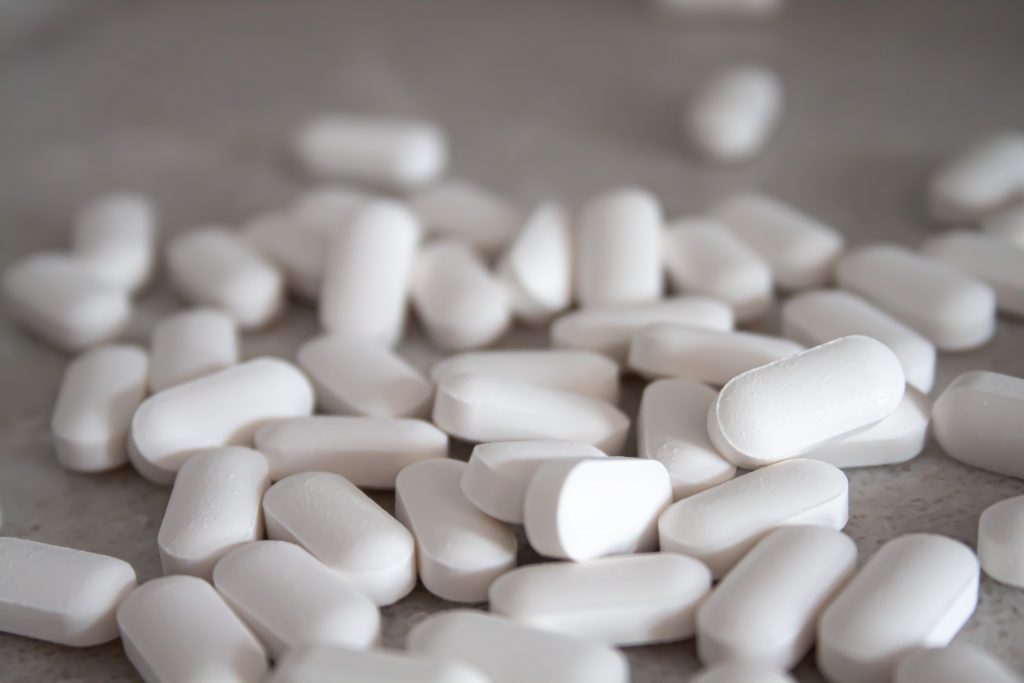
Microcrystalline Cellulose (MCC) is one of the most widely used pharmaceutical excipients globally, listed in USP, EP, BP, and JP pharmacopoeias. It is the excipient of choice in direct compression tablet manufacturing due to its exceptional compressibility, chemical inertness, and multifunctional performance.
Within a single ingredient, MCC simultaneously functions as a binder, diluent, and disintegrant — simplifying formulation design and improving manufacturing efficiency. Key performance benefits include:
Controlled disintegration — rapidly absorbs water and breaks apart upon contact with gastrointestinal fluids, supporting faster drug release and improved bioavailability
Uniform content distribution — ensures consistent active ingredient concentration across every tablet unit
Broad API compatibility — chemically inert and compatible with the vast majority of active pharmaceutical ingredients
Flexible processing — suitable for direct compression, wet granulation, and roller compaction manufacturing platforms
CMC and HPMC also play important roles in pharmaceutical formulations. CMC is used as a binder and disintegrant in tablet manufacturing, as well as a viscosity modifier and suspension agent in oral liquids and topical gels. HPMC is widely used in controlled-release matrix tablets, film coatings, and hard capsule production, where its gel-forming and film-forming properties provide precise control over drug release profiles.Carboxymethyl cellulose plays a key role in food stabilization. Explore CMC in food and pharmaceutical applications.
Key functions: binding, disintegration, controlled release, film coating, suspension, viscosity modification Recommended ingredients: MCC (PH-101, PH-102, PH-200), CMC, HPMC
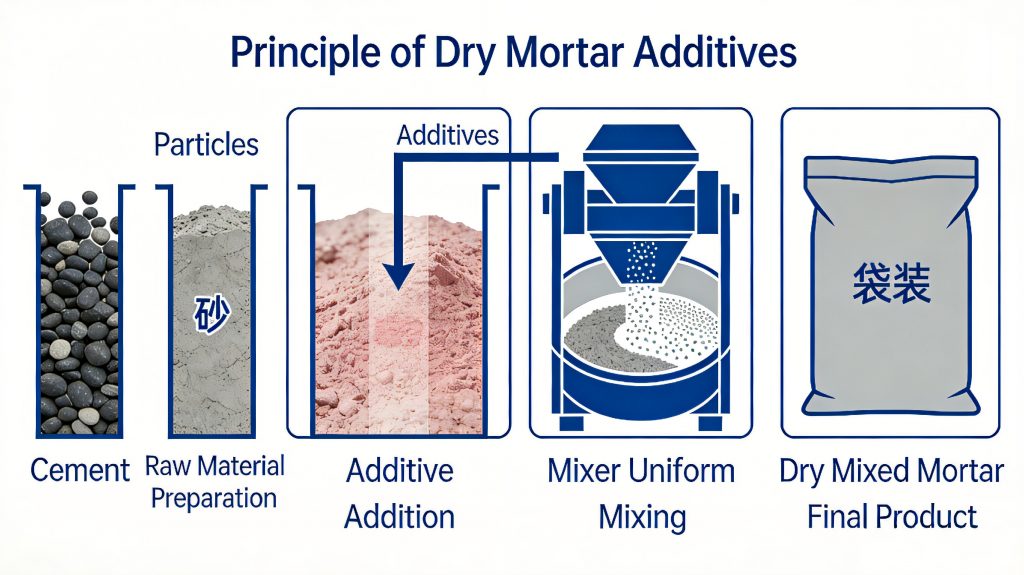
HPMC and HEMC are the two primary cellulose ethers used in construction chemistry. Their ability to retain water, control rheology, and improve workability makes them indispensable additives in dry-mix construction systems. Modified Starch also finds application in certain construction and industrial adhesive systems where additional binding and water retention are required.
For film-forming and controlled release systems, many manufacturers use HPMC excipient solutions.
Render systems rely on render additives to improve crack resistance and workability.
In render and plaster formulations, HPMC and HEMC improve water retention by reducing water loss to the substrate during application. This extends the open time of the mortar, allowing applicators to achieve a smoother, more uniform finish. Better water retention also ensures adequate hydration of the cement or gypsum binder, which is critical for achieving full mechanical strength and preventing surface cracking.
HEMC offers particular advantages in gypsum-based render systems due to its superior compatibility with gypsum and its ability to maintain consistent viscosity across a range of temperatures — making it a preferred choice in regions with variable working conditions.
Key functions: water retention, open time extension, workability improvement, crack resistance Recommended ingredients: HPMC (construction grade), HEMC
In construction systems,dry mix mortar additives are essential for improving performance and durability.
In dry mix mortar systems, cellulose ethers control the rheology of the mixed mortar, ensuring pumpability, preventing material segregation, and delivering uniform consistency from mixing through to application. The right cellulose grade and dosage level are critical to balancing workability with setting time — a factor that directly affects both application speed and final bond strength.
HPMC and HEMC are available in a range of viscosity grades to match the specific requirements of different mortar formulations, from lightweight thermal plasters to heavy-duty repair mortars.
Key functions: rheology control, anti-segregation, pumpability, consistency Recommended ingredients: HPMC, HEMC
For tile installation, specialized tile adhesive additives ensure strong bonding and extended open time.
In tile adhesive formulations, HPMC and HEMC provide three critical functions: viscosity control to ensure the adhesive spreads evenly, anti-sag performance to prevent tiles from slipping on vertical surfaces before the adhesive sets, and water retention to maintain adequate moisture for cement hydration and reliable long-term bond strength.
The correct selection of cellulose ether viscosity grade directly determines the open time, slip resistance, and final adhesion performance of the tile adhesive — making it one of the most technically important ingredients in the formulation.In construction materials,hydroxyethyl methyl cellulose is widely used to improve workability and water retention.
Key functions: viscosity control, anti-sag, water retention, bond strength support Recommended ingredients: HPMC, HEMC
The widespread adoption of cellulose stabilizers across both the food and pharmaceutical industries is driven by a combination of functional performance, safety, and regulatory reliability that few other ingredient categories can match.
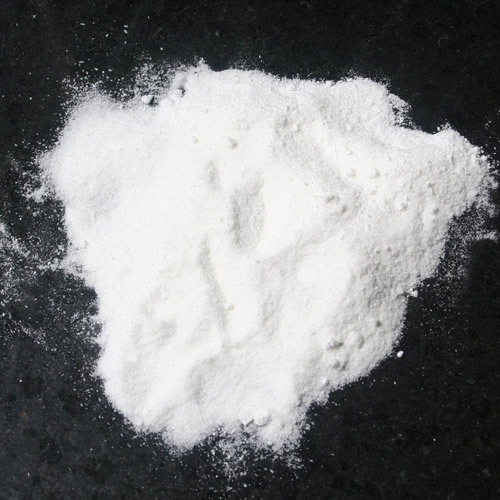
CMC in food applications delivers consistent thickening and stabilization across a wide pH range, making it suitable for acidic beverages, neutral dairy systems, and high-temperature sauce production alike. MCC gel uses in food formulations go beyond simple thickening — the ingredient actively replaces fat, restores creaminess in low-fat products, and prevents ice crystal formation in frozen desserts without contributing digestible calories. HPMC uses in bakery and processed food systems improve water retention, extend product freshness, and support clean-label reformulation by replacing synthetic additives with a plant-derived alternative. Modified starch applications provide reliable heat stability, freeze-thaw resistance, and moisture binding in products where cellulose alone may not deliver sufficient body or processing tolerance.
In the pharmaceutical sector, the benefits of cellulose-based ingredients are equally compelling. Microcrystalline cellulose applications in solid dosage manufacturing are valued for MCC’s unique ability to function simultaneously as a binder, disintegrant, and diluent — reducing formulation complexity while improving tablet hardness, content uniformity, and disintegration speed. As pharmaceutical excipients, CMC and HPMC bring additional value through their roles in controlled-release systems, oral suspensions, and film coatings, where consistent viscosity and gel-forming behavior directly influence drug bioavailability and patient experience. Across all of these applications, cellulose-based ingredients share a common set of advantages: they are chemically inert, non-toxic, derived from renewable plant sources, and compliant with major international regulatory frameworks — making them a dependable foundation for product development in both industries.
Qingdao Acta Biotechnology Co., Ltd. as been manufacturing cellulose derivatives and functional food ingredients since 2002. We supply MCC, CMC, HPMC, HEMC, and Modified Starch directly from our factory, offering consistent quality, competitive pricing, and responsive technical support to customers across the food, pharmaceutical, and construction industries worldwide.
Factory-direct pricing with flexible minimum order quantities Full quality documentation: COA, MSDS, TDS, and regulatory compliance support Food-grade, pharmaceutical-grade, and industrial-grade product specifications Export experience to Europe, North America, Southeast Asia, and the Middle East Technical guidance on grade selection, dosage recommendations, and formulation development
Cellulose stabilizers are widely listed and applied across global supply chains. Explore industry insights via chemical ingredient marketplace.
They are used to improve texture, stability, and suspension in food and pharmaceutical formulations.
Yes, it is widely recognized as safe and used globally in food and pharma.
Contact our team for technical support, samples, and customized formulations.
Email:wangpengfei@actabiotechnology.comm Website:https://www.actabiotechnology.com