

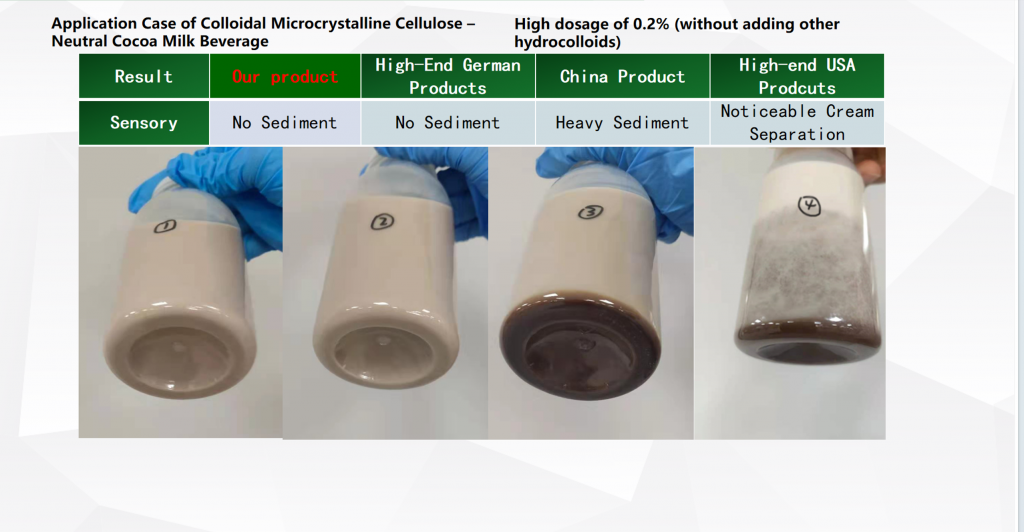
Plant-based milk has become one of the fastest-growing segments in the global beverage industry. Products such as almond milk, oat milk, soy milk, and coconut milk rely on an effective plant-based milk stabilizer system to maintain uniform suspension, smooth texture, and desirable mouthfeel. Without the support of a proper plant-based milk stabilizer, plant-based beverages are prone to sedimentation, phase separation, and unstable viscosity during storage
Functional ingredients such as microcrystalline cellulose, carboxymethyl cellulose, and modified starch play an important role in modern plant-based milk formulations. These ingredients help create smooth, creamy beverages with improved shelf stability and consistent quality throughout storage and transportation.
Manufacturers of plant-based beverages often face several formulation challenges:
A well-designed stabilizer system helps overcome these challenges while maintaining a clean and appealing texture.
Several functional ingredients are widely used in plant-based milk formulations.
Microcrystalline Cellulose (MCC)
Microcrystalline cellulose acts as an excellent suspension stabilizer. It forms a three-dimensional network structure that helps suspend plant proteins and particles evenly throughout the beverage.
Carboxymethyl Cellulose (CMC)
CMC improves viscosity and provides effective stabilization in plant-based milk. It also enhances mouthfeel and prevents phase separation.
Hydroxypropyl Starch
Modified starch contributes to body and texture while improving freeze-thaw stability in certain beverage applications.
These ingredients are commonly used in combination to create stable and smooth plant-based beverages.
Using cellulose derivatives and modified starch in plant-based milk formulations offers several advantages:
Plant-based stabilizer systems are commonly used in:
Recommended ingredients for plant-based milk:
Many cellulose-based stabilizers used in plant-based milk are approved food additives by global regulatory authorities such as the FDA and EFSA.