

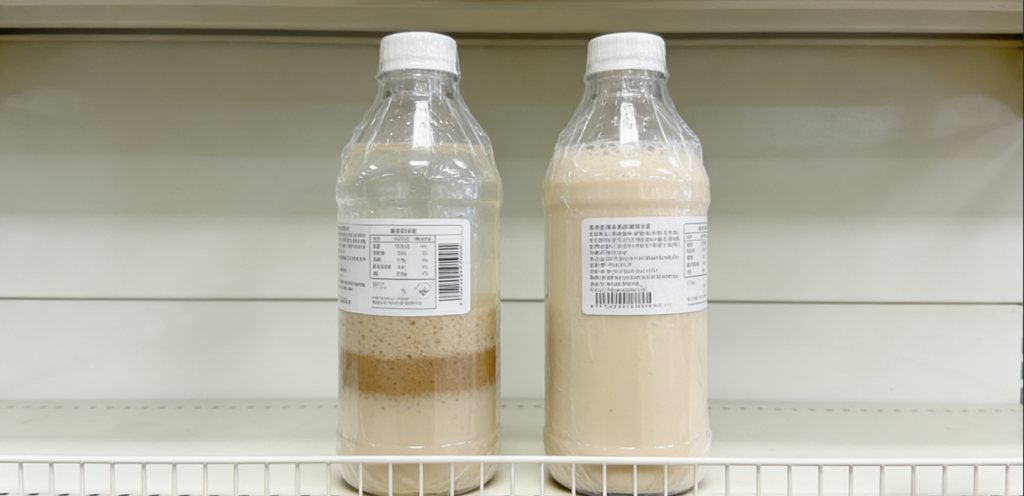
Beverage stabilizers is a key functional ingredient used to improve suspension, texture, and stability in modern beverage systems. Manufacturers use it in protein drinks, plant-based milk, dairy beverages, and RTD formulations to prevent sedimentation, phase separation, and viscosity loss during processing and storage.
In the modern food industry, consequently,food stabilizers play a critical role in meeting consumer demands for clean-label products, extended shelf life, and consistent sensory experiences.For example, Without effective stabilization, products like plant-based milk, ice cream, salad dressings, and protein beverages would rapidly separate, lose texture, or degrade in quality during storage and distribution.
As a result,,As food manufacturers face growing pressure to reduce synthetic additives while maintaining product performance, cellulose-based and starch-based food stabilizers have emerged as the preferred solution — offering natural origin, broad global regulatory approval, and outstanding multifunctional performance. Moreover,Whether used as thickeners, suspension agents, emulsifiers, or texture modifiers, food stabilizers are essential building blocks for any high-quality food and beverage formulation.Cellulose-based stabilizers play a critical role in modern formulations. Learn more about cellulose food additives in food systems.
Sedimentation is one of the most persistent challenges in protein beverage formulation. It directly affects shelf appeal, consumer trust, and product quality. When protein particles, minerals, or fiber settle at the bottom of the bottle, the product loses visual uniformity and nutritional consistency.
The root cause is simple: gravity continuously acts on any particle that is denser than the surrounding liquid. Without a stabilizer network, even well-homogenized protein drinks begin to separate within days.
First, manufacturers use a colloidal MCC gel system. This system builds a three-dimensional suspension network that physically holds particles in place. It does not thicken the liquid; instead, it creates a structured matrix throughout the beverage.
Second, manufacturers combine MCC gel with CMC. This combination adjusts viscosity at the micro level and slows particle movement. At the same time, it avoids a heavy or gummy mouthfeel.
Third, manufacturers optimize homogenization parameters. They reduce particle size so it stays below the threshold where gravity-driven settling becomes significant.
Protein drinks often undergo heat treatment and long-term ambient storage. Therefore, the stabilizer system must remain stable under UHT conditions.
MCC gel and HPMC both provide strong thermal resistance. They ensure that the suspension network survives high-temperature processing and remains stable throughout shelf life.
For whey protein, casein, or plant-based protein isolates, formulators typically use a combination of colloidal MCC (0.4%–1.0%) and CMC. This is widely regarded as the industry benchmark for sedimentation control in RTD protein drinks.
Plant-based milk separates during storage for a fundamentally different reason than traditional dairy, and understanding this difference is the first step to solving it.
In cow’s milk, natural caseins and whey proteins create a relatively stable colloidal system. In contrast, oat milk, almond milk, and soy milk contain proteins that are structurally weaker and carry different surface charges. As a result, they cannot maintain stable emulsions over time, especially under temperature fluctuations during transport and retail storage.
Emulsion breakdown occurs when the oil–water interface becomes unstable. Plant-based fat droplets tend to coalesce and rise to the surface through creaming unless an effective emulsifier and stabilizer system maintains interface stability.
Protein sedimentation happens when plant proteins aggregate under low pH or heat exposure. Because plant proteins have weaker electrostatic charges than dairy proteins, they flocculate more easily and settle during UHT processing or long-term storage.
Starch retrogradation in oat-based beverages leads to gel formation and texture changes. This process accelerates phase separation after the product is opened and stored again.
Stabilizers directly address all three mechanisms. MCC gel forms a colloidal suspension network that prevents protein sedimentation. CMC increases electrostatic repulsion between protein particles and keeps them dispersed. Modified starch and HPMC improve emulsion stability and mouthfeel, especially in oat and rice-based formulations.
Because plant-based beverages typically undergo UHT processing, the stabilizer system must maintain structural integrity above 135°C. Cellulose-based stabilizers — particularly MCC and HPMC — provide reliable UHT resistance, making them the preferred choice for shelf-stable plant-based milk formulations.
Cocoa-based drinks often show visible sediment at the bottom of the container. This reduces product quality and consumer acceptance. Therefore,Suspension stabilizers help lock cocoa particles into a stable network system.
Heat treatment and UHT processing can damage protein structures. Consequently,This leads to aggregation and poor dispersion. On the other hand,Proper stabilizer systems maintain protein stability under thermal conditions.
Without proper stabilization systems, beverages lose uniform texture during storage. Stabilizers help maintain consistency, appearance, and mouthfeel throughout shelf life.
Stabilizers create a structured matrix that restricts particle movement and prevents sedimentation under gravity.
During processing, stabilizers reduce viscosity under shear force and recover structure after mixing, thus ensuring stable processing and final texture.
MCC gel forms a three-dimensional elastic network that physically traps suspended particles and maintains uniform distribution.
CMC interacts with protein particles and improves electrostatic repulsion, thereby preventing aggregation and phase separation.
Certain cellulose derivatives maintain structural integrity even under ultra-high temperature processing, ensuring long shelf life performance.For UHT processing principles in plant-based beverages, see: UHT Processing in the Context of Plant-Based Beverages: A Scientific Review (academic review via NuFind).
Stabilizers reduce interfacial tension between oil and water phases, therefore improving emulsion stability in dairy and flavored beverages.
According to FDA food additive regulations, hydrocolloids such as cellulose derivatives are widely used in beverage systems.
Understanding how beverage stabilizers work helps formulators make better decisions — and helps procurement and quality teams evaluate supplier claims with confidence.
Beverage stabilizers do not simply thicken a liquid to slow particle settling. Instead, the most effective systems build functional structures within the beverage itself. These structures operate through four distinct mechanisms, and high-performance formulations typically combine more than one.
Colloidal network formation is the primary mechanism of MCC gel systems. When properly hydrated and dispersed, colloidal MCC particles link together to form a continuous three-dimensional gel network throughout the liquid phase. This network acts as a physical scaffold — it holds suspended particles, fat droplets, and protein aggregates in place by mechanical entrapment rather than by viscosity alone. As a result, suspension stability is maintained even at relatively low overall viscosity levels, which preserves the drinkable texture that consumers expect.
Particle immobilization works in combination with colloidal network formation. Once the gel network is established, particles are trapped within its structure and cannot migrate freely under the influence of gravity. Unlike viscosity-based stabilization — where particles simply move more slowly through a thicker liquid — true particle immobilization prevents movement entirely within the network. This is why MCC gel systems outperform gum-based or starch-only solutions in long-term storage stability testing.
Shear-thinning behavior is a critical processing property of cellulose-based stabilizer systems. Under the mechanical force of mixing, homogenization, or pump transfer, the gel network temporarily breaks down and viscosity drops sharply. This allows the stabilizer to flow freely through processing equipment without damaging pipes, valves, or filling systems. Once the shear force is removed — after filling into the bottle, for example — the network immediately rebuilds. This shear-thinning and recovery cycle repeats without degradation throughout the production process, ensuring consistent performance from the mixing tank to the finished product.
UHT resistance separates high-performance beverage stabilizers from general-purpose hydrocolloids. Ultra-high temperature processing exposes beverages to temperatures above 135°C for short durations, which degrades many conventional stabilizing agents. Cellulose derivatives — particularly MCC gel and HPMC — maintain their structural properties under UHT conditions because their molecular backbone is chemically stable at high temperatures. Furthermore, HPMC exhibits a unique thermal gelation behavior: it gels when heated and re-dissolves upon cooling, which actually reinforces structure during the hottest phase of UHT processing. Together, these properties ensure that the suspension network survives processing and continues to function throughout the full shelf life of the product.
Modern beverage manufacturers use advanced stabilizer systems to solve formulation challenges in industrial production.
These include:
As a result,These systems improve suspension performance, texture consistency, and shelf life stability across different beverage categories.
Selecting the right stabilizer begins with understanding the functional properties of each ingredient type.Specifically, The following are the most widely used food stabilizers across global food and beverage manufacturing.
Microcrystalline Cellulose is a plant-derived, insoluble cellulose stabilizer used as a fat replacer, suspension agent, and texture modifier in food applications. Its colloidal gel network provides outstanding particle suspension in beverages and dairy alternatives, while delivering a smooth, creamy mouthfeel without added fat. Moreover, MCC is GRAS-approved by the FDA, heat-stable, and highly compatible with clean-label product development. 👉 View Microcrystalline Cellulose Products →
Carboxymethyl Cellulose is a water-soluble cellulose derivative that functions as a thickener, emulsifier, and viscosity modifier. For instance, CMC is highly effective in beverages, ice cream, sauces, and bakery products — controlling ice crystal growth, preventing syneresis, and stabilizing emulsions across a broad range of pH and temperature conditions. In addition,It is compatible with most food ingredients and approved for use globally. CMC stabilizer systems are widely used in beverage formulations to prevent sedimentation and improve mouthfeel.
HPMC is a semi-synthetic cellulose ether with unique thermal gelation behavior — it gels upon heating and re-dissolves when cooled. Therefore, it is widely used in baked goods, fried foods, and plant-based meat alternatives, However,HPMC also acts as a film-former, water retention agent, and fat barrier, improving texture consistency while reducing oil absorption in processed food applications. HPMC and CMC are widely used in beverage stabilization. Discover HPMC supplier options for improved suspension and mouthfeel.
Modified Starch is a physically or chemically treated starch engineered for superior performance under high temperature, low pH, and freeze-thaw processing conditions. Consequently,it provides reliable thickening, binding, and moisture management in sauces, soups, dairy products, and convenience foods — applications where native starch would fail to maintain consistency under commercial processing demands. 👉 View Modified Starch Products →
Our food stabilizer solutions are designed to meet the specific technical requirements of each food, beverage, and pharmaceutical category. Specifically,the nine application areas below represent the core industries where our ingredients deliver commercially validated, science-backed performance.
Specialized stabilizers designed to improve suspension, texture, and long-term stability in oat milk, almond milk, soy milk, and other dairy alternatives. Thus,they directly addresses sedimentation, phase separation, and mouthfeel challenges inherent to plant-based beverage systems. 👉 Explore Plant-Based Milk Stabilizers →
For formulation principles of dairy and functional beverages, refer to: Formulating Dairy Protein Beverages (CDR, University of Wisconsin–Madison)
Stabilizers used in frozen desserts to control ice crystal growth, improve overrun, and deliver a consistently smooth, creamy texture. In addition,they are critical for maintaining product quality across freeze-thaw cycles and during extended frozen storage and cold chain distribution. 👉 Explore Ice Cream Stabilizers →
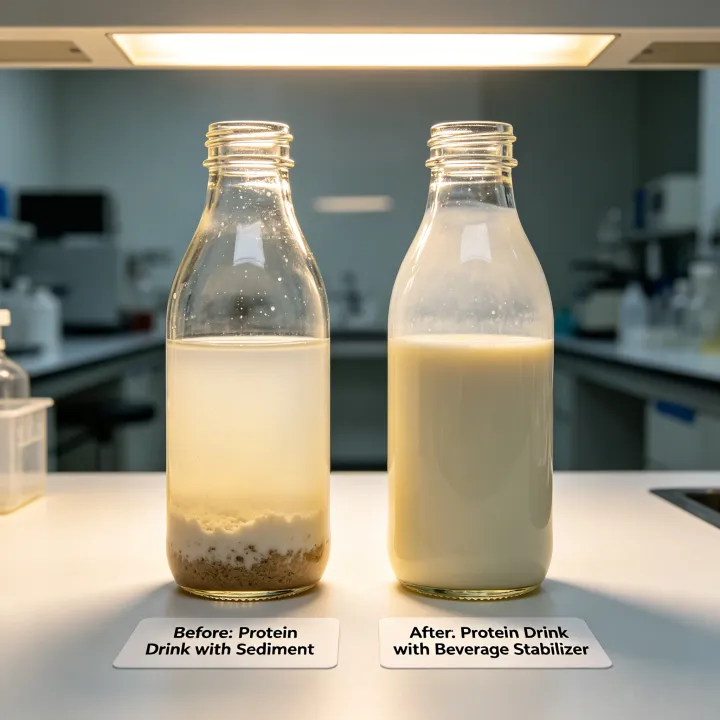
Formulated to prevent protein sedimentation, reduce aggregation, and maintain uniform particle suspension in nutritional and sports beverages. As a result, they ensure visual consistency and smooth texture across the full shelf life — including under refrigerated and ambient storage conditions. 👉 Explore Protein Drink Stabilizers → https://www.actabiotechnology.com/applications/protein-drinks/
Ingredients used to improve viscosity and body in sauces, dressings, beverages, and processed foods. Provides formulators with precise control over flow behavior and final product texture across varying processing temperatures and formulation conditions. 👉 Explore Food Thickeners
Used to keep insoluble particles — including fibers, plant proteins, and mineral fortifications — evenly distributed throughout liquid food systems. Prevents settling and maintains a visually homogeneous product from production through to the end of shelf life. 👉 Explore Food Suspension Agents
Cellulose-based ingredients widely used as stabilizers, thickeners, and texture modifiers across food and pharmaceutical applications. Naturally derived, clean-label compatible, and supported by extensive global regulatory approvals including FDA GRAS and EU food additive status.
Functional ingredients used in pharmaceutical formulations including tablets, capsules, oral suspensions, and topical preparations. Provides binder, disintegrant, and suspension functionality to ensure consistent drug delivery performance and manufacturing reliability. 👉 Explore Pharmaceutical Excipients
Excipients used in tablet manufacturing to improve mechanical strength, compressibility, and structural integrity. Ensures tablets withstand the rigors of handling and packaging while disintegrating reliably and predictably upon consumption in the target release environment.
Choosing the wrong stabilizer isn’t just a formulation mistake — it’s a commercial risk. Here’s how the leading options compare across the applications that matter most.
| Stabilizer | Primary Function | Best Application | Key Limitation |
|---|---|---|---|
| MCC Gel | Physical suspension network | Protein drinks, cocoa beverages | Requires proper hydration |
| CMC | Viscosity & water binding | Acidic beverages, dairy | Less effective for heavy particles |
| HPMC | Thermal gelation, heat stability | UHT beverages, hot-fill | Texture profile differs by grade |
| Modified Starch | Body, texture, opacity | Dairy drinks, meal replacements | Lower suspension efficiency |
The practical conclusion: Most high-performance beverage systems combine two or more stabilizers. MCC Gel provides the suspension backbone; CMC or starch adjusts viscosity and texture to match product targets.
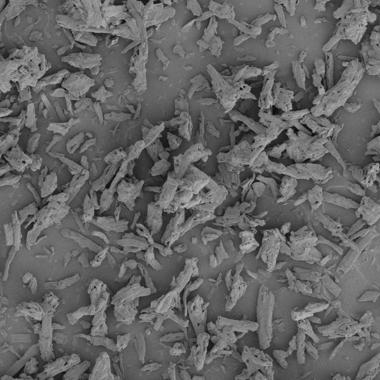
When suspension performance is non-negotiable, beverage formulators worldwide rely on colloidal microcrystalline cellulose — and the reason is structural, not just functional.
Unlike traditional gums that simply raise viscosity to slow settling, MCC Gel builds a true three-dimensional network — a physical architecture that holds particles in place regardless of temperature, processing stress, or storage duration.
This structural difference is why MCC Gel outperforms single-ingredient viscosity builders in real-world beverage applications:
For RTD protein drinks, plant-based beverages, and any nutritional product requiring 12+ months of shelf stability, MCC Gel is the industry benchmark.
Effective stabilization starts with the right dosage. The following ranges reflect industry-standard formulation practice — adjusted for beverage type, processing conditions, and target texture profile.
| Beverage Type | Recommended Dosage |
|---|---|
| Plant-based milk | 0.3% – 0.8% |
| Protein drinks | 0.4% – 1.0% |
| Cocoa beverages | 0.5% – 1.2% |
| Meal replacement drinks | 0.5% – 1.5% |
| Dairy beverages | 0.2% – 0.6% |
Note: Final dosage is influenced by protein type and concentration, homogenization intensity, UHT cycle parameters, and target mouthfeel. Always validate through stability testing under your specific processing conditions.
The best stabilizer for beverages depends on the product type and processing conditions. For protein drinks and cocoa beverages, colloidal MCC gel delivers the strongest suspension performance because it builds a three-dimensional particle-immobilizing network rather than simply raising viscosity. In acidic beverages and dairy drinks, CMC provides effective viscosity control and protein stabilization. About UHT-processed beverages, HPMC adds thermal gelation behavior that reinforces stability during high-temperature processing. In practice, most high-performance RTD beverages combine MCC gel with CMC or modified starch to address suspension, texture, and shelf life simultaneously.
Plant-based drinks separate due to unstable emulsions and weak particle interactions. Stabilizers improve structure and prevent phase separation.
Beverage stabilizers prevent sedimentation primarily through colloidal network formation and particle immobilization. MCC gel, for example, forms a continuous elastic network throughout the liquid that physically traps suspended particles and prevents them from migrating downward under gravity. This is fundamentally different from viscosity-based approaches, where particles simply move more slowly through a thicker medium. Because MCC gel networks are shear-thinning, they break down temporarily during processing and recover their structure after filling — ensuring consistent suspension stability throughout the product’s shelf life.
MCC gel is used as a suspension stabilizer to improve texture and prevent particle settling in beverages.
HPMC and cellulose-based stabilizers are commonly used because they maintain stability under high-temperature processing.
Colloidal MCC gel and CMC are the two most effective stabilizers for protein drinks. MCC gel provides the suspension network that prevents protein particles and mineral fortifications from settling. CMC improves electrostatic repulsion between protein molecules, reducing aggregation and supporting even distribution throughout the liquid. Because protein drinks often undergo UHT processing, both stabilizers must also deliver UHT resistance — a property that cellulose-based systems offer reliably. A combined MCC + CMC system at 0.4%–1.0% total dosage represents the industry standard for protein drink stabilization.
Plant-based milk formulations typically use a combination of colloidal MCC, CMC, and in some cases HPMC or modified starch. MCC gel builds the suspension network that prevents protein sedimentation. CMC improves emulsion stability by reducing interfacial tension between fat droplets and the aqueous phase. HPMC contributes UHT resistance and thermal gelation behavior, which is especially important for shelf-stable oat milk and almond milk processed at high temperatures. Modified starch adds body and opacity that help plant-based milk achieve the sensory profile consumers associate with dairy beverages.
For beverage manufacturers, choosing the right stabilizer is only the first step. The actual performance depends on particle size, dispersion, dosage, processing conditions, water chemistry, and long-term storage stability. For a practical step-by-step approach, see our guide to beverage stabilizer formulation, including dosage screening, suspension mechanisms, processing, scale-up, and stability testing.
Formulation challenges don’t follow a standard template — and neither should your stabilizer system.
Our application team works directly with beverage manufacturers to solve specific production and stability problems, including:
We support your development process with sample testing, dosage optimization, formulation guidance, and application-specific technical documentation — from bench trials through commercial scale-up.
Contact our technical team to build a stabilizer system engineered for your specific beverage, your processing line, and your shelf life requirements.