

Tile Adhesive Additive are essential components in modern dry mix mortar formulations. High-performance systems rely on cellulose ethers such as HPMC and HEMC to improve water retention, open time, bond strength, and anti-slip properties.
Choosing the right tile adhesive additives not only improves performance but also reduces formulation cost and production risks.
According to EN 12004 (European standard for tile adhesives), additives must ensure open time ≥30 minutes and slip ≤0.5 mm. ISO 13007 further defines performance requirements for cement-based tile adhesives in global markets.
Whether you are formulating a C1 economy adhesive for interior ceramic tiles or a high-performance C2TE system for large-format porcelain on exterior facades, the additives you choose determine everything: how long the adhesive stays workable, how well it resists slip, how firmly it bonds — and whether it passes EN 12004 and ISO 13007 testing. This page covers the full technical picture: what tile adhesive additives are, why cellulose ethers are the backbone of every serious formulation, how HPMC and HEMC compare, how to select the right viscosity grade, and what dosage targets to target for different tile and substrate combinations.
Tile adhesive additives play a critical role in determining mortar performance, especially in demanding construction environments.
For better cold-water solubility and improved workability, many manufacturers prefer Hydroxyethyl Methyl Cellulose (HEMC) in modern dry-mix formulations.
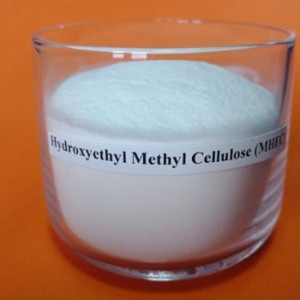
Tile adhesive additives are specialty chemicals blended into the dry powder phase of cement-based tile adhesives before packaging. They do not change the fundamental chemistry of Portland cement — they modify the physical behaviour of the fresh mortar (the paste between mixing and tile setting) and influence how the cured adhesive performs over its service life.
A modern tile adhesive is far more than cement and sand. The substrate in a bathroom renovation may be old lime plaster, cement board, or a freshly screeded floor. The tile may be a small mosaic or a 120×120 cm porcelain slab weighing over 20 kg/m². The ambient temperature during installation may range from 5°C on a winter site to 40°C in a Middle-Eastern summer. Without additives, no single cement-based adhesive could reliably accommodate this range of conditions. With the right additive package, it can.
Among all additive types, cellulose ether remains the most essential component.Standard formulations often rely on Hydroxypropyl Methyl Cellulose (HPMC) as the primary additive due to its stable water retention and wide global acceptance.
Tile adhesive additives include cellulose ethers (HPMC, HEMC),redispersible polymer powder (RDP), starch ether, and defoamers. Among them, cellulose ether is the most critical component for water retention and workability.
The four main categories of functional additives used in tile adhesive dry-mix formulations are:
Depending on the performance class targeted, additional additives may include Portland cement accelerators or retarders (to control set time), fibres (glass or polypropylene, to reduce plastic shrinkage cracking), or silica fume (to improve chemical resistance in swimming pool and wet-area applications).
Of these components, cellulose ether is consistently the most critical performance driver — and the one that formulators spend the most time optimising. The sections below explain why.
Learn more about our cellulose ether products: HEMC — Hydroxyethyl Methyl Cellulose | HPMC — Hydroxypropyl Methyl Cellulose
Cellulose ether is added to tile adhesives at less than 0.5% by weight — yet it defines almost all of the application-phase performance characteristics that determine whether a tiler considers a product “good” or “bad.” Understanding what cellulose ether does at a molecular level explains why it is irreplaceable in this application.
When cellulose ether powder (HPMC or HEMC) contacts water during mixing, the polymer chains hydrate and swell, forming a three-dimensional molecular network throughout the aqueous phase of the mortar. This network simultaneously delivers four distinct functional effects:
The single most important function of cellulose ether in tile adhesive is water retention. Portland cement requires a minimum water-to-binder ratio to complete hydration — typically w/c ≥ 0.42 by mass. When an adhesive is spread onto a porous substrate (such as autoclaved aerated concrete, brick, or unprimed plasterboard), capillary suction rapidly draws water from the adhesive bed into the substrate. If sufficient water is lost before the cement has hydrated, the adhesive will be dry and powdery beneath the tile, with tensile adhesion strength potentially reduced by 50% or more compared to a properly hydrated sample.
Cellulose ether prevents this. The polymer network physically immobilises water within the mortar matrix, resisting capillary suction from below and evaporation from above. High-quality HPMC and HEMC grades achieve water retention values of 96–99% when tested by the filter paper method. In practical terms, this means that even on a highly absorbent substrate in warm weather, the adhesive retains enough moisture to fully hydrate the cement and develop the bond strength required by EN 12004.
Open time is the window of time between spreading the adhesive and the point at which a tile pressed onto it no longer achieves the minimum tensile adhesion strength (≥0.5 N/mm² for C1 class, ≥1.0 N/mm² for C2 class). For interior wall tiling with standard ceramic tiles, an open time of 20 minutes is typically sufficient. For large-format exterior cladding, 30 minutes or more may be needed to accommodate the slower pace of work when handling heavy slabs.
Cellulose ether extends open time by maintaining the adhesive’s water content and keeping the surface of the adhesive bed tacky for longer. The higher the viscosity grade of the cellulose ether (and to a lesser extent the higher the dosage), the longer the open time. HEMC grades in the 40,000–75,000 mPa·s range consistently deliver open times exceeding 30 minutes under standard test conditions (23°C, 50% RH).
It is worth noting that open time and set time are not the same thing — and optimising one does not necessarily compromise the other. Cellulose ether extends open time without significantly retarding cement set, because the polymer does not react with the cement chemistry. Set time is controlled by the cement type, the water-to-cement ratio, and the temperature.
Anti-slip performance (also called sag resistance or non-slip behaviour) refers to the ability of the adhesive to hold a tile in place on a vertical wall immediately after it is pressed into the adhesive — before the cement has set. Without adequate anti-slip performance, heavy tiles slide down the wall under gravity, and large-format tiles can catastrophically detach before bonding occurs.
Cellulose ether contributes to anti-slip performance through its thixotropic, pseudoplastic rheology: the mortar is fluid under the shear stress of trowelling, but recovers to a stiff gel almost instantly when the shear force is removed. This means the adhesive spreads easily but does not flow or creep under the static load of the tile. For particularly heavy tiles or large natural stone panels, starch ether is co-formulated at low dosage (0.02–0.04%) to boost the instantaneous sag resistance beyond what cellulose ether alone can provide.
Workability encompasses the subjective experience of mixing, transferring, and spreading the adhesive — what tilers call “feeling” or “body.” A well-formulated tile adhesive should mix without lumps, transfer cleanly from bucket to substrate, spread smoothly under the notched trowel without tearing or dragging, and hold the notch profile (ridges and valleys) without collapsing before the tile is placed.
Cellulose ether delivers all of these characteristics simultaneously. The polymer lubricates the movement of solid particles (cement grains, aggregate) against each other, reduces trowel drag, and provides the creamy, plastic consistency that experienced tilers look for. The lubrication effect is particularly pronounced with HEMC, which is why HEMC is increasingly preferred for premium C2 tile adhesive products.
Both HPMC (Hydroxypropyl Methyl Cellulose) and HEMC (Hydroxyethyl Methyl Cellulose, also called MHEC) are non-ionic cellulose ethers that deliver equivalent water-retention and rheology performance in tile adhesive systems. The choice between them comes down to five key performance and commercial factors:
| Property | HPMC | HEMC (MHEC) |
|---|---|---|
| Cold water solubility | Moderate — may require surface treatment for fast wetting-out | Faster — dissolves readily in cold water without surface treatment |
| Water retention | Excellent (96–99%) | Excellent (96–99%) |
| Workability / trowel feel | Smooth | Very smooth — slightly better lubrication effect |
| Cold-weather performance (≤10°C) | Standard | Better — faster wetting-out in cold water |
| Thermal gelation temperature | 75–90°C | 65–75°C |
| Anti-sag in hot climates (substrate >60°C) | Good | Very good — gels at lower temperature, stiffening adhesive on hot substrates |
| pH stability | pH 3–11 | pH 3–11 |
| Regulatory / REACH status | Compliant | Compliant |
| Typical commercial preference | Global standard, widely available | Preferred in Europe, growing globally for C2 premium products |
Summary recommendation: For standard C1 interior tile adhesive in temperate climates, HPMC at 25,000–40,000 mPa·s is a reliable, cost-effective choice. For C2 and C2TE products, large-format tile applications, exterior cladding in variable climates, or any situation where faster cold-water wetting-out is a priority, HEMC delivers a measurable performance advantage — particularly in the 40,000–75,000 mPa·s viscosity range.
Can you switch between them? Yes — HPMC and HEMC are interchangeable in most tile adhesive formulations at equivalent viscosity grades. Minor dosage adjustments (±5–10%) may be required to match the existing open time and water retention profile precisely. Our technical team provides reformulation support at no charge for qualified customers.
→ Full technical data: HEMC / MHEC product page
→ Full technical data: HPMC product page
Not sure which cellulose ether grade fits your formulation?
Our construction chemistry team works with dry-mix producers worldwide to optimise cellulose ether selection, dosage, and viscosity for specific tile types, substrates, and climate requirements.Get Expert Formulation Support →
For applications requiring faster dissolution and improved performance in cold environments, HEMC for tile adhesive is increasingly preferred over traditional cellulose ether options
Every tile adhesive sold in Europe must be classified and labelled in accordance with EN 12004 (Requirements for cementitious adhesives, dispersion adhesives, and reaction resin adhesives for tiles). International markets increasingly reference ISO 13007, which is technically aligned with EN 12004 and uses the same classification system.
Understanding what these standards test — and how cellulose ether additives help products meet them — is essential for any additive supplier or dry-mix formulator targeting professional specification work.
EN 12004 classifies cementitious tile adhesives (Type C) on two axes:
A C2TE adhesive — the most demanding standard classification for wall tiling — must simultaneously achieve ≥1.0 N/mm² adhesion in four test conditions, reduced slip ≤0.5 mm, and extended open time ≥30 minutes. Meeting all three requirements in a single formulation is the central challenge that cellulose ether selection and dosage must address.
| Test Parameter | Standard Requirement | How HPMC / HEMC Contributes |
|---|---|---|
| Initial tensile adhesion strength | C1: ≥0.5 N/mm² / C2: ≥1.0 N/mm² | High water retention ensures full cement hydration; RDP improves polymer film formation in the bond line. |
| Adhesion after water immersion (28 days) | C1: ≥0.5 N/mm² / C2: ≥1.0 N/mm² | Cellulose ether is water-soluble but leaches out slowly from cured mortar; the cured cement matrix carries the structural load. RDP improves wet adhesion. |
| Adhesion after heat ageing (70°C, 14 days) | C1: ≥0.5 N/mm² / C2: ≥1.0 N/mm² | HEMC’s thermal gelation behaviour stiffens the adhesive at elevated temperature, maintaining contact during the curing phase. |
| Adhesion after freeze-thaw cycling | C1: ≥0.5 N/mm² / C2: ≥1.0 N/mm² | Flexible polymer network from RDP absorbs micro-crack propagation. Cellulose ether ensures bond development before first freeze cycle. |
| Open time | Standard: ≥10 min / E suffix: ≥30 min | Directly controlled by cellulose ether viscosity grade and dosage. Higher viscosity = longer open time. |
| Slip (T suffix — anti-sag) | ≤0.5 mm displacement under 300 g load | Pseudoplastic rheology of cellulose ether plus starch ether co-formulation controls sag on vertical substrates. |
For formulators targeting the EN 12004 C2TE classification with a cellulose ether-based system, a combination of HEMC at 50,000–75,000 mPa·s (0.30–0.45% dosage) and RDP at 2–4% typically provides the best balance of open time, anti-slip performance, and adhesion across all four test conditions.
Typical dosage of cellulose ether in tile adhesive ranges from 0.2% to 0.5% of dry mix weight, depending on tile type, substrate, and required performance class.
Cellulose ether is effective over a narrow dosage window. Too little, and water retention and open time fall below standard requirements. Too much, and the mortar becomes over-thickened, difficult to mix, and may show increased air entrainment that reduces adhesion strength. The table below provides starting-point dosage targets by application type.
| Application | Viscosity Grade (mPa·s) | Dosage (% of dry mix) | Notes |
|---|---|---|---|
| Standard C1 interior ceramic tile | 15,000 – 30,000 | 0.20 – 0.30% | Floor and wall tiles up to 30×30 cm; non-absorbent substrate |
| C2 interior wall tile / porcelain | 25,000 – 45,000 | 0.25 – 0.35% | Tiles up to 60×60 cm; plasterboard or cement board substrate |
| C2T (anti-sag) wall tile adhesive | 40,000 – 55,000 | 0.30 – 0.40% | Combine with starch ether at 0.02–0.03% for EN 12004 T suffix |
| C2TE large-format porcelain / stone | 50,000 – 75,000 | 0.35 – 0.45% | Tiles ≥60×60 cm or >15 kg/m²; exterior cladding |
| Waterproofing mortar (wet areas) | 40,000 – 55,000 | 0.30 – 0.40% | Balconies, shower trays; combine with higher RDP loading |
Optimizing dosage is only effective when the correct additive type is selected. In most global formulations, HPMC for tile adhesive remains a standard baseline before switching to higher-performance alternatives
A common formulation mistake is to compensate for an incorrect viscosity grade by adjusting dosage. This rarely produces the intended result. Doubling the dosage of a low-viscosity grade to achieve the open time of a high-viscosity grade will over-thicken the mix and increase air entrainment — both of which reduce adhesion strength. The correct approach is to select the viscosity grade that aligns with the target application first, then optimise dosage within the recommended range.
For large-format tiles where both extended open time and anti-sag are required simultaneously — the most demanding combination — a high-viscosity HEMC grade (ACTA50000 or ACTA70000) at 0.35–0.45% dosage, combined with starch ether at 0.025–0.035%, is the most reliable formulation approach.
The right additive selection varies significantly depending on the tile type, substrate, and installation environment. The following sections detail the specific performance requirements and formulation considerations for each major application category.
Traditional glazed ceramic tiles (up to 30×30 cm, weight typically 8–12 kg/m²) are the least demanding application for tile adhesive additives. A C1 standard adhesive with HPMC or HEMC at 20,000–30,000 mPa·s and 0.20–0.30% dosage provides sufficient open time (20+ minutes), water retention, and workability for interior floor and wall applications. The risk of sag on vertical surfaces is low due to the modest tile weight.
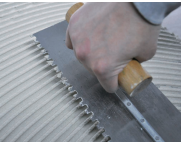
Rectified porcelain tiles, particularly in large formats (60×60 cm, 80×80 cm, 120×60 cm), are one of the fastest-growing tile categories globally. They present two formulation challenges: they are non-porous (no capillary suction to assist bonding), and they are heavy (15–25 kg/m²). The non-porous surface means that 100% of the bond strength must come from cement hydration and polymer contact adhesion — making water retention absolutely critical. The high weight demands excellent anti-sag performance. HEMC at 50,000–75,000 mPa·s combined with RDP at 3–4% and starch ether at 0.025% is the recommended system.
Natural stone tiles introduce two additional complications: many stones are sensitive to the moisture and alkali in cement adhesives (marble in particular can warp or discolour), and some dark stones will show efflorescence from cement salts migrating to the surface. White cement is commonly used as the base for natural stone adhesives, and the cellulose ether system must maintain performance within the slightly different pH and chemistry of white cement. HEMC is generally preferred over HPMC for natural stone applications due to its slightly better compatibility with calcium-rich systems. A full-coverage application method (adhesive applied to both tile and substrate) is recommended.
Exterior tile installations are exposed to freeze-thaw cycling, thermal expansion differentials, rain, wind, and UV — conditions that impose far greater mechanical demands on the adhesive than any interior application. EN 12004 requires adhesion testing after freeze-thaw cycling and heat ageing for adhesives intended for exterior use. High-viscosity HEMC (ACTA70000) at 0.40–0.45% dosage, combined with RDP at 4–5% for deformability (S1 or S2 classification), provides the performance package needed for durable exterior cladding.
Wet-area installations require adhesives with excellent water resistance after cure and good bonding to waterproofing membranes. The cellulose ether system plays a supporting role here — it ensures the cement matrix is fully hydrated and well-bonded during the critical first 24–72 hours before the tile installation is exposed to water. RDP type and loading are the primary drivers of long-term wet adhesion. HEMC at 40,000–55,000 mPa·s is typically used in the cellulose ether slot for wet-area tile adhesives.
→ Cellulose ether for render and plaster systems
→ Full dry-mix mortar additive solutions
Additive selection for tile adhesive is not a single-variable decision. The optimal cellulose ether type, viscosity grade, and dosage depend on a matrix of application, product class, and environmental factors. The decision framework below walks through the key variables in priority order.
Start with the EN 12004 / ISO 13007 classification your product must achieve. C1 products can be formulated with a wider range of cellulose ether viscosities and lower dosages. C2TE products require high-viscosity HEMC or HPMC grades at the upper end of the dosage range, in combination with RDP. If the product requires an F (fast-set) designation, ensure that the cellulose ether type and dosage do not excessively retard cement set — in fast-set systems, dosage should be kept at the lower end of the effective range.
Tile size and weight are the primary drivers of viscosity grade selection. A useful rule of thumb: tiles up to 30×30 cm → 15,000–30,000 mPa·s; tiles 30–60 cm → 25,000–45,000 mPa·s; tiles over 60 cm or heavy natural stone → 50,000–75,000 mPa·s. This rule assumes a wall installation; for floor installations, sag is not a concern, and a lower viscosity grade (one step down) may be acceptable.
Highly porous substrates (old brickwork, unprimed AAC, unglazed terracotta) require higher water retention to compensate for capillary suction. Increase dosage by 0.05–0.10 percentage points above the baseline recommendation. Non-porous substrates (existing glazed tiles, porcelain, glass mosaic backing sheets) require excellent surface tack from the polymer component — RDP loading is more important here than cellulose ether dosage adjustment.
At ambient temperatures above 30°C or in low-humidity conditions (RH <40%), water loss by evaporation significantly reduces open time. Consider increasing cellulose ether dosage by 0.05% or moving to a higher-viscosity grade. In cold conditions (below 10°C), HEMC outperforms HPMC due to its faster cold-water wetting. In climates with extreme temperature variation (e.g., continental climates with summer peaks above 35°C and winter lows below −10°C), the flexibility contribution of RDP must also be increased to accommodate thermal movement.
Hand application with a notched trowel allows the full viscosity benefit of high-grade cellulose ether — the pseudoplastic rheology of the mortar holds notch definition well. Machine spray application (increasingly common in large commercial projects) requires lower-viscosity formulations that can be pumped without excessive pressure drop; HEMC or HPMC grades in the 15,000–25,000 mPa·s range are typically used, with dosage and mix design adjusted to maintain adequate water retention despite the lower viscosity.
Selecting the correct cellulose ether for a tile adhesive formulation is a three-variable decision. Get all three right and the product passes EN 12004 testing, performs consistently on site, and earns repeat orders. Work through the three variables below in order — viscosity grade first, cellulose ether type second, dosage third.
1. Tile Type → Select the Right Viscosity Grade
Tile size and weight are the primary drivers of viscosity selection. As tile format increases, the adhesive must hold more mass against gravity on a vertical surface, demanding higher pseudoplastic stiffness from the cellulose ether network. Use the table below as your starting point.
| Tile Type / Format | Typical Weight (kg/m²) | Recommended HEMC Grade | Recommended HPMC Grade |
|---|---|---|---|
| Standard ceramic wall/floor tile (≤30×30 cm) | 8 – 12 | ACTA20000 (15,000 – 25,000 mPa·s) | 1575RT / 4000ASE |
| Porcelain floor tile (30–60 cm) | 12 – 18 | ACTA30000 (25,000 – 40,000 mPa·s) | 4000ASE / GDE15 |
| Rectified porcelain wall tile (30–60 cm) | 12 – 18 | ACTA45000 (40,000 – 55,000 mPa·s) | GDE15 / GDK4M |
| Large-format porcelain slab (≥60×60 cm) | 18 – 25 | ACTA50000 (50,000 – 65,000 mPa·s) | GDK4M / 15ASK4M |
| Natural stone / heavy exterior cladding | 20 – 35+ | ACTA70000 (65,000 – 75,000 mPa·s) | 15ASK4M |
A note on grade selection discipline: do not compensate for an incorrect viscosity grade by increasing dosage. Doubling the dosage of ACTA20000 to chase the anti-sag performance of ACTA70000 will over-thicken the mix, increase air entrainment, and ultimately reduce tensile adhesion strength. Select the correct grade first, then optimise dosage within the recommended range.
For floor-only applications, sag resistance is not a concern. You can use a viscosity grade one step lower than the wall recommendation above — ACTA30000 instead of ACTA45000, for example — giving a slightly more fluid mix that levels better under the tile and reduces trowel fatigue over large areas.
2. Climate & Temperature → HEMC or HPMC?
Both our HEMC range (ACTA10000 through ACTA70000) and our HPMC range (60RT, 1575RT, 4000ASE, GDE15, GDK4M, 15ASK4M, MH-400G) deliver equivalent water retention and open time at the same viscosity grade under standard laboratory conditions (23°C, 50% RH). Climate is what separates them in real-world performance.
| Climate / Site Condition | Recommended Type | Grade to Specify | Reason |
|---|---|---|---|
| Cold weather installation (≤10°C) | HEMC | ACTA20000 – ACTA70000 (grade by tile type) | HEMC dissolves significantly faster in cold water without surface treatment. Faster wetting-out means consistent open time even on cold mornings where HPMC may clump or hydrate unevenly. |
| Hot climate / exterior work (substrate >35°C) | HEMC | ACTA45000 – ACTA70000 | HEMC’s lower thermal gelation point (~65–75°C vs. 75–90°C for HPMC) causes the adhesive to stiffen on hot substrates — a built-in anti-sag mechanism that prevents wall tiles from slipping before the cement sets. |
| Temperate / stable interior (15–30°C) | HPMC or HEMC | 1575RT / 4000ASE / GDE15 or ACTA20000 / ACTA30000 | Both perform equivalently. HPMC grades 1575RT and 4000ASE are cost-effective for standard C1 interior products; HEMC ACTA20000–ACTA30000 is preferred for C2 and C2TE premium lines. |
| Low humidity / dry desert climate (<30% RH) | HEMC | ACTA45000 – ACTA70000 (upper dosage end) | Rapid surface evaporation sharply reduces open time. HEMC’s superior film-formation property slows evaporation from the adhesive face more effectively than HPMC at equivalent dosage. |
| High humidity / tropical climate (>80% RH) | HPMC or HEMC | Any grade — reduce dosage by ~0.05% | High ambient humidity slows evaporation naturally, extending open time. A slight dosage reduction prevents over-extension of open time which delays set and slows job progress. |
| Multi-climate universal adhesive | HEMC | ACTA30000 – ACTA50000 | If a single SKU must perform reliably across cold winters and hot summers — a common requirement for products sold across multiple regions — HEMC is the safer specification at every point in the temperature range. |
Practical summary: if your product targets a single, stable climate, HPMC grades such as 4000ASE, GDE15, or GDK4M offer a reliable and cost-optimised solution. If your product is positioned as a universal or premium adhesive sold across multiple climate zones, HEMC — particularly ACTA30000 through ACTA70000 — covers the performance envelope that HPMC cannot match at the temperature extremes.
3. Substrate Type → Fine-Tune the Dosage
Once viscosity grade and cellulose ether type are fixed, substrate porosity determines where within the recommended dosage range you land. The mechanism is direct: porous substrates draw water out of the adhesive by capillary suction; non-porous substrates do not. More suction means more water retention is needed — which means a higher dosage.
| Substrate | Porosity | Dosage Range | Additional Notes |
|---|---|---|---|
| Dense concrete (well-cured) | Low – Medium | 0.25 – 0.35% | Standard starting point. Prime if surface is dusty or carbonated. |
| Sand-cement render / floor screed | Medium | 0.25 – 0.35% | Allow full cure (28 days minimum) before tiling to avoid shrinkage cracking beneath tiles. |
| Autoclaved Aerated Concrete (AAC / Ytong) | Very High | 0.35 – 0.45% | Extremely high capillary suction — use the upper dosage limit of your grade. Priming the AAC surface before tiling is strongly recommended regardless of adhesive grade. |
| Unprimed brick / masonry | High | 0.30 – 0.40% | Suction can vary across the same wall. Back-buttering tiles reduces bond inconsistency on uneven-porosity substrates. |
| Gypsum plasterboard (drywall) | Medium | 0.25 – 0.35% | Use moisture-resistant board in wet areas. Confirm tile weight does not exceed board manufacturer’s span rating. |
| Cement board (Hardiebacker, Aquapanel) | Medium – High | 0.30 – 0.40% | Preferred substrate for wet areas. Tape all board joints with alkali-resistant mesh before tiling. |
| Existing glazed ceramic tile (tile-on-tile) | None | 0.20 – 0.30% + RDP 3–4% | Zero capillary suction — bond is entirely contact adhesion. RDP polymer film formation is the critical variable; cellulose ether plays a supporting role. Lightly sand or degrease the tile face before application. |
| Porcelain / glass mosaic backing | None | 0.20 – 0.28% + RDP 3–4% | Same logic as tile-on-tile. Avoid over-thickening — mosaic sheets require a level, thin adhesive bed to prevent grout joint distortion after pressing. |
The dosage optimisation workflow in practice: fix the viscosity grade (Variable 1) and cellulose ether type (Variable 2) first. Then run three trial batches at the low, mid, and high dosage points for your substrate type. Test water retention by the filter paper method and open time per EN 12004 protocol after each batch. The optimal dosage is the lowest value that meets your open time target — not the highest the formulation can tolerate. This keeps formulation cost under control while leaving headroom to increase dosage if a future market requires a higher-suction substrate.
Quick-Reference Decision Matrix
| Variable | Condition | Specify |
|---|---|---|
| Tile type → Viscosity | Standard ceramic ≤30 cm | ACTA20000 / 1575RT / 4000ASE |
| Porcelain / rectified 30–60 cm | ACTA30000–ACTA45000 / GDE15 / GDK4M | |
| Large format / heavy stone ≥60 cm | ACTA50000–ACTA70000 / 15ASK4M | |
| Climate → Type | Cold (≤10°C) or hot (>35°C substrate) | HEMC |
| Temperate stable interior | HPMC or HEMC | |
| Multi-climate / premium universal | HEMC | |
| Substrate → Dosage | Non-porous (glazed tile, porcelain) | 0.20 – 0.30% + higher RDP loading |
| Medium porosity (concrete, screed, drywall) | 0.25 – 0.35% | |
| High porosity (AAC, brick, cement board) | 0.35 – 0.45% |
| Application | Recommended Additive | Benefit |
|---|---|---|
| Ceramic tile | HPMC 20,000 cps | Cost-effective |
| Porcelain tile | HEMC 50,000 cps | Better anti-slip |
| Large format tile | HEMC 70,000 cps | High sag resistance |
The EN 12004 standard classifies cementitious tile adhesives as C1 (standard performance) or C2 (improved performance). The key difference is tensile adhesion strength: C1 must achieve ≥0.5 N/mm² in all test conditions; C2 must achieve ≥1.0 N/mm². In practical formulation terms, moving from C1 to C2 typically requires a combination of higher RDP loading, a higher-viscosity cellulose ether grade, and optimised cement content to ensure both strength and sufficient open time.
A C2T (anti-sag) or C2TE adhesive is suitable for both floor and wall applications. Standard C1 adhesives formulated for floors may not have adequate anti-sag performance for wall applications, particularly with tiles larger than 30×30 cm. From a formulation perspective, wall adhesives require starch ether or a higher cellulose ether dosage to achieve the reduced-slip (T suffix) requirement of ≤0.5 mm vertical displacement.
A cement-sand mortar without cellulose ether will typically skin over within 5–10 minutes on a porous substrate in normal conditions, as surface evaporation and capillary suction rapidly dry the adhesive face. Adding HEMC at 0.3% dosage extends this to 20–35 minutes, depending on the viscosity grade, substrate porosity, and ambient temperature. The mechanism is purely physical: the polymer network holds water in the mortar phase, slowing both evaporation and capillary suction.
At optimised dosage levels (0.2–0.45%), cellulose ether has no significant negative effect on final tensile adhesion strength. Because it improves cement hydration (by retaining water), it can actually increase strength compared to an unmodified mortar on porous substrates. At excessive dosages (above 0.6–0.7%), the high polymer content begins to dilute the cement matrix and may reduce compressive and tensile strength — which is one of the reasons dosage should be optimised by laboratory trial rather than simply maximised.
No minimum order quantity applies to technical evaluation samples. We dispatch 500 g to 5 kg samples for laboratory trial within 3–5 business days. Commercial supply is available from 25 kg bags to full container loads with OEM private-label packaging.
We supply HPMC and HEMC cellulose ethers to dry-mix mortar manufacturers and construction chemical formulators worldwide — from evaluation samples to full container-load OEM supply. Every grade ships with a full Certificate of Analysis, Safety Data Sheet, and access to our technical formulation team.