

Manufacturers widely use MCC Gel E460i stabilizer beverage stabilizer and dairy stabilizer systems to prevent sedimentation and improve texture.
✔ Keeps particles suspended (no settling)
✔ Improves mouthfeel in low-fat products
✔ Stable under heat, freeze, and shear
👉 Ideal for beverages, dairy, sauces, and nutrition drinks
[Request Quote] | [Get Sample]
MCC Gel E460i is a microcrystalline cellulose stabilizer. Manufacturers use it widely in food and pharmaceutical applications. As a colloidal MCC stabilizer, it forms a three-dimensional network that improves suspension stability, texture, and mouthfeel in beverages, dairy products, and formulations.
E460(i) is microcrystalline cellulose (MCC), a widely used food and pharmaceutical stabilizer. It functions as a suspension stabilizer, anti-caking agent, and fat replacer. Unlike soluble thickeners, E460(i) forms a physical network that prevents particles from settling, making it ideal for beverages, dairy products, and tablets.However, despite its ubiquity, many formulators and buyers have only a surface-level understanding of how it actually works — and that gap leads to suboptimal formulations, sourcing mistakes, and missed performance.
Related solutions: manufacturers widely use colloidal MCC stabilizer and microcrystalline cellulose excipient together with microcrystalline cellulose E460i for advanced stabilization systems.
This guide covers everything: the chemistry, the mechanism, the specifications, the applications, the regulatory status, and the practical considerations for anyone working with E460(i) at a professional level.
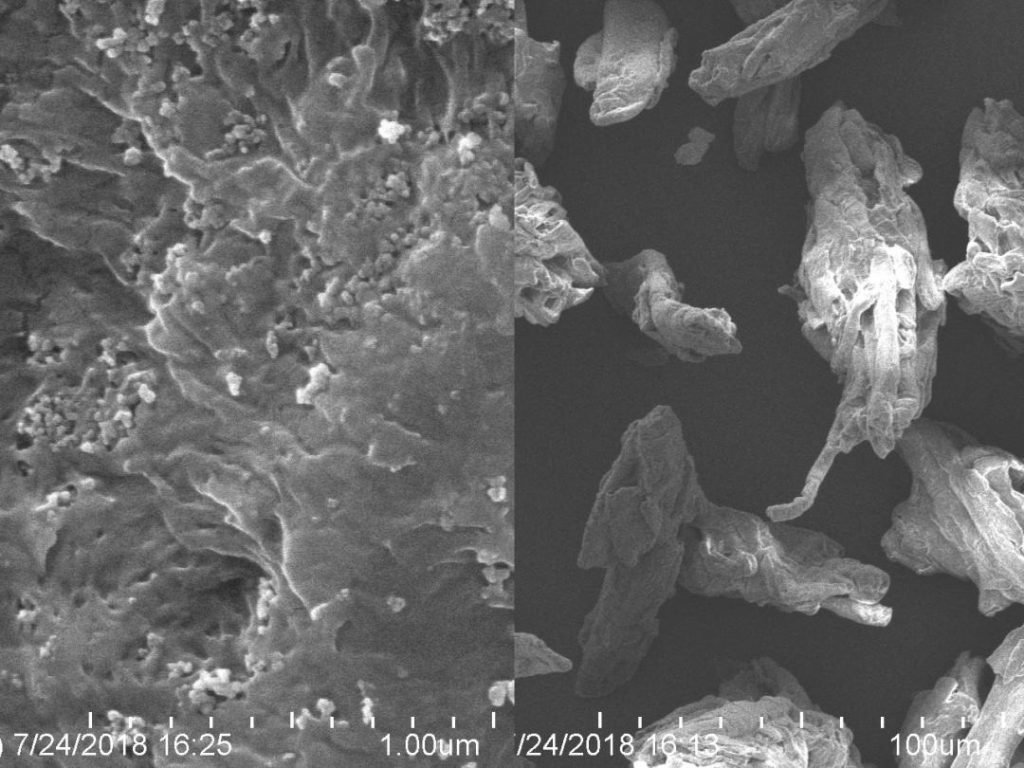
E460(i) is the European food additive number assigned to microcrystalline cellulose.
Manufacturers produce it through the partial acid hydrolysis of purified alpha-cellulose.
The process creates a white, odorless, tasteless powder with a crystallinity index typically between 55% and 80%.
Such a high crystallinity level gives the ingredient functional properties that differ significantly from other cellulose derivatives like E460(ii) and E466.
Unlike cellulose ethers such as CMC or HPMC, E460(i) remains a purified native cellulose material without additional chemical substitution.. Instead,It is purified, partially depolymerized native cellulose — which is why it carries a clean-label profile and broad regulatory acceptance globally.
MCC Gel stabilizes beverages through a physical particle network rather than simple viscosity increase. After acid hydrolysis, MCC particles typically range from 20 to 200 micrometers depending on the grade and application. The particles do not dissolve in water. Instead, they absorb water, hydrate, and interact with each other through hydrogen bonding. When properly dispersed under high shear, the particles form a weak three-dimensional structure that helps suspend proteins, cocoa, minerals, and other insoluble components. This network gives MCC several important functional properties in beverage systems.
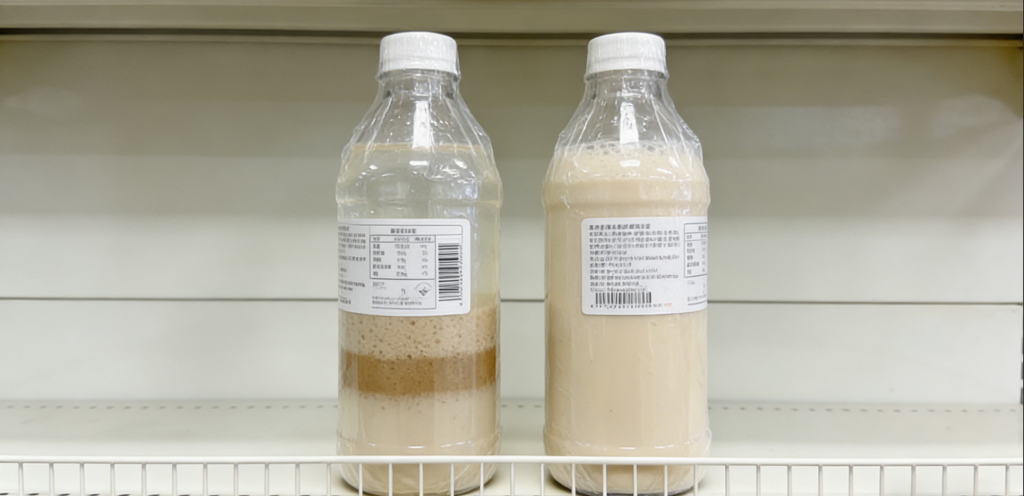
Sedimentation is one of the biggest formulation challenges in protein beverages — and one of the fastest ways to lose consumer trust. When a customer shakes a bottle and still sees a layer of sediment at the bottom, they question the product’s quality, safety, and value. So understanding why protein particles settle — and how to stop it — is the foundation of a shelf-stable, market-ready beverage.
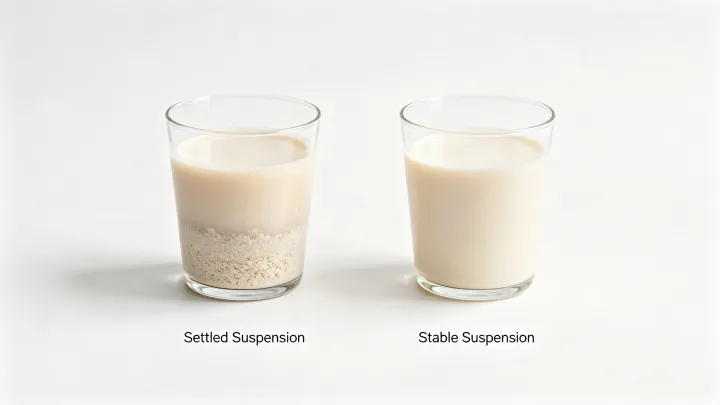
Protein particles in aqueous suspension are denser than the surrounding liquid. According to Stokes’ Law, the rate of particle settling is directly proportional to the square of the particle size and the density difference between the solid and the liquid phase. In practical terms: the larger and heavier the protein particle, the faster it sinks.
In a standard RTD (ready-to-drink) protein beverage, this process begins almost immediately after filling. Whey isolates, caseinates, pea protein, and soy protein all exhibit this tendency — particularly under the thermal stress of pasteurization or UHT processing, which can cause protein aggregation and accelerate settling dramatically.
Visible settling quickly affects consumer perception because separated beverages often appear unstable, low-quality, or poorly formulated.
Sedimentation is not just a visual defect. As proteins compact at the bottle’s base, they create a dense, often irreversible sediment cake. As a result, re-dispersion failure becomes a major shelf-life problem:
For private label manufacturers, sports nutrition brands, and functional food companies, an unstable suspension means unsellable inventory, retailer chargebacks, and damaged brand equity.
Microcrystalline cellulose (MCC) gel solves the sedimentation problem not by making particles lighter — but by making the medium resist particle movement entirely.
When MCC is properly hydrated and high-shear dispersed in an aqueous system, its colloidal cellulose particles self-assemble into a three-dimensional thixotropic gel network. This network permeates the entire liquid matrix, physically immobilizing suspended protein particles within its mesh structure. Admittedly,gravity still acts on the particles — but the yield stress of the MCC network is greater than the gravitational force acting on individual protein aggregates.
Unlike guar gum or xanthan gum alone, MCC gel creates a structured but invisible matrix — one that consumers feel as clean and natural, not thick or gummy.
MCC Gel performs well in beverage systems because it combines suspension stability with a clean drinking texture. At relatively low use levels, hydrated MCC particles create a colloidal network throughout the liquid phase. The structure holds suspended particles in place while still allowing the beverage to pour smoothly during drinking. Unlike many gum-based stabilizers, MCC does not rely only on viscosity to slow sedimentation. This difference allows formulators to improve shelf stability without creating excessive thickness or slimy mouthfeel.
At concentrations as low as 0.3–0.8% (depending on protein load and processing conditions), MCC particles form an interconnected colloidal network throughout the aqueous phase. This is not a conventional gel — it has no significant visible viscosity at rest that a consumer would notice. Instead, it creates a structural framework with measurable yield stress: a threshold force below which the matrix behaves as a solid, and above which it flows freely.
MCC gel is a classic pseudoplastic (shear-thinning) material. Under applied shear stress — such as shaking a bottle, pouring into a glass, or swallowing — the network temporarily breaks down and the viscosity drops dramatically.the liquid flows smoothly and naturally.
Once shear is removed (the bottle sits on a shelf, or the beverage rests in the mouth), the network rebuilds rapidly. This thixotropic recovery is what maintains suspension stability between interactions.
For beverage formulators, this means:
| Property | Consumer Benefit | Technical Benefit |
|---|---|---|
| Low rest viscosity (apparent) | Feels like a real drink, not a gel | No pump or fill line blockage |
| Shear-thinning on pour | Smooth, natural mouthfeel | No thinning agents needed |
| Rapid network recovery | Stable on shelf after agitation | Consistent texture measurement |
The MCC network works through a combination of steric entrapment and weak secondary interactions with dispersed particles. In beverage systems, protein aggregates — whether whey micelles, casein clusters, or plant protein bodies — become embedded within the cellulose matrix rather than free to migrate under gravity.
This mechanism is fundamentally different from the mechanism of hydrocolloids like xanthan or carrageenan,, which stabilize primarily through increased continuous-phase viscosity. MCC’s network provides structural immobilization at significantly lower bulk viscosity, which directly translates to a cleaner consumer experience.
Texture plays a major role in repeat purchase decisions for protein and nutrition beverages.Consumers who experience a “coating,” “slimy,” or “heavy” texture attribute it to low-quality formulation — and they switch brands.
MCC gel provides neutral sensory contribution at functional use levels. It does not coat the palate, contribute off-flavors, or leave residual texture after swallowing. For instance,in trained sensory panel evaluations, beverages stabilized with MCC gel consistently score higher on “refreshing,” “clean,” and “natural” attributes versus those stabilized with carrageenan or guar gum alone.
Understanding the specifications helps buyers and formulators evaluate quality and fitness for purpose.
Particle size: Standard food grades range from 50 to 180 μm (D50). In contrast,colloidal grades (co-processed with CMC) have much finer particles, often below 10 μm, which allows full gel network formation upon hydration.
Moisture content: Typically 5% or less by loss on drying (LOD). High moisture content indicates poor manufacturing control and will affect shelf life and flowability.
pH (10% dispersion): Typically 5.0–7.5. Significant deviation from neutral pH may indicate residual acid from hydrolysis or contamination.
Degree of polymerization (DP): After acid hydrolysis, the DP of MCC is typically 150–300, compared to 800–1700 for native cellulose. This reduction in chain length is what creates the fine crystalline particles.
Bulk density: Typically 0.28–0.38 g/cm³ for standard grades. This affects handling, blending, and dosing in manufacturing.
Crystallinity index: 55–80% by X-ray diffraction. Higher crystallinity generally correlates with better compressibility in pharmaceutical tablet applications.
Ash content: Not more than 0.1% (food grade) per Codex Alimentarius specifications.
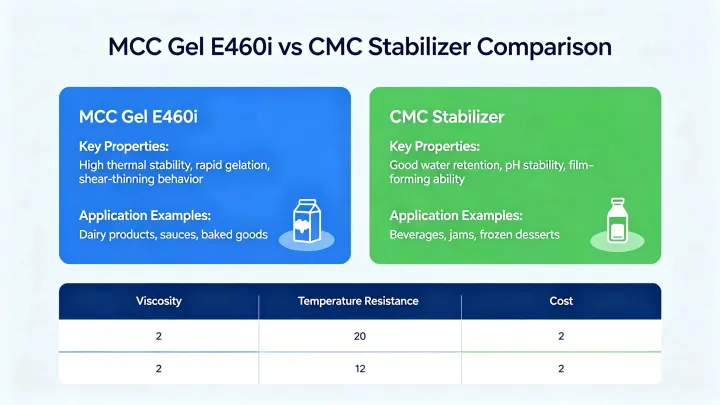
| Property | E460(i) | E460(ii) | E466 (CMC) |
|---|---|---|---|
| Type | Microcrystalline cellulose | Powdered cellulose | Carboxymethyl cellulose |
| Solubility | Insoluble (forms network) | Insoluble | Water-soluble |
| Function | Stabilizer / suspension | Bulking agent | Thickener |
| Mechanism | Particle network | No network | Viscosity increase |
| Best use | Beverages, dairy | Dry foods | Sauces, drinks |
Many formulators frequently confuse these two additives, even experienced ones.Compared with CMC, microcrystalline cellulose E460i provides a physical network structure rather than simple viscosity.
Unlike CMC, E460(i) stabilizer creates yield stress, making it more effective for long-term suspension stability.
E460(ii) is powdered cellulose — mechanically ground cellulose that has not been subjected to acid hydrolysis. It retains its original fibrous structure and has a much lower crystallinity index. Furthermore,it does not form a gel network in water and does not provide suspension stability.
E460(i), by contrast, has undergone partial hydrolysis to remove amorphous regions.This gives it colloidal properties in water when properly dispersed, allowing it to form the three-dimensional network responsible for its stabilizing function.
This is one of the most searched comparisons in the food additive space, and most existing content does not explain it well.
E466 (sodium carboxymethyl cellulose, CMC) is a water-soluble cellulose ether. Instead,it works by dissolving in water. its stabilization mechanism mainly depends on viscosity increase and rheological control.. Its mechanism is purely rheological — it slows down particle settling by increasing the resistance to particle movement through the liquid medium.Compared with CMC, microcrystalline cellulose E460i provides a physical network structure rather than simple viscosity. For formulations requiring higher electrolyte tolerance, you may also explore our CMC supplier page.
E460(i) works through a completely different stabilization mechanism.
Instead of relying only on viscosity increase, E460(i) forms a physical particle network that creates measurable yield stress inside the beverage system.
In practice, many formulators frequently co-process MCC with CMC to improve dispersion and network formation: CMC acts as a dispersant that helps individual MCC particles separate and hydrate properly, allowing the MCC network to form. Without CMC, raw MCC powder is difficult to disperse into an effective gel network in water. Therefore,the combination — often sold as colloidal MCC — provides both the network structure of MCC and the viscosity contribution of CMC.HPMC thickener is also used together with MCC Gel E460i in complex systems.
The typical MCC:CMC ratio in co-processed colloidal grades is 85:15 to 90:10 by weight. Formulators who blend them separately should use similar ratios.
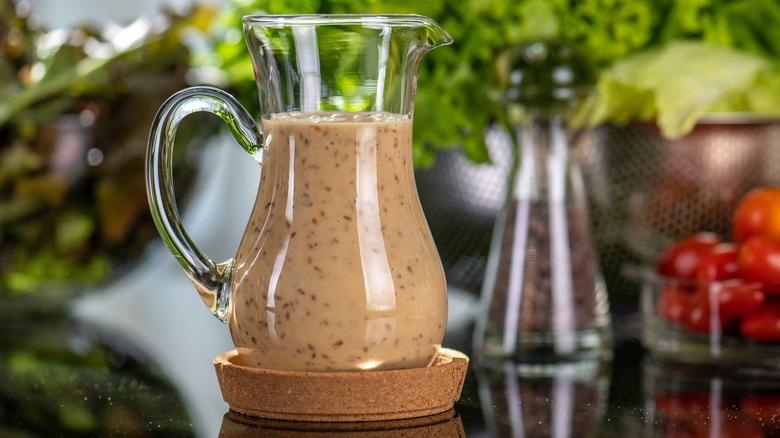
Manufacturers uses E460(i) stabilizer (MCC gel) in:
• Ice cream – E460(i) stabilizer prevents ice crystal growth
• Sauces – colloidal MCC stabilizer improves texture and emulsion stability
Ice cream and frozen desserts. MCC Gel E460i is widely used as a colloidal MCC stabilizer.It controls ice crystal growth during storage and temperature cycling. When ice cream is subjected to freeze-thaw cycles (as happens during distribution), water migrates and recrystallizes into larger, coarser ice crystals that create a gritty texture. In response,E460(i) physically impedes this migration by forming a matrix that restricts water movement. Typical use levels are 0.2% to 0.5%.
Sauces, dressings, and emulsions. E460(i) stabilizes oil-water emulsions by adsorbing at the oil-water interface and forming a physical barrier against coalescence. In addition,In low-fat dressings, it also replaces the textural contribution of fat — providing body and mouthfeel that would otherwise be lost when fat is reduced. Use levels are typically 0.5% to 1.5%.
Low-calorie and fat-reduced products. Because E460(i) contributes essentially zero calories (it is not digested) while providing fat-like texture, it is a primary tool in fat replacement strategies. Manufacturers often combine this ingredient with inulin or modified starch. They do so to achieve more complete fat simulation. the final product mimics the mouthfeel and texture of fat more effectively.
Bakery products. In gluten-free bakery, E460(i) improves batter viscosity, gas retention, and crumb structure. It also serves as an anti-caking agent in powdered mixes.
MCC gel is one of the most versatile suspension stabilizers available to beverage formulators today. Thanks to its unique combination of sedimentation control, shear-thinning flow, and clean sensory profile makes it applicable across nearly every category of functional and nutritional beverages.
High-protein RTD beverages — whether dairy-based (whey, casein) or plant-based (pea, soy, hemp) — represent the most demanding suspension challenge in the beverage industry. Protein concentrations of 5–20 g per 250 mL serving create particle loads that defeat most single-stabilizer systems after UHT or retort processing.
MCC gel at 0.4–0.7% active content, combined with appropriate co-stabilizers (typically CMC or locust bean gum), delivers:
Cocoa powder particles are hydrophobic, polydisperse, and notoriously difficult to keep suspended. Traditional approaches rely on heavy doses of carrageenan — effective but texturally penalizing, and increasingly scrutinized by clean-label consumers.
MCC gel offers a carrageenan-reduction or carrageenan-replacement pathway for chocolate milk and cocoa drink formulations. Specifically,the cellulose network holds cocoa particles uniformly through distribution, while the shear-thinning behavior ensures the product pours and drinks with the smooth, indulgent mouthfeel that drives repeat purchase.
Oat milk, almond milk, rice milk, and pea milk face a dual instability challenge: fat droplet coalescence and protein/starch particle sedimentation. Standard stabilizer packages often over-thicken plant milks, producing a texture that consumers describe as “starchy” or “paste-like.”
MCC gel enables plant-based milk formulators to achieve stability without viscosity penalty — maintaining the fluid, pourable character consumers expect from a dairy milk analog. it is non-GMO, vegan, Kosher, and Halal certifiable, aligning with the values-driven purchase behavior of the plant-based consumer segment.
Flavored milks, cultured dairy drinks, and fortified dairy beverages all present sedimentation risks when we add vitamins, minerals, or flavor particles. MCC gel integrates seamlessly into dairy systems, exhibiting no negative interaction with milk proteins at standard use levels and maintaining its network structure through HTST and UHT thermal processes.
For dairy processors operating under regional standards of identity, MCC (E460) carries broad regulatory approval across the EU, US (FDA 21 CFR 182.90), China (GB 2760), and most APAC markets.
Complete nutrition beverages — used in clinical nutrition, sports recovery, and weight management — contain the highest complexity of suspended materials: proteins, fats, carbohydrates, vitamins, minerals, and fiber. Achieving 12–24 month shelf stability at these formulation densities requires a stabilizer system with genuine structural capacity.
MCC gel is the industry-standard choice for this application. Its network architecture scales with increasing particle load, and its shear-thinning behavior ensures consumer-acceptable texture even in calorie-dense (300–500 kcal/250 mL) formats. Because of this structural stability, products stabilized with MCC gel consistently outperform competitive systems in both sedimentation volume tests and consumer preference panels.
E460(i) is the most widely used excipient in solid dosage form manufacturing globally. Its pharmaceutical applications go well beyond simple binding.
Direct compression. The crystalline structure of MCC gives it exceptional plastic deformation under compressive force. When pressure is applied in a tablet press, MCC particles deform and interlock, creating strong mechanical bonds without requiring high compression forces. Thus,this makes it the excipient of choice for direct compression manufacturing, which avoids wet granulation and reduces processing cost and time.
Grades matter significantly. Different pharmaceutical MCC grades have different particle sizes and bulk densities that determine their application:
Disintegration. MCC is also an effective disintegrant. When a tablet contacts water, MCC particles absorb water and swell, creating internal stress that breaks apart the tablet structure and releases the active ingredient. This dual function — binder during compression, disintegrant upon contact with water — makes MCC uniquely valuable.
Extrusion-spheronization. In pellet manufacturing, MCC acts as a spheronization aid. When wet-massed with water and extruded, MCC produces smooth, dense, spherical pellets with narrow size distribution. No other excipient matches its performance in this application. Typical MCC content in spheronization is 40% to 70% of the pellet mass.
Regulatory status in pharma. E460(i) appears in all major pharmacopeias: USP-NF (as Microcrystalline Cellulose), EP (Cellulosum microcristallinum), JP, and BP. it is GRAS (Generally Recognized as Safe) in the United States and has no ADI (Acceptable Daily Intake) restriction set by JECFA, reflecting its excellent safety profile.Explore microcrystalline cellulose excipient for pharmaceutical formulations.
pH stability. E460(i) remains stable across a wide pH range. Meanwhile, the stabilizer maintains its suspension network under most beverage processing conditions. However, under strongly acidic conditions (pH below 2) at elevated temperatures, some depolymerization of the cellulose backbone can occur over extended time. For standard food and beverage applications, this is not a concern.
Temperature stability. As noted earlier, E460(i) does not undergo thermal gelation or melting. It is stable at retort temperatures (121°C) and freeze conditions. This makes it one of the few stabilizers suitable for use across the full range of food processing conditions
Ionic strength. High concentrations of electrolytes can partially disrupt the hydrogen bonding network of E460(i), reducing its gel strength. Consequently,in high-salt formulations, higher use levels or combination with ionic hydrocolloids may be required.
Compatibility with other hydrocolloids. E460(i) is generally compatible with xanthan gum, carrageenan, guar gum, and pectin.Synergistic effects are often observed when E460(i) is combined with xanthan gum — the xanthan increases low-shear viscosity while the MCC network provides structural stability, resulting in better overall suspension performance than either ingredient alone.
E460(i) carries one of the most comprehensive safety profiles of any food additive.
The European Union, it is listed under Regulation (EC) No 1333/2008 as E460(i), permitted in a wide range of food categories under quantum satis (no numerical limit), reflecting its inert nature and long history of safe use.
In the United States, The FDA recognizes MCC as GRAS under 21 CFR 182.90. Additionally,it is also listed as an approved food additive under 21 CFR 172.862.According to the FDA, microcrystalline cellulose is classified as a safe food additive.
JECFA (the Joint FAO/WHO Expert Committee on Food Additives) has evaluated MCC and established no ADI — meaning the committee found no need to set a limit because the substance is considered safe at any level used in food.
E460(i) is not absorbed by the human body.Instead, it passes through the gastrointestinal tract intact and is not fermented by gut bacteria to any significant degree, distinguishing it from other dietary fibers.As a result, it contributes zero calories.
It is suitable for vegan, vegetarian, halal, and kosher diets. Finally,it contains no allergens and is gluten-free.
Choosing the right MCC Gel E460i grade is critical for performance.Not all E460(i) products are the same. Key selection criteria include:
Application type. For liquid food applications requiring suspension stability, you need a colloidal MCC grade (co-processed with CMC) that will fully disperse and form a gel network. Standard MCC powder will not adequately disperse in water without CMC as a dispersing aid.
Particle size. Finer particles provide better gel network formation and smoother texture. Coarser particles may be acceptable for dry applications or tablet manufacturing.
Source material. Wood pulp-derived and cotton linter-derived MCC have slightly different characteristics. Cotton linter MCC tends to have higher crystallinity and is often preferred for pharmaceutical applications.
Moisture content. For tablet manufacturing, low moisture content is critical to ensure consistent compressibility and to avoid moisture-sensitive APIs.
Regulatory documentation. Food-grade MCC should come with full specification sheets, certificates of analysis, and Halal/Kosher certifications if required. Similarly,Pharmaceutical-grade MCC requires DMF (Drug Master File) support in the US and CEP (Certificate of Suitability) in Europe.
Many suppliers provide standard MCC powder that does not disperse properly in liquid systems. Without proper colloidal processing, the stabilizing network will not form, leading to poor performance in beverages and dairy applications.
Sourcing E460(i) requires more than finding the lowest price. In fact,consistency of particle size, moisture content, and crystallinity index between batches is critical for reproducible formulation performance.
Key factors to evaluate when selecting a supplier:
We supply food-grade and pharmaceutical-grade E460(i) microcrystalline cellulose with consistent quality, full documentation, and global delivery capability.
👉 Contact us today to request samples, technical specifications, and pricing.
MCC Gel E460i is a colloidal microcrystalline cellulose stabilizer commonly used in beverages, dairy products, sauces, and pharmaceutical formulations. The ingredient forms a three-dimensional suspension network that helps keep insoluble particles evenly distributed during storage. Unlike soluble hydrocolloids that mainly increase viscosity, MCC works through a physical particle structure that improves stability without creating a heavy or gummy texture. E460(i) is the European food additive designation for microcrystalline cellulose. Food manufacturers use it as a suspension stabilizer, anti-caking agent, fat replacer, and texture modifier across multiple industries. Many beverage formulators choose MCC because it performs well under heat treatment, freeze-thaw cycles, and long shelf-life storage conditions. This guide explains how MCC Gel E460i works, where manufacturers use it, how it compares with CMC, and what buyers should consider when selecting the right grade.
E460(i) is microcrystalline cellulose, the hydrolysis process selectively removes the amorphous regions of the cellulose chain.In contrast, E460(ii) is powdered cellulose, produced by mechanical grinding without hydrolysis. E460(i) forms a gel network in water and provides suspension stability; E460(ii) does not.
Yes. Regulatory authorities including the FDA, EFSA, and JECFA approve E460(i) for use in food and pharmaceutical products.Moreover, JECFA has established no ADI, reflecting its excellent safety record. Additionally,it is not absorbed by the body and contributes zero calories.The EFSA has evaluated E460(i) as safe for use under approved conditions.
For suspension stability in beverages, typical use levels range from 0.3% to 1.2% of the finished product weight, depending on particle load, required shelf life, and processing conditions.
Yes. In fact,manufacturers always use E460(i) in fat-reduced and low-calorie products to replicate the texture and mouthfeel of fat. Furthermore,It contributes zero calories and is particularly effective in dressings, dairy products, and spreads.
Yes. E460(i) is derived entirely from plant-based cellulose (wood pulp or cotton). It is suitable for vegan, vegetarian, halal, and kosher diets and contains no animal-derived ingredients.
Common pharmaceutical grades include PH-101 (50 μm, general purpose), PH-102 (100 μm, improved flowability), PH-200 (180 μm, high-speed compression), and PH-301/302 (dense grades). Each grade is listed in USP-NF, EP, JP, and BP.
MCC gel (microcrystalline cellulose gel) is used in beverages primarily as a suspension stabilizer and texture modifier. It prevents sedimentation of protein particles, cocoa powder, minerals, and other insoluble components in RTD beverages. For instance, manufacturers widely use this ingredient in various food and beverage products. Additionally, they add it to protein drinks, plant-based milks, cocoa beverages, dairy drinks, and meal replacement formulas. In short,,its primary function is to maintain uniform particle distribution throughout the product’s entire shelf life. Furthermore, it achieves this goal without contributing any undesirable thickness or off-flavors.
MCC prevents sedimentation by forming a three-dimensional colloidal network throughout the beverage’s aqueous phase when hydrated and dispersed under high shear. In turn,this network creates a measurable yield stress — a structural resistance that physically immobilizes suspended particles against gravitational settling. Moreover,because the network is thixotropic (shear-thinning), it breaks down temporarily during pouring or shaking to allow normal flow, then rebuilds rapidly at rest to re-establish suspension stability. Thus,this mechanism is fundamentally different from simple viscosity-building stabilizers and delivers superior long-term sedimentation control at lower sensory impact.
MCC is highly suitable for plant-based milk formulations because it is completely plant-derived, typically from wood pulp or cotton linter cellulose. In oat milk, almond milk, pea milk, and similar beverages, MCC gel helps control fat separation and protein sedimentation while maintaining a smooth, pourable texture. The ingredient also performs well under UHT processing conditions without negatively affecting plant proteins or natural sugars. MCC is widely used in vegan beverage systems because it supports clean-label positioning and provides stable suspension performance during shelf life.
MCC gel demonstrates excellent thermal stability during Ultra-High Temperature (UHT) processing, typically at 135–145°C for 2–6 seconds. Some hydrocolloids lose structural performance under high-temperature processing, but MCC maintains its suspension stability after UHT treatment. Proper hydration and high-shear dispersion before sterilization are important for full network development. When properly incorporated, MCC-stabilized beverages maintain stable texture and suspension performance throughout extended ambient shelf life.
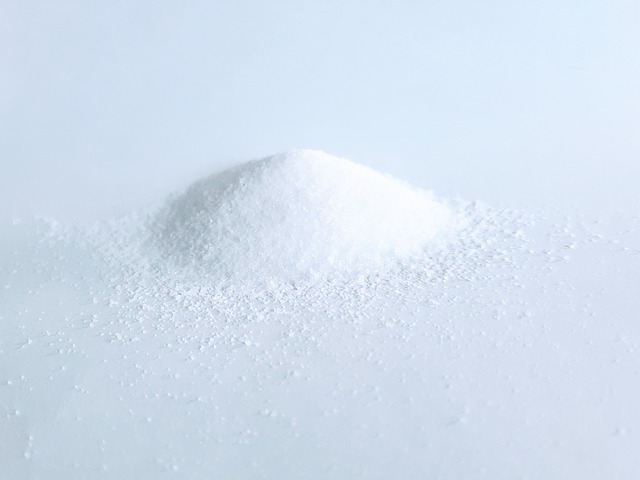
We supply high-quality microcrystalline cellulose (E460(i)) for food and pharmaceutical applications worldwide.
