

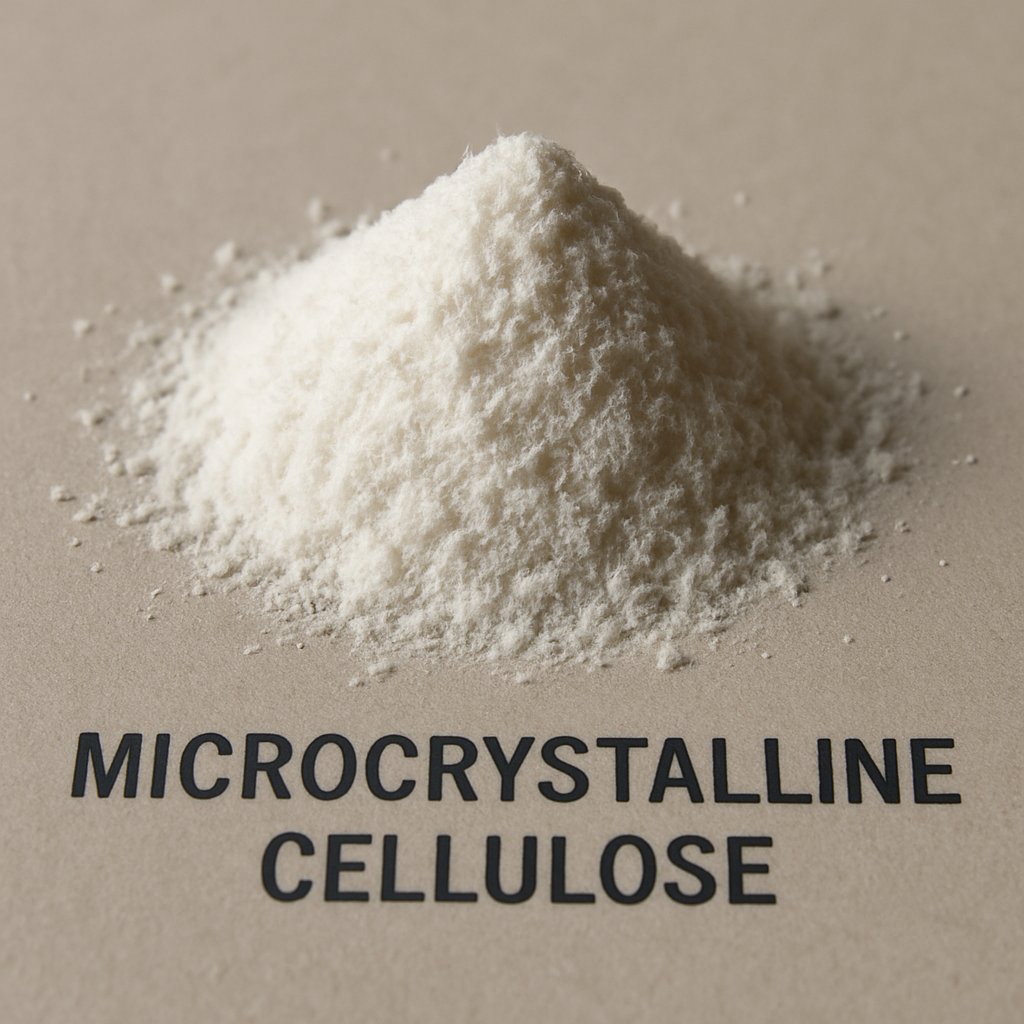
Silicified Microcrystalline Cellulose uses ,When looking at the ingredient list on a supplement bottle, you might see the term Silicified Microcrystalline Cellulose (SMCC). This name can seem exceedingly technical and strange.
While it sounds complex, its role is basically essential. This ingredient serves as a critical functional agent, not just an inert filler. It enables the proper formation of tablets and creates a stable, effective final product.
Professionals and DIY formulators alike often question the prevalent emphasis on SMCC in tablet manufacturing. At its core, it is a specially upgraded form of microcrystalline cellulose, designed to solve practical production challenges.
One can deconstruct the nomenclature by commencing with its fundamental component: cellulose. This is natural plant fiber—the same structural material found in wood, cotton, and celery. You can find one of Earth’s most abundant organic compounds here.
The “microcrystalline” process cleans and turns raw plant fiber into a fine and even powder. Think of refining coarse sugar into soft confectioners’ sugar. This base powder, Microcrystalline Cellulose (MCC), is a standard pharm excipient that provides bulk and basic structure to tablets.
The “silicified” part is the crucial upgrade. A co-processing technique adds a small amount of colloidal silicon dioxide to cellulose.
It constitutes approximately 2% of the total weight (2% w/w).. The addition happens during production. This creates a single, synergistic material that improves key properties like flow and compaction, unlike a physical mixture.
Strict standards govern the manufacturing. The process involves co-blending and drying the two components in water, yielding a product with 94.0%-100.0% microcrystalline cellulose content for reliable batch-to-batch consistency.
This co-process creates a much finer, more consistent distribution of silica particles. This gives it five times the specific surface area and 30-50% greater compaction ability than traditional MCC.. These measurable advantages translate directly into superior powder flow and mechanically stronger tablets.
Imagine trying to fill thousands of tiny tablet molds with a clumpy, inconsistent powder. Consistent dose accuracy would be impossible. This is the core industrial challenge where SMCC excels.
The Go-To Excipient for Direct Compression
SMCC is the premier choice for direct compression, the most efficient tableting method. It can replace multi-step wet granulation processes, significantly reducing the number of required excipients and processing time. For example, in low-dose (75 mg) aspirin tablets, SMCC serves as a complete filler-binder system. It ensures uniform content and consistent die filling directly from a powder blend, which streamlines the production process.
Superior Powder Flow and How well it compresses
The adding silica process significantly improves powder flow by reducing internal friction and cohesion. SMCC’s unique structure allows it to compress well. This enables strong binding with lower compression forces.
It does this because of its mix of brittle and plastic deformation behavior. This allows for the consistent production of hard tablets, even on high-speed presses.
Practitioners say that using SMCC changes the tableting process. The powder exhibits excellent, free-flowing characteristics. It reduces sticking to molds.
This method makes tablets with clean edges and the right hardness. It also solves common sticking issues.
As a filler-diluent, SMCC is critical for low-dose, high-potency drugs. Its great flow ensures even filling of the die. This property ensures that minute active ingredients, such as hormones or potent analgesics, distribute themselves uniformly throughout the blend.. It also allows for precise dosing in each tablet.
Promotes Tablet Breaks down and Drug Dissolution
The microporous structure from Adding silica acts like a capillary network. Research indicates that SMCC-based tablets disintegrate rapidly.
Studies on capsule formulations show a clear benefit. Plugs filled with SMCC or MCC help drugs like A common pain reliever (e.g., Tylenol) and piroxicam dissolve faster. This is better than using anhydrous lactose or Pre-treated starch.
Anti-Sticking and Flow-Aiding Action
The colloidal silicon dioxide in SMCC acts as a built-in lubricant. This reduces friction between the powder and the metal tablet tools, like dies and punches. This helps prevent sticking and makes sure the tablet comes out smoothly. In capsule machines, specific SMCC grades consistently require low force to eject plugs, making automated production more reliable.
Improves Stability and Dose Evenness
SMCC is chemically stable and does not absorb moisture from the air. For ingredients that are sensitive to moisture, special low-moisture grades exist (e.g., ACTA® SMCC 90 LM with less than 3% moisture). These grades protect the active drug from breaking down and maintain a consistent dose in every tablet throughout its shelf life.
A High-Performance Capsule Filler
Beyond tablets, SMCC is an effective direct-fill excipient for hard gelatin capsules. Its excellent flow ensures consistent fill weight in automatic capsule-filling machines. The plugs formed have sufficient mechanical strength to handle machine transfer, all while supporting rapid drug dissolution.
Available in Engineered Grades for Specific Needs
SMCC is not one-size-fits-all. It comes in various grades optimized for different functions, allowing formulators to perfectly balance compaction, flow, and Breakdown:
Its role extends beyond binding. As an excipient and dispersant, SMCC excels in preventing Separating when mixed with other powders.
It blends easily and evenly with other powders, requiring little mixing. This greatly improves the texture and quality of the final product. This applies to meal replacement tablets, nutritional supplements, or homemade herbal formulas. This makes it a versatile choice for achieving consistent blends.
A Trusted, Multi-Purpose Ingredient
SMCC is a well-established technology with a strong track record. Companies have optimized products like PROSOLV® SMCC for over 25 years to work in modern, high-speed production.
It holds Generally Recognized As Safe (GRAS) status from the U.S. Food and Drug Administration (FDA). Manufacturers use it in many products, from everyday aspirin to prescription drugs. This shows it is reliable for many tasks.
That complex name on the label is now clear. It represents a smart combination of plant fiber and mineral—a multi-talented ingredient designed for top performance. It enables precise medication dosing, ensures your supplements break down correctly, solves production problems, and supports efficient manufacturing.
Silicified microcrystalline cellulose is the versatile engineering hero working behind the scenes. The next time you see it on a list, you’ll know it’s a small but essential piece of science that makes products work as they should.
Guo, M., et al. (2003). Potential application of silicified microcrystalline cellulose in direct-fill formulations for automatic capsule-filling machines. Pharmaceutical Development and Technology. DOI: 10.1081/pdt-120017523. Retrieved from https://pubmed.ncbi.nlm.nih.gov/12665197/
Kalita, P., et al. (2024). Silicified microcrystalline cellulose from renewable banana pseudostem: Physicochemical and functional analysis. International Journal of Biological Macromolecules. DOI: https://doi.org/10.1016/j.ijbiomac.2024.134307. Abstract retrieved from https://www.sciencedirect.com/science/article/abs/pii/S0141813024084307
