

The Silicified Microcrystalline Cellulose USP Monograph establishes the official quality standards, testing requirements, and specifications for this widely used pharmaceutical excipient.
Many individuals review the ingredient lists on vitamin bottles. Did you feel confused by a name like “Silicified Microcrystalline Cellulose USP Monograph”? This is a common practice among consumers
That lengthy name belongs to a key helper ensuring your pill is safe and effective. But to understand its role, we must first break down its core component.
The story begins with something incredibly familiar: plants. Cellulose is the strong, fibrous material that makes up tree trunks and cotton.
We clean and treat plant fiber with acid to make Microcrystalline Cellulose (MCC).. This process breaks it down.
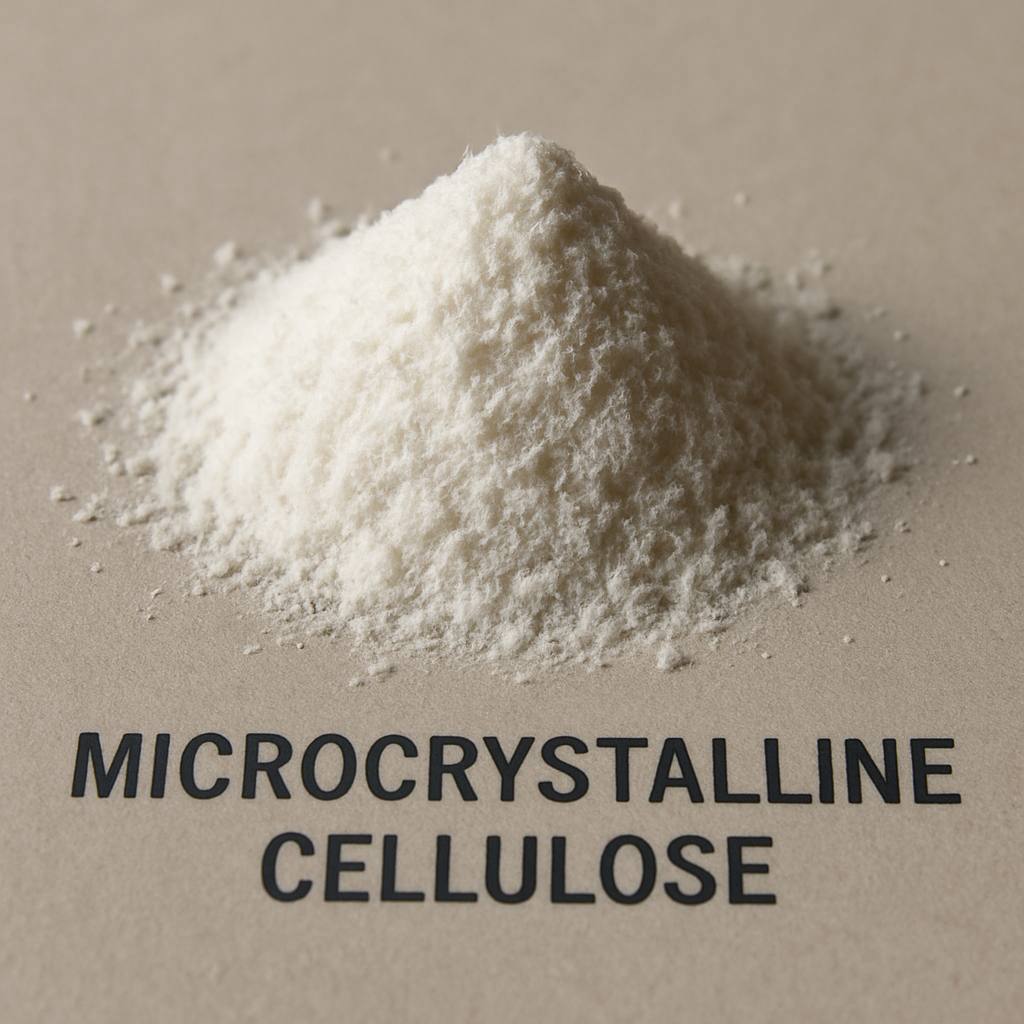
The result is a purified, partially broke down cellulose that appears as a white or almost white powder. Odorless and tasteless, it serves as an ideal inert carrier for active medicines without affecting their sensory profile.
This powder functions similarly to flour in a baking recipe.. It provides the bulk for a tiny dose of active medicine and binds everything into a solid tablet.
Its does not dissolve is a key reason why MCC performs so effectively.. It won’t mix into or swell in water, alcohol, or common solvents. This chemical stability helps it remain unchanged during manufacturing and storage. This makes it a reliable base for creating consistent pills and tablets.
If you manufacture solid dosage forms, you already know that excipient quality can make or break a formulation. Silicified Microcrystalline Cellulose USP — commonly called SMCC — is a co-processed excipient that pharmaceutical scientists rely on when they need consistent, high-performance tableting.
SMCC is not a simple physical blend. Manufacturers produce it by co-processing microcrystalline cellulose (MCC) with colloidal silicon dioxide in an aqueous suspension, then spray-drying the slurry. Because both components bond at the particle level during drying, the resulting powder behaves as a single, uniform material rather than two separate ingredients.
The designation “USP” matters here. It tells every buyer, regulator, and patient that this ingredient meets the official identity, purity, and performance standards published in the United States Pharmacopeia–National Formulary. No USP mark, no guarantee. With it, you have a legally recognised quality benchmark built into every shipment.
In practical terms, SMCC is a white-to-off-white, odourless, free-flowing powder. It is chemically inert, which means it will not react with active pharmaceutical ingredients (APIs) or alter drug release profiles. That inertness, combined with outstanding mechanical properties, is exactly what makes it the preferred excipient for direct compression tablet manufacturing worldwide.
Understanding the composition of SMCC explains why it outperforms conventional MCC in almost every critical tableting parameter. The USP monograph specifies a tightly controlled ratio: approximately 98% microcrystalline cellulose paired with 2% colloidal silicon dioxide.
The 98% MCC base provides the structural backbone. MCC itself is produced by controlled acid hydrolysis of cellulose derived from high-purity plant pulp. The process removes amorphous regions and leaves highly crystalline cellulose chains. These chains pack tightly during compression, creating strong hydrogen bonds that hold the tablet together without requiring excessive pressure or added binders.
The 2% colloidal silicon dioxide (silica) is where the performance leap comes from. Colloidal silica particles are nanometre-scale, and because they co-process with MCC rather than merely blend with it, they coat and partially penetrate the cellulose particle surface. This nano-level interaction achieves several things at once: it reduces inter-particle cohesion, lowers the surface energy that causes powder sticking, and creates a rougher particle surface that actually improves compressibility.
The result is a synergistic composite that exceeds what either component delivers alone. Industry studies consistently show that SMCC achieves Carr’s Index values of ≤ 20% — a benchmark that qualifies as “good” to “excellent” flow — while standard MCC grades often fall in the 20–35% range. That difference translates directly into fewer weight-variation failures on the production floor.
Furthermore, because this composition is codified in the USP monograph, every compliant batch must fall within the specified silica range. Buyers do not need to verify composition independently on every order — the pharmacopoeial standard does that work for them.
The USP monograph for Silicified Microcrystalline Cellulose functions as a legally enforceable quality contract between the manufacturer, the drug maker, and the end patient. It does not simply describe the ingredient — it specifies exactly how to test it, what values are acceptable, and what must happen before any batch leaves the facility.
Three principles underpin the monograph’s approach to quality definition:
1. Identity, not just purity. The monograph requires that manufacturers confirm the material is genuinely SMCC — not simply MCC with silica added at the blending stage. The identification tests (discussed in detail below) use both spectroscopic and chemical methods to confirm cellulose identity, the presence of silica, and the distribution of silica throughout individual particles. A material that passes purity tests but fails identification is still non-compliant.
2. Quantified limits, not vague guidance. Every parameter in the monograph carries a specific numerical threshold. Moisture loss on drying must be ≤ 7.0%. Residue on ignition — the measure of silica content — must fall within 1.5–3.5%. Heavy metals must not exceed 10 ppm. These numbers give quality teams a clear pass/fail framework and eliminate subjective interpretation.
3. Traceability and batch consistency. The monograph supports a Certificate of Analysis (CoA) culture. Because every SMCC supplier who claims USP compliance must run the same defined tests, buyers can compare CoA data across suppliers on a like-for-like basis. This makes supplier qualification audits faster and more reliable.
Together, these principles mean that when a formulator specifies “Silicified Microcrystalline Cellulose USP” in a drug master file or regulatory submission, every reviewer — from an internal QA team to an FDA inspector — knows precisely which standard applies. That shared understanding streamlines approvals and reduces the risk of compliance gaps throughout the supply chain.Manufacturers rely on the Silicified Microcrystalline Cellulose USP Monograph to ensure product consistency and regulatory compliance.
The USP monograph mandates a comprehensive battery of tests that covers identity, physical properties, chemical purity, and microbial safety. Together, these tests create a multi-layered quality net that catches non-conforming material before it ever reaches a tablet press.
The monograph requires four distinct identification tests, labelled A through D. Each one targets a different aspect of the material’s identity, and a supplier must pass all four to claim USP compliance.
Identification A — Infrared Spectroscopy: The sample’s infrared absorption spectrum must correspond to that of a USP Reference Standard for Silicified Microcrystalline Cellulose. This test confirms that the cellulose polymer backbone is present and structurally intact. Because IR spectroscopy is highly specific to molecular structure, it effectively rules out adulteration or substitution with other polymers.
Identification B — Colour Reaction with Iodine/Zinc Chloride Reagent: When treated with iodinated zinc chloride solution, a compliant sample produces a violet-blue colouration. This reaction is characteristic of cellulose and confirms that the material has not been chemically modified into a derivative such as carboxymethylcellulose or hydroxypropylmethylcellulose.
Identification C — Silicon Presence: A chemical test confirms the presence of silica. The sample is digested and reacted with ammonium molybdate, producing a yellow silicomolybdic acid complex. This test verifies that silicon dioxide is genuinely part of the material — not merely claimed on a label.
Identification D — Homogeneous Silica Distribution: This is the test that distinguishes true co-processed SMCC from a physical blend. Under scanning electron microscopy or specific chemical staining, the silica must appear uniformly distributed throughout the MCC particles rather than existing as separate, free particles. A uniform distribution is the defining characteristic of the co-processing step and the source of SMCC’s superior flow and compression behaviour.
Taken together, these four tests give quality departments a complete, systematic confirmation of identity before any further testing even begins.
Loss on Drying (Moisture Content): The monograph sets a maximum of ≤ 7.0% moisture loss when the sample is dried at 105 °C to constant weight. Many manufacturers apply an even tighter internal limit of ≤ 6.0% to provide a quality buffer. Excess moisture weakens inter-particle bonding during compression and can cause tablets to soften, swell, or lose hardness over time. Controlling moisture is therefore inseparable from controlling tablet quality.
Residue on Ignition (Silica Content): When SMCC is incinerated at high temperature, the organic cellulose burns away and the inorganic silica remains as an ash residue. The monograph specifies that this residue must fall within 1.5–3.5%, which corresponds to the intended 2% silica content with appropriate tolerances. A residue below 1.5% indicates insufficient silication and predicts reduced flow performance; a residue above 3.5% suggests over-silication and potential issues with tablet friability or disintegration.
Because both parameters directly affect tableting performance, manufacturers who deliver consistently tight ranges — rather than merely passing the wide monograph limits — provide formulators with far more predictable process results.
Pharmaceutical excipients that contact drug products must meet strict microbial limits, and SMCC is no exception. The USP monograph references the harmonised microbial enumeration and specified organism tests under USP General Chapters <61> and <62>.
Compliant SMCC must demonstrate:
These limits reflect SMCC’s intended use in oral solid dosage forms. Although oral excipients face lower microbial risk than injectable materials, contaminated excipients can degrade API stability, affect product shelf life, and — in some patient populations — pose genuine health risks. Meeting USP microbial standards is therefore a non-negotiable part of pharmaceutical-grade supply.
Reputable manufacturers support these results with full documentation: lot-specific Certificates of Analysis, third-party laboratory confirmations, and traceability to validated test methods. When evaluating suppliers, always request this documentation alongside the CoA.
The USP designation establishes the quality floor, but the real competitive advantage of SMCC lies in what it does inside a tablet press. Three performance benefits stand out, and each one addresses a pain point that formulators encounter daily in solid dosage manufacturing.
Poor powder flow is one of the most disruptive problems in tablet manufacturing. When powder sticks to hopper walls, bridges at the die feed, or flows unevenly into the die cavity, the result is weight variation — and weight variation means dose variation.
SMCC solves this problem directly. The co-processed silica particles sit on the cellulose surface and act as a physical spacer that reduces inter-particle friction and van der Waals cohesion. The practical outcome is dramatic: Carr’s Index values of ≤ 20% and Hausner Ratios below 1.25, both of which qualify as “good” to “excellent” flow under standard pharmaceutical classification systems.
Moreover, SMCC retains this flow advantage even when blended with sticky or cohesive APIs — the very drugs that most challenge conventional excipients. Instead of absorbing the cohesion from the API, the silica-treated surface of SMCC resists it, keeping the blend flowing freely throughout a production run.
The downstream benefit is fewer interventions, less downtime, and higher throughput. Manufacturers who switch from standard MCC to SMCC frequently report that they can run longer production batches without stoppages for hopper clearing or die cleaning.
A tablet that crumbles during coating, packaging, or shipping is a production failure. A tablet that fails hardness specifications during quality control requires expensive rework or rejection. SMCC addresses both risks by delivering superior compressibility.
The co-processing step creates a rougher, more porous particle surface compared with standard MCC. Under compression, these irregular surfaces interlock more effectively, forming stronger hydrogen bonds and physical entanglements. The result is tablets with higher hardness at equivalent compression force — or, equivalently, the same target hardness achieved at lower punch forces, which reduces tooling wear and extends press life.
Industry comparisons consistently show that SMCC reduces tablet defects such as capping (top layer separation) and lamination (internal delamination) by more than 50% versus standard MCC grades. These defects are not merely cosmetic — capped tablets fail dissolution tests and can deliver incorrect doses. Eliminating them at the source, through better excipient choice, is far more efficient than catching them at QC.
For formulators working with high-dose APIs or moisture-sensitive drugs, SMCC’s compression efficiency also means that smaller tablet cores are achievable. A smaller core can simplify film coating, reduce coating material costs, and improve patient swallowability — all consequential benefits that trace back to excipient selection.
Beyond flow and compression, SMCC contributes to a broader reduction in manufacturing defects, which in turn affects both product quality and operational efficiency.
Because SMCC flows uniformly and compresses consistently, it therefore supports tighter weight control across an entire production batch. Consequently, reduced weight variation leads to fewer rejected tablets during in-process checks and a lower overall defect rate at final QC — which directly improves yield and reduces cost-per-tablet.
In addition, SMCC reduces the need for additional glidants and lubricants. Standard tableting processes often require 0.5–1% magnesium stearate plus a separate glidant such as colloidal silica. However, because SMCC already incorporates silica and provides inherent lubricity, formulators can frequently reduce or even eliminate separate flow aids. As a result, fewer excipients mean simpler formulations, shorter ingredient lists, and fewer interactions to manage during stability studies.
Finally, SMCC’s consistent physical properties — including tight particle size distribution, controlled bulk density, and reproducible compressibility — ensure that scale-up from laboratory to commercial production is more predictable. Therefore, the formulation that works at a 10 kg scale behaves the same way at 500 kg, which reduces the number of development batches needed and accelerates time to market.
SMCC combines USP-certified quality, superior flow, and excellent compression performance, making it suitable for a wide range of solid dosage forms. The three main applications are direct compression, tablet formulation, and capsule filling.
Direct Compression: Direct compression (DC) is the simplest and most cost-effective method for making tablets. It compresses a blend of API and excipients directly into tablets, without wet granulation. However, DC requires excipients with excellent flow and compressibility; otherwise, weight variation and mechanical failures can occur. Therefore, SMCC is widely regarded as the benchmark DC excipient because it meets both requirements simultaneously. As a result, formulators using SMCC for DC can eliminate the energy, time, and equipment costs associated with granulation, while still maintaining full USP compliance.
Tablets: For immediate-release, film-coated, or chewable tablets, SMCC helps produce a stronger, more uniform core. Its porous structure supports rapid disintegration — water quickly enters the cellulose pores, breaking the tablet apart and releasing the API at the intended rate. For quality control teams, SMCC’s consistent performance across batches ensures highly reproducible dissolution profiles, simplifying process validation and post-approval change management.
Capsules: In hard capsule filling, powder flow is even more critical than in tablet manufacturing. The capsule filling process depends on powder falling freely into small capsule bodies without bridging or sticking. SMCC’s Carr’s Index of ≤ 20% places it within the optimal range for capsule filling. Additionally, SMCC compresses well at low forces, supporting the production of slug-filled or mini-tablet-filled capsules — formats that are increasingly popular for pediatric and geriatric dosing, where smaller, flexible dose units are advantageous.
Even though MCC performs very well in pharmaceutical formulations, it has a common drawback: the fine powder tends to stick and form agglomerates in high-speed processing equipment.
To address this issue, manufacturers use a technique called silica co-processing. Instead of simply mixing MCC with silica—a naturally occurring mineral derived from sand—both materials are processed together in water before drying. This creates a tightly bonded composite structure.
Thanks to this controlled process, the final powder flows freely, almost like fine sugar, rather than forming clumps. This represents a significant advancement in tablet manufacturing technology.
The improved flowability also ensures that the powder fills tablet dies evenly and consistently during high-speed compression. As a result, each tablet receives a uniform dose of active ingredient, enhancing dose accuracy and overall product quality.
Additionally, this innovation simplifies the manufacturing process while improving tablet robustness. Tablets become stronger, more stable, and less prone to breaking or crumbling during handling and packaging.
Finally, this raises an important regulatory question: how should this specialized excipient be controlled and defined to ensure its safety, identity, and consistent performance?
An ingredient like “Silicified Microcrystalline Cellulose” on a label need not be a source of uncertainty. Manufacturers deliberately engineer this component.
The next time you pick up a supplement, look for three letters on the ingredient list: USP. Finding them transforms the label from a mystery into a message of assurance. This monograph is the official rulebook for excipient and finished-dosage manufacturers. It helps them qualify each batch of material and support regulatory filings.
You’re not just seeing a list of words; you’re seeing a system of protection. The Silicified Microcrystalline Cellulose USP monograph is proof that behind effective medicine lie strict, enforceable rules for identity, purity, strength, and quality. That label becomes a clear signal, allowing you to read it with confidence.
Choosing the right SMCC supplier is as crucial as selecting the right grade. Therefore,a supplier may meet USP specs on paper, but inconsistent batches increase rework, delays, and regulatory issues.
Evaluate potential suppliers against five criteria:
Look for suppliers who hold current GMP certifications, maintain a Drug Master File (DMF) with the FDA or equivalent agency, and provide full CoA documentation for every batch. SMCC intended for pharmaceutical use must be manufactured under pharmaceutical-grade GMP conditions — not food-grade or industrial-grade facilities.
Request multi-batch CoA data, not just one batch. Check moisture, silica, particle size, and bulk density for 10–20 batches. Narrow deviations indicate strong process control; wide variation indicates risk.
A good supplier knows excipient choice depends on formulation. They should provide technical support, share compressibility and flow data for SMCC grades, and offer samples for lab testing.
For commercial-scale pharmaceutical manufacturing, supply continuity is non-negotiable. Evaluate the supplier’s production capacity, lead times, safety stock policies, and track record of on-time delivery. A single supply disruption can halt production and delay patient access to medicine.
Reputable suppliers provide full traceability from raw materials to finished excipient batches. They share cellulose pulp sources, silica origins, and process validation. This transparency supports your regulatory filings and shows their commitment to long-term quality.
At Acta Biotechnology, we manufacture Silicified Microcrystalline Cellulose to full USP standards under GMP. Every batch includes a complete CoA, and our technical team supports formulation from lab to commercial scale. Contact us for samples, multi-batch data, or technical consultation to see how SMCC improves your solid dosage formulation.
Understanding the Silicified Microcrystalline Cellulose USP Monograph helps formulators select compliant and high-performance pharmaceutical excipients. Strict quality rules support this highly engineered, multi-purpose solution. This process shows how science and strict rules turn simple plant fiber into a pill ingredient you can trust. The USP monograph is what builds that trust.
References & Further Reading on the USP Monograph:
