

Cellulose stabilizers such as MCC gel, CMC, and HPMC are widely used in food, pharmaceutical, and industrial applications to improve suspension stability, texture, and performance.
Last updated: October 2026 | Written by: Richard Wang, Qingdao ACTA Biotechnology Co., Ltd. Introduction: How to Evaluate Pharmaceutical Grade MCC Pharmaceutical grade MCC (microcrystalline cellulose) is a widely used excipient in solid dosage formulations, particularly tablets and selected capsule…
By Richard Wang, Qingdao ACTA Biotechnology Co., Ltd. | Last updated: October 13, 2026 Introduction: Why Choosing a CMC Supplier Takes More Than a Price Quote Caption:Evaluating CMC supplier samples helps buyers compare product specifications and suitability for their intended…
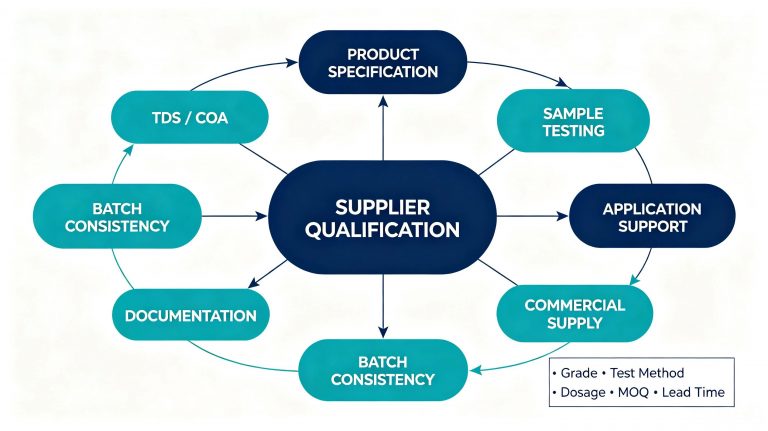
1. Introduction Choosing a reliable microcrystalline cellulose supplier is essential when MCC affects product quality, processing performance, and purchasing costs. This guide explains how to compare MCC grades, review technical specifications, assess supplier qualifications, evaluate samples, and compare quotations before…
Plant-Based Beverage Stabilizer is essential formulation tools for controlling sedimentation, creaming, viscosity, texture, and physical stability in oat milk, soy milk, almond milk, pea-protein beverages, and other plant-based drinks. A suitable stabilizer system can help maintain particle suspension, improve mouthfeel,…
Introduction: Which Stabilizer Actually Solves Your Problem? Xanthan Gum vs MCC: What Is the Difference? Xanthan Gum vs MCC is a common comparison for food and beverage formulators deciding how to control viscosity, particle suspension, texture, and long-term physical stability.…
Introduction CMC for Acidified Milk Drinks Stabilization Acidified milk drinks — including drinkable yogurt, fermented milk beverages, fruit-yogurt drinks, cocoa milk beverages, and protein-rich dairy drinks — present some of the most difficult stabilization challenges in beverage formulation. When milk…
MCC for Cloud Stability is an important consideration when developing beverages that contain suspended particles, cocoa solids, minerals, proteins, or other ingredients that tend to settle during storage. A beverage may look stable immediately after processing but gradually develop sedimentation,…
Food Hydrocolloids Guide: How to Select, Formulate & Optimize Food Hydrocolloids Food products rarely consist of water plus one or two ingredients. Most modern formulations are complex, multiphase systems that combine proteins, starches, oils, minerals, fibers, sugars, acids, and flavor…
Beverage Stabilizer Formulation: Complete Guide to Suspension, Stability & Commercial Production Beverage stabilizer formulation is the process of selecting and optimizing functional ingredients to control sedimentation, particle aggregation, phase separation, viscosity, and physical stability in liquid beverages. A successful beverage…
Quick Answer Introduction: Why HPMC Drives Modern Controlled-Release Formulation HPMC for controlled release is one of the most widely used approaches for developing sustained-release and extended-release oral tablets. Pharmaceutical-grade Hydroxypropyl Methylcellulose (HPMC) functions as a hydrophilic matrix former, helping control…