

MCC Gel vs Xanthan Gum is a common comparison among food manufacturers looking for effective stabilizers, suspension agents, and texture modifiers. Both ingredients can improve viscosity and product stability, but they work differently in beverages, dairy products, sauces, and plant-based formulations.
Author
Richard Wang
Technical Sales Engineer
Qingdao ACTA Biotechnology Co., Ltd.
Specializing in cellulose-based food stabilizers, pharmaceutical excipients, and formulation support for beverage, dairy, bakery, and frozen dessert applications.
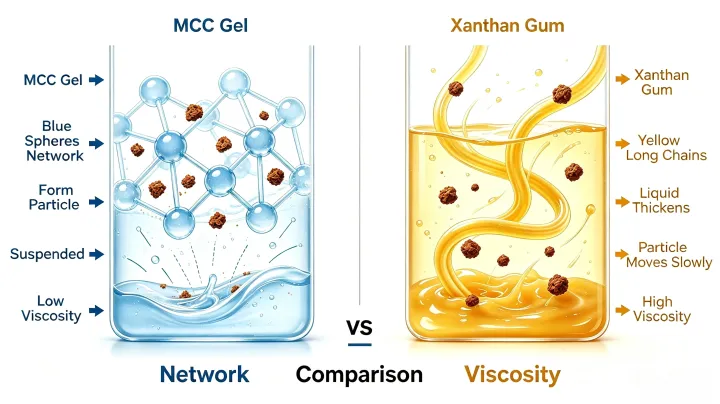
Caption
Figure 1. MCC Gel stabilizes food by forming a three-dimensional cellulose network, whereas xanthan gum primarily stabilizes by increasing viscosity.
Figure Insight
Unlike xanthan gum, which slows particle movement by thickening the liquid, MCC Gel builds a structural cellulose network that physically supports suspended particles while maintaining a lighter mouthfeel.
MCC Gel and xanthan gum are both widely used food stabilizers, but they work through different mechanisms. MCC Gel forms a three-dimensional cellulose network that provides excellent suspension, water binding, and freeze–thaw stability while maintaining low viscosity. Xanthan gum primarily stabilizes food by increasing viscosity and offers excellent shear-thinning behavior. Rather than competing directly, the two ingredients are often used together to optimize texture, stability, and processing performance.
Featured Snippet
MCC Gel vs Xanthan Gum at a Glance
| Property | MCC Gel | Xanthan Gum |
|---|---|---|
| Suspension | ⭐⭐⭐⭐⭐ | ⭐⭐⭐ |
| Viscosity | ⭐⭐⭐ | ⭐⭐⭐⭐⭐ |
| Mouthfeel | ⭐⭐⭐⭐⭐ | ⭐⭐⭐ |
| Freeze-Thaw | ⭐⭐⭐⭐⭐ | ⭐⭐ |
| Water Binding | ⭐⭐⭐⭐⭐ | ⭐⭐⭐ |
| Chocolate Milk | ⭐⭐⭐⭐⭐ | ⭐⭐⭐ |
| Oat Milk | ⭐⭐⭐⭐⭐ | ⭐⭐⭐ |
| Ice Cream | ⭐⭐⭐⭐⭐ | ⭐⭐⭐⭐ |
| Sauces | ⭐⭐⭐⭐ | ⭐⭐⭐⭐⭐ |
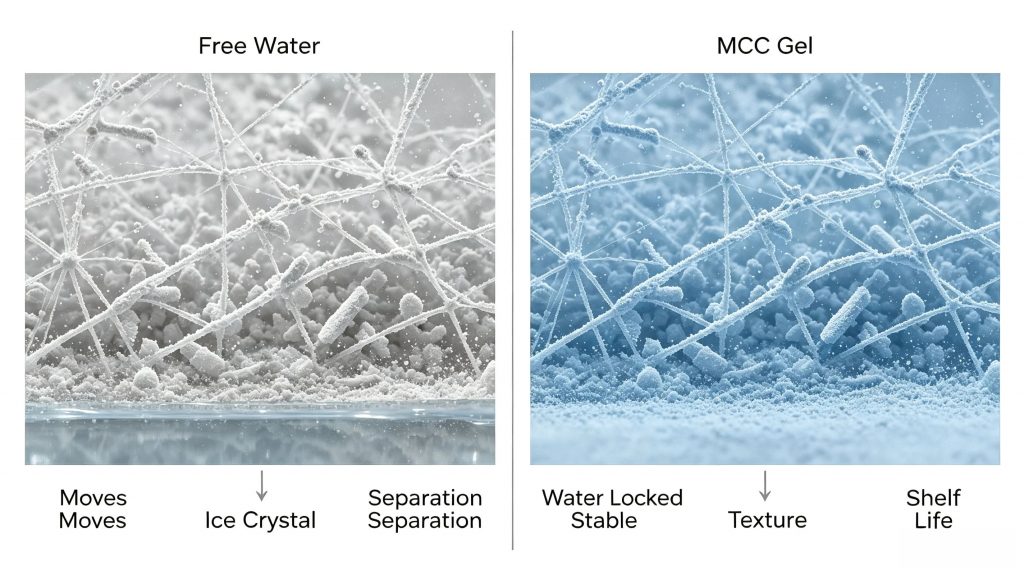
Caption
Figure 5. MCC Gel immobilizes free water through a hydrated cellulose network, improving stability across multiple food systems.
Figure Insight
Water immobilization is the primary mechanism behind improved freeze–thaw stability, reduced syneresis, and enhanced suspension performance.
MCC Gel and xanthan gum are both widely used food stabilizers, but they work through different mechanisms. MCC Gel forms a three-dimensional cellulose network that provides excellent suspension, water binding, and freeze–thaw stability while maintaining low viscosity. Xanthan gum primarily stabilizes food by increasing viscosity and offers excellent shear-thinning behavior. Rather than competing directly, the two ingredients are often used together to optimize texture, stability, and processing performance.
| Property | MCC Gel | Xanthan Gum |
|---|---|---|
| Suspension | ⭐⭐⭐⭐⭐ | ⭐⭐⭐ |
| Viscosity | ⭐⭐⭐ | ⭐⭐⭐⭐⭐ |
| Mouthfeel | ⭐⭐⭐⭐⭐ | ⭐⭐⭐ |
| Freeze-Thaw | ⭐⭐⭐⭐⭐ | ⭐⭐ |
| Water Binding | ⭐⭐⭐⭐⭐ | ⭐⭐⭐ |
| Chocolate Milk | ⭐⭐⭐⭐⭐ | ⭐⭐⭐ |
| Oat Milk | ⭐⭐⭐⭐⭐ | ⭐⭐⭐ |
| Ice Cream | ⭐⭐⭐⭐⭐ | ⭐⭐⭐⭐ |
| Sauces | ⭐⭐⭐⭐ | ⭐⭐⭐⭐⭐ |
Both MCC Gel and xanthan gum improve food stability, but they work in completely different ways. Xanthan gum mainly increases viscosity, while MCC Gel forms a three-dimensional cellulose network that suspends particles without making beverages excessively thick. As a result, the two ingredients often get grouped together in supplier catalogs, yet they solve very different formulation problems.
Choosing the wrong stabilizer can lead to sedimentation, a poor mouthfeel, unstable emulsions, or unnecessary formulation costs. A chocolate milk that separates on the shelf, a protein drink that feels gummy, or a plant-based beverage that develops a chalky layer at the bottom of the bottle usually points back to the same root cause: the stabilizer system was not matched to the product’s real technical challenge.
This guide compares MCC Gel and xanthan gum across formulation, processing, stability, texture, dosage, cost, and commercial applications so that food and beverage manufacturers can choose the right solution for their specific product. Along the way, we cover the science behind each ingredient, real application data across six beverage categories, a full decision framework, and a supplier buying guide, so that R&D teams and procurement teams both leave with clear, actionable answers.
MCC Gel, or colloidal microcrystalline cellulose, is a food-grade stabilizer derived from purified plant cellulose. It carries the INS number E460(ii) and is recognized internationally as a safe, functional, and clean-label ingredient for beverages, dairy products, sauces, and frozen desserts. As a food colloid, it belongs to a distinct category within broader hydrocolloid system formulations, functioning by a fundamentally different mechanism than the soluble gums and stabilizers typically grouped alongside it.
Unlike soluble hydrocolloids, MCC Gel does not dissolve in water. Instead, mechanical processing breaks the cellulose fibers down into colloidal-sized particles that disperse evenly throughout a liquid system. This dispersion is driven by a hydration process in which water molecules surround and interact with the surface of each cellulose particle, enabling particle interaction between neighboring fibrils. Once hydrated, these microscopic cellulose particles link together and form a three-dimensional cellulose network that physically traps and supports suspended solids such as cocoa, protein, calcium, and fruit pulp.
Because this network works through physical structure rather than viscosity, MCC Gel can deliver strong suspension performance while keeping a beverage relatively light and drinkable. This structural suspension mechanism — rather than the thickening-based approach used by many soluble hydrocolloids — is precisely why formulators increasingly rely on MCC Gel wherever suspension stability and a clean mouthfeel both matter.
| Property | Specification |
| INS Number | E460(ii) |
| Source | Purified plant cellulose |
| Solubility | Insoluble in water |
| Primary Mechanism | Physical particle-support network |
| Appearance | White to off-white colloidal gel or powder |
| Typical Dosage | 0.20% to 0.80% |
| Key Function | Structural suspension, freeze-thaw stability, water binding |
MCC Gel stabilizes food systems by building a physical structure rather than by thickening the liquid phase, which allows manufacturers to achieve strong suspension without sacrificing drinkability. Through its unique hydration mechanism, MCC Gel disperses into a fine colloidal dispersion of cellulose microfibrils that interlock to form a three-dimensional network throughout the product. This particle network physically entraps suspended solids — whether cocoa particles, proteins, minerals, or pulp — holding them in place against gravity rather than merely slowing their movement through elevated viscosity.
This structural approach delivers several practical advantages. Because the network provides true particle suspension rather than viscosity-driven drag, it maintains its integrity under the mechanical stress of pumping, filling, and agitation, giving reliable shear stability throughout processing. The network also reforms readily after homogenization, allowing it to reestablish suspension even after high-pressure processing breaks down larger particle clusters. Over time, this translates into effective sedimentation control and resistance to phase separation, both of which are critical for consistent shelf-life stability in refrigerated or ambient distribution. Unlike thickening-based stabilizers, which must be used at higher concentrations to achieve the same suspension effect — often at the cost of a heavy or gummy mouthfeel — MCC Gel’s structural mechanism achieves robust, long-term stability while preserving the light, clean drinkability that consumers expect.
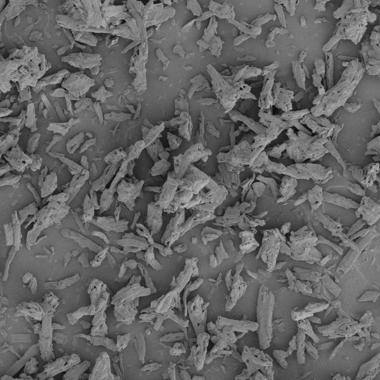
Caption
Figure 2. Hydrated MCC Gel forms a three-dimensional cellulose network that supports suspended particles and immobilizes free water.
Figure Insight
The functional performance of MCC Gel begins after hydration, when cellulose particles become evenly dispersed and interconnected throughout the food matrix.
Xanthan gum, identified by the INS number E415, is a soluble polysaccharide produced through the fermentation of simple sugars by the bacterium Xanthomonas campestris. After fermentation, the gum is precipitated, dried, and milled into a fine powder that dissolves readily in cold or hot water.
Once hydrated, xanthan molecules unfold and interact with each other, dramatically increasing the viscosity of the surrounding water phase. This higher viscosity slows the movement of suspended particles, which reduces sedimentation and gives xanthan gum its well-known thickening and shear-thinning behavior. Because only a small dosage is needed to build significant viscosity, xanthan gum remains one of the most widely used hydrocolloids in sauces, dressings, and gravies.
| Property | Specification |
| INS Number | E415 |
| Source | Microbial fermentation |
| Solubility | Fully soluble in water |
| Primary Mechanism | Viscosity development |
| Rheology | Strong shear-thinning behavior |
| Typical Dosage | 0.05% to 0.30% |
| Key Function | Thickening, cling, flow control |
Although both ingredients help reduce sedimentation and improve product stability, their behavior during hydration, processing, and storage differs significantly. Xanthan gum primarily stabilizes foods by increasing the viscosity of the continuous water phase, whereas MCC Gel forms a three-dimensional cellulose network that physically supports suspended particles without relying on excessive thickening.
The most important distinction lies in how each ingredient controls particle movement. MCC Gel forms a microscopic cellulose framework that physically supports insoluble particles throughout the continuous phase, so cocoa, calcium, protein, fiber, and fruit pulp stay evenly suspended even though the beverage itself remains relatively low in viscosity. Xanthan gum, by contrast, has no structural particle-support network; hydrated xanthan molecules simply dissolve and thicken the surrounding liquid, so particles settle more slowly because they meet greater resistance while moving through the thicker phase.
Both mechanisms improve suspension, yet they create noticeably different drinking experiences. Understanding this difference is essential before selecting a stabilizer for beverages, dairy products, frozen desserts, sauces, or plant-based formulations.
| Property | MCC Gel | Xanthan Gum |
| INS Number | E460(ii) | E415 |
| Raw Material | Purified cellulose | Fermentation |
| Solubility | Insoluble | Soluble |
| Primary Mechanism | Physical network | Viscosity increase |
| Suspension Ability | Excellent | Moderate |
| Thickening Power | Low | High |
| Mouthfeel | Clean | Slightly slimy at high levels |
| Water Binding | Excellent | Good |
| Emulsion Stability | Excellent | Good |
| Freeze-Thaw Stability | Excellent | Good |
| Protein Compatibility | Excellent | Moderate |
| Shear Stability | Excellent | Excellent |
| Heat Stability | Excellent | Excellent |
| Acid Stability | Good | Excellent |
| Typical Dosage | 0.20% to 0.80% | 0.05% to 0.30% |
| Best Use | Structural stabilizer | Thickener |
Recent beverage formulation studies increasingly frame this topic as a broader hydrocolloid comparison rather than a simple ingredient swap, and structural suspension generally outperforms viscosity alone, particularly in products containing cocoa, calcium, protein, dietary fiber, or fruit pulp. This is exactly why formulators researching colloidal MCC vs xanthan gum are often searching for the best suspension agent rather than simply the cheapest thickener. As a result, many premium beverage manufacturers now build MCC Gel into multifunctional stabilizer systems to improve long-term physical stability while preserving a clean drinking texture.
Expert Insight
Many formulators assume that suspension always improves as viscosity increases. In reality, excessive thickening often compromises mouthfeel without fully preventing sedimentation, which is exactly why the cellulose gel vs xanthan gum debate keeps resurfacing in formulation reviews. Structural stabilizers such as MCC Gel solve this problem differently by physically supporting suspended particles, making them especially effective in beverages where drinkability matters most — and this is why many R&D teams now consider MCC Gel the best hydrocolloid for suspension-critical applications.
Practical Tip
Before choosing between MCC Gel and xanthan gum, identify your primary formulation objective first. Framed as a microcrystalline cellulose vs xanthan gum decision, the choice usually comes down to one question: does the product need viscosity, or does it need structural suspension? Choose xanthan gum when the goal is to build viscosity. Choose MCC Gel when long-term suspension, clean mouthfeel, and reduced sedimentation matter more. For manufacturers searching for the best food stabilizer, combining both ingredients at optimized levels ultimately delivers the best overall performance.
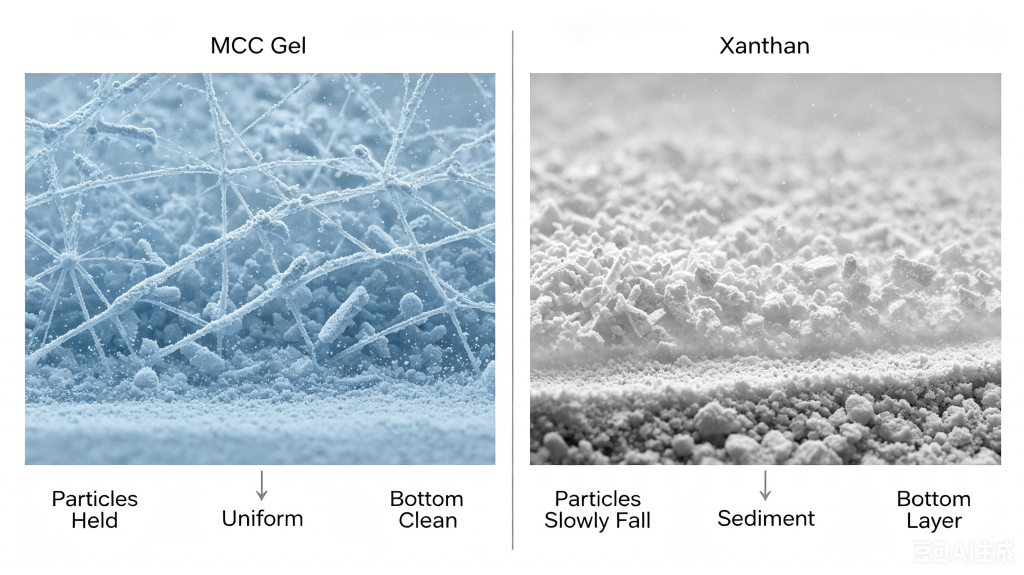
Caption
Figure 4. Structural suspension keeps particles evenly distributed more effectively than viscosity-based stabilization alone.
Figure Insight
Structural support reduces sedimentation without requiring excessive viscosity, resulting in improved drinking quality.
Although both MCC Gel and xanthan gum improve product stability, their performance varies considerably depending on the food system. Selecting the better stabilizer is therefore never just a matter of comparing viscosity or dosage; it depends on the type of particles being suspended, the desired mouthfeel, processing conditions, and shelf-life requirements.
Beverages containing cocoa, calcium, protein, dietary fiber, or fruit pulp need excellent suspension without becoming excessively thick. This requirement is especially important in Ready-to-Drink (RTD) beverages, where consumers expect a smooth, pourable texture rather than the heavier body acceptable in sauces or dressings.
Cocoa suspension and fruit pulp stabilization require a structural stabilizer that keeps dense or fibrous particles evenly dispersed without significantly increasing viscosity. Likewise, protein suspension in dairy and plant-based beverages demands a stabilizer that maintains protein-water interactions while avoiding a chalky or overly heavy mouthfeel.
In contrast, sauces and dressings are typically formulated as oil-in-water emulsions, where higher viscosity improves cling, body, and perceived richness. This performance target differs significantly from that of beverages, where drinkability remains a key quality attribute.
Understanding how MCC Gel vs Xanthan Gum performs across different food systems enables formulators to balance suspension stability, texture, viscosity, and consumer acceptance. Selecting the appropriate stabilizer depends not only on the product category but also on processing conditions, ingredient interactions, and the desired sensory experience.
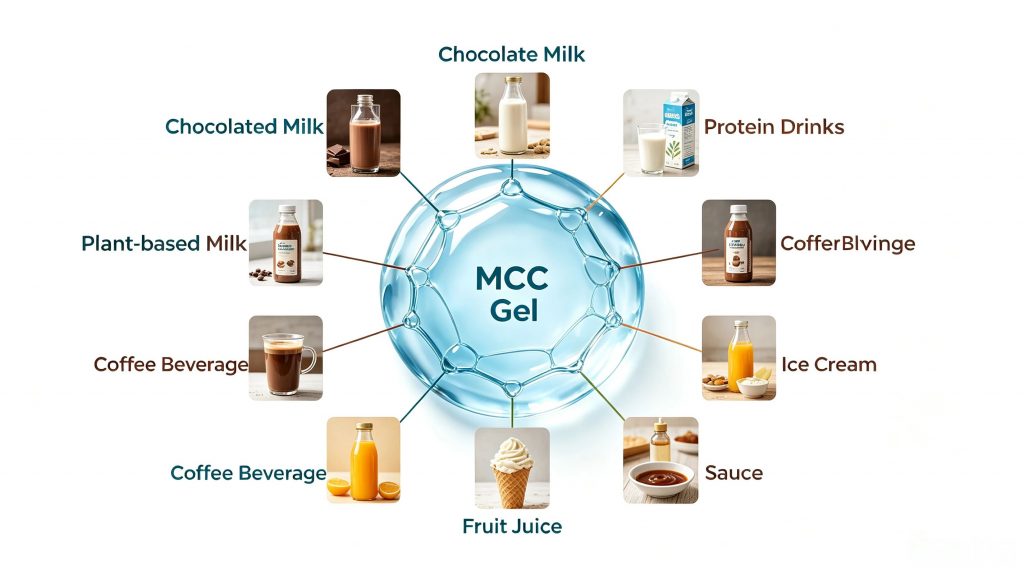
Caption:
MCC Gel provides structural stabilization across beverage, dairy, frozen dessert, and sauce applications.
Figure:
Figure 3. Food applications of MCC Gel as a structural stabilizer in beverage and dairy formulations.
| Food Application | MCC Gel | Xanthan Gum | Preferred Choice |
| Chocolate Milk | Excellent | Good | MCC Gel |
| Oat Milk | Excellent | Good | MCC Gel |
| Soy Beverage | Excellent | Good | MCC Gel |
| Protein Drink | Excellent | Good | MCC Gel |
| Fruit Juice | Very Good | Very Good | Blend |
| Coffee Beverage | Excellent | Good | MCC Gel |
| Ice Cream | Excellent | Very Good | Blend |
| Sauce | Very Good | Excellent | Blend |
| Salad Dressing | Very Good | Excellent | Blend |
| Bakery Filling | Very Good | Good | MCC Gel |
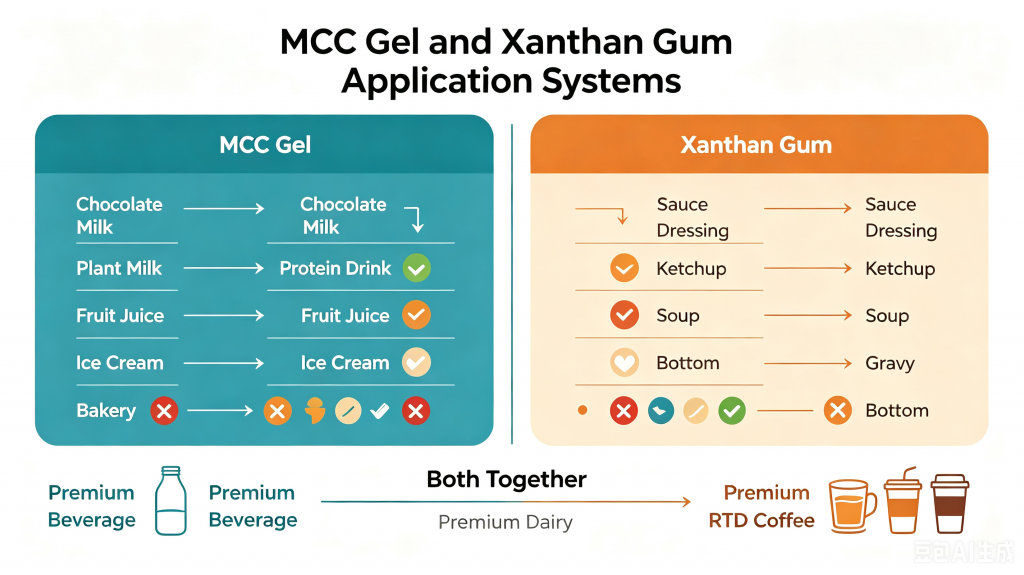
Caption
Figure 6. MCC Gel and xanthan gum are often used in different food systems based on their stabilization mechanisms, and many premium formulations successfully combine both.
Figure Insight
Rather than competing directly, MCC Gel and xanthan gum frequently complement one another by combining structural suspension with controlled viscosity, allowing formulators to optimize both physical stability and sensory quality.
Chocolate milk contains relatively heavy cocoa particles that naturally settle during storage. As a Chocolate Milk Suspension solution, MCC Gel forms a three-dimensional cellulose network that physically supports cocoa particles throughout the beverage, so sedimentation drops significantly while the drink keeps a smooth, natural mouthfeel. Xanthan gum, by contrast, slows sedimentation by increasing viscosity, and higher xanthan concentrations can produce a texture consumers perceive as gummy. Many premium chocolate milk formulations therefore use MCC Gel alone or combine it with a small amount of carrageenan to optimize both suspension and protein stability.
Industry Insight
Chocolate milk remains one of the most technically demanding suspension systems in the dairy beverage industry because cocoa particles are both hydrophobic and significantly denser than the surrounding liquid. Consequently, formulators must prevent sedimentation without creating excessive viscosity or masking the smooth drinking experience consumers expect. This is precisely why many premium chocolate milk manufacturers increasingly favor structural suspension systems over viscosity-based stabilization alone.
Recent formulation studies continue to demonstrate that structural cellulose networks maintain cocoa suspension more effectively during refrigerated storage than viscosity-based hydrocolloids alone. Rather than relying solely on increased viscosity to slow particle movement, structural stabilizers physically support cocoa particles throughout the beverage, resulting in longer-lasting suspension and a cleaner mouthfeel.
Statistics at a Glance
Cocoa particles are considerably denser than milk and naturally settle during storage without an effective suspension system.
Premium chocolate milk formulations commonly combine MCC Gel with carrageenan to achieve both cocoa suspension and milk protein stabilization.
Sedimentation typically becomes much more noticeable after two to four weeks of refrigerated storage, making long-term testing essential during formulation development.
Practical Tip
Before increasing the stabilizer dosage, optimize homogenization pressure and particle dispersion first. Improved particle size distribution often enhances suspension more effectively than simply adding more hydrocolloid.
Expert Insight
Experienced dairy formulators rarely adjust stabilizer concentration as the first solution. Instead, they typically evaluate hydration efficiency, homogenization conditions, and ingredient addition sequence because processing parameters often have as much influence on suspension stability as the formulation itself.
For chocolate milk, long-term suspension depends on structural particle support rather than viscosity alone. MCC Gel therefore provides superior cocoa suspension while maintaining the smooth, drinkable texture consumers expect.
Oat, soy, almond, and coconut beverages contain proteins, minerals, and insoluble fibers that settle during storage. MCC Gel keeps these particles suspended by building a structural cellulose network, allowing manufacturers to achieve excellent stability without excessive viscosity. Xanthan gum primarily increases viscosity, and while this slows particle movement, the beverage can become thicker than consumers expect in a ready-to-drink product. Premium plant-based beverages therefore frequently combine MCC Gel with small amounts of xanthan gum or gellan gum to balance suspension, texture, and processing stability.
Plant-based beverages are among the fastest-growing categories in the global beverage market, yet they also present some of the most complex formulation challenges. Proteins, minerals, insoluble fibers, and plant particles behave differently depending on the raw material, meaning oat, soy, almond, coconut, and pea protein beverages all require carefully designed stabilization systems rather than a one-size-fits-all solution.
Current beverage formulation trends increasingly favor multifunctional stabilizer systems that combine structural suspension with moderate viscosity. This approach improves long-term physical stability while maintaining the clean-label texture and drinking experience consumers increasingly demand.
Sedimentation remains one of the most common quality complaints in plant-based beverages.
Many commercial oat and almond beverages combine two or more hydrocolloids to balance suspension and mouthfeel.
Structural stabilizers generally provide better particle distribution than viscosity-based systems at similar sensory thickness.
Evaluate sedimentation after several weeks of storage rather than immediately after production. Many instability problems only become visible after extended storage or transportation.
Successful plant-based beverage formulations rarely rely on a single hydrocolloid. Instead, experienced formulators optimize hydration behavior, homogenization, and hydrocolloid compatibility to achieve the desired balance between suspension, mouthfeel, and shelf-life stability.
Structural suspension allows proteins and plant particles to remain evenly distributed while preserving the light, refreshing drinking texture consumers expect from premium plant-based beverages.
High-protein drinks present one of the toughest formulation challenges because proteins, minerals, and added nutrients raise the likelihood of sedimentation. As a Nutrition Drink Stabilizer, MCC Gel supports suspended particles structurally while keeping the beverage relatively low in viscosity, while xanthan gum thickens the continuous phase effectively but can suppress flavor release at higher concentrations. Protein beverages therefore commonly benefit from a blended stabilizer system in which MCC Gel supplies structural suspension and xanthan gum fine-tunes viscosity.
High-protein beverages represent one of the most demanding formulation systems because proteins, minerals, vitamins, and nutritional ingredients all compete for physical stability within the same liquid matrix. Maintaining uniform nutrient distribution throughout the entire shelf life has therefore become a primary objective for nutrition drink manufacturers.
Recent formulation research indicates that structural suspension systems generally outperform viscosity-driven stabilization in high-protein beverages because they maintain particle distribution without excessively increasing viscosity or suppressing flavor release.
High-protein beverages typically contain substantially more suspended solids than conventional soft drinks.
Protein aggregation becomes increasingly likely as storage time increases.
Commercial nutrition drinks frequently combine structural stabilizers with viscosity modifiers to optimize overall performance.
Always evaluate product stability after accelerated shelf-life testing instead of relying only on freshly prepared laboratory samples, since many sedimentation issues develop gradually over time.
Experienced beverage formulators monitor particle distribution throughout the entire bottle rather than observing only bottom sediment because protein instability often begins long before obvious sediment becomes visible.
Maintaining nutritional uniformity requires structural suspension rather than viscosity alone, making MCC Gel particularly suitable for high-protein beverage systems.
RTD coffee drinks — lattes, cold brews, and creamer-blended coffees — face a distinct challenge: dairy or plant-based creamers combined with coffee solids and added sugars are prone to fat separation, ring formation, and protein sedimentation. As a Coffee Beverage Stabilizer, MCC Gel builds a suspending network that holds creamer particles and coffee fines in place without adding a starchy or gummy mouthfeel, which is especially important in black or lightly sweetened coffee formats where flavor clarity matters.
Ready-to-drink coffee beverages combine coffee solids, proteins, fats, and sugars within one formulation, making them especially susceptible to ring formation, fat separation, and sedimentation. Consumers also expect a clean coffee flavor, meaning stabilizers must improve physical stability without creating a heavy or gummy mouthfeel.
Recent RTD coffee development increasingly focuses on structural stabilization rather than viscosity enhancement, allowing manufacturers to improve shelf-life stability while preserving flavor clarity and drinking quality.
Coffee particles naturally settle during storage without an effective suspension system.
Fat separation becomes increasingly visible in cream-containing coffee beverages.
Premium RTD coffee formulations often combine structural stabilizers with emulsifiers to improve both suspension and emulsion stability.
Evaluate ring formation, fat separation, and sedimentation separately because solving one stability issue does not necessarily eliminate the others.
Coffee beverages should always be tested under simulated transportation conditions because continuous vibration frequently accelerates visible instability that may not appear during static laboratory storage.
Successful RTD coffee stabilization requires simultaneous control of suspended solids, emulsion stability, and mouthfeel rather than relying on viscosity alone.
Juices with pulp, fiber additions, or fortified nutrients (such as calcium or vitamin blends) are prone to cloud loss and particle settling. As a Fruit Juice Stabilizer, MCC Gel maintains cloud stability and pulp suspension while preserving the light, refreshing mouthfeel consumers expect, avoiding the syrupy texture that can result from viscosity-based stabilizers alone.
Modern fruit beverages are no longer limited to clear juices. Today’s premium juice products increasingly contain fruit pulp, dietary fiber, calcium, vitamins, probiotics, and botanical extracts, all of which increase the risk of sedimentation and cloud loss during storage. Consequently, manufacturers require stabilizers that preserve a natural drinking texture while maintaining a uniform appearance throughout shelf life.
Recent beverage formulation research shows that structural suspension systems are particularly effective in pulp-containing beverages because they physically support insoluble particles instead of relying solely on viscosity. This approach helps maintain cloud stability while preserving the light mouthfeel consumers associate with premium fruit juices.
Fruit pulp naturally settles during storage because of its higher density than the surrounding liquid.
Cloud stability is one of the most important quality indicators for premium juice products.
Fortified fruit beverages generally require stronger suspension systems than conventional juice formulations.
Evaluate cloud stability after repeated transportation simulation rather than relying only on static shelf storage, since vibration often accelerates pulp sedimentation during commercial distribution.
Experienced beverage developers evaluate both cloud retention and pulp distribution separately because a beverage may appear visually stable while still developing localized sediment at the bottom of the package.
For fruit beverages, maintaining cloud stability and pulp suspension simultaneously is essential for delivering the fresh, natural appearance consumers expect.
Calcium and other mineral fortificants are notoriously difficult to keep suspended because of their density and reactivity with proteins. In a Calcium Fortified Beverage, MCC Gel’s cellulose network physically traps mineral particles, preventing the chalky sediment layer that often forms at the bottom of fortified milk, juice, or plant-based drinks.
Calcium-fortified beverages present one of the most difficult suspension challenges in modern food formulation because calcium particles are considerably denser than most beverage ingredients. Without an effective structural stabilizer, mineral sediment rapidly forms at the bottom of the package, leading to inconsistent nutritional delivery and reduced consumer acceptance.
Current formulation studies continue to demonstrate that structural cellulose networks distribute mineral particles more effectively than viscosity-based stabilizers alone, particularly in beverages requiring long shelf life and nutritional consistency.
Calcium is among the most difficult food fortificants to keep uniformly suspended.
Mineral sediment directly affects both product appearance and nutritional consistency.
Many fortified beverages combine structural stabilizers with protein-compatible hydrocolloids.
Practical Tip
Always verify calcium distribution after extended storage instead of evaluating only freshly manufactured products, since mineral sediment often develops gradually over time.
Expert Insight
Experienced formulators recognize that increasing viscosity alone rarely solves calcium sedimentation. Instead, structural suspension combined with appropriate homogenization generally delivers much better long-term stability.
Key Takeaway
Uniform mineral distribution depends on structural suspension rather than viscosity alone, making MCC Gel particularly suitable for calcium-fortified beverages.
Drinking yogurt and other fermented dairy beverages face a unique stability challenge: the acidified environment causes milk proteins to partially destabilize, leading to whey separation, protein sedimentation, and a thin, watery layer at the top or bottom of the bottle. As an Acidified Milk Beverage stabilizer, MCC Gel forms a cellulose network that holds destabilized casein particles in suspension, reducing whey separation while preserving the light, pourable texture consumers expect from drinking yogurt. Xanthan gum can also slow separation in fermented dairy products, but at the concentrations needed to fully control whey-off, it often introduces a stringy or overly viscous mouthfeel that clashes with yogurt’s expected tanginess and lightness.
Industry Insight
Fermented dairy beverages present unique stabilization challenges because milk proteins become increasingly sensitive as pH decreases during fermentation. As a result, whey separation, protein sedimentation, and serum layering are common quality defects that significantly influence consumer perception.
Recent dairy formulation research consistently shows that combining structural suspension with protein-compatible hydrocolloids provides better long-term stability than relying on viscosity enhancement alone, particularly in drinking yogurt applications.
Statistics at a Glance
Whey separation is one of the most common quality defects in fermented dairy beverages.
Protein stability becomes increasingly difficult as product acidity increases.
Premium drinking yogurt formulations frequently combine MCC Gel with pectin to improve overall stability.
Practical Tip
Always evaluate refrigerated stability over the intended commercial shelf life because whey separation typically develops gradually rather than immediately after production.
Expert Insight
Experienced dairy technologists optimize pH, homogenization, and stabilizer compatibility together because protein behavior changes continuously throughout fermentation and refrigerated storage.
Key Takeaway
Maintaining protein suspension while minimizing whey separation is essential for producing premium drinking yogurt with a smooth, uniform texture.
Beyond generic “plant-based milk,” each individual category — Oat Beverage, Almond Beverage, Soy Beverage, Coconut Beverage, and Pea Protein Drink — has distinct sedimentation behavior based on its particle size, protein type, and fat content. Oat beverages tend toward starch settling and a slightly slimy mouthfeel if over-stabilized; almond beverages struggle with fine nut particulate that settles quickly; soy beverages deal with protein aggregation; coconut beverages face both fat separation and pulp sedimentation; and pea protein drinks are especially prone to chalky sediment due to protein density. MCC Gel adapts well across all five categories because its suspension mechanism is structural rather than purely viscosity-based, so it doesn’t amplify the starchy (oat), gritty (almond), or chalky (pea protein) mouthfeel issues that are already inherent to each base.
Industry Insight
Plant protein beverages have become one of the fastest-growing categories in functional nutrition. However, proteins from oat, pea, soy, almond, and coconut all exhibit different particle characteristics, making universal stabilizer formulations ineffective across multiple product types.
Current research indicates that structural suspension systems adapt better to varying plant protein sources because they support particles mechanically instead of depending entirely on viscosity, allowing formulators to optimize stability without sacrificing drinkability.
Statistics at a Glance
Pea protein beverages generally exhibit the highest sedimentation tendency among common plant protein drinks.
Oat beverages are particularly susceptible to starch settling during storage.
Commercial plant protein beverages frequently utilize blended hydrocolloid systems.
Practical Tip
Develop individual formulations for each plant protein source rather than applying one stabilizer system universally, since each protein base behaves differently during processing and storage.
Expert Insight
Experienced formulators treat oat, soy, almond, coconut, and pea protein beverages as distinct formulation systems because differences in protein composition, fat content, and particle size strongly influence stabilizer performance.
Key Takeaway
Successful plant protein stabilization requires tailoring structural suspension to the characteristics of each individual protein source.
Bakery fillings present a different kind of stability challenge than beverages: rather than preventing particle sedimentation in a liquid, the goal is moisture retention and preventing syneresis (liquid weeping) during baking, cooling, and extended shelf storage. In fruit filling applications, MCC Gel helps bind free water within the fruit matrix, reducing the watery bleed-out that causes soggy crusts and loss of visual appeal. In cream filling applications, it supports a stable, non-weeping structure even under temperature fluctuations from oven heat to refrigerated display, helping the filling hold its shape without becoming runny or separating during storage.
MCC Gel excels in products requiring structural suspension and a clean mouthfeel, while xanthan gum performs best when viscosity enhancement is the primary objective. Across chocolate milk, plant-based milk, coffee, juice, calcium-fortified, and protein applications, many successful Ready-to-Drink Beverage formulations combine both ingredients as a complete RTD Beverage Stabilizer system to maximize stability, texture, and overall product quality.
Industry Insight
Unlike beverages, bakery fillings require stabilizers that control water migration instead of particle sedimentation. During baking, cooling, freezing, and storage, moisture movement can cause syneresis, texture deterioration, filling collapse, and reduced product shelf life. Therefore, effective water management becomes the primary formulation objective.
Recent bakery formulation research suggests that combining structural water-binding ingredients with starch-based systems improves moisture retention and freeze–thaw stability more effectively than starch alone, particularly in fruit and cream filling applications.
Statistics at a Glance
Moisture migration is one of the leading causes of quality loss in bakery fillings.
Freeze–thaw cycling significantly increases the risk of syneresis in fruit fillings.
Premium bakery fillings commonly combine cellulose ingredients with modified starch for enhanced stability.
Practical Tip
Evaluate filling stability after complete baking, cooling, freezing, and thawing cycles because moisture migration frequently becomes visible only after multiple processing stages.
Expert Insight
Experienced bakery formulators evaluate moisture retention throughout the entire product life cycle rather than focusing solely on fresh product texture, since long-term water migration largely determines final consumer acceptance.
Key Takeaway
For bakery fillings, controlling water movement is more important than increasing viscosity, making structural water-binding systems particularly valuable for maintaining texture, appearance, and shelf-life stability.
Texture is often the deciding factor in consumer acceptance, and this is where MCC Gel and xanthan gum diverge most clearly. Because xanthan gum builds viscosity through dissolved polymer chains, higher dosages can create a stringy or slimy sensation, especially in beverages that are meant to feel light and refreshing. MCC Gel, on the other hand, relies on a physical particle network rather than dissolved polymers, so it tends to preserve a cleaner, creamier mouthfeel even at dosages that provide strong suspension.
This distinction matters most in categories such as plant-based milk, protein drinks, and coffee beverages, where consumers expect a smooth, drinkable texture rather than a thick, gummy one. Formulators aiming for a natural sensory profile frequently lean on MCC Gel for this reason, while reserving xanthan gum for products where a heavier body is actually desirable, such as sauces and dressings.
MCC Gel typically delivers a cleaner, creamier mouthfeel, while xanthan gum can feel slimy or stringy at higher concentrations because it relies on dissolved polymer viscosity rather than physical particle support.
Frozen and semi-frozen products, including ice cream, frozen yogurt, and other frozen desserts, face a unique stability challenge: repeated freeze-thaw cycles encourage ice crystal growth and moisture migration, which damages texture over time. MCC Gel’s three-dimensional network binds water effectively and resists structural breakdown during freezing, which helps control ice crystal size and maintain a smoother texture after thawing.
Xanthan gum offers good freeze-thaw performance as well, but it is generally most effective when combined with other stabilizers such as guar gum or locust bean gum. As a result, many frozen dessert formulations use MCC Gel as a structural base while adding xanthan gum or other gums to fine-tune viscosity and processing behavior.
The table below summarizes the preferred stabilizer for common food categories, along with the primary reason behind each recommendation.
| Application | Winner | Reason |
| Chocolate Milk | MCC Gel | Superior cocoa particle suspension |
| Oat Milk | MCC Gel | Low viscosity with strong suspension |
| Soy Milk | MCC Gel | Better protein stability |
| Protein Drink | MCC Gel | Clean mouthfeel with structural support |
| Ice Cream | MCC Gel + Guar Gum | Best freeze-thaw performance |
| Yogurt | MCC Gel + Xanthan Gum | Balanced texture and suspension |
| Sauce | Xanthan Gum | Higher viscosity and cling |
| Dressing | Xanthan Gum | Thick, rich body |
| Fruit Juice | Blend | Combines suspension and viscosity |
| Bakery | MCC Gel | Moisture control and structure |
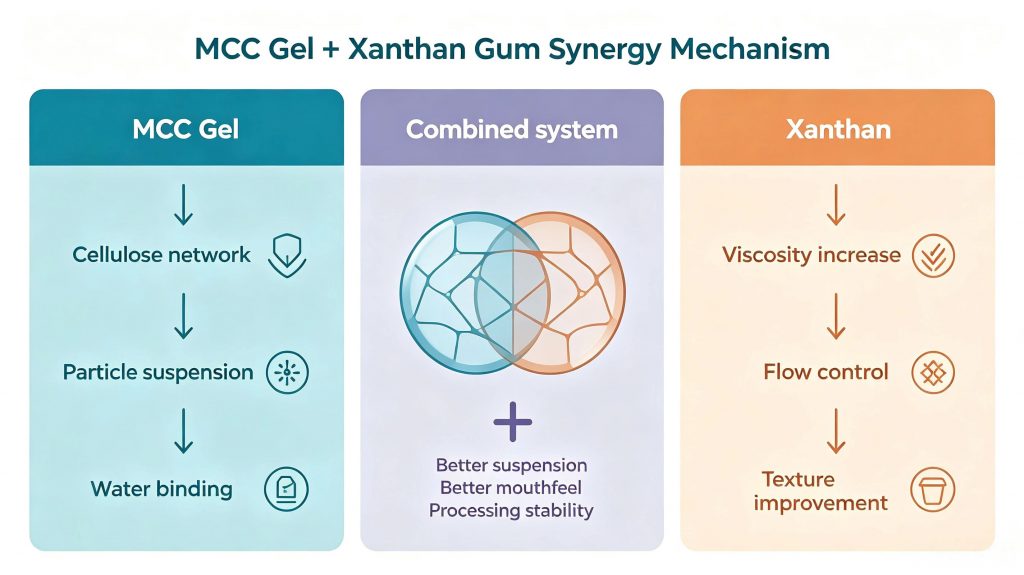
Caption:MCC Gel provides structural suspension while xanthan gum improves viscosity control and texture.
Figure:Figure 7. MCC Gel and xanthan gum complement each other by combining structural suspension with viscosity control.
Yes. Rather than replacing one ingredient with the other, many commercial food manufacturers combine MCC Gel and xanthan gum to take advantage of their complementary functions. MCC Gel typically provides suspension stability, water immobilization, a creamy texture, and freeze-thaw performance, while xanthan gum contributes controlled viscosity, shear-thinning flow, improved cling, and enhanced processing stability.
This complementary pairing is particularly valuable across different processing conditions. During high-shear mixing, xanthan gum’s shear-thinning behavior helps maintain manageable viscosity for pumping and filling, while MCC Gel’s particle network is engineered to withstand that same mechanical stress and reform its suspension structure once processing is complete. The combination also performs well across thermal treatments — whether pasteurization, UHT, or retort sterilization — since MCC Gel’s structural stabilization is largely heat-stable and doesn’t break down the way some viscosity-based systems can under prolonged high-temperature exposure. This heat resilience, paired with strong freeze-thaw stability, supports consistent shelf-life performance across a wide range of distribution and storage conditions, from refrigerated cold chains to ambient shelf-stable products.
Together, these ingredients often produce a more balanced formulation than either stabilizer achieves alone.
An original formula relying on xanthan gum alone achieved good viscosity but still showed coffee sediment and a slightly slimy texture. After the formula was optimized with MCC Gel plus a small amount of xanthan gum, the manufacturer observed better suspension, improved mouthfeel, lower sediment, and higher sensory acceptance.
Dosage requirements differ significantly between the two ingredients because they work through different mechanisms. MCC Gel typically requires a higher dosage range because it must build a sufficient particle network, while xanthan gum achieves strong viscosity at much lower concentrations.
| Ingredient | Typical Dosage Range | Notes |
| MCC Gel | 0.20% to 0.80% | Higher dosage needed to build a structural network |
| Xanthan Gum | 0.05% to 0.30% | Efficient viscosity builder at low dosage |
| MCC Gel + Xanthan Gum Blend | MCC Gel 0.25%–0.45%; Xanthan 0.03%–0.10% | Balances suspension and viscosity |
Always evaluate dosage performance after several weeks of storage rather than immediately after production, since sedimentation and texture changes often become more visible over time.
Comparing MCC Gel and xanthan gum by price per kilogram alone can be misleading. What ultimately matters is cost-in-use: the total cost of achieving a stable, market-ready product, including dosage, production efficiency, shelf-life performance, consumer acceptance, and the risk of costly reformulation.
A stabilizer with a higher purchase price may reduce overall manufacturing costs if it improves stability and reduces production failures. Conversely, choosing the cheapest ingredient can increase total cost if it leads to product returns, complaints, or a shorter shelf life. Because xanthan gum is used at lower dosages, its cost-in-use per kilogram of finished product can sometimes be lower than expected, while MCC Gel’s higher dosage requirement is often offset by fewer stability failures and less need for secondary stabilizers.
Experienced formulators evaluate stabilizers on total formulation cost, not on ingredient price alone. A slightly more expensive stabilizer that reduces production downtime and consumer complaints almost always delivers a better return over the product’s life cycle.
Many stability problems in commercial food production trace back to a small set of recurring formulation mistakes. Avoiding these errors can save significant development time and reduce costly reformulation.
Clean label demand continues to reshape ingredient selection across the beverage and food industry, and this shift is a major driver behind MCC Gel’s growing adoption. As consumers increasingly scrutinize ingredient lists and favor recognizable, minimally processed components, formulators are moving away from synthetic or heavily modified stabilizers toward plant-derived alternatives that still deliver reliable performance. Because MCC Gel is produced from purified plant cellulose and can often be labeled simply as “cellulose gel” or “microcrystalline cellulose,” it fits naturally into this clean label trend without requiring formulators to compromise on suspension stability or food texture.
Consumer expectations around food texture continue to evolve. Modern beverage consumers want products that feel light, smooth, and naturally drinkable—not thick, gummy, or overly viscous—even as manufacturers add more protein, fiber, and minerals. Compared with viscosity-based stabilizers, MCC Gel creates a three-dimensional cellulose network that provides excellent suspension while maintaining a clean, premium mouthfeel.
Successful adoption of MCC Gel (or blended stabilizer systems) typically follows a structured development process. Small-scale pilot trials allow formulators to optimize dosage, verify compatibility with other hydrocolloids, and evaluate suspension stability before scale-up. During commercial production, mixing speed, homogenization pressure, and heat treatment become critical factors affecting the final performance of the cellulose network. A systematic scale-up process helps ensure consistent product quality and manufacturing efficiency.
As demand for clean-label, protein-enriched, and plant-based foods continues to grow, manufacturers are increasingly seeking stabilizers that provide both functional performance and consumer-friendly labeling. In the MCC Gel vs Xanthan Gum comparison, MCC Gel is expected to gain wider adoption in beverages, dairy products, and functional foods because it combines suspension stability, smooth texture, and clean-label appeal without relying solely on high viscosity.
MCC Gel is based on microcrystalline cellulose, a well-established food ingredient with a long history of safe use across dairy, plant-based, and other beverage and food applications. As a food additive, microcrystalline cellulose is recognized internationally under the E-number system as E460(i) (microcrystalline cellulose) and is closely related to E460(ii) (powdered cellulose), which shares a similar cellulose origin but differs in particle structure and functional application. Both are approved for use in a wide range of food categories across major regulatory markets, including the EU, and are subject to purity and specification standards set by bodies such as the Joint FAO/WHO Expert Committee on Food Additives (JECFA).
In the United States, microcrystalline cellulose holds GRAS (Generally Recognized as Safe) status and is regulated under 21 CFR 182.1859, which governs its use as a multipurpose food substance. This allows manufacturers to incorporate MCC Gel into beverage and food formulations without additional pre-market approval, provided usage remains consistent with current good manufacturing practice and applicable use-level guidance.
From a food safety and food standards perspective, microcrystalline cellulose is non-digestible, non-caloric, and does not undergo significant metabolic breakdown in the body, which supports its favorable safety profile across the regulatory frameworks referenced above. That said, specific labeling requirements, permitted usage levels, and category-specific restrictions can vary by country and by product type (e.g., conventional beverages versus organic-certified or “clean label” products), so manufacturers should confirm current requirements with local regulatory authorities or a qualified regulatory affairs specialist before finalizing a formulation for a specific market.
Selecting the right stabilizer starts with identifying the product’s dominant technical challenge rather than comparing ingredients in the abstract. Ask whether the formulation is suffering from particle sedimentation, oil separation, water separation, ice crystal growth, poor mouthfeel, or insufficient viscosity. Once that primary challenge is clear, the choice becomes much easier.
If sedimentation is the main issue, MCC Gel usually provides the most effective solution because it physically supports suspended particles. If high viscosity is required, xanthan gum generally performs better. Processing conditions also matter: MCC Gel performs particularly well in homogenized beverages, since its structural network supports finely dispersed particles during storage, while xanthan gum is often preferred where viscosity development is the primary objective and homogenization plays a smaller role.
| If You Want To… | Best Choice |
| Suspend cocoa particles | MCC Gel |
| Stabilize oat milk | MCC Gel |
| Build sauce viscosity | Xanthan Gum |
| Improve freeze-thaw stability | MCC Gel |
| Create a thick dressing | Xanthan Gum |
| Balance suspension and texture | MCC Gel + Xanthan Gum |
| Reduce sediment without excessive thickness | MCC Gel |
| Develop a multifunctional stabilizer system | MCC Gel + Xanthan Gum |
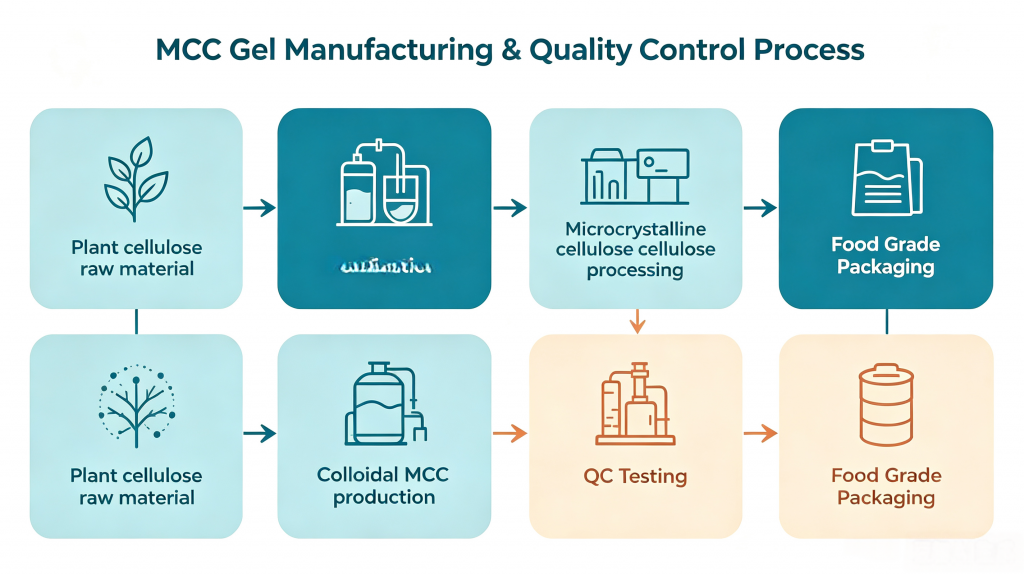
Caption:Quality-controlled manufacturing process ensures consistent MCC Gel performance for global food applications.
Figure:Figure 8. Manufacturing and quality control steps for food-grade MCC Gel production.
When sourcing MCC Gel for commercial production, manufacturers should work with suppliers who can provide complete documentation to support quality assurance, regulatory compliance, and food safety requirements. Standard documentation typically includes a COA (Certificate of Analysis) for each production batch, confirming that the product meets specified purity, particle size, and viscosity parameters; a TDS (Technical Data Sheet) outlining recommended usage levels, hydration procedures, and application guidance; and an SDS (Safety Data Sheet) covering handling, storage, and safety information for both production staff and regulatory records.
Beyond product-specific documentation, reputable suppliers should also hold facility-level certifications that reflect consistent quality and food safety management. ISO 9001 certification indicates a supplier maintains a robust quality management system across its manufacturing operations, while HACCP (Hazard Analysis and Critical Control Points) compliance demonstrates that food safety risks are systematically identified and controlled throughout production. Many leading suppliers also carry FSSC 22000 certification, a globally recognized food safety management standard that combines ISO requirements with additional sector-specific food safety criteria, giving manufacturers added confidence when qualifying a new ingredient supplier.
For manufacturers serving religious or culturally specific markets, Halal and Kosher certifications are often essential requirements. Since MCC Gel is derived from plant cellulose, it is generally well-suited to meeting both certification standards, but manufacturers should always confirm current certification status and scope directly with the supplier, as certifications can be product- and facility-specific and may need periodic renewal. Requesting up-to-date COA, TDS, SDS, and certification documentation as part of the supplier qualification process helps ensure a smooth path from ingredient sourcing through regulatory approval and final product launch.
| Evaluation Item | Why It Matters |
| Batch Consistency | Ensures stable formulation performance |
| Technical Support | Speeds up formulation optimization |
| COA / TDS / SDS | Confirms regulatory compliance |
| Food Safety Certification | Required for export approval |
| Production Capacity | Guarantees reliable supply |
| Traceability | Protects product safety |
| Application Experience | Enables faster troubleshooting |
| Export Experience | Supports smooth international shipment |
Never qualify a supplier based on a single laboratory sample. Request samples from at least two or three different production batches, test them under identical processing conditions, and evaluate hydration behavior, suspension stability, viscosity, mouthfeel, freeze-thaw performance, and shelf-life stability. This approach provides a far more accurate picture of long-term product consistency than a single sample ever can.
MCC Gel stabilizes food through a physical cellulose network that suspends particles, while xanthan gum stabilizes food by increasing the viscosity of the water phase.
Yes, MCC Gel is another name for colloidal microcrystalline cellulose, a processed form of purified plant cellulose.
MCC Gel functions as a hydrocolloid stabilizer, though it works through insoluble particle structure rather than dissolving in water.
Xanthan gum is produced through the fermentation of simple sugars by the bacterium Xanthomonas campestris.
MCC Gel is derived from purified plant cellulose and is widely accepted as a clean-label ingredient in many markets.
Xanthan gum is produced through a natural fermentation process, though it undergoes further purification before use.
MCC Gel can replace xanthan gum in many suspension-focused applications, but xanthan gum remains preferred where high viscosity is the main requirement.
Xanthan gum can partially replace MCC Gel in some applications, but it typically cannot match MCC Gel’s structural suspension performance.
MCC Gel forms a three-dimensional network that physically supports particles, while xanthan gum only slows particle movement through viscosity.
Viscosity slows sedimentation but does not eliminate it, so denser particles can still settle gradually over time.
MCC Gel’s cellulose network helps stabilize dispersed fat droplets, reducing the likelihood of creaming or separation.
MCC Gel binds water within its structural network, which helps limit ice crystal growth during freeze-thaw cycles.
MCC Gel increases viscosity only slightly compared with xanthan gum, since it relies on structural support rather than dissolved polymer thickening.
MCC Gel generally provides a cleaner mouthfeel, while high xanthan gum concentrations can feel slimy or stringy.
MCC Gel is generally preferred for chocolate milk because it suspends cocoa particles more effectively while keeping the drink light.
MCC Gel is typically the best choice for oat milk, since it maintains suspension without adding unwanted thickness.
Yes, MCC Gel is commonly used in almond milk to keep insoluble particles evenly suspended.
MCC Gel is generally favored in soy milk because it supports protein stability without excessive viscosity.
Yes, MCC Gel is often used in ice cream, frequently in combination with guar gum, to improve freeze-thaw stability.
Xanthan gum is generally better for sauces because it efficiently builds the viscosity and cling that sauces require.
MCC Gel should be dispersed under adequate shear and allowed to hydrate fully before evaluating its suspension performance.
MCC Gel generally performs best with high-shear mixing, which helps disperse the cellulose particles evenly throughout the formulation.
MCC Gel is generally stable under UHT processing conditions, making it suitable for shelf-stable beverages.
Lumping usually results from inadequate shear or incomplete hydration during the dispersion step.
Evaluate batch consistency, technical support, regulatory documentation, and multiple production-batch samples before approving a supplier.
Look for a Certificate of Analysis, Technical Data Sheet, Safety Data Sheet, and relevant food-grade or religious certifications.
MCC Gel is typically used at 0.20% to 0.80%, while xanthan gum is typically used at 0.05% to 0.30%, depending on the application.
Cost-effectiveness depends on total formulation performance rather than price per kilogram, so the answer varies by application.
Yes, MCC Gel is frequently combined with pectin, carrageenan, or guar gum to build multifunctional stabilizer systems.
Neither is universally “better” — they work through different mechanisms and suit different goals. MCC Gel is generally better for suspension stability and a clean, light mouthfeel, while xanthan gum is better when higher viscosity or improved cling is the main objective. The right choice depends on the specific product and application.
In many suspension-focused applications, yes — MCC Gel can replace xanthan gum, often at a lower dosage, while avoiding the heavy or gummy texture that higher xanthan concentrations can cause. However, if a formulation specifically relies on xanthan gum’s viscosity or shear-thinning flow behavior, a direct replacement may require reformulation rather than a simple substitution.
MCC Gel stabilizes by forming an insoluble three-dimensional cellulose network that physically traps suspended particles. Xanthan gum stabilizes by dissolving into the liquid and increasing overall viscosity, which slows particle movement rather than physically holding particles in place. This is why MCC Gel tends to deliver suspension without heaviness, while xanthan gum delivers thickness and cling.
MCC Gel is generally the better primary stabilizer for plant-based milk, since it suspends proteins, minerals, and fiber without adding excessive viscosity. Many formulators pair it with a small amount of xanthan or gellan gum to fine-tune texture and mouthfeel.
Yes. They’re often used together as complementary stabilizers — MCC Gel providing suspension and structure, xanthan gum contributing controlled viscosity and cling — resulting in a more balanced formulation than either ingredient achieves alone.
Selecting the right food stabilizer has become increasingly important as manufacturers pursue cleaner labels, longer shelf life, better sensory quality, and more stable formulations. Although both MCC Gel and xanthan gum are widely used across the food industry, they solve different formulation challenges and should not be treated as automatic substitutes for one another.
MCC Gel excels at suspension stability, water immobilization, freeze-thaw stability, and a creamy mouthfeel, while xanthan gum excels at viscosity development, shear-thinning flow, and rich body in thick sauces and dressings. In many commercial formulations, the most effective approach combines both ingredients to achieve superior stability, texture, processing efficiency, and consumer acceptance.
| If Your Goal Is… | Recommended Solution |
| Suspend cocoa particles | MCC Gel |
| Stabilize plant-based milk | MCC Gel |
| Reduce ice crystal growth | MCC Gel |
| Improve water retention | MCC Gel |
| Increase sauce viscosity | Xanthan Gum |
| Create rich body | Xanthan Gum |
| Balance texture and suspension | MCC Gel + Xanthan Gum |
| Build multifunctional formulations | MCC Gel + Xanthan Gum |
At ACTA Biotechnology, we specialize in food-grade cellulose-based stabilizers for global food manufacturers. Our technical team supports customers from initial formulation development through pilot trials and commercial production, and we provide food-grade MCC Gel, microcrystalline cellulose, sodium CMC, HPMC, and customized stabilizer recommendations backed by complete export documentation.
Whether you are developing plant-based beverages, chocolate milk, protein drinks, yogurt, ice cream, sauces, dressings, or bakery fillings, our application specialists can recommend the most suitable stabilizer system based on your formulation objectives, processing conditions, and target shelf life.
Every formulation is different. Whether you are developing plant-based beverages, dairy products, sauces, frozen desserts, or nutritional drinks, our application specialists can recommend the most suitable MCC Gel grade or stabilizer system based on your ingredients, processing conditions, and shelf-life targets. Contact ACTA Biotechnology today to request product samples, technical documents, formulation support, or a customized stabilization solution for your next project.
