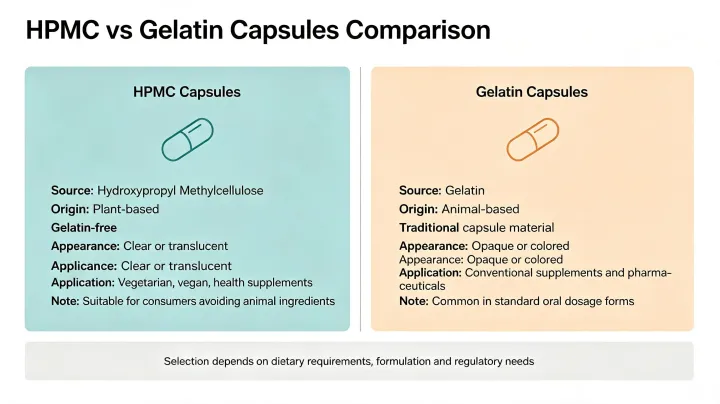
Caption:HPMC vs Gelatin Capsules: Comparison of HPMC and gelatin capsules based on material source, stability, applications and manufacturing considerations.
The choice between HPMC vs Gelatin Capsules has become an important decision for pharmaceutical, nutraceutical and supplement manufacturers. Because consumer expectations keep shifting and export markets keep expanding, this decision now shapes far more than a single production line — it shapes how a product performs, how consumers perceive it, and where it can legally and commercially compete.
For decades, gelatin capsules held the position as the traditional choice for oral dosage forms, largely because gelatin offers excellent film-forming properties, strong mechanical performance and clear cost advantages. However, growing demand for vegetarian, vegan, halal-friendly and more stable capsule solutions has accelerated the adoption of HPMC capsules (Hydroxypropyl Methylcellulose capsules) as a serious alternative rather than a niche substitute.
The key question, therefore, is not simply whether HPMC capsules are better than gelatin capsules in the abstract. The better choice depends on the specific application, the active ingredients involved, storage conditions, manufacturing requirements and the target market. In an HPMC vs Gelatin Capsules comparison, manufacturers generally prefer HPMC capsules when they require plant-based materials, lower moisture content, improved stability and broader consumer acceptance, while gelatin capsules remain widely used when manufacturers prioritize cost efficiency, traditional manufacturing processes and specific mechanical properties.
Because capsule selection directly influences product stability, dissolution performance, shelf life, consumer acceptance, regulatory compliance and manufacturing efficiency, understanding the differences between HPMC capsules and gelatin capsules helps manufacturers make better formulation decisions and select the most suitable capsule shell system for their products. This guide walks through material sources, technical performance, advantages and limitations, pharmaceutical and supplement applications, market trends, and supplier selection considerations — based on ACTA’s experience supplying cellulose-based functional ingredients to manufacturers worldwide.
As a cellulose ingredient manufacturer, ACTA provides HPMC, MCC and other cellulose-based solutions for pharmaceutical and nutraceutical manufacturers, supporting customers with grade selection, technical documentation and application evaluation before commercial production.
For most modern pharmaceutical and nutraceutical applications, HPMC capsules are becoming a preferred alternative to gelatin capsules, especially when manufacturers need vegetarian, vegan, halal-friendly or moisture-sensitive capsule solutions. Gelatin capsules, however, still provide advantages in certain applications where lower cost and traditional capsule performance are priorities.
| Requirement | Better Choice | Reason |
|---|---|---|
| Vegetarian capsules | HPMC Capsules | Made from plant-derived cellulose |
| Vegan supplements | HPMC Capsules | No animal-derived ingredients |
| Halal-friendly applications | HPMC Capsules | Easier compliance with halal requirements |
| Moisture-sensitive ingredients | HPMC Capsules | Lower moisture content and better stability |
| Probiotics and herbal extracts | HPMC Capsules | Better protection for sensitive ingredients |
| High humidity environments | HPMC Capsules | Improved environmental stability |
| Cost-sensitive products | Gelatin Capsules | Lower raw material cost |
| Traditional pharmaceutical production | Gelatin Capsules | Long-established technology |
| Fast dissolution requirements | Both | Both can provide excellent dissolution performance |
| Premium supplement positioning | HPMC Capsules | Strong consumer acceptance |
The short answer: HPMC capsules are usually the better choice when stability, plant-based positioning and global market acceptance matter most. Gelatin capsules remain suitable when manufacturers prioritize cost efficiency and conventional capsule manufacturing systems. Either way, the final selection should weigh active ingredient characteristics, moisture sensitivity, storage environment, target consumers, regulatory requirements and the production process together, rather than any single factor in isolation.
| Application Requirement | Recommended Capsule |
|---|---|
| Vegan supplement | HPMC |
| Vegetarian product | HPMC |
| Probiotic formulation | HPMC |
| Tropical climate export | HPMC |
| Moisture-sensitive ingredients | HPMC |
| Cost-focused products | Gelatin |
| Existing gelatin production line | Gelatin |
| Premium supplement brand | HPMC |
The global capsule market has changed significantly in recent years. Previously, gelatin capsules dominated most pharmaceutical and supplement applications because gelatin offered excellent capsule formation, good elasticity, reliable sealing performance and established manufacturing technology. Several industry trends, however, have since increased demand for HPMC capsule solutions.
Growing demand for plant-based capsules. Consumers increasingly look for vegetarian supplements, vegan nutrition products, clean-label formulations and animal-free pharmaceutical solutions. Because HPMC derives from cellulose, a plant-based polymer, it meets the requirements of markets where consumers simply do not prefer — or do not accept at all — animal-derived gelatin.
Ingredient stability is increasingly important. Many modern supplements contain moisture-sensitive ingredients, including probiotics, plant extracts, enzymes, vitamins, minerals and other hygroscopic active ingredients. Gelatin capsules naturally contain higher moisture levels, since gelatin requires water to maintain flexibility, whereas HPMC capsules generally hold less moisture — making them suitable wherever moisture control plays a critical role in the formulation.
Global market and regulatory considerations. Pharmaceutical and supplement manufacturers increasingly supply products to multiple regions, including North America, Europe, the Middle East and Southeast Asia. Because these markets carry different expectations around vegetarian ingredients, halal compliance, animal-derived materials and consumer preference, HPMC capsules give manufacturers a wider market-acceptance range than a single gelatin-only strategy would allow.
HPMC capsules are made from Hydroxypropyl Methylcellulose, a cellulose derivative widely used in pharmaceutical and food applications. Manufacturers produce HPMC by modifying natural cellulose to improve solubility, film-forming ability, capsule-forming performance and stability. In pharmaceutical applications, formulators commonly select HPMC because it delivers three core benefits.
Plant-based origin. Unlike gelatin, which is derived from animal collagen, HPMC originates from cellulose. This makes HPMC capsules suitable for vegetarian products, vegan supplements and plant-based health products — categories that gelatin simply cannot serve.
Low moisture characteristics. HPMC capsules typically contain lower moisture compared with gelatin capsules, which provides real advantages for moisture-sensitive ingredients, long-term storage and humidity-sensitive export markets.
Excellent chemical stability. HPMC capsules generally show good compatibility with many active ingredients, which makes them suitable for a wide range of pharmaceutical and nutraceutical formulations without introducing new stability risks.
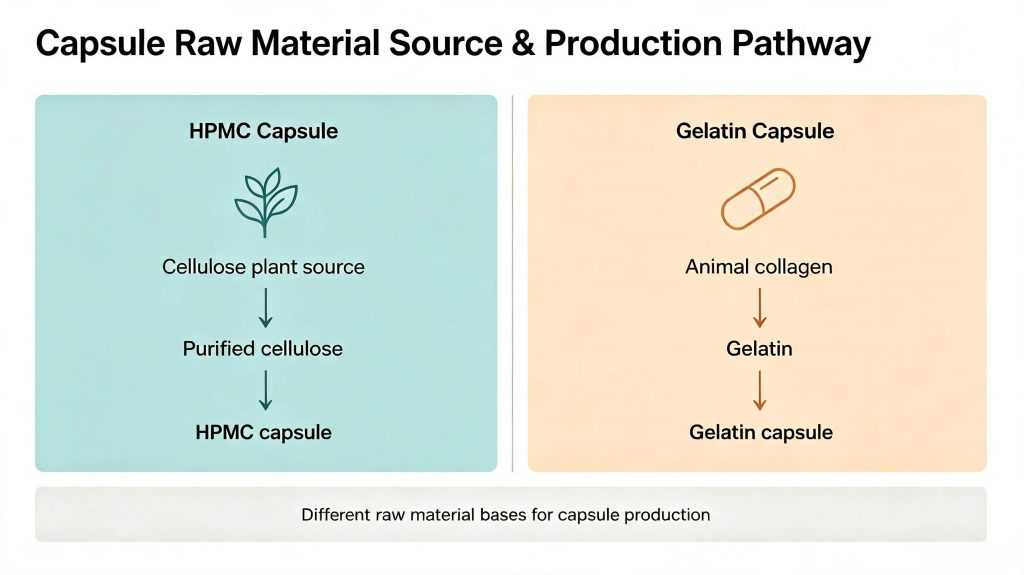
Caption:HPMC capsules are produced from purified cellulose, while gelatin capsules are derived from animal collagen sources.
Gelatin capsules are produced using gelatin, a protein obtained from collagen, and they have been widely used in pharmaceutical manufacturing for many decades. Their continued popularity comes down to three practical strengths.
Excellent mechanical properties. Gelatin provides good flexibility, strong capsule shell formation and reliable manufacturing performance — the foundation on which most legacy capsule-filling lines were originally built.
Cost advantage. Compared with HPMC capsules, gelatin capsules usually carry lower production costs, which makes them attractive for price-sensitive applications and high-volume generic products.
Established manufacturing process. Many pharmaceutical companies already run mature production systems designed around gelatin capsule technology, so switching away from gelatin carries real operational cost, not just a difference in raw material price.
The fundamental difference between these two capsule systems is the material source.
| Feature | HPMC Capsules | Gelatin Capsules |
|---|---|---|
| Main material | Hydroxypropyl Methylcellulose | Animal-derived gelatin |
| Source | Plant cellulose | Collagen |
| Animal-free | Yes | No |
| Vegetarian suitable | Yes | No |
| Moisture content | Lower | Higher |
| Stability | Excellent | Good |
| Market acceptance | Broad | Traditional |
From a formulation perspective, neither HPMC nor gelatin is universally better — the correct choice depends on the complete product system. A probiotic supplement manufacturer, for example, may prefer HPMC capsules because lower moisture content helps protect probiotic activity, while a traditional pharmaceutical product focused mainly on cost efficiency may continue using gelatin capsules without issue. Therefore, the best decision in any HPMC vs Gelatin Capsules evaluation should consider the entire product lifecycle rather than only the capsule material itself.
When pharmaceutical manufacturers compare HPMC vs Gelatin Capsules, the decision should never rest on material origin alone. The capsule shell directly affects product stability, moisture control, dissolution behavior, manufacturing performance and final consumer acceptance. Although both capsule types serve oral dosage forms, they differ significantly in physical properties and application advantages — differences that matter across pharmaceutical formulations, dietary supplements, probiotics, herbal extracts, vitamins and minerals, and nutraceutical products generally.
| Factor | HPMC Capsules | Gelatin Capsules |
|---|---|---|
| Material source | Plant-derived cellulose | Animal-derived collagen |
| Main polymer | Hydroxypropyl Methylcellulose | Gelatin protein |
| E Number | E464 | Not classified as a cellulose derivative |
| Vegetarian suitability | Excellent | Not suitable |
| Vegan suitability | Excellent | Not suitable |
| Halal compatibility | Easier to achieve | Depends on gelatin source |
| Kosher compatibility | Easier to achieve | Depends on certification |
| Moisture content | Low | Higher |
| Humidity stability | Excellent | Moderate |
| Temperature stability | Excellent | Moderate |
| Chemical stability | High | Medium |
| Cross-linking risk | Very low | Possible under certain conditions |
| Oxygen sensitivity | Lower impact | Higher impact in some formulations |
| Dissolution performance | Excellent | Excellent |
| Drug compatibility | Broad compatibility | Broad compatibility |
| Hygroscopic ingredient suitability | Excellent | More challenging |
| Global consumer acceptance | Very high | Variable |
| Production cost | Higher | Lower |
| Traditional market acceptance | Increasing rapidly | Established |
The most fundamental difference between HPMC capsules and gelatin capsules is the origin of the capsule material.
HPMC capsules: cellulose-based material. Manufacturers produce HPMC capsules from Hydroxypropyl Methylcellulose, derived from purified cellulose — one of the most abundant natural polymers, widely used across pharmaceutical, food and cosmetic industries. Because HPMC is plant-derived, it offers advantages for vegetarian supplements, vegan products, plant-based health products and animal-free pharmaceutical applications. For manufacturers targeting global markets, HPMC capsules simplify product positioning, since they avoid the concerns often associated with animal-derived ingredients.
Gelatin capsules: protein-based material. Manufacturers produce gelatin capsules from collagen obtained from animal sources — depending on the supplier, this may include bovine, porcine or fish sources. Gelatin’s excellent film-forming properties explain why it has anchored capsule manufacturing for decades. However, its animal origin creates additional considerations around religious requirements, vegetarian consumers, vegan markets and source traceability, all of which complicate global positioning in ways HPMC simply doesn’t.
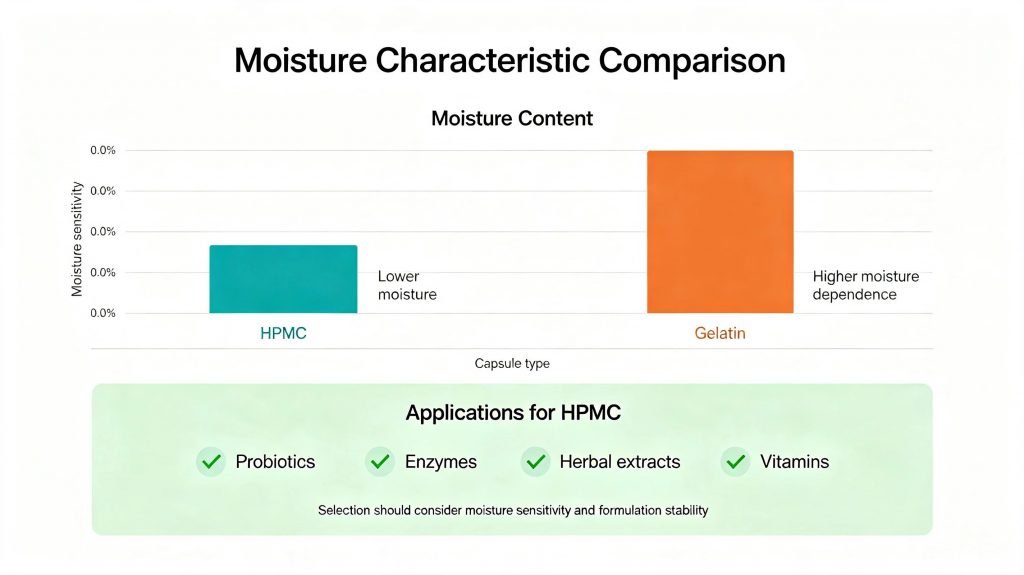
Caption:HPMC capsules are widely used in pharmaceutical, nutraceutical, probiotic and herbal supplement applications.
One of the most important differences in the HPMC vs Gelatin Capsules comparison is moisture behavior — a factor that becomes especially important for manufacturers producing probiotic supplements, enzyme products, herbal extracts, vitamin formulations and other hygroscopic ingredients.
HPMC capsules: lower moisture and better stability. HPMC capsule shells generally carry lower moisture content than gelatin capsules, which provides real advantages when formulations contain water-sensitive ingredients. For probiotics, since many strains are sensitive to moisture, excess exposure can affect microbial activity, shelf stability and overall product performance — and HPMC capsules can provide a more suitable environment for these moisture-sensitive formulations. For herbal extracts, many botanical ingredients contain active compounds that humidity can degrade, so HPMC capsules help manufacturers control storage stability more precisely.
Gelatin capsules: higher moisture dependence. Gelatin needs moisture to stay flexible and avoid brittleness, but this same characteristic creates real challenges. Under high humidity, capsule shells may soften, mechanical strength may decrease, and storage stability may suffer; under very dry conditions, gelatin capsules may become brittle and more prone to cracking. As a result, gelatin capsule performance depends more heavily on environmental humidity control than HPMC does.
Temperature stability matters wherever global supply chains involve long-distance transportation, tropical climates, warehouse storage or seasonal temperature swings.
HPMC capsules: strong temperature resistance. HPMC capsules generally demonstrate good stability across different temperature conditions, offering better resistance to environmental change, lower sensitivity to humidity fluctuations and more reliable performance during transportation. This makes HPMC capsules attractive for companies supplying products to Southeast Asia, the Middle East, Latin America and other tropical regions.
Gelatin capsules: more sensitive to temperature conditions. Gelatin capsule properties may shift under certain temperature and humidity combinations — high temperature paired with humidity, for instance, can affect capsule hardness, shell integrity and storage performance. Consequently, manufacturers using gelatin capsules often need stricter environmental control throughout storage and transportation.
A common question from pharmaceutical manufacturers is whether HPMC capsules dissolve as well as gelatin capsules. The answer is yes: both HPMC and gelatin capsules deliver excellent dissolution performance when properly manufactured, though the exact behavior depends on capsule formulation, manufacturing process, active ingredient characteristics and testing conditions.
Gelatin capsules bring rapid hydration, fast shell breakdown and an established dissolution profile, backed by a long history of successful use in immediate-release pharmaceutical products. HPMC capsules, meanwhile, offer reliable dissolution and good performance across different storage conditions, making them well suited to moisture-sensitive formulations. Because modern HPMC capsule technology has improved significantly compared with earlier cellulose capsule systems, HPMC capsules are now widely accepted for pharmaceutical and nutraceutical applications.
Cross-linking is a technical issue that pharmaceutical professionals search for frequently, and it’s worth explaining directly.
Gelatin capsule cross-linking. Because gelatin is a protein material, it may interact under certain conditions with aldehydes, certain active ingredients or oxidation products, creating cross-linking reactions. These reactions can slow dissolution, reduce capsule performance and produce unwanted changes during stability testing.
HPMC capsules and cross-linking. It is a cellulose derivative rather than a protein, so it carries a much lower risk of cross-linking reactions — a meaningful advantage for formulations where long-term stability is a priority rather than a bonus.
The best capsule material ultimately depends on the active ingredient’s own characteristics.
Manufacturers often prefer HPMC capsules for probiotics, since the lower moisture environment better protects sensitive strains; for herbal supplements, since HPMC suits botanical ingredients and offers good storage stability; for vitamins and minerals, since HPMC provides broad compatibility; and for moisture-sensitive compounds generally, since HPMC reduces unwanted moisture interaction.
Manufacturers commonly use gelatin capsules for traditional pharmaceutical products, because gelatin technology has been established for many years, and for cost-sensitive supplements, where material cost is the primary consideration.
Consumer expectations have shifted significantly. Many customers now actively look for vegetarian, vegan, plant-based, clean-label and sustainable products — a trend that has directly increased demand for HPMC capsules. For supplement brands entering international markets, HPMC capsules therefore provide broader acceptance across different consumer groups than gelatin capsules can offer alone.
Choose HPMC capsules when you need: a plant-based capsule solution, vegetarian or vegan positioning, halal-friendly formulation options, better moisture stability, sensitive-ingredient protection, or global market acceptance.
Choose gelatin capsules when you need: lower production cost, traditional capsule technology, established pharmaceutical processes, or strong mechanical properties.
The choice between HPMC vs Gelatin Capsules ultimately depends on the complete product strategy. HPMC capsules offer advantages in stability, consumer acceptance, moisture-sensitive applications and plant-based requirements, while gelatin capsules remain valuable because of cost efficiency, manufacturing familiarity and long-term industry adoption. For modern pharmaceutical and nutraceutical manufacturers, HPMC capsules are increasingly becoming the preferred alternative when product quality, market flexibility and long-term stability are the priorities.
The pharmaceutical and nutraceutical industries have changed significantly over the past decade. While gelatin capsules remain an important dosage form, more manufacturers are evaluating HPMC vs Gelatin Capsules when developing new products — a shift driven by changing consumer preferences, expanding international markets, stricter regulatory expectations and the growing use of moisture-sensitive active ingredients. Today, HPMC capsules are no longer viewed simply as a vegetarian alternative; instead, they’ve become a strategic choice for products that require better stability, broader market acceptance and greater formulation flexibility.
Pharmaceutical companies require capsule shells that offer consistent quality, reliable dissolution, excellent machinability and compatibility with a wide range of active pharmaceutical ingredients (APIs). Compared with gelatin capsules, HPMC capsules often provide additional advantages in formulations where environmental stability and ingredient compatibility are critical, spanning prescription medicines, over-the-counter products, traditional herbal medicines, controlled manufacturing environments and export pharmaceutical products.
When selecting between HPMC vs Gelatin Capsules, pharmaceutical manufacturers usually evaluate API compatibility, stability during storage, capsule filling performance, dissolution characteristics, regulatory compliance and export market requirements. Moisture-sensitive drug formulations deserve special attention here: many pharmaceutical ingredients — certain antibiotics, enzymes, biological ingredients and sensitive chemical compounds — are hygroscopic, meaning they readily absorb moisture from the environment. Because excessive moisture can affect stability, potency, shelf life and consistency, and because HPMC capsules generally contain less moisture than gelatin capsules, manufacturers frequently select HPMC for these formulations.
The dietary supplement industry has experienced rapid global growth, and consumers increasingly prefer products that are plant-based, vegetarian, vegan, non-GMO and clean-label. As a result, many supplement brands now specify HPMC capsules as their preferred capsule shell across vitamins (Vitamin C, Vitamin D, B-complex, multivitamins), mineral supplements (calcium, magnesium, zinc, iron), herbal supplements (turmeric, ginseng, ashwagandha, milk thistle, green tea extract) and functional ingredients (Coenzyme Q10, curcumin, lutein, resveratrol). For these products, the comparison of HPMC vs Gelatin Capsules often focuses on consumer preference just as much as technical performance.
One of the fastest-growing applications for HPMC capsules is probiotics. Because probiotic microorganisms are highly sensitive to environmental conditions, exposure to moisture can reduce bacterial viability before the product even reaches consumers. Compared with gelatin capsules, HPMC capsules provide several potential advantages: lower moisture exposure, better storage stability, improved shelf-life protection, and reduced risk of environmental moisture affecting sensitive strains. For probiotic manufacturers exporting products to tropical or humid regions, HPMC capsules are therefore often considered the preferred solution.
Herbal supplements continue to gain popularity worldwide, with common ingredients including Ginkgo Biloba, turmeric extract, Garcinia Cambogia, ginseng, ginger powder, Rhodiola and green coffee bean extract. Because many botanical extracts contain natural compounds that moisture, oxygen or storage conditions can affect, manufacturers comparing HPMC vs Gelatin Capsules often select HPMC capsules for the better environmental stability, plant-based positioning, wider consumer acceptance and compatibility with botanical formulations they provide.
The sports nutrition industry has also increased demand for HPMC capsules, particularly across amino acids, creatine, electrolytes, performance supplements and recovery products. Since consumers purchasing sports nutrition products frequently expect vegan capsules, clean-label ingredients and animal-free formulations, many premium sports nutrition brands now use HPMC capsules as a deliberate product-differentiation strategy.
International regulations and consumer expectations vary significantly across regions, so capsule selection directly affects market accessibility for manufacturers exporting worldwide.
North America. Consumers increasingly prefer plant-based supplements, vegan products and sustainable ingredients — trends HPMC capsules align with naturally.
Europe. European supplement brands often emphasize clean-label formulations, vegetarian certification and sustainable sourcing, categories where HPMC capsules are widely accepted.
Middle East. Halal compliance is an important consideration here. Although halal-certified gelatin does exist, manufacturers often find HPMC capsules easier to position, since they’re plant-derived from the outset.
Asia-Pacific. Growing health awareness has increased demand for functional foods, herbal supplements and premium nutraceuticals, and many brands choose HPMC capsules specifically to meet the expectations of health-conscious consumers in this region.
Consumer purchasing decisions no longer rest on product efficacy alone — packaging claims influence buying behavior too. Labels such as “Vegetarian Capsules,” “Vegan Capsules,” “Plant-Based Capsules” and “Animal-Free Capsules” can meaningfully improve product appeal in many markets. For premium supplement brands, HPMC capsules therefore provide marketing advantages that extend well beyond technical performance.
| Application | Recommended Capsule | Main Reason |
|---|---|---|
| Prescription pharmaceuticals | Both | Depends on formulation requirements |
| OTC medicines | Both | Cost and formulation determine selection |
| Herbal supplements | HPMC | Plant-based positioning and ingredient compatibility |
| Probiotic supplements | HPMC | Lower moisture content |
| Enzyme formulations | HPMC | Better moisture protection |
| Vitamin supplements | HPMC | Improved stability and consumer preference |
| Mineral supplements | HPMC | Broad compatibility |
| Sports nutrition | HPMC | Vegan and clean-label positioning |
| Traditional pharmaceutical products | Gelatin | Mature manufacturing technology |
| Cost-sensitive products | Gelatin | Lower production cost |
The comparison of HPMC vs Gelatin Capsules reflects a broader transformation within the pharmaceutical and nutraceutical industries. Several long-term trends are driving HPMC adoption: growing demand for plant-based healthcare products, increasing exports to global markets, higher expectations for ingredient transparency, rising popularity of clean-label supplements, expansion of vegan and vegetarian product lines, and greater focus on formulation stability. Together, these trends suggest that HPMC capsules will continue gaining market share, particularly in premium pharmaceutical and dietary supplement applications.
Based on ACTA’s experience supplying pharmaceutical-grade cellulose materials, capsule selection should never rest on capsule shell material alone. Manufacturers should evaluate the complete formulation system, including active ingredient properties, moisture sensitivity, filling process, storage conditions, transportation environment, target consumer market and regulatory requirements. In many projects, the optimal solution isn’t found by replacing gelatin with HPMC universally, but by selecting the capsule material that best matches the formulation and production process.
Beyond supplying pharmaceutical-grade HPMC, ACTA provides technical support to help manufacturers select suitable HPMC viscosity grades, evaluate compatibility with active ingredients, optimize formulation performance, support laboratory and pilot-scale testing, and access complete technical documentation — including TDS, COA, SDS and certification packages on request. This application-focused approach helps pharmaceutical and nutraceutical manufacturers reduce development risk while improving product quality and market competitiveness.
Need Help Selecting the Right HPMC Grade?
Every formulation has different requirements. ACTA can support manufacturers with HPMC grade recommendation, technical documents, sample evaluation and application guidance. Contact our technical team for support. Request HPMC Sample →
One of the most common questions pharmaceutical and supplement manufacturers ask when evaluating HPMC vs Gelatin Capsules is whether HPMC capsules can completely replace gelatin capsules. The short answer: yes, HPMC capsules can replace gelatin capsules in many pharmaceutical and nutraceutical applications, but the decision depends on formulation requirements, manufacturing conditions and target market expectations.
HPMC capsules have become one of the most widely accepted alternatives to gelatin capsules because they offer plant-based origin, low moisture characteristics, broad consumer acceptance, good compatibility with sensitive ingredients, and strong performance in global markets. Gelatin capsules, however, still maintain advantages in certain applications thanks to lower cost, long-established manufacturing processes and strong mechanical properties. Therefore, the choice between HPMC and gelatin should never be viewed as simply replacing one material with another — the correct selection depends on the complete product strategy.
Manufacturers usually consider switching from gelatin capsules to HPMC capsules for four main reasons.
The most common reason companies choose HPMC capsules is consumer demand for plant-based products. Modern supplement consumers increasingly look for vegetarian capsules, vegan capsules, plant-based ingredients and animal-free products. Since gelatin capsules cannot meet vegan requirements — gelatin is, after all, derived from animal collagen — HPMC capsules, produced from cellulose, fit naturally into vegan supplements, vegetarian products and plant-based nutrition brands. For companies targeting premium health markets, switching from gelatin to HPMC can meaningfully improve product acceptance.
Moisture sensitivity is one of the biggest technical differences in the HPMC vs Gelatin Capsules comparison. Many modern formulations contain ingredients that require better moisture control, including probiotics, enzymes, herbal extracts, effervescent ingredients and certain vitamins. Because gelatin capsules naturally contain higher moisture levels, they may not always be the ideal choice for these formulations, whereas HPMC capsules generally provide lower moisture content, better protection for sensitive ingredients and improved storage flexibility. For products requiring longer shelf stability, manufacturers often prefer HPMC capsules for exactly this reason.
Global supplement companies often need products that satisfy different consumer expectations, since a capsule suitable for one market may face limitations in another. A gelatin capsule acceptable in one region, for example, may raise questions elsewhere regarding animal origin, vegetarian requirements or religious considerations. HPMC capsules provide broader international acceptance because they’re plant-derived, suitable for vegetarian positioning, and easier to communicate globally — which matters especially for companies selling across Europe, North America, the Middle East and Southeast Asia.
Capsule choice isn’t only a technical decision; it’s also a marketing decision. Consumers increasingly associate HPMC capsules with premium supplements, clean-label products, natural formulations and sustainable choices, so for many supplement brands, the capsule shell itself becomes part of the product’s value proposition. A product marketed as “Vegetarian Capsules” or “Vegan Capsules” may attract consumers who actively avoid animal-derived ingredients.
Advantage 1: plant-based and vegan-friendly. The strongest advantage of HPMC capsules remains their plant-based origin, which makes them suitable for vegetarian products, vegan supplements, plant-based health products and animal-free formulations — an attractive fit for brands targeting modern consumer preferences.
Advantage 2: better moisture stability. HPMC capsules generally hold lower moisture content than gelatin capsules, which benefits products containing moisture-sensitive active ingredients, probiotic strains and botanical extracts. Improved moisture control can contribute to better stability, longer shelf life and more reliable product performance overall.
Advantage 3: lower risk of cross-linking. Because gelatin is a protein material, it may experience cross-linking under certain conditions — triggered by aldehyde exposure, oxidation reactions or interaction with specific active ingredients — which can affect capsule dissolution and drug release performance. Since HPMC is a cellulose derivative, it carries significantly lower cross-linking concerns, making it attractive for applications where long-term stability matters most.
Advantage 4: broad consumer acceptance. A major benefit of HPMC capsules is market flexibility: a single capsule type can support multiple positioning strategies at once — vegetarian, vegan, plant-based and clean-label — which helps manufacturers simplify product development across different regions.
Advantage 5: good compatibility with sensitive ingredients. Many modern supplements contain advanced active ingredients such as probiotics, plant extracts, enzymes and functional ingredients. Manufacturers frequently select HPMC capsules because they provide a suitable environment for these sensitive formulations.
ACTA supports manufacturers with:
Pharmaceutical grade HPMC recommendation
Technical documents
Sample evaluation
Application support
Although HPMC capsules provide many advantages, manufacturers should also understand their limitations. A professional comparison of HPMC vs Gelatin Capsules has to weigh both benefits and challenges honestly.
Limitation 1: higher cost compared with gelatin. One of the main disadvantages of HPMC capsules is cost. HPMC capsule production generally requires more advanced processing, specialized raw materials and additional manufacturing control, so HPMC capsules usually cost more than gelatin capsules. Even so, many manufacturers consider this additional cost acceptable because of the premium product positioning, better market acceptance and expanded export opportunities it enables.
Limitation 2: different manufacturing conditions. HPMC and gelatin capsules don’t behave exactly the same way during production. Manufacturers switching from gelatin to HPMC may need to evaluate filling equipment compatibility, storage conditions, production parameters and capsule handling procedures — a successful transition requires genuine technical evaluation, not simply changing materials.
Limitation 3: specific grade selection is important. Not all HPMC materials suit capsule production. Manufacturers need pharmaceutical-grade HPMC with controlled viscosity, substitution level, purity and moisture content, since using unsuitable HPMC grades may result in poor film formation, inconsistent capsule quality and avoidable production difficulties.
Choose HPMC capsules if you need: vegetarian or vegan positioning, plant-based product claims, better moisture control, global market flexibility, sensitive-ingredient protection, or premium supplement positioning.
Choose gelatin capsules if you need: lower material cost, established production technology, traditional pharmaceutical acceptance, or cost-sensitive product positioning.
| Product Type | Recommended Choice | Main Reason |
|---|---|---|
| Vegan supplements | HPMC | Plant-based requirement |
| Vegetarian vitamins | HPMC | Consumer acceptance |
| Probiotics | HPMC | Moisture-sensitive formulation |
| Herbal extracts | HPMC | Stability and clean-label positioning |
| Premium supplements | HPMC | Marketing advantage |
| Traditional medicines | Both | Depends on market |
| Low-cost supplements | Gelatin | Cost advantage |
| Large-volume generic products | Gelatin | Manufacturing economics |
Consider a supplement company selling probiotic products internationally. Its initial formulation relied on gelatin capsules, but the company began facing increasing customer requests for vegetarian options and stability concerns in humid export markets. After evaluation, the company switched to HPMC capsules — and gained an expanded vegetarian customer base, better product positioning, improved moisture management and easier international marketing as a result. This type of transition is becoming increasingly common across the global supplement industry.
The goal of selecting HPMC capsules isn’t simply to replace gelatin. The better approach is to evaluate product requirements, target customers, storage conditions, ingredient sensitivity and regulatory expectations together. For some products, gelatin remains an excellent solution; for many modern pharmaceutical and nutraceutical products, HPMC provides advantages that better match current market trends.
The question “Can HPMC replace gelatin capsules?” doesn’t have a universal yes-or-no answer. HPMC capsules make an excellent alternative when manufacturers need plant-based solutions, better moisture stability, international market acceptance or sensitive-ingredient protection. Gelatin capsules remain valuable where cost efficiency, traditional processing and established technology are the main priorities. The best capsule material is simply the one that matches the product, the manufacturing process and the market strategy.
The global pharmaceutical and nutraceutical industries are experiencing a major shift in capsule material selection. For many years, gelatin capsules dominated the market because of their established manufacturing technology, reliable performance and competitive cost. However, increasing demand for plant-based products, vegetarian supplements, vegan nutrition, clean-label formulations and sustainable healthcare products has accelerated the adoption of HPMC capsules. The comparison of HPMC vs Gelatin Capsules is therefore no longer only a technical discussion — it has become a strategic decision involving consumer expectations, brand positioning, international market access, product sustainability and long-term business development.
Expansion of plant-based health products. The plant-based movement has expanded well beyond food and beverages into pharmaceuticals and supplements. Because consumers increasingly prefer products aligned with vegetarian lifestyles, vegan principles, natural ingredient preferences and ethical sourcing expectations, demand for vegetable capsules, plant-derived excipients and animal-free formulations has grown accordingly. HPMC capsules sit well within this trend, since they’re manufactured from cellulose, a natural plant-derived polymer.
Increasing demand from the nutraceutical industry. The nutraceutical market has grown rapidly, driven by rising consumer interest in preventive healthcare across vitamins, minerals, probiotics, herbal supplements, sports nutrition and beauty supplements. Many brands entering these categories prefer HPMC capsules specifically because they support premium product positioning — a vegan probiotic launch, for instance, benefits from the vegetarian compatibility, clean-label positioning and better consumer acceptance that HPMC provides.
Growth of global supplement export markets. Many supplement manufacturers now sell internationally, which creates additional challenges since different regions carry different expectations. North America shows growing demand for vegan supplements, plant-based products and clean-label health products. Europe maintains a strong focus on sustainability, transparency and vegetarian products. The Middle East emphasizes halal requirements and ingredient source transparency. Asia-Pacific shows rapid growth in functional nutrition, herbal supplements and wellness products. Across all of these regions, HPMC capsules give manufacturers broader market flexibility than traditional gelatin capsules can provide.
Sustainability has become an increasingly important factor in pharmaceutical and supplement product development, as brands evaluate not only product performance but also ingredient source, environmental impact and supply chain transparency.
Plant-derived raw material. Because manufacturers produce HPMC from cellulose, a renewable plant-based material, it provides real advantages for companies developing sustainable supplements, green healthcare products and environmentally conscious brands — advantages that animal-derived gelatin simply cannot match.
Consumer perception and brand value. Today, capsule selection influences consumer perception directly. A product label reading “Vegetarian Capsule,” “Vegan Capsule” or “Plant-Based Capsule” can create additional value for certain consumer groups, and for premium supplement brands, the capsule shell becomes part of the overall product identity.
| Market Factor | HPMC Capsules | Gelatin Capsules |
|---|---|---|
| Plant-based trend | Excellent fit | Limited |
| Vegan market | Strong advantage | Not suitable |
| Traditional pharmaceutical use | Growing | Strong |
| Premium supplement positioning | Excellent | Moderate |
| Cost competitiveness | Lower advantage | Strong advantage |
| Global consumer acceptance | Broad | Depends on source |
| Sustainability positioning | Strong | More challenging |
Trend 1: more brands moving toward clean-label products. Consumers increasingly want simple, understandable product information — transparent ingredients, plant-based materials and fewer unnecessary additives. HPMC capsules support this direction directly, since they’re widely recognized as a plant-derived capsule option.
Trend 2: growth of personalized nutrition. Personalized nutrition is becoming an important supplement-industry trend, with future products focusing on individual health needs, targeted formulations and specific nutrient combinations. This shift will increase demand for flexible capsule systems capable of handling different active ingredients, and HPMC capsules are well positioned here because of their broad formulation compatibility.
Trend 3: increasing demand for moisture-sensitive formulations. Modern supplements increasingly include advanced ingredients such as probiotics, enzymes, botanical extracts and functional compounds. As formulations grow more complex, capsule material performance becomes more important, and the moisture-stability advantages of HPMC capsules make them increasingly attractive for these applications.
Trend 4: more pharmaceutical companies evaluating alternatives to gelatin. Although gelatin remains widely used, many companies are actively reviewing alternative capsule systems in response to export market requirements, consumer preferences, product differentiation needs and stability considerations. Consequently, searches such as “HPMC vs Gelatin Capsules,” “gelatin capsule alternative” and “vegetable capsule benefits” continue to attract strong interest from pharmaceutical and supplement professionals.
From a pharmaceutical development perspective, HPMC capsules provide several strategic advantages. Manufacturers benefit from easier product positioning — since HPMC capsules allow companies to market products as vegetarian, vegan or plant-based — and from better international flexibility, since a single HPMC capsule solution can support multiple global markets without concerns tied to animal origin. HPMC capsules also expand formulation options for moisture-sensitive APIs, herbal ingredients, nutraceutical compounds and functional supplements.
Challenge. A supplement manufacturer was developing a premium probiotic product for international markets and faced several challenges at once: customers were requesting vegetarian capsules, the product targeted multiple countries, and the active ingredients were moisture-sensitive.
Previous solution. The company initially considered traditional gelatin capsules, but concerns quickly emerged around consumer acceptance, moisture sensitivity and international positioning.
New approach. The manufacturer evaluated HPMC capsules, focusing its assessment on capsule stability, product positioning and compatibility with probiotic ingredients.
Result. The company selected HPMC capsules because they better matched its target customers, export strategy and product positioning — demonstrating why the choice between HPMC vs Gelatin Capsules depends on more than technical specifications alone.
As demand for HPMC capsules grows, manufacturers need suppliers who provide more than raw materials. Important supplier capabilities include consistent quality control, since stable batch performance is essential for pharmaceutical applications; complete documentation support, typically covering Technical Data Sheets, Certificates of Analysis, Safety Data Sheets and quality documentation; and technical application support, since a professional supplier should help customers evaluate suitable HPMC grades, viscosity requirements, processing conditions and application compatibility.
As a cellulose-based ingredient supplier, ACTA believes the future of capsule development will focus increasingly on plant-based materials, functional performance, global compliance and sustainable ingredient solutions. ACTA provides cellulose-based pharmaceutical ingredients including pharmaceutical-grade HPMC, Microcrystalline Cellulose (MCC), Sodium CMC and other cellulose derivatives. For companies evaluating HPMC vs Gelatin Capsules, ACTA supports customers with product grade recommendations, technical documentation, application guidance and sample evaluation support — because the goal isn’t simply to supply ingredients, but to help manufacturers develop stable, competitive pharmaceutical and nutraceutical products.
The growth of HPMC capsules reflects a broader transformation in the pharmaceutical and supplement industries. While gelatin capsules remain an important traditional solution, HPMC capsules are increasingly preferred for applications requiring plant-based positioning, vegetarian and vegan compatibility, moisture-sensitive ingredient protection, global market acceptance and sustainable product strategies. The future of capsule development will likely involve a balance between traditional performance requirements and modern consumer expectations — and for many manufacturers, HPMC capsules represent not just an alternative to gelatin, but a more flexible solution for future product development.
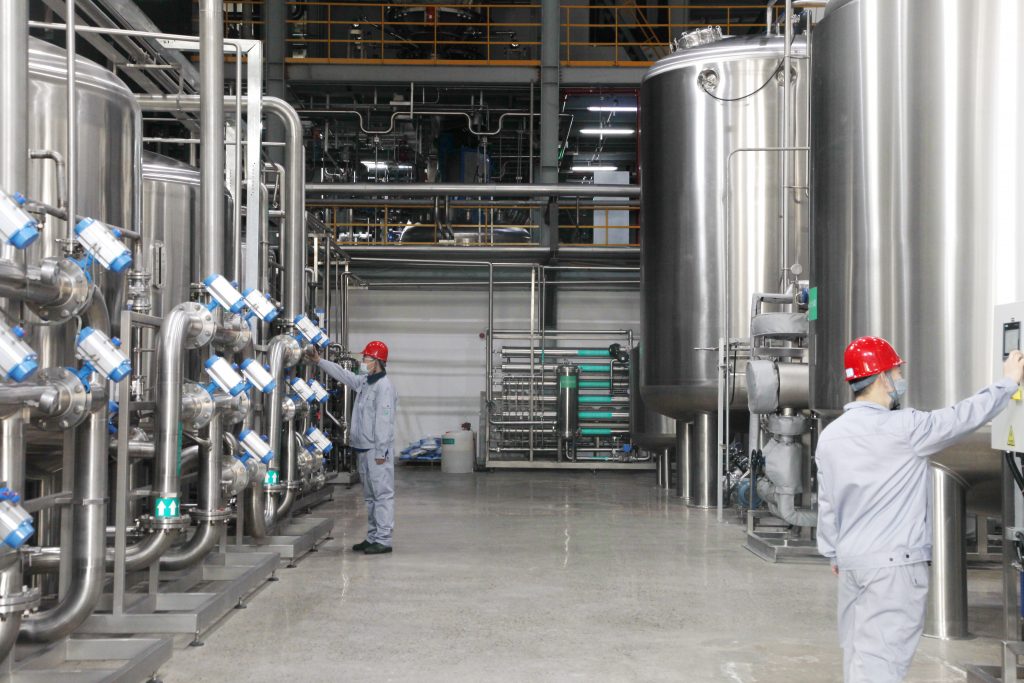
For pharmaceutical and nutraceutical manufacturers, selecting the right HPMC supplier matters just as much as selecting the right capsule material. The decision of HPMC vs Gelatin Capsules affects product stability, manufacturing efficiency, regulatory approval, consumer acceptance and long-term market competitiveness. However, even the best capsule concept can fail if the raw material supplier cannot provide stable quality, pharmaceutical-grade documentation, technical support and reliable supply capability. Manufacturers should therefore evaluate HPMC suppliers on both product quality and technical capability.
The first and most important consideration is whether the supplier can provide genuinely pharmaceutical-grade HPMC. Not all HPMC products suit capsule applications — capsule-grade HPMC requires strict control of purity, viscosity, substitution degree, moisture content, physical properties and batch consistency. A professional pharmaceutical HPMC supplier should understand capsule manufacturing requirements, pharmacopeia expectations, regulatory documentation and quality-control standards. When evaluating suppliers, manufacturers should specifically ask whether the supplier has pharmaceutical application experience, since a supplier experienced in pharmaceutical applications can provide far more reliable technical recommendations than a general chemical supplier.
Documentation is a critical part of supplier approval for pharmaceutical and nutraceutical companies. Before cooperation, buyers commonly require a Technical Data Sheet (TDS) covering product specifications, physical properties, recommended applications and storage conditions; a Certificate of Analysis (COA), normally including appearance, identification, viscosity, moisture, pH value where applicable, ash content, microbial requirements and heavy metals; a Safety Data Sheet (SDS) covering product safety information, handling requirements and storage recommendations; and, depending on the target market, additional certifications such as GMP-related documents, ISO certification, Halal certificates, Kosher certificates and food or pharmaceutical compliance documents. A supplier capable of providing complete documentation can significantly shorten the qualification process.
For pharmaceutical products, consistency is essential — a capsule manufacturer needs more than one good batch. They need stable quality across multiple shipments, consistent viscosity performance and reliable physical properties, since variation in HPMC quality can influence capsule production, film formation, dissolution behavior and final product stability. Buyers should therefore evaluate a supplier’s manufacturing experience, quality management system, batch testing procedures and long-term supply capability before committing.
A major difference between a raw material trader and a professional ingredient supplier is technical support. When evaluating HPMC vs Gelatin Capsules, manufacturers often need guidance on suitable HPMC grade, application compatibility, processing conditions and product optimization. A reliable supplier should support grade selection — since a probiotic manufacturer may focus on moisture control and stability, while a pharmaceutical manufacturer may focus on dissolution performance and regulatory requirements — as well as trial support, providing samples, technical information and testing support before manufacturers commit to laboratory evaluation, pilot testing and stability testing.
For international customers, supply reliability is essential. Important factors include production capacity, export experience, packaging standards, shipping support and communication efficiency. A professional HPMC supplier should understand international trade requirements, including export documentation, container loading, customer inspection and the quality-confirmation process.
| Evaluation Factor | Why It Matters |
|---|---|
| Pharmaceutical-grade HPMC | Ensures suitability for capsule applications |
| Stable batch quality | Reduces production risks |
| Complete documentation | Supports regulatory approval |
| Technical support | Helps optimize formulation |
| Sample availability | Allows performance evaluation |
| Export experience | Ensures smoother cooperation |
| Certification support | Meets market requirements |
Request HPMC Technical Recommendation
To recommend the correct HPMC grade, suppliers need more than a generic request for “HPMC for capsules” — a professional supplier needs to understand the actual application. Buyers should provide application information (hard capsules, pharmaceutical products, nutraceutical supplements, herbal products, probiotic capsules); product requirements (capsule size, filling material, active ingredient type, target market, required certifications); and, where available, technical requirements such as required viscosity, pharmacopeia standard, dissolution requirements and moisture requirements. The more information a buyer provides, the more accurately the supplier can recommend a suitable HPMC grade.
Successful capsule development rarely comes down to simply purchasing a material — it requires cooperation between the capsule manufacturer, the raw material supplier, the formulation team and the quality department. A supplement company developing a probiotic capsule, for example, might initially assume it needs “a stronger capsule,” when technical evaluation actually reveals the real solution lies in adjusting HPMC grade, improving packaging, optimizing moisture control or changing storage conditions. This is exactly why experienced suppliers offer more than products — they offer application knowledge.
Looking for a Reliable Pharmaceutical Grade HPMC Supplier?
ACTA provides cellulose-based ingredients for pharmaceutical and nutraceutical applications, and we support customers with TDS, COA, SDS and technical consultation. Get Technical Support →
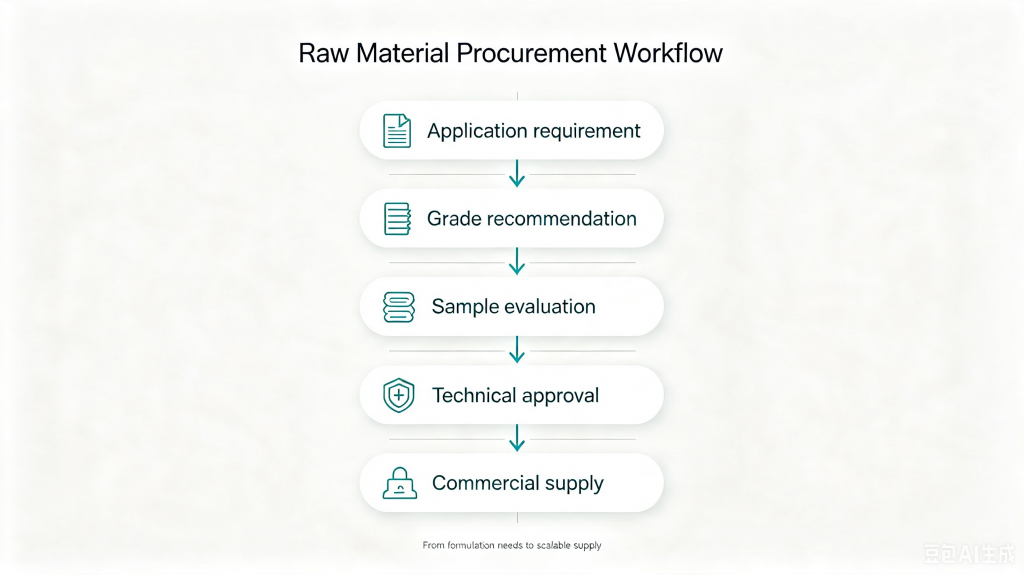
Caption:Selecting the right HPMC supplier requires evaluation of product quality, documentation, technical support and application experience.
ACTA specializes in cellulose-based functional ingredients and provides solutions for pharmaceutical, nutraceutical, food and industrial applications. Our pharmaceutical and nutraceutical cellulose ingredient portfolio includes pharmaceutical grade HPMC (Hydroxypropyl Methylcellulose), used across pharmaceutical formulations, nutraceutical products, capsule-related applications and functional excipient systems; Microcrystalline Cellulose (MCC), valued for MCC in direct compression tablets, pharmaceutical formulations and supplement manufacturing; and food grade Sodium CMC, used for stabilization, binding and functional pharmaceutical applications.
For customers comparing HPMC vs Gelatin Capsules, ACTA provides technical support including product selection — helping customers identify suitable grades based on application requirements, performance targets and processing conditions; documentation support, providing TDS, COA, SDS, quality documents and certification support; and sample evaluation, supporting customers with laboratory testing, product evaluation and technical communication.
A successful supplier relationship requires more than competitive pricing. Manufacturers value reliable quality, since consistent product performance supports stable production; technical communication, since fast and accurate technical responses help reduce development time; and long-term cooperation, since ACTA focuses on building lasting partnerships with pharmaceutical and nutraceutical companies worldwide, from initial sample request through complete production support and ongoing cellulose derivatives consultation.
If you’re developing pharmaceutical capsules, vegetarian supplements, probiotic products, herbal formulations or nutraceutical products and comparing HPMC vs Gelatin Capsules, ACTA can help evaluate the most suitable cellulose-based solution. Contact our technical team with your application details, required specifications, target market and estimated purchasing volume, and we can provide suitable HPMC grade recommendations, technical documents, samples for evaluation and application support.
The main difference between HPMC and gelatin capsules is the source material. HPMC capsules are made from hydroxypropyl methylcellulose, a plant-derived cellulose polymer, while gelatin capsules are made from animal collagen. The key differences include source (plant cellulose vs. animal collagen), vegan suitability (yes vs. no), moisture content (lower vs. higher), consumer acceptance (broad vs. market-dependent) and cost (higher vs. lower). The best choice depends on formulation requirements, target market and product positioning.
Neither capsule type is universally better. HPMC capsules are often preferred when manufacturers need vegetarian or vegan positioning, lower moisture characteristics, better acceptance in international markets, or compatibility with sensitive ingredients. Gelatin capsules may be preferred when lower cost is the priority, traditional pharmaceutical processes are already in place, or animal-derived gelatin is acceptable. The correct choice depends entirely on the application.
Yes, HPMC capsules can replace gelatin capsules in many applications, including dietary supplements, herbal products, probiotics, vitamins and functional nutrition products. However, manufacturers should evaluate active ingredient compatibility, production process, storage conditions and target market requirements before making the switch.
Companies are switching because of growing demand for vegetarian products, vegan consumer preferences, export market requirements, moisture-sensitive formulations and clean-label trends. HPMC capsules provide broader market flexibility than gelatin can offer alone.
Yes. HPMC capsules are plant-derived and suitable for vegetarian products, vegan products and plant-based supplements.
Yes. Since HPMC capsules do not contain animal-derived ingredients, manufacturers commonly use them for vegan supplements.
HPMC capsules are generally considered suitable for halal applications because they’re cellulose-based. However, manufacturers should confirm certification requirements with their target market and certification authority before making a halal claim.
HPMC is derived from cellulose, a natural polymer found in plants. Although HPMC is chemically modified to improve functionality, it originates from plant cellulose and is widely accepted for pharmaceutical and food applications.
Yes. Pharmaceutical-grade HPMC is widely used in capsule shells, pharmaceutical formulations and food applications. Safety depends on supplier quality control and compliance with applicable standards.
HPMC capsules are made from hydroxypropyl methylcellulose, water and optional approved processing ingredients depending on formulation requirements. The main component is plant-derived cellulose.
HPMC capsules generally contain lower moisture than gelatin capsules, which makes them suitable for ingredients sensitive to humidity, including probiotics, enzymes, herbal extracts and certain vitamins.
Yes. HPMC capsules are designed to dissolve and release their contents under appropriate conditions. Dissolution performance depends on capsule formulation, storage conditions, active ingredient properties and testing method.
In many applications, HPMC capsules provide better stability because they’re less sensitive to moisture-related issues. However, overall product stability still depends on active ingredients, packaging, storage environment and formulation design.
Yes. Many probiotic manufacturers choose HPMC capsules because probiotics can be sensitive to moisture, and HPMC capsules may help improve product protection during storage.
Yes. HPMC capsules are widely used for herbal extracts because they support plant-based positioning, consumer acceptance and moisture-sensitive formulations.
Yes. HPMC capsules are commonly used for multivitamins, Vitamin C, Vitamin D and Vitamin B products.
Yes. Pharmaceutical-grade HPMC capsules are used for many prescription and OTC applications.
HPMC capsules generally have good temperature stability compared with gelatin capsules. Even so, storage recommendations should always follow supplier specifications.
HPMC capsules are affected by environmental humidity, but they generally behave differently from gelatin capsules in this regard. Proper packaging and storage remain important either way.
The capsule material itself doesn’t fully determine shelf life — that depends on active ingredient stability, packaging, storage conditions and manufacturing quality. However, HPMC capsules may provide advantages for moisture-sensitive products specifically.
Many capsule filling machines can process HPMC capsules. However, manufacturers should confirm compatibility and optimize production parameters before scaling up.
HPMC capsule production requires more specialized technology compared with gelatin, since manufacturers need to control viscosity, drying conditions and film properties precisely.
Capsule manufacturing requires pharmaceutical-grade HPMC with controlled viscosity, substitution degree, purity and moisture content.
Generally, no — capsule production requires pharmaceutical-grade HPMC rather than standard food-grade HPMC, since the required quality standards differ significantly.
A professional supplier should provide a Technical Data Sheet (TDS), Certificate of Analysis (COA), Safety Data Sheet (SDS), quality certificates and regulatory documents when required.
Consider pharmaceutical experience, quality system, documentation capability, technical support and production consistency.
Important questions include: Is the product pharmaceutical grade? What are the viscosity specifications? Can you provide a COA? What certifications are available? Can you support sample testing?
Capsule performance depends on more than the raw material alone. Technical support helps manufacturers select suitable grades, reduce trial failures and improve production efficiency.
Yes. ACTA supplies cellulose-based functional ingredients, including pharmaceutical-grade HPMC, Microcrystalline Cellulose (MCC), Sodium CMC and other cellulose derivatives, along with technical support for pharmaceutical and nutraceutical applications.
Yes. Sample evaluation is commonly used before commercial cooperation, allowing manufacturers to evaluate performance, compatibility and processing behavior firsthand.
HPMC capsules are often preferred for probiotics because of their moisture characteristics and plant-based positioning.
HPMC capsules are widely used for herbal extracts due to their compatibility with plant-based supplements.
The answer depends on product strategy. HPMC is often selected for premium supplements, vegan products and international markets.
Both HPMC and gelatin capsules can be suitable. The choice depends on drug properties, manufacturing requirements and regulatory needs.
Yes, HPMC capsules generally cost more than gelatin capsules. Many brands accept the higher cost because of the market advantages, consumer preference and product differentiation it provides.
Growth is driven by vegan lifestyles, clean-label demand, global supplement trends and rising consumer awareness.
HPMC capsules are expected to continue growing because they align with major market trends. However, gelatin capsules will continue to have applications, particularly in cost-sensitive and traditional categories.
Because HPMC supports premium positioning, plant-based claims and global consumer acceptance.
HPMC capsules are plant-derived and support sustainability-focused product strategies.
HPMC capsules are widely accepted internationally, but manufacturers must still comply with destination market requirements.
Evaluate target consumers, ingredient sensitivity, market requirements and cost expectations together, rather than any single factor alone.
The biggest advantages are plant-based origin, moisture control and global acceptance.
The main disadvantage is higher cost compared with gelatin.
Many products can use either option, but testing is still recommended before finalizing the choice.
Capsule material can influence dissolution behavior, so compatibility testing remains important for any new formulation.
They may be used in certain formulations, but release performance ultimately depends on the complete formulation system, not the capsule shell alone.
Storage should follow supplier recommendations, typically avoiding excessive heat, humidity and direct sunlight.
Common evaluation methods include laboratory trials, stability testing, dissolution testing and production trials.
Buyers should provide the application, active ingredient, required capsule size, target market and technical requirements.
There’s no universal answer. HPMC capsules are often preferred for modern supplement products requiring plant-based positioning, global market acceptance and moisture-sensitive ingredient protection. Gelatin capsules remain suitable for many traditional applications. The best choice depends on the product, the process and the business strategy.
The comparison of HPMC vs Gelatin Capsules is becoming increasingly important for pharmaceutical, nutraceutical and supplement manufacturers. While gelatin capsules remain one of the most established capsule technologies worldwide, HPMC capsules have gained significant attention due to changing market demands, including the growth of vegan and vegetarian supplements, increasing demand for clean-label products, expansion of global nutraceutical markets, the need for improved formulation flexibility, and the growing importance of sustainable ingredient solutions.
However, no single capsule material suits every product. The best choice depends on a complete evaluation of active ingredient characteristics, moisture sensitivity, manufacturing process, storage environment, target market and consumer expectations — considered together, not separately.
| Your Requirement | Recommended Choice |
|---|---|
| Vegan or vegetarian supplement | HPMC Capsules |
| Plant-based product positioning | HPMC Capsules |
| Moisture-sensitive ingredients | HPMC Capsules |
| Probiotic formulations | HPMC Capsules |
| Herbal extracts | HPMC Capsules |
| Premium nutraceutical products | HPMC Capsules |
| Lowest capsule cost | Gelatin Capsules |
| Traditional pharmaceutical products | Gelatin Capsules |
| Established manufacturing process | Gelatin Capsules |
| Factor | HPMC Capsules | Gelatin Capsules |
|---|---|---|
| Raw material source | Plant cellulose | Animal collagen |
| Vegan suitability | Excellent | Not suitable |
| Vegetarian suitability | Excellent | Limited |
| Moisture content | Lower | Higher |
| Sensitive ingredient protection | Excellent | Good |
| Consumer acceptance | Global | Depends on market |
| Cost | Higher | Lower |
| Manufacturing history | Growing rapidly | Long-established |
| Premium positioning | Strong | Moderate |
| Sustainability positioning | Strong | More challenging |
The future of capsule development won’t simply be about replacing gelatin. Instead, manufacturers will increasingly focus on selecting the capsule system that best matches product performance, consumer demand, regulatory expectations and market strategy. HPMC capsules are expected to keep gaining importance because they solve real needs across plant-based healthcare products, vegan supplements, international market expansion, moisture-sensitive formulations and premium nutraceutical positioning. At the same time, gelatin capsules will continue playing an important role wherever cost efficiency and established manufacturing processes remain the priority.
Choosing the right capsule material is only one part of successful product development — the right raw material supplier helps manufacturers reduce development risk and improve product performance at every stage. ACTA provides cellulose-based functional ingredients and technical support for companies developing pharmaceutical products, nutraceutical supplements, functional health products and plant-based formulations, with a support approach built around grade recommendation, complete technical documentation, sample evaluation and application consultation — because the goal isn’t simply supplying ingredients, it’s helping manufacturers build stable, competitive products.
Whether you’re developing vegetarian supplements, probiotic products, herbal capsules or pharmaceutical formulations, ACTA can recommend a suitable cellulose-based solution. Send us your application details and technical requirements, and our technical team can provide suitable HPMC grade recommendations, technical documents, samples for evaluation and application support.
