

Choosing a reliable microcrystalline cellulose supplier is essential when MCC affects product quality, processing performance, and purchasing costs. This guide explains how to compare MCC grades, review technical specifications, assess supplier qualifications, evaluate samples, and compare quotations before committing to a commercial order. Whether you need conventional MCC powder or colloidal MCC (MCC Gel), the right choice depends on your application, documented product requirements, and testing results, not simply the lowest price per kilogram.
MCC serves the food, pharmaceutical, cosmetic, and industrial sectors, yet not every grade suits every application. Differences in particle characteristics, functional performance, documentation, and manufacturing consistency affect both processing efficiency and finished-product quality. Therefore, procurement managers, ingredient buyers, R&D teams, and production managers need a structured process, and this guide provides one. It keeps the focus on practical evaluation rather than promotional claims.
Before you request a quotation, confirm these six points:
A suitable MCC supplier explains what it offers, documents the relevant quality requirements, and supports a clear evaluation process before you place a large order.
Use these five gates to turn the checklist into a go/no-go decision. A supplier that does not pass one gate should not advance to the next.
| Gate | Condition to move forward | Where to check |
|---|---|---|
| 1. Product fit | The MCC type and the specific grade match your application | Sections 2–3 |
| 2. Document review | Specification, COA, and applicable documents can be verified | Sections 5, 8 |
| 3. Sample test | The sample meets the technical criteria you agreed in advance | Section 9 |
| 4. Commercial review | Quotation, lead time, payment, and delivery terms are acceptable | Section 7 |
| 5. Commercial verification | Batch documents, traceability, and change-notification requirements are clearly defined | Sections 8.3, 9.4 |
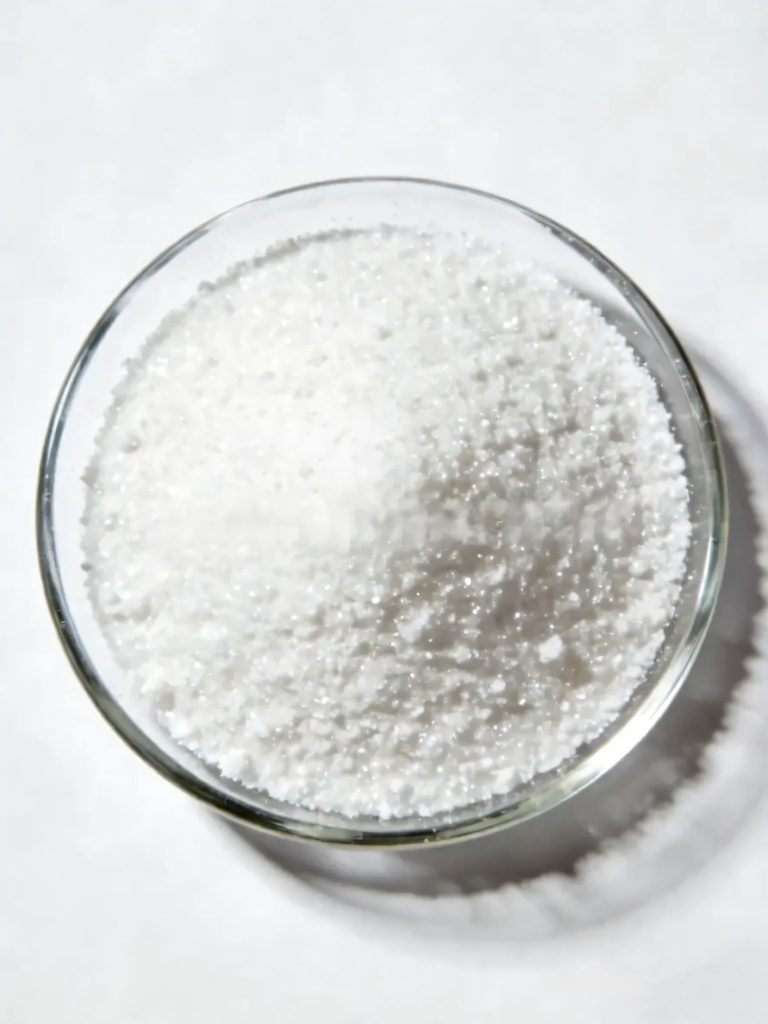
Microcrystalline cellulose is a purified, partially depolymerized cellulose that manufacturers use as a functional ingredient in pharmaceutical, food, and selected industrial applications. Suppliers generally offer it as a white or almost white, odorless powder, although detailed physical characteristics depend on the grade and manufacturing process.
Cellulose occurs naturally as a structural polysaccharide in plants. Commercial production generally follows these controlled stages, although exact processes vary between producers:
This overview describes a general concept, not a universal procedure.
This distinction matters more than any other in MCC sourcing.
Conventional MCC powder commonly serves pharmaceutical tablet formulations as a diluent and binder, and some grades suit selected food applications. Its value lies in powder properties and process suitability.
Colloidal MCC (MCC Gel) targets dispersed systems. Depending on formulation, it may provide suspension stability, structure, and texture control in food and beverages. Some commercial colloidal systems combine MCC with sodium carboxymethyl cellulose (CMC-Na), so the composition depends on the specific grade.For a reference definition of a colloid-forming combination of microcrystalline cellulose and sodium carboxymethyl cellulose, consult the USP–NF monograph preview. Buyers should still verify the composition and specifications of the specific commercial grade they intend to purchase.
The difference lies in function, not in the name. Conventional MCC powder does not automatically deliver the suspension behavior of a properly designed colloidal system. A beverage manufacturer with a sedimentation problem, for instance, should evaluate a colloidal stabilizer system instead of simply adding more conventional MCC powder.
No. Food-grade status depends on the grade, manufacturing controls, specifications, and the requirements of your destination market. Likewise, a food-grade product does not automatically meet pharmaceutical requirements. When you look for a food grade MCC supplier, treat “food grade” as a claim to document, and see Section 8 for the documents to request.
Selection starts with the application, not with the product name. Use the framework below to decide which product type to evaluate, and then narrow the choice to specific grades.
| Selection factor | Conventional MCC powder | Colloidal MCC / MCC Gel |
|---|---|---|
| Selection focus | Powder properties and process performance | Behavior in a dispersed system |
| Pharmaceutical tablets | Commonly relevant for suitable grades | Application-dependent; not assumed interchangeable |
| Beverage suspension | Not equivalent to a colloidal system by default | Often evaluated for suspension stabilization |
| Key evaluation | Application-specific process tests | Dispersion, hydration, stability, viscosity, sensory |
Treat this table as a framework, not a performance guarantee. Actual suitability comes from specifications and application testing.
When you source from a colloidal MCC supplier, consider the desired suspension and storage stability, the target viscosity and mouthfeel, the characteristics of the suspended particles, your hydration equipment, and ingredient compatibility. A higher reported viscosity is not automatically better, since excessive viscosity can complicate processing or create an undesirable texture.
Follow a simple flow. First, define the main performance objective. Second, compare the candidate grades against the current grade-specific specifications and test conditions in the technical data sheet. Third, confirm the choice through your own application testing. ACTA’s colloidal MCC grades differ in their viscosity ranges, and Section 11.1 explains how to evaluate them. For product detail, see ACTA’s Colloidal Microcrystalline Cellulose page.
Product codes are manufacturer-specific, so a similar name from another supplier does not guarantee identical performance. Approve a product by its documented specification and test results, not by its name. Section 5 explains how to read that data, and Section 8 lists the documents to request.
Buyers frequently make five mistakes:
Avoiding them improves qualification and reduces costly reformulation.When comparing grades, an experienced MCC supplier should explain the differences in particle characteristics, functional performance, and recommended applications.
The best grade depends on the application, because a grade that excels in tablets may not stabilize a beverage. The sections below show how each application changes what you ask of a supplier.
MCC is a widely used excipient in solid oral dosage forms. Depending on grade and formulation, it acts as a binder, a filler or diluent, a direct-compression excipient, and a formulation aid that influences tablet strength and disintegration. Suitable grades deform under pressure and form strong interparticle bonds, which supports direct compression. Still, performance depends on particle-size distribution, bulk density, moisture, lubricant level, compression force, and the other excipients.For pharmaceutical applications, buyers should check the applicable compendial requirements and confirm whether the material meets the relevant USP–NF Microcrystalline Cellulose monograph, where applicable.
Pharmaceutical buyers should evaluate compendial compliance, identification and purity specifications, particle size and density, moisture or loss on drying, microbiological requirements, change control, and supporting documentation. A product described simply as “MCC” does not automatically suit pharmaceutical use.
In food, selected MCC grades contribute structure, texture, or formulation performance. In sauces and dressings, performance depends on oil content, other hydrocolloids, pH and ionic environment, hydration procedure, shear, and the target sensory profile. If a sauce turns too thick, the cause may lie in the total stabilizer system instead of MCC alone. In powdered foods, flowability, dispersibility, and moisture sensitivity often matter more than viscosity, so ask your supplier which characteristics it controls.
Beverages must keep appearance, mouthfeel, and particle distribution stable throughout shelf life. Plant-based beverages, protein drinks, and some flavored drinks contain components that settle or separate. Depending on its composition, colloidal MCC may form a structured particle network that keeps ingredients distributed, and MCC combined with CMC-Na may add complementary effects.
| Formulation problem | What to investigate |
|---|---|
| Sediment | Particle size, density, stabilizer selection, hydration, storage |
| Visible separation | Ingredient compatibility, processing, complete stabilizer system |
| Inconsistent mouthfeel | Concentration, viscosity, particle distribution, sensory targets |
| Excessive thickness | Total stabilizer loading, grade, processing |
| Batch variation | Raw-material consistency, mixing, hydration, quality controls |
Diagnose these issues through formulation testing, and do not assume the MCC caused them. For more application context, see ACTA’s Colloidal MCC Stabilizer Uses page.
Oat, soy, and almond beverages all need physical stability, yet their challenges differ. Oat milk may involve cereal solids and starch-related viscosity changes, soy milk contains proteins that influence particle interactions, and almond milk may contain dispersed particles and oil-related components. Consequently, avoid asking a supplier for a generic “plant-based milk grade.” Share the beverage type, key ingredients, processing conditions, current stability problem, and sensory target instead.
Ice cream and frozen desserts need control over ice crystal growth, melting behavior, and texture. Manufacturers usually evaluate a complete stabilizer system, so assess MCC for its intended role rather than assuming it replaces a conventional blend. For broader context, see ACTA’s food stabilizers resource.
| Application | Main priorities | Qualification step |
|---|---|---|
| Pharmaceutical tablets | Compendial compliance, compression, consistency | Verify grade documents; run formulation trials |
| Food powders | Specification, handling, regulatory suitability | Confirm food-grade status; test the blend |
| Sauces and dressings | Texture, structure, compatibility | Test the complete formulation |
| Plant-based beverages | Suspension, mouthfeel, heat compatibility | Test through storage |
| Ice cream | Texture, melting, system performance | Test under freezing and storage conditions |

This section is the technical core of the guide. Suppliers may offer similar-sounding products with different specifications and test methods, so set acceptance criteria before you approve anyone. Moreover, distinguish specifications that define quality from performance tests that show suitability, because a material can meet its published specification yet behave differently in your formulation.
A COA documents analytical results for a specific batch, while a specification states the permitted limits. Check that the product name and grade match your order, the batch number appears clearly, both limits and actual results are reported, the test methods are identified, and the results meet your criteria. A COA listing only generic ranges tells you little, so define in the purchase agreement which parameters must appear and what happens if a batch fails.
| Parameter | Why it matters | What to ask |
|---|---|---|
| Moisture or LOD | Affects handling, storage, dispersion | Specification, method, storage advice. Moisture and LOD are not automatically identical |
| Particle size | Affects flow, blending, dispersion, compression | Typical or guaranteed? Sieving or laser diffraction? |
| Bulk and tapped density | Affects storage, filling, dosing | Method; density does not fully describe flowability |
| Ash, purity, identification | Supports chemical requirements | Parameter name, limit, referenced standard |
| Microbiological and contaminant limits | Relevant to food and pharma use | Applicable limits and test reports |
Do not compare parameter names alone. Compare the test conditions, methods, and specification limits as well, because different methods can yield results that do not compare directly.
Viscosity is relevant for certain colloidal MCC products, but it is not a universal quality indicator for all MCC grades. A viscosity value is meaningful only when the measurement conditions are clearly defined, including concentration, sample preparation, hydration time, temperature, instrument configuration, and measurement speed.
When comparing colloidal MCC grades, confirm that the test methods and preparation conditions are sufficiently comparable. Otherwise, differences in reported viscosity may reflect the testing procedure rather than a meaningful difference in product performance.
More importantly, laboratory viscosity alone cannot predict performance in a finished formulation. For plant-based beverages and other dispersed systems, evaluate suspension stability, mouthfeel, ease of processing, compatibility with other ingredients, and performance after the relevant heat treatment and storage conditions. Test candidate grades under consistent conditions before making a purchasing decision.
One compliant COA helps, but long-term buyers need confidence that successive batches stay within specification. Review COAs from several batches, compare the parameters that matter most, and look for patterns instead of single results. In addition, ask how the supplier controls raw materials, monitors production, tests finished batches, investigates deviations, controls changes, and maintains traceability.A reliable MCC supplier should provide a batch-specific Certificate of Analysis (COA) and explain the test methods used for key quality parameters.
Buyers often ask whether to buy from an MCC manufacturer or through a distributor. Both models work. A manufacturer may offer closer access to production information, while a distributor may offer several brands, flexible sourcing, or shipment consolidation. Because some manufacturers sell through authorized distributors and some traders coordinate quality well, evaluate actual capabilities instead of assuming one model always wins.
| Factor | Direct manufacturer | Distributor or trader |
|---|---|---|
| Production information | May access processes and records directly | Relies on manufacturer information |
| Product range | Often its own portfolio | May cover several manufacturers |
| Technical support | May reach production or application specialists | Depends on capabilities and relationships |
| Shipment consolidation | Depends on export capabilities | May simplify multi-source shipments |
| MOQ | Depends on production and sales policy | May be more flexible, not guaranteed |
| Traceability | Direct when records are controlled | Depends on the full supply chain |
These are tendencies, not rules. A capable distributor can outperform a poorly managed manufacturer. Likewise, buying direct is not automatically cheaper, because a higher MOQ or longer lead time can offset an apparent price advantage (Section 7 explains how to calculate this).
“Technical support” means different things, so ask whether the supplier can recommend candidate grades, explain methods, provide samples, and investigate deviations. No supplier should promise that a grade will solve a problem without knowing your formulation. Also agree in writing which legal entity signs the contract, issues the invoice, owns the specification, and handles claims.
Investigate further if a supplier cannot name the exact grade, hides its manufacturing source, supplies a COA that does not match the batch, makes broad certification claims without documents, quotes one product but documents another, or promises guaranteed formulation results. A warning sign does not prove unsuitability, but it calls for clarification. For a first transaction, consider a manageable trial order and appropriate payment protection.
Two MCC quotations can differ in grade, specification, packaging, quantity, delivery terms, documentation, and reliability. Unless you identify those differences, you compare offers that do not describe the same product. Whether you request an MCC quotation for a trial or an MCC bulk price for annual supply, follow the steps below.
Send every supplier the same request: product name and grade, application, required specifications, regulatory requirements, packaging, quantity, destination, delivery term, required documents, and delivery schedule. For colloidal MCC, also confirm composition, viscosity specifications, and test conditions. Otherwise, you may end up comparing conventional MCC with colloidal MCC, which serve different purposes.
Always write the named place or port and the Incoterms version (for example, Incoterms® 2020) into the quotation and contract. Whenever practical, ask all suppliers to quote on the same basis.
Larger orders may lower the unit price and improve shipment efficiency, yet they raise upfront cash needs, storage costs, and the risk of slow-moving stock. Smaller orders cost more per unit but reduce commitment while you evaluate a new supplier. For a first purchase, choose a quantity that supports meaningful evaluation and still comes with traceable batch documentation.
Total landed cost = product cost + origin charges + international freight + insurance + destination charges + import duties and taxes + other applicable costs.
Include only the costs relevant to your transaction, and avoid counting any charge twice when your quotation already includes it. Confirm duties and tax treatment with your customs broker or another qualified adviser.
Then take one more step and divide by what you can actually use:
Effective cost per usable unit = total landed cost ÷ usable quantity
Usable quantity reflects what you accept and consume in production, after any rejected, unusable, or expired material. Two suppliers with different unit prices can therefore produce very different effective costs once MOQ, payment terms, freight, losses, and inventory financing differ. For instance, a cheaper offer that requires a much larger order may leave you holding stock you cannot use quickly, which raises working-capital pressure and storage cost.
Consider a hypothetical purchase of 20 metric tons of the same approved grade. All figures below are assumptions for illustration only. They do not represent ACTA quotations or current market prices.
| Cost item | Supplier A: FOB | Supplier B: CIF (named destination port) |
|---|---|---|
| Product price | USD 2,300/MT | USD 2,380/MT |
| Total product cost | USD 46,000 | USD 47,600 |
| Assumed freight and insurance | USD 2,400 | Included in CIF price |
| Assumed destination charges | USD 1,000 | USD 1,000 |
| Illustrative total before duties and taxes | USD 49,400 | USD 48,600 |
| Illustrative cost per MT | USD 2,470 | USD 2,430 |
Supplier A has the lower product price, yet Supplier B has the lower estimated cost because the freight assumptions differ. The lowest product price and the lowest delivered cost are therefore not always the same. A fair comparison uses the same product type, comparable specifications, and the same destination, with each quotation adjusted for the costs and services it includes. Clearly identify the Incoterm and named port, and account for freight, insurance, destination charges, duties, and other applicable costs without double-counting. Express every cost item in the same unit (here, USD and metric tons).Before placing an order, ask each MCC supplier to clarify the quotation basis, packaging, lead time, and applicable shipping terms.
An advance payment helps a seller finance production, but it exposes the buyer before shipment. For a first transaction, confirm the seller’s identity, specification, delivery schedule, and contractual remedies before transferring funds, and define the balance-payment milestone and the consequences of delay or nonconformity. Also watch for packaging and labeling requirements, extra inspection or documentation, consolidation charges, delay costs, and inventory financing.
Copy the table below and fill it in for each shortlisted supplier.
| Evaluation item | Supplier A | Supplier B | Supplier C |
|---|---|---|---|
| Exact grade | To be filled | To be filled | To be filled |
| Specification / test method | To be filled | To be filled | To be filled |
| TDS and COA | To be confirmed | To be confirmed | To be confirmed |
| Sample test result | To be filled | To be filled | To be filled |
| MOQ and packaging | To be filled | To be filled | To be filled |
| Price basis / Incoterm and named port | To be filled | To be filled | To be filled |
| Payment terms | To be filled | To be filled | To be filled |
| Lead time | To be confirmed | To be confirmed | To be confirmed |
| Traceability and change control | To be confirmed | To be confirmed | To be confirmed |
| Total landed cost | To be calculated | To be calculated | To be calculated |
When you negotiate, give suppliers a realistic plan (grade, quantities, packaging, destination, delivery date, payment preference), ask for quantity-based pricing, and use only comparable quotations as benchmarks.
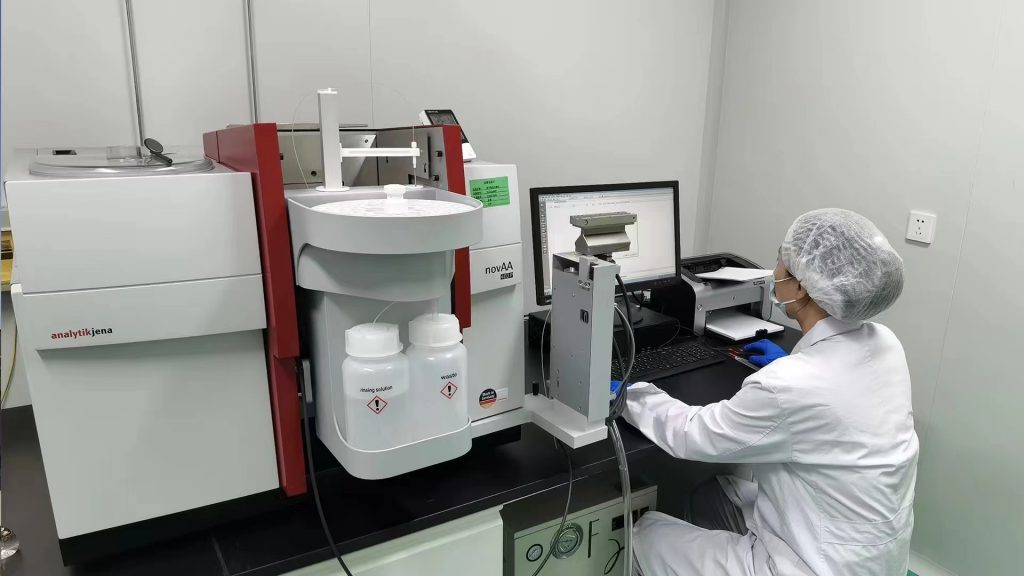
Section 5 explains how to read the numbers. This section covers which documents prove what, and how to qualify a supplier. A certificate does not automatically cover every product a supplier sells, nor every application, so verify each document’s scope, validity, issuer, manufacturing site, and relevance.
| Document | What it verifies | What to check |
|---|---|---|
| Technical Data Sheet (TDS) | Product properties and application information | Grade, specification, methods, revision date |
| Certificate of Analysis (COA) | Batch test results | Batch number matches the shipment |
| Safety Data Sheet (SDS) | Safety and handling | Product identity, supplier details, revision |
| Quality management certificate | Management system scope | Issuer, validity, covered site and activities |
| Food or pharmaceutical documents | Qualification evidence | Regulation or compendium, market, intended use |
| Origin and export documents | Trade and import procedures | Product description, exporter, origin, consistency |
Not every document is mandatory for every transaction, so build a checklist from your application and destination market.
An ISO 9001 certificate relates to a quality management system within a defined scope. It does not certify that every MCC grade meets food or pharmaceutical requirements, and a certificate covering a trading office may not cover the factory. Check the legal name, site, scope, issue and expiry dates, and issuing body, and verify through the issuer when the certificate affects approval.
When you qualify a food grade MCC supplier, depending on the market you may need a specification, COA, SDS, allergen or GMO statements, compliance information, microbiological and heavy-metal results, and customer-specific declarations. For pharmaceuticals, clarify the applicable compendial standard or customer specification, how the supplier handles traceability, deviations, and change control, and which additional documents your quality team requires. A successful sample test forms only one step in formal excipient qualification.For products intended for the EU market, buyers should review applicable food-additive legislation and confirm that the ingredient meets the requirements relevant to its intended use, including Commission Regulation (EU) 2025/666, where relevant.
The batch number on the COA should match the packaging and shipping records. Agree which changes (specification, raw material, process, or site) require advance notification or requalification. Before dispatch, compare product names, grade codes, batch numbers, weights, and company details across the purchase order, invoice, packing list, and COA, because inconsistencies cause avoidable delays.
Scale the effort to the risk. A small trial order needs a proportionate review, whereas a pharmaceutical project or strategic supply agreement may require an audit or a formal questionnaire.
A sample that arrives and looks acceptable does not end supplier selection. A successful laboratory test does not guarantee identical pilot or commercial results, because equipment, mixing, processing time, formulation, and storage can change outcomes. A structured evaluation process helps buyers assess functional performance, identify process-related issues, and verify consistency before approving a commercial order.
Before you request an MCC sample for testing, state the application, target product type, current benchmark, performance objective, target specifications, testing conditions, required quantity, documentation needs, and acceptance criteria. Send the same core requirements to each supplier so you can compare samples fairly. If you do not know the right grade, ask for a small number of candidates and an explanation of their differences. On receipt, record the supplier, product designation, lot reference, receipt date, and storage conditions, and check that the packaging is intact and the label matches the documents.
Build a repeatable plan. Use a control or benchmark, change one variable at a time, and document the formulation, addition sequence, mixing equipment and settings, hydration time, temperature, measurement methods, evaluation time points, and acceptance criteria. If you change grade and dosage simultaneously, you cannot tell which caused the difference.
Match the test to the product. For conventional MCC, test moisture or LOD, particle size, density and flowability where relevant, compatibility with your process, and specification compliance. For colloidal MCC, test ease of dispersion, hydration, viscosity under defined conditions, suspension stability, sedimentation, redispersibility, mouthfeel, and compatibility with other stabilizers.
MCC Sample Evaluation Record: What Buyers Should Document
| Evaluation area | Information to record | Why it matters |
|---|---|---|
| Sample identification | Supplier, grade, lot number, receipt date | Maintains sample traceability |
| Preparation conditions | Concentration, addition sequence, mixing equipment, time, temperature | Makes the test repeatable |
| Initial performance | Dispersion, hydration, viscosity or other application-specific measurements | Establishes baseline performance |
| Processing compatibility | Mixing behavior, handling, equipment constraints | Identifies practical production issues |
| Storage stability | Appearance, sedimentation, separation, viscosity or texture at defined time points | Evaluates performance during storage |
| Reproducibility | Repeat-test results and any deviations | Helps distinguish consistent results from one-off observations |
| Acceptance decision | Results against pre-agreed criteria, follow-up actions, approval status | Creates a documented basis for grade selection |
Use the same preparation and measurement conditions for each candidate whenever possible. Record any deviations before comparing results, and do not approve a grade solely because it performs well in one laboratory trial.
When a sample fails one criterion, investigate whether grade, dosage, preparation, formulation, or test conditions caused it before you reject it.
Dosage and processing both shape results: more stabilizer may improve suspension yet raise viscosity or change mouthfeel. Establish a baseline, test a limited set of variations, and identify a practical operating range.
Pilot trials then test ingredient handling, dispersion and mixing efficiency, hydration time, equipment compatibility, batch reproducibility, finished-product quality, and storage performance. When you scale up, mixing energy, equipment geometry, addition rate, and batch size change, so a procedure that works in a small vessel may need adjustment. Document the laboratory process, identify equipment differences, define critical parameters, run a controlled pilot, record deviations, and approve the process only after the agreed criteria are met. An unsuccessful first pilot does not automatically mean the grade is unsuitable, because the process may need refinement.
A sample can perform well at first and change during storage, so define evaluation periods and track appearance, viscosity, sedimentation, separation, and texture. Accelerated tests help screening, but they do not automatically replace real-time evaluation. After approval, confirm that the commercial order supplies the same grade, specification, batch documentation, packaging, and change-notification procedure. Compare the first commercial batch against the approved sample records, run incoming checks, and investigate any difference before production use.Before approving an MCC supplier, evaluate the sample under representative processing conditions and document the acceptance criteria.
| Problem | Typical cause | Preventive action |
|---|---|---|
| Wrong grade | Conventional and colloidal MCC treated as interchangeable | Define the application first; confirm the exact grade (Sections 2–3) |
| Inconsistent batches | No written specification or incoming checks | Agree limits; request a COA per batch (Section 5) |
| Sample differs from commercial product | Unclear grade or unapproved substitution | Name the approved grade in the purchase order; require approval for substitutions (Section 9) |
| Misleading price comparison | Non-equivalent grades or different delivery terms | Use one comparison sheet; calculate total landed cost (Section 7) |
| Incomplete documentation | Documents requested too late or mismatched | Request documents before ordering; check names, grades, and batches (Section 8) |
| Low supplier transparency | Unclear manufacturer, distributor, or trader role | Ask who manufactures, who issues the COA, and who handles complaints (Section 6) |
| Delivery delays | Lead time milestone not defined | Confirm production, shipment, and delivery milestones; share forecasts; keep buffers |
| Packaging and storage problems | Packaging not specified | Specify material, bag weight, palletization, labeling; inspect on arrival |
| Payment and contract risk | Terms not aligned across documents | Align terms in the pro forma invoice and contract; verify bank details through reliable channels |
| Unclear responsibilities | No owner per stage | Assign a contact for each stage and keep written records of every change |
| No long-term supply plan | Demand growth not discussed | Discuss annual demand, peak seasons, and capacity; consider a second qualified source |
Choosing an MCC supplier based on price alone can create additional costs if the material fails to meet the required performance or consistency standards.A qualified MCC supplier should help buyers investigate quality deviations, review batch records, and establish corrective actions when problems occur.
ACTA offers several colloidal MCC grades, including ACT591, ACT3212, ACT611, ACT538, and ACT521. These grades should be compared using their current grade-specific specifications and clearly defined test conditions, rather than product codes alone.
A practical selection process starts with the application and the performance requirement. For a beverage, for example, the evaluation may focus on suspension stability, sedimentation, mouthfeel, processing conditions, and storage performance. For other applications, the relevant acceptance criteria may be different.
Buyers should request current technical information for the candidate grades, confirm sample preparation instructions, and compare the products under consistent conditions. The final choice should be based on documented specification compliance and application test results.
When contacting ACTA, share the intended application, the main formulation challenge, the existing stabilizer system if applicable, the estimated requirement, and the destination market. This information helps define which product information, samples, and quotation details are relevant to the evaluation.
ACTA offers five colloidal MCC grades: ACT591, ACT3212, ACT611, ACT538, and ACT521. Grade codes are manufacturer-specific (Section 3.3), and the grades differ in their viscosity ranges. Treat the codes as candidates to screen, not as a ranking. No grade should be chosen for a beverage type before your formulation has been tested.
| Step | What to do | What to confirm with ACTA |
|---|---|---|
| 1. Define the objective | State the application and the current stability problem (for example sedimentation, separation, or mouthfeel), plus your stabilizer system, heat treatment, and shelf-life target | Which grades are reasonable candidates for this objective |
| 2. Screen by current specification | Compare candidates using each grade’s current grade-specific specification and viscosity test conditions (Section 5.3) | Current TDS; composition (MCC alone or MCC with CMC-Na); the test conditions behind each viscosity value |
| 3. Test under identical conditions | Use the same dosage basis, preparation procedure, mixing equipment, time, temperature, and benchmark for every candidate. Record results with the template in Section 9.2 | Recommended sample preparation instructions |
| 4. Decide on results | Approve the grade on documented specification compliance and your own application and storage results | Representative COA and sample availability for the chosen grade |
Use a comparison sheet like this for the grades you shortlist. Fill it from the current technical documents, not from product codes:
| Item | ACT591 | ACT3212 | ACT611 | ACT538 | ACT521 |
|---|---|---|---|---|---|
| Composition | To be confirmed | To be confirmed | To be confirmed | To be confirmed | To be confirmed |
| Viscosity specification | To be confirmed | To be confirmed | To be confirmed | To be confirmed | To be confirmed |
| Viscosity test conditions | To be confirmed | To be confirmed | To be confirmed | To be confirmed | To be confirmed |
| Sample preparation | To be confirmed | To be confirmed | To be confirmed | To be confirmed | To be confirmed |
| Your test result | To be filled | To be filled | To be filled | To be filled | To be filled |
If a higher viscosity grade gives a thicker product than your target, do not assume it is the better grade (see Section 5.3). Send your application details using the checklist in Section 11.7, and keep comparing ACTA against other qualified suppliers.
For product detail, see the Colloidal Microcrystalline Cellulose page.
For your specific grade, request the current TDS (including the viscosity test conditions), the product specification, a representative COA, the SDS, sample preparation instructions, and any compliance statements your market requires. Confirm which documents exist for your grade and transaction. Section 8 explains how to check their scope and validity.
A practical evaluation follows five steps:
Colloidal MCC may suit plant-based beverages, selected protein drinks, sauces, dressings, and other formulations that need suspension or texture management, subject to your product design and the applicable regulatory and quality requirements. Because some colloidal products combine MCC with CMC-Na and composition varies by grade, confirm the composition and preparation procedure. For broader context, explore ACTA’s food stabilizers information. Buyers sourcing several cellulose products can also review the Global Cellulose Supplier: MCC, HPMC and CMC page.
ACTA may suit food and beverage manufacturers evaluating colloidal MCC, ingredient distributors sourcing MCC, procurement teams comparing quotations, R&D teams investigating alternative stabilizer systems, and manufacturers who want a documented process for sample approval and repeat purchasing. Establish suitability through documentation, sample evaluation, and your own qualification procedures, and keep comparing against other qualified suppliers.
To discuss a potential MCC supply requirement with ACTA, share your intended application, estimated quantity, destination market, and any target specification you already have.
If you have not selected a grade, describe the application and the main performance requirement instead. You can ask about relevant technical data, representative COA availability, sample evaluation, packaging, and quotation terms.
Use the checklist below to organize your inquiry. Providing more details at the start can help clarify which product information and evaluation steps are relevant to your project.
Copy this list into your email or inquiry form. Fill in what you know, and leave the rest blank:
If you are unsure which grade to select, describe your application and performance objective so the supplier can identify suitable candidates for evaluation.
Look for clearly identified grades, batch documentation, relevant technical information, a practical sample process, transparent quotations, and realistic lead times. The best supplier is the one whose product, controls, and terms meet your requirements, not necessarily the cheapest one.
Conventional MCC is a powder selected by physical and functional requirements, whereas colloidal MCC (MCC Gel) serves applications that need dispersion, suspension, or texture properties. They are not automatically interchangeable (see Section 2.2).
Define the material’s function, compare TDS and specifications, and test samples under comparable conditions. Approve the grade on both specification compliance and application results (see Section 3).
Price depends on grade, specification, quantity and MOQ, packaging, Incoterm, destination, and payment terms. Request quotations for equivalent grades under the same terms and compare total landed cost (see Section 7).
Neither route is automatically cheaper or more reliable. Verify the supplier’s role and who handles quality, documents, delivery, and claims (see Section 6).
Commonly requested documents include the TDS, specification, COA, SDS, applicable quality certificates, and origin and shipping documents where required. Confirm that each identifies the correct product and batch (see Section 8).
Yes, for a new supplier, a new grade, or a demanding application. A successful test does not guarantee identical future batches, so document the approved grade and run incoming checks (see Section 9).
Agree a written specification, review each batch COA against the limits, and add incoming testing according to risk. When differences appear, first confirm comparable test conditions (see Section 5.4).
It may, in suitable formulations, but results depend on grade, dosage, preparation, beverage composition, processing, and storage. Sedimentation also stems from particle size, density, protein and mineral content, pH, and heat treatment. No single grade or dosage works in every beverage. See Colloidal MCC Stabilizer Uses.
Use one comparison sheet covering grade, specifications, documentation, MOQ, price and Incoterm, freight and duties, lead time, and payment terms. Location influences logistics, but it should not be your only criterion.
Use the inquiry checklist in Section 11.7. If you are unsure of the grade, describe your application and performance objective.
Possibly, depending on the supplier’s range, although you should evaluate each material individually. For an overview, visit ACTA’s Global Cellulose Supplier: MCC, HPMC and CMC page.
After the initial inquiry, you can review relevant product information, discuss sample availability, and confirm quotation terms. Approve the final grade only after completing your own testing and qualification procedures.
Selecting a microcrystalline cellulose supplier is both a technical and a commercial decision. Confirm the exact grade, review the documents, compare equivalent quotations, evaluate samples under controlled conditions, and establish a clear process for commercial batch verification. For conventional MCC and colloidal MCC alike, the lowest quoted price does not necessarily deliver the best purchasing value.
Looking for a supplier of conventional MCC or colloidal MCC for an existing product or a new formulation? Share your intended application, estimated quantity, destination market, packaging requirements, and target specification, if available.
If you have not selected a grade, describe the application and the main technical challenge you need to address, such as beverage sedimentation, suspension stability, texture, or processing performance.
ACTA can discuss relevant product information, the availability of technical documents and samples for the specific grade, packaging options, and quotation terms. Before placing a bulk order, confirm the applicable specification, sample approval procedure, and commercial terms. Final grade selection should be based on your own testing and qualification requirements.
