

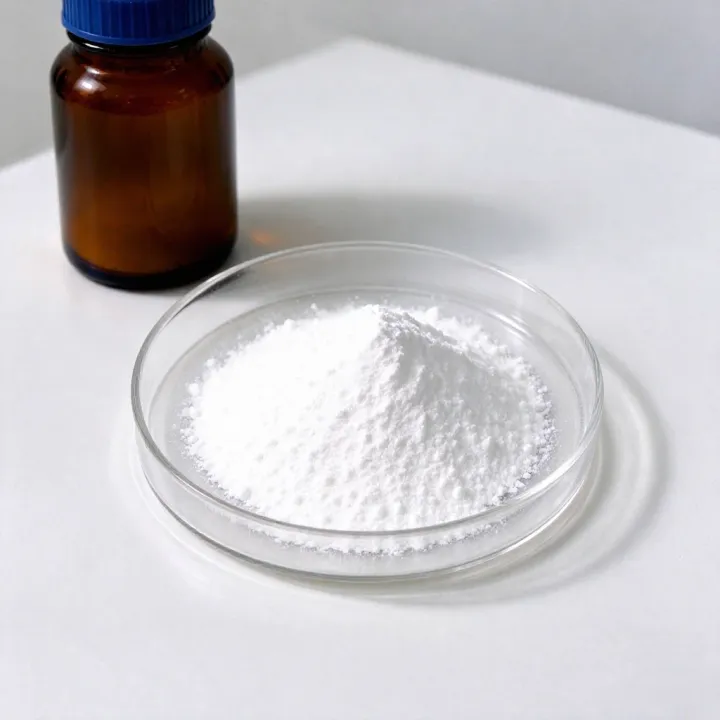
Caption:Evaluating CMC supplier samples helps buyers compare product specifications and suitability for their intended applications.
Choosing a CMC supplier requires more than comparing price per kilogram. For procurement teams, the real challenge is finding a grade that meets the required specifications, performs consistently in the intended application, and can be supplied reliably at an acceptable total cost.
This CMC supplier guide explains how to compare sodium CMC grades, verify viscosity test methods and quality documents, evaluate samples, calculate cost in use, and qualify suppliers before placing a commercial order. It also includes a supplier scorecard and a practical RFQ template to help buyers make better-supported sourcing decisions.
This guide explains how to evaluate sodium CMC grades, compare suppliers on an equivalent basis, test samples, calculate cost in use, and prepare a complete request for quotation (RFQ). Use the checklist and supplier scorecard to structure your evaluation and identify the information you need before approving a supplier.Choosing a reliable CMC supplier involves evaluating technical capability, product consistency, documentation, and delivery reliability—not simply comparing quoted prices.
| Factor | What to check | Why it matters |
|---|---|---|
| Product identity | Sodium CMC and the exact grade | Prevents comparing unlike materials |
| Application fit | Food, pharma, detergent, or industrial use | Requirements differ by market |
| Viscosity | Range, concentration, temperature, method | A number means little without test conditions |
| Specifications | Purity, moisture, pH, DS where relevant | Creates measurable acceptance criteria |
| Documents | Current TDS, representative COA, SDS | Supports qualification |
| Samples | Controlled, comparable trials | Confirms fit in your formulation |
| Supply | Lead time, MOQ, packaging, traceability | Protects production planning |
| Commercial terms | Incoterm, payment, total landed cost | Exposes hidden costs |
Use five gates to structure supplier qualification. A supplier should not advance to the next gate until the current requirements have been met. If a requirement remains unresolved, request clarification, corrective action, or additional testing before deciding whether to proceed or reject the supplier.
| Gate | Condition to advance |
|---|---|
| 1. Product fit | CMC type and specific grade match your application |
| 2. Document review | Specification, COA, and applicable documents can be verified |
| 3. Sample test | Sample meets the criteria you agreed in advance |
| 4. Commercial review | Quotation, lead time, payment, and delivery terms are acceptable |
| 5. Commercial verification | Batch documents, traceability, and change notification are defined |
Carboxymethyl cellulose (CMC), usually supplied as sodium CMC, is a cellulose derivative made by introducing carboxymethyl groups into cellulose. Depending on grade, it thickens, retains water, stabilizes, modifies texture, binds, and forms films. Yet “sodium CMC” is not one uniform product. Two materials with the same label can behave differently because their molecular characteristics, DS, purity, particle properties, and test methods differ.
Manufacturers produce CMC by treating purified cellulose, usually from wood pulp or cotton linters, with sodium hydroxide, and then reacting it with monochloroacetic acid or its sodium salt. This reaction attaches carboxymethyl groups to the cellulose backbone. Afterward, the manufacturer neutralizes, washes, dries, and mills the product. Each step shapes the final material.
For example, the cellulose source and molecular characteristics can influence the viscosity potential of the final CMC. However, reaction conditions, degree of substitution, substitution uniformity, purification, and processing also affect the product’s properties. Therefore, viscosity should be evaluated together with the specified test method and other relevant quality parameters. The reaction conditions influence how evenly the carboxymethyl groups distribute along the chain. Washing influences purity, because poor washing leaves residual salts and by-products. Milling influences particle size, and particle size in turn influences how quickly the powder disperses and hydrates.
Manufacturing controls can influence CMC quality and batch consistency. A manufacturer may have direct access to production and process-control information, while a trading supplier may rely on its upstream producer for these details. However, company type alone does not establish product quality. Buyers should evaluate documented quality controls, batch traceability, technical responsiveness, and sample performance regardless of whether the supplier manufactures or trades the material.
Before comparing quotations, buyers should establish four basics:
These questions provide an initial screening framework. Section 4 explains how to verify supplier capabilities, while Section 7.4 covers traceability and change control.
For food-grade CMC, supplier qualification should also include a review of the regulatory requirements in the target market. Buyers can consult the Codex General Standard for Food Additives database to check the provisions relevant to sodium carboxymethyl cellulose (INS 466). However, buyers should verify the applicable food category, conditions of use, and local requirements rather than assuming that the same provisions apply to every product or market.
For products intended for the United States, buyers should also review the applicable regulatory provisions for sodium carboxymethylcellulose. The text of 21 CFR § 182.1745 provides a reference for checking the relevant U.S. regulation. Supplier declarations and product documents should still be reviewed against the intended use, customer requirements, and applicable regulations before approval.
CMC often makes up a small share of a formulation’s cost, yet it controls a large share of its behavior. An unsuitable grade can cause lumps during dissolution, texture that drifts between batches, or a rejected production run. These failures cost far more than the price difference that tempted the buyer to switch. Treat supplier selection as a risk decision, not only a purchasing task.A qualified CMC supplier should be able to explain the grade selection, viscosity range, test method, and suitability of the material for the buyer’s intended application.
Suppliers classify viscosity differently, so grade names never replace the technical data sheet.
| Category | Typical objective | What to evaluate |
|---|---|---|
| Low viscosity | Functional benefit with limited thickening | Enough body or water retention? |
| Medium viscosity | Balance of thickening and processability | Viscosity at your dosage and process |
| High viscosity | Stronger thickening | Dispersion, hydration, risk of excess thickness |
Low-viscosity grades may suit applications that need stabilization, binding, or water retention without a heavy, gel-like body. Medium-viscosity grades often offer a practical balance between thickening and processing in applications such as beverages, bakery fillings, and detergent slurries. High-viscosity grades can provide stronger thickening at relatively low dosage. However, achieving uniform dispersion and complete hydration may require closer control of powder addition, mixing conditions, and hydration time. The actual risk of lump formation depends on the grade’s particle properties, formulation, and preparation procedure, so it should be assessed under the intended processing conditions. The highest-viscosity grade is not automatically the best choice. Choose the grade that gives the required performance at the lowest practical dosage and with the easiest processing.
A viscosity value is meaningful only when you know the test conditions behind it. Viscosity depends on concentration, temperature, spindle and speed, solution preparation, and hydration time. Two suppliers who both claim “a 1% viscosity of 1,000 mPa·s” may not offer comparable products unless they use the same method.
Always ask these five questions before you compare numbers:
For a meaningful comparison, align the concentration, temperature, instrument, spindle and speed where applicable, hydration time, and solution preparation method. If the methods differ, treat the reported values as potentially non-equivalent until the difference has been evaluated.
Request the viscosity range rather than a single figure. A specified viscosity range defines the acceptance limits, but it does not by itself show the supplier’s actual batch-to-batch consistency. To assess consistency, request representative COAs from several recent production batches and compare the results using the same test method and conditions. Where consistency is critical, agree on acceptance limits and verify them through incoming quality control.
Consider two hypothetical CMC suppliers:
| Test parameter | Supplier A | Supplier B |
|---|---|---|
| Reported viscosity | 1,000 mPa·s | 1,000 mPa·s |
| Solution concentration | 1% | 1% |
| Test temperature | 25°C | 25°C |
| Instrument and spindle | Not fully stated | Not fully stated |
| Rotation speed | Not stated | Not stated |
| Hydration procedure | Not stated | Not stated |
Although the reported viscosity values are identical, the available information is insufficient to establish that the two products are equivalent.
Before comparing the grades, request the complete test methods and agree on a common procedure. Where practical, prepare both samples under the same conditions and measure them using the same instrument, spindle, speed, and hydration protocol.
Also distinguish between a viscosity specification range and an actual batch result. A specification range defines the permitted limits; representative batch COAs help you assess the results reported for individual batches.
Finally, verify performance in the intended formulation. Equivalent viscosity readings in water do not necessarily guarantee equivalent performance in a high-salt, acidic, or otherwise complex system.
Note: The 1,000 mPa·s figure is a hypothetical number used to illustrate the comparison logic. It is not an ACTA product specification.
The degree of substitution (DS) describes the average number of carboxymethyl groups introduced per anhydroglucose unit of the cellulose backbone. Commercial sodium CMC grades vary in DS, and the appropriate range depends on the intended application and product specification.
DS can influence hydration, solubility, solution clarity, and interactions with other formulation ingredients. These effects should not be interpreted in isolation. Viscosity grade, substitution uniformity, concentration, pH, electrolyte content, and processing conditions can also affect performance.
When comparing CMC suppliers, request the specified DS range and the relevant test method where applicable. More importantly, verify the material under your actual formulation conditions rather than selecting a grade on DS alone.
| Parameter | What it tells you | What to request |
|---|---|---|
| Assay / sodium CMC content, where applicable | How much active polymer you buy | Minimum value and test method |
| Moisture | Water weight in the bag, plus storage risk | Maximum limit |
| pH (typically 1% solution) | Compatibility with acidic or sensitive systems | Range and test conditions |
| Particle size / mesh | Dispersion and hydration speed | Distribution, not just “80 mesh” |
| Heavy metals and contaminants | Safety and regulatory fit | Limits and test method |
| Sodium chloride and sodium glycolate | Residual by-products; limits vary by grade and process | Maximum limits and test method |
| Microbiological limits | Suitability for food and pharma | Limits where applicable |
CMC purity and residual salt levels vary by grade, manufacturing process, and specification. Do not assume that a product meets your requirements simply because it is described as technical-grade, food-grade, or high-purity. Compare the stated limits and test methods for relevant parameters, such as sodium chloride, sodium glycolate, moisture, and other applicable impurities. For food or pharmaceutical use, verify compliance with the standards and regulations applicable to your intended market.
Because you pay by the kilogram, also compare the active polymer content and the dosage you need to reach your target performance, not the price per kilogram alone.
Different industries stress different properties. Use the guide below as a starting point, and then validate with samples.
Food-grade CMC stabilizes acidic milk drinks, controls ice crystals in frozen desserts, improves texture in bakery products, and thickens sauces. Buyers should confirm that the grade meets the food additive standards of their target market, and they should check purity, heavy metals, and microbiological limits closely.
For formulations that require particle suspension or a structured stabilization system, buyers may need to evaluate ingredients beyond conventional CMC grades. Depending on the application, colloidal MCC stabilizers may also be worth screening alongside other stabilizing ingredients. The final choice should be based on the formulation, processing conditions, target viscosity, storage stability, and sensory requirements.
For food manufacturers, supplier selection should consider not only CMC viscosity and consistency but also the ingredient’s intended function in the finished product. Depending on the formulation, the overall stabilization system may include more than one hydrocolloid or functional ingredient. Buyers evaluating ingredients for different food applications can also explore ACTA’s food stabilizer solutions when comparing possible formulation approaches.
In pharmaceutical applications, sodium carboxymethyl cellulose may be used as a binder, suspending agent, or viscosity modifier, depending on the grade and formulation. Croscarmellose sodium is a distinct, crosslinked cellulose derivative used primarily as a tablet disintegrant; it should not be treated as interchangeable with ordinary sodium CMC. Buyers should confirm the exact excipient identity, applicable pharmacopoeial requirements, and grade-specific documentation before qualification.
For pharmaceutical applications, procurement teams may need to verify compliance with the applicable pharmacopeial requirements in addition to the supplier’s internal specifications. The USP–NF Carboxymethylcellulose Sodium monograph information can serve as a starting point for identifying the relevant compendial reference. Buyers should confirm the current applicable edition and the full requirements relevant to their product before qualifying a supplier.
In laundry detergents, CMC acts as an anti-redeposition agent, which keeps removed soil from settling back onto fabric. Buyers typically weigh dissolution in alkaline, high-salt systems and cost per dose.
Drilling-fluid grades control filtration loss and viscosity under high salinity, so buyers prioritize salt tolerance and consistent rheology.
These sectors use CMC as a binder, coating additive, sizing agent, or electrode-slurry thickener. Each one sets its own priorities, such as green strength in ceramics or dispersion quality in battery slurries.
Because requirements differ so much, never accept a supplier’s claim that one grade “works for everything.” Ask instead which grades the supplier recommends for your application, and ask why.
The same CMC grade may perform differently across applications because formulation composition, processing conditions, and performance targets vary. Therefore, define the intended function and measurable acceptance criteria before requesting quotations or selecting candidate grades.
For procurement teams, this also makes supplier comparisons more meaningful: every candidate is evaluated against the same technical requirements rather than a general claim that a grade is suitable for multiple industries.
CMC is not the only cellulose-based ingredient that may be considered when designing a stabilization system. Depending on the formulation and performance target, manufacturers may also evaluate microcrystalline cellulose (MCC) as part of their ingredient selection process. The two materials serve different functions, so their suitability should be assessed through application-specific trials rather than assuming that one can directly replace the other.
Documents form the evidence base for your decision, but many buyers collect them without reading them critically. The following three documents each serve a different purpose.
The TDS describes the product in general: its grade, typical properties, specification limits, recommended applications, packaging, and storage. Check whether the TDS distinguishes guaranteed limits from typical values. Also confirm that the TDS carries a revision date, because an undated sheet may describe a product the supplier no longer makes.
A COA provides batch-specific test information, while a TDS describes the product’s general characteristics and specification. When you review a COA, verify the following:
A COA should provide enough information to verify compliance with the agreed specification. Numeric results are particularly useful for parameters such as viscosity, moisture, and pH, while some tests may legitimately use a qualitative pass/fail result.
When several batch COAs show identical values, ask whether the figures represent actual test results, rounded results, or specification limits. Compare the documents with the agreed test methods and, where necessary, request clarification from the supplier. Identical reported values alone do not establish that a COA has been copied or falsified.
The SDS covers handling, hazards, storage, and disposal. Review the supplier’s current SDS for product-specific handling, exposure controls, storage, and disposal guidance. During powder handling, minimize dust generation and follow the workplace’s applicable safety procedures. Buyers should assess any additional precautions according to the product documentation and their own handling conditions.
Depending on your market, you may also need:
Never rely on a certificate you cannot verify. Check the certificate number, scope, validity dates, and issuing body. If the scope does not cover the product you plan to buy, the certificate does not support your decision.
Before approval, confirm that each document applies to the exact product, manufacturing site, and intended market. A general company certificate does not, by itself, establish that every CMC grade supplied by that company meets your product-specific or regulatory requirements.
Verification separates a trustworthy supplier from a convincing website. Start with the supplier’s identity, and then move to capability and track record.
Find out whether the supplier manufactures CMC or only trades it. Ask directly, and expect a direct answer.
Both manufacturers and trading suppliers can be suitable sourcing partners. A manufacturer may provide more direct access to production controls and process information, while a trading supplier may offer access to multiple qualified producers or more flexible order arrangements. These advantages depend on the individual supplier’s capabilities.
Instead of relying on company type as a proxy for quality, verify the legal entity, production source, batch traceability, quality-control responsibilities, and change-notification procedures. Ask who is responsible for investigating nonconforming batches and who will authorize corrective actions.
The key question is not simply whether a company manufactures or trades CMC. It is whether the supplier can consistently deliver the agreed grade and provide verifiable evidence of conformity.
Next, verify the legal entity. Check the registered company name, address, and business scope. In addition, confirm that the name on the quotation, the contract, and the bank account all match. An unexplained mismatch between these three warrants independent verification before you make any payment.
Ask technical questions and judge the quality of the answers. For instance:
A supplier with real technical depth answers these questions specifically and admits what it does not know. By contrast, a supplier that answers every question with “no problem” is giving you sales language, not technical information.

Caption:Consistent viscosity testing helps buyers assess CMC quality and compare supplier samples under defined test conditions.
Ask how the supplier tests incoming raw materials, in-process samples, and finished batches. Ask whether the supplier retains samples from each batch, and for how long. Retained samples allow the supplier to investigate complaints later. Section 7.4 explains how to write retention and traceability into your contract.
A CMC grade that performs well in one application may not deliver the same results in another. Beverage manufacturers, for example, need to consider suspension stability, mouthfeel, processing conditions, and storage performance when selecting a stabilizer system. For additional application context, readers can review ACTA’s guide to plant-based milk stabilization using MCC, CMC, and modified starch.When comparing CMC suppliers, buyers should check whether specifications are supported by batch-specific certificates of analysis and clearly defined testing methods.
Request references from customers in your industry or region, and contact them when possible. Ask about consistency, communication, delivery reliability, and how the supplier handled problems. Problems happen to every supplier; the way a supplier responds tells you far more than a spotless record that you cannot verify.Supplier qualification should also cover production lead times, packaging options, shipment planning, and the process for communicating delays or specification changes.
For large or critical purchases, an on-site audit gives the most reliable information. If travel is difficult, a live video tour of the production and laboratory areas can still show you how the supplier works. Alternatively, a third-party inspection company can audit on your behalf.
Assess red flags according to their severity rather than counting them. For example, an unexplained mismatch between the contracting entity and the beneficiary bank account warrants independent verification before payment. Missing technical documents, unclear test methods, or inconsistent specifications should also be resolved before the supplier advances to the next qualification stage.
After you collect documents and samples, compare suppliers side by side. A simple weighted scorecard keeps the decision objective. Score each criterion from 1 (poor) to 5 (excellent), multiply by the weight, and add the results. The weights below are examples; adjust them to your application.
| Criterion | Example weight | Supplier A | Supplier B | Supplier C | Evidence / notes |
|---|---|---|---|---|---|
| Sample performance against your acceptance criteria | 30% | Trial data | |||
| Documents and compliance (TDS, COA, SDS, certificates verified) | 20% | Verified with issuing body | |||
| Batch consistency (COAs from several recent batches) | 15% | Variation within specification | |||
| Cost in use and landed cost | 15% | Same Incoterm for all | |||
| Supply (lead time, MOQ, packaging, stock) | 10% | Written confirmation | |||
| Communication, traceability, and change notification | 10% | Contract terms | |||
| Weighted total | 100% |
Rate each criterion from 1 (poor) to 5 (excellent). Multiply each rating by its assigned weight, expressed as a percentage, and add the weighted results.
For example, if a supplier scores 4 out of 5 on sample performance, which carries a 30% weight, its contribution is:
4 ÷ 5 × 30 = 24 points.
Because the rating scale runs from 1 to 5, the resulting total score ranges from 20 to 100 points. Use the weighted score to rank suppliers that have already passed all mandatory qualification requirements.
Before calculating the weighted score, screen out any supplier that fails a mandatory requirement, such as product identity, a critical specification limit, required regulatory documentation, or an agreed sample acceptance criterion. Only suppliers that pass these requirements should be ranked using the weighted scorecard. A high overall score must never compensate for a critical qualification failure.
Suppose a buyer compares two sodium CMC suppliers for the same industrial formulation.
| Evaluation factor | Supplier A | Supplier B |
|---|---|---|
| Quoted price | Lower | Higher |
| Viscosity test method | Not fully specified | Documented and agreed |
| Sample performance | Acceptable in one trial | Acceptable in three repeat trials |
| Batch consistency | Insufficient data | Several recent batch COAs available |
| Processing requirements | Not yet verified | Confirmed in the buyer’s trial |
| Final decision | Requires further qualification | Preferred if all mandatory requirements pass |
This hypothetical comparison illustrates why suppliers should be evaluated against equivalent specifications, verified sample performance, and available quality records. Before making a final decision, confirm that the preferred supplier meets all mandatory requirements and compare the total cost of achieving the same finished-product performance, including dosage, processing, freight, and potential quality-related losses.
The practical lesson is simple: a lower quotation is a commercial advantage only when the product and supply conditions are genuinely comparable.
Note: This is a hypothetical case used to illustrate the evaluation method. It is not a real ACTA customer case.
A sample test confirms what documents cannot: whether the material works in your formulation and on your equipment. An uncontrolled trial produces unreliable conclusions, so follow these steps to keep the comparison fair.
Write down the pass/fail criteria before the sample arrives. Depending on the application, these may include a target viscosity range at a defined dosage, acceptable dissolution time, absence of visible lumps, or specified finished-product performance after storage.
Use the same criteria for every candidate supplier. Defining acceptance limits in advance helps prevent inconsistent judgments when comparing samples.
Request a sample from a production batch, not a specially selected laboratory sample, and ask for the matching COA. Request enough material to run at least three trials, so that you can see repeatability. For critical applications, request samples from two or three different batches.
Change only one variable at a time. Keep the water source, temperature, mixing speed, mixing time, order of addition, and dosage the same across all samples. If you compare a new supplier against your current one, run both samples side by side on the same day and with the same operator.
Dissolution often causes the most practical problems. CMC powder can form “fish eyes,” which are lumps with a hydrated outer layer and a dry core. To avoid them, use these methods:
If a sample forms lumps under correct procedures, record that result. It may point to a particle-size or surface-treatment issue that you should discuss with the supplier.
Laboratory results at room temperature do not always predict plant behavior. Test the sample under the conditions your process actually uses, such as heat treatment, homogenization, acidic pH, high salt content, or long storage. Also observe the finished product over its intended shelf life, since some defects appear only after days or weeks.
Record each trial’s sample batch number, dosage, preparation conditions, measured results, and observations. Compare the findings with your predefined acceptance criteria and document whether each requirement passes or fails.
If a sample fails, share the relevant results with the supplier and request a technical review or an alternative grade. If it passes, retain the test records as evidence for the next qualification stage.
Price per kilogram attracts attention, but it never tells the full story. A more useful question is: what does it cost to achieve the required performance in my product?
Compare suppliers on the cost of achieving the same finished-product performance, rather than on price per kilogram alone.
Total cost per batch = CMC ingredient cost + incremental processing cost + expected quality-related loss
For a more meaningful comparison, divide the total by the quantity of finished product produced. This gives you a cost per kilogram, or per 1,000 kg, of finished product.
For example, a lower-priced CMC grade may require a higher dosage to meet the same performance target. Another grade may cost more per kilogram but require less material or less processing time. Compare the alternatives using the same production scale, target performance, and cost assumptions.
Use actual plant data wherever possible. Identify any estimate of rejected batches, processing delays, or other quality-related losses as an estimate rather than treating it as a guaranteed saving.
Example: Comparing CMC Cost at Different Dosage Levels
Assume two candidate grades are being evaluated for the same 1,000 kg finished-product batch.
| Cost factor | Grade A | Grade B |
|---|---|---|
| Illustrative price per kg | $4.00 | $5.00 |
| Required dosage | 0.50% | 0.35% |
| CMC required per batch | 5.0 kg | 3.5 kg |
| CMC cost per batch | $20.00 | $17.50 |
In this hypothetical example, Grade B has a higher unit price but a lower CMC cost per batch because it achieves the target performance at a lower dosage.
This conclusion is valid only if both grades meet the same performance requirements and the dosage levels have been confirmed experimentally. Include processing costs, freight, duties, and quality-related losses when they differ materially between suppliers.The lowest-priced CMC supplier may not deliver the lowest total cost if the product requires a higher dosage, causes processing problems, or produces inconsistent results.
Note: These figures are illustrative. They are not market quotations or ACTA product data.
Incoterms define who pays for and bears the risk of each stage of shipping. The same product can look very different under EXW, FOB, CIF, and DDP terms. Ask every supplier to quote on the same Incoterm, and add the following to reach your landed cost:
Besides price, negotiate the terms that protect you:
New relationships often start with a smaller order and tighter payment security. As trust grows, you can negotiate better terms.

Caption:Packaging, stock management, and delivery planning are important factors when qualifying a CMC supplier for long-term procurement.
Suppliers set MOQs to cover production and logistics cost. Standard grades often carry lower MOQs than custom grades. If your needs are small, ask whether the supplier offers mixed-grade pallets or a trial order at a reasonable surcharge. If you plan large volumes, ask about contract pricing and scheduled shipments.
Ask for lead time in two parts: production time and shipping time. Then add a safety buffer for customs and unexpected delays. Ask whether the supplier keeps stock of standard grades, since stocked grades ship far faster than made-to-order grades.
CMC powder can take up moisture depending on the product, packaging integrity, and storage conditions. Confirm the supplier’s recommended storage conditions and packaging configuration, such as bag material, net weight, pallet configuration, and labeling. Keep bags sealed when not in use and store them in a clean, dry environment. Before use, inspect packaging for damage and follow the product-specific shelf-life and storage instructions.
Write the following requirements into your purchase contract or quality agreement:
These clauses let you and the supplier find the cause of a problem quickly, and they protect you from silent changes.
Even a good supplier can face disruptions. To reduce risk, consider these steps:
Dual sourcing costs more effort at the start, but it protects your production if one source fails.
Each mistake below has a matching section where the fix is explained in detail.
A complete request for quotation (RFQ) saves several rounds of email and helps suppliers quote accurately. Copy the template below and complete the fields.
Subject: RFQ – Sodium CMC for [Application]
When you send this RFQ to several suppliers, you receive quotations that you can compare directly. Your decision then rests on equal information rather than on guesswork.
In everyday trade, people use “CMC” to mean sodium carboxymethyl cellulose, the sodium salt form. Always confirm the exact chemical form and grade in the specification, because other salt forms and related derivatives exist.
Start with your function. If you need stabilization with little body, test low-viscosity grades. If you need balanced thickening and easy processing, test medium-viscosity grades. When you need strong thickening at low dosage, test high-viscosity grades, and watch dissolution closely. Then confirm with samples.
Viscosity at one condition does not describe the whole rheological profile. DS, uniformity of substitution, particle size, salt content, and shear behavior all change real performance. Always test in your own formulation.
Request a current TDS, a COA from a recent batch, and an SDS. Also request any compliance statements and certificates that your market requires, and verify them with the issuing body.
Test at least three trials of one batch. For critical applications, also test samples from two or three different batches to check consistency.
Not necessarily. Price reflects grade, purity, certification, volume, and market conditions, but it does not guarantee fit. Evaluate cost in use and verify quality through documents and testing.
First, retrieve the batch number and COA. Next, retest the retained sample and the new batch side by side under identical conditions. Then send the data to the supplier and request a root-cause analysis. A reliable supplier investigates promptly and proposes a corrective action.
Both manufacturers and trading suppliers can be suitable. Manufacturers may provide more direct access to production information, while trading suppliers may offer broader sourcing options or flexible order arrangements. Actual capabilities vary by company, so verify technical support, batch traceability, quality-control responsibilities, and change notification before qualification.
Timelines vary with the application and the testing you need. A simple industrial application may qualify in a few weeks, whereas a food or pharmaceutical application often takes longer because of documentation review and stability testing. Plan your timeline around your slowest gate.A professional CMC supplier should provide documentation appropriate to the product grade and target market, such as a technical data sheet, certificate of analysis, and applicable safety documentation.
Choosing a CMC supplier starts with defining the required performance, verifying the product specification, and confirming that the proposed grade is suitable for your application.
If you are evaluating a new CMC supplier or considering an alternative to your current grade, prepare the following information:
Once the requirements are available, the next steps are to check whether a suitable grade can be offered, review the applicable technical documents, and clarify sample availability, batch information, quotation validity, lead time, and commercial terms.
Final grade selection and dosage should be confirmed through application testing rather than assumed from viscosity specifications alone.
Need help evaluating a CMC grade?
Whether you are sourcing sodium CMC for a new formulation or looking for an alternative to your current supplier, ACTA welcomes application and specification inquiries.
To help us assess your requirements, please share any information available:
If some details are not yet available, start with your application and target performance. We can discuss the information needed to evaluate potential grade options.
Email: wangpengfei@actabiotechnology.com
WhatsApp: +86 182 6365 3583
Please note that grade suitability, specifications, documentation, sample arrangements, and commercial terms must be confirmed for each inquiry. Final grade selection should be based on application testing.
