

In modern commercial baking, HPMC plays a critical role in improving dough handling, moisture retention, loaf volume, thermal stability, and shelf life. Modern bakery products are expected to remain soft, uniform, and fresh throughout production, transportation, retail display, and consumer storage. However, achieving consistent quality is increasingly difficult as manufacturers develop high‑fiber breads, frozen dough, clean‑label formulations, and gluten‑free baked goods. Under these conditions, dough handling, gas retention, moisture migration, crumb softness, and shelf‑life stability all become more challenging.
This is why HPMC has become one of the most widely used food hydrocolloids in commercial baking. Unlike conventional thickeners that simply increase viscosity, Hydroxypropyl Methylcellulose (HPMC, E464) performs multiple functions throughout the entire baking process—from dough mixing and proofing to baking and storage. Moreover, its unique combination of water‑binding capacity, thermal gelation, film‑forming ability, and structural reinforcement helps manufacturers consistently produce bakery products with superior texture, higher loaf volume, and extended freshness.
In addition, as illustrated in Figure 1, HPMC contributes to bakery performance through six complementary mechanisms rather than a single function.
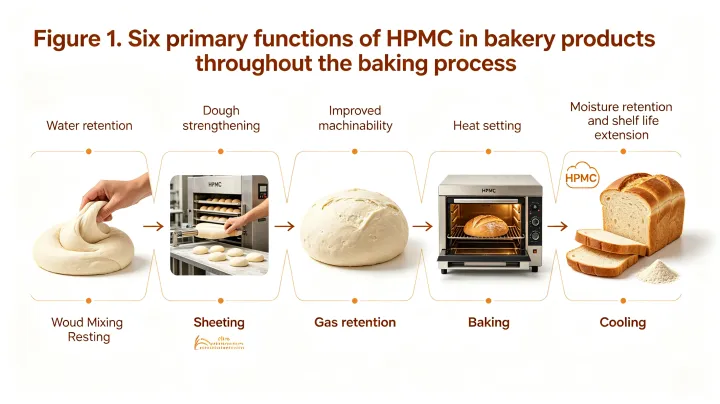
Figure 1. Six primary functions of HPMC in bakery products throughout the baking process.
(Insert original infographic here: “Six Functions of HPMC in Bakery Products”)
Figure Insight: Rather than acting as a simple thickener, HPMC performs multiple roles during bakery processing. It binds water during mixing, strengthens dough structure during proofing, forms a thermo-gel network during baking, stabilizes gas cells, delays moisture migration during storage, and partially replaces gluten in gluten-free formulations. These combined mechanisms explain why HPMC has become an essential multifunctional ingredient in modern bakery manufacturing.
Water management is one of the most important factors affecting bakery quality. For instance, during mixing, flour proteins and starch granules compete for available water, while moisture is continuously lost during baking and storage. Consequently, insufficient water retention often results in dry crumb, poor dough machinability, and rapid staling.
To address this, HPMC contains numerous hydrophilic methoxy and hydroxypropoxy groups that readily bind water molecules through hydrogen bonding. Moreover, instead of allowing free water to migrate rapidly, hydrated HPMC forms a stable water-binding system that distributes moisture more evenly throughout the dough.
As a result, this improved hydration benefits nearly every stage of production by increasing dough consistency, reducing moisture loss during baking, and maintaining crumb softness throughout shelf life.
In addition to its water‑binding capacity, thermal gelation plays a vital role in stabilizing bread structure. In fact, unlike most food hydrocolloids, HPMC exhibits reversible thermal gelation. As dough temperature rises during baking, hydrated HPMC molecules transform from a liquid solution into a three‑dimensional gel network.
This temporary gel network performs two critical functions: first, it strengthens the dough structure while starch gelatinization and gluten setting occur; second, it prevents the collapse of expanding gas cells before the bread structure becomes permanent.
After cooling, the gel gradually returns to its hydrated state without negatively affecting product texture.
Therefore, this unique thermo‑gelling behaviour is one of the primary reasons why HPMC performs exceptionally well in bread, cakes, frozen dough, and gluten‑free bakery products.
Furthermore, gas cell stabilization is key to increasing loaf volume. High loaf volume depends on the ability of dough to retain carbon dioxide generated during yeast fermentation.
Without sufficient structural support, gas bubbles merge, rupture, or escape during proofing and the early stages of baking, resulting in dense crumb and poor oven spring.
However, HPMC reinforces the thin liquid films surrounding individual gas cells, reducing coalescence and improving gas retention throughout fermentation and baking.
As a consequence, bakery products typically exhibit:
Finally, improved dough rheology enhances processing efficiency. Commercial bakeries require dough that performs consistently on automated production lines. For example, excessively sticky dough slows production, while overly stiff dough reduces product quality.
Because HPMC modifies dough rheology without excessively increasing viscosity, it improves dough elasticity, extensibility, and machinability simultaneously.
Moreover, properly selected HPMC grades help maintain stable dough behaviour during:
This processing stability is particularly valuable for industrial bakeries operating continuous production systems.
Bread staling begins immediately after baking as starch retrogradation and moisture redistribution gradually harden the crumb.
Although staling cannot be completely prevented, HPMC significantly slows this process by retaining moisture within the crumb and reducing water migration between starch and gluten.
Consequently, bakery products remain softer for longer periods while maintaining improved sensory quality throughout distribution and retail storage.
This delayed staling effect also reduces food waste and improves customer satisfaction.
Perhaps the most valuable application of HPMC in bakery products is gluten-free baking.
Without gluten, dough lacks the elastic protein network needed to retain fermentation gases and support bread structure.
HPMC compensates for this deficiency by forming a thermo-responsive gel network that mimics several functional properties of gluten.
In gluten-free bread formulations, HPMC helps:
For this reason, HPMC is now considered one of the most important hydrocolloids used in commercial gluten-free bakery products worldwide.
| Function | Benefit to Bakery Products |
| Water Retention | Improves dough hydration and crumb softness |
| Thermal Gelation | Stabilizes dough structure during baking |
| Gas Retention | Increases loaf volume and oven spring |
| Dough Rheology | Improves machinability and processing stability |
| Anti-Staling | Extends freshness and shelf life |
| Gluten Replacement | Supports structure in gluten-free products |
Unlike conventional bakery additives, HPMC in bakery products performs six essential functions simultaneously: water retention, thermal gelation, gas cell stabilization, dough rheology modification, anti‑staling, and gluten replacement. As a result, these complementary mechanisms improve product quality from dough preparation through baking and long‑term storage, making HPMC one of the most versatile hydrocolloids in modern commercial baking.
Unlike conventional bakery improvers that simply increase dough viscosity, HPMC in bakery products improves baking performance through multiple mechanisms simultaneously, including water retention, thermal gelation, gas‑cell stabilization, dough rheology modification, and delayed starch retrogradation. Consequently, this multifunctional behaviour explains why HPMC has become one of the most widely used hydrocolloids in modern commercial bakery formulations.
Our bakery application engineers recommend optimising dough hydration and mixing conditions before increasing HPMC dosage. This is because, in commercial production, proper hydration often improves dough performance more effectively than simply adding more hydrocolloid.
During bakery formulation development, selecting a higher HPMC dosage does not always produce better results. In fact, in many cases, flour protein quality, water absorption, mixing intensity, and proofing conditions have a greater influence on final product quality than HPMC concentration alone. Therefore, pilot‑scale optimisation of the complete formulation system is recommended before commercial production. (Note: “therefore” was already in your original, so I kept it; I added “In fact” before the second sentence.)
Need Technical Support?
Whether you are developing sandwich bread, cakes, frozen dough, gluten-free bakery products, or other baked goods, our bakery application specialists can recommend the most suitable food-grade HPMC grade, dosage, and processing parameters based on your formulation requirements.
Request a Free Sample Talk to Our Bakery Application Engineer
Target Keywords
Unlike conventional hydrocolloids that function primarily by increasing viscosity, HPMC in bakery products delivers multiple functional benefits throughout the entire baking process. From dough mixing and proofing to baking, cooling, packaging, and storage, HPMC continuously changes its behavior as temperature increases.
Its unique combination of water retention, thermal gelation, gas cell stabilization, film formation, and anti-staling performance explains why HPMC has become one of the most widely used bakery improvers worldwide.
As illustrated in Figure 2, HPMC supports bakery quality through five complementary mechanisms rather than a single function.
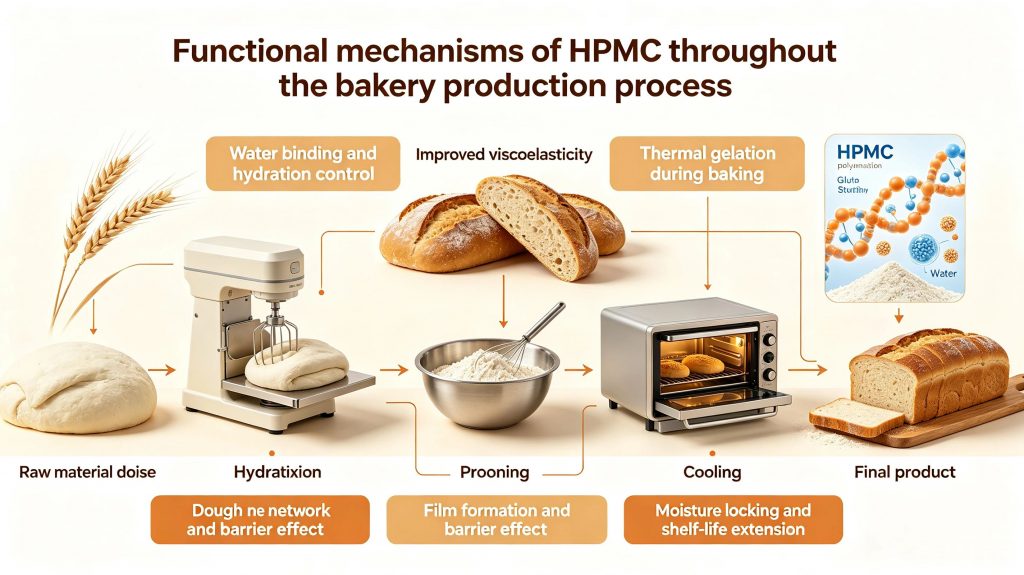
Figure 2. Functional mechanisms of HPMC throughout the bakery production process.
Figure 2 illustrates how HPMC continuously changes its functionality during dough mixing, proofing, baking, cooling, and storage. Unlike starch or simple gums, HPMC responds to increasing temperature by forming a thermal gel network that stabilizes dough structure while retaining moisture. This multifunctional behavior enables consistent product quality, extended freshness, and improved process tolerance across a wide variety of bakery products.
Water management is one of the most critical factors affecting bakery quality. For example, during mixing and baking, water migrates continuously between flour particles, gluten proteins, starch granules, and surrounding air.
Without adequate moisture retention, dough becomes dry during proofing, loses elasticity, and eventually produces bread with a firm crumb and short shelf life. To prevent this, HPMC molecules contain numerous hydrophilic hydroxyl and methoxy groups, so they rapidly bind water molecules through hydrogen bonding.
Moreover, instead of allowing free water to evaporate quickly, HPMC converts part of the free water into bound water, helping maintain optimal moisture distribution throughout processing.
As a result, typical benefits include:
Furthermore, compared with many traditional hydrocolloids, HPMC provides moisture retention without producing excessive stickiness or gumminess.
Therefore, for most commercial bakery products, HPMC improves freshness primarily by retaining water inside the dough matrix rather than simply increasing viscosity.
Thermal Gelation: Why HPMC Is Different from Other Hydrocolloids
Perhaps the most unique characteristic of HPMC in bakery products is its reversible thermal gelation behaviour.
In contrast, most hydrocolloids become thinner when heated. However, HPMC behaves differently. As dough temperature rises to approximately 55–75°C, hydrated HPMC molecules begin associating with each other through hydrophobic interactions. Instead of remaining as individual polymer chains, they rapidly build a three‑dimensional gel network.
This temporary network performs several important functions during baking:
After cooling, the gel partially relaxes while leaving behind a stronger bread structure.
Consequently, this thermal gelation mechanism is one reason why HPMC is especially valuable in gluten‑free formulations.
However, do not select HPMC solely based on viscosity. Thermal gelation temperature often has a greater impact on loaf volume and crumb stability than viscosity alone.
During fermentation, yeast continuously generates carbon dioxide.
As gas pressure increases, dough must stretch without rupturing.
Weak dough loses gas easily, producing:
Hydrated HPMC increases dough cohesiveness while reinforcing gas-cell walls.
During baking, thermal gelation further strengthens these thin cell membranes until starch gelatinization permanently fixes the final bread structure.
This dual mechanism greatly improves:
For industrial bakeries running high-speed production lines, improved gas retention often translates directly into higher production yield.
HPMC supports larger loaf volume by strengthening gas-cell walls throughout fermentation and baking rather than by increasing dough viscosity alone.
Modern bakery production depends heavily on automated processing.
Dough must remain stable during:
Poor dough rheology often results in:
HPMC modifies dough rheology by increasing elasticity while maintaining extensibility.
The result is dough that processes smoothly without becoming excessively stiff.
Manufacturers often observe:
Consumers often associate bread staling with moisture loss.
In reality, the primary mechanism is starch retrogradation.
After baking, gelatinized starch molecules gradually reorganize into crystalline structures.
This process causes:
HPMC delays starch retrogradation through two mechanisms:
First, it retains moisture around starch granules.
Second, polymer chains interfere with starch recrystallization.
As a result, bakery products remain softer for longer periods.
Many commercial bakeries report freshness improvements of several days depending on formulation.
Rather than simply slowing moisture loss, HPMC delays bread staling by interfering with starch recrystallization during storage.
Perhaps no bakery application demonstrates the value of HPMC better than gluten-free baking.
Traditional wheat dough depends on gluten proteins to create an elastic network capable of trapping gas.
Without gluten, dough lacks:
HPMC partially replaces gluten by forming a temporary hydrocolloid network during proofing and thermal gelation during baking.
This allows gluten-free breads to achieve:
Consequently, HPMC has become one of the most widely used hydrocolloids in commercial gluten-free bread production.
| Parameter | Recommendation |
| Recommended Product | ACTA Food Grade HPMC 60RT15 |
| Typical Dosage | 0.30–1.20% |
| Hydration | Add during dry mixing |
| Water Temperature | 20–35°C |
| Mixing Time | 5–10 min |
| Baking Process | Conventional / Continuous |
| Suitable Applications | Bread, Cake, Cookies, Gluten-Free Bakery |
Selecting the right HPMC grade depends on flour type, water absorption, bakery process, and final product characteristics.
Our bakery application engineers can recommend the most suitable viscosity grade, dosage, hydration procedure, and processing parameters based on your formulation.
Free Sample
Bakery Formulation Support
Processing Recommendations
Shelf-Life Optimization
Contact Our Technical Team
Not all bakery products require the same functionality from HPMC. Bread, cakes, cookies, pastries, frozen dough, and gluten-free products each present different formulation challenges, meaning that the recommended HPMC grade, dosage, and processing conditions also vary.
Selecting the appropriate HPMC grade according to product type improves dough handling, baking stability, finished-product texture, and shelf life while reducing formulation trials during product development.
Bread is one of the largest application areas for food-grade HPMC. During mixing and proofing, HPMC improves water absorption and dough consistency, making the dough easier to process while reducing stickiness.
During baking, HPMC forms a thermal gel as the temperature rises. This temporary gel network helps retain carbon dioxide generated by yeast fermentation, resulting in greater loaf volume and a finer, more uniform crumb structure.
Because HPMC also slows starch retrogradation after baking, bread remains softer for a longer period and stales more slowly during storage.
| Parameter | Recommendation |
| Recommended Product | Acta HPMC 60RT15 |
| Typical Dosage | 0.20–0.50% |
| Application | White Bread / Sandwich Bread |
| Water Addition | 58–65% |
| Mixing Time | 8–12 min |
| Baking Temperature | 180–220°C |
| Shelf Life | 5–10 days |
For most commercial bread formulations, Acta HPMC E15 at 0.20–0.50% improves loaf volume, crumb softness, moisture retention, and shelf-life stability without negatively affecting dough machinability.
Cake batter requires a stabilizer that maintains a stable foam structure throughout mixing and baking.
HPMC increases batter viscosity just enough to reduce air bubble coalescence before baking. As oven temperature increases, thermal gelation strengthens the cake structure until starch gelatinization and egg protein coagulation are complete.
The result is:
| Parameter | Recommendation |
| Recommended Product | Acta HPMC 75RT400 |
| Typical Dosage | 0.15–0.40% |
| Application | Sponge Cake / Pound Cake |
| Batter Density | Medium |
| Baking Temperature | 170–190°C |
| Shelf Life | 5–7 days |
For cake applications, HPMC stabilizes batter aeration and produces a softer, more resilient crumb with improved moisture retention throughout storage.
Cookies require a very different functionality than bread.
Rather than maximizing loaf volume, manufacturers seek:
HPMC binds water during mixing while limiting excessive dough spread during baking.
Because moisture migrates more slowly after baking, cookies retain their desired crispness for longer while becoming less susceptible to cracking during transportation.
| Parameter | Recommendation |
| Recommended Product | Acta HPMC E15 |
| Typical Dosage | 0.10–0.30% |
| Application | Cookies / Biscuits |
| Water Addition | Low |
| Baking Temperature | 180–210°C |
| Texture | Crisp |
For cookies and biscuits, HPMC provides dimensional stability while improving handling properties and reducing breakage during packaging and transportation.
Croissants, Danish pastries, puff pastry, and laminated dough require excellent dough extensibility while maintaining clear separation between butter and dough layers.
HPMC improves dough elasticity and water distribution without making the dough excessively elastic.
During baking, the thermal gel network helps maintain laminated layers while steam expands between them, producing:
| Parameter | Recommendation |
| Recommended Product | Acta HPMC K4M |
| Typical Dosage | 0.20–0.40% |
| Application | Puff Pastry / Croissant |
| Lamination | Excellent |
| Baking Temperature | 190–210°C |
For laminated dough systems, HPMC improves layer stability and produces lighter, flakier pastries with excellent baking consistency.
Frozen dough presents one of the greatest challenges in commercial baking because repeated freezing and thawing damages the gluten network and reduces yeast activity.
HPMC binds water before freezing, reducing ice crystal formation and limiting structural damage.
After thawing, dough retains:
| Parameter | Recommendation |
| Recommended Product | Acta HPMC MH400-G |
| Typical Dosage | 0.30–0.60% |
| Application | Frozen Dough |
| Storage Temperature | -18°C |
| Frozen Shelf Life | 6–12 months |
For frozen dough products, HPMC minimizes freeze–thaw damage and improves baking consistency after long-term frozen storage.
Gluten-free baking represents one of the fastest-growing applications for HPMC worldwide.
Without gluten, dough lacks the elastic protein network required to retain fermentation gases.
HPMC compensates by creating a temporary gel structure during baking that mimics many of gluten’s functional properties.
This enables gluten-free products to achieve:
Compared with many other hydrocolloids, HPMC remains the industry benchmark for gluten-free bread because of its unique thermal gelation behavior.
| Parameter | Recommendation |
| Recommended Product | Acta HPMC K4M |
| Typical Dosage | 0.80–2.00% |
| Application | Gluten-Free Bread |
| Flour System | Rice / Corn / Starch |
| Water Addition | Higher hydration |
| Baking | Standard Bread Process |
For gluten-free bakery products, HPMC functions as a gluten replacer by creating a heat-induced network that improves loaf volume, texture, and shelf-life stability.
| Bakery Product | Recommended Grade | Dosage |
| Bread | Acta HPMC 60RT15 | 0.20–0.50% |
| Cake | Acta HPMC 75RT4000 | 0.15–0.40% |
| Cookies | Acta HPMC E15 | 0.10–0.30% |
| Puff Pastry | Acta HPMC K4M | 0.20–0.40% |
| Frozen Dough | Acta HPMC MH400-G | 0.30–0.60% |
| Gluten-Free Bread | Acta HPMC K4M | 0.80–2.00% |
Optimize dough hydration and mixing conditions before increasing HPMC dosage. In many bakery formulations, inconsistent water absorption or insufficient dough development has a greater impact on product quality than the HPMC level itself. Small adjustments to mixing time, water addition, or proofing conditions often deliver better results than simply adding more hydrocolloid.
Whether you’re developing bread, cakes, cookies, laminated pastries, frozen dough, or gluten-free bakery products, our bakery application specialists can recommend the most suitable HPMC grade, dosage, hydration procedure, and processing parameters based on your formulation and production process.
✔ Free Sample ✔ Formula Optimization ✔ Technical Consultation ✔ Bakery Application Support
�� Contact Our Technical Team
Even well-designed bakery formulations can encounter processing or quality issues during commercial production. Bread may collapse after baking, cakes can become dry within days, cookies sometimes lose their shape, and frozen dough may fail to recover after thawing.
Although these problems often appear to result from insufficient hydrocolloid dosage, the root cause is frequently related to dough hydration, ingredient interactions, mixing conditions, proofing parameters, or baking processes. Simply increasing the HPMC dosage rarely provides the best solution.
This troubleshooting guide summarizes the most common bakery production challenges, explains their likely causes, and provides practical formulation recommendations to help product developers achieve consistent quality while minimizing costly trial-and-error.
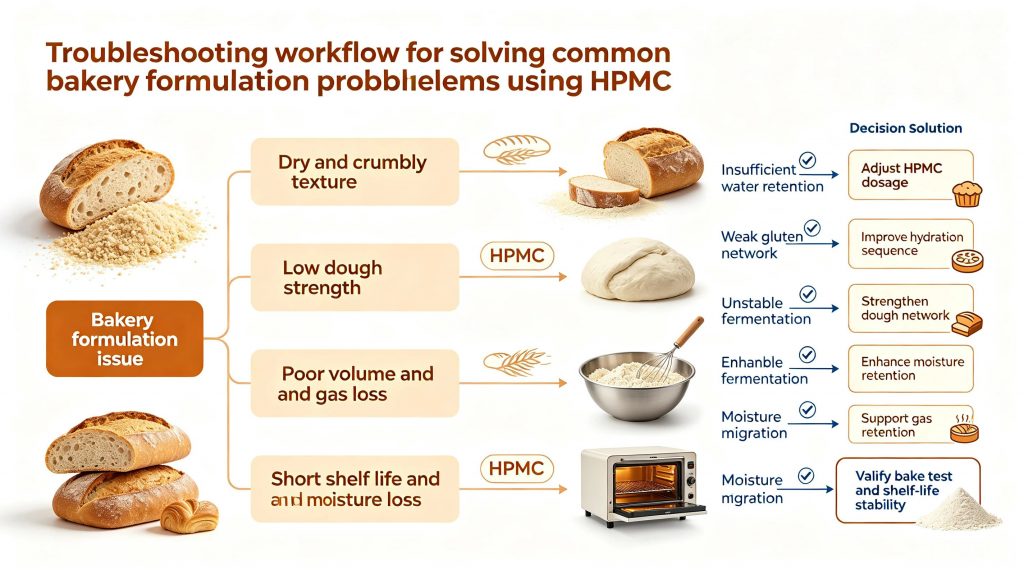
As illustrated in Figure 5, identifying the root cause before adjusting the formulation significantly improves product quality and development efficiency.
Figure 5. Troubleshooting workflow for solving common bakery formulation problems using HPMC.
Figure Insight
Rather than increasing HPMC dosage immediately, bakery manufacturers should first evaluate dough hydration, mixing conditions, proofing performance, and baking parameters. In many commercial formulations, optimizing processing conditions delivers greater improvements than simply adding more hydrocolloid.
Poor loaf volume is one of the most common complaints in bread production. The finished loaf appears dense, compact, and lacks the light, airy structure expected by consumers.
Although insufficient HPMC may contribute, inadequate gluten development, under-proofing, poor hydration, or excessive dough stiffness are often the primary causes.
A properly selected HPMC grade forms a thermo-gel during baking that stabilizes expanding gas cells before starch gelatinization is complete, helping the loaf retain more gas and achieve greater volume.
Fresh bread gradually loses moisture after baking, causing the crumb to become firm and dry. At the same time, starch retrogradation accelerates crumb hardening, reducing product freshness and shortening shelf life.
HPMC slows moisture migration by binding water within the crumb structure while delaying starch recrystallization. As a result, bread remains softer for longer without increasing product stickiness.
Sticky dough creates major difficulties during industrial production by reducing machining efficiency and increasing waste.
Excessive water addition, insufficient flour strength, incomplete HPMC dispersion, or incorrect mixing sequences commonly contribute to this problem.
Proper hydration of HPMC before complete dough development improves water distribution and produces a smoother, easier-to-process dough.
Conversely, dough may become overly stiff when hydration is insufficient or when high-viscosity HPMC is overdosed.
This reduces dough extensibility, increases mechanical resistance, and limits gas expansion during proofing.
Reducing HPMC dosage or increasing water absorption usually restores the desired dough consistency.
Cake collapse often occurs when the batter cannot maintain its cellular structure during baking.
Insufficient batter viscosity, weak air-cell stabilization, or inadequate thermal gel formation allows gas cells to rupture before the cake structure sets.
HPMC stabilizes batter viscosity during heating and supports gas-cell integrity, producing higher cake volume and a finer crumb.
Cookies may spread excessively during baking or lose their designed shape due to weak dough structure.
A small amount of low-viscosity HPMC increases dough cohesiveness while maintaining machinability, allowing cookies to retain sharper edges and more uniform dimensions.
Ice crystal formation damages gluten structure during frozen storage, reducing gas retention after thawing.
Freeze-stable HPMC grades improve water distribution and help maintain dough integrity through repeated freeze-thaw cycles, resulting in improved proofing and loaf volume after baking.
| Problem | Possible Cause | Recommended Solution | Recommended HPMC |
| Poor loaf volume | Weak dough structure | Improve hydration and select medium-viscosity HPMC | Acta HPMC K4M |
| Dry crumb | Moisture loss | Increase water retention | Acta HPMC K4M |
| Rapid staling | Starch retrogradation | Improve moisture binding | Acta HPMC K4M |
| Sticky dough | Improper hydration | Optimize mixing sequence | Acta HPMC MH400-G |
| Dry dough | Low water absorption | Increase hydration | Acta HPMC MH400-G |
| Cake collapse | Weak batter stability | Improve thermal gel formation | Acta HPMC 75RT4000 |
| Cookie spreading | Low dough consistency | Increase dough cohesion | Acta HPMC E15 |
| Frozen dough collapse | Ice crystal damage | Improve freeze-thaw stability | Acta HPMC MH400-G |
| Gluten-free bread collapse | Weak structure | Replace gluten network | Acta HPMC 60RT15 |
Before increasing HPMC concentration, bakery manufacturers should verify the following processing conditions:
Has HPMC been completely dispersed before dough development?
Is dough hydration appropriate for the flour being used?
Is mixing time optimized?
can proofing temperature and humidity properly be controlled?
Is proofing time sufficient?
can baking temperature be consistent throughout the oven?
Can the selected HPMC viscosity be appropriate for the product?
Has water absorption been adjusted after changing flour batches?
Has yeast activity been verified?
Have all ingredients been added in the correct sequence?
In many commercial bakeries, correcting one of these processing variables solves quality problems without increasing HPMC dosage or formulation cost.
During pilot-scale production, avoid treating HPMC as the primary solution to every bakery problem. Dough hydration, flour quality, yeast performance, proofing conditions, and baking temperature often have a greater influence on final product quality than hydrocolloid dosage alone. Optimizing the entire production process generally produces more consistent improvements than simply increasing HPMC concentration.
| Parameter | Recommendation |
| Recommended Product | Acta HPMC 60RT15 |
| Typical Dosage | 0.30–0.60% |
| Suitable Products | Bread, Buns, Toast |
| Mixing Method | Dry blend with flour |
| Water Temperature | 20–30°C |
| Baking Temperature | 180–220°C |
| Main Benefit | Improved volume, softer crumb, delayed staling |
| Item | Recommendation |
| Product | Acta HPMC 60RT15 |
| Dosage | 0.40% |
| Water Absorption | +3% |
| Mixing Time | 8–10 min |
| Proofing | 38°C, 85% RH |
| Baking | 200°C |
| Shelf Life | 7 Days |
| Main Benefit | Higher loaf volume, softer crumb, delayed staling |
Most bakery quality issues originate from a combination of formulation and processing factors rather than HPMC dosage alone. By selecting the appropriate HPMC grade, optimizing hydration, controlling mixing and proofing conditions, and validating processing parameters through pilot trials, manufacturers can consistently improve dough handling, baking performance, product texture, and shelf life while reducing development time and production costs.
Selecting the appropriate hydrocolloid is just as important as choosing the right flour or baking process. Although HPMC is one of the most widely used bakery improvers, formulators often compare it with cellulose gums, plant gums, starches, and pectin when developing new products.
Each hydrocolloid offers unique functional properties. Some primarily increase viscosity, while others improve moisture retention, stabilize emulsions, or replace gluten. Understanding these differences helps manufacturers optimize product quality while controlling formulation costs.
As illustrated in Figure 7, HPMC provides one of the most balanced combinations of gas retention, thermal gelation, moisture management, and shelf-life extension among commonly used bakery hydrocolloids.
Figure 7. Functional comparison of HPMC and other hydrocolloids used in bakery products.
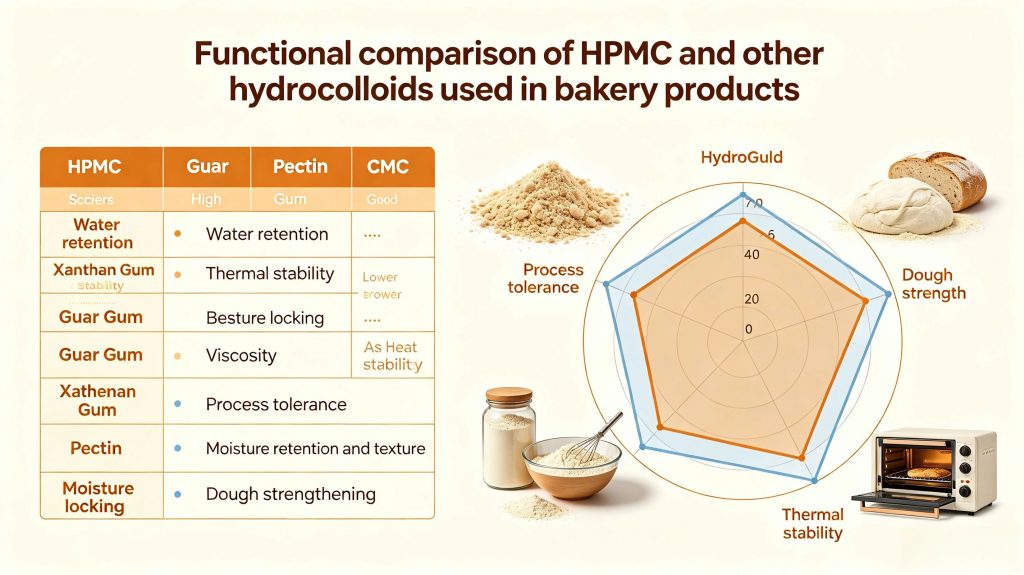
Unlike conventional hydrocolloids that mainly increase viscosity, HPMC develops a thermo-reversible gel during baking. This unique behavior stabilizes expanding gas cells before starch gelatinization is complete, allowing baked products to achieve greater volume, improved crumb structure, and longer freshness.
Both HPMC and CMC are cellulose derivatives, but they perform very differently during baking.
CMC functions primarily as a water-binding and thickening agent. It improves dough handling, moisture retention, and softness but does not form a thermal gel during baking.
HPMC, on the other hand, undergoes thermal gelation as temperature increases. This allows it to stabilize gas cells during oven spring, resulting in higher loaf volume and improved crumb structure.
| Property | HPMC | CMC |
| Water Retention | Excellent | Excellent |
| Thermal Gelation | Excellent | None |
| Gas Retention | Excellent | Moderate |
| Bread Volume | Excellent | Moderate |
| Anti-Staling | Excellent | Good |
| Gluten Replacement | Excellent | Poor |
| Frozen Dough | Excellent | Moderate |
Choose HPMC when loaf volume, gluten replacement, or frozen dough performance is important.
Choose CMC when the primary objective is moisture retention or dough handling.
Xanthan gum produces very high viscosity at extremely low dosage.
While this property is valuable for sauces and beverages, excessive xanthan often creates gummy dough and sticky crumb textures in bakery applications.
HPMC provides structural stability without excessive stickiness, making it more suitable for bread and cakes.
| Property | HPMC | Xanthan Gum |
| Gas Retention | Excellent | Moderate |
| Dough Handling | Excellent | Fair |
| Batter Stability | Excellent | Excellent |
| Mouthfeel | Natural | Slightly Sticky |
| Thermal Stability | Excellent | Good |
| Gluten-Free Baking | Excellent | Good |
Use HPMC for bread, cakes, frozen dough, and gluten-free bakery.
Use Xanthan Gum when additional viscosity is required, particularly in gluten-free formulations.
Guar gum hydrates rapidly and provides economical viscosity improvement.
However, guar gum lacks thermal gelation and contributes little to gas-cell stabilization during baking.
| Property | HPMC | Guar Gum |
| Water Binding | Excellent | Excellent |
| Dough Elasticity | Excellent | Moderate |
| Oven Spring | Excellent | Poor |
| Crumb Softness | Excellent | Good |
| Thermal Gelation | Excellent | None |
Guar gum is suitable for moisture retention.
HPMC is preferred whenever loaf volume and baking performance are priorities.
Modified starch contributes body and softness while reducing production cost.
However, starch alone cannot effectively stabilize gas cells during baking.
Many commercial bakery formulations combine modified starch with HPMC to obtain both cost efficiency and superior baking performance.
| Property | HPMC | Modified Starch |
| Water Retention | Excellent | Good |
| Structure Formation | Excellent | Moderate |
| Freeze-Thaw Stability | Excellent | Moderate |
| Shelf-Life Extension | Excellent | Good |
| Baking Performance | Excellent | Moderate |
Pectin is mainly used in fruit fillings and bakery jams.
Its functionality depends heavily on sugar concentration and acidity.
For bread and cakes, HPMC generally provides superior dough stability and moisture retention.
| Property | HPMC | Pectin |
| Bread Applications | Excellent | Poor |
| Cake Applications | Excellent | Moderate |
| Fruit Filling | Moderate | Excellent |
| Water Retention | Excellent | Good |
| Thermal Stability | Excellent | Moderate |
| Property | HPMC | CMC | Xanthan | Guar | Modified Starch | Pectin |
| Water Retention | ★★★★★ | ★★★★★ | ★★★★☆ | ★★★★★ | ★★★★☆ | ★★★☆☆ |
| Gas Retention | ★★★★★ | ★★★☆☆ | ★★★☆☆ | ★★☆☆☆ | ★★☆☆☆ | ★☆☆☆☆ |
| Thermal Gelation | ★★★★★ | ★☆☆☆☆ | ★☆☆☆☆ | ★☆☆☆☆ | ★☆☆☆☆ | ★☆☆☆☆ |
| Dough Handling | ★★★★★ | ★★★★☆ | ★★★☆☆ | ★★★☆☆ | ★★★☆☆ | ★★☆☆☆ |
| Bread Volume | ★★★★★ | ★★★☆☆ | ★★★☆☆ | ★★☆☆☆ | ★★★☆☆ | ★☆☆☆☆ |
| Gluten Replacement | ★★★★★ | ★★☆☆☆ | ★★★★☆ | ★★★☆☆ | ★★☆☆☆ | ★☆☆☆☆ |
| Frozen Dough | ★★★★★ | ★★★☆☆ | ★★★☆☆ | ★★☆☆☆ | ★★★☆☆ | ★☆☆☆☆ |
| If Your Product Is… | Best Choice |
| White Bread | Acta HPMC 60RT15 |
| Whole Wheat Bread | Acta HPMC 60RT15 |
| Sandwich Bread | Acta HPMC 60RT15 |
| Cake | Acta HPMC 75RT4000 |
| Cookies | Acta HPMC E15 |
| Frozen Dough | Acta HPMC MH400-G |
| Gluten-Free Bread | Acta HPMC K4M |
| Fruit Filling | Pectin |
| Bakery Cream | CMC + HPMC |
| Cost-Optimized Bread | HPMC + Modified Starch |
Rather than relying on a single hydrocolloid, many commercial bakeries achieve the best results by combining complementary ingredients. For example, HPMC may be paired with modified starch to improve cost efficiency, or with xanthan gum in gluten-free formulations to enhance dough elasticity and moisture retention. Pilot-scale testing remains the most reliable way to optimize both functionality and production cost.
| Parameter | Recommendation |
| Primary Hydrocolloid | Acta HPMC E50 |
| Typical Dosage | 0.30–0.60% |
| Alternative | HPMC + Modified Starch |
| Gluten-Free | Acta HPMC K100M |
| Frozen Dough | Acta HPMC F50 |
| Main Benefit | Higher loaf volume, softer crumb, delayed staling |
Although CMC, xanthan gum, guar gum, modified starch, and pectin each provide valuable functionality in specific bakery applications, HPMC offers the most comprehensive performance across a wide range of products. Moreover, its unique thermo‑gelation behavior, excellent gas retention, superior moisture management, and proven effectiveness in gluten‑free and frozen dough formulations make it the preferred hydrocolloid for modern bakery production. Therefore, selecting the appropriate HPMC grade—or combining HPMC with complementary hydrocolloids when needed—allows manufacturers to optimize product quality, shelf life, processing efficiency, and overall formulation cost.
Selecting the correct HPMC grade is only one part of successful bakery formulation. Indeed, in commercial production, improvements in dough handling, baking performance, product consistency, and shelf life are usually achieved by optimizing the complete formulation rather than simply increasing hydrocolloid dosage. Furthermore, the following application examples illustrate how HPMC solved common bakery challenges in different product categories. Although every formulation is unique, these real‑world scenarios demonstrate practical approaches that product developers can adapt during pilot production. Consequently, as shown in Figure 10, selecting the appropriate HPMC grade and optimizing processing conditions significantly improve product quality while reducing formulation development time.
Figure 10. Performance improvements achieved by optimized HPMC formulations in commercial bakery products.
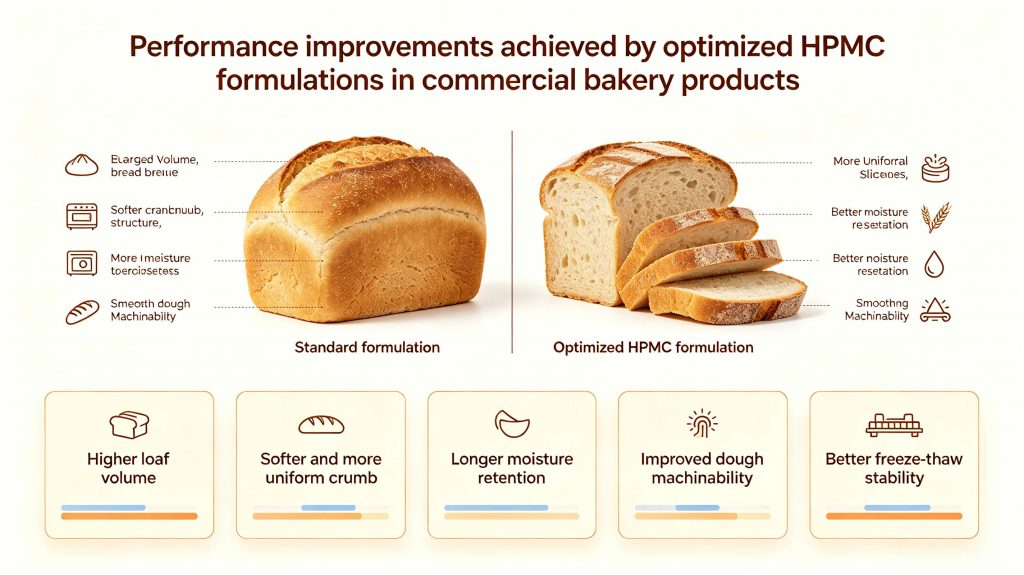
Successful bakery formulations rely on balancing HPMC grade selection, dough hydration, proofing conditions, and baking parameters. Optimizing these variables together consistently produces better volume, softer texture, improved machinability, and longer shelf life than adjusting HPMC dosage alone.
A commercial bread manufacturer producing sandwich loaves experienced:
The original formulation used only emulsifiers and enzymes without any cellulose ether.
Application engineers recommended incorporating Acta HPMC E50 while optimizing water absorption and proofing conditions.
Key adjustments included:
After pilot production:
Loaf volume increased by approximately 12%
Crumb became softer and more uniform
Shelf life extended from 3 days to 6 days
Reduced customer complaints
| Parameter | Recommendation |
| Product | Acta HPMC 60RT15 |
| Dosage | 0.40% |
| Product Type | Sandwich Bread |
| Benefit | Higher loaf volume |
| Shelf Life | 6 Days |
For yeast-leavened bread, medium-viscosity HPMC improves oven spring, enhances crumb softness, and significantly delays staling without negatively affecting dough machinability.
A cake manufacturer encountered:
The formulation was optimized using Acta HPMC 75RT4000.
Processing adjustments included:
Compared with the original formulation:
Cake height increased by approximately 10%
Uniform crumb structure
Reduced collapse during cooling
Better appearance consistency
| Parameter | Recommendation |
| Product | Acta HPMC 75RT4000 |
| Dosage | 0.25% |
| Product Type | Sponge Cake |
| Main Benefit | Better batter stability |
Low-viscosity HPMC effectively stabilizes cake batter while maintaining a light, soft texture.
A frozen dough manufacturer exporting bakery products experienced:
Application specialists recommended:
Pilot production demonstrated:
Better dough stability after thawing
Improved gas retention
More uniform loaf volume
Stable quality after extended frozen storage
| Parameter | Recommendation |
| Product | Acta HPMC MH400-G |
| Dosage | 0.60% |
| Product Type | Frozen Dough |
| Storage | −18°C |
| Main Benefit | Freeze–thaw stability |
Freeze-stable HPMC helps protect dough structure during frozen storage, resulting in improved proofing performance and more consistent baked products.
Gluten-free bread presents one of the greatest formulation challenges because the gluten network responsible for gas retention is absent.
A manufacturer producing rice-based gluten-free bread experienced:
Application engineers recommended replacing the previous hydrocolloid system with Acta HPMC 60RT15.
Key formulation adjustments included:
Following optimization:
Improved dough elasticity
Approximately 20% higher loaf volume
Softer crumb
Better sliceability
Longer freshness
| Parameter | Recommendation |
| Product | Acta HPMC 60RT15 |
| Dosage | 1.20% |
| Product Type | Gluten-Free Bread |
| Main Benefit | Gluten replacement |
High-viscosity HPMC effectively replaces gluten functionality, improving dough structure, loaf volume, and crumb quality in gluten-free bakery products.
| Bakery Product | Recommended Grade | Typical Dosage | Main Improvement |
| Bread | Acta HPMC 60RT15 | 0.30–0.60% | Higher loaf volume |
| Cake | Acta HPMC 75RT4000 | 0.20–0.40% | Better batter stability |
| Cookie | Acta HPMC E15 | 0.10–0.30% | Improved shape retention |
| Frozen Dough | Acta HPMC MH400-G | 0.40–0.80% | Freeze-thaw stability |
| Gluten-Free Bread | Acta HPMC K4M | 0.80–2.00% | Gluten replacement |
When validating bakery formulations, evaluate the entire production process instead of focusing solely on HPMC dosage. Water absorption, flour quality, mixing intensity, proofing conditions, and baking temperature often influence final product quality as much as hydrocolloid selection. Small process adjustments can produce significant improvements without increasing ingredient costs.
Whether you are developing bread, cakes, cookies, frozen dough, or gluten-free bakery products, our bakery application specialists can recommend the most suitable HPMC grade, dosage, and processing parameters based on your formulation and production process.
Free Sample
Formula Optimization
Bakery Processing Guide
Technical Consultation
Contact Our Technical Team
Selecting the correct HPMC grade is only part of a successful bakery formulation. Moreover, consistent product quality also depends on choosing a reliable supplier capable of delivering stable raw materials, technical support, and long‑term supply security.
Although many companies sell food‑grade HPMC, not every supplier provides the same manufacturing consistency, quality documentation, or application expertise. For instance, batch‑to‑batch variation can affect dough handling, loaf volume, moisture retention, and shelf life, thereby making supplier selection an important part of commercial product development.
Consequently, as illustrated in Figure 11, selecting an HPMC supplier should involve evaluating not only product specifications but also technical capabilities, quality management, and application support.
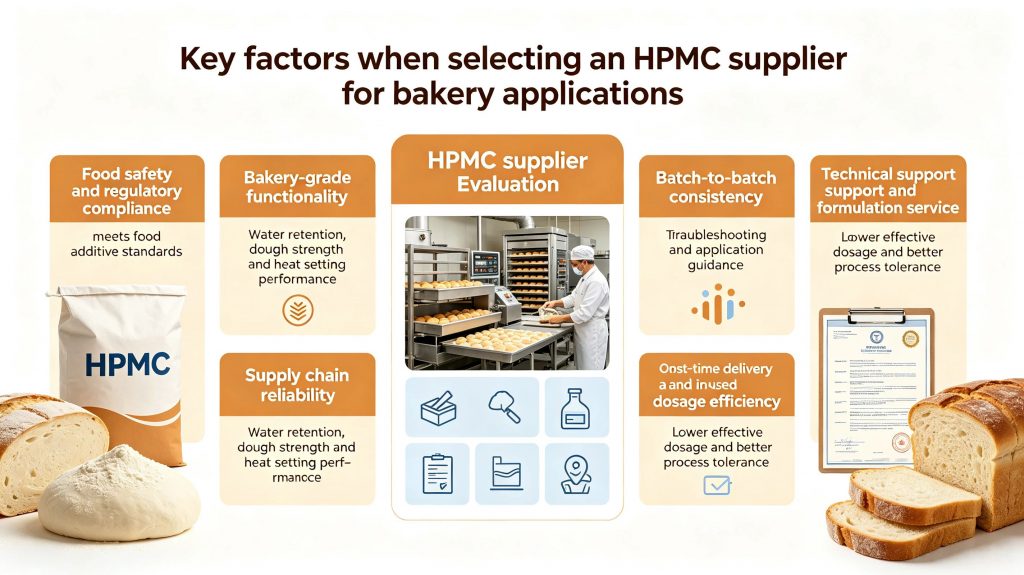
Figure 11. Key factors when selecting an HPMC supplier for bakery applications.
Choosing a bakery HPMC supplier involves much more than comparing price. Consistent viscosity, particle size distribution, manufacturing quality, certifications, technical support, and supply reliability all influence final bakery performance and long-term production stability.
Many formulation problems that appear to originate from HPMC are actually caused by inconsistent raw material quality.
Common supplier-related issues include:
These issues may reduce loaf volume, shorten shelf life, increase production waste, and complicate quality control.
A professional supplier should be able to provide complete technical documentation before commercial supply.
| Document | Purpose |
| Technical Data Sheet (TDS) | Product specifications |
| Certificate of Analysis (COA) | Batch quality verification |
| Safety Data Sheet (SDS/MSDS) | Safe handling information |
| Halal Certificate | Muslim markets |
| Kosher Certificate | Jewish markets |
| ISO 9001 | Quality management |
| HACCP / FSSC 22000 / BRCGS | Food safety management |
| Allergen Statement | Export compliance |
| GMO Statement | Customer requirements |
Many buyers compare suppliers based only on price.
However, formulation support often saves far more money than purchasing the cheapest ingredient.
Experienced application engineers can help optimize:
Reducing one pilot trial often saves more than the price difference between suppliers.
Before selecting a commercial supplier, verify the following:
| Evaluation Item | Why It Matters |
| Stable production capacity | Consistent long-term supply |
| Batch-to-batch consistency | Reliable bakery quality |
| Food-grade certifications | Regulatory compliance |
| Bakery application experience | Faster formulation |
| Multiple viscosity grades | Greater flexibility |
| Technical support | Faster troubleshooting |
| Sample availability | Pilot validation |
| Export experience | Smooth international delivery |
| Evaluation Factor | Excellent Supplier | Average Supplier |
| Manufacturing Experience | ✓ | Limited |
| Product Portfolio | Wide range | Few grades |
| Batch Consistency | Excellent | Variable |
| Technical Support | Dedicated application team | Sales only |
| Documentation | Complete | Basic |
| Export Experience | Global | Limited |
| Sample Availability | Fast | Slow |
| Response Time | <24 hours | Several days |
Do not evaluate an HPMC supplier solely by price per kilogram. Consider the total cost of ownership, including technical support, formulation optimization, product consistency, and supply reliability. A supplier that helps shorten development time and reduce production failures often provides greater long-term value than one offering only the lowest purchase price.
For commercial bakery production, choose a supplier that offers:
Food-grade HPMC specifically developed for bakery applications
Multiple viscosity grades for different products
Complete certification package
Stable batch-to-batch quality
Professional bakery application support
Fast sampling service
Reliable export experience
Before placing your first commercial order, confirm:
Food-grade production
ISO-certified manufacturing
Bakery-specific HPMC grades
Stable viscosity control
Batch COA available
TDS and SDS available
Halal certificate (if required)
Kosher certificate (if required)
Application engineers available
Sample testing supported
Export packaging available
Stable production capacity
Download our free Bakery HPMC Selection Guide to simplify product development.
Inside the guide:
Bakery Grade Selection Matrix
Dosage Guide
Bread Formulation Guide
Cake Formulation Guide
Cookie Formulation Guide
Gluten-Free Baking Guide
Troubleshooting Checklist
Supplier Evaluation Checklist
Processing Parameters
Pilot Trial Worksheet
�� Download Now
Whether you are developing bread, cakes, cookies, frozen dough, pastries, or gluten-free bakery products, our bakery application specialists can recommend the most suitable HPMC grade, dosage, and processing parameters based on your formulation.
Our technical support includes:
| Criteria | Excellent | Good | Fair |
| Bakery Experience | ★★★★★ | ★★★★☆ | ★★★☆☆ |
| Technical Support | ★★★★★ | ★★★☆☆ | ★★☆☆☆ |
| Documentation | ★★★★★ | ★★★★☆ | ★★★☆☆ |
| Product Consistency | ★★★★★ | ★★★★☆ | ★★★☆☆ |
| Export Capability | ★★★★★ | ★★★☆☆ | ★★☆☆☆ |
Bakery HPMC Procurement Card
| Item | Recommendation |
| Product | Acta HPMC 60RT15 |
| Application | Bread & Buns |
| Dosage | 0.30–0.60% |
| Packaging | 25 kg Kraft Paper Bag |
| MOQ | 1 MT |
| Shelf Life | 24 Months |
| Certifications | ISO 9001, HACCP, Halal (available), COA, TDS, SDS |
| Sample | Available |
| Technical Support | Yes |
Throughout this guide, one principle has remained consistent: HPMC is far more than a simple thickener. Indeed, in bakery applications, it functions as a multifunctional ingredient that improves dough handling, strengthens gas retention, enhances moisture management, delays staling, and supports product consistency throughout processing and storage.
Furthermore, whether producing artisan bread, sandwich bread, cakes, cookies, frozen dough, or gluten‑free bakery products, selecting the appropriate HPMC grade and optimising processing conditions are equally important. However, successful formulations rarely depend on dosage alone. Instead, product quality results from balancing ingredient selection with hydration, mixing, proofing, baking, and storage parameters.
Finally, as illustrated in Figure 12, achieving consistent bakery quality requires considering the complete formulation system rather than focusing on a single ingredient.
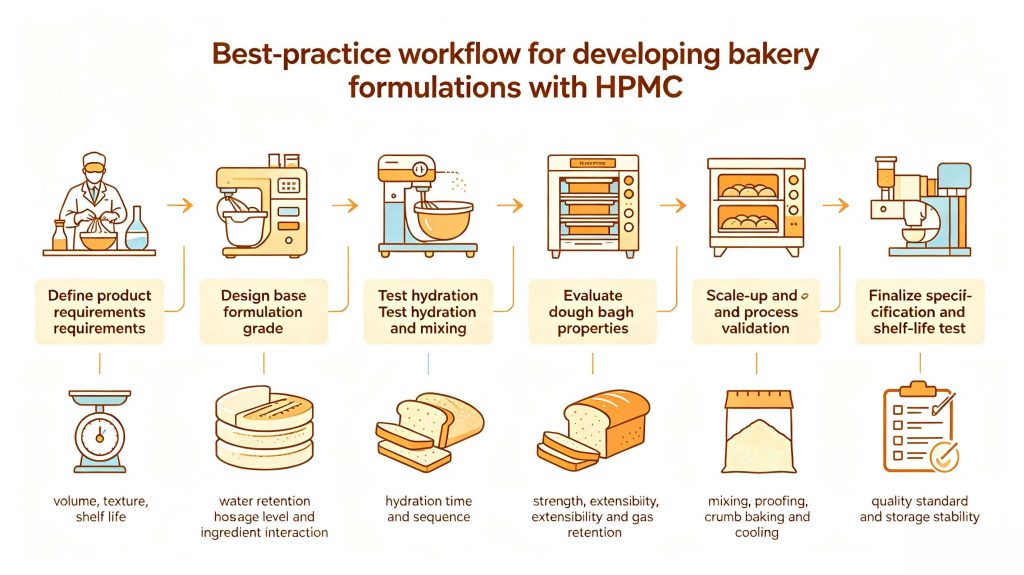
Figure 12. Best-practice workflow for developing bakery formulations with HPMC.
Successful bakery formulation begins with understanding the product requirements, selecting the appropriate HPMC grade, optimizing dosage, validating processing conditions, and confirming shelf-life performance through pilot-scale testing. This systematic approach shortens development time while improving commercial success.
| Bakery Product | Recommended Grade | Typical Dosage | Primary Function |
| White Bread | Acta HPMC 60RT15 | 0.30–0.60% | Gas retention |
| Whole Wheat Bread | Acta HPMC 60RT15 | 0.40–0.70% | Moisture retention |
| Sandwich Bread | Acta HPMC 60RT15 | 0.35–0.60% | Shelf-life extension |
| Cakes | Acta HPMC 75RT4000 | 0.20–0.40% | Batter stability |
| Muffins | Acta HPMC E15 | 0.20–0.45% | Volume improvement |
| Cookies | Acta HPMC MH400-G | 0.10–0.30% | Shape retention |
| Frozen Dough | Acta HPMC MH400-G | 0.40–0.80% | Freeze–thaw stability |
| Gluten-Free Bread | Acta HPMC K4M | 0.80–2.00% | Gluten replacement |
| Product | Water Absorption | Recommendation |
|---|---|---|
| Bread | High | Increase Water 3–8% |
| Cake | Medium | Standard Formula |
| Cookie | Low | Reduce Water |
| Frozen Dough | High | Optimize Hydration |
| Bakery Product | Baking Temperature | HPMC Performance |
|---|---|---|
| Bread | 200–220°C | Excellent |
| Cake | 170–190°C | Excellent |
| Cookie | 160–180°C | Good |
| Pizza | 230–260°C | Excellent |
| Product | Moisture Retention | Freshness |
|---|---|---|
| Bread | Excellent | 5–7 Days |
| Cake | Excellent | 7–10 Days |
| Cookies | Moderate | 6–12 Months |
| Frozen Dough | Excellent | 12 Months |
HPMC improves dough handling, gas retention, moisture management, and shelf life.
Different bakery products require different HPMC grades and dosage levels.
Processing conditions are just as important as ingredient selection.
Pilot-scale testing provides the most reliable basis for commercial production.
Partnering with an experienced HPMC supplier can reduce development time and improve formulation success.
Download our Bakery HPMC Formulation Guide to simplify product development and accelerate commercial production.
HPMC Grade Selection Matrix
Bakery Dosage Guide
Bread Formulation Guide
Cake Formulation Guide
Cookie Formulation Guide
Gluten-Free Baking Guide
Frozen Dough Guide
Troubleshooting Manual
Processing Parameters
Supplier Evaluation Checklist
Pilot Trial Worksheet
Commercial Scale-Up Checklist
Download the Free Guide
Whether you are developing bread, buns, cakes, cookies, pastries, frozen dough, or gluten-free bakery products, our bakery application engineers can recommend the most suitable HPMC grade, dosage level, and processing parameters based on your specific formulation.
Our technical support includes:
�� Contact Our Technical Team
HPMC functions as a dough improver, moisture‑retention agent, thermo‑gelling stabilizer, and gluten replacer. In practice, it helps increase loaf volume, improve crumb softness, delay staling, and enhance processing performance.
Typical dosage ranges from 0.30–0.60% based on flour weight, although this may vary depending on flour quality, formulation, and processing conditions.
Yes. In fact, high‑viscosity HPMC grades are widely used to replace gluten functionality by improving dough structure, gas retention, and crumb quality.
Yes. Specifically, freeze‑stable HPMC grades help reduce structural damage caused by ice crystals and improve proofing performance after thawing.
Yes. Food‑grade HPMC is approved for use in many countries and is widely used in bakery products, dairy products, beverages, sauces, confectionery, and plant‑based foods.
HPMC (Hydroxypropyl Methylcellulose) is a multifunctional bakery ingredient used to improve dough handling, increase loaf volume, retain moisture, delay staling, stabilize batters, and replace gluten in gluten‑free products. Moreover, unlike conventional thickeners, HPMC forms a thermo‑reversible gel during baking, helping stabilize gas cells as the product expands in the oven.
Traditional hydrocolloids mainly increase viscosity. However, HPMC not only thickens but also forms a thermal gel at baking temperatures, providing structural support during oven spring. As a result, this unique characteristic improves product volume, crumb structure, and overall baking performance.
Typical dosage ranges from 0.30–0.60% based on flour weight. Furthermore, higher‑protein flour or frozen dough formulations may require 0.50–0.80%, while gluten‑free bread generally uses 0.80–2.00%, depending on the flour blend and desired texture.
Medium‑viscosity bakery grades, such as Acta HPMC E50, are commonly recommended because they provide an excellent balance of gas retention, dough machinability, and anti‑staling performance.
Low‑viscosity grades such as Acta HPMC E15 are generally preferred since they stabilize batter while maintaining a light, tender crumb and good volume.
Yes. HPMC is one of the most widely used gluten replacers in commercial gluten‑free bakery products. Although it does not contain protein, its thermo‑gelation properties help build a network capable of retaining fermentation gases during baking.
Yes. High‑viscosity HPMC grades significantly improve dough structure, gas retention, loaf volume, sliceability, moisture retention, and shelf life. For this reason, HPMC is considered one of the most effective hydrocolloids for gluten‑free baking.
Yes. Freeze‑thaw cycles can damage dough structure by forming ice crystals that disrupt the gluten network. Nevertheless, HPMC helps retain water, protect dough structure, and improve proofing performance after thawing.
Yes. Specifically, by reducing moisture migration and slowing starch retrogradation, HPMC helps bakery products remain soft for longer, extending shelf life without significantly changing product texture.
No. Food‑grade HPMC is essentially tasteless, odorless, and colorless. Moreover, when used within recommended dosage ranges, it has minimal impact on flavor while improving texture and stability.
Yes. Food‑grade HPMC is approved for use in many countries and regions, including the United States, the European Union, and numerous international markets. Consequently, it is widely used in bakery, dairy, confectionery, beverages, and pharmaceutical applications.
Yes. HPMC is derived from plant cellulose and contains no animal‑derived ingredients, therefore making it suitable for vegan and vegetarian bakery products.
Yes. HPMC contains no gluten and is widely used in certified gluten‑free bakery formulations.
Yes.
Commercial formulations frequently combine HPMC with:
These combinations help optimize dough handling, texture, and production cost.
Absolutely.
Although often associated with bread, HPMC also improves:
Different viscosity grades should be selected according to product type.
For best results:
Proper incorporation improves functionality and minimizes lump formation.
Yes.
Overdosing may result in:
For this reason, pilot-scale trials are recommended before commercial production.
A reliable supplier should be able to provide:
When stored in sealed packaging under cool and dry conditions, bakery-grade HPMC typically has a shelf life of 24 months.
Evaluate suppliers based on:
Selecting an experienced supplier often reduces formulation time and improves commercial success.
| Question | Quick Answer |
| Best grade for bread | Acta HPMC 60RT15 |
| Best grade for cakes | Acta HPMC 75RT4000 |
| Frozen dough | Acta HPMC MH400-G |
| Gluten-free bread | Acta HPMC K4M |
| Bread dosage | 0.30–0.60% |
| Cake dosage | 0.20–0.40% |
| Cookie dosage | 0.10–0.30% |
| Frozen dough dosage | 0.40–0.80% |
| Gluten-free dosage | 0.80–2.00% |
Every bakery formulation is unique. Factors such as flour quality, water absorption, sugar level, fat content, processing conditions, and shelf-life requirements all influence HPMC performance.
If you’re developing bread, cakes, cookies, frozen dough, pastries, or gluten-free bakery products, our bakery application specialists can recommend:
Use this worksheet before pilot production.
| Item | Your Formula |
|---|---|
| Flour Type | __________ |
| Flour Protein (%) | __________ |
| Water (%) | __________ |
| Sugar (%) | __________ |
| Oil (%) | __________ |
| Salt (%) | __________ |
| Yeast (%) | __________ |
| HPMC Grade | __________ |
| HPMC Dosage (%) | __________ |
| Mixing Time | __________ |
| Proofing Time | __________ |
| Baking Temperature | __________ |
| Target Shelf Life | __________ |
Yes. Although sourdough fermentation differs from conventional yeast fermentation, HPMC can still improve dough stability, gas retention, and crumb softness. During the long fermentation process, gluten structure gradually weakens due to organic acid production. To counteract this, HPMC helps reinforce the dough network by improving water distribution and supporting gas cells during baking. Moreover, for artisan sourdough breads, HPMC also reduces moisture loss after baking, delays crumb firming, and extends shelf life without noticeably affecting the characteristic open crumb structure. Typical usage ranges from 0.20–0.50% depending on flour type and fermentation time.
Yes. Rich bakery products such as brioche, croissants, Danish pastries, and laminated dough contain large amounts of butter, eggs, and sugar, which makes dough handling more difficult. However, HPMC improves dough elasticity, increases moisture retention, and enhances layer stability during baking. In addition, it also helps reduce moisture migration between dough and butter layers, improving lamination quality and final texture. As a general rule, low- to medium-viscosity grades are preferred for laminated pastry applications.
Partially. To be precise, HPMC cannot completely replace all egg functions, but it can replace part of the structural and moisture‑retention properties provided by eggs. For example, in vegan cakes, muffins, pancakes, and some cookies, HPMC contributes to batter stability, gas retention, and crumb softness. Furthermore, it is often combined with starches, proteins, emulsifiers, or plant fibers to achieve the desired texture.
The international food additive code for Hydroxypropyl Methylcellulose is E464. Notably, E464 is approved for food use in many countries and is widely used in bakery products, dairy products, beverages, confectionery, sauces, and pharmaceutical applications. Its primary functions include thickening, emulsifying, stabilizing, moisture retention, and thermo‑gel formation.
Yes. High‑fiber bread formulations often contain bran, oat fiber, bamboo fiber, resistant starch, or other dietary fibers that weaken gluten development. To compensate for this, HPMC improves dough cohesion and gas retention. Additionally, it also helps increase loaf volume and produces a softer crumb despite the high fiber content. Typical dosage ranges between 0.40–0.80% depending on total fiber level.
Absolutely. Commercial bakeries frequently combine HPMC with enzymes such as amylase, xylanase, lipase, and glucose oxidase. While enzymes improve dough machinability and delay staling through biochemical reactions, HPMC provides physical stabilization through water binding and thermo‑gel formation. As a result, the combination often delivers better baking performance than either ingredient alone.
Although both belong to the cellulose ether family, HPMC generally provides better moisture retention, improved dough handling, and superior baking performance. Specifically, compared with methylcellulose, HPMC produces softer crumb texture and greater formulation flexibility across different bakery products. For this reason, HPMC has become the preferred cellulose ether in most commercial bakery applications.
This depends on the target market. HPMC is derived from natural cellulose but is chemically modified during production. Therefore, many regulatory authorities classify it as a food additive rather than a clean‑label ingredient. On the other hand, some premium clean‑label products instead use citrus fiber, oat fiber, or natural hydrocolloids. Nevertheless, many commercial bakery manufacturers continue to select HPMC because of its outstanding technical performance and highly consistent quality.
Proper dispersion is critical for achieving maximum functionality. First of all, in most bakery applications, HPMC disperses best when first mixed with dry ingredients before water addition. If dispersed directly in water, temperatures around 20–30°C generally provide the best balance between dispersion and hydration. However, very hot water may cause premature surface hydration, leading to lump formation.
Yes. Flour strength significantly influences the required HPMC dosage. Specifically, strong bread flour already forms a relatively stable gluten network and therefore requires lower HPMC levels. In contrast, weak flour, cake flour, or gluten‑free flour generally requires higher dosage to compensate for reduced structural strength. Consequently, formulators should always optimize dosage according to actual flour characteristics rather than following fixed recommendations.
Yes. One of HPMC’s major advantages is its ability to retain carbon dioxide generated during fermentation. Moreover, during baking, thermo‑gel formation stabilizes expanding gas cells, allowing the loaf to reach greater oven spring while reducing collapse. As a result, the final product exhibits larger loaf volume, finer crumb structure, and improved product consistency.
Yes. Bread staling is primarily caused by starch retrogradation and moisture migration. HPMC slows both processes by binding water within the crumb structure and reducing moisture redistribution. Consequently, bread remains softer for longer and maintains better eating quality throughout shelf life.
Yes. Cake batters contain air bubbles that must remain stable during mixing and baking. HPMC increases batter viscosity sufficiently to stabilize these air cells while still allowing expansion during baking. Therefore, this produces cakes with improved volume, finer crumb, and more uniform texture.
Yes. Frozen dough experiences repeated freezing and thawing stresses that damage gluten structure. However, HPMC reduces ice crystal damage, improves water retention, and enhances proofing recovery after thawing. For this reason, it is one of the most commonly used hydrocolloids in frozen bakery formulations.
Yes. Commercial bakery formulations frequently combine HPMC with xanthan gum, guar gum, CMC, carrageenan, pectin, or modified starch. Moreover, each ingredient contributes different functional properties, allowing formulators to optimize dough handling, texture, shelf life, and production cost simultaneously.
When optimizing a bakery formulation, avoid increasing HPMC dosage as the first solution. In many cases, mixing time, water absorption, fermentation conditions, or baking temperature have a greater impact on final product quality than the HPMC level itself. A systematic optimization of the entire formulation typically produces better results than adjusting a single ingredient.
Selecting the appropriate HPMC grade becomes much easier when formulation parameters are organized into practical reference cards. The following formulation cards summarize recommended products, dosage ranges, processing conditions, and expected performance across the most common bakery applications.
These recommendations provide an excellent starting point for pilot production. Final optimization should always be based on flour characteristics, water absorption, production equipment, and desired product quality.
As illustrated in Figure 13, selecting HPMC follows a simple workflow based on bakery product type, processing conditions, and target quality.
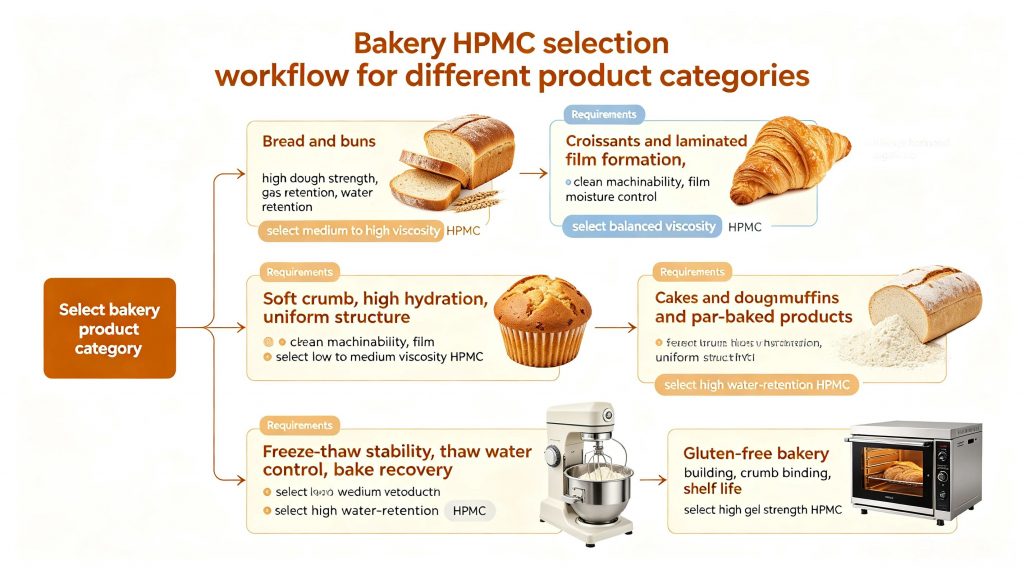
Figure 13. Bakery HPMC selection workflow for different product categories.
Rather than selecting HPMC solely by viscosity, formulators should first identify the bakery product, then evaluate dough characteristics, moisture requirements, baking conditions, and desired shelf life. This systematic approach reduces formulation trials and improves commercial success.
| Item | Recommendation |
| Product | Acta HPMC 60RT15 |
| Application | White Bread / Sandwich Bread |
| Dosage | 0.30–0.60% |
| Flour Protein | 11–13% |
| Water Absorption | 60–65% |
| Mixing Time | 8–10 min |
| Proofing | 38°C / 85% RH |
| Baking | 200–220°C |
| Main Benefit | Higher loaf volume |
| Shelf Life | 5–7 Days |
| Sample | Available |
Acta HPMC E50 provides an excellent balance between dough machinability, gas retention, and crumb softness, making it suitable for most commercial bread applications.
| Item | Recommendation |
| Product | Acta HPMC 60RT15 |
| Dosage | 0.40–0.70% |
| Fiber Content | Medium–High |
| Water Absorption | Increase 3–5% |
| Main Benefit | Moisture retention |
| Shelf Life | 5–6 Days |
Whole wheat formulations generally require slightly higher HPMC levels because bran particles interrupt gluten development and accelerate moisture loss.
| Item | Recommendation |
| Product | Acta HPMC 75RT4000 |
| Dosage | 0.20–0.40% |
| Batter Type | Sponge / Chiffon |
| Mixing | Medium Speed |
| Baking | 170–180°C |
| Main Benefit | Batter stability |
| Texture | Soft |
| Sample | Available |
Low-viscosity HPMC improves cake volume and crumb uniformity while maintaining a light, tender texture.
| Item | Recommendation |
| Product | Acta HPMC E15 |
| Dosage | 0.10–0.30% |
| Product Type | Cookies / Biscuits |
| Main Benefit | Shape retention |
| Texture | Crisp |
| Shelf Life | Long |
HPMC helps control dough spread during baking, producing cookies with more consistent dimensions and improved appearance.
| Item | Recommendation |
| Product | Acta HPMC MH400-G |
| Dosage | 0.40–0.80% |
| Storage | −18°C |
| Freeze–Thaw Stability | Excellent |
| Main Benefit | Better proofing recovery |
| Shelf Life | 6–12 Months |
Freeze-stable HPMC minimizes structural damage caused by ice crystals and improves dough performance after thawing.
| Item | Recommendation |
| Product | Acta HPMC K4M |
| Dosage | 0.80–2.00% |
| Flour System | Rice / Corn / Tapioca |
| Water Absorption | Increase 8–12% |
| Main Benefit | Gluten replacement |
| Crumb | Soft |
| Volume | High |
High-viscosity HPMC effectively replaces gluten functionality, producing better loaf volume, softer crumb, and improved sliceability.
Step 1: What are you producing?
↓
Bread → Acta HPMC E50
↓
Cake → Acta HPMC E15
↓
Cookie → Acta HPMC E15
↓
Frozen Dough → Acta HPMC F50
↓
Gluten-Free Products → Acta HPMC K100M
↓
Step 2: Determine water absorption and flour characteristics.
↓
Step 3: Conduct pilot-scale testing.
↓
Step 4: Optimize dosage (±0.05–0.10%) based on loaf volume, texture, and shelf-life performance.
Start with the recommended dosage range for your bakery product rather than selecting an HPMC grade based solely on viscosity. During pilot production, optimize water absorption, mixing time, proofing conditions, and baking temperature before increasing HPMC dosage. In many cases, processing parameters have a greater impact on final product quality than small adjustments in hydrocolloid concentration.
Download our comprehensive Bakery HPMC Formulation Guide to accelerate product development and reduce formulation trials.
Bakery Product Selection Matrix
HPMC Grade Comparison
Dosage Recommendations
Bread Formulation Guide
Cake Formulation Guide
Cookie Formulation Guide
Frozen Dough Guide
Gluten-Free Formulation Guide
Troubleshooting Checklist
Processing Parameters
Supplier Selection Checklist
Pilot Trial Worksheet
�� Download the Free Guide
Whether you are developing bread, cakes, cookies, frozen dough, pastries, or gluten-free bakery products, our bakery application specialists can help you select the most suitable HPMC grade and optimize your formulation.
Our support includes:
�� Contact Our Technical Team
Selecting the right HPMC grade is only the first step toward producing consistent, high‑quality bakery products. Furthermore, equally important is partnering with a supplier capable of delivering stable product quality, responsive technical support, and reliable global supply.
To achieve this, at ACTA Biotechnology, we work closely with bakery manufacturers, ingredient distributors, and food formulation companies worldwide to develop HPMC solutions for bread, cakes, cookies, frozen dough, pastries, and gluten‑free bakery products.
In addition, rather than supplying a single standard grade, our application engineers help customers identify the most suitable viscosity, dosage, and processing conditions based on their formulation objectives.
Consequently, as illustrated in Figure 14, successful bakery formulation depends on the combination of product quality, technical expertise, and long‑term supply reliability.
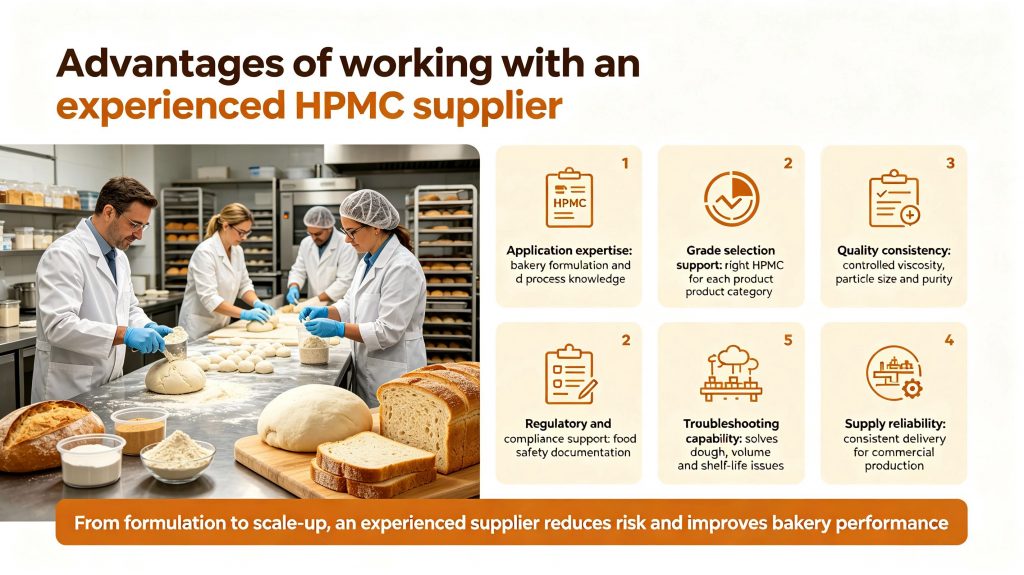
Figure 14. Advantages of working with an experienced HPMC supplier.
Selecting a bakery ingredient supplier involves more than comparing prices. Reliable product quality, application expertise, responsive technical support, and stable global logistics all contribute to faster product development, improved production efficiency, and long-term commercial success.
We supply multiple food-grade HPMC grades designed for different bakery applications, including:
This allows formulators to select the most appropriate viscosity rather than using one product for every application.
Our application specialists assist customers with:
Technical support helps reduce development time while improving formulation success.
Consistent batch quality is essential for bakery production.
ACTA maintains strict quality control over:
This helps customers maintain stable production performance from batch to batch.
We provide comprehensive documentation to support international food manufacturers.
Available documents include:
Our products are supplied to customers in:
We support both distributors and direct manufacturers.
Many bakery formulation challenges can be solved without changing ingredients.
Our engineers help customers optimize:
Water absorption
Dough consistency
Mixing sequence
Fermentation
Baking conditions
Shelf-life performance
This often reduces raw material cost while improving product quality.
| Product | Application |
| Food-grade HPMC 60RT15 | Bread |
| Food-grade HPMC 75RT4000 | Cakes |
| Food-grade HPMC E15 | Cookies |
| Food-grade HPMC MH400-G | Frozen Dough |
| Food-grade HPMC K4M | Gluten-Free Bakery |
| MCC | Bakery Fillers |
| CMC | Bakery Stabilization |
| Modified Starch | Texture Improvement |
Multiple Bakery HPMC Grades
Professional Formulation Support
Consistent Product Quality
Fast Sample Delivery
Complete Export Documentation
Flexible MOQ
Reliable International Shipping
Experienced Technical Team
If you are developing:
We recommend starting with pilot-scale evaluation using our bakery-specific HPMC grades.
Our application team can recommend:
Whether you are optimizing an existing bakery formulation or developing a completely new product, our technical specialists are available to assist throughout the development process.
We provide:
Free Samples
Formula Evaluation
Product Selection
Dosage Recommendations
Processing Guidance
Shelf-Life Improvement
Pilot Trial Support
COA / TDS / SDS
Export Documentation
Continue exploring our bakery formulation resources to learn how HPMC improves different bakery applications, compare hydrocolloids, and optimize commercial production.
Learn how HPMC replaces gluten by improving dough structure, gas retention, crumb softness, and loaf volume. This guide covers viscosity selection, dosage recommendations, troubleshooting, and formulation strategies for commercial gluten-free bread production.
Recommended for:
Read More
Compare HPMC and xanthan gum across dough stability, moisture retention, loaf volume, crumb texture, freeze–thaw stability, and gluten-free performance. Discover when to use each hydrocolloid and when combining them produces better baking results.
You’ll learn:
Read More
Frozen dough requires hydrocolloids that can withstand repeated freezing and thawing. This article explains how HPMC minimizes ice-crystal damage, improves proofing recovery, and maintains dough quality during long-term frozen storage.
Applications include:
Read More
Discover how food-grade HPMC stabilizes cake batter, improves air-cell distribution, reduces collapse, and produces softer cakes with longer shelf life.
Topics include:
Read More
Not sure how much HPMC to add?
This practical guide summarizes recommended dosage ranges for bread, cakes, cookies, frozen dough, pastries, gluten-free products, and high-fiber bakery formulations.
Includes:
Understand the differences between HPMC, CMC, MCC, MC, and other cellulose ethers used in bakery products.
The article explains:
Bread remains the largest application for bakery-grade HPMC. Learn how selecting the correct viscosity grade improves dough machinability, oven spring, crumb softness, and shelf life across artisan bread, sandwich bread, and whole wheat bread.
Read More
Cookies require controlled dough spread during baking. This guide explains how HPMC helps maintain product dimensions, improves texture, and enhances production consistency in industrial biscuit manufacturing.
Read More
Finding the right supplier involves more than comparing prices. Learn how to evaluate viscosity consistency, food safety certifications, technical support, export capability, and application expertise before selecting an HPMC manufacturer.
Includes:
Compare the most commonly used bakery hydrocolloids, including HPMC, xanthan gum, guar gum, CMC, carrageenan, pectin, and modified starch.
This guide helps formulators choose the best ingredient based on:
If you’re new to bakery formulation, we recommend reading the following articles in order:
Richard Wang is a food ingredient specialist at ACTA Biotechnology, focusing on cellulose ethers and hydrocolloid solutions for bakery, dairy, beverages, pharmaceutical, and plant-based food applications. He works closely with food manufacturers worldwide to optimize HPMC formulations for improved texture, processing efficiency, and shelf-life stability.
This article is based on published scientific literature, commercial application experience, industry standards, and practical formulation knowledge. All formulation recommendations should be verified through pilot-scale production before commercial manufacturing.
