

MCC Gel in Food has become one of the most widely used stabilizer systems for improving suspension, texture, water binding, and product stability across modern food applications.Food manufacturers face a common challenge: keeping proteins, minerals, cocoa, and fruit particles evenly suspended without turning a beverage into syrup. MCC Gel solves this problem, and it does so more efficiently than most conventional hydrocolloids. This guide explains what MCC Gel is, how it works, where it performs best, and how to select the right grade for your formulation.
Beverage and dairy categories have grown far more complex over the past decade. High-protein drinks, plant-based milk alternatives, reduced-fat sauces, and fortified beverages all introduce new suspension and emulsion challenges that a single conventional gum rarely solves on its own. Consequently, formulators increasingly look for one multifunctional ingredient that can manage water, oil, and suspended solids together, and MCC Gel has become one of the clearest answers to that need. The sections below walk through its composition, its stabilizing mechanism, its most common applications, correct processing practices, how it compares with other hydrocolloids, and how to choose a supplier you can rely on for consistent, commercial-scale performance.
| Parameter | Typical Value |
|---|---|
| MCC Content | 85–92% |
| CMC Content | 8–15% |
| E Number | E460(ii) |
| Typical Dosage | 0.20–1.00% |
| pH Stability | 3–10 |
| Shelf Life | 24 Months |
Although MCC Gel is added at less than 1% in many food formulations, it can significantly improve suspension stability, mouthfeel, and freeze–thaw performance without noticeably increasing viscosity.
Many manufacturers assume MCC Gel functions simply as a thickener.
In reality, its primary role is to build a three-dimensional cellulose network that stabilizes insoluble particles throughout the food matrix.
Selecting a product based solely on viscosity often leads to poor formulation performance.
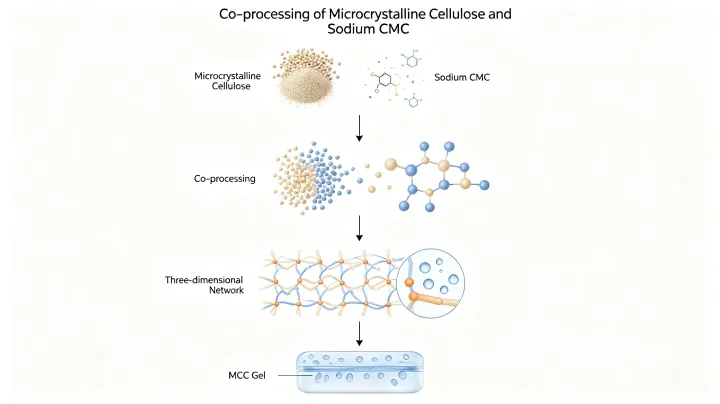
Figure 1. Composition of MCC Gel from microcrystalline cellulose and sodium CMC.
MCC Gel is produced by co-processing microcrystalline cellulose with sodium carboxymethyl cellulose to create a stable three-dimensional suspension network.
MCC Gel, also called Colloidal Microcrystalline Cellulose or Cellulose Gel, is a multifunctional food stabilizer made from microcrystalline cellulose (MCC, E460(i)) combined with a small proportion of sodium carboxymethyl cellulose (CMC, E466). Unlike hydrocolloids that dissolve completely in water, MCC Gel forms a stable three-dimensional colloidal network once hydrated. As a result, it can simultaneously suspend particles, bind water, stabilize emulsions, and improve texture.
Because of these combined properties, MCC Gel is now widely used across beverages, dairy products, plant-based foods, sauces, and frozen desserts wherever long-term physical stability is essential. Rather than acting only as a thickener, it functions as a multifunctional hydrocolloid system. Specifically, the microcrystalline cellulose particles build a microscopic structural framework, while the CMC component hydrates rapidly and evenly disperses the cellulose particles throughout the liquid phase. Consequently, the two components work synergistically to provide excellent suspension stability without creating excessive viscosity.
As formulations grow more complex — with higher protein, lower fat, added fiber, minerals, cocoa, or plant proteins — MCC Gel’s ability to stabilize several phases at once makes it increasingly valuable for modern food manufacturers.
The term “colloidal” describes how hydrated MCC particles behave rather than a chemical modification. When dispersed in water, the cellulose particles remain insoluble; however, they spread uniformly throughout the liquid. As hydration continues, these particles interact to form a microscopic three-dimensional network that traps water and physically supports suspended solids. Unlike soluble gums, which primarily increase viscosity, this cellulose network stabilizes food through mechanical support instead of excessive thickening. Consequently, beverages containing cocoa, protein, calcium, fiber, or fruit pulp remain uniformly suspended for much longer while maintaining a smooth, drinkable texture.
Yes. Food-grade MCC Gel comes from purified cellulose derived from renewable sources such as wood pulp or cotton linters. Both microcrystalline cellulose (E460(i)) and cellulose gel ingredients have a long history of safe use in dairy products, beverages, frozen desserts, sauces, and bakery fillings. Major authorities, including the FDA, EFSA, and Codex Alimentarius, recognize cellulose-based ingredients for broad food use, though manufacturers should always confirm local labeling requirements before exporting to new markets.
According to the Food Chemicals Codex (FCC), both microcrystalline cellulose and colloidal microcrystalline cellulose are recognized food ingredients with established identity and quality specifications for food applications. As a result, FCC specifications are widely used by food manufacturers and ingredient suppliers as an important benchmark for evaluating ingredient quality and consistency. Furthermore, many manufacturers reference FCC standards when selecting raw materials and establishing internal quality control procedures, thereby supporting greater product reliability and regulatory compliance.
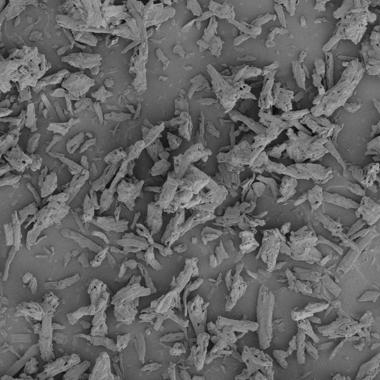
Most stability problems in food arise from the movement of water, oil, air, and suspended particles. As a result, manufacturers need stabilizer systems that can address multiple mechanisms simultaneously rather than a single issue. Traditional hydrocolloids, however, usually solve only one of these challenges—some gums primarily increase viscosity, while others mainly stabilize emulsions or improve mouthfeel. MCC Gel, by contrast, works differently. Instead of relying on viscosity alone, it forms a three-dimensional cellulose network that simultaneously supports several phases of a food system. Consequently, it improves suspension stability, emulsion stability, water retention, creaminess, and freeze–thaw performance within a single formulation.
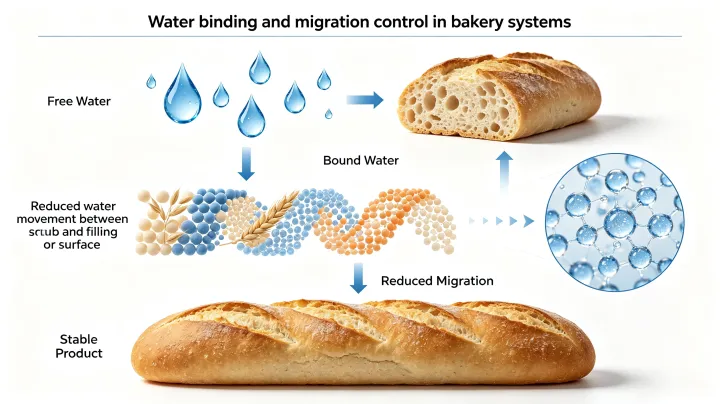
Figure 6. Mechanism showing how MCC Gel stabilizes food systems through water binding, particle suspension, and network formation.
Unlike conventional thickeners that mainly increase viscosity, MCC Gel creates a three-dimensional cellulose network that physically immobilizes water and suspended particles. As a result, this multifunctional mechanism simultaneously improves suspension stability, emulsion stability, mouthfeel, and shelf life across a wide range of food applications.
Free water naturally migrates throughout a food system, carrying dissolved solids, promoting phase separation, and accelerating ice crystal growth during storage. To address these challenges, MCC Gel functions through a unique hydration mechanism. When MCC Gel hydrates, the CMC component rapidly absorbs water and evenly disperses the cellulose particles. Meanwhile, the hydrated cellulose particles interact to form a stable three-dimensional network that physically traps a portion of the free water. Consequently, water mobility is significantly reduced while a smooth, creamy mouthfeel is maintained. As a result, food products remain more stable during processing, storage, and transportation.
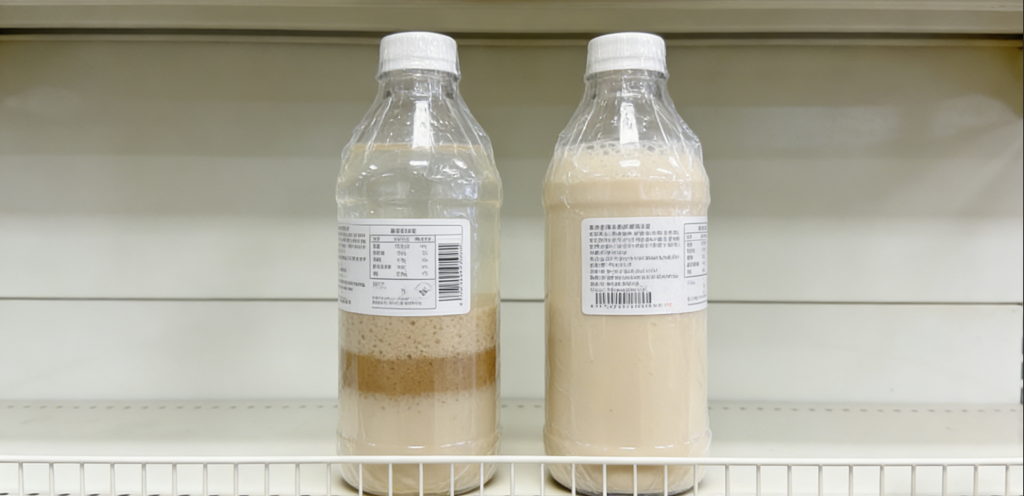
Beverages containing cocoa, calcium, plant protein, dietary fiber, coffee particles, or fruit pulp naturally experience sedimentation over time unless an effective suspension system is present. To overcome this challenge, MCC Gel forms a microscopic three-dimensional support network throughout the liquid phase, physically holding suspended particles in place rather than allowing them to settle under gravity. Unlike high-viscosity gums, which mainly slow particle movement by increasing viscosity, MCC Gel provides structural suspension while maintaining a smooth, drinkable consistency. Consequently, beverages remain more homogeneous throughout storage, resulting in improved visual appeal, product stability, and consumer acceptance.
Many food products—including salad dressings, sauces, dairy beverages, and nutritional drinks—contain both water and oil. Because these two phases are naturally immiscible, oil droplets gradually collide, coalesce, and eventually cause visible phase separation during storage. To reduce this instability, MCC Gel strengthens the continuous water phase and forms a supportive network around dispersed droplets. As a result, droplet movement slows, collisions become less frequent, and the emulsion structure remains finer and more uniform throughout the product’s shelf life. Furthermore, a more stable emulsion contributes to improved appearance, smoother texture, and greater consumer confidence in product quality.
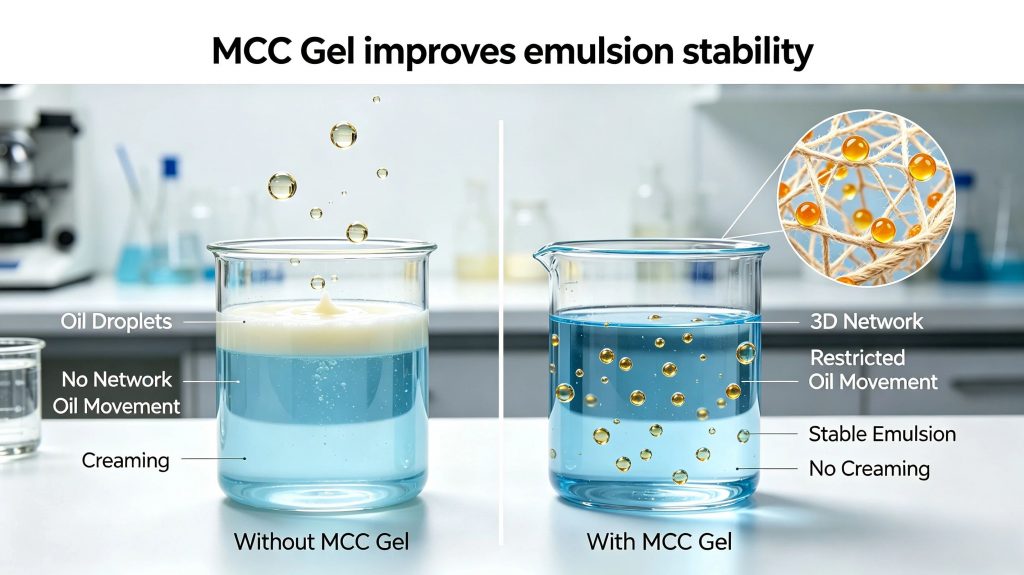
Figure 9. MCC Gel stabilizes emulsions by restricting oil droplet movement.
Stable emulsions improve mouthfeel, appearance, and shelf life in dairy drinks, sauces, and dressings.
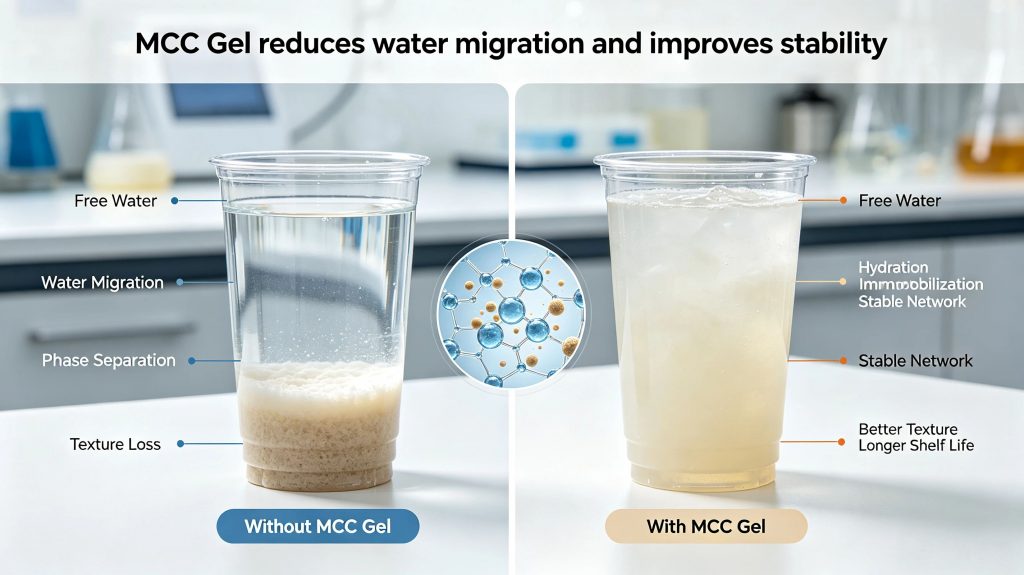
Figure 7. MCC Gel immobilizes free water to reduce migration and improve product stability.
Water immobilization is the primary mechanism behind improved suspension, freeze–thaw stability, and reduced syneresis in many food applications.
Water immobilization is the primary mechanism behind improved suspension stability, freeze–thaw stability, and reduced syneresis across many food applications. Therefore, controlling water mobility has become one of the most effective strategies for improving both product stability and shelf life in modern food formulations.
Because MCC Gel builds a three-dimensional structural network rather than simply increasing viscosity, it delivers a clean, natural mouthfeel without creating excessive thickness. As a result, it is particularly well suited for plant-based milk, protein beverages, chocolate milk, and frozen desserts, where excessive gumminess is undesirable. Furthermore, the same hydrated cellulose network reduces water migration during repeated freezing and thawing. Consequently, frozen desserts, sauces, and refrigerated products retain better texture, stability, and overall product quality throughout long-term storage.
Key takeaway: MCC Gel is unique because it addresses multiple stability challenges through a single physical mechanism—a hydrated cellulose network—rather than relying on separate ingredients for suspension, emulsification, water retention, and texture control. Consequently, formulators can often simplify stabilizer systems while maintaining excellent product performance across a wide range of food applications.
Expert insight: The performance of MCC Gel depends on far more than dosage alone. In addition to concentration, particle size distribution, the cellulose-to-CMC ratio, hydration behavior, and compatibility with other hydrocolloids all influence the final result. Therefore, experienced formulators evaluate MCC Gel under actual processing conditions rather than relying solely on paper specifications. Furthermore, pilot-scale validation remains essential before a formulation is finalized for commercial production, because even small processing differences can significantly affect long-term stability and sensory performance.
Selecting a higher-viscosity hydrocolloid does not always improve suspension.
Instead, stability depends on particle size, hydration behavior, and the interaction between stabilizers.
| Performance Indicator | Typical Improvement |
|---|---|
| Sedimentation Stability | Significantly Improved |
| Suspension Time | Extended |
| Water Separation | Reduced |
| Freeze–Thaw Stability | Improved |
| Mouthfeel | Creamier |
The Joint FAO/WHO Expert Committee on Food Additives (JECFA) recognizes microcrystalline cellulose as a food additive with a long history of safe technological use. Its primary functional roles include bulking, stabilization, suspension, and texture improvement in a wide variety of processed foods.
Modern food products keep growing more complex: higher-protein beverages, dairy alternatives with plant proteins, reduced-fat sauces, and frozen desserts that must stay stable throughout transportation. As these challenges increase, multifunctional stabilizers are replacing single-function ingredients, and MCC Gel fits naturally because it improves suspension, emulsion stability, water management, mouthfeel, and freeze–thaw performance within one system.
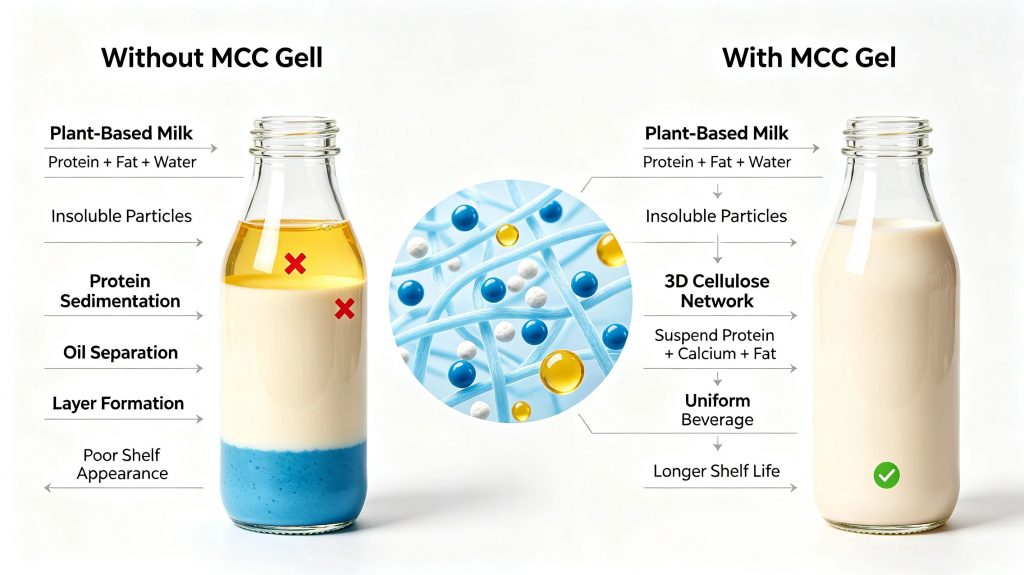
Figure 11. MCC Gel creates a three-dimensional cellulose network that stabilizes proteins, minerals, and oil droplets in plant-based milk.
Unlike traditional gums, which mainly improve stability by increasing viscosity, MCC Gel physically supports suspended particles through a three-dimensional cellulose network while maintaining a clean, smooth drinking texture. As a result, it is particularly well suited for plant-based beverages such as oat milk, almond milk, soy milk, coconut milk, and pea-protein drinks, where both suspension stability and sensory quality are essential.
These beverages naturally contain proteins, minerals, dietary fiber, and other insoluble particles that gradually settle during storage. To minimize this sedimentation, MCC Gel forms a microscopic structural network that physically supports the dispersed particles throughout the liquid phase. Consequently, the beverage remains more homogeneous while retaining a light, drinkable consistency. Furthermore, this stabilization mechanism helps reduce sedimentation, improve shake stability, and extend shelf life without creating excessive viscosity.
| Ingredient | Typical Level (%) |
|---|---|
| Plant Protein | 2.0–4.0 |
| Vegetable Oil | 1.5–3.5 |
| Sugar | 2.0–6.0 |
| MCC Gel | 0.30–0.60 |
| CMC | 0.05–0.15 |
| Water | Balance |
| Storage | Without MCC Gel | With MCC Gel |
|---|---|---|
| Day 7 | 8% sediment | 1% |
| Day14 | 15% | 3% |
| Day28 | 24% | 5% |
| Property | Without MCC Gel | With MCC Gel |
|---|---|---|
| Sedimentation | Significant | Minimal |
| Suspension Stability | Moderate | Excellent |
| Mouthfeel | Thin | Creamy |
| Heat Stability | Moderate | Improved |
| Shelf Stability | Shorter | Longer |
For most plant-based beverages, MCC Gel performs best when combined with a small amount of CMC. The cellulose network helps suspend proteins and insoluble particles, while CMC contributes additional viscosity and water binding. Initial pilot trials should begin with 0.30–0.50% MCC Gel before fine adjustments are made according to protein content and processing conditions.
| Problem | Possible Cause | Recommended Solution |
|---|---|---|
| Sedimentation | Low stabilizer level | Increase MCC Gel gradually |
| Layer Separation | Poor homogenization | Optimize homogenization pressure |
| Sandy Mouthfeel | Large particles | Improve grinding or homogenization |
| Excessive Viscosity | Overdosing | Reduce stabilizer dosage |
Laboratory evaluations commonly show that MCC Gel significantly improves suspension stability by forming a three-dimensional cellulose network that physically supports insoluble particles. Final performance depends on protein type, particle size distribution, homogenization efficiency, and storage conditions.
Published studies have shown that microcrystalline cellulose–based stabilizer systems significantly improve suspension stability and reduce sedimentation in plant-based beverages compared with unstabilized formulations. Improvements are attributed to the formation of a weak three-dimensional network that limits particle migration during storage.
| Parameter | Without MCC Gel | With MCC Gel |
|---|---|---|
| Particle suspension | Poor | Excellent |
| Sedimentation tendency | High | Low |
| Visual stability | Moderate | Excellent |
| Shelf-life consistency | Moderate | Improved |
Reference: Trends summarized from published research on cellulose-based beverage stabilizers.
Authority Reference
The European Food Safety Authority (EFSA) has evaluated cellulose additives within the E460 group and considers their technological functions well established in food systems, including stabilization, thickening, and suspension.
High-protein beverages built on whey, casein, soy, or pea protein tend to aggregate and settle, especially alongside minerals or fibers. MCC Gel stabilizes the continuous phase and reduces particle movement, so manufacturers can improve stability without over-thickening the drink.
| Ingredient | Typical Level (%) |
|---|---|
| Cocoa Powder | 1.0–2.5 |
| Milk Solids | 6–10 |
| Sugar | 4–8 |
| MCC Gel | 0.25–0.50 |
| Water | Balance |
| Property | Without MCC Gel | With MCC Gel |
|---|---|---|
| Cocoa Suspension | Poor | Excellent |
| Sedimentation | Heavy | Minimal |
| Mouthfeel | Thin | Rich |
| Stability | Moderate | Excellent |
When stabilizing cocoa beverages, MCC Gel is often selected because it suspends dense cocoa particles without creating an excessively thick texture. Combining MCC Gel with a low level of CMC may further improve long-term storage stability.
Cocoa settling
↓
Insufficient suspension
↓
Increase MCC Gel
────────
Water separation
↓
Improve hydration
────────
Poor mouthfeel
↓
Adjust stabilizer ratio
Chocolate beverages generally require a balance between suspension stability and drinkability. Excessive stabilizer levels may reduce consumer acceptance even if suspension performance improves.
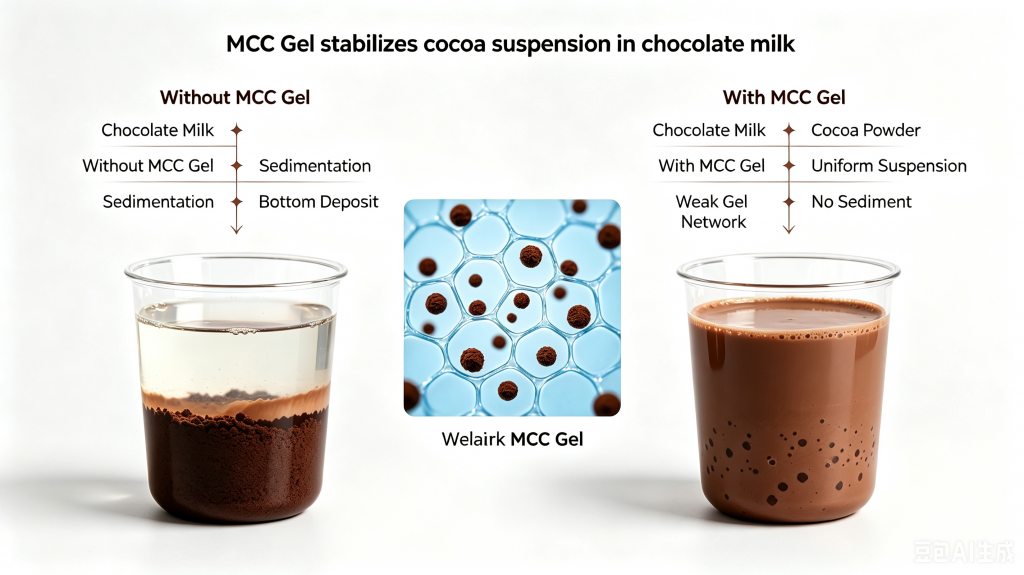
Figure 12. MCC Gel keeps cocoa particles suspended without creating excessive viscosity.
Chocolate particles are significantly denser than milk. MCC Gel maintains a homogeneous appearance by supporting cocoa particles throughout the beverage.
Cocoa particles are significantly denser than milk, so they settle quickly without support. MCC Gel forms a structural network that keeps cocoa evenly distributed while preserving a smooth drinking texture, reducing bottom sediment and improving visual quality.
| Parameter | Without MCC Gel | With 0.35% MCC Gel |
|---|---|---|
| Sedimentation after 7 days | Visible | Minimal |
| Sedimentation after 14 days | Heavy | Slight |
| Suspension stability | Moderate | Excellent |
| Visual appearance | Layered | Uniform |
Example application data for reference only. Actual performance depends on formulation, particle size, homogenization, and storage conditions.
| Ingredient | Typical Level (%) |
|---|---|
| Milk | Balance |
| Cocoa Powder | 1.0–2.5 |
| Sugar | 4–8 |
| MCC Gel | 0.25–0.50 |
| CMC | 0.05–0.15 |
| Property | Without MCC Gel | With MCC Gel |
|---|---|---|
| Cocoa Suspension | Poor | Excellent |
| Bottom Sediment | Significant | Minimal |
| Mouthfeel | Thin | Creamy |
| Visual Stability | Moderate | Excellent |
| Shelf Stability | Moderate | Improved |
For chocolate milk, MCC Gel is commonly used at 0.25–0.50% to suspend cocoa particles while maintaining a smooth drinking texture. Combining MCC Gel with a small amount of CMC can further improve long-term suspension stability without creating excessive viscosity. Pilot-scale validation is recommended because cocoa particle size and homogenization conditions influence final performance.
| Problem | Possible Cause | Recommended Solution |
|---|---|---|
| Cocoa settling | Insufficient suspension | Increase MCC Gel gradually |
| Layer separation | Poor homogenization | Optimize homogenization pressure |
| Thin mouthfeel | Low stabilizer level | Adjust stabilizer system |
| High viscosity | Excess MCC Gel | Reduce dosage |
Chocolate beverages contain relatively dense cocoa particles that naturally settle during storage. MCC Gel creates a three-dimensional cellulose network that physically supports these particles, improving suspension while preserving a clean, drinkable texture.
Cocoa particles possess a much higher density than milk serum. Cellulose-based stabilizers reduce sedimentation by increasing the structural integrity of the continuous phase.
| Observation | Conventional Formula | MCC Gel Formula |
|---|---|---|
| Cocoa sediment | High | Low |
| Product appearance | Layering | Uniform |
| Consumer perception | Moderate | Improved |
Frozen desserts need water control throughout freezing, hardening, and long-term storage. MCC Gel binds free water, reduces ice crystal growth, supports air-cell stability, and improves melting resistance — often working best alongside guar gum or locust bean gum.
| Ingredient | Typical Level (%) |
|---|---|
| Milk Fat | 6–12 |
| Sugar | 12–16 |
| Milk Solids | 8–12 |
| MCC Gel | 0.20–0.50 |
| Guar Gum | 0.10–0.20 |
| Property | Without MCC Gel | With MCC Gel |
|---|---|---|
| Ice Crystal Growth | Faster | Slower |
| Creaminess | Moderate | Improved |
| Melting Resistance | Moderate | Higher |
| Freeze–Thaw Stability | Fair | Excellent |
| Storage | Without MCC | MCC Gel |
|---|---|---|
| Fresh | 30 μm | 30 μm |
| Week4 | 42 μm | 34 μm |
| Week8 | 58 μm | 38 μm |
For frozen desserts, MCC Gel performs best when combined with guar gum or locust bean gum. Initial pilot trials generally begin with 0.20–0.40% MCC Gel, followed by adjustments according to fat content, overrun, and storage requirements.
| Problem | Cause | Solution |
|---|---|---|
| Large ice crystals | Poor water control | Increase MCC Gel slightly |
| Fast melting | Weak stabilizer system | Optimize hydrocolloid blend |
| Weak body | Low total solids | Improve formulation balance |
| Hard texture | Improper freezing | Optimize freezing process |
In frozen desserts, MCC Gel contributes primarily by immobilizing free water, reducing ice recrystallization, and reinforcing the frozen matrix. Final product quality depends on both stabilizer selection and process control.
Published research indicates that cellulose-based stabilizers reduce ice recrystallization during frozen storage by limiting water mobility within the unfrozen serum phase.
| Storage Observation | Conventional Mix | MCC Gel System |
|---|---|---|
| Ice crystal growth | Faster | Slower |
| Melting resistance | Moderate | Improved |
| Texture stability | Moderate | Better |
| Freeze–thaw stability | Moderate | Excellent |
The U.S. Food and Drug Administration (FDA) recognizes microcrystalline cellulose as a permitted direct food substance when used in accordance with current good manufacturing practice (cGMP). It has been widely applied in frozen desserts, dairy products, beverages, bakery products, and sauces for decades.
Yogurt drinks need a smooth texture while minimizing whey separation. MCC Gel increases water retention and strengthens the serum phase, resulting in better body and a more stable product over the shelf-life period.
| Ingredient | Typical Level (%) |
|---|---|
| Milk | Balance |
| Protein | 3–5 |
| Sugar | 3–8 |
| MCC Gel | 0.20–0.50 |
| Property | Without MCC Gel | With MCC Gel |
|---|---|---|
| Whey Separation | Higher | Lower |
| Texture | Moderate | Smooth |
| Stability | Moderate | Excellent |
| Mouthfeel | Light | Creamy |
In drinking yogurt and stirred yogurt, MCC Gel helps minimize whey separation while improving viscosity and body. Usage levels typically range from 0.20–0.40%, depending on protein content and desired texture.
| Problem | Cause | Solution |
|---|---|---|
| Whey separation | Weak water binding | Increase MCC Gel |
| Grainy texture | Protein aggregation | Optimize heat treatment |
| Thin body | Low stabilizer | Adjust dosage |
Protein interactions strongly influence fermented dairy stability. MCC Gel improves serum stability by increasing water retention without masking the characteristic yogurt texture.
Dairy stabilization research has shown that improved water retention within the serum phase contributes to reduced whey separation and better texture stability during refrigerated storage.
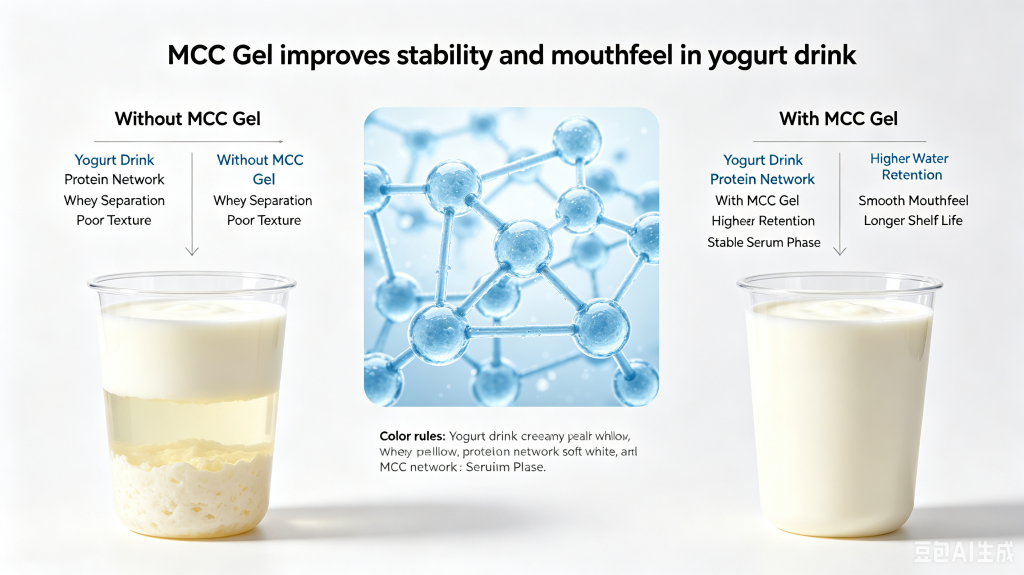
Figure 15. MCC Gel strengthens the continuous water phase, reducing oil movement and improving emulsion stability.
Unlike emulsifiers that primarily reduce interfacial tension, MCC Gel enhances the stability of the continuous phase. As a result, sauces and dressings remain smooth and visually appealing throughout storage, even under transportation or moderate temperature fluctuations.
Oil-in-water emulsions naturally separate as oil droplets rise and merge. MCC Gel strengthens the continuous water phase, reducing oil movement and keeping sauces smoother and more visually appealing over time.
| Ingredient | Typical Level (%) |
|---|---|
| Oil | 20–40 |
| Water | Balance |
| Vinegar | 3–8 |
| MCC Gel | 0.30–0.80 |
| Property | Without MCC Gel | With MCC Gel |
|---|---|---|
| Oil Separation | Higher | Lower |
| Emulsion Stability | Moderate | Excellent |
| Pourability | Good | Good |
| Shelf Stability | Moderate | Improved |
For salad dressings and sauces, MCC Gel helps stabilize oil droplets without producing excessive thickness. Combining MCC Gel with xanthan gum may further improve emulsion stability.
| Problem | Cause | Solution |
|---|---|---|
| Oil separation | Weak emulsion | Increase MCC Gel |
| Phase separation | Poor homogenization | Improve emulsification |
| Excess viscosity | Overdosing | Reduce dosage |
Unlike conventional thickeners, MCC Gel stabilizes emulsions by reinforcing the continuous water phase rather than relying solely on viscosity.
Cellulose-based stabilizers are widely used throughout the global food industry because they remain effective across a broad pH range and are compatible with numerous hydrocolloid systems commonly used in sauces and dressings.
Research on oil-in-water emulsions indicates that increasing the viscosity of the continuous phase slows oil droplet movement and helps delay phase separation, particularly during storage and transportation.
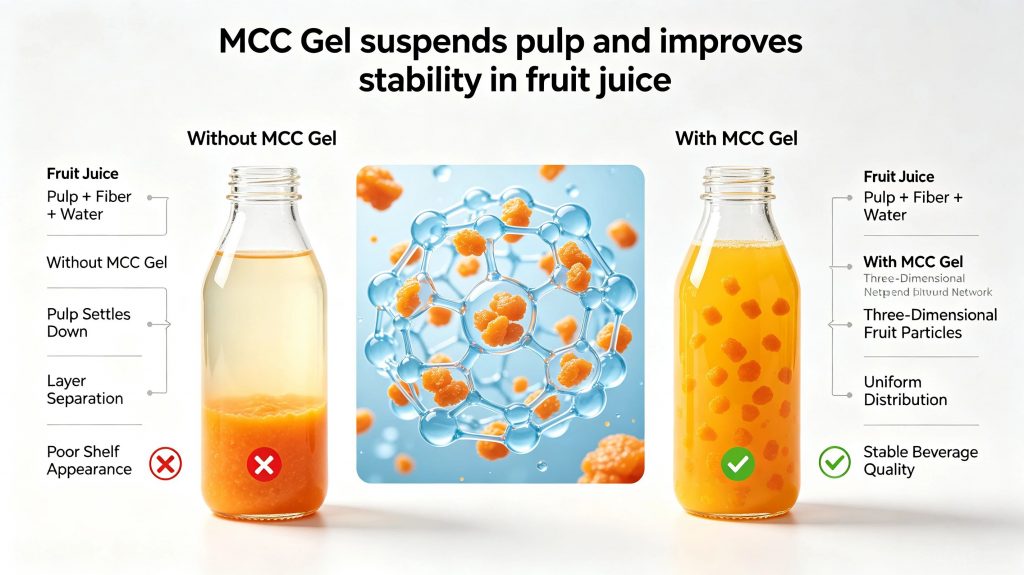
Figure 16. MCC Gel forms a three-dimensional network that keeps fruit pulp evenly suspended throughout the beverage.
Fruit pulp naturally settles because its density is much higher than the surrounding liquid. MCC Gel minimizes sedimentation by physically supporting suspended particles instead of relying solely on viscosity, allowing manufacturers to maintain a clean appearance and pleasant drinking texture.
Fruit pulp, fibers, and coffee solids settle unless a suspension system supports them. MCC Gel maintains a homogeneous appearance without adding excessive thickness, so both categories retain a clean, uniform drinking quality.
| Ingredient | Typical Level (%) |
|---|---|
| Fruit Juice | 20–50 |
| Fruit Pulp | 2–10 |
| MCC Gel | 0.25–0.60 |
| Property | Without MCC Gel | With MCC Gel |
|---|---|---|
| Pulp Suspension | Poor | Excellent |
| Sedimentation | High | Low |
| Visual Appearance | Uneven | Uniform |
| Shelf Stability | Moderate | Excellent |
MCC Gel is particularly suitable for beverages containing pulp, coffee particles, or botanical extracts because it improves suspension without significantly increasing viscosity.
| Problem | Cause | Solution |
|---|---|---|
| Pulp settling | Low suspension | Increase MCC Gel |
| Layer formation | Poor dispersion | Improve mixing |
| Thick texture | Excess dosage | Reduce stabilizer |
Particle size distribution has a major influence on beverage stability. MCC Gel helps maintain a homogeneous appearance by supporting suspended particles throughout storage.
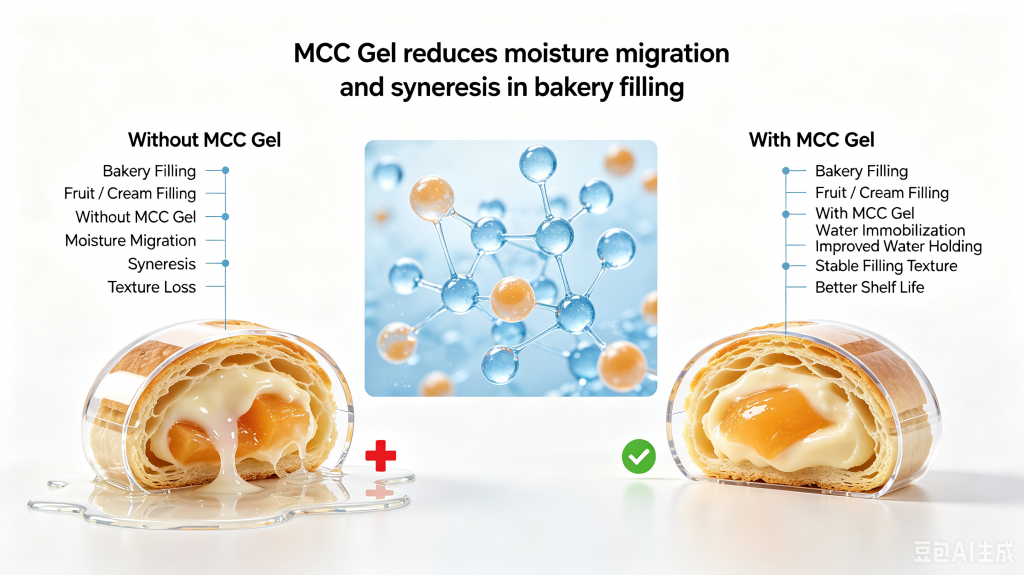
Figure 18. MCC Gel minimizes moisture migration, helping bakery fillings remain smooth and stable during storage and baking.
Water migration is one of the primary causes of filling failure. By increasing water retention, MCC Gel reduces syneresis, improves consistency, and helps maintain product quality during distribution and baking.
Fruit and cream fillings need strong water retention to maintain texture through storage and baking. MCC Gel reduces moisture migration and improves consistency, cutting down on syneresis.
Key Takeaway: Overall, MCC Gel’s role shifts depending on the application—from suspension in beverages and ice-crystal control in frozen desserts to emulsion support in sauces and water retention in bakery fillings. Consequently, its multifunctional performance is exactly why it has become a preferred stabilizer across such a wide range of food categories.
Research Highlight
Published studies on bakery fillings suggest that improved water-binding capacity can reduce moisture migration between fillings and bakery matrices, helping maintain product texture throughout storage.
| Ingredient | Typical Level (%) |
|---|---|
| Fruit Filling | Balance |
| Sugar | 20–40 |
| MCC Gel | 0.20–0.60 |
| Property | Without MCC Gel | With MCC Gel |
|---|---|---|
| Water Retention | Moderate | Excellent |
| Syneresis | High | Low |
| Filling Stability | Moderate | Excellent |
| Texture | Soft | Smooth |
Fruit fillings and cream fillings generally use 0.20–0.50% MCC Gel to improve water retention and reduce moisture migration during storage and baking.
| Problem | Cause | Solution |
|---|---|---|
| Water leakage | Weak water binding | Increase MCC Gel |
| Syneresis | Formula imbalance | Optimize stabilizer system |
| Texture breakdown | Poor hydration | Improve dispersion |
In bakery applications, MCC Gel functions primarily as a water-management ingredient, helping fillings retain moisture and maintain consistent texture throughout shelf life.
What are you producing?
↓
Beverage
↓
Choose MCC Gel
↓
Need Suspension?
↓
YES
↓
0.30–0.60%
────────────
Ice Cream
↓
0.20–0.50%
────────────
Sauce
↓
0.30–0.80%
────────────
Plant Milk
↓
0.30–0.70%
What are you producing?
↓
Beverage
↓
Choose MCC Gel
↓
Need Suspension?
↓
YES
↓
0.30–0.60%
────────────
Ice Cream
↓
0.20–0.50%
────────────
Sauce
↓
0.30–0.80%
────────────
Plant Milk
↓
0.30–0.70%
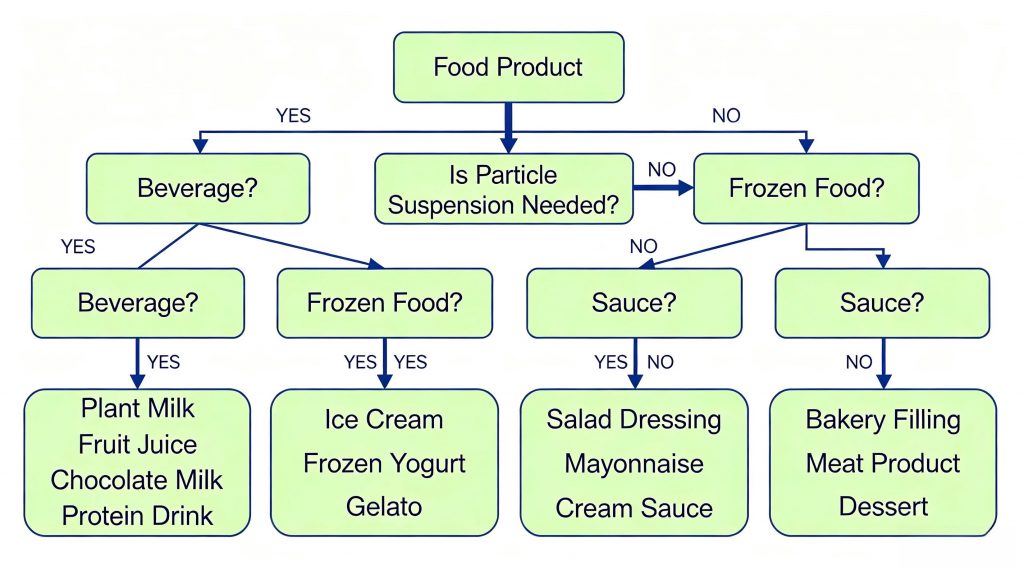
Figure 19. Decision tree for selecting MCC Gel across beverage, dairy, frozen dessert, bakery, and sauce applications.
Different food categories require different stabilization mechanisms. This decision tree helps formulators quickly determine where MCC Gel offers the greatest functional advantage based on suspension, emulsion, freeze stability, and water retention requirements.
Food Application
Commercial Usage
Plant Milk
★★★★★
Chocolate Milk
★★★★★
Protein Drink
★★★★★
Ice Cream
★★★★★
Sauce
★★★★☆
Bakery
★★★★☆
| Food Application | Suspension | Water Binding | Freeze Stability | Emulsion Stability | Recommended |
|---|---|---|---|---|---|
| Plant Milk | ★★★★★ | ★★★★☆ | ★★★☆☆ | ★★★★★ | ✓ |
| Chocolate Milk | ★★★★★ | ★★★★☆ | ★★★☆☆ | ★★★★☆ | ✓ |
| Fruit Juice | ★★★★★ | ★★★☆☆ | ★★☆☆☆ | ★★★☆☆ | ✓ |
| Protein Drink | ★★★★★ | ★★★★★ | ★★★☆☆ | ★★★★☆ | ✓ |
| Ice Cream | ★★★★☆ | ★★★★★ | ★★★★★ | ★★★★☆ | ✓ |
| Yogurt | ★★★★☆ | ★★★★★ | ★★★☆☆ | ★★★★☆ | ✓ |
| Sauces | ★★★☆☆ | ★★★★☆ | ★☆☆☆☆ | ★★★★★ | ✓ |
| Bakery Filling | ★★★☆☆ | ★★★★★ | ★★☆☆☆ | ★★★☆☆ | ✓ |
Figure 20. Functional comparison of MCC Gel across major food applications based on suspension, water binding, freeze stability, and emulsion performance.
Rather than performing a single function, MCC Gel provides different benefits depending on the formulation. This matrix allows food technologists and purchasing managers to quickly identify where MCC Gel delivers the greatest value and where complementary hydrocolloids may be required.
The Codex General Standard for Food Additives (GSFA) permits the use of cellulose-based additives, including microcrystalline cellulose, in numerous food categories under defined technological functions and applicable good manufacturing practices.
Selecting the right grade is only the first step; however, proper processing is equally important because even a high-quality stabilizer will underperform if it is added incorrectly. In fact, MCC Gel develops its full functionality only after the cellulose particles are evenly dispersed throughout the system. Therefore, successful application depends on proper ingredient addition, sufficient hydration, and appropriate mixing conditions.
First, pre-blend MCC Gel with sugar, maltodextrin, milk powder, starch, or protein powder. By doing so, individual particles remain separated before they come into contact with water, thereby reducing the risk of localized clumping and significantly improving hydration efficiency.
Next, gradually introduce the blended powder into stirred water. As long as the powder is added slowly and evenly, food-grade MCC Gel generally disperses well under normal industrial mixing conditions without requiring excessive shear. Consequently, proper dispersion can be achieved while maintaining efficient production.
After dispersion, allow sufficient time for complete hydration. During this stage, the CMC component hydrates first, while the cellulose particles gradually separate and form a three-dimensional network. As a result, the stabilizer develops its full functional performance. Conversely, insufficient hydration time often leads to weaker suspension stability than expected.
For emulsified products such as plant-based milk, dairy beverages, and sauces, homogenization is recommended whenever appropriate. During this process, particle size is reduced and fat droplets are distributed more uniformly. Meanwhile, the hydrated MCC Gel network supports these smaller particles throughout storage, thereby improving long-term emulsion stability.
Finally, apply standard pasteurization, UHT processing, or sterilization as required by the formulation. Fortunately, MCC Gel tolerates these normal manufacturing conditions very well because cellulose itself is highly heat stable. Therefore, its stabilizing performance is generally maintained throughout conventional thermal processing.
In practice, most performance issues originate from processing rather than from the ingredient itself. For example, poor dispersion often results in incomplete hydration, which subsequently weakens the cellulose network and shortens product shelf life. Fortunately, these issues can usually be corrected through proper process optimization rather than by increasing dosage. Therefore, before modifying a formulation, first confirm that MCC Gel has been evenly dispersed, fully hydrated, and added in the correct sequence. In many cases, optimizing these processing steps alone is sufficient to resolve stability problems while maintaining the original formulation.
| Problem | Cause | Solution |
|---|---|---|
| Lumps | Poor dispersion | Pre-mix powder |
| Poor suspension | Low dosage | Increase gradually |
| Water separation | Incorrect hydration | Improve mixing |
| High viscosity | Overdosing | Reduce dosage |
Dry blend
Water temperature suitable
Complete hydration
Mixing finished
Pilot trial completed
Practical tip: Document the grade, dosage, hydration procedure, and mixing parameters used in any successful pilot trial. A standardized process record makes it far easier to reproduce results consistently once production moves to full commercial scale.
Manufacturers rarely rely on a single hydrocolloid to solve every formulation challenge because each ingredient has its own strengths and limitations. Instead, they often combine complementary stabilizers to achieve the desired balance of suspension, texture, stability, and processing performance. Among these ingredients, MCC Gel stands out because it simultaneously delivers suspension stability, water binding, emulsion stabilization, texture improvement, and freeze–thaw performance within a single ingredient. By comparison, ingredients such as xanthan gum, guar gum, carrageenan, pectin, and modified starch are generally selected to address more specific formulation challenges. Consequently, MCC Gel is frequently used as the foundation of multifunctional stabilizer systems in modern food formulations.
| Stabilizer | Primary Function | Typical Application |
| MCC Gel | Suspension + water binding + emulsion | Beverages, dairy, ice cream |
| Xanthan Gum | Thickening across wide pH range | Sauces, dressings |
| Guar Gum | Thickening + creamy body | Ice cream, sauces |
| Sodium CMC | Thickening + water binding | Dairy, bakery |
| Carrageenan | Milk protein stabilization | Chocolate milk, dairy |
| Pectin | Gel formation | Yogurt, fruit products |
| Modified Starch | Texture improvement | Sauces, soups |
Xanthan gum performs well across a wide range of pH conditions; however, its stabilization mechanism relies primarily on increasing viscosity. By contrast, MCC Gel builds a three-dimensional physical network that keeps beverages smooth while simultaneously delivering superior suspension stability. Likewise, guar gum hydrates quickly and provides significant thickening even at low dosage levels. However, excessive amounts can create a heavy or gummy mouthfeel. In comparison, MCC Gel provides structural suspension with a lighter, cleaner texture. Consequently, many commercial formulations successfully combine both ingredients to balance stability and sensory quality.
Similarly, carrageenan remains highly effective for milk-protein interactions. Therefore, chocolate milk formulations frequently combine carrageenan with MCC Gel to achieve both protein stabilization and cocoa suspension. Meanwhile, pectin performs exceptionally well in acidic, gel-forming fruit systems, whereas MCC Gel primarily focuses on suspension stability and water management. As a result, many fruit beverage formulations also use the two ingredients together to maximize overall product performance
Practical tip: Rather than selecting a stabilizer based solely on viscosity or price, first identify your product’s primary technical challenge—whether it is suspension, emulsion stability, gelling, or creaminess—and then match the ingredient accordingly. Furthermore, blended hydrocolloid systems, with MCC Gel serving as the foundation, typically outperform single-ingredient solutions in commercial-scale production because they provide a better balance of stability, texture, and processing performance.
| Property | MCC Gel | Xanthan | Guar | CMC |
|---|---|---|---|---|
| Suspension | ★★★★★ | ★★★ | ★★ | ★★★ |
| Mouthfeel | ★★★★★ | ★★★ | ★★★★ | ★★★ |
| Cloud Stability | ★★★★★ | ★★★ | ★★ | ★★★ |
| Heat Stability | ★★★★★ | ★★★★ | ★★★ | ★★★ |
Dairy systems are especially demanding because proteins, fat globules, minerals, and water must all remain stable through processing, transport, and refrigerated storage. Even minor instability causes sedimentation, whey separation, or fat creaming. MCC Gel addresses these issues without producing an overly thick texture.
Because certification availability can vary by supplier, production line, and even individual batch, manufacturers should never assume that a certificate automatically applies across a supplier’s entire product range. Instead, they should request the specific COA, TDS, and certification documents tied to the exact grade and batch being purchased. Furthermore, this documentation should be revalidated whenever a new market, label claim, or regulatory update is involved. As a result, manufacturers can reduce compliance risks and avoid unnecessary delays. After all, this extra verification step is inexpensive compared with the cost of a recall or a shipment being rejected at customs.
Practical Tip: Keep a standing regulatory file for each approved MCC Gel grade, including the latest FDA and EFSA references, Halal and Kosher certificates, and any market-specific approvals. In addition, update this file annually rather than only when a new market opens. By doing so, manufacturers can avoid last-minute compliance delays, respond more quickly to customer requests, and maintain smoother international shipments.
Beyond individual authority statements, a consolidated regulatory summary helps buyers confirm compliance at a glance, especially when a formulation is destined for several export markets at once. The table below reflects the current approval status recognized across major markets and certification schemes.
| Region / Scheme | Status |
|---|---|
| FDA | Approved |
| EFSA | Approved |
| Codex Alimentarius | Approved |
| China (GB Standards) | Approved for specified categories |
| Halal | Available |
| Kosher | Available |
Because certification availability can vary by supplier, production line, and even individual batch, manufacturers should never assume that a certificate automatically applies across an entire product range. Instead, they should request the specific COA, TDS, and certification documents associated with the exact grade and production batch being purchased. Furthermore, this documentation should be revalidated whenever products are exported to a new market, a label claim changes, or regulatory requirements are updated. As a result, manufacturers can significantly reduce compliance risks and avoid costly delays. After all, this additional verification step is inexpensive compared with the financial and reputational costs of a product recall or a shipment being rejected at customs.
Keep a dedicated regulatory file for every approved MCC Gel grade. In addition to the latest COA, TDS, and SDS, include current FDA and EFSA references, Halal and Kosher certificates, and any market-specific approvals required by your target countries. Furthermore, review and update this file at least once a year rather than waiting until a new export opportunity arises. By maintaining up-to-date regulatory documentation, manufacturers can respond more quickly to customer audits, accelerate export approvals, and avoid last-minute compliance issues.
Selecting the right supplier matters just as much as selecting the right grade, because two products labeled “MCC Gel” can differ significantly in cellulose source, CMC ratio, particle size, and manufacturing quality. Poor supplier selection can lead to inconsistent viscosity, batch-to-batch variation, regulatory gaps, and unnecessary cost.
Before placing a commercial order, ask the supplier which applications the grade is recommended for, what viscosity range to expect, whether it is suitable for high-shear processing, and how it performs under UHT treatment or repeated freeze–thaw cycles. In addition, request detailed technical information about hydration behavior and processing recommendations whenever possible. Although many buyers focus primarily on viscosity, actual performance depends on several factors, including particle morphology, the MCC-to-CMC ratio, hydration behavior, and raw cellulose quality. As a result, two products with similar viscosity specifications can perform very differently in terms of suspension stability, texture, and long-term product consistency. Therefore, request samples from at least two or three separate production batches before approving a long-term supplier, because comparing batch-to-batch performance under identical processing conditions provides a much more reliable assessment than evaluating a single laboratory sample.
Technical support is just as important as the product itself. In many cases, an experienced application team can resolve suspension or emulsion challenges much faster than repeated trial-and-error testing on the production floor. Therefore, a dependable supplier should provide dosage recommendations, formulation optimization guidance, suspension troubleshooting, and pilot-scale application support, in addition to complete export documentation. Furthermore, many global food manufacturers evaluate a new supplier for six to twelve months before approving it as a long-term ingredient partner. During this qualification period, they continuously assess batch consistency, regulatory compliance, documentation quality, and technical responsiveness. Consequently, this systematic supplier evaluation process significantly reduces formulation risks, minimizes production disruptions, and builds a more reliable long-term supply chain.
Need Beverage?
↓
YES
↓
Need Suspension?
↓
YES
↓
Choose MCC Gel
↓
Need Thickening?
↓
YES
↓
Blend with CMC
↓
Need Freeze Stability?
↓
YES
↓
Blend with Guar
| Item | Importance |
|---|---|
| COA | ★★★★★ |
| TDS | ★★★★★ |
| Halal | ★★★★ |
| Particle Size | ★★★★★ |
| Batch Stability | ★★★★★ |
| Technical Support | ★★★★★ |
Customer
Flavored Milk Manufacturer
Challenge
Chocolate particles settled to the bottom of the bottle after approximately two weeks of refrigerated storage, requiring consumers to shake the product before drinking.
Technical Assessment
The beverage lacked sufficient suspension strength to keep cocoa particles uniformly dispersed throughout storage.
Recommended Solution
Result
✔ More uniform cocoa suspension
✔ Reduced sedimentation
✔ Improved appearance
✔ Better consumer acceptance
Commercial Value
✔ Reduced formulation development time.
✔ Improved production consistency.
✔ Lower customer complaints.
✔ Better product stability during transportation.
Results may vary depending on formulation, particle size, processing conditions, and storage environment.
Customer
Plant-Based Beverage Manufacturer
Challenge
An oat-and-pea-protein blend showed visible protein sedimentation and a thin, watery mouthfeel within ten days of cold storage, undermining the product’s premium positioning.
Technical Assessment
The original formulation relied on a single soluble gum for viscosity, which was insufficient to keep denser protein particles suspended once the protein content was increased.
Recommended Solution
Result
✔ Uniform protein suspension throughout shelf life
✔ Creamier, more drinkable mouthfeel
✔ No visible separation after 21 days of refrigerated storage
Commercial Value
✔ Reduced formulation development time.
✔ Improved production consistency.
✔ Lower customer complaints.
✔ Better product stability during transportation.
Results may vary depending on formulation, particle size, processing conditions, and storage environment.
Customer
Sports Nutrition Beverage Brand
Challenge
A whey-and-calcium fortified drink developed a dense sediment layer after transportation, resulting in retailer complaints and several rejected shipments.
Technical Assessment
Vibration and temperature fluctuations during long-distance transport accelerated particle settling that was already borderline unstable at rest.
Recommended Solution
Result
✔ No visible sediment after simulated transport testing
✔ Consistent appearance across multiple production batches
✔ Successful re-acceptance by the retailer’s quality team
Commercial Value
✔ Reduced formulation development time.
✔ Improved production consistency.
✔ Lower customer complaints.
✔ Better product stability during transportation.
Results may vary depending on formulation, particle size, processing conditions, and storage environment.
Customer
Frozen Dessert Manufacturer
Challenge
A premium ice cream line melted too quickly at retail display temperatures and developed a coarse, icy texture after repeated freeze–thaw cycles during distribution.
Technical Assessment
The existing stabilizer blend controlled viscosity but did not sufficiently limit water migration during temperature fluctuations, allowing ice crystals to grow.
Recommended Solution
Result
✔ Smaller, more uniform ice crystals
✔ Noticeably improved melting resistance at display temperature
✔ Smoother texture retained after repeated freeze–thaw testing
Commercial Value
✔ Reduced formulation development time.
✔ Improved production consistency.
✔ Lower customer complaints.
✔ Better product stability during transportation.
Results may vary depending on formulation, particle size, processing conditions, and storage environment.
Even experienced buyers can undermine an otherwise sound formulation by overlooking a few purchasing fundamentals. The most frequent mistakes include:
Common Mistakes
✘ Choosing products only by price
✘ Ignoring particle size
✘ Ignoring hydration
✘ Ignoring dosage
✘ Ignoring pilot testing
✘ Approving a supplier based on a single sample batch
✘ Overlooking documentation gaps until an audit or export shipment
Avoiding these mistakes upfront is far less costly than correcting a stability failure after full-scale production has already begun. For example, price comparisons that ignore particle size distribution or hydration behavior often lead buyers to select a lower-cost grade that performs poorly under actual production conditions. As a result, manufacturers may be forced to reformulate products, repeat pilot trials, or even interrupt commercial production. Similarly, skipping pilot-scale testing to save time frequently proves to be a false economy, because issues that never appear in small laboratory batches often become evident immediately after scaling up to commercial production. Therefore, evaluating both ingredient performance and processing compatibility before purchasing is essential for reducing long-term formulation risks.
Treat every new MCC Gel purchase as a mini qualification project rather than a routine order. In addition to reviewing technical specifications, verify particle size distribution, hydration performance, dosage response, and batch-to-batch consistency together. Furthermore, conduct at least one pilot-scale trial before committing to full-scale production. By following this structured evaluation process, manufacturers can make more informed purchasing decisions while achieving greater formulation reliability and long-term production consistency than by selecting a supplier based on price alone.
Many multinational food manufacturers evaluate cellulose-based ingredients against internationally recognized standards such as the Food Chemicals Codex (FCC), ISO 9001, FSSC 22000, and HACCP. Consequently, these standards have become important benchmarks for ensuring consistent product quality, food safety, and manufacturing reliability across global food supply chains. Furthermore, compliance with recognized quality management systems provides buyers with greater confidence in supplier consistency and long-term product performance.
MCC Gel is a colloidal food stabilizer made from microcrystalline cellulose (MCC) combined with a small proportion of sodium carboxymethyl cellulose (CMC). After hydration, it forms a three-dimensional cellulose network that suspends particles, binds water, and stabilizes emulsions simultaneously.
MCC Gel combines two components: microcrystalline cellulose, which builds the structural particle network, and sodium CMC, which hydrates rapidly and disperses the cellulose particles evenly throughout the liquid phase.
No. Standard microcrystalline cellulose is a powder used mainly as an anti-caking or bulking agent. MCC Gel is a hydrated colloidal system engineered specifically to stabilize suspensions, emulsions, and liquid foods.
The term describes the behavior of hydrated MCC particles rather than a chemical modification. The particles remain insoluble yet disperse uniformly in water, forming a network that physically supports suspended solids instead of simply dissolving.
It stabilizes multiple phases of a food system at once — suspending particles, binding free water, supporting emulsions, and improving texture — functions that many single-purpose hydrocolloids cannot combine.
Yes. MCC Gel is produced from purified plant cellulose sourced from renewable materials such as wood pulp or cotton linters, processed through approved food-manufacturing methods.
Yes. MCC Gel contains no animal-derived ingredients, making it suitable for vegan, vegetarian, and plant-based food formulations.
Yes. MCC Gel is naturally gluten-free. Manufacturers should still confirm finished-product labeling requirements according to local regulations before making a gluten-free claim.
No. MCC Gel is essentially tasteless, odorless, and white, so it has minimal impact on a finished product’s flavor or appearance.
Because MCC Gel improves suspension, emulsion stability, water binding, and texture within one ingredient system, reducing the need for multiple separate stabilizers and simplifying formulation.
During hydration, CMC absorbs water first and separates the cellulose particles, which then interact to build a three-dimensional network capable of trapping water and supporting suspended solids.
The hydrated cellulose network physically traps free water molecules, restricting their movement through the product while still preserving a smooth, drinkable mouthfeel.
Rather than relying on viscosity, MCC Gel builds a microscopic support structure that holds particles in place throughout the liquid phase, preventing them from settling under gravity.
MCC Gel strengthens the continuous water phase of an emulsion, which slows oil droplet movement, reduces droplet collisions, and helps maintain a finer, more stable emulsion structure.
Most food applications use approximately 0.2% to 1.0%, depending on the product category and the desired suspension, texture, or emulsion outcome.
The powder should be added gradually into agitated water, ideally after dry-blending with sugar or another dry ingredient, to ensure even hydration and avoid localized clumping.
Not necessarily. Most commercial grades hydrate effectively under standard industrial mixing conditions when added slowly and evenly, though manufacturers should follow the specific grade’s recommendations.
Yes, though MCC Gel generally performs well across a broad pH range, roughly pH 3 to 10. Extremely acidic systems may require minor formulation adjustments.
Yes. Properly hydrated MCC Gel withstands standard pasteurization, UHT processing, and sterilization without losing its functional performance.
Most performance issues come from processing rather than the ingredient itself — typically poor dispersion, incomplete hydration, or evaluating the product before the network has fully developed.
Yes. It is widely used in oat, almond, soy, and coconut milk to suspend proteins and minerals while maintaining a smooth, drinkable texture.
Yes. It stabilizes whey, casein, soy, and pea protein particles, preventing sedimentation without producing an overly thick or gritty drink.
Yes. MCC Gel effectively suspends dense cocoa particles, reducing bottom sediment and maintaining a consistent appearance throughout shelf life.
Yes. It reduces ice crystal growth, improves melting resistance, and supports a smoother texture, particularly through repeated freeze–thaw cycles during distribution.
Yes. It reduces whey separation and improves body, giving stirred yogurt and drinkable yogurt a smoother, more consistent texture.
Yes. It strengthens the continuous water phase, reducing oil separation and helping sauces and dressings remain smooth and visually stable.
Yes. It keeps fruit pulp, fiber, and vitamins uniformly suspended without adding excessive viscosity to the finished beverage.
Yes. It improves water retention in fruit and cream fillings, reducing moisture migration and syneresis throughout storage and baking.
Partially. Its cellulose network contributes creaminess and body, helping reduced-fat products maintain a richer mouthfeel without significantly increasing calories.
Yes. It is frequently paired with pectin, carrageenan, guar gum, or xanthan gum, since blended stabilizer systems often outperform any single ingredient alone.
MCC Gel is generally classified under E460(ii), with the CMC component associated with E466, depending on regional labeling requirements.
Yes. Microcrystalline cellulose and sodium carboxymethyl cellulose are permitted for food use under applicable FDA regulations when used according to good manufacturing practice.
Yes. Cellulose-based ingredients, including MCC and CMC, are recognized food additives under EFSA’s evaluations for the European market.
Yes. MCC Gel’s component ingredients are included in Codex Alimentarius food additive standards, supporting consistent regulatory recognition across international markets.
Many commercial grades are available with Halal certification. Manufacturers should always request a valid certificate directly from their supplier for their specific market.
Yes. Many suppliers offer Kosher-certified grades suitable for use in commercial food manufacturing.
Typically no, but manufacturers should always confirm the allergen statement provided by the supplier for the specific grade being used.
Yes. While MCC Gel’s components are broadly approved, exact labeling, permitted usage levels, and required documentation can vary by country, so manufacturers should verify local rules before exporting.
Manufacturers should maintain a Certificate of Analysis (COA), Technical Data Sheet (TDS), Safety Data Sheet (SDS), and any relevant Halal, Kosher, or regional certification for each grade purchased.
Documentation should be reviewed at least annually, and immediately whenever entering a new market, changing suppliers, or updating a product label claim.
Evaluate suppliers on product consistency, technical support, certifications, documentation quality, and long-term supply reliability, rather than price alone.
Look for food-grade certification, ISO and HACCP certification, and, where required, Halal and Kosher certificates, along with full COA, TDS, and SDS documentation.
Particle size distribution directly affects suspension performance and hydration behavior, so two products with similar viscosity specifications can perform very differently in actual production.
Request samples from at least two or three separate production batches, since comparing batch-to-batch consistency reveals far more than testing a single laboratory sample.
A reliable supplier should provide dosage recommendations, formulation optimization guidance, suspension troubleshooting, pilot-scale support, and complete export documentation.
Many global manufacturers evaluate a new supplier for six to twelve months before approving it as a long-term partner, assessing consistency, compliance, and support throughout that period.
Selecting a product based only on price or viscosity, without evaluating particle size, hydration behavior, dosage response, or batch-to-batch consistency.
Yes. Pilot-scale validation under real processing conditions is essential, since laboratory results do not always translate directly to full commercial production.
Confirm the supplier’s standard packaging specifications, shelf-life data, batch traceability, and prior experience exporting to your target market.
Treat this as a warning sign. In general, a dependable long-term partner should readily provide a COA, TDS, SDS, and all relevant certifications for every batch without unnecessary delays. Otherwise, incomplete documentation may indicate weaknesses in quality management, regulatory compliance, or technical support, all of which can increase formulation and supply-chain risks.
Product quality depends on far more than the ingredient list. In reality, stability, texture, appearance, and shelf life all depend on how effectively water, oil, proteins, and suspended particles interact within a formulation. Among today’s multifunctional hydrocolloids, MCC Gel stands out because it forms a three-dimensional cellulose network that simultaneously stabilizes suspension, emulsions, and water distribution while maintaining a clean mouthfeel and excellent processing performance.
Furthermore, as consumer demand continues to shift toward clean-label products, reduced-fat foods, plant-based formulations, and longer shelf life, the importance of MCC Gel continues to grow. Consequently, manufacturers increasingly evaluate stabilizers based on their overall functionality rather than viscosity alone. Therefore, successful formulation development should begin with selecting the appropriate MCC Gel grade, followed by laboratory validation, pilot-scale trials, and shelf-life evaluation under actual production conditions. As a result, this systematic approach minimizes formulation risks while improving manufacturing consistency, product quality, and long-term commercial performance.
Because regulatory acceptance, extensive commercial experience, and decades of successful industrial use have all been established internationally, MCC Gel remains one of the most widely trusted cellulose-based stabilizers for modern food manufacturing. Furthermore, its long history of safe application across beverages, dairy products, frozen desserts, sauces, and bakery products continues to reinforce its reputation among food manufacturers worldwide.
Growing demand for clean-label products is driving wider adoption of cellulose-based stabilizers. At the same time, plant-based beverages have become one of the fastest-growing application areas for MCC Gel because consumers increasingly expect excellent suspension stability without excessive viscosity. Moreover, manufacturers are gradually replacing conventional single-function stabilizers with multifunctional hydrocolloid systems that not only improve texture and stability but also simplify ingredient declarations and support cleaner product labels.
Before finalizing your MCC Gel selection, confirm the following: food-grade certification and E460(ii) compliance, an appropriate viscosity grade, a clearly defined MCC-to-CMC composition, documented suspension performance, batch-to-batch consistency, a complete COA, TDS, and SDS package, relevant Halal or Kosher certifications, and reliable technical formulation support. By verifying these factors in advance, manufacturers can significantly reduce formulation risks, avoid costly production issues, and accelerate commercial product development.
Whether you are developing plant-based milk, protein drinks, chocolate milk, ice cream, yogurt, sauces, or bakery fillings, our technical team can recommend the most suitable food-grade MCC Gel based on your formulation requirements, processing conditions, and shelf-life objectives. In addition, we provide comprehensive technical documentation, including COA, TDS, and SDS, as well as Halal- and Kosher-certified grades and pilot-scale application support. Therefore, we can help you shorten formulation development time while improving product stability and manufacturing efficiency.
| Evaluation Item | Importance |
|---|---|
| Batch consistency | ★★★★★ |
| Technical support | ★★★★★ |
| Application experience | ★★★★★ |
| COA availability | ★★★★★ |
| Halal | ★★★★☆ |
| Export experience | ★★★★★ |
Contact us today to discuss your formulation and receive tailored technical recommendations.
Our food application specialists can help you:
Select the most suitable MCC Gel grade
Optimize formulation
Reduce sedimentation
Improve suspension stability
Evaluate pilot-scale performance
Provide COA, TDS, SDS and regulatory documentation
Recommend compatible hydrocolloid systems
Request your free technical consultation and product samples today.
MCC Gel is one of the most effective suspension stabilizers for modern food systems.
Proper grade selection is more important than increasing dosage.
Pilot-scale testing remains the best method for formulation optimization.
Working with an experienced supplier reduces development time and improves production consistency.
Combining MCC Gel with complementary hydrocolloids often delivers the best commercial performance.
