

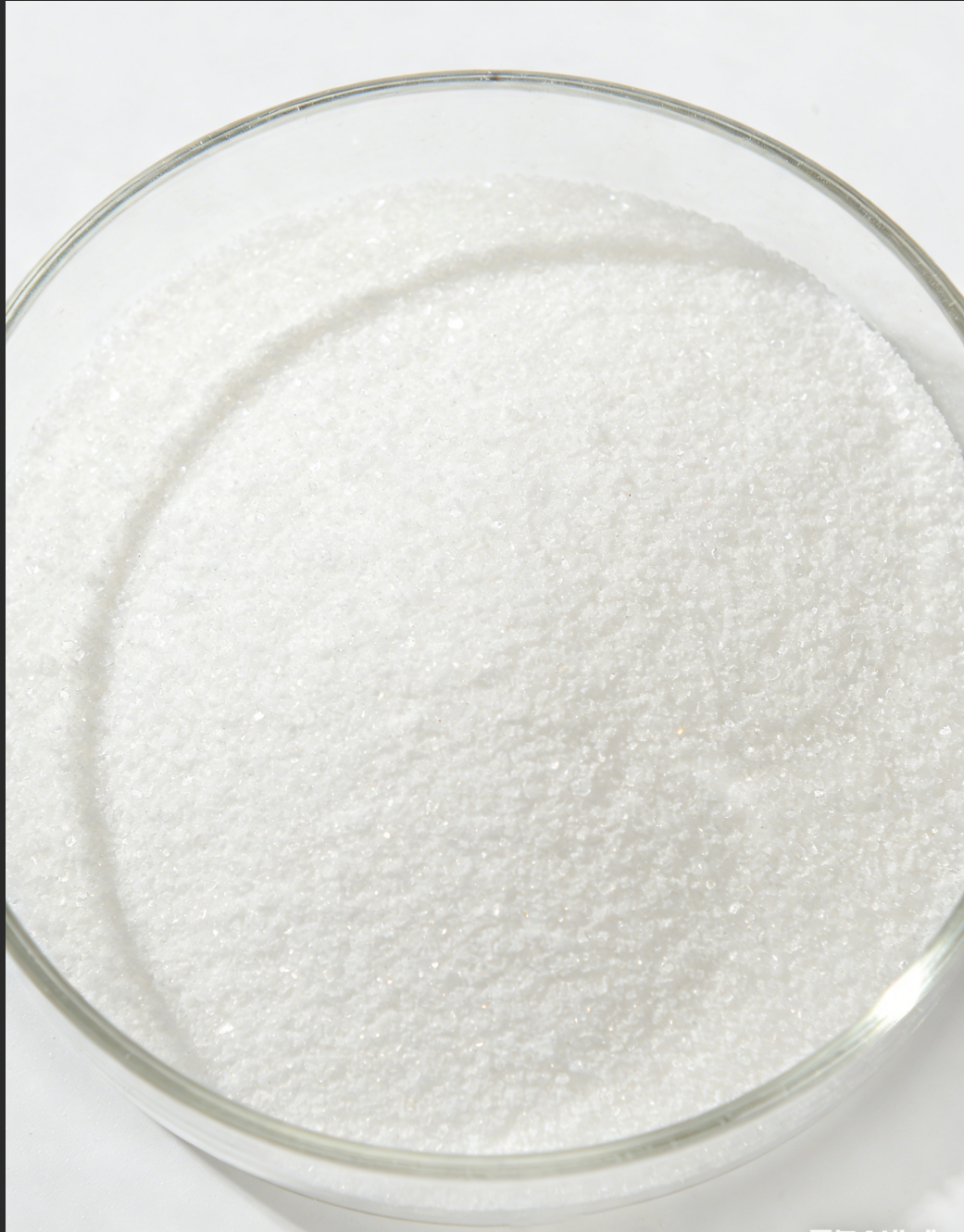
Looking for a reliable CMC Supplier for Beverages? We supply high-purity sodium carboxymethyl cellulose for beverage, dairy, pharmaceutical, and industrial applications worldwide.
Furthermore,As a professional beverage CMC supplier and sodium CMC supplier, we provide food-grade and pharmaceutical-grade CMC powder with stable viscosity, consistent batch quality, and global bulk supply support.
Moreover, our technical team helps customers select suitable viscosity grades for different beverage systems, including protein drinks, plant-based milk, cocoa beverages, and dairy applications.
✔ Food-grade CMC (E466)
✔ Multiple viscosity grades
✔ Stable global bulk supply
✔ Technical formulation support
Request a Quote | Get Free Sample

Carboxymethyl cellulose (CMC), also known as sodium CMC or cellulose gum, is a water-soluble cellulose ether widely used as a thickener, stabilizer, and suspension agent.
Therefore,Manufacturers uses modifying natural cellulose to produce CMC . During production, carboxymethyl groups are introduced into the cellulose structure, allowing the material to dissolve easily in water and form stable viscous solutions.
Because of its excellent water-binding capacity and suspension stability, Manufacturers uses CMC in beverages, dairy products, pharmaceuticals, and industrial formulations.
Especially,CMC is approved as a food additive under E466 in the EU, as GRAS (21 CFR §182.1745) by the FDA in the United States, and is listed in the United States Pharmacopeia (USP) and European Pharmacopoeia (Ph. Eur.) for pharmaceutical applications.
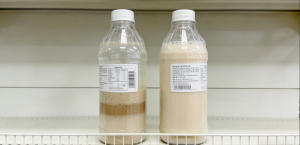
CMC helps beverage manufacturers improve product stability, mouthfeel, and shelf-life performance.
As a result,in many liquid systems, suspended particles gradually settle during storage. In addition, protein aggregation and phase separation may appear after heat treatment or long transportation periods. As a result, the final product may lose its uniform appearance and texture consistency.
Therefore, many beverage manufacturers use CMC to improve formulation stability and reduce sedimentation problems.
CMC increases beverage viscosity and slows particle sedimentation. Consequently, cocoa powder, calcium, proteins, and fiber remain evenly distributed throughout the product during storage and transportation.
Low-fat and plant-based beverages often feel thin or watery. However, CMC helps create a smoother and fuller texture without increasing fat content.
CMC binds free water and stabilizes the beverage system. As a result, products maintain a more uniform appearance and improved shelf stability.
CMC remains stable during pasteurization and UHT processing. Therefore, manufacturers widely use it in shelf-stable beverages and ready-to-drink formulations.
When dispersed in water, CMC chains hydrate and extend, creating a structured polymer network that resists flow. This yields several simultaneous functional effects that make CMC indispensable in formulation work:
Important for acidic systems (pH < 4.0): Below pH 3.5, CMC begins converting to its free acid form and may lose solubility or form a gel. For very acidic applications such as carbonated fruit drinks, consider a high-DS grade (DS ≥ 1.0) which maintains stability down to approximately pH 3.0, or combine CMC with colloidal MCC for enhanced particle suspension.
Different beverage systems require different viscosity levels.
Low viscosity grades dissolve quickly and work well in beverages requiring light texture improvement.
Typical applications include:
Furthermore,medium viscosity grades provide balanced thickening and suspension performance.
Typical applications include:
High viscosity grades deliver stronger stabilization and suspension control.
Typical applications include:
As a professional CMC Supplier for Beverages, we provide sodium CMC solutions for multiple beverage systems requiring viscosity control and long-term suspension stability.
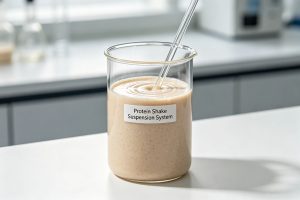
Protein beverages are difficult to stabilize because proteins tend to aggregate during heat treatment. Therefore, manufacturers often use CMC to improve protein stability and suspension performance.
CMC forms a protective layer around protein particles and helps maintain a smooth texture after UHT processing. In addition, it reduces sedimentation during long-term storage.
For high-protein beverages, many manufacturers combine CMC with colloidal MCC stabilizers to achieve stronger suspension performance.

Beverage factory uses CMC in oat milk, almond milk, soy milk, and pea protein beverages.
It improves mouthfeel, prevents phase separation, and helps stabilize plant proteins during processing and storage. Furthermore, CMC helps suspend calcium and mineral particles more evenly in fortified beverages.
Cocoa particles naturally settle over time. However, CMC helps keep cocoa evenly suspended and improves beverage consistency.
At the same time, it creates a richer and smoother drinking experience, which improves overall product quality.
In flavored milk and yogurt drinks, CMC improves viscosity consistency and reduces whey separation.
Because of its compatibility with dairy proteins, CMC performs well in both neutral and mildly acidic dairy systems. Consequently,factories uses it in dairy beverage stabilization.
CMC in pharmaceuticals is used as a binder, disintegrant, and suspension agent in tablets, syrups, and ophthalmic solutions. Pharmaceutical-grade CMC meets USP and Ph. Eur. standards.In pharmaceutical formulations, CMC is often used alongside microcrystalline cellulose excipient to enhance tablet binding and suspension performance.
CMC for drilling fluid applications provides fluid loss control, viscosity modification, and thermal stability in oilfield operations. For this reason,it is widely used in water-based drilling systems.
In certain formulations, HPMC thickener is used as an alternative or complementary ingredient to improve thermal stability and film-forming properties.
As a professional CMC powder supplier, we provide tailored grades for each application, ensuring optimal performance across food, pharmaceutical, and industrial uses.
Sedimentation is one of the most common quality problems in beverage manufacturing.
Over time, insoluble particles gradually move toward the bottom of the container and create visible layers. Consequently, the beverage loses its uniform appearance and consumer appeal.
CMC helps prevent this problem through three key mechanisms.
CMC increases the viscosity of the beverage system. Therefore, suspended particles move more slowly during storage, which improves long-term suspension stability.
CMC binds free water inside the beverage system and improves overall product stability. In addition, it helps reduce moisture migration and phase separation.
In protein beverages, CMC helps reduce protein aggregation and improves suspension performance after heat treatment.
For high-solid beverage systems, manufacturers often combine CMC with colloidal MCC stabilizers to achieve even stronger long-term stability.
| Parameter | Food Grade (E466) | Pharma Grade (USP/Ph. Eur.) |
|---|---|---|
| Appearance | White to off-white powder | White to off-white powder |
| Degree of Substitution | 0.65–1.20 | 0.65–0.95 |
| Assay (on dry basis) | ≥ 99.5% Na-CMC | ≥ 99.5% Na-CMC |
| Moisture content | ≤ 10% | ≤ 10% |
| Heavy metals (as Pb) | ≤ 10 ppm | ≤ 10 ppm |
| NaCl content | ≤ 0.5% | ≤ 0.2% |
| pH (1% solution) | 6.5–8.5 | 6.5–8.0 |
| Particle size (d90) | Customizable | As specified |
| Property | CMC (Na-CMC) | HPMC | Colloidal MCC |
|---|---|---|---|
| Ionic character | Anionic | Nonionic | Nonionic |
| Mechanism | Viscosity building, electrostatic protection | Viscosity, thermal gelation | 3D gel network, true suspension |
| Thermal gelation | No | Yes (55–90°C) | No |
| pH sensitivity | Moderate (precipitates < pH 3.5) | Low (stable pH 2–13) | Low |
| Salt tolerance | Moderate — high ionic strength reduces viscosity | Good | Good |
| Primary food use | Beverage, dairy, baked goods | Gluten-free, film coatings | Fat-reduced, UHT, heavy suspensions |
| Primary pharma use | Oral suspensions, ophthalmic drops | Controlled-release tablets | Oral suspensions, topical |
Formulation tip: CMC is often preferred for beverage systems because it combines viscosity control, protein stabilization, and suspension performance in one ingredient.
Compared with other cellulose derivatives such as colloidal MCC stabilizer, HPMC thickener, and microcrystalline cellulose excipient,CMC provides strong viscosity building and electrostatic stabilization, making it ideal for beverages and dairy systems.
| Item | Specification |
| Product Name | Sodium Carboxymethyl Cellulose |
| Food Additive Code | E466 |
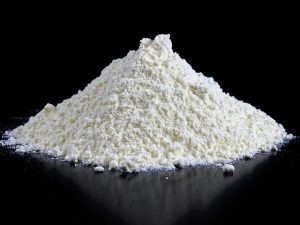
| Appearance | White to off-white powder |
| Viscosity Range | 50–3000 mPa·s |
| pH Stability | 4.0–11.0 |
| Purity | ≥99.5% |
| Solubility | Cold water soluble |
Custom viscosity and DS grades are available for beverage applications.

As a professional CMC supplier, we support beverage manufacturers worldwide with stable quality and technical support.
We provide reliable global supply for food and beverage manufacturers.
Moreover,Low, medium, and high viscosity grades are available for different beverage systems.
Furthermore,Our team helps customers select the right CMC grade based on viscosity target, pH condition, and processing requirements.
CoA, SDS, and technical documents are available with every shipment.
Tell us your application, required viscosity grade, and target volume. We’ll respond within one business day with specifications, samples, and pricing.
CMC is used as a thickener, stabilizer, and suspension agent in beverages. It helps improve mouthfeel and prevents sedimentation during storage.
Yes. Food-grade CMC is approved as E466 and widely used in beverages, dairy products, sauces, and processed foods.
Yes. CMC increases beverage viscosity and helps keep particles evenly distributed throughout the product.
Yes. CMC performs well under UHT and pasteurization conditions and remains stable during high-temperature processing.
The correct viscosity depends on your beverage type, particle load, and target texture. Our technical team can recommend suitable grades for your application.
Low to medium viscosity grades (200–800 mPa·s at 2%) are most commonly used in protein beverages. A high DS (≥ 0.90) is recommended to ensure electrostatic protein protection remains effective through UHT processing and across the product’s pH range. For very high protein concentrations, combining CMC with colloidal MCC stabilizer provides additional suspension reinforcement.
A medium viscosity, high-DS CMC grade (DS ≥ 0.90, 200–600 mPa·s at 2%) is well suited for most plant-based milk formulations. It provides adequate body and mouthfeel improvement, electrostatic interaction with plant proteins, and emulsion stability for added oils — without making the product unpleasantly thick. For fortified plant-based milks containing heavy mineral particles, a CMC and colloidal MCC combination is preferred.
Yes. CMC slows cocoa particle sedimentation by increasing the viscosity of the continuous aqueous phase, reducing particle settling velocity according to Stokes’ Law. It also stabilizes fat droplets against creaming through interfacial adsorption. For cocoa beverages with high particle loads processed under UHT conditions, combining CMC with colloidal MCC stabilizer provides the strongest long-term suspension performance.
Yes. CMC does not undergo irreversible thermal degradation under standard UHT processing conditions (135–150°C for a few seconds). Its viscosity decreases temporarily at high temperatures but recovers on cooling. Unlike some natural gums, CMC maintains its stabilizing function through the thermal treatment cycle and continues to provide suspension stability and mouthfeel improvement in the finished product during ambient shelf life.
Medium viscosity grades (200–800 mPa·s at 2%) are standard for most dairy drink applications, including flavored milks, drinking yogurts, and extended-shelf-life dairy beverages. High viscosity grades (800–2,000 mPa·s) are used where stronger protein protection or greater body is required, such as in calcium-fortified or reduced-fat dairy drinks. Grade selection should account for processing temperature and the calcium ion content of the dairy system, as divalent cations reduce CMC solution viscosity.
A reliable sodium CMC supplier should provide stable viscosity control, food-grade and pharmaceutical-grade certifications, complete regulatory documentation, and long-term bulk supply capability. Technical formulation support and consistent batch quality are also critical for beverage and dairy manufacturers.
A professional CMC Supplier for Beverages provides stable viscosity control, consistent suspension performance, technical formulation support, and reliable global bulk supply for beverage manufacturers.
A CMC Supplier for Beverages helps manufacturers improve suspension stability, mouthfeel, and shelf-life consistency in protein drinks, dairy beverages, cocoa drinks, and plant-based milk.
Need food-grade CMC for beverage production?
Our team can recommend suitable viscosity grades based on your formulation, processing conditions, and suspension requirements.
Contact us for:
Contact us today for pricing, specifications, and free samples.
Reviews
There are no reviews yet.