

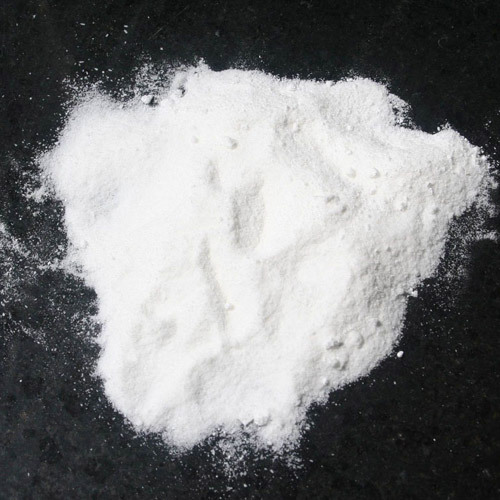
Microcrystalline cellulose colloid is a liquid suspension of cellulose particles used as a stabilizer and suspending agent in food, pharmaceutical, and industrial applications.
It is widely used as a stabilizer, suspending agent, and rheology modifier in liquid systems.
This page provides a complete guide, including definition, properties, applications, and supply options for bulk buyers.
Microcrystalline cellulose colloid, also known as colloidal microcrystalline cellulose or MCC colloid, is widely used as a liquid stabilizer in food, pharmaceutical, and industrial systems.
Microcrystalline cellulose colloid is widely used as an MCC suspension in various liquid systems where stability and uniform dispersion are critical. As a cellulose colloid stabilizer, it helps prevent sedimentation, control viscosity, and maintain consistent texture across food, pharmaceutical, and industrial applications. This liquid microcrystalline cellulose form is particularly effective in oral formulations, where MCC for oral suspension ensures accurate dosing and redispersibility. In the food industry, it also functions as an MCC stabilizer for food, improving mouthfeel, suspension stability, and shelf-life in beverages, sauces, and dairy products.
Microcrystalline cellulose colloid is produced by processing purified cellulose — derived from wood pulp or cotton linters — to particle sizes small enough to remain stably dispersed in water without settling. The resulting material is a white, odorless, tasteless liquid suspension in which cellulose particles are distributed throughout the aqueous phase and interact through surface hydrogen bonding to form a continuous soft network.
The word “colloid” defines the physical state: MCC particles are small enough that gravity alone does not cause them to sediment under normal conditions, yet they are not dissolved. MCC colloid is a stable dispersion, not a solution. This distinction matters because the network formed by colloidal particles — rather than dissolved polymer chains — is what provides MCC colloid’s functional properties in formulations.
At rest, this network maintains its structure, keeping suspended particles in place and resisting liquid separation. Under applied shear — stirring, shaking, pumping, or pouring — the network temporarily breaks down, allowing the material to flow. When shear is removed, the bonds between particles reform and the network rebuilds. This behavior is called thixotropy, and it is the defining functional characteristic of microcrystalline cellulose colloid.
| TEST ITEMS | ACT591 | ACT3212 | ACT611 | ACT538 | ACT521 |
| Loss on drying,w/% | ≤7.0 | ≤7.0 | ≤7.0 | ≤7.0 | ≤7.0 |
| Residue on ignition,w/% | ≤5.0 | ≤5.0 | ≤5.0 | ≤5.0 | ≤5.0 |
| Viscosity,1.2%,mpa.s | 39-91 | 50-200 | 50-151 | 39-175 | 50-100 |
| Particle Size retained on 60 mesh sieve | <1 | <1 | <1 | <1 | <1 |
| Heavy Metal,mg/kg | ≤10 | ≤10 | ≤10 | ≤10 | ≤10 |
| Total aerobic microbial count,cfu/g | ≤1000 | ≤1000 | ≤1000 | ≤1000 | ≤1000 |
| Total moulds and yeasts count,cfu/g | ≤100 | ≤100 | ≤100 | ≤100 | ≤100 |
| Escherichia coli | Not detected/10g | Not detected/10g | Not detected/10g | Not detected/10g | Not detected/10g |
| Salmonella species | Not detected/10g | Not detected/10g | Not detected/10g | Not detected/10g | Not detected/10g |
| Staphylococcus aureus | Not detected/10g | Not detected/10g | Not detected/10g | Not detected/10g | Not detected/10g |
| Pseudomonas aeruginosa | Not detected/10g | Not detected/10g | Not detected/10g | Not detected/10g | Not detected/10g |
| Application | food and beverage | Milk shake, sauce | food and beverage | Neutral milk drinks, vegetable protein drinks |
food and beverage |
The terms MCC colloid, MCC gel, and powder MCC all describe microcrystalline cellulose in different physical forms. Each has a distinct functional profile and is suited to different application types.
| MCC Colloid | MCC Gel | Powder MCC | |
|---|---|---|---|
| Physical form | Fluid aqueous suspension | Structured aqueous gel dispersion | Dry white powder |
| Viscosity | Low to moderate | Moderate to high | N/A (dry material) |
| Thixotropy | Mild | Pronounced | None |
| Primary function | Liquid stabilization, particle suspension | Texture, fat replacement, creaminess | Tablet binding, anti-caking |
| Typical application | Beverages, pharma suspensions, industrial liquids | Ice cream, yogurt, bakery fillings | Solid dose pharma, dry food mixes |
| Activation required | None | None | High-shear hydration |
| Particle size | Sub-micron to low-micron | Sub-micron to low-micron | 20–200 microns (typical) |
The practical distinction between MCC colloid and MCC gel comes down to viscosity and structural intensity. MCC colloid is the thinner, more fluid form — suited to applications where the system must remain pourable or injectable and the primary need is particle suspension or emulsion stabilization rather than body and creaminess. MCC gel is a more concentrated, more structured dispersion suited to applications where texture contribution and fat replacement are formulation priorities.
Powder MCC operates in an entirely different domain — dry and compressed systems — and is not functionally interchangeable with either liquid form.
For solid applications such as tablets and dry blends, explore microcrystalline cellulose powder.
For applications requiring higher viscosity and texture, see MCC gel stabilizer.
This type of liquid microcrystalline cellulose is commonly applied as an MCC suspension in both food and pharmaceutical formulations. As a cellulose colloid stabilizer, it ensures long-term stability and prevents phase separation in complex liquid systems.
Microcrystalline cellulose colloid is used wherever a liquid system requires stable particle suspension, controlled viscosity, or long-term emulsion integrity — without contributing flavor, color, or calories to the finished product.
In food manufacturing, MCC colloid is applied in liquid and semi-liquid systems where stability across the full supply chain — from manufacture through retail shelf life — is a non-negotiable quality requirement.

Plant-based beverages and fortified drinks
In oat milk, almond milk, rice drink, soy milk, and fortified juice products, insoluble particles including fiber, mineral salts, protein aggregates, and added nutrients tend to sediment during storage, creating a dense layer at the bottle bottom that consumers find unacceptable. MCC colloid’s particle network keeps these components uniformly distributed throughout the liquid, ensuring consistent appearance, mouthfeel, and nutritional delivery in every serving without requiring vigorous shaking.
Low-fat dressings and pourable sauces
Reducing fat in emulsified products like salad dressings removes both the structural and viscosity contributions of the oil phase, destabilizing the emulsion and producing a thin, watery product that separates rapidly in the bottle. MCC colloid stabilizes the reduced-fat emulsion, maintains a consistent pourable texture, and prevents phase separation during ambient storage — allowing manufacturers to reduce fat content without sacrificing the product quality consumers expect.
Dairy beverages and flavored milks
In chocolate milk, coffee drinks, and dairy-based beverages containing cocoa particles, coffee solids, or botanical extracts, MCC colloid prevents sedimentation and maintains uniform suspension across the product’s shelf life. This is particularly demanding in ambient-stable products that may sit on retail shelves for weeks or months before consumption.
Low-fat and reduced-calorie product lines
Because MCC colloid is non-caloric, non-digestible, and flavorless, it is a natural fit for light and reduced-calorie product reformulations where the ingredient label, caloric positioning, and regulatory compliance are all marketing and regulatory priorities simultaneously.

In pharmaceutical manufacturing, MCC colloid is used as a suspending and stabilizing agent in oral liquid dosage forms — an application where its colloidal network properties directly determine product safety and dose accuracy.
Oral suspensions contain insoluble active pharmaceutical ingredients that must be uniformly distributed throughout the liquid at the moment of dosing. Without an effective suspending agent, API particles sediment over time and compact into a dense, hard layer at the bottle bottom that cannot be redispersed by normal shaking before use. The clinical consequence is a product that delivers an inconsistent dose — potentially sub-therapeutic in the first doses drawn from a well-settled bottle and supratherapeutic in the final doses drawn from a resuspended concentrate.
MCC colloid prevents this failure mode by maintaining API particles within its colloidal network at rest. When the patient or caregiver shakes the bottle, the network momentarily breaks down and the suspension flows as a uniform liquid for accurate measurement. The network then reforms within seconds, re-suspending particles and restoring stability for the next dose.
This mechanism is recognized in USP/NF and Ph. Eur. pharmacopoeial guidance for oral suspension formulation. Additional pharmaceutical applications include:
Antacid and mineral suspensions — products containing insoluble mineral actives such as calcium carbonate, aluminum hydroxide, and magnesium trisilicate depend on effective suspension stabilization to deliver consistent dose and maintain the smooth, uniform texture that defines the category’s consumer experience.
Nutraceutical and herbal liquid products — in liquid dietary supplements and botanical extract suspensions, MCC colloid stabilizes insoluble particles and prevents the phase separation and sedimentation that would otherwise compromise both product appearance and consumer confidence in efficacy.
Beyond food and pharmaceutical use, microcrystalline cellulose colloid is used in industrial and personal care formulations where thixotropic stabilization of water-based liquid systems is required.
Cosmetics and personal care
In sunscreen formulations, body lotions, liquid foundations, tinted moisturizers, and hair care products, MCC colloid stabilizes oil-in-water emulsions, prevents UV filter or pigment sedimentation, and contributes to smooth, non-greasy skin feel during application. Its particulate nature means it does not form a film or leave a residue — making it suitable for both rinse-off and leave-on cosmetic applications across skin types.

Water-based paints and industrial coatings
MCC colloid functions as an anti-settling agent and viscosity modifier in architectural and industrial water-based coatings, maintaining uniform pigment suspension in the can during storage while allowing easy application and leveling under the higher shear of brushing or rolling. Thixotropic recovery after application reduces dripping and sagging on vertical painted surfaces.
Agrochemical suspension concentrates
In liquid agrochemical formulations — particularly herbicide, fungicide, and insecticide suspension concentrates — MCC colloid keeps active ingredient particles in uniform suspension, improving spray application consistency and reducing the risk of nozzle blockage from compacted settled solids in the spray tank.
Q: Is MCC colloid the same as colloidal MCC? A: Yes. MCC colloid and colloidal MCC are different terms that describe the same material — a liquid suspension of microcrystalline cellulose particles in an aqueous medium. The terms are used interchangeably across industries and regions. “Colloidal MCC” is more common in technical, pharmaceutical, and academic literature, while “MCC colloid” appears more frequently in industrial ingredient and procurement contexts. Both refer to a thixotropic cellulose dispersion in which sub-micron particles form a stabilizing network in water.
Q: What is the difference between MCC colloid and MCC gel? A: Both are aqueous dispersions of microcrystalline cellulose, but they differ in viscosity, structural intensity, and primary application. MCC colloid is a thinner, more fluid suspension suited to liquid stabilization in beverages, pharmaceutical oral suspensions, and industrial liquids where the system must remain pourable. MCC gel is a more structured, higher-viscosity dispersion used where texture, body, and fat replacement are formulation priorities — such as in ice cream, yogurt, and bakery fillings. The underlying cellulose material is the same; the difference lies in concentration, processing, and the functional outcome required.
Q: What is microcrystalline cellulose colloid used for? A: MCC colloid is used as a stabilizer and suspending agent in food beverages, low-fat dairy products, oral pharmaceutical suspensions, cosmetics, and industrial liquid formulations. Its colloidal particle network prevents sedimentation, controls viscosity, and stabilizes emulsions without contributing flavor, color, or calories to the finished product. It is approved for food use as E460 in the EU and holds GRAS status in the USA, and is monographed in USP/NF and Ph. Eur. for pharmaceutical applications.
For comparison with soluble hydrocolloids, visit carboxymethyl cellulose (CMC).
Q: Is microcrystalline cellulose colloid safe for use in food and pharmaceuticals? A: Yes. Microcrystalline cellulose holds GRAS status in the United States under FDA 21 CFR 182.90 and is approved as food additive E460 under EU food additive regulations. It is monographed in USP/NF and Ph. Eur. for pharmaceutical use. MCC colloid is a non-digestible dietary fiber with no known adverse effects at typical usage levels, an extensive global safety record in food and pharmaceutical manufacturing, and regulatory approval in most major markets including the EU, USA, Canada, Japan, Australia, and China.
According to the FDA, microcrystalline cellulose is generally recognized as safe (GRAS) for food use.
Q: Can MCC colloid be used alongside other hydrocolloids and stabilizers? A: Yes. MCC colloid is highly compatible with most food-grade and pharmaceutical stabilizers including xanthan gum, carrageenan, CMC, locust bean gum, guar gum, and pectin. In food applications it is frequently incorporated into multi-component stabilizer systems where each ingredient contributes a complementary function — MCC colloid providing suspension and base stability while other hydrocolloids contribute specific viscosity or texture profiles. In pharmaceutical suspensions it is routinely combined with additional suspending agents, sweeteners, and preservatives.
Q: What is the shelf life and storage requirement for MCC colloid? A: As an aqueous liquid dispersion, MCC colloid should be stored in sealed containers at cool to ambient temperatures — typically 5–25°C — away from direct heat and freezing conditions. Shelf life under recommended storage is typically 12–24 months depending on the specific grade and packaging format. Consult the product technical data sheet for grade-specific storage conditions, shelf life data, and handling guidance.
Research published on ScienceDirect shows that colloidal cellulose systems provide effective particle suspension and rheology control.
We provide high-quality microcrystalline cellulose colloid with stable viscosity, consistent particle size, and global supply capability. ✔ Food & pharma grade available ✔ Technical support for formulation ✔ Free samples for testing Request a sample or get a quote today.
Explore related cellulose products:
• Microcrystalline cellulose powder (solid applications)
• MCC gel stabilizer (high-viscosity systems)
• Carboxymethyl cellulose (CMC) (soluble hydrocolloid)
Reviews
There are no reviews yet.