

CMC in dairy products is widely used as a multifunctional dairy stabilizer in modern industrial formulation systems.It plays a critical role in improving stability, texture, and shelf life across milk, yogurt, and beverage applications.For a broader overview of industrial stabilizer systems, see our Food Stabilizers page covering functional hydrocolloid applications across food systems.
In modern dairy manufacturing, product instability commonly appears as:
To solve these challenges, CMC serves as a multi-functional stabilizer in dairy products, improving viscosity control, suspension stability, and protein protection.
CMC is especially important in CMC milk stabilization systems and CMC beverage formulation, which require long shelf life and uniform texture.
In dairy formulations, CMC functions as a stabilizer for protein systems, a viscosity modifier for liquid dairy, a water-binding agent to reduce syneresis, a suspension control agent for particles, and a texture enhancement polymer. Unlike starch or simple thickeners, CMC provides stable performance under heat, acid, and long shelf-life conditions, making it suitable for industrial dairy production. CMC is a water-soluble anionic polymer that serves widely as a thickener, stabilizer, emulsifier, and water-retention agent across various food systems.
Manufacturers use CMC in dairy products to stabilize proteins, improve viscosity, and prevent phase separation in milk, yogurt, and beverage systems.
It functions as:
This makes CMC a core ingredient in CMC yogurt stabilizer systems and liquid dairy applications.In advanced CMC beverage formulation systems, manufacturers rely on its ability to control viscosity, prevent phase separation, and enhance sensory consistency in protein and flavored drinks.
In industrial dairy manufacturing, product defects do not appear randomly — they follow predictable patterns driven by the physical and chemical instability of dairy systems. CMC addresses five critical failure modes that routinely compromise product quality, shelf life, and consumer acceptance. Understanding these problems and their solutions is essential for any formulator working with dairy stabilizer systems.
When milk acidifies to a pH below the isoelectric point of casein, the casein micelles lose the electrostatic repulsion that normally keeps them dispersed. At neutral pH, caseins exist as micelles stabilized by steric repulsion from the extended conformation of κ-casein on their surface. During acidification, this protective conformation collapses, causing the micelles to aggregate and precipitate. Without effective stabilization, this leads to visible protein flocculation, sedimentation, and macroscopic whey separation — defects that make the product commercially unacceptable.
Acidified milk drinks encompass a broad range of products with acidic pH values, including fermented milks and directly acidified beverages. The protein separation problem is particularly acute in these systems because the casein micelles are inherently unstable in this pH range.
CMC addresses protein separation through a dual mechanism. First, CMC adsorbs onto casein micelles through electrostatic attraction during acidification. This adsorption endows the casein micelles with both electrostatic and steric repulsions — precisely the protective mechanisms they lose when κ-casein collapses. The ζ-potential of CMC-coated casein micelles increases significantly, creating strong electrostatic repulsion between particles that prevents them from aggregating.
Both the molecular weight and degree of substitution of CMC critically influence this stabilization. CMC with high molecular weight increases the viscosity of the aqueous phase significantly, contributing to stability through reduced particle mobility. CMC with high degree of substitution generates higher ζ-potential on coated casein micelles, increasing electrostatic repulsion and preventing phase separation.
The practical implication is clear: manufacturers can select CMC grades with appropriate molecular weight and substitution patterns to match their specific acidification profile and protein content. The amount of CMC required for efficient coverage of casein micelles increases with molecular weight. Above the efficient coverage concentration, high molecular weight CMC delivers superior long-term stability compared to low molecular weight alternatives.
Importantly, CMC works effectively even in whole milk systems containing fat. The presence of fat does not disturb CMC adsorption onto casein micelles below the relevant pH threshold. CMC effectively prevents both the unwanted creaming of fat embedded in CMC-casein clusters and the aggregation of casein micelles. For acidified whole milk drinks — which are increasingly popular in many markets — CMC provides comprehensive stabilization that addresses both protein and fat instability simultaneously.
In many regions, CMC is commonly chosen as a stabilizer instead of pectin because of its lower cost, particularly where long shelf life is required. This cost-effectiveness, combined with robust protein stabilization performance, makes CMC the stabilizer of choice for many acidified dairy applications.
Sedimentation plagues a wide range of dairy products where insoluble particles must remain uniformly suspended throughout shelf life. Chocolate milk exemplifies this problem: cocoa particles are denser than the surrounding milk serum and will settle over time, forming an unattractive sediment layer at the bottom of the container. Similar challenges arise in flavored milk containing fruit particles, protein-fortified beverages with insoluble protein aggregates, and calcium-fortified dairy drinks where mineral particles tend to precipitate.
The root cause is straightforward physics: particles with density greater than the continuous phase will sediment over time. The sedimentation rate depends on particle size, density difference, and — critically — the viscosity of the continuous phase. In low-viscosity dairy systems, sedimentation occurs rapidly and visibly.
CMC addresses sedimentation primarily by increasing the viscosity of the continuous aqueous phase. Higher viscosity reduces particle mobility and slows sedimentation dramatically. This is not merely a passive thickening effect; CMC’s pseudoplastic (shear-thinning) behavior means the product flows easily during pouring and consumption but maintains high viscosity at rest, keeping particles suspended during storage.
In flavored dairy beverages such as chocolate milk, CMC stabilizes suspended particles including cocoa powder and fruit pellets while simultaneously extending shelf life. The stabilizer creates a uniform suspension that prevents the hard sediment layer that forms when cocoa particles settle and compact.
CMC’s suspension capability extends beyond chocolate milk. In beverages containing plant proteins or milk fats, CMC effectively prevents fat from rising to the surface and protein from precipitating out of solution. This dual action — controlling both sedimentation and creaming — makes CMC valuable for complex dairy systems with multiple suspended phases.
At appropriate usage levels, CMC provides sufficient viscosity to maintain suspension without creating an undesirable heavy or gelatinous texture.
Syneresis — the expulsion of whey from a gel network — is one of the most common and commercially damaging defects in yogurt and fermented dairy products. When the casein gel network that forms during fermentation is weak or unstable, it cannot retain the serum phase effectively. Whey pools on the surface or separates along the sides of the container, creating an unappealing appearance and indicating poor product quality to consumers.
Goat milk yogurt is particularly susceptible to syneresis because it forms a weaker gel structure than cow milk yogurt. However, syneresis affects all yogurt types to varying degrees, especially in low-fat formulations where the reduced fat content provides less structural support to the gel network.
Gel network instability underlies the mechanism of syneresis. When the protein network contracts or rearranges during storage, it expels water that the gel structure previously held. Factors including acidification rate, fermentation temperature, protein content, and stabilizer system all influence the extent of syneresis.
CMC reduces syneresis through its exceptional water-binding capacity. The polymer binds free water molecules through hydrogen bonding, effectively immobilizing the serum phase within the gel network. This water retention strengthens the gel structure and prevents the protein network from contracting and expelling whey.
CMC addition at various concentrations significantly improves yogurt characteristics by increasing viscosity and reducing syneresis. The optimal treatment achieves low syneresis values, with the microstructure showing denser, more compact gel networks and smaller voids compared to control samples.
CMC at appropriate concentrations maintains the physical stability of yogurt throughout its typical storage period. This extended stability is critical for commercial products that must withstand distribution, retail display, and consumer storage without quality deterioration.
In yogurt beverages, CMC improves body texture and prevents water separation during transportation and refrigerated storage. The stabilizer helps maintain consistent viscosity throughout the product’s shelf life, even under the mechanical stress of transportation.
For stirred yogurt, CMC enhances viscosity, creates a smoother texture, and prevents separation during transportation. The stabilizer integrates into the yogurt matrix, providing long-term protection against syneresis without altering the natural flavor profile.
When formulators reduce fat content in dairy products, they lose more than just calories — they lose the sensory attributes that consumers associate with quality. Fat provides creaminess, mouthfeel, body, and flavor release. Removing fat leaves products thin, watery, and lacking in sensory satisfaction.
Consumers increasingly demand reduced-fat and fat-free dairy options, but they refuse to compromise on eating experience. The challenge for dairy manufacturers is to deliver the sensory attributes of full-fat products without the fat content. This requires ingredients that can mimic the textural and mouthfeel contributions of fat.
Traditional approaches using starch-based thickeners often fall short. Starches can create heavy, pasty textures and may undergo retrogradation during storage, leading to textural deterioration. They also require higher usage levels to achieve the desired effect, which can impact cost and flavor neutrality.
CMC provides a sophisticated solution to low-fat texture challenges.Manufacturers increasingly use sodium carboxymethyl cellulose as an alternative thickener to starch in semi-solid dairy products because of its technological and nutritional advantages. CMC mimics the texture and mouthfeel of fats, enabling the production of low-fat or fat-free products without compromising taste and texture.
In low-fat products, CMC provides a creamy mouthfeel that closely resembles the texture of higher-fat versions. The polymer’s high water retention capacity reduces water loss during processing and storage, maintaining a moist texture and mouthfeel. Low-fat yogurt and dairy products formulated with CMC increase consistency, improve mouthfeel, and prevent whey precipitation, making them taste remarkably similar to their full-fat counterparts.
CMC’s effectiveness as a fat replacer is well established. As CMC content in reduced-fat cheese milk increases, cheese yield and moisture increase significantly. The hydrocolloid compensates for the missing fat, delivering acceptable rheological and sensory attributes.
In dairy desserts, CMC-based low-fat formulations with appropriate fat replacers display rheological behavior similar to full-fat control samples. This means consumers experience the same thickness, creaminess, and mouthfeel they expect from full-fat products.
CMC’s ability to function as a fat mimetic stems from its water-binding and viscosity-building properties. By structuring the aqueous phase, CMC creates the sensation of body and richness that fat normally provides. This allows formulators to reduce fat content significantly while maintaining — or even improving — sensory quality.
Ultra-High Temperature (UHT) processing represents one of the most severe challenges in dairy manufacturing. Ambient drinking yogurt undergoes intense heat treatment to achieve commercial sterility and extended shelf life at room temperature. This extreme heat can irreversibly damage protein structures, causing denaturation, aggregation, and precipitation.
The thermal stress of UHT processing is compounded by high-shear homogenization, which can further disrupt protein structures and stabilizer systems. Products must survive this aggressive processing while emerging with the same texture, stability, and appearance they will maintain for months of ambient storage.
Traditional stabilizers often fail under these conditions. Starches may break down or retrograde. Some hydrocolloids lose viscosity or undergo molecular degradation at high temperatures. The stabilizer system must hydrate rapidly and form a resilient protective network around casein particles before the heat treatment begins.
CMC demonstrates exceptional thermal stability that makes it ideally suited for UHT-processed dairy products. CMC maintains stable performance under heat, acid, and long shelf-life conditions. It can withstand high temperatures without losing its thickening properties, and specific grades maintain functionality through the more extreme conditions of UHT processing.
CMC’s heat resistance allows manufacturers to maintain desired texture and viscosity even after exposure to intense heat treatment. The stabilizer system remains intact through pasteurization, high-temperature mixing, and homogenization. In UHT-treated dairy beverages, CMC helps maintain pourable viscosity over extended shelf life without gelation or phase separation.
In acidic dairy beverages, CMC maintains stability even during high-temperature sterilization processes like UHT and pasteurization. This is particularly valuable for ambient-stable drinking yogurts and lactic acid bacteria beverages that must withstand extreme processing while delivering a smooth, stable product to consumers.
CMC’s thermal stability is complemented by its acid resistance. Food-grade CMC maintains stable performance under different food processing conditions, including the acidic environment typical of fermented and acidified dairy products. This combination of heat and acid stability makes CMC uniquely qualified for the demanding processing conditions of modern dairy manufacturing.
The stabilizer’s performance during UHT processing is not merely about survival — it is about protection. CMC forms a protective network around casein particles before heat treatment, shielding proteins from the denaturing effects of extreme heat. This protective function preserves protein integrity, prevents aggregation, and ensures that the final product maintains its intended texture and stability throughout shelf life.
| Problem | Root Cause | CMC Solution | Key Mechanism |
|---|---|---|---|
| Protein separation | Casein aggregation below isoelectric pH | Electrostatic + steric stabilization | CMC adsorption onto casein micelles; ζ-potential increase |
| Sedimentation | Particle settling by gravity | Viscosity increase | Continuous phase thickening; reduced particle mobility |
| Syneresis | Weak gel network expels water | Water binding | Hydrogen bonding immobilizes serum phase |
| Low-fat texture loss | Missing fat sensory attributes | Fat mimetic function | Aqueous phase structuring; creamy mouthfeel |
| UHT instability | Protein denaturation at high heat | Thermal protection | Heat-resistant stabilizer network |
CMC solves these five critical problems through a combination of mechanisms: electrostatic stabilization of proteins, viscosity modification of the continuous phase, water binding within gel networks, textural mimicry of fat, and thermal protection during processing. This multifunctional capability explains why CMC has become an indispensable stabilizer in modern dairy manufacturing systems.
For dairy formulators, understanding these problem-solution relationships is essential for selecting the right CMC grade and dosage for each specific application. The molecular weight, degree of substitution, and viscosity grade of CMC must be matched to the processing conditions, pH, protein content, and desired texture of the final product to achieve optimal performance.
CMC is a water-soluble cellulose derivative that modifies rheology and stabilizes dispersed systems. It functions as a highly efficient dairy stabilizer in milk, yogurt, and beverage systems that require long-term physical stability. In dairy applications, it functions as a stabilizer that prevents phase separation and protein aggregation, a thickening agent that increases viscosity and improves mouthfeel, a water-binding polymer that retains moisture and reduces syneresis, a suspension control agent that keeps particles uniformly distributed, and a texture enhancer that creates smooth, creamy textures.
Unlike starch-based systems, CMC delivers stable performance under heat, acid, and long shelf-life conditions. CMC is favored in the food industry because of its stability in acidic environments, colorless and odorless properties, and physiologically inert nature. Over 50 years of industrial use has established CMC as a stabilizer and texturizer that prevents ingredient separation while being tasteless and odorless. CMC solutions demonstrate exceptional stability across a broad pH range of 3.5 to 12, ensuring consistent performance in diverse formulations. it significantly improves gel structure, reduces syneresis, and enhances texture consistency in low-fat yogurt systems.
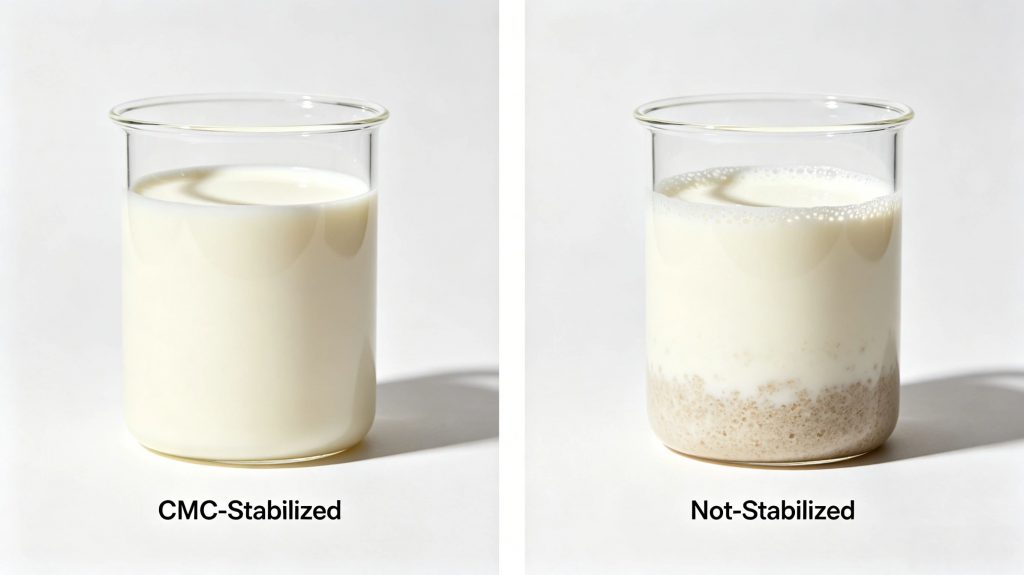
CMC stabilizes milk systems by increasing viscosity of the continuous phase, physically restricting particle movement before sedimentation can occur.CMC suspension technology works by forming a hydrated polymer network that slows particle movement and prevents sedimentation in chocolate milk and fortified dairy beverages.
How it works — 3 steps
1 CMC dissolves into the aqueous continuous phase, forming a viscoelastic polymer network that raises bulk viscosity
2 Elevated viscosity reduces the settling velocity of dispersed particles according to Stokes’ law (v ∝ 1/η)
3 Particle movement through the continuous phase is slowed — uniformity is maintained from production through shelf life CMC polymer network Dissolves in aqueous phase Elevated viscosity Restricts particle movement Stable suspension Uniform product shelf-life
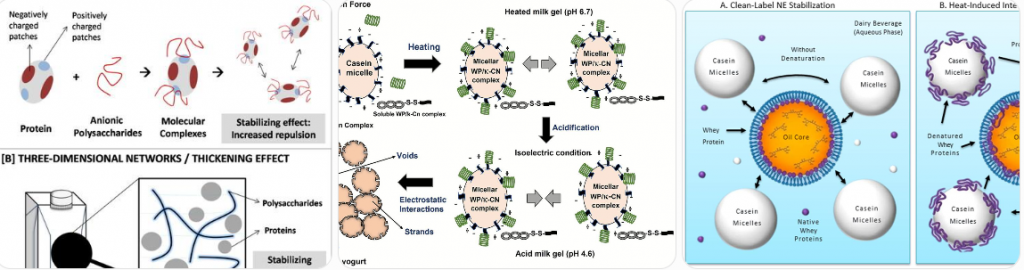
Fig. 1 — CMC stabilizes milk by raising continuous-phase viscosity and preventing particle settling
✓ Reduced sedimentation✓ Improved suspension stability✓ Enhanced product uniformity
In acidic dairy systems (pH 3.6–4.6), casein micelles approach their isoelectric point, lose electrostatic charge, and aggregate — creating visible protein sediment and off-texture.
3.6–4.6Critical pH range for casein destabilization
StericRepulsion type created by CMC coating
UHTPrimary application: high-heat acidic beverages
CMC’s three-layer defence
1 Adsorption — CMC chains adsorb onto the casein micelle surface through electrostatic and hydrophobic interactions
2 Steric barrier — The polymer layer projects outward, physically preventing micelle–micelle contact and aggregation
3 Electrostatic boost — CMC’s carboxylate groups (–COO⁻) increase the net negative charge, strengthening repulsion between micelles Without CMC Casein micelle aggregates + CMC → With CMC coating Casein micelle CMC layer repels
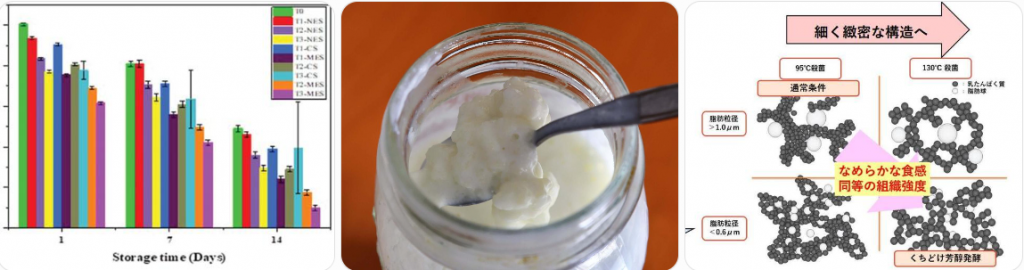
Fig. 2 — CMC coating on casein micelles prevents protein aggregation in acidic conditions
💡This is the core mechanism behind CMC dairy stabilizer performance in acidic UHT beverages — CMC does not change the pH, it shields the protein.
Syneresis — visible whey separation on yogurt surfaces — is one of the most common consumer-facing quality defects. CMC addresses it through a dual water-management and network-reinforcement strategy.
How CMC controls syneresis
1 Water binding — CMC’s hydroxyl groups form hydrogen bonds with free water molecules, reducing mobile water available to migrate
2 Gel reinforcement — CMC interpenetrates the casein gel network, increasing structural integrity and resistance to contraction
3 Water-holding capacity — Bound water is retained within the gel matrix rather than expelled under mechanical or thermal stress Without CMC Loose protein gel network Free water migrates → syneresis +CMC With CMC Reinforced gel + bound water Water retained → no whey separation
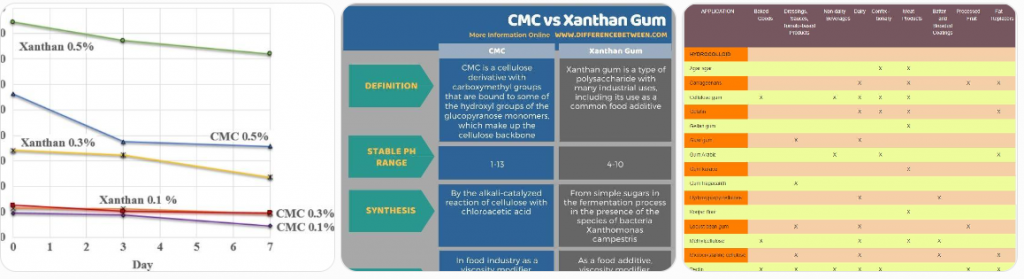
Fig. 3 — CMC improves yogurt gel stability and reduces whey separation
Stirred yogurtDrinking yogurtSet yogurtFruit-based yogurt
CMC yogurt stabilizer works synergistically with pectin or starch in multi-hydrocolloid systems — allowing formulators to tune texture and syneresis resistance independently.
Cocoa particles (d₅₀ ≈ 5–20 µm) are denser than the milk serum and settle rapidly without stabilization. CMC suspension technology addresses this through both viscosity management and direct particle–polymer interaction.Similar viscosity-driven stabilization mechanisms are also widely used in beverage systems, as explained in our Food Suspension Agents guide for preventing sedimentation in liquid formulations.
What CMC provides in chocolate milk
1Suspension stability — Viscosity increase slows cocoa settling velocity by orders of magnitude compared to unstabilized systems
2Controlled viscosity — CMC allows precise viscosity targeting (typically 30–100 mPa·s) without adversely affecting pourability or mouthfeel
3Sediment prevention — Hard, compacted sediment layers — which cannot be resuspended — are eliminated, protecting shelf appeal No stabilizer Cocoa particles sediment rapidly Hard compact layer forms at base +CMC CMC-stabilized system Cocoa uniformly suspended throughout No sediment layer — consistent delivery
Fig. 4 — CMC prevents cocoa sedimentation in chocolate milk systems
🏆CMC suspension technology is also applied in flavoured milks, cocoa powder beverages, and plant-based chocolate drinks — wherever dense particles require long-term suspension stability.
Carboxymethylcellulose (CMC) is one of the most versatile hydrocolloids in dairy manufacturing. Across five major product categories, it delivers targeted functional benefits — from suspension stability to fat replacement — making it a cornerstone ingredient in modern dairy formulation.In modern CMC milk stabilization system, casein proteins remain stable under heat and acid stress, reducing whey separation and improving long-term shelf performance.
In flavored milk and UHT dairy drinks, CMC milk stabilization systems improve three critical quality parameters: particle suspension, flavor uniformity, and storage stability. By raising the viscosity of the continuous aqueous phase, CMC slows particle settling velocity according to Stokes’ law, keeping flavor compounds and added ingredients evenly distributed from production through the end of shelf life.These stabilization principles are also widely applied in beverage processing systems, as described in our
Beverage Stabilizers technology guide for liquid dairy and flavored milk products.
Cocoa particles (d₅₀ ≈ 5–20 µm) are significantly denser than the milk serum and will sediment rapidly in unstabilized systems, forming hard, irresuspendable layers at the base of the container. CMC suspension technology prevents this by increasing bulk viscosity to the optimal range (typically 30–100 mPa·s), achieving stable cocoa suspension while preserving the creamy mouthfeel and long-term color uniformity that consumers expect. The same technology applies to plant-based chocolate drinks and cocoa powder beverages.
Syneresis — the separation of whey from the yogurt gel — is one of the most damaging quality defects in fermented dairy. CMC yogurt stabilizer addresses this through two simultaneous mechanisms: hydroxyl groups on the CMC chain bind free water molecules, reducing the mobile water available to migrate; and CMC chains interpenetrate the casein protein network, reinforcing gel structure and increasing resistance to contraction. The result is improved gel firmness, better spoonability, and significantly reduced whey separation across stirred, drinking, and set yogurt formats. CMC performs particularly well in multi-hydrocolloid blends alongside pectin or modified starch, allowing formulators to independently tune texture and syneresis control.In fermented dairy and yogurt systems, similar formulation strategies are used in our Plant-Based Milk Stabilizer solutions to improve gel stability and reduce syneresis.
At the low pH values typical of acidic dairy beverages (pH 3.6–4.6), casein micelles approach their isoelectric point, lose electrostatic stability, and aggregate — producing visible protein sediment and an unacceptable gritty mouthfeel. CMC beverage formulation systems solve this without altering pH: CMC chains adsorb onto casein micelle surfaces, creating steric repulsion barriers that physically prevent micelle-to-micelle contact. Additionally, the carboxylate groups (–COO⁻) on the CMC backbone increase the net negative charge on the micelle surface, strengthening electrostatic repulsion. The combined effect is stable protein dispersion, smooth texture, and clean mouthfeel — essential performance requirements for UHT-treated acidic dairy drinks.For high-protein systems, similar stabilization strategies are applied in our Protein Drink development guide.
Reducing fat content in dairy products invariably degrades the sensory experience: mouthfeel becomes thin and watery, creaminess disappears, and texture body is lost. CMC acts as a functional fat replacer by building viscosity and mimicking the lubricity and oral coating sensation normally provided by fat globules. Across fat levels from 0.5% to 2%, CMC restores creaminess, enhances mouthfeel, and maintains the texture body that makes reduced-fat products acceptable to consumers — enabling genuine calorie reduction without detectable quality compromise.
Based on industrial practice and research findings, the following dosage ranges are recommended for different dairy applications:
| Application | Dosage (%) | Primary Function |
|---|---|---|
| Milk beverages | 0.1–0.2 | Stability improvement |
| Chocolate milk | 0.15–0.3 | Suspension control |
| Yogurt | 0.1–0.3 | Syneresis reduction |
| Protein drinks | 0.2–0.5 | Protein stabilization |
| Low-fat dairy | 0.2–0.4 | Texture improvement |
| Yogurt drinks | 0.2–0.4 | Viscosity and stability |
For yogurt drinks, CMC is the most common hydrocolloid used, with typical dosage ranges of 0.1–0.9%. Research on goat milk yogurt has examined CMC additions at 0.75%, 1.0%, and 1.25% to evaluate effects on viscosity and syneresis.
The amount of CMC needed for efficient coverage of casein micelles increases with increasing molecular weight of CMC. Above the efficient coverage concentration, the long-term stability of acidified milk drinks with high molecular weight CMC is better than that with low molecular weight CMC.
| Evaluation Index | CMC (Carboxymethyl Cellulose) | Xanthan Gum | Modified Starch |
|---|---|---|---|
| Whey Separation Resistance | Excellent; forms compact network to lock moisture, minimal serum separation | Very good; high pseudoplasticity inhibits water migration | Fair; easy to release free water under long storage |
| Gel Uniformity of Yogurt / Fermented Dairy | Smooth, dense, crack-free gel texture | Soft, creamy gel with slight slippage risk | Coarse gel, prone to internal fissures |
| Acid & Heat Stability | Stable at pH 4.2–6.8, withstands pasteurization | Ultra-wide pH tolerance (pH 2–12), stable during UHT sterilization | Degrades severely under high temperature + acidic conditions |
| Salt Tolerance (Milk Calcium Ions) | Moderate; slight viscosity drop with high calcium | Outstanding; viscosity barely affected by dairy salts | Poor; calcium induces retrogradation & stratification |
| Suspending Power for Milk Particles | Strong; suspends milk fat & protein evenly | Superior suspension capacity for insoluble solids | Weak; particles settle after prolonged storage |
| Mouthfeel & Texture | Clean, non-sticky, creamy taste | Slight slippery slimy texture | Heavy, starchy aftertaste |
| Synergy with Milk Proteins | Great binding affinity with casein | Weak interaction with dairy proteins | No synergistic effect with casein micelles |
| Cost Level | Low-medium industrial cost | Higher raw material cost | Lowest price among three additives |
| Typical Dairy Applications | Fermented yogurt, flavored milk, dairy puddings | Protein drinks, salad cream, acidic dairy beverages | Low-cost yogurts, cream fillings, dairy desserts |
CMC provides better heat stability, cleaner taste, and lower dosage requirement. Starch requires higher dosage and may cause retrogradation, leading to texture deterioration over time. CMC delivers stable performance under heat, acid, and long shelf-life conditions, making it superior for UHT-processed products. Starch offers cost-effectiveness but suffers from instability under processing stress.
CMC provides smoother mouthfeel, less slimy texture, and better dairy compatibility. Xanthan offers higher viscosity but less sensory acceptance. CMC provides a smooth texture in dairy systems, while xanthan adds thickness. Xanthan gum is best when you want thick creamers, while CMC provides a smooth texture without the undesirable sliminess that xanthan can sometimes produce. Research comparing hydrocolloids shows that xanthan gum demonstrates significantly different rheological properties from CMC.
CMC provides broader pH stability, better suspension control, and less sensitivity to ions. Carrageenan is stronger in gel systems but less flexible. Carrageenan is effective in preventing creamers from separating, but CMC offers more versatility across different dairy applications. CMC provides a smooth texture in creamers, while carrageenan works at specific concentrations to create a smooth matrix. In acidified milk drinks, CMC is commonly chosen as a stabilizer instead of pectin because of its cost effectiveness.
CMC offers cost-effective stabilization with broader application flexibility. While pectin requires specific conditions for optimal performance, CMC delivers stable performance across a wider range of processing conditions. In Asia, CMC is a common stabilizer selected as a replacement for pectin because of its cost effectiveness.
Single-hydrocolloid systems are increasingly giving way to combined stabilizer blends in industrial dairy manufacturing. By pairing CMC with complementary hydrocolloids, formulators can target multiple functional objectives simultaneously — achieving performance levels that no single ingredient can deliver alone. Three CMC-based synergistic systems have emerged as industry standards.
The combination of CMC and carrageenan is most widely used in UHT-treated dairy beverages where both protein stability and suspension performance are critical. Carrageenan interacts directly with casein micelles through electrostatic binding, while CMC provides steric protection and continuous-phase viscosity. Together, they deliver superior protein stabilization against heat-induced aggregation, improved particle suspension across extended shelf life, and robust UHT stability that neither ingredient achieves independently. This system is the formulator’s first choice for high-temperature-processed flavored milks and protein-enriched dairy drinks.
Where high viscosity control and long-term emulsion stability are the primary requirements, CMC and xanthan gum form a particularly effective partnership. Xanthan gum contributes a strong pseudoplastic rheology profile — high viscosity at rest that drops sharply under shear — while CMC broadens the viscosity range and improves solution consistency across temperature fluctuations. The synergy between the two polysaccharides also strengthens emulsion stability, preventing fat droplet coalescence and phase separation during storage. This system is favored in dairy-based dressings, high-solids beverages, and products requiring long-term storage resistance under variable temperature conditions.
Notably, the CMC and MCC system relies on structural reinforcement rather than viscosity alone. In this system, MCC forms a colloidal gel network that provides physical scaffolding for suspended particles, while CMC stabilizes the MCC dispersion and contributes water-holding capacity. As a result, the combined effect yields three key benefits: first, structural reinforcement of the product matrix; second, improved suspension of dense particles such as cocoa or fruit pulp; and third, measurable texture enhancement — particularly the creamy, full-bodied mouthfeel that consumers associate with premium dairy products. Consequently, manufacturers widely use this system in chocolate milk, dairy desserts, and reduced-fat formulations, where texture body is a primary quality driver.
CMC provides major industrial advantages that make it a core ingredient in modern dairy manufacturing systems.
CMC maintains consistent viscosity and prevents phase separation throughout the product’s shelf life. It reduces water loss and ensures a smooth texture, effectively extending shelf life. In flavored dairy beverages, CMC stabilizes suspended particles while also extending shelf life.
Ambient drinking yogurt undergoes severe UHT treatment (typically 137°C for 4 seconds) to ensure a long shelf life at room temperature. This extreme heat can irreversibly damage protein structures, but CMC helps maintain pourable viscosity over a 6-month shelf life without gelation. CMC is essential for heat-stable dairy processing.
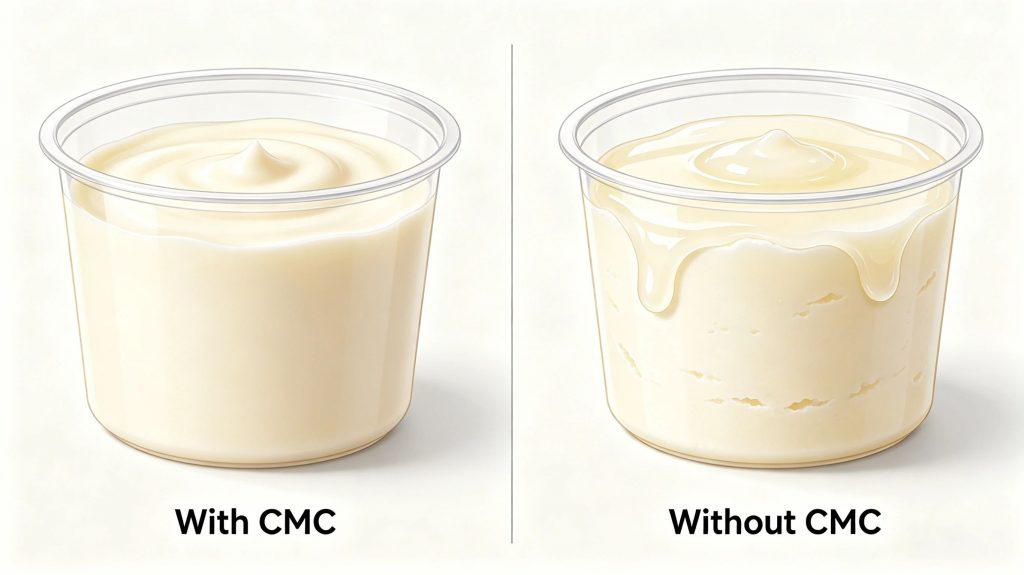
CMC prevents protein coagulation and precipitation, improving overall product stability. It prevents sedimentation, stratification, and protein coagulation in various dairy applications. In acidified milk drinks, CMC prevents the flocculation of milk proteins and subsequent macroscopic whey separation.
CMC provides uniform texture and prevents stratification, increasing the smoothness of the taste. In frozen dairy products, CMC controls ice crystal formation, contributes to a smoother texture, and improves overall product quality.
CMC achieves desired results with lower dosage levels, reducing production costs. Its high thickening efficiency at low to medium concentrations makes it a cost-effective choice for dairy manufacturers. In Asia, manufacturers commonly choose CMC as a stabilizer instead of pectin because of its cost effectiveness.
CMC (E466) has been thoroughly evaluated by international regulatory bodies and deemed safe for use as a food additive. Organizations such as the U.S. Food and Drug Administration (FDA) and the European Food Safety Authority (EFSA) have confirmed CMC’s safety when consumed within acceptable daily intake levels. CMC (E466) is approved as a food additive by the U.S. Food and Drug Administration.
CMC comes from wood pulp, is free of allergens, is vegetarian and vegan friendly, and is available with Kosher and Halal certifications. With a 99.5% purity level, CMC solutions consistently meet the highest quality standards. Customers also benefit from harvest-independent sourcing with no seasonality, ensuring year-round availability and dependable production capacity for uninterrupted supply.
CMC is recognized as a safe food additive by the International Food Codex Alimentarius and the FDA. Its inert nature, along with its lack of absorption or digestion by the human body, contributes to its favorable safety profile.
CMC stabilizes milk, yogurt, and dairy beverages by improving viscosity, preventing separation, and enhancing texture. It functions as a stabilizer, thickening agent, water-binding polymer, suspension control agent, and texture enhancer in various dairy applications.
CMC reduces whey separation (syneresis) and improves gel stability, especially in low-fat yogurt systems. It binds free water molecules effectively and helps maintain physical stability during storage.
Yes. CMC (E466) is approved by FDA, EFSA, and Codex Alimentarius for food applications. It is derived from wood pulp and is free of allergens, with Kosher and Halal certifications available.The European Food Safety Authority (EFSA) has evaluated CMC for food applications.
Yes. CMC provides better stability, cleaner taste, and lower dosage requirements than starch. CMC delivers heat-stable performance with clean texture, while starch offers cost-effectiveness but suffers from instability under processing stress.
For milk beverages, the recommended dosage is 0.1–0.2%; for chocolate milk, 0.15–0.3%; for protein drinks, 0.2–0.5%.
Yes. CMC works synergistically with other hydrocolloids. CMC + carrageenan improves protein and suspension stability; CMC + xanthan gum enhances viscosity and particle control; CMC + pectin stabilizes acidified milk drinks effectively.
Industrial dairy formulation is rarely a one-size-fits-all process. Protein content, processing temperature, target pH, and shelf life requirements all vary by product — and we must match the right CMC grade, usage level, and stabilizer combination precisely to each application.
We provide end-to-end technical support for dairy manufacturers and R&D teams working across milk, yogurt, protein beverage, and chocolate drink systems.
Contact us for Our formulation support services
Technical Data Sheets (TDS) covering viscosity profiles, substitution degree, particle size distribution, and application-specific performance data for each CMC grade in our portfolio.
Sample testing support — we supply application-grade CMC samples with recommended trial dosages and testing protocols, so your team can evaluate performance under your exact processing conditions before committing to full-scale production.
Customized CMC grade selection based on your product’s pH range, heat treatment intensity, target viscosity, and hydrocolloid system design — whether you are running a single-ingredient stabilizer or a multi-component blend with carrageenan, xanthan gum, or MCC.
Dairy stabilization system design for complete formulation development, including synergistic hydrocolloid combinations, usage-level optimization, and troubleshooting for existing systems experiencing sedimentation, syneresis, protein aggregation, or texture defects.
If you are developing or reformulating a milk beverage, yogurt, UHT protein drink, or reduced-fat dairy product, contact our technical team to discuss your formulation requirements. We will recommend the most suitable CMC grade and stabilization system for your specific application and processing conditions.
CMC is not only a stabilizer but a core functional ingredient in modern dairy formulation systems. It enables stable suspension systems, improved texture engineering, extended shelf life, and industrial scalability across the full spectrum of dairy products.
From flavored milk and chocolate milk to yogurt, fermented dairy, protein beverages, and low-fat products, CMC delivers consistent, reliable performance that dairy manufacturers can depend on. Its proven safety record, cost-effectiveness, and versatility make it an indispensable tool for dairy formulation professionals.
CMC in dairy products has become a core ingredient in stabilizer systems due to its ability to improve stability, texture, and shelf-life performance across multiple dairy categories. Whether you are developing a new quark-type cheese, optimizing a whey-less cheese system, or formulating a high-protein dairy beverage, CMC provides the functional foundation you need to achieve your texture, stability, and shelf-life targets.
By understanding the mechanisms, applications, and synergistic possibilities of CMC, you can create superior dairy products that meet consumer expectations and stand out in the marketplace. This makes CMC essential for modern dairy product development.For a complete overview of industrial dairy formulation systems, visit our Food Stabilizers category page.
