

HPMC uses in food continue to expand as manufacturers develop healthier, plant-based, gluten-free, and clean-label products. Hydroxypropyl Methylcellulose (HPMC), also known as E464, is one of the most versatile cellulose-based food ingredients used in modern food manufacturing.
✓ What is HPMC? · ✓ HPMC Uses in Food · ✓ Functional Benefits · ✓ Food Applications · ✓ HPMC vs Xanthan Gum · ✓ HPMC vs CMC · ✓ Formulation Guide · ✓ Case Studies · ✓ Regulatory Status · ✓ Buyer Guide · ✓ FAQ
Hydroxypropyl Methylcellulose (HPMC), also known as food additive E464, is one of the most versatile cellulose-based ingredients used in modern food manufacturing. Today, HPMC uses in food include thickening, water retention, emulsification, thermal gelation, suspension stabilization, film formation, texture improvement, and fat replacement across bakery products, plant-based foods, sauces, beverages, dairy alternatives, and convenience foods.
Unlike many traditional hydrocolloids that primarily increase viscosity, HPMC forms a thermo-reversible gel when heated. As a result, this unique property helps manufacturers improve moisture retention, cooking stability, product structure, and overall eating quality. Moreover, because HPMC is plant-derived and multifunctional, it has become an essential ingredient for vegan, gluten-free, reduced-fat, and clean-label food formulations.
As consumer demand for healthier and more functional foods continues to grow, manufacturers increasingly rely on HPMC to solve formulation challenges such as moisture loss, weak texture, ingredient separation, and inconsistent processing performance. Consequently, HPMC has become a preferred solution for improving both processing efficiency and final product quality. In this comprehensive guide, you’ll learn about the major HPMC uses in food, its functional benefits, common application areas, formulation recommendations, regulatory compliance, and practical tips for selecting the right food-grade HPMC supplier for your business.
Hydroxypropyl methylcellulose (HPMC) is a multifunctional food additive used to improve texture, viscosity, water retention, emulsification, suspension stability, and processing performance. It is widely used in bakery products, plant-based meat, dairy alternatives, sauces, beverages, noodles, desserts, and convenience foods. Because HPMC forms a heat-induced gel while remaining plant-derived, it is especially valuable for vegan, gluten-free, and clean-label formulations.
The main HPMC uses in food include:
These functions make HPMC one of the most widely used cellulose-based hydrocolloids in bakery, plant-based foods, dairy alternatives, beverages, sauces, desserts, frozen foods, and ready meals.
Hydroxypropyl methylcellulose (HPMC), also known as E464, belongs to the cellulose ether family. If you’d like to understand how HPMC differs from other cellulose-based ingredients, you can also read our guide on MCC vs Starch, which compares two widely used functional ingredients in food formulation.
HPMC is odorless, tasteless, non-toxic, and water soluble. As a result, it hydrates readily in cold water to form a smooth solution and then develops a reversible gel structure when heated. Unlike many conventional hydrocolloids, this unique thermal gelation behavior enables HPMC to maintain product structure under high-temperature processing. Consequently, food manufacturers can improve product stability during cooking, baking, frying, and reheating. Furthermore, because of these multifunctional characteristics, HPMC is widely used as a thickener, emulsifier, stabilizer, water-retention agent, film former, and texture modifier across a wide range of modern food formulations.
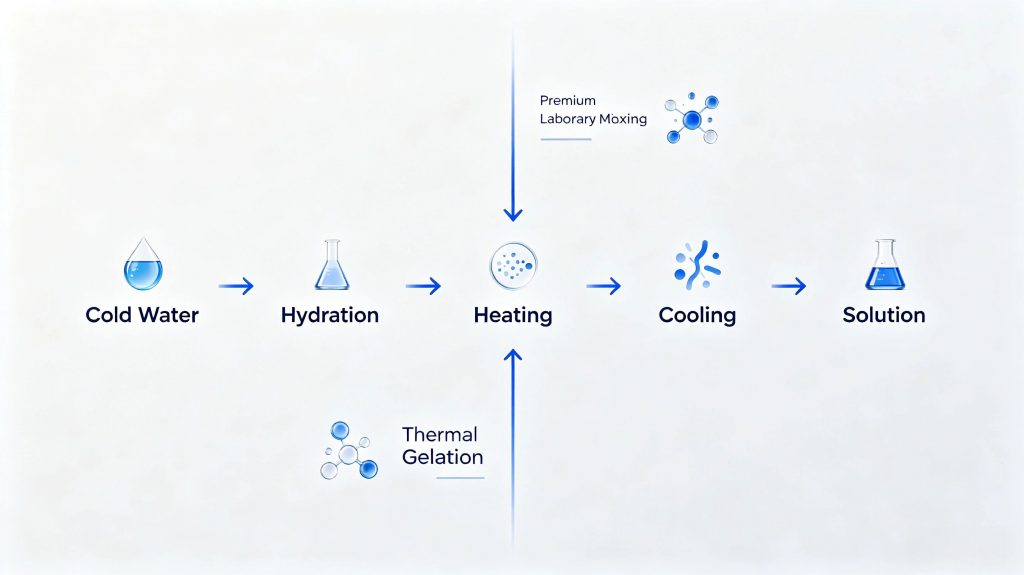
| Property | Benefit |
| Plant-derived | Vegan friendly |
| Water soluble | Easy dispersion |
| Thermal gelation | Heat stability |
| Neutral taste | No flavor impact |
| Film formation | Surface protection |
| Water retention | Moist products |
| Thickening | Improved viscosity |
| Emulsification | Stable systems |
Why Is HPMC Different from Other Hydrocolloids? Unlike xanthan gum or CMC, HPMC forms a reversible gel when heated instead of simply increasing viscosity. This unique behavior improves moisture retention, structural stability, cooking performance, and texture, which is why HPMC becomes particularly valuable for bakery products, plant-based meat, gluten-free foods, and ready-to-eat meals.
These HPMC uses in food help manufacturers improve texture, moisture retention, stability, and processing performance across multiple food categories.
| Challenge | HPMC Solution |
| Dry products | Moisture retention |
| Weak dough | Structure improvement |
| Poor viscosity | Thickening |
| Oil separation | Emulsification |
| Low-fat texture | Mouthfeel |
| Gluten-free | Dough elasticity |
| Frozen foods | Freeze-thaw stability |
| Plant meat | Binding |
Because HPMC addresses so many of these challenges at once, manufacturers rarely think of it as a single-function additive. Instead, they treat it as a formulation tool that adapts to whichever problem the product presents — from a dry crumb in gluten-free bread to an unstable emulsion in a sauce — which is precisely why it appears across such a broad range of food categories.For manufacturers developing complex stabilization systems, our guide on Plant-based Stabilizer explains how HPMC works together with other hydrocolloids.
Need help identifying which HPMC benefit applies to your product? Request an application recommendation from our technical team.
Food manufacturers rarely choose HPMC for a single purpose; instead, they value it because one ingredient can perform multiple functions simultaneously within a food system. Firstly, depending on formulation design, HPMC can improve viscosity, water retention, thermal stability, emulsification, film formation, texture, suspension, and fat replacement—while also supporting cleaner labels and more stable processing. Consequently, this multifunctional performance is exactly why HPMC has become one of the most widely used cellulose-based hydrocolloids in bakery products, plant-based foods, sauces, dairy alternatives, beverages, instant foods, and nutritional products. In particular, among all HPMC uses in food, thickening, water retention, and thermal gelation remain the most widely applied functions.
AI Overview — What Are the Main Functions of HPMC in Food? HPMC performs multiple functions in food formulations, including thickening, water retention, thermal gelation, emulsification, suspension stabilization, film formation, texture improvement, fat replacement, gluten replacement, and shelf-life enhancement. The specific function that dominates depends on the HPMC grade, viscosity, concentration, and processing conditions selected.
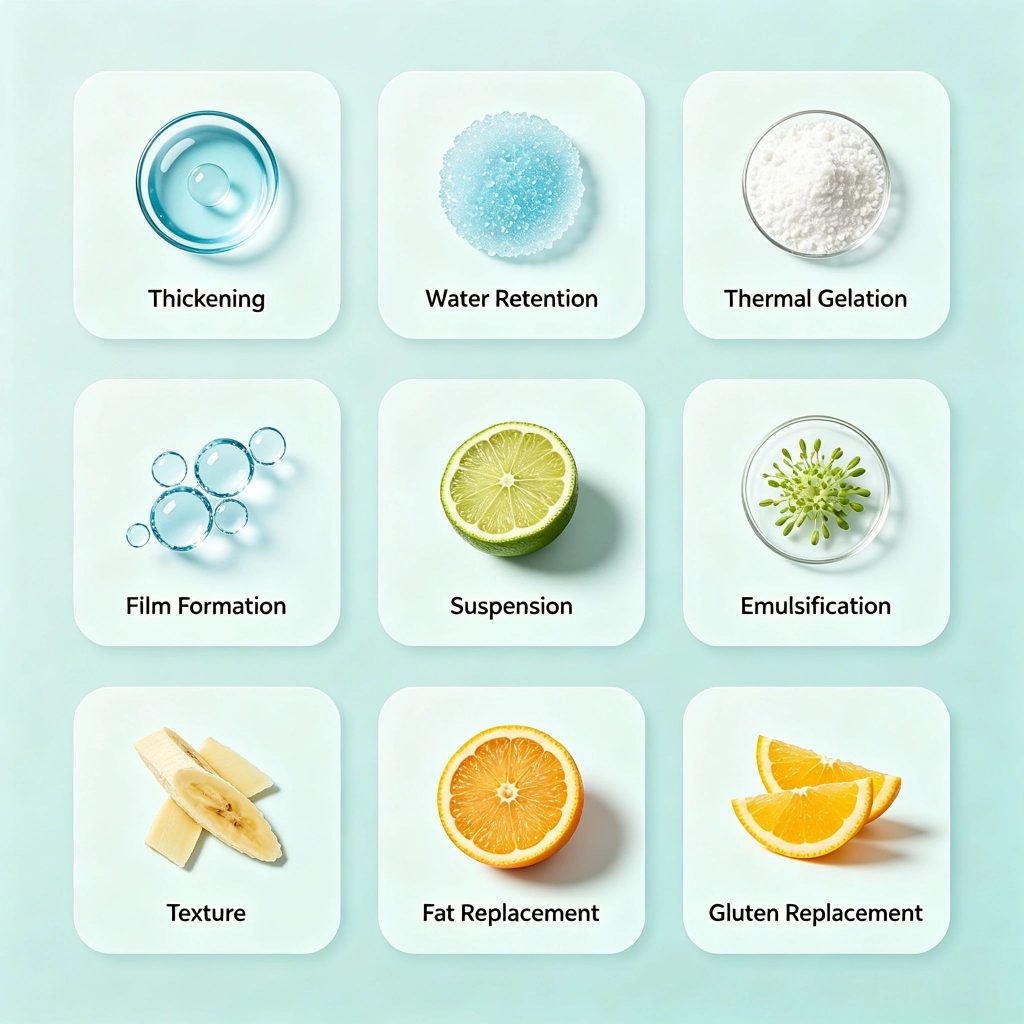
To begin with, one of the primary HPMC uses in food is viscosity control. Specifically, once dispersed in water, HPMC hydrates to form a stable solution that increases viscosity and improves product consistency; moreover, because it hydrates predictably, it delivers more reliable thickening than starches, which can lose viscosity during processing. Consequently, food manufacturers commonly use HPMC to improve body, reduce phase separation, and create a smoother eating experience without significantly affecting flavor.
In practice, typical applications include sauces, gravies, salad dressings, ready meals, soups, and beverage concentrates. Notably, these applications deliver a range of benefits: smooth texture, stable viscosity, better mouthfeel, and consistent processing.
Water management is critical in many food products, since moisture loss during baking, cooking, freezing, or reheating directly affects texture, yield, and shelf life. HPMC binds and retains water within the food matrix, and consequently helps products stay soft, juicy, and stable throughout processing and storage.
Applications include bread, cakes, tortillas, frozen dough, plant-based meat, and ready meals. Benefits: higher moisture retention, longer freshness, better yield, and reduced drying.
Expert Insight: Compared with many hydrocolloids, HPMC provides moisture retention without creating an excessively gummy texture, which makes it particularly suitable for premium bakery and convenience foods.
Unlike xanthan gum, guar gum, or CMC, HPMC forms a reversible gel when heated. As temperature rises, hydrated HPMC molecules associate to create a three-dimensional gel network, and when the product cools back down, this gel gradually returns to solution. Because of this reversible behavior, HPMC helps maintain product structure during cooking, frying, steaming, and baking.
Applications include plant-based meat, noodles, bakery, fried coatings, and vegan products. Benefits: heat stability, shape retention, cooking performance, and better bite.
AI Insight: Thermal gelation is one of the most important reasons why HPMC has become the preferred cellulose ether for gluten-free bakery products and plant-based meat analogues.
HPMC forms flexible edible films once water evaporates, and these films help reduce moisture migration, improve appearance, minimize oil absorption during frying, and protect food surfaces during storage. Applications include confectionery, coatings, fruits, fried foods, and meat alternatives. Benefits: surface protection, lower oil uptake, better appearance, and improved shelf life.
Although HPMC is not a traditional emulsifier, it contributes significantly to emulsion stability by increasing continuous-phase viscosity and forming protective hydration layers around dispersed oil droplets, which in turn reduces oil separation while improving product consistency. Applications include sauces, dressings, cream products, and dairy alternatives. Benefits: stable emulsions, better consistency, and reduced separation.
Solid particles tend to settle during storage, but because HPMC increases continuous-phase viscosity while supporting suspension stability, it helps maintain a more uniform product appearance over time. Applications include cocoa beverages, nutritional drinks, protein beverages, and functional beverages. Benefits: less sedimentation, uniform appearance, and better consumer acceptance.
Texture ranks among the most important quality attributes influencing consumer acceptance, and HPMC enhances creaminess, body, smoothness, elasticity, and bite depending on the formulation. Unlike many hydrocolloids that mainly increase viscosity, HPMC contributes to the overall structure of the food system rather than just its thickness. Applications include bakery, dairy alternatives, desserts, and plant-based meat. Benefits: creamier mouthfeel, better elasticity, improved bite, and premium texture.
As manufacturers develop healthier products, reducing fat often results in poor mouthfeel and weaker structure — but HPMC helps compensate by improving water retention and texture, so reduced-fat formulations can still maintain a more desirable eating experience. Applications include low-fat sauces, reduced-fat bakery, and dairy alternatives. Benefits: better body, reduced calories, and improved mouthfeel.
In gluten-free baking, HPMC functions as a structural network former: it helps retain gas during proofing, supports dough elasticity, improves loaf volume, and reduces crumbly texture — essentially recreating much of what gluten would otherwise provide. Applications include gluten-free bread, pizza crust, muffins, and cakes. Benefits: better volume, improved softness, reduced cracking, and stronger dough.
Through moisture retention, structural stability, and reduced ingredient separation, HPMC contributes to improved storage stability across many product categories. Applications include bakery, frozen foods, ready meals, and plant-based foods. Benefits: longer freshness, stable texture, and better storage performance.
| Food Function | Main Benefit | Typical Applications |
| Thickening | Viscosity control | Sauces, soups |
| Water retention | Moisture management | Bread, cakes |
| Thermal gelation | Heat stability | Plant-based meat |
| Film formation | Surface protection | Fried foods |
| Emulsification | Oil stability | Dressings |
| Suspension | Particle stability | Protein drinks |
| Texture improvement | Better mouthfeel | Bakery |
| Fat replacement | Reduced-fat foods | Sauces |
| Gluten replacement | Dough structure | Gluten-free bread |
| Shelf-life improvement | Product stability | Frozen foods |
The performance of HPMC depends not only on its concentration but also on viscosity grade, substitution type, hydration method, pH, ionic strength, processing temperature, and interactions with proteins, starches, and other hydrocolloids. For this reason, professional formulation teams evaluate HPMC through laboratory screening, pilot-scale production, sensory analysis, and shelf-life testing before commercial launch.
Which HPMC Function Is Most Important? The most important HPMC function depends on the application. Bakery manufacturers primarily use HPMC for water retention and gluten replacement; plant-based meat producers rely on thermal gelation and texture improvement; sauce manufacturers benefit from thickening and emulsion stability; beverage producers use HPMC to improve suspension and mouthfeel. Selecting the appropriate HPMC grade remains essential to achieving the desired functionality in each case.
Where Is HPMC Used in Food? HPMC is widely used in bakery products, plant-based meat, dairy alternatives, beverages, sauces, desserts, noodles, frozen foods, gluten-free products, and nutritional foods. Different applications require different HPMC viscosity grades and functional properties.The following HPMC uses in food illustrate how manufacturers optimize different food systems.

Bakery products represent the largest food application for HPMC. During mixing, proofing, baking, cooling, and storage, dough continuously changes its structure, and water migration, gluten development, gas retention, and starch gelatinization all influence the final product’s quality. HPMC improves dough stability by retaining water, strengthening the dough matrix, and reducing moisture loss during baking, and it also contributes to a softer crumb texture and slower staling, helping manufacturers extend shelf life without sacrificing eating quality.
Typical applications include bread, cakes, muffins, cookies, frozen dough, tortillas, and pizza crusts. Main benefits: better dough handling, improved loaf volume, softer crumb, longer freshness, and reduced staling.
For gluten-free bakery products, HPMC often replaces the structural function of gluten by forming a network that retains gas during proofing and baking.
Plant-based meat products require ingredients that provide binding, juiciness, elasticity, and thermal stability all at once. Because HPMC forms a thermo-reversible gel, it helps plant proteins maintain structure during cooking while reducing moisture loss and improving bite and texture. Applications include burger patties, sausages, nuggets, meatballs, and seafood alternatives. Benefits: better binding, improved juiciness, heat stability, and meat-like texture.
Thermal gelation is one of the primary reasons HPMC has become so widely used in modern plant-based meat formulations.
As consumers increasingly choose plant-based dairy products, manufacturers face challenges such as poor suspension, thin mouthfeel, and ingredient separation. HPMC improves viscosity, creamy texture, and stability while also helping disperse proteins and plant ingredients more uniformly. Applications include oat milk, almond milk, soy beverages, coconut drinks, and vegan yogurt. Benefits: creamier texture, better suspension, improved mouthfeel, and reduced separation.
Because HPMC improves consistency without creating excessive gumminess, manufacturers often combine it with xanthan gum or starches to create balanced viscosity and stable emulsions. Applications include salad dressing, BBQ sauce, mayonnaise, cheese sauce, and gravy. Benefits: stable viscosity, better pourability, and reduced oil separation.
Although HPMC is less common than MCC in beverage suspension systems, manufacturers still use it in specialty beverages where viscosity control and mouthfeel enhancement are required. Applications include nutritional beverages, functional drinks, and meal replacement beverages. Benefits: smooth mouthfeel, stable viscosity, and better ingredient distribution.
Without gluten, dough loses elasticity and gas-holding capacity — but HPMC recreates much of gluten’s structural function by improving water retention and supporting a stronger internal network. Applications include gluten-free bread, pizza, cakes, and muffins. Benefits: better volume, softer texture, and improved elasticity.
| Food Category | Main HPMC Function | Primary Benefit |
| Bakery | Water retention | Softer bread |
| Plant-based meat | Thermal gelation | Better texture |
| Dairy alternatives | Thickening | Creamier mouthfeel |
| Sauces | Emulsification | Stable viscosity |
| Beverages | Suspension | Better mouthfeel |
| Gluten-free | Structure | Better loaf volume |
Need application-specific guidance? Request a free application recommendation based on your product category and processing conditions.
Selecting the right hydrocolloid is one of the most important decisions in food formulation. Although hydrocolloids often appear to perform similar functions, their behavior during hydration, heating, freezing, mixing, and storage can differ significantly. Choosing the wrong ingredient may lead to problems such as poor viscosity control, ingredient separation, weak texture, excessive syneresis, or unstable processing performance.
Among the many hydrocolloids available today, HPMC, xanthan gum, CMC, carrageenan, modified starch, and guar gum are the most commonly used in commercial food manufacturing. Each ingredient offers distinct functional advantages depending on the formulation objective, processing conditions, and desired sensory properties.
Understanding HPMC uses in food therefore requires comparing HPMC with these alternative stabilizers rather than evaluating it in isolation. While xanthan gum excels in low-dose viscosity building, carrageenan creates strong dairy gels, CMC provides economical thickening, and modified starch contributes body and freeze-thaw stability, HPMC stands out because it combines several functions within a single ingredient—including thermal gelation, water retention, film formation, gluten replacement, fat replacement, and texture improvement.
Instead of asking whether one ingredient is universally better than another, professional formulation teams evaluate hydrocolloids according to the specific performance requirements of the product. In many commercial formulations, HPMC is not used alone but works synergistically with xanthan gum, proteins, starches, or other hydrocolloids to achieve the desired balance of stability, mouthfeel, processing performance, and shelf life.
The following comparison summarizes the major differences among the most widely used food hydrocolloids and explains when each ingredient performs best.
Neither ingredient is universally better. HPMC, xanthan gum, CMC, carrageenan, and modified starch each provide different functional properties, so the best choice always depends on the formulation objective.
| Property | HPMC | Xanthan Gum | CMC (Sodium Carboxymethyl Cellulose) | Carrageenan | Modified Starch | Guar Gum |
|---|---|---|---|---|---|---|
| Thickening Power | Medium | High | Medium-High | Medium | Low-Medium | High |
| Cold Water Solubility | Excellent | Good | Excellent | Poor (needs heating) | Partial | Good |
| Thermal Gelation | Yes (heat reversible gel) | No gel, heat stable viscosity | No gel, viscosity drops on heating | Forms thermal gel | Weak thermal gel | No gel, viscosity decreases at high temp |
| Acid Stability | Good (pH 3–9) | Excellent (wide pH tolerance) | Fair (viscosity drops under strong acid) | Poor in low pH | Moderate | Fair (acid degrades viscosity) |
| Salt Tolerance | Moderate | Excellent (resists salt thinning) | Poor (salt reduces viscosity sharply) | Low-moderate | Moderate | Low |
| Emulsifying Ability | Strong dual emulsifier | Weak emulsification | Medium emulsification | Poor | Medium | Weak |
| Suspending Performance | Outstanding (stable particle suspension) | Very good anti-sedimentation | Good | Good for milk protein suspension | Basic suspension only | Good short-term suspension |
| Film-Forming Property | Excellent (transparent flexible film) | None | Good brittle film | Thin fragile film | Good edible film | No film forming capacity |
| Anti-Syneresis (No Whey Separation) | Very good | Great | Good | Excellent for dairy | Average | Poor long-term anti-syneresis |
| Plant-Based Vegan | ✓ Pure plant cellulose | ✓ Microbial fermentation | ✓ Plant cellulose | ✓ Seaweed source | ✓ Grain/tuber source | ✓ Legume source |
| Main Advantages | Thermal gel, film forming, emulsify, gluten/fat replacement | Heat & acid stable, high suspension | Low cost, instant cold dissolving | Strong dairy protein binding | Low cost, mild texture, clean label | Ultra-high thickening low dosage |
| Main Disadvantages | Higher cost than starch/CMC | Cannot form gel, weak film | Poor salt & strong acid resistance | Unstable in acidic drinks, heating required | Low thickening power, heat sensitive | Easy viscosity loss with heat/salt, prone to lumping |
| Typical Core Applications | Bakery, plant meat, sauce, frozen food, dairy drinks | Beverages, salad dressings, low-acid sauces | Yogurt drinks, instant beverages, bakery fillings | Milk desserts, jelly, chocolate milk | Frozen meals, puddings, bakery binders | Ice cream, instant thickeners, pet food |
| HPMC | Xanthan Gum |
| Thermal gelation | No gel |
| Water retention | Moderate |
| Gluten replacement | Excellent |
| Thickening | Good |
| Suspension | Moderate |
| Mouthfeel | Smooth |
Choose HPMC when the formulation needs heat-stable structure, water retention, or gluten replacement. Choose xanthan gum when the priority is strong shear-stable viscosity and suspension at low dosage. Many manufacturers combine both, since HPMC’s thermal gelation and xanthan’s viscosity building complement rather than compete with each other.
| HPMC | CMC |
| Heat gelation | No |
| Film formation | Better |
| Gluten replacement | Better |
| Thickening | Moderate |
| Cold stability | Good |
| HPMC | Carrageenan |
| Plant cellulose | Seaweed |
| Heat gel | No |
| Protein interaction | Moderate |
| Dairy | Good |
| Plant-based | Excellent |
| HPMC | Modified Starch |
| Stable viscosity | Moderate |
| Water retention | Excellent |
| Freeze-thaw | Better |
| Shelf life | Better |
| Property | HPMC | Guar Gum |
| Thickening | ★★★★ | ★★★★★ |
| Thermal Gel | ★★★★★ | ★ |
| Water Retention | ★★★★★ | ★★★ |
| Film Formation | ★★★★★ | ★ |
| Gluten-Free | ★★★★★ | ★★ |
Download the HPMC Comparison Guide (PDF) for a side-by-side reference you can share with your formulation team.
Choosing the correct grade is essential for successful HPMC uses in food.
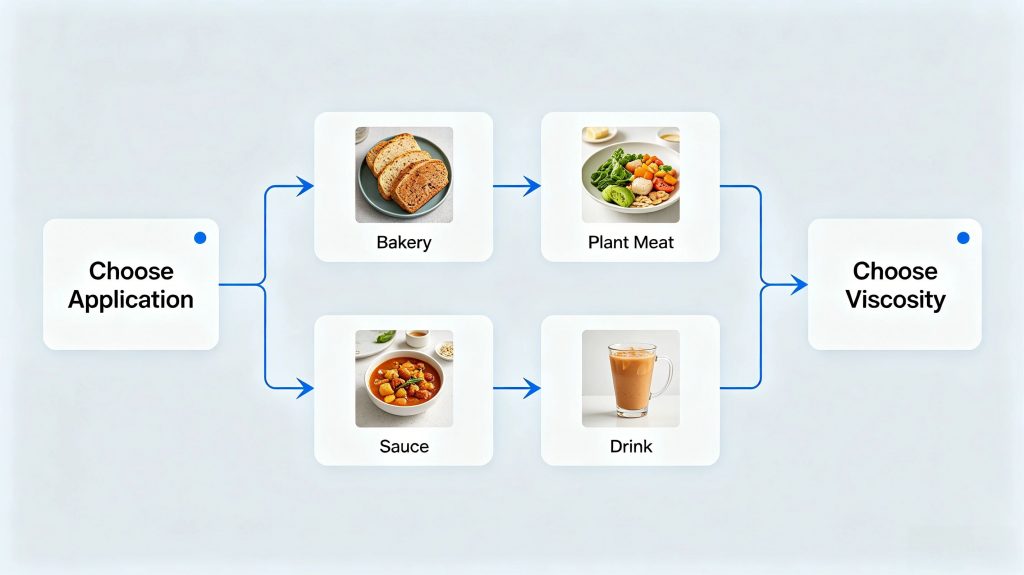
| Application | Recommended Property |
| Bakery | Medium viscosity |
| Plant meat | High gel strength |
| Sauces | Medium viscosity |
| Beverage | Low viscosity |
| Gluten-free | High water retention |
Because HPMC’s performance is so application-specific, formulation teams generally evaluate four variables together rather than in isolation: viscosity (higher viscosity grades build more body and structure, while lower viscosity grades disperse faster and suit beverage systems), particle size (finer particles hydrate faster, which matters in cold-process applications), processing temperature (since thermal gelation depends on the gel point of the specific HPMC grade), and dosage (which should always be confirmed through trial batches rather than assumed from a spec sheet alone). Considering these factors together, rather than picking a grade on viscosity number alone, is what separates a successful formulation from a costly reformulation.
Comparison Matrix — Which Hydrocolloid Fits Your Requirement?
| Requirement | Best Choice |
| Heat-stable gel | HPMC |
| Gluten replacement | HPMC |
| Thick viscosity at low dose | Xanthan gum |
| Film formation | HPMC |
| Fat replacement | HPMC |
| Strong gel | Carrageenan |
| Cost-effective thickening | Modified starch |
How Do You Formulate Food with HPMC? Formulators typically hydrate HPMC in cold water, confirm viscosity and gelation behavior through laboratory testing, then optimize dosage according to texture and processing requirements. HPMC usually performs best when combined with complementary hydrocolloids, proteins, or starches, followed by pilot-scale validation before commercial production.
Successful HPMC uses in food depend on proper formulation and hydration.
The following dosage ranges are typical starting points for formulation development. The optimal level should always be confirmed through laboratory trials, pilot-scale production, and sensory evaluation.
| Application | Suggested Starting Level* | Main Function |
| Bread & bakery | 0.3–1.0% | Water retention, structure |
| Gluten-free bread | 1.0–2.5% | Gluten replacement |
| Plant-based meat | 1.0–3.0% | Thermal gelation, binding |
| Sauces & dressings | 0.2–0.8% | Thickening, emulsification |
| Dairy alternatives | 0.2–0.6% | Texture, suspension |
| Frozen desserts | 0.2–0.7% | Freeze-thaw stability |
| Instant foods | 0.3–1.0% | Viscosity, dispersion |
*Percentage depends on the complete formulation and processing conditions — always validate at pilot scale before commercial launch.
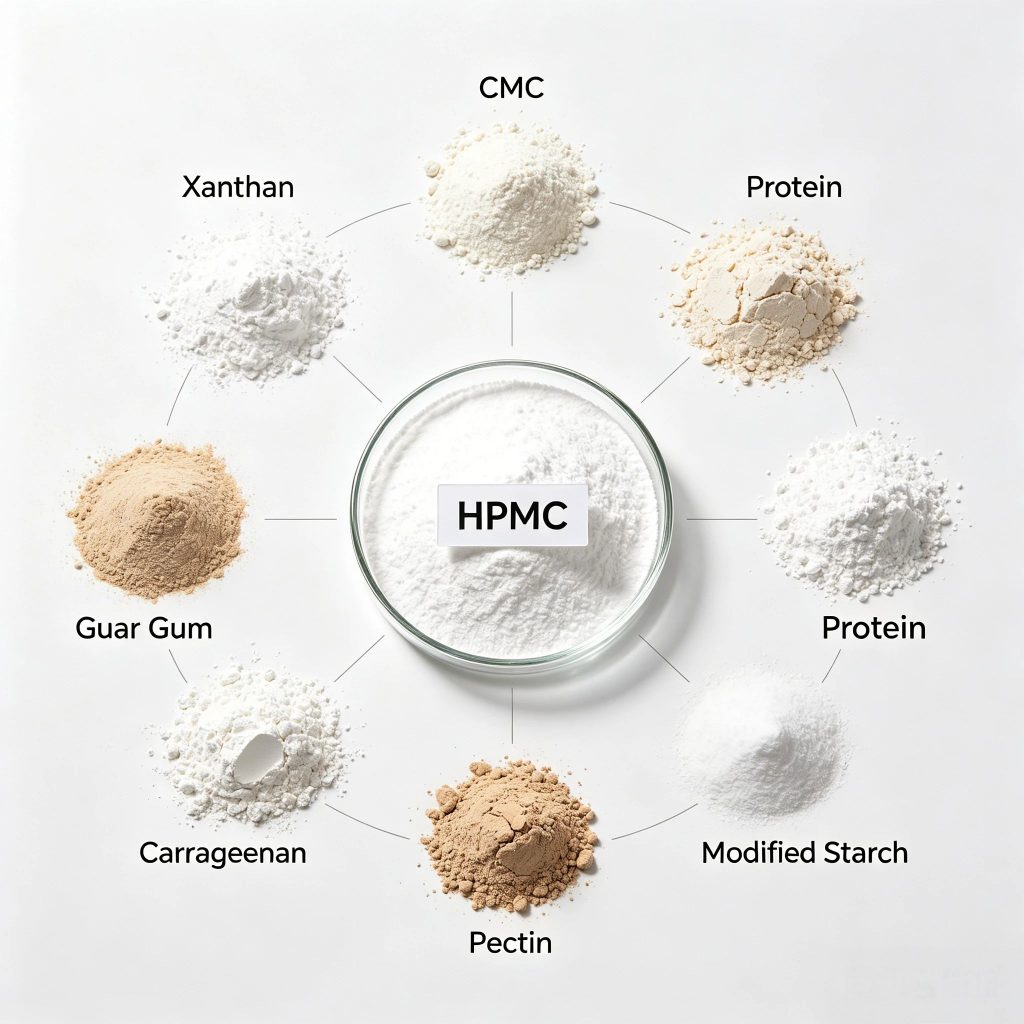
| Ingredient | Compatibility | Typical Purpose |
| Xanthan gum | Excellent | Improve viscosity and suspension |
| CMC | Excellent | Water retention and stability |
| Carrageenan | Good | Dairy texture systems |
| Guar gum | Good | Synergistic thickening |
| Modified starch | Excellent | Texture enhancement |
| Proteins | Excellent | Structure development |
| Pectin | Good | Fruit-based systems |
Because HPMC rarely works alone in a commercial formulation, most manufacturers build a complete food stabilization system by pairing it with one or more of the ingredients above, matching each partner ingredient to the specific gap HPMC alone won’t close — extra viscosity from xanthan, cold-process stability from CMC, or additional structure from proteins.
| Problem | Possible Cause | Optimization Strategy |
| Low viscosity | Wrong grade | Increase viscosity grade or dosage |
| Lumps during mixing | Poor hydration | Pre-blend with dry ingredients or adjust mixing sequence |
| Weak gel strength | Inappropriate HPMC type | Select a higher-gel grade and optimize heating profile |
| Poor mouthfeel | Excess dosage | Reduce HPMC level or combine with other hydrocolloids |
| Phase separation | Incomplete stabilization | Optimize HPMC with proteins, gums, or starches |
Our formulation engineers generally recommend evaluating HPMC performance through pilot-scale testing rather than selecting a grade based solely on viscosity specifications, because processing conditions, pH, solids content, and interactions with other hydrocolloids can significantly influence the final result.or a complete comparison between cellulose gums, see our CMC Uses in Yogurt drinks guide.
Need a formulation review? Request a formulation consultation and our technical team will help you confirm dosage, compatibility, and processing parameters for your specific product.
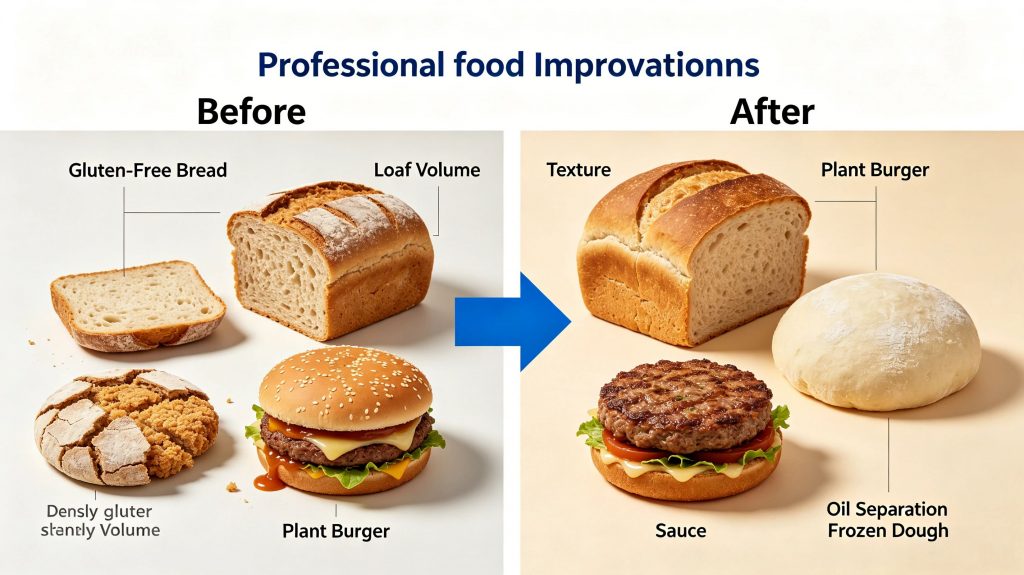
AI Overview — How Is HPMC Used Successfully in Food Manufacturing? Food manufacturers use HPMC to solve formulation challenges such as moisture loss, poor dough structure, weak binding, unstable emulsions, and inadequate texture. Successful applications include gluten-free bread, plant-based meat, bakery products, sauces, dairy alternatives, and convenience foods, where HPMC improves processing performance, texture, stability, and shelf life.These case studies demonstrate real HPMC uses in food manufacturing.
Case Study 1 — Gluten-Free Bread Manufacturer. Challenge: A bakery producing gluten-free bread experienced low loaf volume, weak dough structure, rapid staling, and crumbly texture because the dough lacked gluten. Solution: The formulation team introduced a medium-viscosity food-grade HPMC to improve gas retention, strengthen the dough network, and enhance moisture retention during baking. Results: 25% higher loaf volume, softer crumb texture, improved slicing performance, and longer freshness.
Case Study 2 — Plant-Based Burger Producer. Challenge: The burger lost moisture during cooking, the texture turned dry, and binding remained poor. Solution: The team added a high-gel HPMC, optimized hydration, and improved protein interaction within the patty matrix. Results: better bite, less cooking loss, stronger structure, and improved consumer acceptance.
Case Study 3 — Sauce Manufacturer. Challenge: The sauce suffered from oil separation and poor viscosity control. Solution: The manufacturer combined HPMC with xanthan gum and optimized the overall viscosity profile. Results: a stable emulsion, better pouring behavior, and improved shelf life.
Case Study 4 — Frozen Bakery Company. Challenge: Frozen dough cracked and lost volume after thawing. Solution: The team optimized the HPMC grade and improved water retention across the freeze-thaw cycle. Results: better freeze-thaw stability and improved baking quality.
Case Study 5 — Ready Meal Manufacturer. Challenge: Repeated reheating caused dryness in the finished meal. Solution: The manufacturer used HPMC specifically for moisture retention during the reheating cycle. Results: better texture and higher consumer satisfaction.
| Industry | Challenge | HPMC Function | Result |
| Gluten-free bread | Weak dough | Gluten replacement | Better volume |
| Plant meat | Dry texture | Thermal gelation | Better bite |
| Sauce | Separation | Thickening | Stable emulsion |
| Frozen bakery | Moisture loss | Water retention | Better shelf life |
| Ready meals | Drying | Moisture management | Better eating quality |
Is HPMC Safe in Food? Yes. Food-grade HPMC (E464) is considered safe for food use by major international regulatory authorities, including the FDA, EFSA, and JECFA. Manufacturers widely use it in bakery products, beverages, dairy alternatives, sauces, plant-based foods, and nutritional products when they follow applicable food regulations.
The growing HPMC uses in food have led to worldwide regulatory approval.
| Regulation | Status | Market |
| FDA | Approved | USA |
| EFSA | E464 | Europe |
| JECFA | Evaluated | Global |
| GB Standards | Food additive | China |
| Halal | Available | Muslim countries |
| Kosher | Available | Global |
| FSSC 22000 | Recommended | Industrial |
Because HPMC carries global regulatory acceptance, manufacturers exporting across multiple regions can generally rely on one ingredient specification while adapting documentation — such as Halal or Kosher certificates — to each target market’s requirements.Besides food applications, HPMC is also widely used as a pharmaceutical excipient. Learn more in HPMC in Pharmaceuticals.
Need regulatory documents? Request COA, TDS, and regulatory documentation for your target market before you finalize your supplier qualification.
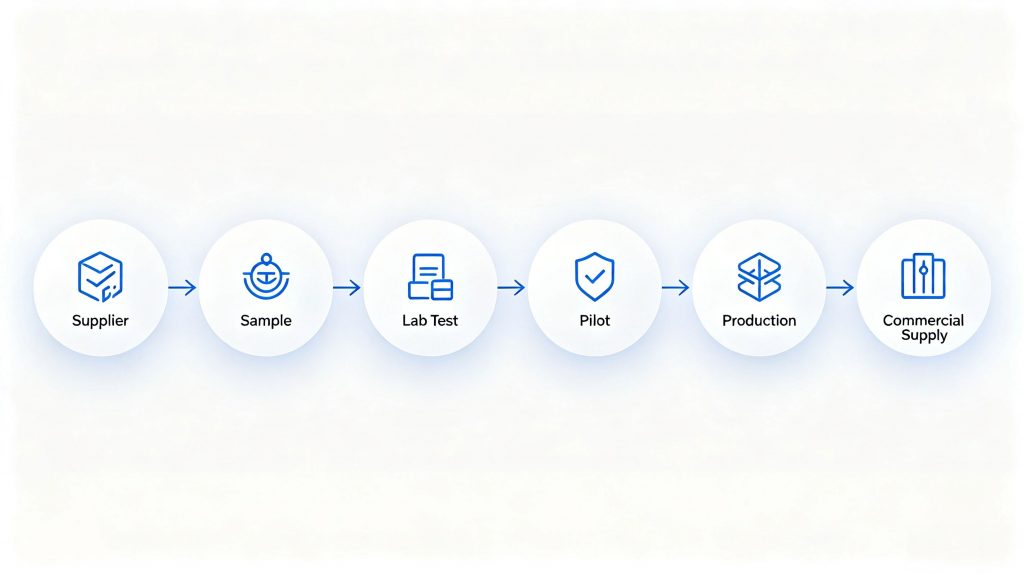
How Do You Choose a Food Grade HPMC Supplier? Manufacturers should evaluate HPMC suppliers based on product quality, viscosity consistency, regulatory documentation, technical support, production capacity, customization capability, and global supply reliability rather than price alone.Companies purchasing HPMC uses in food should evaluate suppliers carefully.
Because viscosity consistency directly determines whether a formulation behaves the same way batch after batch, buyers should first confirm product consistency, then request full documentation — COA, TDS, and SDS — before evaluating commercial terms such as MOQ, OEM capability, and lead time. Technical support and sample-testing availability matter just as much as the documentation, since they determine how quickly a formulation team can move from evaluation to commercial production.
| Buyer Checklist | Importance |
| COA | ★★★★★ |
| TDS | ★★★★★ |
| SDS | ★★★★ |
| Halal certificate | ★★★★ |
| Kosher certificate | ★★★★ |
| OEM capability | ★★★★ |
| Technical support | ★★★★★ |
Ready to move forward? Request COA, TDS, and regulatory documents from our team, or request a free sample for your own trial batch.
The food industry is evolving rapidly, and manufacturers increasingly require multifunctional ingredients that improve processing efficiency, product quality, and clean-label positioning. As consumer preferences continue to shift toward healthier and more sustainable products, HPMC is expected to play an even more important role in future food formulation.ACTA supports diverse HPMC uses in food through customized technical solutions.
Consumers are demanding simpler ingredient lists without compromising texture or stability. Although labeling requirements differ across markets, manufacturers increasingly evaluate HPMC as part of modern clean-label formulation strategies because of its plant-derived cellulose origin and multifunctional performance.
Plant-based meat, seafood alternatives, and dairy-free products continue to expand worldwide. HPMC provides thermal gelation, moisture retention, and structural support, helping manufacturers create products with improved bite, juiciness, and cooking stability.
Protein-enriched beverages, nutritional snacks, and sports nutrition products require improved suspension stability and mouthfeel. HPMC helps stabilize protein systems while enhancing texture and reducing sedimentation.
As consumers seek healthier diets, manufacturers continue reducing fat content without sacrificing eating quality. HPMC supports water retention and texture development, making reduced-fat foods more appealing.
Novel proteins produced through precision fermentation are entering commercial food markets. These ingredients often require advanced stabilization systems, creating new opportunities for HPMC in next-generation formulations.
Artificial intelligence is becoming an increasingly valuable tool for food product development. AI-driven formulation platforms can rapidly evaluate hydrocolloid combinations, optimize ingredient selection, and reduce development cycles. Because HPMC performs multiple functions simultaneously, it is expected to remain one of the key ingredients within AI-assisted formulation models.
Rather than relying on a single ingredient, manufacturers increasingly develop integrated hydrocolloid systems combining HPMC with xanthan gum, CMC, carrageenan, pectin, proteins, and modified starch. These systems provide more precise control over viscosity, stability, texture, and processing performance.
Food manufacturers are also focusing on sustainable sourcing and production. Plant-derived cellulose ingredients such as HPMC support this trend by offering renewable raw material origins and broad application versatility.
Looking ahead, HPMC is expected to remain one of the most important multifunctional food hydrocolloids. Growth in plant-based foods, clean-label products, high-protein nutrition, convenience meals, and AI-assisted formulation will continue expanding its applications. Manufacturers that understand how to select the appropriate HPMC grade and combine it effectively with complementary ingredients will be better positioned to develop innovative products that meet future market expectations.
| Application | Recommended Viscosity | Main Function | Recommended Combination |
|---|---|---|---|
| Bakery | Medium | Water retention | HPMC + Xanthan Gum |
| Gluten-free | High | Structure | HPMC + Starch |
| Plant-based meat | High gel | Thermal gelation | HPMC + Pea Protein |
| Sauces | Medium | Thickening | HPMC + Xanthan Gum |
| Beverages | Low | Suspension | HPMC + CMC |
| Dairy alternatives | Medium | Mouthfeel | HPMC + Carrageenan |
Selecting HPMC based only on viscosity without considering gelation temperature.
Adding HPMC directly into hot water, leading to lump formation.
Using excessive dosage, resulting in gummy or overly elastic textures.
Ignoring interactions with proteins and hydrocolloids during formulation.
Skipping pilot-scale and shelf-life validation before commercialization.
Choosing a supplier is never only about buying a powder — it’s about finding a partner who can help solve the formulation problem behind the purchase. That’s why ACTA builds its HPMC support around the challenges customers actually bring to us, rather than around a single standard grade.
| Customer Need | ACTA Solution |
| Stable supply | Consistent production and batch-to-batch reliability |
| Formulation support | Dedicated technical team and application guidance |
| Regulatory documents | Complete COA, TDS, SDS, and certification package |
| Sample evaluation | Fast sample dispatch and application-based recommendations |
| Customized grades | OEM viscosity and packaging customization |
Whether you’re developing bakery products, plant-based meat, sauces, dairy alternatives, or gluten-free foods, our technical team can help you match the right HPMC grade to your formulation goal, then support you through pilot-scale trials and commercial supply.
Does HPMC replace gelatin? In many vegan and plant-based applications, yes — HPMC’s thermal gelation can recreate some of gelatin’s structural function without using an animal-derived ingredient, though the two ingredients don’t behave identically in every system.
Can HPMC improve protein beverage stability? Yes, HPMC increases continuous-phase viscosity and helps keep protein particles suspended, which reduces sedimentation during storage.
Is HPMC suitable for vegan food? Yes. Because manufacturers derive HPMC entirely from plant cellulose, it fits vegan and plant-based formulations without any animal-derived input.
Does HPMC change food taste? No. HPMC is essentially tasteless and odorless, so it improves texture and structure without altering flavor.
Can HPMC reduce production cost? Indirectly, yes — by improving yield, reducing moisture loss, and extending shelf life, HPMC can lower waste and rework costs even though it isn’t the cheapest ingredient on a per-kilogram basis.
Can HPMC replace starch? In some systems, HPMC can replace or reduce starch usage, particularly where heat stability and water retention matter more than raw viscosity.
What foods contain E464? Bread, gluten-free bakery products, plant-based meat, sauces, dressings, dairy alternatives, and various convenience foods commonly contain E464 (HPMC).
Does HPMC absorb water? Yes — water retention is one of its core functions, which is why it performs so well in bakery and frozen food applications.
Is HPMC clean label? Many manufacturers position HPMC as a recognizable, plant-derived cellulose ingredient, though “clean label” perception varies by market and brand strategy.
HPMC serves as a thickener, stabilizer, emulsifier, water-retention agent, film former, and texture modifier across bakery products, plant-based meat, dairy alternatives, sauces, and beverages.
HPMC stands for Hydroxypropyl Methylcellulose, a semi-synthetic cellulose ether derived from purified plant cellulose.
E464 is the food additive code for HPMC under EU and international food additive regulations.
Yes, because it comes entirely from plant-derived cellulose rather than any animal source.
Yes, HPMC itself contains no gluten and is commonly used to replace gluten’s structural function in gluten-free baking.
Yes. Regulatory authorities including the FDA, EFSA, and JECFA recognize food-grade HPMC as safe when used according to approved food regulations.
HPMC originates from natural plant cellulose, though manufacturers modify it chemically through controlled etherification to achieve its functional properties.
No, HPMC is essentially neutral in taste and does not meaningfully change a product’s flavor profile.
Yes, HPMC is generally suitable for Halal certification since it derives from plant cellulose; buyers should still request formal certification for their target market.
Yes, HPMC can be produced and certified as Kosher; buyers targeting Kosher markets should request the relevant certificate.
Neither is universally better — HPMC offers thermal gelation and gluten replacement, while xanthan gum offers stronger shear-stable thickening at low dosage; many formulations combine both.
HPMC forms a heat-induced gel and offers stronger film formation and gluten replacement, while CMC mainly increases viscosity through polymer hydration without gelling on heating.
In gluten-free baking, HPMC recreates much of gluten’s gas-retention and structural function, though it works through a different mechanism than gluten itself.
HPMC supports fat reduction by improving water retention and mouthfeel, but it doesn’t replace every function fat provides, such as flavor carrying.
Starting dosage depends heavily on the application — see the formulation guide above for typical starting ranges, and always confirm the final level through pilot-scale testing.
The best grade depends on your application: lower viscosity suits beverages and cold-process systems, while higher viscosity suits bakery and plant-based meat applications that need more structure.
Formulators typically hydrate HPMC in cold water first, since this produces a more uniform dispersion before any heating step.
Yes, HPMC increases continuous-phase viscosity and forms protective layers around oil droplets, which helps stabilize emulsions in sauces and dressings.
Thermal gelation describes HPMC’s ability to form a reversible gel network when heated and return to solution when cooled — a property most other hydrocolloids don’t share.
Manufacturers choose HPMC when they need heat-stable structure, water retention, film formation, or gluten replacement — functions many traditional gums can’t deliver as effectively.
Yes, HPMC’s water retention and structural stability make it valuable for freeze-thaw applications such as frozen dough and frozen desserts.
Yes — thermal gelation and water retention make HPMC one of the most common functional ingredients in plant-based meat formulations.
Yes, through moisture retention and structural stability, HPMC helps extend freshness in bakery, frozen, and ready-meal applications.
Request a COA, TDS, SDS, and any relevant regulatory or certification documents such as Halal or Kosher certificates.
Evaluate product consistency, documentation completeness, technical support, MOQ flexibility, and export experience rather than price alone.
26. Can HPMC be customized for different viscosity requirements?
Yes, professional suppliers can offer multiple viscosity grades and, in many cases, OEM customization to match a specific application.
Yes — HPMC pairs well with xanthan gum, CMC, carrageenan, guar gum, modified starch, proteins, and pectin depending on the desired functional outcome.
Lumps usually form from rapid water addition or inadequate mixing; pre-blending HPMC with dry ingredients typically solves this.
Share your application details with our technical team, and we’ll recommend a suitable grade and arrange a sample for your own formulation trial.
HPMC also plays a significant role in pharmaceutical excipients, capsules, and construction materials — ask our technical team if you’d like more detail on these related applications.
As consumer demand continues shifting toward healthier, plant-based, gluten-free, and clean-label products, food manufacturers need multifunctional ingredients capable of solving increasingly complex formulation challenges. Food-grade HPMC has become one of the most valuable cellulose-based hydrocolloids precisely because it combines thickening, thermal gelation, water retention, film formation, emulsification support, texture improvement, and processing stability within a single ingredient.
Selecting the appropriate HPMC grade is not simply a purchasing decision — it directly influences product quality, manufacturing efficiency, regulatory compliance, and consumer acceptance. Working with an experienced technical partner can significantly reduce formulation time, improve commercial success, and accelerate product development. Whether you are developing bakery products, plant-based meat, dairy alternatives, sauces, nutritional foods, gluten-free products, or ready-to-eat meals, the right HPMC solution can help you build products that meet both market expectations and production requirements.
Richard Wang — Food Hydrocolloid Application Specialist, ACTA Biotechnology
Richard has years of experience in cellulose derivatives, hydrocolloids, pharmaceutical excipients, and food formulation development. He has worked with manufacturers across dairy, beverages, nutraceuticals, pharmaceuticals, and plant-based foods, helping customers optimize formulation performance, improve production efficiency, and select suitable functional ingredients for industrial applications.
His technical focus includes: Microcrystalline Cellulose (MCC), HPMC, CMC, hydrocolloid systems, pharmaceutical excipients, and food stabilization systems.
Every article published by ACTA Biotechnology is prepared based on scientific literature, industrial formulation experience, regulatory guidance, and practical application knowledge. Our technical team regularly reviews all content to ensure accuracy, relevance, and compliance with current food ingredient regulations. Information provided is intended for technical reference only and should be validated through formulation testing.
