

CMC in Yogurt Drinks is one of the most widely used stabilizer systems in modern dairy beverage formulation, especially in acidified dairy stabilizer applications where whey separation control and protein stability are critical.
As a leading CMC yogurt stabilizer, it helps manufacturers maintain uniform texture, reduce whey separation, and improve long-term stability in yogurt drink stabilizer systems.
With the rapid growth of drinking yogurt products worldwide, CMC in yogurt drinks has become a key formulation choice for improving viscosity control, mouthfeel, and shelf-life performance in commercial dairy beverages.
With the rapid expansion of the global yogurt drink market, manufacturers are increasingly relying on advanced yogurt drink stabilizer systems to maintain product consistency, shelf-life performance, and consumer acceptance.This strong whey separation control is one of the main reasons CMC is preferred in commercial yogurt drink stabilizer applications.
Before understanding how CMC solves stability problems, it is important to understand why yogurt beverages are inherently prone to instability in the first place.
Unlike fresh milk, yogurt drinks contain a complex mixture of acidified milk proteins, fermentation metabolites, added fruit preparations, sugars, minerals, and flavor systems. Together, these ingredients create a highly complex colloidal system that is naturally prone to physical destabilization during storage.
As storage time increases, several physical defects commonly occur and directly reduce product quality and consumer acceptance.
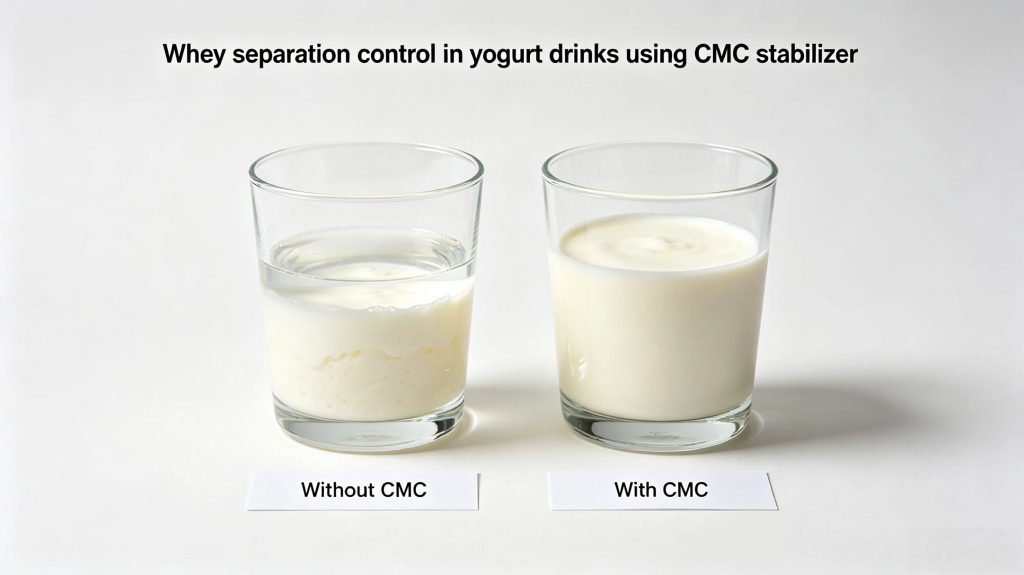
Figure 2 illustrates whey separation control in acidified dairy stabilizer applications.
Whey separation is the most common and commercially damaging defect in drinking yogurt. During storage, water migrates out of the protein network and forms a visible serum layer on the product surface. Even though the product remains microbiologically safe, consumers consistently interpret this separation as spoilage—and they reject the product.As a CMC yogurt stabilizer, CMC provides strong whey separation control by binding free water and stabilizing casein networks in yogurt drink stabilizer systems.
Effective whey separation control is essential in acidified dairy stabilizer applications, especially for long shelf-life drinking yogurt products.
The most common causes of whey separation include:
For dairy manufacturers, whey separation directly reduces product acceptance, drives consumer complaints, and shortens effective shelf life. This is precisely why whey separation control remains the primary driver for using CMC in yogurt drinks.For more details on stabilizer systems, see our Food Stabilizers & Thickening Agents Solutions
Yogurt drinks typically operate within a pH range of 3.8 to 4.5. At this pH, casein proteins approach their isoelectric point and become highly unstable. Without adequate stabilization, protein flocculation occurs, large aggregates form, sedimentation accelerates, and texture becomes unacceptably grainy and inconsistent.
Acidified dairy stabilizer systems must therefore actively protect proteins against aggregation throughout the entire shelf life of the product.
Many yogurt beverages exhibit acceptable viscosity immediately after production but gradually lose body and texture quality during storage. This leads to a thin, watery mouthfeel, unwanted water release, and declining sensory quality that accelerates consumer rejection.
A high-performance yogurt drink stabilizer must maintain viscosity throughout shelf life, not just at the moment of manufacture.
Modern drinking yogurt formulations frequently include fruit particles, cocoa, calcium fortification agents, and fiber ingredients. Without adequate suspension technology, these particles settle rapidly to the bottom of the container, creating an unacceptable appearance and an uneven product experience for the consumer.
Ambient yogurt drinks undergo severe thermal processing. Typical UHT conditions reach 137–145°C for several seconds. Such extreme heat can denature proteins, reduce viscosity dramatically, and significantly increase aggregation risk. A reliable stabilizer must therefore survive both the processing conditions and the extended storage period that follows.
The effectiveness of CMC yogurt stabilizer systems comes from four complementary mechanisms that work simultaneously to protect the beverage from multiple destabilization pathways. Unlike simple thickeners that only increase viscosity, CMC functions as a protein stabilizer, water-binding polymer, viscosity modifier, suspension aid, and texture enhancer all at once.
As an efficient acidified dairy stabilizer, CMC helps maintain protein dispersion even under low pH conditions commonly found in yogurt drinks.A high-performance yogurt drink stabilizer system such as CMC plays a key role in maintaining stability under acidic dairy conditions.The primary stabilization mechanism involves direct interaction between CMC and casein proteins. As a leading CMC yogurt stabilizer, As a widely used acidified dairy stabilizer, CMC carries negatively charged carboxymethyl groups that interact strongly with milk proteins under low pH conditions..When dispersed in acidified dairy systems, CMC adsorbs onto protein particles and creates two powerful protective effects: electrostatic repulsion that pushes protein particles apart, and steric hindrance that physically blocks protein-protein collision.
Together, these effects prevent proteins from colliding, flocculating, and forming aggregates. As a result, selecting the right yogurt drink stabilizer has become a defining factor in modern dairy formulation, especially for manufacturers looking for a reliable yogurt drink stabilizer system with long-term stability. This mechanism explains why CMC for drinking yogurt performs particularly well in low-pH environments where other stabilizers struggle.
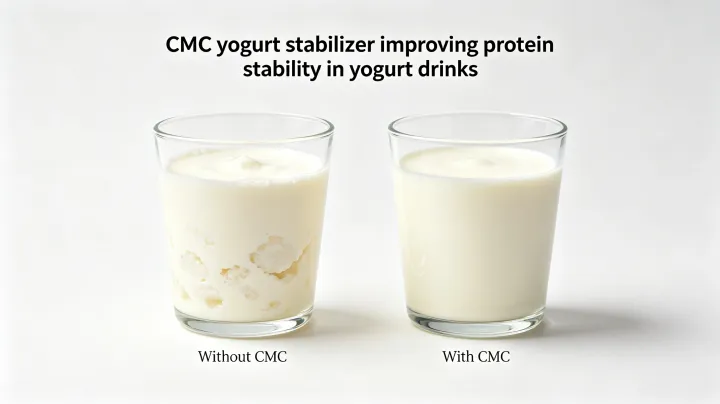
Figure 1 shows how CMC improves whey separation control in yogurt drink stabilizer systems.
CMC possesses exceptional water-holding capacity. The polymer forms hydrogen bonds with water molecules and significantly reduces free water migration within the beverage matrix. This directly prevents whey separation, improves consistency, maintains better texture stability, and extends effective shelf life.Similar stabilization principles are also used in various food suspension agents designed for beverage applications.In modern acidified dairy stabilizer systems, CMC is highly effective in preventing whey separation during long-term storage.
For low-fat yogurt stabilizer systems, water management becomes even more critical because fat is no longer available to provide structural support. CMC compensates for this loss by improving water retention and restoring the textural body that fat removal eliminates.Learn more about formulation systems in our Food Thickener Guide for Industrial Manufacturing
CMC increases continuous-phase viscosity in a controlled and predictable manner. Higher viscosity slows particle movement, reduces protein sedimentation, and retards water migration—all of which contribute to a more stable and visually appealing beverage. Unlike some gums that produce excessive or uneven viscosity, CMC provides smooth, consistent viscosity without sliminess, making it particularly suitable for yogurt beverage stabilizer applications where sensory quality is paramount.CMC acts as a highly efficient drinking yogurt stabilizer by increasing viscosity in a controlled way without creating a gel-like texture.
In modern yogurt drink stabilizer systems, this allows manufacturers to achieve smooth mouthfeel while maintaining stable acidified dairy stabilizer performance.
Modern yogurt drinks frequently contain fruit pulp, dietary fiber, minerals, and other functional ingredients that require suspension throughout the product. CMC suspension technology improves suspension performance by increasing viscosity and creating a protective matrix around particles that slows sedimentation and maintains uniform appearance from the first serving to the last.Learn more about particle stability in beverage systems in our Food Suspension Agents guide.
Many hydrocolloids are available to dairy formulators, including pectin, xanthan gum, carrageenan, guar gum, and modified starch. Yet CMC consistently emerges as one of the most preferred choices. Several factors explain why manufacturers around the world return to CMC again and again.
Yogurt beverages operate within a challenging pH range where many stabilizers lose effectiveness. CMC, however, maintains full functionality throughout the pH range commonly found in drinking yogurt. This makes it a highly reliable acidified dairy stabilizer for both standard and specialty formulations.
Compared with pectin, CMC often provides significantly lower formulation cost while delivering comparable or better stability performance. This cost advantage is especially important in price-sensitive markets across Asia, Latin America, and the Middle East, where competitive pricing directly determines market success. For many manufacturers, CMC delivers the best balance between technical performance and formulation cost.
Texture plays a major role in consumer acceptance of yogurt beverages. CMC creates a creamier texture, fuller body, and improved drinkability without generating excessive gel strength or an artificial sensation. Consumers consistently perceive CMC-stabilized yogurt drinks as smoother and more consistent than untreated or poorly stabilized alternatives.
CMC combines effectively with pectin, xanthan gum, carrageenan, and microcrystalline cellulose (MCC). These combinations frequently outperform single-stabilizer systems by combining complementary mechanisms. This flexibility makes CMC highly attractive to formulators who need to fine-tune stability, viscosity, and texture across different product categories.
These functional mechanisms explain why CMC is widely adopted as a yogurt drink stabilizer in modern acidified dairy stabilizer systems.
Based on its strong whey separation control and stability performance, CMC is widely used in commercial yogurt drink stabilizer systems.Not all yogurt drinks present the same formulation challenges, and different product categories require different stabilization strategies. Understanding how CMC performs in each category enables more precise and effective formulation.
TToday, CMC yogurt stabilizer systems are widely used as a drinking yogurt stabilizer in standard yogurt beverages, fruit yogurt drinks, and probiotic dairy formulations.
A well-designed yogurt drink stabilizer system ensures consistent performance across acidified dairy stabilizer applications.Traditional drinking yogurt represents the largest and most established application category. CMC is widely used as a yogurt drink stabilizer in drinking yogurt formulations to control whey separation.The primary objectives are preventing whey separation, maintaining smooth texture, and improving shelf stability throughout the distribution chain. CMC achieves all three objectives effectively at a dosage of 0.15–0.35%, making it the default stabilizer choice for this category worldwide.CMC provides excellent whey separation control by binding water and stabilizing the protein network throughout shelf life.Effective whey separation control is one of the main reasons why manufacturers choose CMC for commercial yogurt beverages.A properly formulated drinking yogurt stabilizer system significantly improves appearance, texture consistency, and consumer acceptance.
Probiotic beverages contain live cultures that remain biologically active during storage. CMC is widely used as a yogurt drink stabilizer in drinking yogurt formulations to control whey separation.These formulations require stabilizers that maintain viscosity, protect protein systems, and support texture consistency without interfering with probiotic viability. CMC performs exceptionally well in these formulations because it stabilizes the physical matrix without affecting the biological activity of probiotic cultures.
Fruit particles create additional stabilization challenges because they are denser than the surrounding beverage matrix and tend to settle rapidly. CMC helps suspend fruit particles, reduce settling velocity, and maintain uniform appearance throughout shelf life. This application frequently combines CMC with pectin to achieve both protein stabilization and particle suspension simultaneously.
Removing fat from yogurt beverages eliminates an important structural component that normally contributes to creaminess, mouthfeel, and body. CMC acts as a powerful texture enhancer and low-fat yogurt stabilizer by replacing the textural contribution of fat. Benefits include improved creaminess, better viscosity maintenance, and enhanced overall sensory quality that makes low-fat products more competitive with full-fat alternatives. CMC is widely used as a yogurt drink stabilizer in drinking yogurt formulations to control whey separation.
Ambient yogurt beverages undergo UHT treatment and then experience extended storage at room temperature—the most demanding conditions that any dairy stabilizer must face. These systems require maximum stabilization performance. CMC provides heat stability that survives UHT processing, long-term viscosity retention during extended storage, and consistent whey separation control, making it one of the preferred stabilizers in shelf-stable yogurt beverage formulations globally.
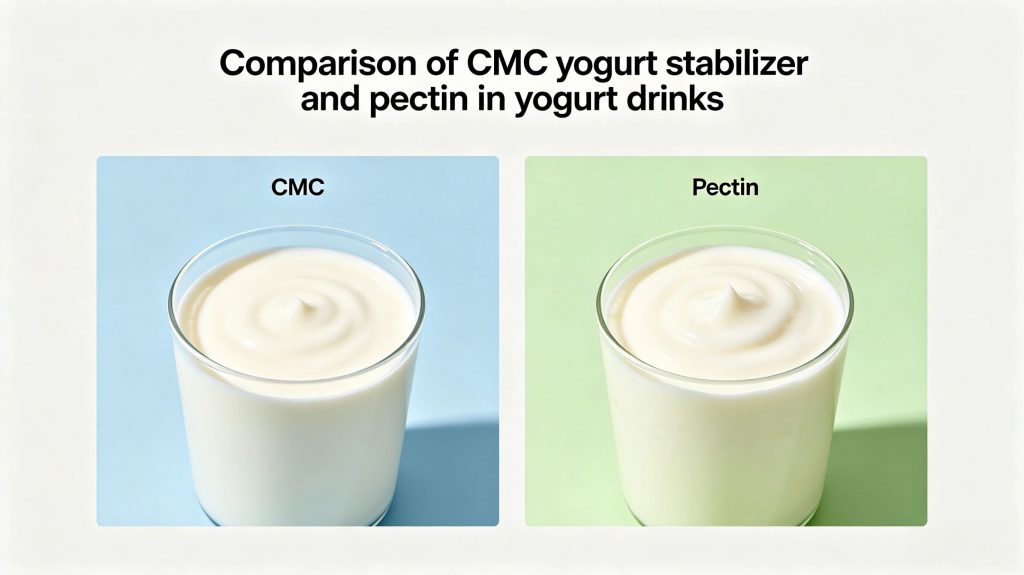
Figure 3 compares whey separation control performance of different yogurt drink stabilizer systems.
Among all the comparisons that dairy formulators make, the CMC vs. pectin debate is by far the most common and most commercially significant. Both ingredients are widely used in yogurt drink formulation, but they stabilize dairy systems through different mechanisms and deliver different performance profiles.
Understanding these differences enables manufacturers to select the most suitable yogurt drink stabilizer for their specific production goals and market requirements.
Pectin is a naturally occurring polysaccharide extracted primarily from citrus peel and apple pomace. In acidified dairy beverages, pectin adsorbs onto casein particles and creates a protective steric layer around proteins. This mechanism prevents protein aggregation, reduces sedimentation, and improves serum stability. Because pectin works particularly well in low-pH dairy systems, manufacturers have traditionally used it in premium yogurt beverages where clean-label positioning is important.
Pectin offers three notable formulation benefits. First, it provides excellent protein protection through a strong steric barrier around casein particles, making it highly effective in acidified milk drinks. Second, consumers often recognize pectin as a natural ingredient, which improves product perception in clean-label markets. Third, pectin typically provides better flavor release than some high-viscosity gums, preserving the fresh and fruity character of yogurt beverages.
Despite its advantages, pectin presents several significant challenges that limit its use in cost-sensitive and technically demanding applications. Pectin is generally more expensive than CMC—in many countries, it costs two to four times more than an equivalent CMC-based system. Furthermore, pectin requires precise pH control, proper calcium management, and accurate hydration procedures during processing; improper handling can reduce performance significantly. Additionally, while pectin excels at protein stabilization, it provides weaker particle suspension capability compared with CMC suspension technology.Although pectin performs well in some formulations, CMC remains a preferred CMC yogurt stabilizer due to its cost-effectiveness, processing flexibility, and strong suspension performance.
Most formulation guides tell you to use CMC—but almost none of them tell you which CMC grade to use. This is where many manufacturers lose performance and pay for it in shelf-life failures, texture complaints, and reformulation costs. Selecting the correct CMC viscosity grade is just as important as selecting the right dosage, because different grades interact with protein systems, process equipment, and product texture in fundamentally different ways.
CMC is commercially available in three primary viscosity grades—low, medium, and high—and each grade is optimized for a distinct set of yogurt drink applications. Understanding which grade fits your product type allows you to dial in stability performance from the first trial, reduce reformulation iterations, and avoid the common mistake of using a high-viscosity CMC where a low-viscosity grade would deliver better sensory results, or vice versa.
Low viscosity CMC dissolves rapidly, disperses evenly in acidified dairy systems, and contributes minimal gel structure to the continuous phase. Because it builds viscosity gently and predictably, it preserves the light, clean drinking texture that consumers expect from refreshing dairy beverages. At the same time, it still provides effective protein protection and moderate whey separation control without overloading the formulation with unnecessary body.
Low viscosity CMC is most suitable for:
Medium viscosity CMC is the most widely used grade in industrial yogurt drink production, and for good reason. It strikes the optimal balance between protein stabilization, water binding, viscosity contribution, and sensory acceptance. It builds enough body to effectively control whey separation and maintain texture consistency throughout shelf life, while still preserving the smooth, fluid character that makes yogurt drinks enjoyable to consume. Medium viscosity CMC also processes reliably across a wide range of industrial mixing and homogenization conditions, making it the safest and most forgiving choice for high-volume production.
Medium viscosity CMC is most suitable for:
High viscosity CMC builds a stronger, more robust continuous-phase structure that significantly increases water binding, slows protein movement, and maximizes resistance to destabilization under demanding conditions. It is the grade of choice whenever the formulation faces elevated destabilization risk—whether from high protein concentration, absence of fat, severe thermal processing, or extended ambient storage. Because high viscosity CMC contributes more texture body, formulators should monitor dosage carefully to avoid excessive thickness that reduces drinkability, particularly in products positioned as refreshing beverages rather than thick dairy drinks.
High viscosity CMC is most suitable for:
CMC consistently offers lower formulation cost, easier and more forgiving processing conditions, better suspension control for particles and functional ingredients, superior viscosity management, and excellent whey separation control. These advantages explain why yogurt drink manufacturers across Asia, South America, the Middle East, and many other price-sensitive and technically demanding markets prefer CMC yogurt stabilizer systems over pectin-based alternatives.
Another comparison that dairy formulators frequently encounter involves CMC and xanthan gum. Both are widely used hydrocolloids, but their behavior in yogurt drinks differs significantly in ways that matter directly to consumer acceptance.
Xanthan gum delivers extremely high viscosity at very low dosage levels, strong suspension capability for dense particles, and excellent temperature stability. At concentrations below 0.1%, xanthan can dramatically increase beverage viscosity, making it attractive for applications where very high suspension performance is the primary goal.
Despite its technical capabilities, xanthan gum presents serious sensory challenges that often make it unsuitable for yogurt beverage applications. High xanthan concentrations frequently produce a ropey, slimy texture that significantly reduces drinkability and consumer preference. Furthermore, excessive viscosity suppresses flavor perception, making yogurt drinks taste less fresh and less fruity—a critical disadvantage in a category where sensory appeal drives purchase decisions. In industrial production settings, xanthan hydration can also be difficult to manage, with fish-eye formation occurring if mixing procedures are not optimized.
Compared with xanthan gum, CMC provides smoother mouthfeel that consumers prefer, better compatibility with dairy protein systems, a more natural drinking texture that enhances sensory appeal, and superior whey separation control throughout shelf life. For most dairy manufacturers, CMC remains the preferred stabilizer for yogurt drinks where sensory quality and consumer acceptance are the ultimate success metrics.
The table below summarizes how CMC, pectin, and xanthan gum compare across the most critical performance dimensions for yogurt drink formulation:
| Performance Metric | CMC | Pectin | Xanthan Gum |
| Whey Separation Control | ✓ Excellent | ✓ Excellent | ✓ Good |
| Protein Stability | ✓ Very Good | ✓ Excellent | ✓ Good |
| Suspension Stability | ✓ Excellent | ~ Moderate | ✓ Excellent |
| Mouthfeel Quality | ✓ Smooth | ✓ Natural | ✗ Slimy |
| Cost Efficiency | ✓ Excellent | ~ Moderate | ✓ Good |
| Processing Flexibility | ✓ Excellent | ~ Moderate | ~ Moderate |
| UHT Heat Stability | ✓ Excellent | ✓ Very Good | ✓ Excellent |
| Clean Label Appeal | ✓ Good | ✓ Excellent | ✓ Good |
As this comparison demonstrates, CMC delivers the most balanced performance profile across all key dimensions, making it the most versatile and commercially reliable choice for yogurt drink stabilization.
One of the most practical questions that formulators ask is: how much CMC should I use in my yogurt drink formulation? The answer depends on several interacting factors, including protein content, fat content, processing conditions, desired viscosity target, and shelf-life duration. The table below provides evidence-based starting points for each major product category:
| Yogurt Drink Type | CMC Dosage Range | Primary Benefits |
| Standard Drinking Yogurt | 0.15–0.30% | Whey control, viscosity, smooth texture |
| Low-Fat Yogurt Drinks | 0.20–0.40% | Creaminess, water retention, texture |
| Fruit Yogurt Beverages | 0.20–0.50% | Particle suspension, reduced sedimentation |
| Probiotic Yogurt Drinks | 0.15–0.35% | Protein stability, shelf-life extension |
| Ambient UHT Yogurt Drinks | 0.25–0.50% | Heat resistance, long-term stability |
These dosage ranges represent starting points for formulation development. Manufacturers should conduct systematic trials within each range to identify the optimal level for their specific protein content, processing conditions, and target viscosity profile.
Modern dairy manufacturers rarely rely on a single hydrocolloid. Instead, they strategically combine multiple stabilizers to achieve performance levels that no single ingredient can deliver alone. CMC is exceptionally well suited to synergistic blending, and the following combinations represent the most widely used industrial approaches.
This combination is one of the most common systems in premium yogurt beverages, and it delivers a particularly powerful performance profile. CMC provides viscosity management and water binding, while pectin contributes additional protein protection and clean-label appeal. Together, they deliver enhanced protein stability, improved whey separation control, and better overall mouthfeel than either ingredient achieves alone.As a leading CMC yogurt stabilizer, CMC interacts with casein proteins in acidified dairy stabilizer systems to prevent aggregation and flocculation.
This improves stability in yogurt drink stabilizer systems and reduces protein sedimentation during storage.
This combination strategically leverages the complementary strengths of both ingredients. CMC provides smooth mouthfeel and protein stability, while xanthan gum adds strong suspension capability and high viscosity at low dosage. Together, they deliver superior suspension performance, improved viscosity retention, and enhanced particle stability. Manufacturers commonly use this system in fruit yogurt beverages that contain dense fruit particles or fiber ingredients.
Microcrystalline cellulose (MCC) provides physical suspension through its unique thixotropic behavior, while CMC stabilizes protein systems and contributes to water binding. Together, they deliver superior suspension stability, better mouthfeel, and significantly reduced sedimentation. This combination is particularly valuable for fortified yogurt beverages that contain calcium particles, fiber, or other dense functional ingredients.
This system improves heat stability during UHT processing, enhances protein interactions, and increases resistance to the severe thermal conditions that ambient yogurt drinks must survive. Manufacturers frequently use this combination in shelf-stable yogurt drinks where maximum process resistance and long-term stability are the primary formulation objectives.
Better protein stability
Improved texture
Enhanced whey separation control
Longer shelf life
Reliable yogurt drink stabilizer performance
Beyond technical stabilization performance, CMC provides measurable economic and commercial benefits that directly influence manufacturing profitability and product competitiveness.
By reducing whey separation, preventing sedimentation, and maintaining texture degradation throughout storage, CMC allows products to maintain acceptable quality for significantly longer periods. This directly reduces waste, lowers return rates, and enables manufacturers to serve wider distribution geographies and longer supply chains.
Consumers reliably prefer products with smooth texture, creamy mouthfeel, and uniform appearance throughout the container. CMC helps manufacturers achieve all three characteristics consistently across every production batch, driving higher consumer acceptance scores and stronger repeat purchase rates.
Ambient yogurt drinks represent one of the fastest-growing categories in the global dairy beverage market. CMC maintains stability even after severe heat treatment, enabling manufacturers to participate in this high-growth segment without sacrificing product quality or sensory appeal.
Compared with pectin-based stabilizer systems, CMC frequently delivers similar or superior stability performance at a significantly lower overall formulation cost. This cost advantage compounds across high-volume production runs and makes a meaningful difference to overall product economics, particularly in markets where margins are tight and price competition is intense.
CMC (designated as E466 in the European Union) is approved for food use by all major regulatory authorities worldwide, including FDA food additive regulations in the United States, EFSA food additive database in the European Union, and Codex Alimentarius international standards. CMC is non-toxic, non-allergenic, vegetarian-friendly, and available in both Halal-certified and Kosher-certified grades to meet diverse market requirements.
Its long history of safe use across decades of global dairy production makes CMC one of the most trusted and well-documented hydrocolloids in dairy applications. Manufacturers can use CMC with confidence that it meets regulatory requirements in virtually every market they serve.
CMC acts as a multifunctional yogurt drink stabilizer. It simultaneously improves viscosity, prevents whey separation, stabilizes casein proteins against aggregation, enhances texture, and extends shelf life. Because it performs multiple functions at once, CMC often eliminates the need for several separate additives.
Whey separation occurs when free water migrates out of the protein network during storage, forming a visible serum layer on the product surface. CMC prevents this by improving water retention through hydrogen bonding and by stabilizing the protein network that holds water in place.
Both stabilizers perform well in yogurt drinks, but they excel in different situations. CMC consistently provides better cost efficiency, superior suspension stability for particles and functional ingredients, and easier processing flexibility. Pectin offers stronger clean-label appeal and excellent protein protection in premium positioning. Many manufacturers choose CMC for cost-sensitive applications and combine it with pectin for premium products.
Typical dosage ranges from 0.15% to 0.50%, depending on your specific formulation. Standard drinking yogurt generally requires 0.15–0.30%, while ambient UHT products and fruit beverages with heavy particle loads may need 0.25–0.50% for adequate performance. Always conduct systematic trials within the recommended range for your specific formulation.
Yes, and this is one of CMC’s most valuable applications. CMC acts as a highly effective low-fat yogurt stabilizer by increasing creaminess, improving mouthfeel, and providing the textural body that fat removal eliminates. Low-fat yogurt drinks stabilized with CMC consistently achieve higher consumer acceptance scores than unstabilized alternatives.
Yes. CMC (E466) is approved by FDA, EFSA, and Codex Alimentarius for food use worldwide. It is non-toxic, non-allergenic, and has been used safely in food products for decades. It is available in both Halal and Kosher certified grades.This makes CMC one of the most reliable ingredients in acidified dairy stabilizer applications.
From a formulation perspective, CMC remains one of the most reliable yogurt drink stabilizer solutions for acidified dairy systems. CMC in yogurt drinks has established itself as one of the most effective, versatile, and commercially practical solutions available to dairy beverage manufacturers today. Whether you are formulating standard drinking yogurt, probiotic beverages, fruit yogurt drinks, low-fat formulations, or ambient UHT dairy products, CMC consistently delivers the stability, viscosity control, and sensory performance that modern consumers demand and competitive markets require.
As consumer expectations continue to rise and distribution chains grow longer, manufacturers increasingly rely on CMC yogurt stabilizer systems to create products that remain smooth, stable, and visually appealing throughout their entire shelf life. Furthermore, as cost pressures intensify across global dairy markets, CMC’s superior cost efficiency compared with premium alternatives makes it an even more attractive choice for formulation teams looking to maintain product quality while protecting margins.
For companies developing new yogurt beverages or reformulating existing products, selecting the right yogurt drink stabilizer is no longer a secondary consideration—it is a critical strategic decision that directly determines product quality, consumer acceptance, shelf-life performance, and long-term commercial success. CMC, with its proven track record across decades of global dairy beverage production, continues to be the stabilizer that delivers on all of these dimensions simultaneously.
ACTA supplies food-grade CMC solutions for:
Drinking Yogurt
Probiotic Beverages
Low-Fat Yogurt
Fruit Yogurt Drinks
Ambient UHT Yogurt
Fermented Dairy Beverages
What You Receive:
Free Samples
Technical Data Sheets (TDS)
Formulation Recommendations
Fast Global Delivery
OEM Stabilizer Solutions
