

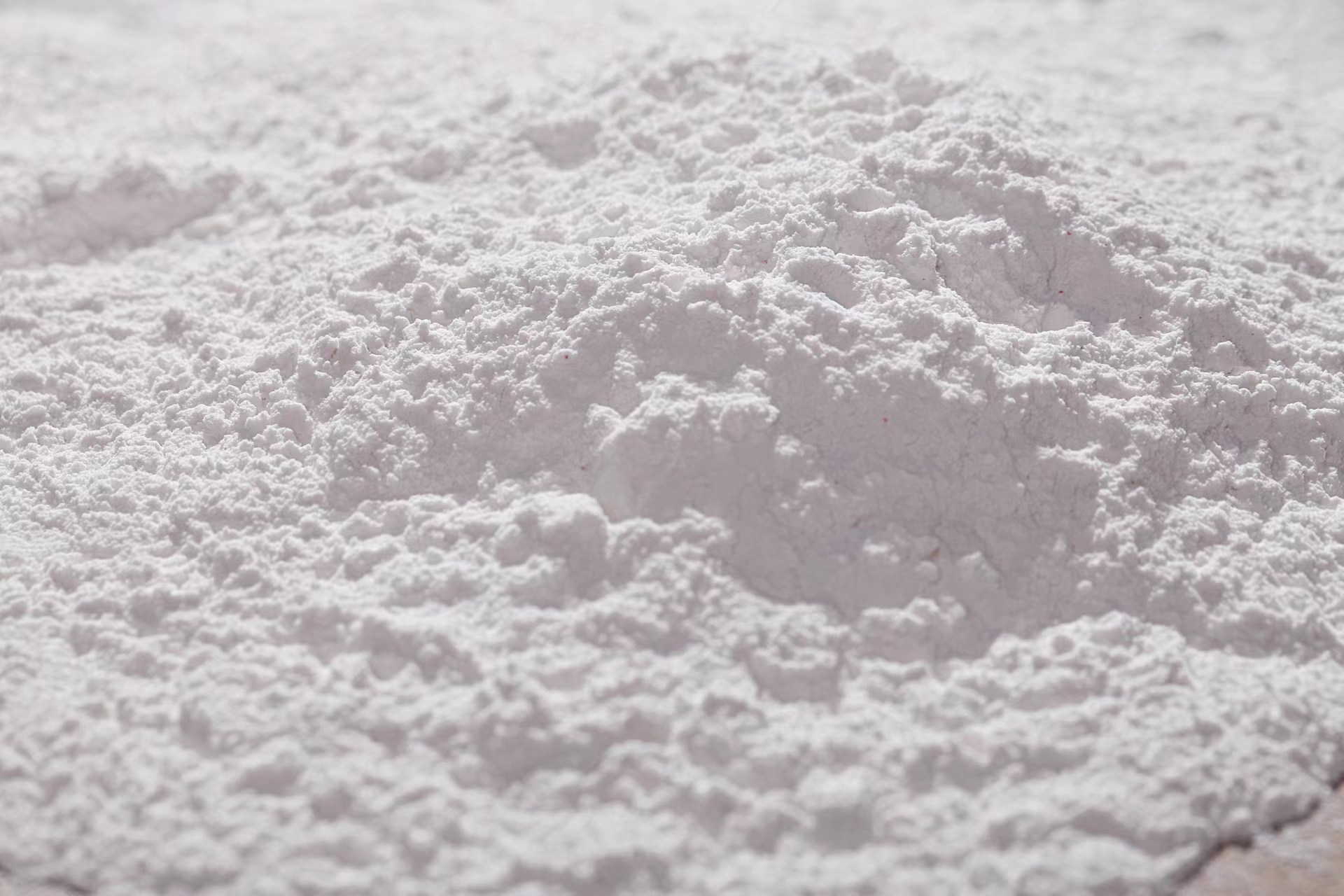
Microcrystalline cellulose source refers to the natural origin and raw materials that manufacturers use to produce microcrystalline cellulose, and it is widely applied in food, pharmaceutical, and industrial formulations.Understanding the microcrystalline cellulose source helps determine product quality, safety, and functional performance..Colloidal MCC composition refers to the structure, source, and functional characteristics of colloidal microcrystalline cellulose. In addition, Colloidal MCC composition determines its suspension behavior, stability, and performance in food, beverage, and pharmaceutical applications.
This functional distinction makes MCC gel one of the most versatile ingredients in modern formulation science, with applications spanning plant-based beverages, protein drinks, dairy alternatives, nutritional supplements, and oral pharmaceutical suspensions.
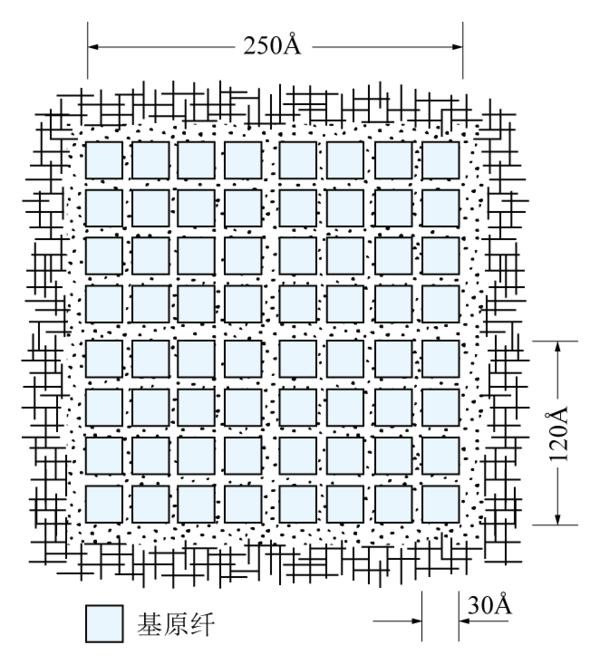
Colloidal microcrystalline cellulose (MCC) is primarily made from natural plant fibers, including purified wood pulp and cotton linters. Manufacturers process these fibers through controlled acid hydrolysis, which removes the amorphous regions and leaves the crystalline cellulose domains intact. In addition, MCC is often co-processed with carboxymethyl cellulose (CMC) to enhance dispersibility and prevent particle aggregation. This careful combination of raw materials ensures that the final product is high-purity, mechanically stable, and suitable for food, beverage, and pharmaceutical applications.
The primary microcrystalline cellulose source is natural plant fiber, typically derived from wood pulp or cotton linters. The choice of microcrystalline cellulose source directly affects the consistency, crystallinity, and performance of the final material. Manufacturers use controlled acid hydrolysis to selectively remove the amorphous regions of purified cellulose chains, which leaves behind the crystalline cellulose domains in a highly ordered and mechanically stable microstructure.
The resulting material — microcrystalline cellulose — is food-grade, non-toxic, chemically inert, and recognized as a natural-origin ingredient across all major regulatory frameworks. It forms the base material for both standard MCC (used as a dry pharmaceutical excipient and food bulking agent) and the colloidal form (MCC gel, E460i) used as a suspension stabilizer in liquid systems.
The plant-fiber origin also gives MCC gel its clean label positioning. On ingredient declarations, it appears as “microcrystalline cellulose,” “cellulose gel,” or “E460i” — all of which perform well in consumer clean label research compared to synthetic stabilizers or modified starches.
👉 Related product: MCC (Microcrystalline Cellulose)
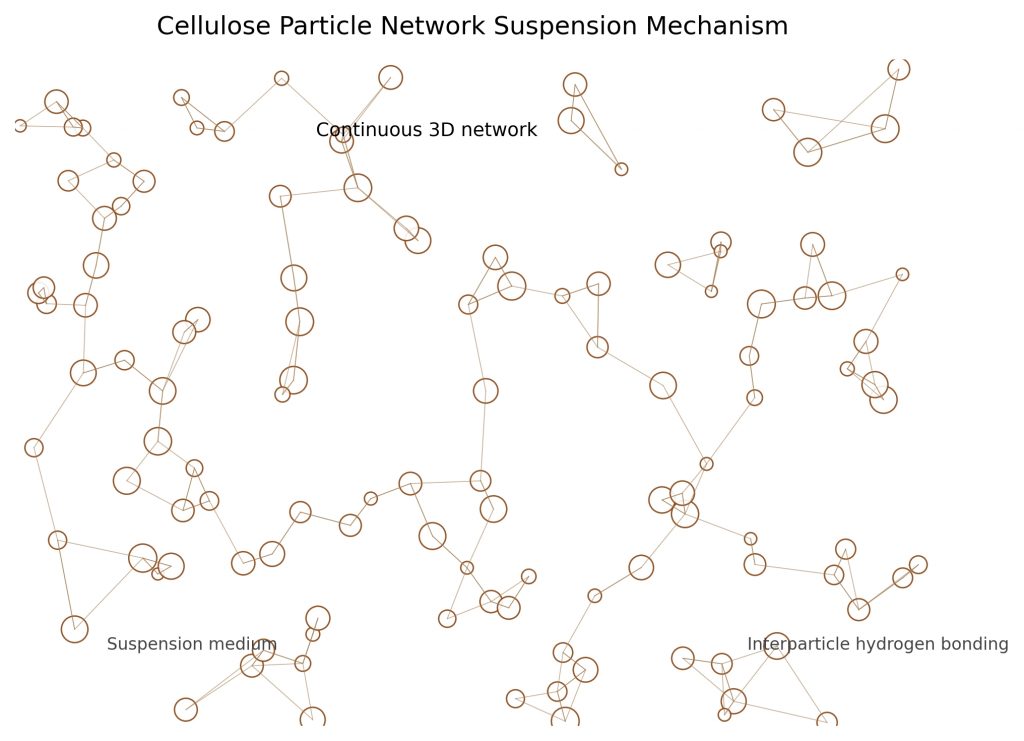
MCC forms suspension networks through its fine microfibril structure. When dispersed in water under shear, the microfibrils separate and create a three-dimensional network that traps particles. Co-processed CMC coats the MCC microfibrils, preventing irreversible aggregation during drying and ensuring the network reliably forms when rehydrated. The ratio of MCC to CMC, combined with precise manufacturing conditions, determines the network’s strength, activation behavior, viscosity contribution, and overall stability. This unique structure allows colloidal MCC to maintain suspension without significantly increasing the viscosity of the liquid, making it ideal for beverages, pharmaceutical suspensions, and other multi-component systems.
Colloidal MCC is not simply fine-milled microcrystalline cellulose; manufacturers actively create a co-processed system consisting of:
Microcrystalline cellulose (MCC) — serving as the primary structural component, manufacturers reduce it to sub-10-micron colloidal particle size during production. At this scale, MCC microfibrils can separate under shear and form the network structure that ensures suspension stability.
Carboxymethyl cellulose (CMC) — a water-soluble anionic polymer that manufacturers co-process with MCC during production. CMC actively functions as a dispersant by coating the surface of MCC microfibrils, preventing irreversible aggregation during drying and ensuring reliable network formation when the powder is rehydrated during product manufacturing.
Manufacturers control the ratio of MCC to CMC and the specific co-processing conditions to determine the functional profile of the final ingredient, including network strength, activation behavior, viscosity contribution, and stability performance. This active design is why co-processed colloidal MCC performs differently from a simple physical blend of MCC powder and CMC solution, and why pharmacopoeial monographs specify the co-processed form rather than the blend.
Regulatory authorities approve MCC gel under E460i (EU), GRAS (FDA), and USP/NF (pharmaceutical grade), and list it in the Codex Alimentarius, allowing manufacturers to supply it for global market access.
👉 Related product: MCC Gel (Colloidal Microcrystalline Cellulose, E460i)
In advanced applications, modified forms such as colloidal systems are used for suspension stabilization in beverages and pharmaceutical liquids.
Plant-based milks (oat, almond, soy, pea protein) — the fastest-growing application segment. It lacks the casein micelle structure that naturally stabilizes dairy milk, making suspension stability a significant formulation challenge. MCC gel provides the structured continuous phase needed to prevent particle sedimentation through shelf life, while contributing to the creamy mouthfeel consumers expect from dairy alternatives — without added fat or starch.
Protein beverages and RTD nutrition drinks — high protein concentrations (15–30 g per serving) create aggregation and sedimentation risk, particularly in acidified RTD formats. MCC gel uses a non-ionic network mechanism that actively remains functional across the pH 3.5–7.0 range typical of RTD proteins, and it resists disruption from mineral salts and protein charges that often destabilize ionic stabilizers.
Dairy beverages and flavored milk — chocolate milk, cocoa drinks, and fortified dairy beverages require cocoa particles, calcium phosphate, and fat droplets to remain uniformly suspended through pasteurization and UHT processing. MCC gel survives UHT conditions (135–140°C) without structural degradation, making it suitable for ambient shelf-life products.
Pharmaceutical oral suspensions — antacids, pediatric liquid medications, and multi-dose oral liquids all require active ingredient particles to remain uniformly distributed between doses. MCC gel’s low viscosity profile is particularly important in pediatric formulations, where patient compliance and accurate dosing depend on a product that is easy to swallow and measure.。
Nutritional drinks and meal replacement beverages — complex nutrient matrices containing proteins, fats, minerals, and fiber fractions are inherently prone to phase separation. MCC gel provides a stabilization scaffold that accommodates multi-component systems without requiring high stabilizer concentrations.
Low-fat dressings and sauces — at 0.5–1.2% w/w, MCC gel can replace a significant portion of fat’s contribution to texture in reduced-fat emulsions, enabling “light” label claims while maintaining acceptable mouthfeel.
The reliability of the microcrystalline cellulose source ensures stable performance in applications such as pharmaceutical excipients, food stabilizers, and suspension systems.
👉 See full application guide: MCC Gel E460i — Food & Pharma Stabilizer
Conventional stabilizers, such as xanthan gum, CMC, and modified starch, increase the viscosity of the continuous phase. Higher viscosity slows particle settling according to Stokes’ Law. However, viscosity also affects the consumer’s perception in the mouth. Therefore, higher stability requires higher viscosity, which results in a thicker, heavier product.
In contrast, MCC gel works through a fundamentally different mechanism. When manufacturers activate it under high shear, it disperses microcrystals and forms a 3D particle network. This network generates a measurable yield stress — a threshold force below which the structure does not flow. Gravitational forces on particles fall below this threshold, preventing settling. At the same time, the yield stress is low enough for the product to pour freely and feel thin.
Importantly, this yield stress network shows thixotropic behavior. When shear is applied, the network temporarily breaks down. Once the shear stops, it rebuilds within seconds. This way, the system restores stability during every handling step, from manufacturing to consumption.
As a result, the final product is stable on the shelf, thin on the palate, and robust during commercial processing.
👉 Learn more: How MCC Gel Stabilizes Suspensions Without Increasing Viscosity
Understanding where each cellulose stabilizer fits requires comparing not just performance data, but the underlying mechanisms that produce that data.
MCC Gel (E460i) functions through an insoluble particle network with a finite yield stress, and its stabilization is independent of bulk viscosity. Moreover, the system is non-ionic, thermally stable through UHT, and functional across pH 2.5–9.0, so manufacturers choose it as the correct option when they must achieve both low viscosity and long-term suspension stability simultaneously, which defines the key requirement in most modern beverage categories.
CMC (Carboxymethyl Cellulose, E466) is a water-soluble anionic polymer that thickens through polymer chain dissolution and entanglement. It is an effective secondary stabilizer and an essential co-dispersant in MCC gel formulations, but as a primary suspension stabilizer it requires viscosity build-up to function. In high-calcium or low-pH environments, ionic interactions can cause CMC to precipitate or lose viscosity — a significant limitation in calcium-fortified plant-based beverages and acid fruit drinks.
Xanthan Gum (E415) is a high-molecular-weight polysaccharide with strong pseudoplastic behavior — high viscosity at rest, lower viscosity under shear. It provides excellent suspension performance but contributes a “slimy” or “heavy” mouthfeel at concentrations effective for long-term stability. In beverages where a clean drinking experience is part of the product proposition, xanthan gum’s sensory profile is a consistent consumer rejection driver.
| MCC Gel (E460i) | CMC (E466) | Xanthan Gum (E415) | |
|---|---|---|---|
| Stabilization mechanism | Yield-stress particle network | Viscosity increase | Pseudoplastic viscosity |
| Viscosity impact | Minimal | Significant | High |
| pH stability | 2.5–9.0 | Limited at low pH | Moderate |
| UHT stability | Excellent | Good | Moderate |
| Clean label | Yes | Yes | Yes |
| Mouthfeel | Thin, clean | Moderate | Heavy at effective dose |
| Best use | Beverages, pharma suspensions | Co-stabilizer, tablets, sauces | Dressings, sauces, thick products |
For most beverage suspension applications, manufacturers actively select MCC gel as the primary stabilizer of choice. They use CMC as a synergistic component. In addition, they reserve xanthan gum for applications where body and texture are intentionally part of the product design, rather than a property that needs to be minimized.
👉 Related guide: MCC Gel vs CMC: Which Suspension Stabilizer Is Right for Your System?
Understanding the microcrystalline cellulose source is essential for formulators. It enables them to achieve consistent product quality and performance across different applications.
In addition, colloidal microcrystalline cellulose (MCC gel, E460i) is a functionally distinct suspension stabilizer. It solves the stability-versus-mouthfeel trade-off that limits conventional thickener-based approaches. Its yield-stress network mechanism, clean label positioning, broad pH and thermal stability, and non-ionic character make it the preferred stabilizer in a wide and growing range of food, beverage, and pharmaceutical applications.
Furthermore, manufacturers achieve full performance potential when they select the right grade, activate it correctly, and integrate it with complementary ingredients. These technical decisions directly determine the final functionality.
Finally, if you are looking for a reliable colloidal microcrystalline cellulose supplier, we actively provide MCC gel (E460i) in both food grade and pharmaceutical grade. We also support customers with technical formulation guidance, development samples, and bulk supply for commercial production.
In addition, manufacturers commonly use modified cellulose systems in advanced food and pharmaceutical applications that require enhanced suspension stability.
👉 Explore related applications and formulation guides
Learn more about cellulose-based stabilizer systems
