


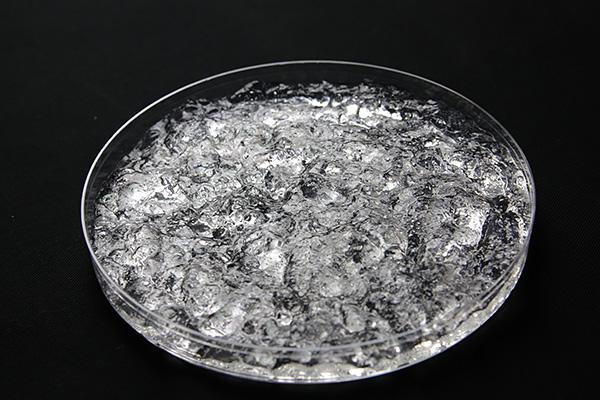
Microcrystalline Cellulose safety is a key concern for its use in food and pharmaceutical applications. Colloidal Microcrystalline Cellulose (MCC) is widely used as a stabilizer, thickener, and suspending agent in various products due to its functional performance and regulatory acceptance.
Is MCC safe?
✔ Yes, it is considered safe by FDA, EFSA, and USP
✔ It is not absorbed by the human body
✔ It functions as dietary fiber and excipient
Yes — microcrystalline cellulose safety is well established by global regulatory authorities including FDA GRAS status and EU E460 approval.
If you have ever checked the ingredient label on a tablet, supplement, or processed food, you have likely seen microcrystalline cellulose (MCC). Despite its widespread use, many people still ask: is microcrystalline cellulose safe?
This article provides a clear, evidence-based explanation of microcrystalline cellulose safety, including FDA GRAS status, E460 regulation, digestion behavior, and potential side effects.
If you have ever checked the ingredient label on a tablet, a low-fat salad dressing, or a powdered supplement, there is a strong chance you have encountered microcrystalline cellulose (MCC). It appears in hundreds of everyday products, yet many consumers and even formulation professionals find themselves asking the same question: is microcrystalline cellulose actually safe to consume?
The answer is yes, and this fact is supported by regulatory evaluation rather than opinion. Regulatory authorities have evaluated and approved microcrystalline cellulose, and they continuously monitor its safety. The FDA has granted it GRAS (Generally Recognized As Safe) status, the European Union lists it as food additive E460, and authoritative compendia such as the United States Pharmacopeia (USP), the European Pharmacopoeia (EP), and the Food Chemicals Codex (FCC) all include it. No credible regulatory body worldwide has identified microcrystalline cellulose as a health risk at normal consumption levels.
This article provides a complete, evidence-based breakdown of microcrystalline cellulose safety — covering its regulatory status, how the body processes it, potential side effects at extreme doses, and its established role across food and pharmaceutical applications.
Microcrystalline cellulose is a purified, plant-derived material, and manufacturers widely use it as a food additive (E460) and pharmaceutical excipient. Producers create it through controlled acid hydrolysis, which removes amorphous regions and leaves a stable crystalline structure. Unlike synthetic additives, MCC comes from plants, contains no active biological compounds, and does not react with APIs or nutrients.
| Regulatory Body | Status |
|---|---|
| FDA | GRAS (21 CFR 182.90) |
| EU | E460 approved |
| USP | Pharmaceutical excipient |
| EFSA | Safe for food use |
The FDA GRAS designation is not granted casually. It requires strong scientific consensus.
GRAS (Generally Recognized As Safe) means an ingredient is considered safe under intended use conditions based on scientific evidence and expert evaluation.
Microcrystalline cellulose has maintained GRAS status under 21 CFR 182.90 for decades. It is widely used as a binder, stabilizer, and texturizer in food products.
The FDA does not assign a strict ADI for MCC. This indicates that normal consumption levels present no safety concern.
n pharmaceutical applications, MCC is a key multifunctional excipient used in tablet formulation, capsule filling, and controlled-release systems.
👉 Explore pharmaceutical MCC applications, grades, and formulation guides in our pharmaceutical cellulose excipients hub
| Ingredient | Safety | Source | Function |
|---|---|---|---|
| MCC (E460) | Very High | Plant | Fiber / stabilizer |
| Silica | High | Mineral | Anti-caking |
| Starch | High | Plant | Thickener |
In the European Union, microcrystalline cellulose is classified under food additive number E460(i), with powdered cellulose designated as E460(ii). Both fall under the broader category of cellulose-based food additives regulated by the European Food Safety Authority (EFSA).
EFSA has conducted multiple safety assessments of cellulose-based additives and consistently concluded that MCC is safe for use in food at technologically justified levels. It is authorized across a wide range of food categories under Regulation (EC) No 1333/2008, including processed cheese, dietary foods for specific nutritional uses, and tablet or capsule-form food supplements.
The dual approval from both the FDA (GRAS) and EFSA (E460) provides a global regulatory consensus that very few food additives achieve. For manufacturers supplying products to international markets, this alignment simplifies compliance and reinforces the safety credentials of MCC as an ingredient.
The global safety consensus on microcrystalline cellulose does not rest on any single regulatory decision. It rests on the convergence of two of the world’s most rigorous and scientifically independent food safety systems — the United States Food and Drug Administration and the European Food Safety Authority — both arriving at the same conclusion through separate, decades-long evaluation processes.
The FDA classified microcrystalline cellulose as Generally Recognized As Safe under 21 CFR 182.90, a designation that reflects one of the most demanding standards in food ingredient regulation. To achieve GRAS status, an ingredient must demonstrate that its safety is supported by a broad scientific consensus — not simply that studies show no harm, but that the weight of all available evidence, evaluated by qualified experts, establishes the ingredient as safe under its intended conditions of use.
For microcrystalline cellulose, that evidence base includes controlled animal studies at dose levels far exceeding any realistic human exposure, human volunteer studies examining gastrointestinal tolerance and absorption behavior, and decades of real-world use across thousands of food and pharmaceutical products without the emergence of credible safety signals. Because the FDA does not assign a strict Acceptable Daily Intake to MCC, the GRAS designation effectively communicates that normal consumption levels present no safety concern that would require a defined upper limit. Manufacturers working in the United States can use MCC across food categories — including dairy products, baked goods, processed foods, dietary supplements, and pharmaceutical solid dosage forms — without seeking individual approval for each application.
The European Food Safety Authority (EFSA) applies a different but equally rigorous framework when it evaluates microcrystalline cellulose. EFSA actively reviews food additives through its scientific panels, and it examines toxicological data, exposure estimates, and functional necessity before it issues an opinion on whether an ingredient should be authorized under European Union food law.
As a result of this evaluation process, EFSA has authorized MCC as food additive E460(i) under Regulation (EC) No 1333/2008, which governs food additive use across all EU member states.EFSA has conducted multiple independent reassessments of cellulose-based additives and consistently concluded that MCC is safe for use in food at technologically justified levels. The EFSA panel also evaluated colloidal MCC — the hydrated dispersion form used in liquid food systems — and found no basis for differentiating its safety profile from standard MCC, since the hydration and dispersion process does not alter the cellulose molecular structure or introduce new reactive species.
Furthermore, EFSA’s authorization applies across a broad range of food categories, including processed dairy products, dietary foods for specific nutritional uses, table-form dietary supplements, and fat-reduced food products where MCC serves as a fat replacer and texture stabilizer. This category breadth reflects EFSA’s confidence that MCC is safe not only under specific conditions of use but across the full range of exposure scenarios that European consumers encounter.
The simultaneous approval of MCC by both the FDA and EFSA creates a regulatory foundation that very few food ingredients achieve. For manufacturers supplying products to North American and European markets — or to markets that reference either FDA or EFSA standards as part of their own import requirements — MCC’s dual regulatory status simplifies compliance documentation, reduces regulatory risk, and eliminates the uncertainty that surrounds ingredients with approval in some jurisdictions but not others.
Beyond the FDA and EFSA, global authorities also recognize MCC in major pharmacopeias, including the United States Pharmacopeia and National Formulary, the European Pharmacopoeia, the Japanese Pharmacopoeia, and the Food Chemicals Codex. As a result, MCC has become one of the most widely accepted ingredients across both food and pharmaceutical supply chains worldwide. This broad regulatory alignment across independent authorities is not coincidental. Instead, it reflects decades of consistent scientific evaluation and more than fifty years of safe commercial use.
The safety of microcrystalline cellulose in food systems does not rely only on regulatory approval. Instead, it comes from the fundamental biology of how the human body interacts with this ingredient. When we understand this biology, we can clearly explain why MCC has maintained an excellent safety record across billions of consumer products over decades, and why scientific authorities have not identified any meaningful health risks at normal usage levels.
The most important factor in MCC safety is that it does not cross the intestinal barrier and does not enter systemic circulation. MCC contains beta-1,4-linked glucose units, the same structural linkage found in natural plant cellulose. However, the human body does not produce cellulase, the enzyme required to break these bonds. Therefore, the body cannot digest MCC.
As a result, MCC passes through the gastrointestinal tract largely intact, and it does not hydrolyze into absorbable sugars. Instead, the body excretes it without systemic exposure. Human absorption studies confirm this behavior. In fact, less than 1% of consumed MCC appears in any measurable systemic form.
Because the body does not recognize MCC as a metabolizable substrate, it treats it as insoluble dietary fiber. It moves MCC through the digestive system via normal peristalsis, and it eliminates it without metabolic transformation. Therefore, MCC does not produce bioactive or harmful metabolites under normal consumption conditions.
Because MCC does not dissolve in the aqueous environment of the gastrointestinal tract, it does not form complexes with vitamins, minerals, or pharmaceutical active ingredients that would reduce their bioavailability. This chemical inertness is a critical safety and functional property: it means that formulators can use MCC alongside sensitive nutrients, APIs, or flavor compounds without introducing the kind of ingredient interaction that could produce unintended nutritional or pharmacological effects.
In food systems, this inertness means that MCC serves its functional role — providing texture, preventing sedimentation, stabilizing emulsions, and extending shelf life — without altering the nutritional profile of the product. A yogurt stabilized with colloidal MCC delivers the same calcium, protein, and vitamin content as an unstabilized equivalent. A tablet compressed with pharmaceutical-grade MCC releases its active ingredient at the rate and completeness intended by the formulation scientist, without competition or interference from the excipient.
Unlike certain synthetic additives that raise concerns about long-term accumulation in tissues or organs, MCC has no accumulation potential. It does not bind to cell membranes, does not deposit in adipose tissue, does not cross the blood-brain barrier, and does not concentrate in any organ system. Long-term animal feeding studies conducted at doses equivalent to hundreds of times normal human exposure have found no evidence of tissue accumulation, organ pathology, endocrine disruption, reproductive toxicity, or carcinogenicity attributable to MCC.
This absence of accumulation potential is directly connected to MCC’s plant-based molecular structure. Cellulose is the most abundant organic polymer on earth, and biological systems — including the human digestive system — have evolved specifically to handle insoluble plant fiber without retaining or transforming it. MCC, as a purified and partially depolymerized form of cellulose, behaves in the same way: it enters the digestive system, performs its functional role in the food matrix, passes through, and exits without leaving a biological footprint.
While the cellulose backbone of MCC is inherently safe, the practical safety of any MCC-containing food product depends on the purity of the MCC grade used. Pharmaceutical-grade and food-grade MCC must meet defined specifications for heavy metal content, residual acid, microbial contamination, and particle size established by the USP, EP, and FCC. Substandard MCC from unqualified suppliers may contain residual processing chemicals, heavy metal impurities from contaminated cellulose feedstocks, or elevated microbial counts that compromise both product safety and stability.
This is why the grade and source of MCC matter as much as the ingredient identity itself. ACTA supplies food-grade and pharmaceutical-grade MCC that meets or exceeds USP, EP, and FCC specifications, with full batch documentation and certificates of analysis available to support customer quality audits and regulatory submissions.
Understanding MCC safety requires understanding what the body actually does with it — and the answer is: essentially nothing, by design.
Humans cannot digest microcrystalline cellulose because their bodies do not produce the enzyme cellulase, which is required to break down the beta-1,4-glycosidic bonds in cellulose chains. Therefore, MCC passes through the gastrointestinal tract largely intact, it does not enter the bloodstream, and the body excretes it without causing systemic exposure.
This non-absorbable nature is not a deficiency — it is the property that makes MCC both safe and functionally useful:
Long-term animal studies conducted at doses far exceeding any realistic human exposure have found no evidence of carcinogenicity, mutagenicity, reproductive toxicity, or organ damage attributable to MCC. These studies form part of the scientific foundation underlying the global regulatory consensus on its safety.
Colloidal microcrystalline cellulose — sometimes labeled as CMCC or MCC/CMC — is a hydrated, dispersible form of MCC co-processed with a small amount of carboxymethylcellulose sodium. It is used primarily as a colloidal MCC suspension stabilizer and thickening agent in liquid food systems, pharmaceutical suspensions, and cosmetic gels.
The safety profile of colloidal MCC is consistent with standard MCC. The hydration and dispersion process does not chemically alter the cellulose backbone or introduce new reactive species. EFSA and the FDA evaluate the colloidal form under the same regulatory framework as standard MCC, and both components — MCC and CMC — carry independent safety approvals.
From a formulation standpoint, colloidal MCC functions as a food stabilizer that prevents sedimentation, maintains homogeneity, and delivers a smooth texture in products such as chocolate milk, sauces, ice cream, and liquid nutritional supplements. Its safety has been validated both as a standalone ingredient and in combination with other approved food additives.
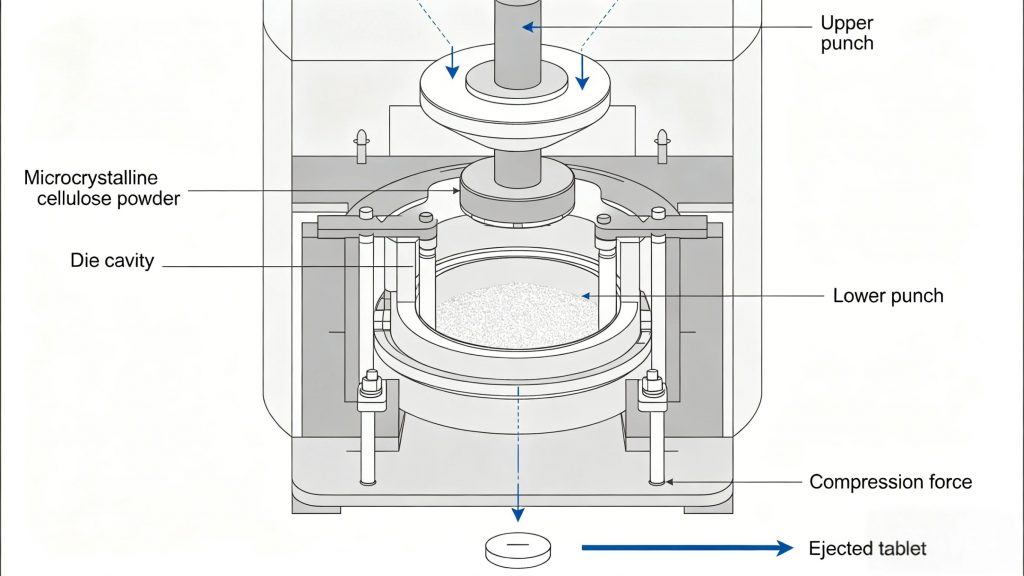
The pharmaceutical industry’s adoption of MCC as a primary excipient is itself a powerful safety signal. Pharmaceutical-grade MCC must meet the stringent purity and quality standards set by the USP/NF, EP, and JP (Japanese Pharmacopoeia), including defined limits for heavy metals, residue on ignition, microbial contamination, and particle size distribution.
In tablet and capsule manufacturing, microcrystalline cellulose serves multiple critical functions — as a binder, a direct compression excipient, a controlled-release matrix component, a capsule filler, and a disintegration enhancer. Across all of these roles, its chemical inertness ensures that it does not interact with active pharmaceutical ingredients, alter their pharmacokinetics, or introduce degradation products that could affect patient safety.
Regulatory agencies including the FDA, EMA, and PMDA have approved MCC-containing drug products across virtually every therapeutic category. Its presence in the FDA’s Inactive Ingredient Database reflects decades of accepted use in approved drug applications at established, well-characterized concentration ranges.
For manufacturers seeking a pharmaceutical excipient that combines functional versatility with an unimpeachable safety record, MCC remains the industry benchmark.
For the vast majority of people, microcrystalline cellulose consumed through normal food or pharmaceutical products produces no side effects whatsoever. This is consistent with its regulatory status and its non-absorbable nature.
However, at unusually high intake levels — well beyond what would be encountered through normal consumption — some individuals may experience:
These effects are not specific to MCC and are characteristic of any significant increase in insoluble fiber intake. They are transient, dose-dependent, and have not been associated with structural or functional harm to the gastrointestinal tract.
No credible clinical evidence links MCC to allergic reactions, immune responses, endocrine disruption, or systemic toxicity under normal or elevated dietary conditions. The rare case reports of digestive sensitivity in the literature involve doses that are not achievable through normal consumption of food or pharmaceutical products.
Microcrystalline cellulose functions as a food stabilizer and thickening agent cellulose in a broad spectrum of processed food categories. Common applications include:

MCC helps prevent whey separation and improves texture in yogurt and milk drinks.
It improves powder flow and extends shelf life in baking ingredients.
MCC is used as a tablet binder and capsule filler in nutraceutical products.
In sauces and ready meals, MCC stabilizes texture and prevents ingredient separation.
Knowing MCC is safe is important. However, understanding the correct dosage in each application is what allows formulators, product developers, and procurement managers to use it effectively and confidently. This guide explains the typical dosage ranges of MCC in food, pharmaceutical, and nutraceutical applications. It also explains the key factors that influence how much MCC should be used in each formulation.
MCC does not have a strict Acceptable Daily Intake because FDA has not set a fixed limit. In addition, EFSA allows its use at technologically justified levels without defining a maximum. Therefore, MCC does not have a strict regulatory ceiling like many other additives.
Instead, dosage depends on function. Formulators use the amount needed to achieve texture, stability, or processing performance. As a result, regulatory limits are not the main constraint.
However, very high intake of insoluble fiber — including MCC — may cause temporary digestive effects. For example, some sensitive individuals may experience bloating or changes in digestion. These effects are not specific to MCC. They are common for dietary fiber in general.
For most food applications, MCC usage stays within normal dietary fiber intake ranges. Therefore, it remains safe under typical consumption conditions.
In beverages, dairy drinks, plant-based milk, and nutritional drinks, colloidal MCC works as a suspension stabilizer and texture modifier. The typical dosage range is 0.2% to 1.0% by weight.
At 0.2%–0.4%, MCC mainly improves suspension stability. It prevents sedimentation of proteins, minerals, and insoluble particles. This level works well in clear or lightly opaque beverages where low viscosity is required.
At 0.5%–1.0%, MCC forms a stronger gel network. As a result, it improves both texture and suspension stability. This range suits protein drinks, cocoa beverages, and plant-based milk. Even at higher dosage, the system remains shear-thinning, so the drink still flows easily.
In yogurt, cheese, and fermented dairy drinks, MCC acts as a stabilizer and fat replacer. The typical dosage is 0.3% to 1.5%, depending on fat content and texture requirements.
In low-fat or fat-free products, MCC improves body and mouthfeel. When used at 0.8%–1.5%, it effectively replaces the texture normally provided by fat. Therefore, manufacturers can reduce calories while maintaining creaminess.
In baked goods and dry mixes, MCC functions as a fiber source, anti-caking agent, and moisture controller. Typical usage ranges from 1.0% to 3.0%.
At this level, MCC improves powder flow and reduces caking during storage. It also increases dietary fiber content without affecting taste or color. In addition, MCC does not participate in browning reactions, so it does not change product appearance.
In tablets and capsules, pharmaceutical-grade MCC (such as PH-101, PH-102, and PH-200) acts as a binder, diluent, and disintegrant. Dosage can range from 10% to 90% of tablet weight.
At low API levels, MCC increases tablet size and improves compressibility. At higher API levels, it mainly supports binding and fast disintegration. As a result, tablets release active ingredients efficiently in the body.
In supplements, MCC works as a filler and binder. The typical dosage is 10% to 50% of total formulation weight.
Because MCC is tasteless and odorless, it does not affect flavor or appearance. In addition, its fiber contribution is usually small in supplement formats, so it does not significantly change nutrition labeling.
When starting a new formulation, always begin at the lower dosage range. Then adjust based on stability, texture, and processing performance.
In addition, MCC often interacts with other hydrocolloids such as CMC in colloidal systems. Therefore, combined systems may require lower total dosage than MCC alone.
Finally, ACTA technical support can help optimize dosage during pilot trials and scale-up.
Yes, global regulatory authorities consider microcrystalline cellulose safe. The FDA classifies it as GRAS under 21 CFR 182.90, which confirms that it is safe when used as intended. This conclusion results from decades of scientific research and thorough regulatory review. Therefore, global regulators and scientific studies have clearly established microcrystalline cellulose safety, and they do not question it worldwide.
Manufacturers produce MCC from purified plant cellulose, and they typically extract it from wood pulp or cotton linters. Because it comes from plant sources, MCC is natural and does not originate from petrochemical processes.
Humans cannot digest MCC because it is an insoluble dietary fiber. The human body does not produce the enzyme needed to break down cellulose, so digestion cannot occur. As a result, the body passes MCC through the digestive tract without absorbing it into the bloodstream.
Yes, colloidal microcrystalline cellulose is a hydrated dispersion that co-processes with carboxymethylcellulose sodium, which enables its use in liquid systems, gels, and suspension formulations. In contrast, standard MCC exists as a dry powder and primarily serves in tablets, capsules, and dry food applications.
Does Microcrystalline Cellulose Have Side Effects?
Microcrystalline cellulose is well tolerated at normal intake levels.
It does not cause side effects in typical food or pharmaceutical use.
There is no evidence linking MCC to toxicity, allergies, or organ damage.
At very high intake levels, some individuals may experience mild symptoms.
These include:
These effects are common for all insoluble fibers.
They are mild, temporary, and dose-dependent.
They do not cause long-term harm.
Microcrystalline cellulose safety in food applications has strong support from both regulatory approvals and its fundamental biological behavior. The European Union classifies MCC as food additive E460(i) under Regulation (EC) No 1333/2008, and EFSA has confirmed its safety through multiple independent evaluations. Therefore, regulators allow its use across a wide range of food categories, including dairy products, baked goods, processed foods, dietary supplements, and low-calorie formulations.
The strong safety profile of microcrystalline cellulose in food comes from one key biological fact: the human body cannot digest it. MCC acts as an insoluble dietary fiber with no caloric value. Because humans do not produce cellulase — the enzyme required to break down cellulose bonds — the body cannot metabolize MCC. As a result, the body moves MCC through the gastrointestinal tract unchanged, does not absorb it into the bloodstream, and eliminates it without systemic exposure. In addition, MCC does not interact with nutrients, does not interfere with the absorption of vitamins or minerals, and does not convert into any biologically active compound during digestion. Therefore, it remains biologically inert throughout the digestive process, and this complete physiological inertness explains why scientific research widely accepts microcrystalline cellulose safety in food and rarely questions it.
As a professional microcrystalline cellulose manufacturer and bulk supplier, we provide pharmaceutical-grade MCC, food-grade MCC, and colloidal MCC for global industries, including pharmaceuticals, food processing, and nutraceutical applications.
In addition, MCC belongs to a broader family of cellulose derivatives that are widely used across food and pharmaceutical industries.
👉 View cellulose derivatives including HPMC, CMC, HEMC, and modified starch systems for formulation optimization
Manufacturers widely use microcrystalline cellulose in both the food and pharmaceutical industries. It occupies a rare position among functional ingredients. MCC is not only one of the most extensively applied materials, but it is also thoroughly validated through long-term industrial and regulatory use. Its safety is not an assumption. Instead, it results from decades of regulatory review, independent scientific research, and real-world use in billions of consumer products worldwide.
From FDA GRAS certification to E460 authorization, from USP compliance to EFSA assessment, the global regulatory consensus on MCC is consistent and unambiguous. For consumers, it is a safe, inert, plant-derived ingredient. For formulators and manufacturers, it is the pharmaceutical excipient and food stabilizer against which alternatives are measured.
Whether your interest is consumer safety, formulation science, or regulatory compliance, the evidence on microcrystalline cellulose points in one direction: it is among the safest and most well-characterized ingredients in the modern food and pharmaceutical supply chain.
