

Written by Richard Wang, International Sales & Technical Content, Qingdao ACTA Biotechnology Co., Ltd about HPMC E5
Last Updated: November 2026
Hydroxypropyl methylcellulose (HPMC), also called hypromellose, is a cellulose ether used by pharmaceutical and industrial manufacturers in a wide range of formulations. The main HPMC E5 uses in pharmaceutical manufacturing are aqueous tablet film coating and binding in selected wet-granulation formulations. Its relatively low solution viscosity and good film-forming properties make it a useful candidate for both, subject to grade specifications and process conditions. Looking for materials rather than background? See ACTA’s HPMC products
Choosing HPMC E5 takes more than buying a product with the right label. Two products sold under the same designation can differ in substitution, particle size, moisture, documentation, and manufacturing source. This guide explains what HPMC E5 is, how its properties shape performance, where manufacturers use it, how it differs from E15 and E50, and how buyers can select and qualify a supplier.
We wrote it for formulation scientists, quality teams, pharmaceutical manufacturers, distributors, and purchasing managers. Throughout, we separate what supplier literature typically supports from what you must confirm through your own testing, because the exact specification of any grade always comes from the supplier’s documents and your own trials.
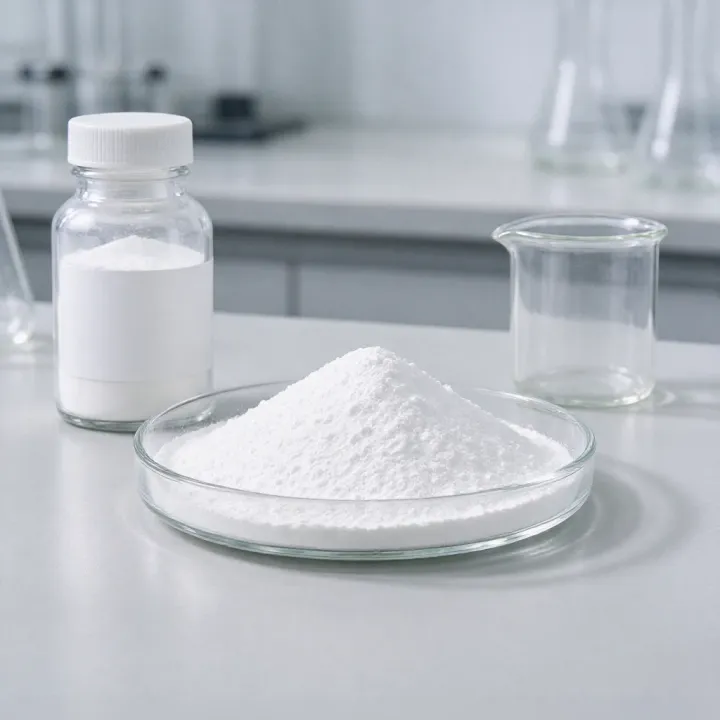
Caption:HPMC E5 is a low-viscosity hydroxypropyl methylcellulose grade used in selected pharmaceutical formulations.
Description:Pharmaceutical-grade HPMC E5 powder, a low-viscosity cellulose ether used in pharmaceutical applications such as tablet film coating and formulation development. Actual suitability depends on product specifications and quality requirements.
| Item | Summary |
|---|---|
| Material | Hydroxypropyl methylcellulose (hypromellose) |
| Nominal viscosity | Approx. 5 mPa·s |
| Primary pharmaceutical application | Tablet film coating |
| Other application | Binder in selected wet-granulation formulations |
| Solubility | Dissolves in cold water; practically insoluble in hot water |
| Substitution type | Verify in the supplier specification (some ranges offer Type 2910) |
| Item | Summary |
|---|---|
| Key purchasing consideration | Confirm viscosity range, substitution type, intended grade, and batch documentation |
Typical commercial description only. The actual viscosity range and substitution type must be verified against the exact manufacturer’s specification.
Looking for HPMC E5 for Tablet Film Coating?
Share your target viscosity, coating solids, tablet core characteristics, and processing conditions. ACTA can review your requirements against available sourcing options.
HPMC E5 mainly serves as a low-viscosity film-forming polymer in pharmaceutical tablet coating and as a binder in selected wet-granulation formulations. Manufacturers must consider its substitution type, viscosity specification, solution preparation, and processing conditions when selecting a grade. They should not expect HPMC E5 to provide enteric or sustained-release performance unless they validate a specific formulation.
HPMC E5 is a low-viscosity grade of hydroxypropyl methylcellulose. Manufacturers produce HPMC by chemically modifying cellulose, which adds methoxy and hydroxypropoxy groups to the polymer chain. This changes how the polymer interacts with water: HPMC disperses and hydrates in cold water to form a colloidal solution, while it is practically insoluble in hot water. Depending on grade and formulation, it can also form films and bind particles.
Buyers should therefore check the exact product specification to confirm the substitution type, methoxy content, hydroxypropoxy content, and viscosity range rather than relying on the E5 designation alone. Manufacturers may also use HPMC grades as binders in selected wet-granulation formulations, but buyers should confirm whether E5 meets their requirements by reviewing the manufacturer’s technical documentation and conducting application tests. Buyers should also verify pharmaceutical-grade status and pharmacopeial compliance through the relevant product documentation rather than relying on the product name alone.
| Term | What it means | What buyers should verify |
|---|---|---|
| E5 | Commercial viscosity-grade designation | Actual viscosity range |
| 2910 | Substitution type | Methoxy and hydroxypropoxy content |
| 5 mPa·s | Common nominal viscosity | Concentration, temperature, test method |
| Pharmaceutical grade | Intended quality and regulatory suitability | Exact specification and supporting documents |
These values describe a commonly used classification, not a purchase specification. Confirm applicable limits and measured results in the manufacturer’s TDS and batch COA. A full parameter checklist for buyers appears in Section 12.

Caption:HPMC viscosity results should always be interpreted together with the test concentration, temperature, and measurement method.
Description:
| Laboratory preparation and viscosity evaluation of HPMC solution. Viscosity is a critical specification, but test conditions must be consistent when comparing different HPMC E5 products. |
Performance depends on viscosity, chemical substitution, water interaction, thermal gelation, and film-forming behavior. Together they determine how HPMC E5 behaves during solution preparation, coating, and granulation.
The defining feature of HPMC E5 is its relatively low solution viscosity. Depending on concentration, temperature, equipment, and formulation, this can help coating solutions flow through pumps and spray guns with manageable resistance and support uniform distribution. It also makes binder solutions easier to handle in selected wet-granulation processes.
Grade designation alone does not determine viscosity. Concentration, temperature, hydration time, measuring equipment, and test procedure all change the result, so compare viscosity values only when the testing conditions are equivalent.
The proportions of methoxy and hydroxypropoxy groups influence solubility, hydration, thermal gelation, and other functional properties. The substitution limits for Type 2910 in the USP hypromellose monograph are:
| Parameter | USP Type 2910 limit |
|---|---|
| Methoxy content | 28.0–30.0% |
| Hydroxypropoxy content | 7.0–12.0% |
These limits define the substitution category. They do not establish a universal viscosity specification for HPMC E5. Two products with similar viscosity may not behave identically if their substitution profiles differ, so ask suppliers for substitution data together with viscosity data.
HPMC E5 forms a colloidal solution after proper dispersion and hydration. If operators add the powder too quickly or fail to provide sufficient mixing, the powder can form hydrated surface layers that trap dry material inside and create lumps that resist uniform dispersion. Because HPMC remains practically insoluble in hot water, operators must control the water temperature during initial dispersion.
Manufacturers commonly use two preparation methods. They can disperse the powder in hot water and then cool the mixture to complete hydration, or add the powder to cold water while maintaining controlled mixing and allowing sufficient hydration time. The optimal procedure depends on particle characteristics, mixing equipment, and batch size. Always follow the supplier’s preparation instructions and validate the method at production scale. Section 4.4 explains how to document these parameters in a coating trial.
HPMC solutions can transition from a liquid-like state to a gel as the temperature rises. The substitution type, polymer concentration, and formulation composition all influence the gelation temperature. Buyers and formulators should therefore treat gelation temperature as a grade-specific parameter and establish the applicable range through testing. Operators should also control the temperature during preparation, transfer, and application to prevent unexpected viscosity changes.
When formulators apply an aqueous HPMC E5 solution to a suitable surface and dry it under controlled conditions, the polymer forms a continuous film. In selected film-coating formulations, this film creates a uniform layer over the tablet core, improves surface appearance, and helps incorporate colorants and other coating ingredients. However, formulators must optimize solids concentration, plasticizer selection, spray rate, atomization, drying conditions, and equipment settings to achieve consistent coating results.
| Parameter | Why it matters |
|---|---|
| Appearance | Helps identify unusual discoloration or physical changes |
| Loss on drying (LOD) | Indicates moisture and volatile loss under the specified test |
| pH | Reflects the prepared solution; test concentration and method must be specified |
| Particle size | Influences powder handling, dispersion, and hydration |
| Residue on ignition | Helps assess inorganic residue |
| Microbiological quality | Matters when the application and specification require it |
Limits vary by grade, applicable standard, and customer requirements. Some supplier specifications list a maximum LOD of 5%, but no one should assume that limit applies to every E5 product. Review these parameters in the official specification and the batch-specific COA.
For tablet coating, low viscosity and film formation matter, but the solution must also suit your spraying and drying process. For wet granulation, binder distribution, hydration, and granule properties need evaluation. Assess viscosity, substitution, dispersion behavior, and application performance together; selecting on a single parameter often leads to formulation adjustments or inconsistent production.

Caption:HPMC E5 can serve as a film-forming polymer in suitable immediate-release tablet coating formulations
Description:Pharmaceutical tablets with film coatings, illustrating one potential application of low-viscosity HPMC E5. Coating performance depends on polymer grade, formulation composition, and processing conditions.
Although HPMC E5 is commonly evaluated for tablet film coating and selected wet-granulation applications, the suitability of a specific grade depends on the formulation objective, processing conditions, and required quality standards. The following comparison helps manufacturers identify which applications deserve further technical evaluation.
| Application | Function | What to note |
|---|---|---|
| Tablet film coating (main) | Film-forming polymer | Formulation and process validation required; see Section 4 |
| Wet-granulation binding | Binder in selected formulations | Needs supplier documentation and formulation trials; see Section 5 |
| Modified-release systems | Not a default matrix grade | Requires validation for the specific grade and release target; see Section 6 |
| Hard capsule systems | Capsule-related use | Requires the specific capsule process and a dedicated specification |
| Food and personal care | Grade-dependent | Confirm the grade, intended-use documentation, and destination-market regulations |
Tablet film coating and wet-granulation binding should be treated as two separate qualification targets. A grade that performs well as a coating polymer may need different concentration and preparation conditions as a binder, so request application-specific technical information and evaluate each function independently.
Tablet film coating is one of the most important HPMC E5 uses. A 2025 review in Pharmaceutics describes HPMC as one of the most versatile cellulose derivatives in pharmaceutics, with roles that include tablet binding and film coating. In a coating formulation, HPMC E5 can act as the primary film former alongside plasticizers, pigments, opacifiers, and processing aids. A well-designed system can improve tablet appearance and surface uniformity, support color application and product identification, and improve handling. The degree of protection against moisture, light, or other factors depends on the complete coating formulation and its validated performance.
Low viscosity plays a central role. A coating solution must pass through pumps and tubing, atomize into fine droplets, and spread evenly across the tablet bed. Because HPMC E5 gives a thinner solution than higher-viscosity grades at the same concentration, it leaves room to work with practical solids levels. Still, evaluate the polymer in the complete coating formulation rather than choosing it for nominal viscosity alone.
| Factor | Potential effect |
|---|---|
| HPMC concentration | Influences solution viscosity, coating solids, and film formation |
| Plasticizer level | Affects film flexibility and mechanical properties |
| Mixing and hydration | Determine solution uniformity and appearance |
| Spray rate | Affects coating deposition and tablet wetting |
| Inlet air and tablet-bed temperature | Influence evaporation and drying |
| Atomization conditions | Affect droplet size and coating distribution |
| Coating weight gain | Determines how much polymer reaches the tablet |
A solution that is too viscous can cause pumping and spraying difficulties, while unsuitable drying conditions can contribute to rough surfaces, sticking, or uneven coating. Establish process parameters with your own grade, equipment, tablet cores, and ingredients rather than copying them from another product.
Practical signs of an unsuitable coating solution. An incompletely dispersed solution may block filters or spray nozzles; unsuitable viscosity and solids content can affect atomization and distribution; excessive wetting may contribute to sticking or picking; inadequate spreading or drying control can produce roughness and uneven film. Evaluate solution uniformity, viscosity at the actual processing concentration, filtration behavior, spray performance, tablet-bed behavior, and final film appearance together. A visually clear solution may be desirable, but appearance alone does not establish suitability, and no single viscosity result should be the sole acceptance criterion.
Ordinary HPMC film coating differs from enteric coating. HPMC E5 is not automatically an enteric polymer; enteric performance normally requires a pH-dependent polymer system and a validated formulation. Likewise, immediate-release coatings should not unintentionally delay disintegration or release, which makes disintegration and dissolution testing essential.
A consistent sequence makes trials comparable across grades and suppliers. Adjust it to your own equipment and quality procedures.
Need HPMC E5 for Tablet Film Coating? Share your current HPMC grade, target viscosity, coating solids content, target coating weight gain, estimated consumption, required documentation, and processing requirements. ACTA can review them against available HPMC sourcing options and discuss suitable specifications and sample arrangements.
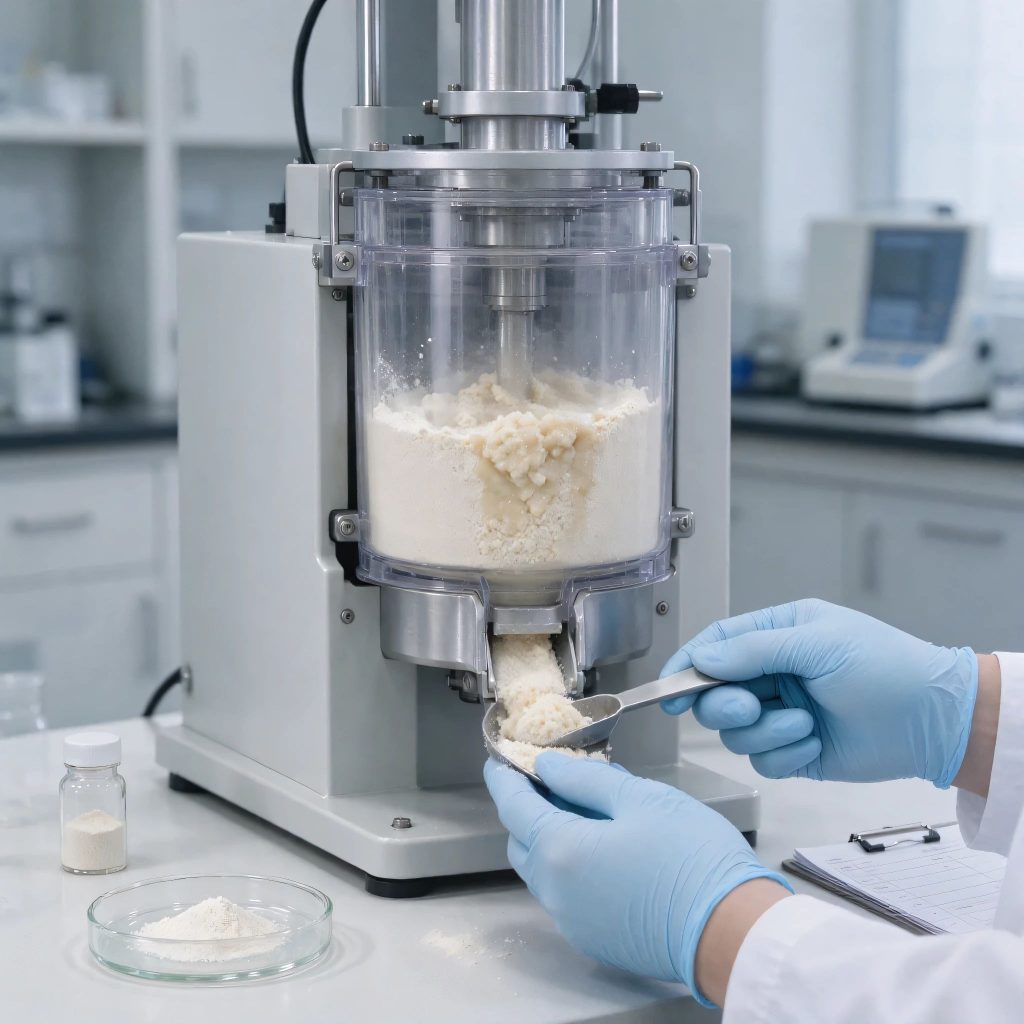
Caption:HPMC may be evaluated as a binder in wet granulation, depending on the required binding strength and formulation properties.
Description:Pharmaceutical wet granulation process illustrating the use of cellulose ether binders in tablet manufacturing. The suitability of a specific HPMC E5 grade should be confirmed through formulation and process trials.
Manufacturers can evaluate HPMC E5 as a binder in selected tablet formulations, particularly in wet granulation. The suitability of HPMC E5 as a wet-granulation binder should be confirmed through supplier documentation and formulation-specific trials, particularly when changing from an established binder grade. A binder helps particles adhere during granule formation and compression, improving granule integrity and the mechanical strength of the finished tablet.
Operators dissolve or disperse HPMC E5 per the supplier’s procedure and add the solution to the powder blend. The liquid wets the powder and forms granules, which are dried, sized, blended with other excipients, and compressed. Binder level and addition rate both influence granule properties, so optimize them for your formulation and equipment.
Too little binder produces weak granules; too much creates dense granules, slows disintegration, and can change dissolution. Establish the level through trials and confirm it at scale-up. Increasing hardness alone never proves a better formulation.
HPMC E5 rarely works alone. Microcrystalline cellulose (MCC) can provide bulk and compressibility, lactose can serve as filler, and pregelatinized starch can contribute binding depending on grade. Disintegrants such as croscarmellose sodium, sodium starch glycolate, or crospovidone help the tablet break apart and may need adjustment when binder concentration changes. A material that performs well alone can behave differently in combination, so assess compatibility in the complete formulation.
Suppliers sometimes list the same E5 grade for both film coating and wet-granulation binding. That describes the supplier’s own product and does not extend automatically to every E5 on the market. Even when one grade serves both functions, concentration, preparation method, and performance targets differ, so evaluate and record each function separately.
Modified-release formulations. HPMC is widely used in hydrophilic matrix tablets, where hydration and gel-layer formation control release, as published reviews describe.These broader HPMC applications should not be interpreted as established applications for every E5 product. Buyers should confirm the exact viscosity profile, substitution type, and functional suitability of the proposed grade before considering it for specialized formulations. Performance depends strongly on viscosity grade, polymer concentration, tablet geometry, and formulation design. Formulators commonly consider higher-viscosity grades for a strong, persistent gel layer, so E5 should not automatically replace them. If you consider E5 for a supporting function, demonstrate suitability through dissolution and stability testing.
Capsules, food, personal care, and industrial systems. Not every viscosity grade suits every capsule process, and an E5 product intended for pharmaceutical or industrial use is not automatically suitable for food or cosmetic applications. Confirm the exact grade, intended-use documentation, applicable regulations, and destination-market requirements before selection.
Caption:Different HPMC viscosity grades should be selected according to the formulation’s processing and performance requirements.
Description:Comparison of different HPMC viscosity grades, including E5, E15, and E50. Grade selection should consider viscosity test conditions, substitution type, application requirements, and product specifications.
Buyers often ask whether another viscosity grade can replace HPMC E5. The grades share a polymer family, but their solutions behave differently: at the same concentration, a higher-viscosity grade gives a thicker solution, which changes how the material sprays, spreads, and binds. For background, see ACTA’s HPMC viscosity grades
The values below are representative nominal designations used in certain commercial HPMC ranges, for general comparison only.
| Grade | Nominal viscosity | Typical evaluation focus |
|---|---|---|
| HPMC E5 | Approx. 5 mPa·s | Low-viscosity coating solution; wet-granulation binder trials |
| HPMC E15 | Approx. 15 mPa·s | Higher solution viscosity; coating and binder performance |
| HPMC E50 | Approx. 50 mPa·s | Higher-viscosity solution; suspension stabilization where the supplier’s documentation supports it |
| Higher-viscosity grades | Higher nominal values | Often evaluated for hydrophilic matrix and gel-layer applications |
A higher viscosity grade does not necessarily perform better. In coating, it may require changes to polymer concentration, solids, or spray conditions; in granulation, it can alter binder distribution, granule growth, and disintegration. Treat grade substitution as a formulation change, compare grades under equivalent test conditions, and validate in your own process.
Important note on grade designations. E5, E15, and E50 are commonly used nominal viscosity designations in certain product ranges, not universal specifications. Viscosity ranges, substitution types, and test conditions may differ between suppliers. Request the manufacturer’s technical specification and confirm solution concentration, temperature, and test method before comparing or replacing grades.
Hydroxypropyl cellulose (HPC), povidone (PVP), copovidone, polyvinyl alcohol (PVA)-based systems, and pregelatinized starch all serve coating or binding roles in certain formulations. PVP and copovidone commonly act as granulation binders, while PVA-based systems appear in film-coating products. Each differs in solubility, film properties, and interaction with other ingredients, so none replaces HPMC E5 automatically. Define the function you must preserve, run side-by-side trials, review stability, disintegration, and dissolution, and handle any replacement through change control.
Selecting the right HPMC E5 grade starts with the intended formulation function, not simply the product name or nominal viscosity. Even when two products are both labeled HPMC E5, differences in viscosity range, substitution type, particle size, and hydration behavior may affect their performance.
Before selecting a grade, define the technical requirements of your application and compare products using equivalent test conditions.
Start by identifying the function HPMC E5 needs to perform in your formulation.
For tablet film coating, evaluate its film-forming behavior, solution viscosity at the intended solids concentration, compatibility with plasticizers and other coating ingredients, and suitability for your coating equipment.
For wet granulation, focus on binder-solution preparation, liquid distribution, granule strength, flow properties, and the effect of the binder on tablet disintegration.
Do not assume that a grade suitable for film coating will automatically perform equally well as a wet-granulation binder. Treat each application as a separate technical evaluation.
Specify the target viscosity together with the test conditions. A viscosity value without its concentration, temperature, and test method is not sufficient for meaningful comparison.
For example, if your target is approximately 5 mPa·s, ask the supplier to confirm:
Compare different products only when the testing conditions are equivalent.
HPMC substitution affects water interaction, hydration, thermal gelation, and other functional properties.
If your formulation requires a particular substitution type, state it clearly in the purchase specification. For example, if Type 2910 is required, request confirmation of the substitution type and the corresponding methoxy and hydroxypropoxy results.
Do not infer the substitution type from the E5 designation alone.
In addition to viscosity and substitution, consider the physical characteristics that may influence processing.
| Parameter | Why it matters during grade selection |
|---|---|
| Particle size | Can influence powder handling, dispersion, and hydration |
| Loss on drying | Helps assess moisture-related handling requirements |
| Solution appearance | Helps identify undispersed particles or unusual physical behavior |
| pH | May matter for formulation compatibility |
| Residue on ignition | Relevant to the applicable material specification |
| Microbiological quality | Must meet the requirements of the intended application |
The required limits should be established from the applicable product specification and customer requirements rather than assumed to be universal for all HPMC E5 products.
The same HPMC E5 grade may behave differently under different preparation and processing conditions.
For coating applications, consider solution solids, mixing conditions, spray rate, atomization, drying capacity, and target coating weight gain.
For wet granulation, consider binder concentration, liquid addition rate, mixing equipment, granulation endpoint, and drying conditions.
A grade should be evaluated using representative processing conditions whenever possible. Laboratory screening is useful, but pilot-scale confirmation may be necessary before commercial production.
Before approving an HPMC E5 grade for further evaluation, confirm the following:
| Selection factor | Information to establish |
|---|---|
| Intended function | Tablet film coating, wet-granulation binding, or another defined use |
| Viscosity | Target value and acceptance range |
| Test conditions | Concentration, temperature, and method |
| Substitution type | Required type and substitution data |
| Physical properties | Particle size, moisture, and other relevant parameters |
| Preparation method | Dispersion, hydration, and solution preparation requirements |
| Formulation performance | Results from application-specific trials |
Once the technical requirements have been established, the next step is to verify the product documentation, manufacturing source, and supplier quality controls. Section 12 covers documentation, while Section 13 explains supplier and source verification.
Most HPMC E5 problems appear during solution preparation, coating, or granulation. Start with process records, equipment condition, and in-process results, because changing the polymer without finding the cause can create new problems. Investigate one major variable at a time; for complex problems, a structured design of experiments (DoE) can reveal interactions between factors.
| Problem | Possible causes | What to check |
|---|---|---|
| Lumps in solution | Uncontrolled powder addition; surface hydration | Mixing method, addition rate, water temperature, hydration time |
| Difficult pumping or spraying | Solution too viscous | Polymer concentration, grade viscosity, solution temperature |
| Rough or uneven coating | Unsuitable drying or spray conditions | Spray rate, atomization, inlet air, tablet-bed temperature |
| Sticking during coating | Over-wetting; slow drying | Spray rate, drying capacity, plasticizer level |
| Weak granules | Low binder level; poor distribution | Binder concentration, liquid addition, mixing |
| Slow disintegration | Excess binder; dense granules or coating | Binder level, coating weight gain, disintegrant level |
An excipient can perform its function well and still affect the API, so compatibility screening belongs in early development. Published reviews report that HPMC works with a range of APIs, but compatibility remains API-specific; test your own combination rather than relying on general statements.
Studies should distinguish chemical degradation of the API (for example hydrolysis or oxidation, depending on structure and storage) from physical changes in the formulation (powder distribution, moisture behavior, solid-state properties). These are formulation-specific risks, not effects to attribute automatically to HPMC E5. Choose analytical methods according to the suspected interaction.
Moisture needs particular attention when the API is moisture-sensitive. HPMC can interact with and absorb moisture, but the actual risk depends on formulation moisture content, storage environment, packaging, and API properties, so evaluate it with suitable analytical methods and finished-product studies. In coating systems, plasticizers change film flexibility, and pigments and opacifiers influence dispersion and appearance.
A practical screening study has four stages:
A binary-mixture study screens risks but does not replace finished-product stability studies, and accelerated results do not directly equal shelf life.
Manufacturers produce HPMC from purified cellulose in controlled stages: alkali treatment, reaction with methylating and hydroxypropylating agents to introduce methoxy and hydroxypropoxy groups, neutralization and purification, drying, milling and sieving, and blending to the final specification. Each stage influences substitution, molecular weight, moisture, and particle characteristics, which in turn determine viscosity, hydration, and handling. Manufacturing control therefore translates directly into batch consistency.
Key control points: cellulose raw material quality, degree of substitution, molecular weight and viscosity consistency, washing and purification, drying and particle-size control, and final blending and batch testing.
Because buyers may source through manufacturers, distributors, or sourcing partners, the practical task is to verify manufacturing-source transparency, batch documentation, and change-control commitments rather than to assume how a given product was made. Ask where the product is made, how viscosity and substitution are controlled between batches, how the finished product is tested, and how process or site changes are notified.

Caption:Buyers should review the product specification and batch-specific COA before approving an HPMC E5 shipment.
Description:Pharmaceutical excipient quality documentation, including a certificate of analysis and technical specification. Buyers should verify product identity, viscosity, substitution parameters, moisture, and applicable quality requirements.
Quality documents turn a product name into verifiable information. For pharmaceutical use, request the following for the exact grade under consideration.
| Document | Purpose |
|---|---|
| Technical specification | Defines acceptance criteria and test methods |
| COA (batch-specific) | Reports actual test results for one batch |
| TDS | Describes typical properties and applications |
| SDS | Covers hazards, handling, and storage |
| Pharmacopeial compliance statement | States compliance with a named monograph, edition, and grade |
| Regulatory declarations | Address allergen, TSE/BSE, residual solvent, and impurity questions where relevant |
| Change-control agreement | Commits the supplier to notify you of raw-material, process, or site changes |
A COA reports measured results, a TDS describes typical characteristics, and a purchase specification defines what every delivered batch must meet. A typical TDS value is not a guaranteed release limit, and a viscosity value means little without its concentration, temperature, and method.
Use this table to compare suppliers on the same basis. Every field should come from the specification or batch COA, not from marketing material. Limits shown in the specification are the buyer’s to confirm; none are universal for E5.
| Parameter | What to verify | Supplier A | Supplier B |
|---|---|---|---|
| Viscosity | Nominal value and acceptance range | ||
| Test concentration | e.g., 2% solution, as stated by the supplier | ||
| Test temperature | As stated by the supplier | ||
| Substitution type | 2910 or other specified type | ||
| Methoxy content | Manufacturer’s specified range | ||
| Hydroxypropoxy content | Manufacturer’s specified range | ||
| Loss on drying | Maximum acceptance limit | ||
| pH | Test concentration and range | ||
| Particle size | Mesh size or distribution | ||
| Residue on ignition | Applicable specification | ||
| Microbial limits | Where required by application | ||
| Pharmacopeial compliance | USP–NF, EP, JP, or applicable standard | ||
| Batch COA | Number of batches reviewed |
A batch-specific Certificate of Analysis (COA) is one of the most useful documents for evaluating an HPMC E5 shipment. However, receiving a COA is only the first step. Buyers should check whether the reported results correspond to the exact product specification and the batch being supplied.
When reviewing an HPMC E5 COA, pay particular attention to the following fields:
| COA field | What the buyer should check |
|---|---|
| Product name and grade | Does it identify the exact HPMC E5 product? |
| Batch or lot number | Does it match the supplied material and shipping documents? |
| Viscosity | Is the reported result within the agreed acceptance range? |
| Test conditions | Are concentration, temperature, and test method identified? |
| Methoxy content | Does the result meet the required substitution specification? |
| Hydroxypropoxy content | Does the result meet the required substitution specification? |
| Loss on drying | Is the result within the agreed limit? |
| pH | Is the test condition and result consistent with the specification? |
| Test date and release information | Are the relevant dates and quality-release details provided? |
A useful COA review compares three items together: the agreed purchase specification, the batch-specific COA, and the identification of the actual supplied batch.
A COA should not be accepted solely because it contains numerical results. Buyers should also confirm the document’s source, product identity, test methods, and consistency with their approved material requirements.
Do not accept a general claim such as “complies with USP/EP.” Confirm whether an applicable monograph exists, which exact grade the statement covers, which edition it refers to, and whether test results support it. An ISO 9001 certificate does not by itself prove that a specific HPMC grade meets a pharmaceutical monograph. Review COAs from several production batches, because consistent incoming material supports reproducible processing.
The term pharmaceutical grade should be supported by the product’s intended-use documentation, applicable quality requirements, and relevant pharmacopoeial compliance statements. A supplier’s product description or general quality certificate alone does not establish that a specific HPMC E5 batch meets the requirements of a pharmaceutical manufacturer.
Buyers should verify the exact grade, manufacturing site, applicable monograph, test methods, batch-specific COA, and any additional requirements defined by their quality system and destination market.
For risk-based supplier and excipient qualification, see the IPEC Federation guide on qualification of excipients; check the IPEC site for current access and availability. The USP hypromellose monograph remains a key reference for the exact grade and edition you use. For Japan, the Japanese Pharmacopoeia also carries a hypromellose monograph; check its current edition.
Depending on destination, manufacturers refer to USP–NF, the European Pharmacopoeia, the Japanese Pharmacopoeia, the Chinese Pharmacopoeia, or other requirements, and should always check the current edition. Monograph compliance of the material does not equal approval of the finished product, and expectations for excipient quality systems vary by market. Confirm requirements with your regulatory and quality teams before finalizing a supplier.

Caption:Supplier qualification involves more than price comparison. Product specifications, manufacturing source, documentation, and supply reliability all matter.
Description:Pharmaceutical raw material supplier evaluation and sourcing process. Buyers should assess manufacturing-source transparency, batch documentation, technical support, and commercial supply arrangements before approving a supplier.
After identifying a technically suitable HPMC E5 grade, buyers need to verify the product’s manufacturing source, quality documentation, batch consistency, and supplier quality controls.
A product specification alone cannot establish the reliability of a supplier. Pharmaceutical manufacturers should assess the material and its supply chain using documented evidence and their own qualification procedures.
First, establish where the HPMC E5 is manufactured and which company is responsible for its production and quality release.
A buyer may communicate with a manufacturer, distributor, trading company, or sourcing partner. These roles are not necessarily interchangeable, and the commercial contact may not be the actual manufacturing site.
Ask for confirmation of:
If a supplier cannot clearly explain the manufacturing source, request further clarification before proceeding with qualification.
Do not rely on a general company brochure or a specification covering a different HPMC grade.
Review documents that identify the exact product and, where applicable, the manufacturing site.
| Document or record | What to verify |
|---|---|
| Product specification | Grade name, acceptance limits, and test methods |
| Batch-specific COA | Batch number, actual results, and conformity with the agreed specification |
| TDS | Typical properties and recommended technical information |
| SDS | Product hazards, handling, and storage information |
| Pharmacopeial statement | Applicable monograph, edition, and grade |
| Manufacturing information | Actual manufacturing site and product origin |
| Change-control information | How significant changes are communicated |
For pharmaceutical applications, the buyer’s quality team should determine whether the available documents satisfy its internal qualification and regulatory requirements.
A single COA shows the reported results for one batch. It does not establish long-term manufacturing consistency.
Where appropriate, request COAs from multiple production batches and compare the results for key parameters, including:
Look at the actual variation between batches rather than simply counting how many COAs are available.
A supplier’s ability to provide traceable batch records and explain relevant variation is an important part of quality assessment.
Supplier qualification should also consider how the manufacturer manages quality-related changes and problems.
Depending on the buyer’s quality requirements, relevant questions may include:
The buyer should evaluate the evidence against its own supplier qualification requirements. Do not treat a general quality certificate as proof that every pharmaceutical requirement has been satisfied.
The description “pharmaceutical grade” should be supported by the exact product documentation and applicable quality requirements.
If a buyer requires USP–NF, EP, JP, or another pharmacopoeial standard, confirm:
An ISO 9001 certificate alone does not establish that a specific HPMC E5 product complies with a pharmaceutical monograph.
Likewise, compliance of the raw material does not automatically establish regulatory approval of the finished medicinal product.
A practical supplier verification process can be organized into the following stages:
A supplier should be approved only when the product, documentation, manufacturing source, and quality arrangements meet the buyer’s requirements.
Once technical and quality suitability have been established, buyers can move on to commercial evaluation. Section 15 discusses how to compare quotations, supply conditions, and total procurement cost.
For international buyers, identifying a suitable HPMC E5 product involves more than finding a supplier with a matching product name. The intended application, technical specification, manufacturing source, and supporting documents all need to be considered together.
As a technical sourcing partner, Qingdao ACTA Biotechnology Co., Ltd. approaches HPMC inquiries through a requirement-based review process.
Step 1: Understand the Buyer’s Requirements
We first review the intended application, target viscosity, substitution requirements, estimated quantity, and destination market.
Step 2: Identify Potentially Suitable Product Specifications
Available product information is reviewed against the buyer’s technical requirements. Products should not be treated as interchangeable simply because they carry the same E5 designation.
Step 3: Review Manufacturing-Source Information
The relevant manufacturing source and available product documentation are checked before discussing a potential supply arrangement.
Step 4: Review Supporting Technical Documents
Depending on availability and the buyer’s requirements, relevant documents may include the product specification, TDS, batch COA, SDS, and applicable compliance statements.
Step 5: Discuss Sample Evaluation
Where a suitable product and sample arrangement are available, the buyer can evaluate the material using its own incoming inspection and application-testing procedures.
Step 6: Discuss Commercial Supply Requirements
After the technical requirements and available documentation have been reviewed, ACTA can discuss quotation details, packaging, estimated order quantity, destination, and export arrangements.
This process is intended to help buyers evaluate available sourcing options more systematically. Final product approval remains the responsibility of the buyer’s technical and quality teams based on the actual material, supporting documents, and application results.
HPMC powder takes up moisture from the air, and absorbed moisture can affect flow, handling, and dispersion. Keep the material in sealed original packaging, store it under the conditions the supplier states, and keep it away from moisture and contaminants. Inspect packaging on receipt, check batch identification against the COA, and reseal opened containers promptly.
Shelf life and storage conditions depend on the supplier’s data and packaging, so rely on labeled and documented values rather than general assumptions. Keep records of receipt, storage, and use, because traceability simplifies investigations if a processing problem appears later.
After technical evaluation and quality verification, buyers need to determine whether a supplier can support their commercial purchasing requirements.
A suitable HPMC E5 product is only one part of a successful sourcing decision. Order quantity, pricing basis, packaging, lead time, export arrangements, communication, and repeat-order availability can all affect the total procurement outcome.
The following factors help buyers compare suppliers on a consistent commercial basis.
Before requesting a quotation, understand whether you are dealing directly with the manufacturer, an authorized distributor, a trading company, or a sourcing partner.
Each business model may offer a different combination of pricing, product access, documentation coordination, communication, and export services.
The important point is transparency. Buyers should understand who is supplying the material, where it is manufactured, which company issues the commercial documents, and who is responsible for addressing supply-related questions.
A quotation should not be evaluated by unit price alone.
Before comparing offers, make sure that the suppliers are quoting on an equivalent basis.
| Commercial factor | What to compare |
|---|---|
| Product specification | Same grade and agreed technical requirements |
| Unit price | Same currency and price unit |
| Order quantity | Same quantity or clearly stated price breaks |
| MOQ | Minimum order quantity |
| Packaging | Bag size, packaging material, and pallet requirements |
| Delivery term | FOB, CIF, CFR, or another agreed Incoterm |
| Destination | Same destination port or delivery location |
| Lead time | Production and shipment schedule |
| Payment terms | Advance payment, balance payment, and agreed method |
| Documents | Commercial and shipping documents required |
| Quotation validity | Validity period and conditions for price changes |
For example, an FOB quotation cannot be compared directly with a CIF quotation without accounting for freight, insurance where applicable, and other relevant costs.
The minimum order quantity may affect the buyer’s inventory, cash flow, and initial qualification cost.
For a new supplier, some buyers prefer to begin with a sample or a smaller commercial order before moving to regular purchasing volumes, subject to the supplier’s available arrangements.
Confirm:
Packaging and order flexibility should be considered together with product protection, traceability, and the buyer’s receiving requirements.
A competitive quotation is less useful if the supplier cannot meet the required delivery schedule.
Discuss the expected production lead time, availability of the confirmed grade, shipping arrangements, and the process for handling unexpected delays.
For repeat purchases, buyers should also understand how the supplier manages changes in manufacturing source, product availability, and production scheduling.
Do not assume that a quoted lead time is guaranteed unless the relevant conditions have been confirmed in the commercial agreement.
Clear communication helps reduce misunderstandings during technical evaluation, order confirmation, and shipment.
For international procurement, consider whether the supplier can coordinate:
The required documents and responsibilities should be confirmed before placing the order.
HPMC E5 pricing depends on the exact product requirements and commercial terms. There is no single quotation that applies to every grade, manufacturer, quantity, and destination.
Important cost factors include:
Product specification: Viscosity range, substitution type, physical properties, and any additional acceptance requirements.
Grade and documentation requirements: Pharmaceutical application requirements and the supporting documents requested by the buyer.
Manufacturing source: Different manufacturing sources may have different specifications, production arrangements, and commercial pricing.
Order quantity and MOQ: Larger quantities may have different unit-price arrangements, while smaller orders may involve higher relative handling costs.
Packaging: Standard bags, customized packaging, pallets, and other handling requirements can affect the quotation.
Shipping and delivery terms: Destination, freight, insurance where applicable, and the selected Incoterm affect the landed procurement cost.
Qualification costs: Sample testing, incoming inspection, and application trials may add to the buyer’s overall cost of changing or approving a supplier.
For a meaningful comparison, request quotations based on the same grade, quantity, packaging, destination, and delivery terms.
The following table can help purchasing teams compare shortlisted suppliers after technical and quality requirements have been reviewed.
| Commercial evaluation factor | Supplier A | Supplier B |
|---|---|---|
| Quoted price and currency | ||
| MOQ | ||
| Standard packaging | ||
| Customized packaging availability | ||
| Delivery term | ||
| Destination port | ||
| Estimated lead time | ||
| Payment terms | ||
| Required export documents | ||
| Repeat-order arrangements | ||
| Communication and response time | ||
| Quotation validity |
A reliable commercial partner should offer clear quotation conditions, transparent supply arrangements, realistic delivery information, and consistent communication.
For HPMC E5 procurement, technical suitability and quality qualification should be completed before a final commercial decision. A low price should never compensate for an unverified product specification or an unclear manufacturing source.
Two HPMC E5 products may have similar reported viscosity values but still behave differently during solution preparation or pharmaceutical processing.
Viscosity is an important comparison parameter, but it does not describe every characteristic of the polymer.
Several factors may contribute to differences in performance:
1. Different substitution profiles
Methoxy and hydroxypropoxy content influence polymer hydration, water interaction, and other functional properties. Products with similar viscosity should not be assumed to have identical substitution characteristics.
2. Different particle-size distributions
Particle size can influence powder dispersion, wetting, and hydration behavior. Differences may become noticeable when preparing solutions under the same mixing conditions.
3. Different moisture levels
Loss on drying and storage conditions can affect powder handling and the consistency of incoming material.
4. Different solution preparation behavior
Water temperature, powder addition rate, mixing equipment, and hydration time can influence the final solution. A difference observed during preparation does not necessarily indicate a difference in polymer quality without further investigation.
5. Different formulation and processing interactions
The complete formulation, including plasticizers, pigments, other excipients, and processing conditions, can affect coating or granulation performance.
For a meaningful comparison, buyers should evaluate both products using the same test conditions and a defined application procedure. Review viscosity, substitution, physical properties, and actual formulation performance together rather than relying on one measurement.
A viscosity result is useful for confirming one important characteristic of HPMC E5, but it cannot replace a complete purchase specification.
For example, two batches may both fall within an agreed viscosity range while differing in other parameters such as loss on drying, particle size, or substitution results.
The buyer should therefore distinguish between:
These three types of information serve different purposes.
Before placing a repeat order, buyers should establish which parameters are included in the purchase specification, how they are tested, and which documents will be supplied with each batch.
This helps reduce misunderstandings between product descriptions, technical expectations, and incoming quality inspection.
A clear RFQ and a consistent sample evaluation help both parties decide quickly whether a suitable product exists.
If You Do Not Yet Have a Complete Specification
Not every buyer has a finalized HPMC E5 specification at the inquiry stage. If you are still developing your formulation, share your intended application, current HPMC grade, target viscosity, and available technical documents. These details help suppliers identify potentially suitable products and decide which specifications or samples to review next.
Final selection must still be based on specification verification and application testing.
Two products both called HPMC E5 are not automatically interchangeable. Before bulk purchasing, follow a staged path:
When the sample arrives, record supplier and batch number, viscosity under defined conditions, moisture, particle size, solution appearance, and application results such as coating appearance, granule strength, hardness, friability, disintegration, and dissolution where relevant. Do not approve a material on a single test result; assess specification compliance, performance, documentation, and batch consistency together.
Illustrative, hypothetical values only. This does not describe any real product, supplier, or customer.
For a meaningful comparison, evaluate both samples with the same tablet core, coating formulation, target solids, plasticizer level, coating weight gain, and process conditions. If either grade needs adjustments, record them separately rather than attributing every difference to the polymer.
| Evaluation item | Supplier A (illustrative) | Supplier B (illustrative) |
|---|---|---|
| Viscosity, 2% solution, 20°C, agreed method (range 4.0–6.0 mPa·s) | 4.8 mPa·s | 5.9 mPa·s |
| Methoxy / hydroxypropoxy content | 29.1% / 9.8% | 28.9% / 10.2% |
| Loss on drying (agreed max 5.0%) | 3.1% | 4.6% |
| Batch COAs reviewed | 3 batches | 1 batch |
| Time to reach defined dispersion endpoint | 45 minutes | 70 minutes |
| Solution appearance | Clear; no undispersed particles | A few undispersed particles |
| Coated tablet appearance (same weight gain) | Smooth and uniform | Slightly rough surface |
| Disintegration of coated tablets | Within limits | Within limits |
| Suggested next step | Repeat trial; review further batches | Request more batch data; review particle size and hydration; repeat trial |
Test conditions for the dispersion time (illustrative): 2% aqueous solution; same water temperature, mixing equipment, stirring speed, and powder addition method for both samples; an endpoint criterion defined in advance (for example, no visible gel lumps remaining, with fine undispersed particles assessed separately). This is a process observation under a defined laboratory procedure, not a universal hydration-time specification or a standalone measure of quality.
Both suppliers meet the agreed viscosity range, yet their results differ. Supplier B hydrates more slowly and gives a rougher coating under these conditions, which may reflect particle characteristics or solution preparation, but further investigation is needed before naming a root cause. Supplier A supplied more batch COAs, though the number alone does not establish consistency: compare the actual results, their variability, and the sampling periods. Request additional batch data from Supplier B before a final decision.
A supplier should not be approved solely because its sample performs well in one trial. Final qualification should consider specification compliance, batch-to-batch consistency, manufacturing-source transparency, documentation, and commercial reliability. The buyer should approve the material only after the required technical and quality reviews are complete.
Every cell is left for your own measured results; the template contains no ACTA test data.
| Evaluation factor | Sample A | Sample B |
|---|---|---|
| Substitution type | [Record] | [Record] |
| Viscosity under the same method | [Record] | [Record] |
| Loss on drying | [Record] | [Record] |
| Solution appearance | [Record] | [Record] |
| Hydration behavior | [Record] | [Record] |
| Film coating performance | [Trial result] | [Trial result] |
| Batch COA availability | [Verified / Not verified] | [Verified / Not verified] |
| Final qualification | [Pending / Approved] | [Pending / Approved] |
A decision framework for buyers, not a set of mandatory pharmacopeial criteria.
| Qualification area | Minimum decision requirement |
|---|---|
| Specification | Meets the agreed purchase specification |
| Documentation | Exact grade and batch documents verified |
| Sample performance | Passes the buyer’s application trials |
| Batch consistency | Supported by sufficient batch data |
| Source traceability | Manufacturing site and source identified |
| Final approval | Approved through the buyer’s quality system |
Mainly as a film-forming polymer in tablet coating and as a binder in suitable wet-granulation formulations. Other applications should be considered only when the manufacturer’s documentation and formulation testing support them.
In common supplier nomenclature, the 5 indicates a nominal viscosity of approximately 5 mPa·s, commonly for a 2% aqueous solution; the exact temperature, method, and range come from the manufacturer’s specification. Some product ranges offer E5 as Type 2910 hypromellose, but this is not universal, so verify the substitution type.
HPMC and hypromellose are two names for the same cellulose ether. E5 is a particular low-viscosity grade designation. Its substitution type, viscosity range, and pharmaceutical suitability must be confirmed in the manufacturer’s specification.
Not automatically. Enteric coating normally requires a pH-dependent polymer system; a standard HPMC film-coating grade does not provide enteric performance.
Not by default. Formulators usually consider higher-viscosity grades for matrix functions, so any E5 use in modified-release systems needs dissolution and stability evidence.
Mainly in nominal viscosity. Higher-viscosity grades give thicker solutions at the same concentration, affecting spraying, coating solids, and binder behavior. Compare them in your own process rather than assuming a one-to-one replacement.
No. Confirm the exact grade, the applicable monograph and edition, and the supporting quality documents before pharmaceutical use.
The specification, TDS, batch-specific COA, SDS, and any pharmacopeial or regulatory statements your market requires. Also ask about manufacturing site, traceability, and change control.
Specification, grade and documentation requirements, manufacturing source, MOQ and packaging, destination and delivery terms. Price depends on the specific inquiry, so send an RFQ (Section 16).
No. Viscosity, substitution, particle size, and moisture can differ between sources. Qualify any new supplier or site through sample testing and your change-control procedures.
HPMC E5 is a versatile, low-viscosity hydroxypropyl methylcellulose that manufacturers mainly use for tablet film coating and wet-granulation binding. Its film-forming ability, cold-water solubility, and manageable solution behavior make it a practical choice. However, the selected grade, substitution type, preparation method, and process conditions ultimately determine its performance.
To select the right material, first identify your intended application, compare viscosity values under equivalent test conditions, review substitution data, and verify the quality and regulatory documents for the exact grade. Next, test samples in your own production process, evaluate batch consistency and manufacturing sources, and compare supply reliability with total cost. Document each evaluation and implement change control whenever you change the grade or supplier.
Qingdao ACTA Biotechnology Co., Ltd. works as a technical sourcing partner for international buyers of cellulose derivatives, including HPMC. For HPMC E5 inquiries, we review the intended application, viscosity and substitution requirements, available product specifications, manufacturing source, and supporting documentation before discussing sample or quotation arrangements.
| Service | Value for the buyer |
|---|---|
| Grade matching | Screening available products by viscosity, substitution type, and intended use |
| Documentation review | Helping check TDS, COA, SDS, and related documents |
| Sample coordination | Discussing sample arrangements based on confirmed specifications |
| Export support | International trade communication, packaging, documents, and export coordination |
Product availability, manufacturing source, documentation, and suitability must be confirmed for each inquiry before quotation or purchase.
Request HPMC E5 TDS, COA and Sample Availability Looking for a suitable HPMC E5 grade for tablet coating or wet granulation? Share your application, target viscosity, required substitution type, and estimated quantity. ACTA will review your requirements against available sourcing options and discuss the relevant technical documents and sample arrangements.
Please include: application; viscosity (with concentration, temperature, and method); substitution type; required documents (TDS, batch COA, SDS, pharmacopeial requirements); sample quantity and estimated demand; destination country and preferred delivery terms.
Contact Qingdao ACTA Biotechnology Co., Ltd. — or explore the HPMC product range
Buyers should always verify the current edition, product specification, and applicable regulatory requirements before making qualification decisions.
These sources provide technical and regulatory context. Buyers must still confirm whether a specific HPMC E5 product meets their requirements by reviewing its technical specifications, checking batch-specific documentation, and conducting application tests.
