

MCC in protein drinks is a highly effective suspension stabilizer that prevents protein sedimentation, improves mouthfeel, and extends shelf life. Unlike traditional viscosity modifiers, colloidal microcrystalline cellulose forms a three-dimensional network that keeps protein particles evenly suspended throughout storage. As a result, manufacturers widely use MCC in dairy protein beverages, plant-based protein drinks, meal replacement shakes, and ready-to-drink (RTD) nutritional products to achieve superior stability, texture, and consumer acceptance.
Figure 1. Overview of how MCC improves suspension stability, mouthfeel, and shelf life in protein drinks.
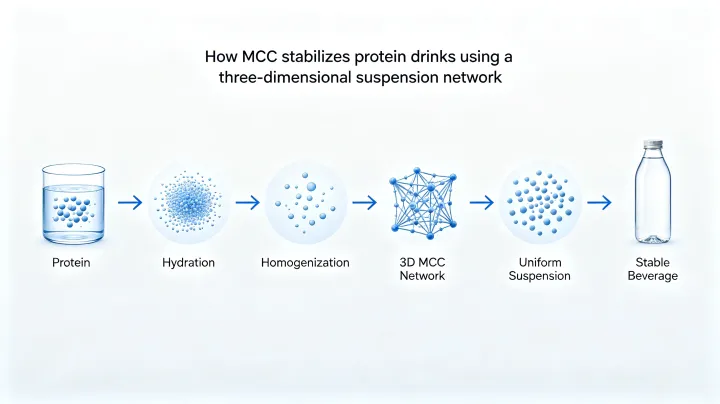
MCC in protein drinks has become one of the most effective solutions for improving beverage stability, texture, and consumer experience. As global demand for ready-to-drink (RTD) protein beverages, sports nutrition products, meal replacements, and plant-based protein drinks continues to grow, manufacturers face increasing challenges in maintaining uniform suspension, preventing sedimentation, and delivering a smooth, creamy mouthfeel throughout the product’s shelf life. Consequently, selecting the right protein drink stabilizer has become a critical formulation decision.As illustrated in Figure 1, MCC provides multiple functional benefits in protein beverages, including suspension stability, improved mouthfeel, and extended shelf life.
Figure 1 summarizes the primary advantages of using MCC in protein beverages. Besides improving suspension stability, MCC contributes to a smoother mouthfeel, better visual appearance, and enhanced storage stability. These combined benefits explain why MCC has become one of the most widely used stabilizers in dairy protein drinks, plant-based beverages, and nutritional formulations.
Among today’s available hydrocolloids, microcrystalline cellulose in protein drinks stands out because it delivers far more than simple viscosity enhancement. Instead of merely thickening the liquid, colloidal MCC creates a three-dimensional network that physically supports suspended protein particles, helping maintain product homogeneity even during long-term storage. As a result, formulators increasingly choose MCC for protein beverages that demand excellent suspension stability, clean texture, and consistent appearance.
Today, manufacturers widely use MCC in protein drinks across whey protein shakes, casein beverages, chocolate milk, high-protein dairy drinks, meal replacement beverages, soy protein drinks, pea protein beverages, oat-based nutritional drinks, and medical nutrition products. Furthermore, MCC works synergistically with other hydrocolloids such as sodium carboxymethyl cellulose (CMC), xanthan gum, and carrageenan, allowing formulators to optimize suspension stability while controlling viscosity and production costs.
This comprehensive guide explains how MCC works in protein beverages, explores its suspension mechanism, compares it with other beverage stabilizers, and provides practical formulation recommendations for selecting the right MCC grade for your application.
Figure 2. Three-dimensional cellulose network formed by MCC to stabilize protein particles.
As shown in Figure 2, MCC creates a three-dimensional cellulose network that physically supports protein particles and minimizes sedimentation.
Unlike conventional gums that rely primarily on viscosity, MCC stabilizes protein beverages through a three-dimensional cellulose network. This structure distributes protein particles more uniformly throughout the liquid phase, thereby reducing sedimentation while maintaining a clean and refreshing mouthfeel.
Over the past decade, the global protein beverage market has grown remarkably, driven by rising consumer demand for convenient nutrition, sports recovery, weight management, and healthy aging. Today, RTD protein shakes, meal replacement beverages, and plant-based protein drinks rank among the fastest-growing categories in the food and beverage industry. As consumers seek products that combine high nutritional value with excellent taste, manufacturers face growing pressure to deliver beverages that remain stable throughout their entire shelf life.
However, producing a stable protein beverage involves far more than simply dispersing protein powder in water. Most protein ingredients—including whey, casein, soy, pea, and oat protein—are naturally insoluble or only partially soluble. As a result, protein particles gradually settle during storage, causing sedimentation, phase separation, and an unattractive appearance that increases the risk of product complaints.
At the same time, modern formulations have grown more complex, incorporating higher protein concentrations, lower sugar, added fiber, vitamins, and probiotics. Each additional ingredient influences suspension stability and viscosity, so selecting the right stabilizer has become one of the most important formulation decisions manufacturers make.
Among today’s hydrocolloids, MCC in protein drinks has emerged as one of the most reliable stabilization technologies. Unlike conventional thickeners that rely primarily on increasing viscosity, colloidal microcrystalline cellulose creates a three-dimensional network throughout the beverage that physically supports suspended particles and slows sedimentation—without producing an excessively thick or gummy mouthfeel. It also performs effectively across both dairy-based and plant-based formulations and works synergistically with CMC, xanthan gum, and pectin, allowing formulators to balance stability, texture, and cost.
Many developers initially assume that increasing viscosity alone prevents protein sedimentation. In reality, viscosity-based stabilization only slows particle settling, while colloidal MCC’s three-dimensional network provides structural support—explaining why MCC-stabilized RTD beverages often achieve significantly longer shelf life than those relying on viscosity modifiers alone.
Microcrystalline cellulose (MCC) is a purified, partially depolymerized cellulose derived from natural plant fibers, typically wood pulp or cotton linters. Through controlled acid hydrolysis, manufacturers remove the amorphous regions of cellulose while preserving its crystalline structure, producing a white, odorless, insoluble powder with excellent physical stability. Because cellulose is renewable and plant-derived, food-grade MCC fits comfortably into clean-label, vegan, gluten-free, and non-GMO formulations.
Although conventional MCC serves widely as a pharmaceutical excipient, MCC in protein drinks appears in a different form. Rather than using dry pharmaceutical grades alone, beverage manufacturers select colloidal microcrystalline cellulose—a co-processed system combining MCC with a small amount of sodium carboxymethyl cellulose (CMC). During manufacturing, CMC adsorbs onto the MCC particle surface, preventing irreversible aggregation and allowing uniform dispersion in water. Consequently, the system forms a stable colloidal dispersion rather than behaving like an insoluble powder.
This distinction matters because conventional MCC particles alone cannot remain evenly dispersed in liquid beverages for extended periods. Colloidal MCC, by contrast, maintains a fine, uniform particle distribution that builds a microscopic three-dimensional network throughout the beverage, supporting suspended protein particles, cocoa solids, fiber, and minerals while preserving a smooth, homogeneous appearance.
Colloidal MCC also performs well across whey protein isolate (WPI), whey protein concentrate (WPC), casein, milk protein concentrate (MPC), soy, pea, oat, rice, and blended plant proteins. Because its stabilization mechanism is physical rather than chemical, it remains effective even in formulations containing vitamins, minerals, cocoa, or probiotics. From a processing standpoint, MCC tolerates high-shear mixing, homogenization, UHT processing, and aseptic filling while maintaining its suspension performance throughout commercial shelf life.
| Property | Conventional MCC | Colloidal MCC |
|---|---|---|
| Physical form | Dry cellulose powder | Co-processed cellulose dispersion |
| Water behavior | Insoluble particles | Stable colloidal suspension |
| Beverage stability | Poor | Excellent |
| Suspension mechanism | None | Three-dimensional network |
| Protein drink application | Rarely used | Industry standard |
| Typical use | Pharmaceutical tablets | Protein drinks, dairy beverages, plant-based beverages |
Expert Tip: Standard pharmaceutical MCC grades cannot form a stable suspension on their own. Beverage manufacturers should therefore choose colloidal MCC, which combines microcrystalline cellulose with CMC to build the structural network required for long-term suspension stability.
MCC in protein drinks stabilizes suspended particles by forming a three-dimensional network rather than simply increasing viscosity. This structural mechanism traps protein particles, reduces sedimentation, improves mouthfeel, and maintains stability throughout shelf life—making MCC a preferred ingredient for RTD protein beverages.
Why protein drinks separate: Unlike soft drinks, protein beverages contain a high concentration of dispersed solids, including milk proteins, plant proteins, minerals, and fiber. These particles never truly dissolve; instead, they remain suspended as a colloidal dispersion. Because gravity continuously pulls larger particles downward (per Stokes’ Law), manufacturers frequently observe sediment, layer separation, grainy mouthfeel, and poor redispersibility.
Why viscosity alone falls short: Formulators often try to solve sedimentation by adding thickeners such as xanthan gum, guar gum, or CMC. While thicker liquids slow settling velocity, consumers quickly notice gummy mouthfeel, reduced drinkability, and a sticky aftertaste. More importantly, viscosity only delays sedimentation—it never truly stops it.
The three-dimensional network: Colloidal MCC works differently. When dispersed under high shear, microscopic cellulose particles interact with CMC to form an interconnected network that physically traps protein particles, preventing them from settling under gravity. This mechanism, often called structural stabilization, forms in five stages: MCC particles hydrate during high-shear mixing; CMC adsorbs onto the cellulose surface; millions of particles interact to build the network; proteins become physically suspended within it; and the network resists gravity while remaining fluid enough to drink comfortably.
MCC and CMC work together: MCC provides the structural skeleton and creates the suspension network, while CMC acts as a protective colloid that keeps cellulose particles separated, improves hydration, and enhances protein compatibility. Neither ingredient alone achieves the same performance—only the combination builds the highly stable colloidal network used across the beverage industry.
Processing resilience: Properly dispersed colloidal MCC remains functional through high-shear mixing, homogenization, UHT sterilization, pasteurization, aseptic filling, and ambient storage. Unlike hydrocolloids that lose viscosity after mechanical shear, MCC’s network rebuilds rapidly, contributing to long shelf life.
Typical dosage ranges from 0.25% in milk protein drinks up to 1.00% in high-protein RTD shakes, though actual levels should always be optimized through pilot-scale trials. Common formulation mistakes include insufficient high-shear dispersion, incorrect hydration sequence, inadequate homogenization, and using food-grade MCC instead of colloidal beverage-grade MCC—all of which reduce suspension performance if left uncorrected.
| Protein | Sedimentation Risk | MCC Level | Best Grade |
|---|---|---|---|
| Whey Protein (WPI/WPC) | Low–Moderate | 0.20–0.50% | ACT591 |
| Milk Protein Concentrate (MPC) | Moderate | 0.30–0.60% | ACT538 |
| Casein | Moderate–High | 0.40–0.80% | ACT3212 |
| Soy Protein | High | 0.50–1.00% | ACT538 |
| Pea Protein | High | 0.50–1.00% | ACT611 |
| Oat Protein | High | 0.50–1.00% | ACT521 |
| Rice Protein | High | 0.50–1.00% | ACT611 |
| Mixed Plant Protein Blends | Very High | 0.60–1.00% | ACT3212 + CMC/Xanthan |
Protein beverages differ significantly in protein source, particle size, viscosity, heat stability, and processing conditions. Consequently, selecting the appropriate colloidal microcrystalline cellulose (MCC) grade and dosage is essential for achieving long-term suspension stability while maintaining a smooth drinking experience.
Unlike conventional thickeners that rely primarily on viscosity, colloidal MCC forms a three-dimensional cellulose network that physically supports suspended protein particles. As a result, it minimizes sedimentation, improves visual stability, and preserves a clean mouthfeel without making beverages overly thick.
The following sections explain how colloidal MCC performs across different protein beverage categories and provide practical formulation recommendations for product developers.
Whey protein beverages represent one of the fastest-growing segments in the global RTD market. However, increasing protein content also increases the tendency for protein aggregation and sedimentation, particularly after UHT processing and during extended storage.
Colloidal MCC forms a three-dimensional suspension network that physically supports whey protein particles throughout the beverage. Consequently, manufacturers can significantly reduce sedimentation while maintaining excellent drinkability and a smooth mouthfeel.
Furthermore, colloidal MCC tolerates UHT sterilization well, making it particularly suitable for shelf-stable whey protein drinks.
| Parameter | Recommendation |
|---|---|
| Recommended Product | Acta Colloidal MCC 3212 |
| Typical Dosage | 0.30–0.45% |
| Protein Type | Whey Protein Concentrate / Whey Protein Isolate |
| Protein Content | 6–12% |
| Recommended pH | 6.5–6.8 |
| Homogenization | 20–25 MPa |
| Heat Treatment | UHT 137–140°C |
| Expected Shelf Life | Up to 12 Months |
| Label Claims | Clean Label • Halal Certified • Food Grade |
| Problem | Solution |
|---|---|
| Protein sedimentation | Increase CMCC dosage |
| Floating particles | Improve hydration |
| Thick mouthfeel | Reduce dosage |
| Phase separation | Increase homogenization pressure |
For most whey protein beverages, Acta Colloidal MCC CM-01 provides an excellent balance between suspension stability, clean mouthfeel, and UHT stability.
Suitable for:
Whey Protein RTD
Sports Drinks
High Protein Milk
UHT Protein Beverages
Ready-to-Drink Nutrition
When protein concentration exceeds 10%, combining colloidal MCC with a small amount of gellan gum often produces significantly better long-term suspension than increasing MCC dosage alone.
If you’re developing whey protein beverages, our application engineers can recommend suitable colloidal MCC grades, dosage levels, and processing parameters based on your formulation.
Milk protein beverages contain both casein and whey proteins, creating more complex stabilization challenges during homogenization and UHT treatment. Phase separation, protein sedimentation, and viscosity changes may occur during storage if the stabilizer system is not properly optimized.
Microcrystalline cellulose gel helps maintain homogeneous protein distribution while preserving the creamy texture expected in flavored milk, chocolate milk, and high-protein dairy beverages.
| Parameter | Recommendation |
|---|---|
| Recommended Product | Acta 591 |
| Dosage | 0.25–0.40% |
| Protein | 3–8% |
| pH | 6.6–6.8 |
| Suitable Process | HTST / UHT |
| Shelf Life | 9–12 Months |
Plant proteins generally possess larger particle sizes and lower solubility than dairy proteins, making sedimentation one of the biggest formulation challenges. Soy protein, pea protein, oat protein, rice protein, and almond protein all benefit from suspension systems rather than viscosity-based stabilization.
Colloidal MCC forms a cellulose network that supports dispersed plant protein particles throughout storage while maintaining excellent pourability and a clean-label formulation.
| Protein Source | Recommended Product | Typical Dosage | Recommended pH | Suitable Process |
|---|---|---|---|---|
| Soy Protein | Acta Colloidal MCC | 0.40–0.60% | 6.8–7.2 | UHT |
| Pea Protein | Acta Colloidal MCC | 0.45–0.70% | 6.6–7.0 | UHT |
| Oat Protein | Acta Colloidal MCC | 0.35–0.60% | 6.5–6.8 | UHT |
| Rice Protein | Acta Colloidal MCC | 0.40–0.65% | 6.5–7.0 | UHT |
| Almond Protein | Acta Colloidal MCC | 0.30–0.50% | 6.5–6.8 | HTST / UHT |
Plant proteins typically require slightly higher colloidal MCC dosages than dairy proteins because their larger particles sediment more rapidly during storage.
Our technical team can recommend the appropriate colloidal MCC grade based on your protein source, processing method, and desired shelf life.
Sports nutrition beverages require rapid consumption, excellent suspension, and a light mouthfeel. Athletes generally reject beverages that become excessively thick or gummy after storage.
High-protein RTD shakes, often delivering 25–50 g of protein, face the highest sedimentation risk in the industry. MCC’s structural suspension allows manufacturers to maintain stability without sacrificing drinkability.
| Parameter | Recommendation |
|---|---|
| Recommended Product | Acta Colloidal MCC 611 |
| Typical Dosage | 0.30–0.45% |
| Protein Type | Whey Protein Isolate |
| Mouthfeel | Smooth |
| Shelf Life | Up to 12 Months |
Meal replacement beverages combine proteins, vegetable oils, dietary fiber, vitamins, and minerals into highly complex systems. Maintaining uniform distribution of all components throughout shelf life is critical.
| Parameter | Recommendation |
|---|---|
| Recommended Product | Acta Colloidal MCC 521 |
| Typical Dosage | 0.40–0.80% |
| Protein Level | 15–30 g |
| Oil Content | 2–6% |
| Processing | UHT |
For formulations containing both high protein and high oil levels, colloidal MCC performs best when used as part of a complete stabilizer system rather than as the sole stabilizing ingredient.
Medical nutrition beverages require exceptional physical stability because patients depend on consistent nutrient intake throughout the product’s shelf life.
Colloidal MCC helps maintain uniform distribution of proteins and micronutrients while supporting long-term storage stability.
| Parameter | Recommendation |
|---|---|
| Recommended Product | Acta Colloidal MCC 3212 |
| Typical Dosage | 0.30–0.60% |
| Sterilization | UHT |
| Shelf Life | Up to 12 Months |
| Applications | Oral Nutrition • Elderly Nutrition • Tube Feeding |
| Challenge | Possible Cause | Recommended Solution |
|---|---|---|
| Protein sedimentation | Insufficient colloidal MCC | Increase dosage by 0.05–0.10% |
| Layer separation | Inadequate homogenization | Increase homogenization pressure to 20–25 MPa |
| Excessive viscosity | Overuse of stabilizer | Reduce colloidal MCC dosage |
| Floating particles | Poor hydration | Pre-disperse colloidal MCC before adding protein |
| Gritty mouthfeel | Large protein particles | Improve hydration and homogenization |
Figure 6. Typical manufacturing process for protein drinks formulated with MCC.
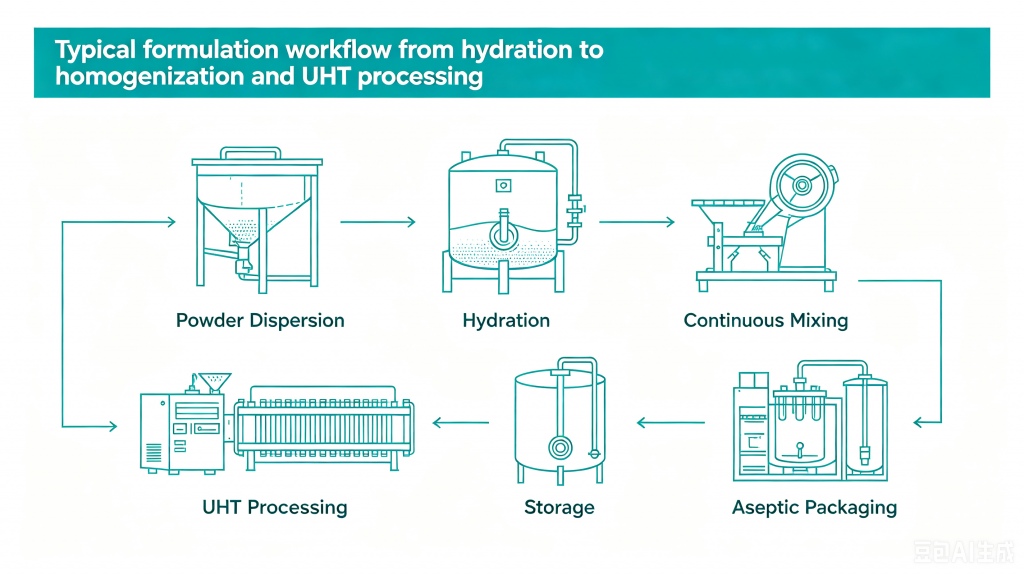
As illustrated in Figure 6, the sequence of ingredient addition plays a critical role in achieving complete MCC hydration.
Proper processing is just as important as ingredient selection. Complete hydration before homogenization helps maximize MCC performance while minimizing agglomeration and improving final beverage stability.
To use MCC in protein drinks successfully, formulators should select the appropriate colloidal MCC grade, disperse it under high-shear mixing, and then add proteins and other ingredients in the correct sequence. Proper hydration, homogenization, and heat treatment are essential for developing a stable suspension network.
Standard pharmaceutical or food-grade MCC powders function as fillers and cannot deliver beverage suspension performance. Formulators should instead choose colloidal MCC, engineered specifically for liquid systems.
Using too little MCC risks sedimentation, while excessive addition raises viscosity and cost unnecessarily. Starting points include 0.30–0.60% for whey drinks, 0.40–0.80% for pea protein beverages, and 0.50–1.00% for high-protein RTD products, with higher protein content generally requiring more structural support.
Add water to the tank, begin high-shear agitation, slowly disperse colloidal MCC, allow complete hydration, then add proteins, sugars, oils, and emulsifiers before homogenizing and heat-treating. This order lets MCC build its network before proteins increase system viscosity.
Colloidal MCC typically requires 15–30 minutes of high-shear mixing to disperse fully. Incomplete hydration produces visible particles, poor suspension, and phase separation, so proteins should never be introduced before hydration finishes.
High-pressure homogenization (typically 15–20 MPa single-stage, or 20–30/3–5 MPa two-stage) reduces particle size and distributes proteins uniformly, though exact pressure depends on protein source, fat content, and equipment.
Colloidal MCC performs well under UHT, HTST pasteurization, retort processing, and aseptic filling, making it especially suitable for long-shelf-life protein drinks.
Manufacturers should evaluate sedimentation height, phase separation, viscosity, and redispersibility under accelerated (37°C, 45°C) and real-time storage conditions before commercial launch.
A typical starting formulation includes water as the balance, 8.0% whey protein isolate, 4.0% sugar, 1.5% sunflower oil, 0.45% colloidal MCC, 0.20% lecithin, and 0.15% flavor, adjusted with vitamins and minerals as required. Common mistakes—using ordinary MCC instead of colloidal MCC, adding proteins before full hydration, or applying insufficient homogenization pressure—can usually be corrected by optimizing ingredient sequence and processing conditions.
MCC in protein drinks is often preferred when manufacturers need strong suspension stability together with a smooth, drinkable texture. Compared with xanthan gum, MCC creates less gumminess. Compared with CMC alone, MCC provides better structural suspension. For gellan gum, MCC is generally easier to formulate and produces a creamier mouthfeel. Compared with pectin, MCC performs better in many high-protein, neutral-pH beverages.
MCC vs. CMC: CMC mainly stabilizes through viscosity, so it slows sedimentation but allows particles to settle eventually. MCC instead builds a three-dimensional network that physically supports particles, achieving better long-term stability with lower perceived thickness. Microcrystalline cellulose suits high-protein RTD beverages, while CMC works well for moderate-protein products and viscosity adjustment.
MCC vs. xanthan gum: Xanthan gum builds strong viscosity at very low levels but can turn gummy or slimy at higher concentrations. Microcrystalline cellulose delivers suspension with a lighter, creamier mouthfeel, making it attractive for premium nutrition products, while xanthan remains useful for cost-sensitive, highly viscous applications.
MCC vs. gellan gum: Gellan gum suspends particles effectively, especially in clear beverages, but shows greater sensitivity to minerals. Microcrystalline cellulose typically provides a creamier, dairy-like mouthfeel that suits protein shakes and meal replacements better, while gellan remains preferable for clear or low-viscosity suspensions.
MCC vs. pectin: Pectin excels in acidified dairy beverages such as drinking yogurt, whereas MCC often provides better suspension and processing flexibility in neutral-pH, high-protein RTD beverages.
Across suspension stability, mouthfeel, drinkability, UHT compatibility, and high-protein RTD performance, MCC consistently scores highest among these five stabilizers, which explains why premium RTD protein beverages increasingly rely on colloidal MCC or MCC+CMC systems as their primary stabilizers.
Figure 3. Comparison of protein beverages formulated with and without MCC after storage.
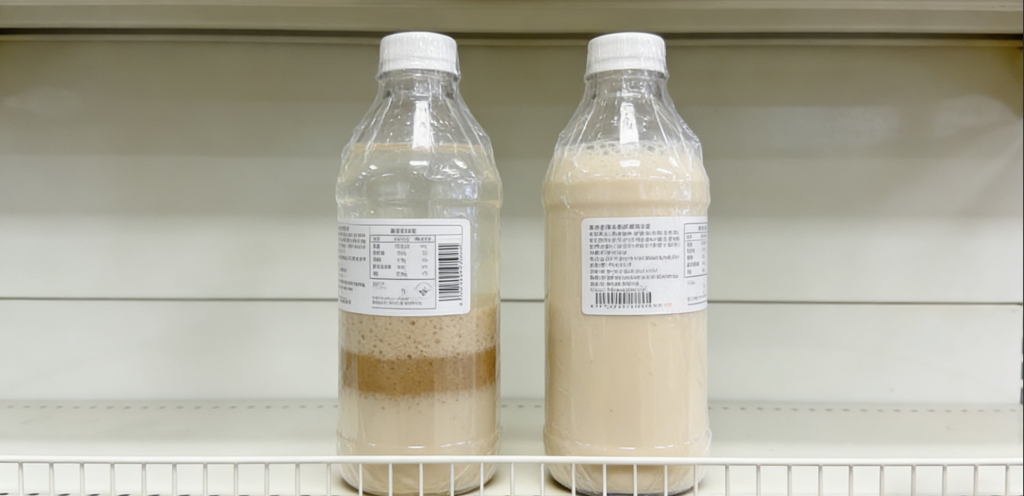
Figure 3 clearly demonstrates the visual improvement in suspension stability achieved with MCC.。
Protein beverages containing MCC remain homogeneous during storage, whereas beverages without MCC typically develop visible sedimentation. Improved suspension stability also enhances consumer confidence because appearance is one of the first quality attributes evaluated before consumption.
Although MCC in protein drinks delivers excellent suspension stability, formulation challenges can still occur when the ingredient is used incorrectly. The most frequent issues include protein sedimentation, phase separation, incomplete hydration, excessive viscosity, gritty mouthfeel, and instability after UHT processing—and most can be resolved by optimizing dosage, processing sequence, and homogenization.
Protein sedimentation typically results from low MCC dosage, oversized particles, or insufficient homogenization. Manufacturers can increase colloidal MCC within the recommended range, improve homogenization efficiency, and validate results through accelerated storage testing.
Phase separation usually stems from incomplete hydration or an incorrect ingredient sequence. Fully hydrating MCC before adding proteins and following the recommended mixing order typically resolves this issue.
Gritty or sandy mouthfeel often traces back to poorly dispersed plant proteins or inadequate homogenization. Improving high-shear mixing and increasing homogenization pressure generally restores a smooth texture.
commonly arises from overdosing stabilizers. Gradually reducing concentration and rebalancing MCC against other hydrocolloids usually solves the problem while preserving suspension performance.
Instability after UHT processing results from protein denaturation and aggregation during heat treatment. Optimizing UHT temperature, improving pre-heat homogenization, and monitoring pH throughout processing all help minimize post-heating sedimentation.
Floating particles and MCC clumping during production typically stem from entrapped air or improper powder addition. Vacuum deaeration, stronger mixing vortices, and slow, controlled MCC addition under vigorous agitation address these issues effectively.
Declining shelf-life stability after several months often reflects inadequate formulation robustness rather than a flaw in MCC itself. Real-time and accelerated shelf-life studies, combined with optimized dosage and packaging, help manufacturers maintain consistency throughout distribution.
As protein concentration rises from 10–20 g per serving to 40–50 g, MCC demand generally increases from roughly 0.20–0.35% to 0.80–1.00%. Because plant proteins present larger particles and lower solubility than dairy proteins, they typically require MCC levels toward the higher end of these ranges. Overall, most stability problems originate from formulation design rather than the cellulose itself, and systematic troubleshooting during development helps ensure consistent commercial performance.
Customer Challenge
A beverage manufacturer producing a 30 g protein ready-to-drink (RTD) whey protein beverage experienced visible sedimentation after only three weeks of storage at room temperature. Although xanthan gum increased viscosity, the beverage developed an undesirably thick mouthfeel and failed consumer sensory testing.
Solution
Our application team recommended replacing the original stabilizer system with a colloidal microcrystalline cellulose (MCC) and sodium carboxymethyl cellulose (CMC) network. The formulation was optimized using:
Results
No visible sediment after 6 months of storage
Smooth drinking texture without excessive viscosity
Stable protein suspension after transportation simulation
Improved consumer acceptance during sensory evaluation
Figure 9. Commercial case study demonstrating improved protein beverage stability after MCC optimization.
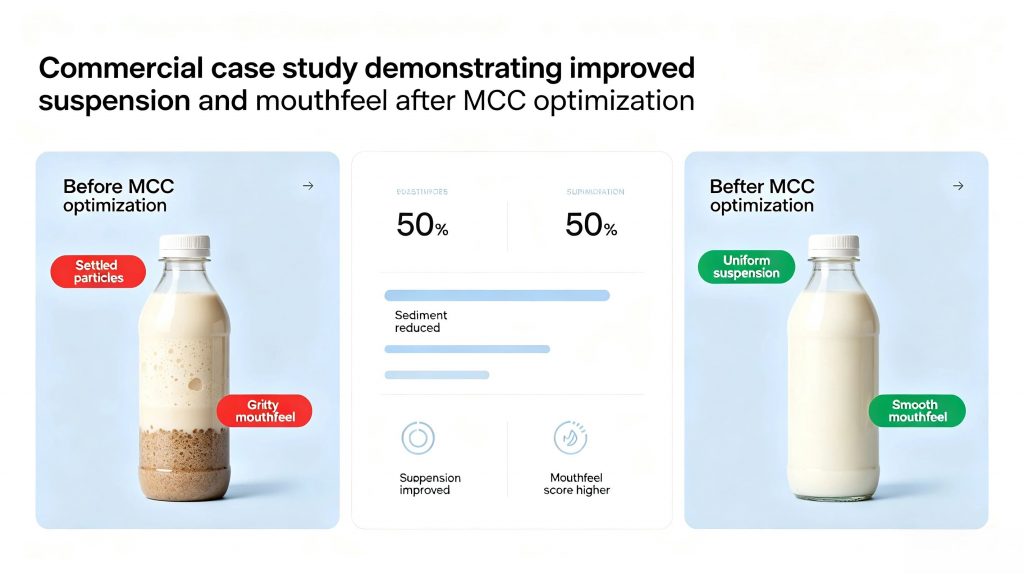
The results presented in Figure 9 demonstrate the practical benefits of optimizing MCC dosage and processing conditions.
Figure Insight: Although formulation details differ among manufacturers, most successful protein beverage developments follow similar optimization principles. Proper MCC selection consistently improves suspension stability and sensory quality.
Customer Challenge
A manufacturer of pea protein beverages encountered severe protein settling and phase separation after UHT processing. Increasing xanthan gum concentration reduced sedimentation but produced an overly gummy texture.
Solution
A suspension system combining colloidal MCC and CMC was introduced.
The optimized formulation included:
Results
Sedimentation reduced by more than 80%
Improved mouthfeel
Uniform appearance throughout shelf life
Better processing stability during filling
Figure 5. Decision Tree for Selecting the Appropriate MCC Grade for Protein Beverages
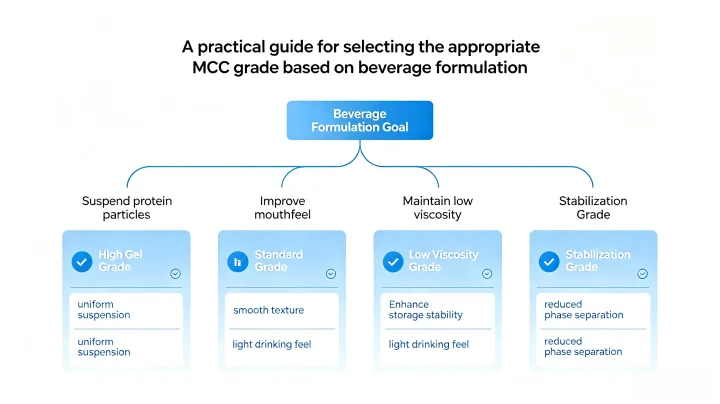
Figure 5 provides a practical framework for selecting the appropriate MCC grade according to beverage formulation requirements.
Figure Insight: Selecting the correct MCC grade at the beginning of product development reduces formulation trials and accelerates commercialization. Factors including protein type, viscosity target, processing method, and shelf-life expectations should all be considered.
Step 1: Select MCC Based on Protein Type
Choosing the right MCC in protein drinks starts with identifying the protein system.
Protein concentration is another critical factor influencing MCC dosage.
| Protein per Serving | Typical MCC Level |
|---|---|
| 10–20 g | 0.20–0.35% |
| 20–30 g | 0.30–0.50% |
| 30–40 g | 0.40–0.70% |
| 40–50 g | 0.80–1.00% |
Higher protein levels generally require a stronger cellulose suspension network to maintain long-term beverage stability.
Different manufacturing processes expose proteins to different levels of thermal and mechanical stress.
Shelf-life expectations also influence stabilizer selection.
The desired drinking experience should also guide MCC selection.
Commercial beverages typically contain additional ingredients such as calcium, vitamins, dietary fiber, probiotics, botanical extracts, and sweeteners. Therefore, formulators should evaluate MCC in protein drinks within the complete formulation rather than relying solely on simplified laboratory systems.
Supplier quality is equally important for successful product development. Manufacturers should verify:
Working with an experienced supplier can significantly reduce formulation time, minimize production risk, and accelerate commercialization.
Figure 7. Long-term storage stability of protein beverages containing MCC.
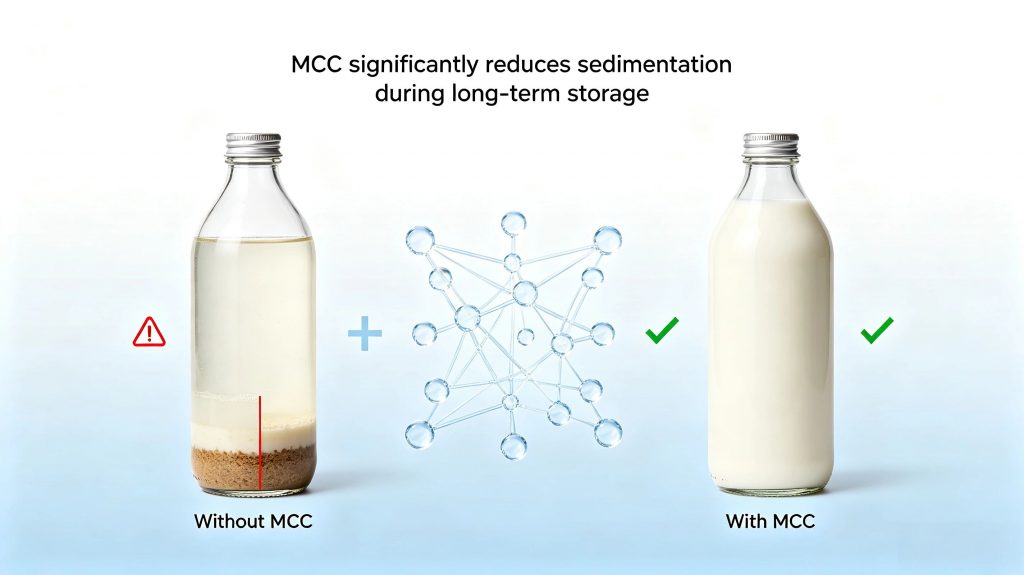
Figure 7 illustrates how MCC maintains beverage homogeneity throughout extended storage.
Figure Insight: Long-term storage stability is one of the most important quality indicators for ready-to-drink protein beverages. MCC significantly reduces sedimentation while maintaining a consistent appearance throughout shelf life.
As global demand for high-protein beverages keeps growing, the role of MCC in protein drinks is expanding beyond traditional suspension stabilization into next-generation beverage innovation. Several major trends will likely increase colloidal MCC adoption over the next decade.
First, rising protein content—30 g, 40 g, even 50 g per serving—creates faster sedimentation and stronger particle interactions, so structural stabilizers like MCC will matter even more as gum-only approaches lose effectiveness. Second, the continued expansion of plant-based protein drinks increases demand for MCC, since pea, oat, soy, and rice proteins generally show poorer suspension stability than dairy proteins. Third, clean-label formulation favors MCC because it originates from purified plant cellulose and supports simple, recognizable ingredient declarations.
Fourth, sugar reduction removes body and mouthfeel that sugar once provided, and colloidal MCC restores creaminess without adding calories. Fifth, AI-assisted formulation is beginning to predict suspension stability and ingredient compatibility, potentially shortening MCC optimization from months to weeks. Sixth, sustainability priorities favor MCC because it derives from renewable, biodegradable cellulose sourced through sustainable forestry.
Seventh, the rapid growth of premium RTD nutrition beverages—medical nutrition, elderly nutrition, and meal replacements—demands structural stabilizers rather than viscosity modifiers alone, since these products combine protein, fiber, calcium, and omega-3 oils in a single formulation. Finally, formulators increasingly design customized stabilizer systems, pairing MCC with CMC, xanthan gum, gellan gum, or pectin, with MCC supplying the structural backbone of the blend.
Because it stabilizes particles, improves mouthfeel, supports clean-label formulation, and enhances shelf stability all at once, colloidal MCC is well positioned to remain one of the most important functional ingredients in next-generation protein beverages.
Colloidal MCC works as a suspension stabilizer, texture enhancer, and mouthfeel improver. It forms a three-dimensional network that supports protein particles, preventing sedimentation and maintaining a uniform appearance in RTD shakes, dairy beverages, and plant-based drinks.
High viscosity makes beverages feel thick and difficult to drink. MCC stabilizes through its cellulose network rather than viscosity alone, achieving better suspension without sacrificing drinkability.
Yes. Regulatory bodies including the U.S. FDA, EFSA, and JECFA recognize food-grade MCC as safe. It passes through the digestive system undigested, functioning as dietary fiber, and is non-toxic, gluten-free, vegan, and non-GMO.
Most formulations use 0.20–0.35% for standard protein drinks, 0.30–0.60% for dairy beverages, and 0.50–1.00% for plant protein or high-protein shakes, confirmed through pilot trials.
Yes. Plant proteins often need more stabilization than dairy proteins due to larger particle size and lower solubility, and colloidal MCC effectively suspends pea, soy, oat, and rice proteins.
No. MCC is virtually tasteless and odorless, enhancing body and creaminess without altering flavor.
Only slightly. It stabilizes primarily through its cellulose network, allowing manufacturers to improve suspension while keeping a light, drinkable texture.
CMC is water-soluble and stabilizes mainly through viscosity, while MCC is insoluble and builds a physical network. Many manufacturers combine both for optimal performance.
Partially. Xanthan offers strong viscosity at low levels, while MCC provides superior structural suspension and creaminess; many formulators combine both.
Yes. Its network remains stable after heat treatment and helps reduce sedimentation caused by protein aggregation.
Yes. Properly dispersed MCC creates a rich, creamy texture without added fat, reducing grittiness and improving overall drinking experience.
Absolutely—MCC performs particularly well in beverages with 30–50 g of protein per serving, where its network supports large numbers of suspended particles.
Add it slowly to water under high-shear mixing before introducing proteins or minerals, ensuring complete hydration before further processing.
Yes, including CMC, xanthan gum, gellan gum, pectin, and carrageenan, often producing synergistic improvements in stability and mouthfeel.
With proper homogenization and formulation design, MCC can help maintain stability throughout typical commercial shelf lives of 12–18 months.
Yes. It derives from purified plant cellulose and is vegan, gluten-free, and non-GMO, aligning with modern clean-label strategies.
MCC contributes virtually no calories, functioning as insoluble dietary fiber that passes through the digestive system unchanged.
Evaluate product consistency, regulatory certifications, technical support, application expertise, and global supply capability.
Yes, including meal replacement drinks, clinical nutrition beverages, and elderly or pediatric nutrition products that require reliable suspension stability.
Rising protein content, cleaner labels, improved texture, and longer shelf-life requirements all drive manufacturers toward MCC’s structural suspension, creamy mouthfeel, and broad compatibility with modern beverage formulations.
Not always. Xanthan gum offers strong viscosity at very low usage levels, which some formulations still need for texture or cost reasons. MCC excels at structural suspension and creamy mouthfeel rather than pure thickening. Many manufacturers combine both ingredients rather than fully replacing one with the other, using MCC for suspension and a small amount of xanthan for viscosity fine-tuning.
Yes, though the mechanism differs slightly. Collagen peptides are largely soluble, so they don’t sediment the way whey or plant proteins do. MCC still adds body and creamy mouthfeel to collagen beverages and becomes essential when the formulation also contains insoluble ingredients like minerals, fiber, or cocoa alongside the collagen.
Yes. Colloidal MCC tolerates ultra-high-temperature (UHT) processing well and rebuilds its suspension network quickly after high-shear homogenization and thermal treatment. This resilience makes it a preferred stabilizer for shelf-stable, ambient-storage protein beverages that require 12–18 months of stability.
For beverages delivering around 30 g of protein per serving, manufacturers typically use 0.50–0.80% colloidal MCC, depending on the protein source. Plant proteins usually require the higher end of this range, while whey or milk proteins often perform well closer to 0.50%. Pilot-scale trials should always confirm the final dosage.
Colloidal MCC can lose stability at low pH because the CMC component that keeps MCC particles dispersed becomes less effective below approximately pH 4.0–4.5. For acidified beverages such as drinking yogurt or cultured milk drinks, formulators often pair MCC with pectin, which performs better under acidic conditions, rather than relying on MCC alone.
As the global market for ready-to-drink protein beverages continues to expand, manufacturers face increasing pressure to deliver products that combine excellent nutrition, outstanding sensory quality, and long shelf life. Meeting these expectations requires more than high-quality protein—it also depends on choosing the right stabilization system.
Throughout this guide, we have explored why MCC in protein drinks has become one of the most effective solutions for modern beverage formulations. Unlike conventional hydrocolloids that rely primarily on viscosity, colloidal microcrystalline cellulose forms a three-dimensional network that physically supports suspended protein particles, reducing sedimentation, enhancing creamy mouthfeel, and maintaining consistency throughout storage.
MCC in protein drinks performs well across whey beverages, milk protein drinks, plant-based formulations, meal replacements, medical nutrition products, and high-protein RTD shakes. Its compatibility with CMC, xanthan gum, pectin, and carrageenan allows formulators to build customized stabilizer systems suited to different processing conditions and market requirements. Selecting the right grade—based on protein type, concentration, heat treatment, and shelf-life target—remains just as important as the ingredient itself.
Looking ahead, growing demand for clean-label beverages, higher protein content, plant-based nutrition, and premium functional drinks will continue to increase the importance of structural stabilizers like MCC.
Figure 10. Food-grade MCC solutions for protein beverage manufacturers worldwide.
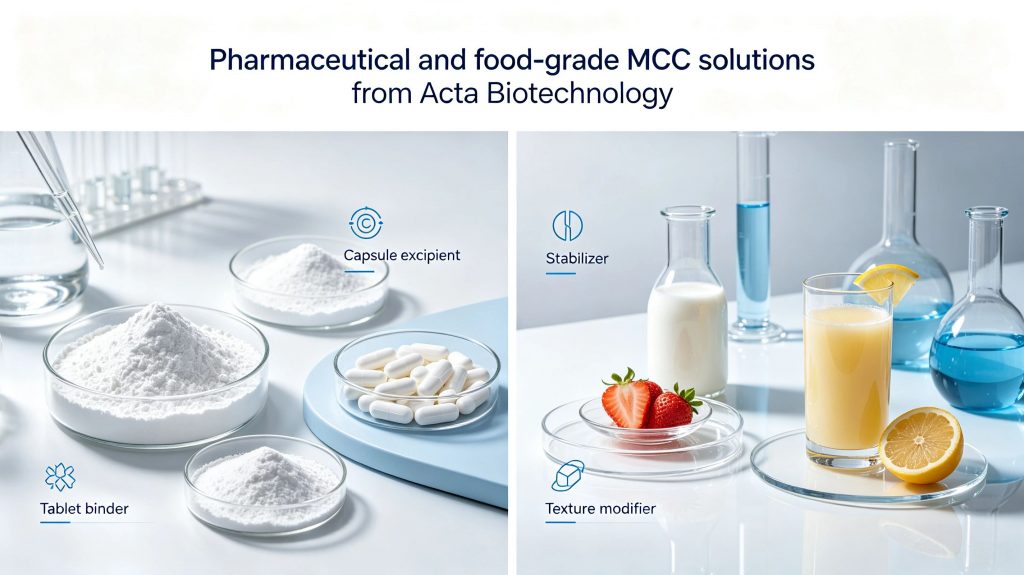
As summarized in Figure 10, selecting a reliable MCC supplier is equally important for ensuring consistent product quality and long-term manufacturing success.
Beyond selecting the correct MCC grade, manufacturers should also evaluate supplier consistency, regulatory documentation, and technical support. These factors contribute significantly to successful commercialization and stable long-term production.
At Acta Biotechnology, we specialize in supplying high-performance food-grade microcrystalline cellulose and colloidal MCC stabilizer systems for beverage manufacturers worldwide. Our technical team works closely with customers to optimize formulations for suspension stability, mouthfeel, and shelf-life performance, offering:
Download Beverage Formulation Guide
↓
↓
↓
↓
↓
↓
↓
