

MCC in Plant-Based Milk has become one of the most important formulation topics in the rapidly growing plant-based beverage industry. As oat milk, almond milk, soy milk, and other dairy alternatives continue to gain market share worldwide, manufacturers face increasing challenges related to sedimentation, phase separation, protein instability, and shelf-life performance.
| Plant-Based Milk Type | Main Stability Problem | Recommended Stabilizer |
|---|---|---|
| Oat Milk | Fiber Sedimentation | MCC + CMC |
| Almond Milk | Particle Settling | MCC |
| Soy Milk | Protein Aggregation | MCC + CMC |
| Coconut Milk | Fat Creaming | MCC + Carrageenan |
| Pea Protein Milk | Protein Sedimentation | MCC + CMC |
The global plant-based beverage market has grown explosively over the past decade, and it shows no sign of slowing down. Oat milk, almond milk, soy milk, coconut milk, and pea protein beverages have moved far beyond niche health-food shelves and now sit confidently in mainstream supermarkets, cafés, and online grocery carts worldwide. Consumers reach for these products every day, drawn by sustainability concerns, lactose intolerance, ethical values, and a genuine craving for variety.
Yet popularity brings pressure. As demand rises, manufacturers must also solve a problem that dairy producers rarely face: keeping a complex, plant-derived liquid visually appealing and texturally consistent from the production line to the consumer’s glass. Unlike dairy milk, plant-based beverages combine plant proteins, insoluble fibers, minerals, vegetable oils, and fortification ingredients in a single system. Because these components differ in density, particle size, and water affinity, they naturally drift apart during storage. Consequently, sedimentation, creaming, protein aggregation, and phase separation rank among the most common—and most damaging—stability issues that beverage formulators encounter.
Without an effective Plant-Based Milk Stabilizer, consumers frequently notice several telltale defects, including:
Fortunately, modern beverage manufacturers now rely on MCC in Plant-Based Milk formulations to solve exactly this problem. Microcrystalline Cellulose (MCC) has emerged as one of the most effective ingredients available today because it offers a unique suspension mechanism that works in harmony with plant proteins and hydrocolloid systems. Because MCC stabilizes through physical structure rather than excessive viscosity, it allows formulators to achieve long-term suspension stability, superior texture, and extended shelf life—all without sacrificing the light, drinkable mouthfeel that consumers expect.
Today, MCC has become a preferred MCC dairy alternative stabilizer for oat milk, almond milk, soy milk, coconut milk, and pea protein beverages worldwide. As an MCC dairy alternative stabilizer, it helps manufacturers achieve long-term suspension stability, creamy texture, and extended shelf life across multiple plant-based beverage categories. In this comprehensive guide, you will learn exactly why plant-based milk becomes unstable, how MCC suspension technology works at a mechanical level, how MCC performs across every major plant-based milk category, and how it compares with alternative stabilizers such as CMC, gellan gum, xanthan gum, and modified starch. By the end, you will understand why so many manufacturers now consider MCC the gold standard Plant-Based Beverage Stabilizer.
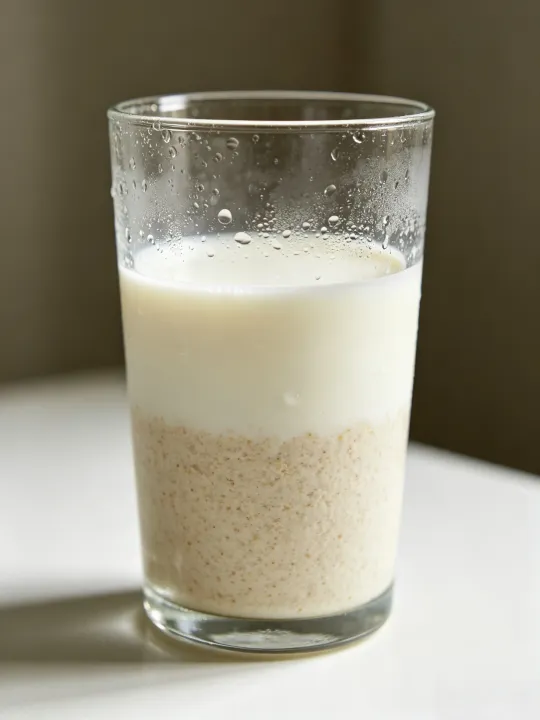
Before selecting the optimal stabilizer system, formulators must first understand why plant-based beverages are inherently unstable. Dairy milk benefits from naturally emulsified fat globules and casein micelles that have evolved over millions of years to stay suspended. Plant-based beverages, on the other hand, consist of dispersed particles derived from nuts, grains, legumes, or seeds—and nature never designed these particles to remain evenly distributed in a liquid for weeks at a time.
These particles differ dramatically in density, particle size, surface charge, and water affinity. Because of these differences, gravity continuously pulls the system toward instability from the moment processing finishes. The following defects appear again and again across the industry.
Heavy particles gradually settle at the bottom of the package. Oat fiber, almond solids, cocoa particles, and added calcium minerals all behave this way. Once sediment forms, consumers must shake the bottle vigorously before pouring, and even then, the texture often remains uneven.
In oil-rich beverages, droplets rise toward the surface instead of sinking. This issue shows up frequently in almond milk, coconut milk, and mixed nut beverages, where a thin oily layer collects at the top of the package and signals “spoiled” to even the most loyal customer.
Plant proteins can clump together under heat treatment or pH fluctuations, particularly in pea protein drinks, soy beverages, and other high-protein formulations. Once aggregation begins, the beverage develops a grainy or chalky mouthfeel that no amount of marketing can disguise.
Over time, an unstabilized beverage gradually separates into distinct visible layers. Consumers almost always interpret this separation as spoilage or low quality, even though the product may still be safe and nutritionally intact.
Most plant-based beverages undergo HTST pasteurization or UHT processing, followed by extended storage and distribution. Without proper stabilization, every stage of this journey—from the filling line to the retail shelf to the consumer’s refrigerator—chips away at product quality.
Figure 1 Image Name: plant-based-milk-stability-problems.jpg ALT Text: Plant-based milk showing sedimentation and phase separation without MCC stabilizer
Figure 1 illustrates the common stability defects found in oat milk and other plant-based beverages, including sedimentation, creaming, and phase separation that develop during storage. Because these defects compound over time, manufacturers must address them early in the formulation process rather than attempting to fix them after launch.
Microcrystalline Cellulose, commonly abbreviated as MCC, is a purified, partially depolymerized cellulose derived from natural plant fiber. Unlike conventional thickeners, MCC does not primarily function by increasing viscosity. Instead, it relies on a far more sophisticated physical suspension mechanism that sets it apart from nearly every other stabilizer on the market.
After undergoing high-shear processing, MCC particles form a three-dimensional colloidal network that spreads throughout the entire beverage. This network simultaneously delivers four critical benefits:
Because MCC achieves stability through structure rather than through brute-force thickening, it allows manufacturers to create beverages that remain smooth, drinkable, and stable—without becoming overly thick or syrupy. This balance explains why MCC has become one of the cornerstone ingredients within modern MCC Suspension Technology, and why so many formulators now treat it as the default starting point when developing a new plant-based beverage.
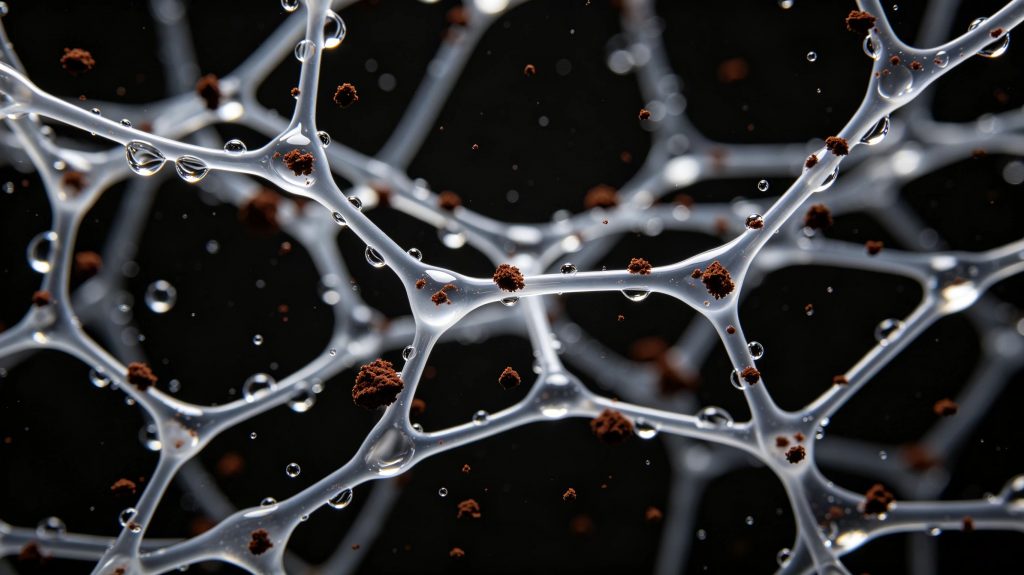
The effectiveness of MCC in plant-based beverages results from several complementary mechanisms working together. Understanding each mechanism helps formulators dose MCC correctly and pair it with the right complementary ingredients.
When formulators properly disperse and homogenize MCC, the particles link together to create an interconnected microscopic network. This network acts as a physical scaffold that spans the entire beverage. Instead of allowing proteins, minerals, fibers, and cocoa particles to settle freely under gravity, the network traps them in place within the liquid matrix. As a result, sedimentation drops dramatically, often by a wide margin compared to unstabilized formulations.Manufacturers looking to reduce sedimentation problems can also explore our detailed guide on food suspension agents, which explains the most effective technologies used to keep beverage particles uniformly dispersed during storage.
One of the most valuable features of MCC suspension technology involves the creation of low-level yield stress. In practical terms, yield stress means that particles must overcome a small minimum force before they can move at all. Because gravity alone cannot generate enough force to overcome this threshold, sedimentation slows dramatically, creaming decreases, and phase separation becomes minimal—all while the beverage maintains excellent drinkability rather than turning into a gel.
MCC performs exceptionally well when combined with hydrocolloids such as CMC, xanthan gum, gellan gum, or carrageenan. These combined systems create multi-layer stabilization mechanisms: MCC contributes the physical suspension network, while the accompanying hydrocolloid contributes viscosity control and water management. Together, these two stabilization approaches provide noticeably superior stability compared with either ingredient used alone.
Replicating dairy-like creaminess remains one of the greatest challenges in plant-based beverage development. MCC helps formulators create fuller body, improved texture, enhanced creaminess, and better overall sensory perception—all without increasing fat content. Consequently, MCC proves especially valuable in reduced-fat and low-calorie beverage formulations, where manufacturers cannot rely on extra oil to deliver a satisfying mouthfeel.For a broader comparison of viscosity modifiers and texture-enhancing ingredients, see our complete food thickener guide, which covers MCC, CMC, HPMC, and other industrial thickening technologies.This makes MCC a critical component in any modern plant-based beverage stabilizer system.
Plant-based milk manufacturers face different stabilization challenges depending on the raw material they use. Oat milk struggles primarily with fiber and starch sedimentation, almond milk battles particle settling, soy milk must manage protein behavior during UHT processing, and coconut milk fights persistent fat creaming. Because MCC functions as a versatile Plant-Based Milk Stabilizer, it addresses all of these issues through the same underlying suspension technology, even though each application requires a tailored approach.
Oat milk has become one of the fastest-growing dairy alternatives worldwide, driven by its dairy-free positioning, sustainability advantages, mild flavor profile, and broad consumer appeal. However, oat beverages present several formulation challenges that other categories do not share.MCC is widely recognized as one of the most effective oat milk stabilizer solutions available to commercial beverage manufacturers.
Oat Fiber Sedimentation Oat beverages contain insoluble fiber particles, beta-glucans, and starch residues that naturally settle during storage. Consumers frequently notice sediment building up at the bottom of the container, and without stabilization, product appearance suffers significantly.This is one of the main reasons why beverage formulators actively search for an effective oat milk stabilizer.
Calcium Fortification Challenges Many oat milk products undergo calcium fortification to mimic dairy nutrition. Unfortunately, calcium salts behave as dense particles that settle rapidly, creating nutritional inconsistency from the first sip to the last, along with poor appearance and reduced consumer confidence.A high-performance oat milk stabilizer must be capable of keeping these minerals evenly dispersed throughout shelf life.
Protein Instability Modern oat beverages increasingly contain added protein to boost nutritional value. While protein fortification improves the nutrition panel, it can simultaneously reduce physical stability if the formulation lacks proper support.
Why MCC Is the Preferred Oat Milk Stabilizer Among all available oat milk stabilizer options, MCC offers one of the most balanced combinations of suspension performance, mouthfeel enhancement, and process stability. MCC addresses all four requirements simultaneously because its three-dimensional suspension network prevents both oat fiber and calcium sedimentation while enhancing creaminess. As a result, MCC has become one of the most widely used stabilizers in commercial oat milk manufacturing today.
| Product Type | MCC Dosage |
|---|---|
| Standard Oat Milk | 0.20–0.40% |
| High Fiber Oat Milk | 0.30–0.60% |
| Barista Oat Milk | 0.40–0.80% |
Almond milk presents a different set of challenges than oat milk. Because almond beverages contain low protein, high water content, and fine nut particles, the major challenge becomes particle sedimentation rather than protein aggregation. After just a few weeks of storage, almond solids accumulate at the bottom of the package, forcing consumers to shake the product before use—an extra step that negatively affects product perception.
MCC helps almond milk formulations in several ways: it keeps almond particles suspended, improves body and mouthfeel, increases viscosity naturally, and reduces visible sediment. Many manufacturers combine MCC with CMC at a typical ratio of MCC : CMC = 3 : 1, achieving both suspension power and viscosity control in a single system.
Soy milk remains one of the largest plant-based beverage categories globally, but its high protein content makes protein stability a central concern. During UHT processing, soy beverages often encounter protein aggregation, heat instability, and sedimentation.
In this context, MCC creates a physical suspension network while accompanying CMC protects protein particles from aggregation. Together, this combination improves suspension stability, heat stability, mouthfeel, shelf-life, and overall homogeneity.
| Product | MCC Dosage |
|---|---|
| Soy Milk | 0.2–0.5% |
| High Protein Soy Drink | 0.4–0.8% |
Coconut beverages contain significant fat content, which makes creaming the dominant instability issue. Fat droplets rise toward the surface over time, creating visible separation, an oily appearance, and poor consumer acceptance.
MCC counteracts creaming by increasing continuous-phase viscosity and forming a stabilizing network around fat droplets. This approach delivers reduced fat migration, better emulsion stability, creamier texture, and improved shelf stability—four benefits that directly translate into better-looking, better-tasting coconut milk on store shelves.
Pea protein beverages are growing rapidly thanks to their high protein content, sustainability credentials, and strong vegan positioning. However, pea protein remains notoriously difficult to stabilize, often producing a chalky texture, noticeable protein settling, and graininess if left unaddressed.
Because MCC suspension technology physically immobilizes protein particles, it delivers a smoother mouthfeel, better suspension, reduced sediment, and a longer shelf life—solving precisely the issues that make pea protein formulation so challenging.
Barista formulations face the additional demand of performing well under heat and mechanical agitation during milk steaming and frothing. Because these products must maintain texture integrity through both storage and preparation, manufacturers typically apply higher MCC dosages, generally between 0.40% and 0.80%, often alongside complementary hydrocolloids to support foam stability and heat resistance.
Because every plant-based beverage category carries its own protein level, fiber content, and desired texture profile, dosage requirements vary accordingly. The table below summarizes general starting points that formulators can fine-tune through pilot trials.
| Product Type | MCC Dosage |
|---|---|
| Almond Milk | 0.20–0.50% |
| Oat Milk | 0.20–0.60% |
| Soy Milk | 0.20–0.50% |
| Coconut Milk | 0.20–0.50% |
| Pea Protein Milk | 0.30–0.80% |
| Barista Milk | 0.40–0.80% |
Because dosage interacts closely with homogenization pressure, processing temperature, and any accompanying hydrocolloids, manufacturers should always validate these ranges through small-batch trials before scaling to full production.
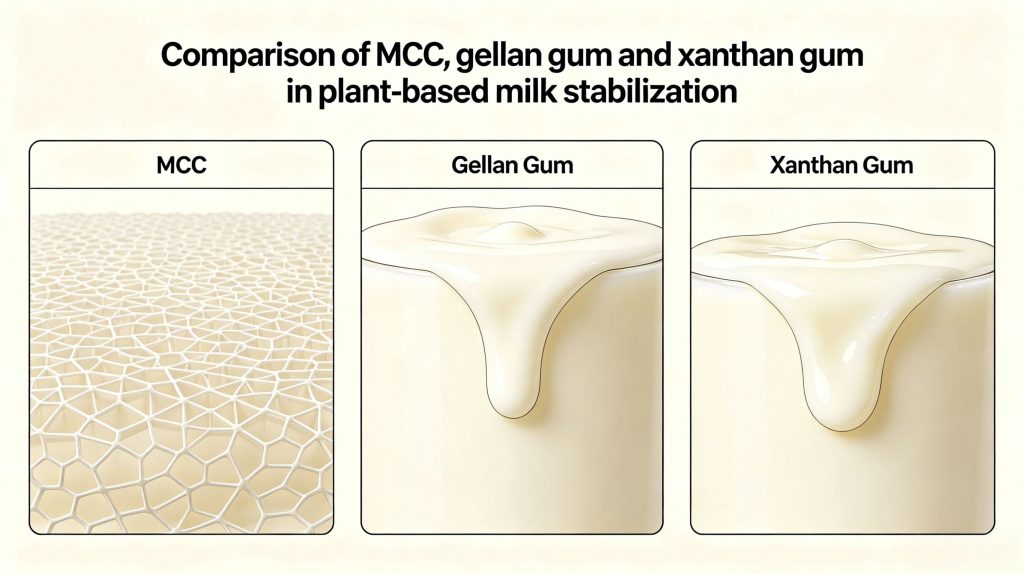
Food formulators frequently compare MCC against other hydrocolloids before finalizing a stabilization system. The comparisons below highlight where MCC excels and where complementary ingredients still play a valuable supporting role.
| Property | MCC | CMC | Xanthan | Gellan |
|---|---|---|---|---|
| Sedimentation Control | ★★★★★ | ★★★★ | ★★★ | ★★★★★ |
| Mouthfeel | ★★★★★ | ★★★★ | ★★ | ★★★ |
| Low Viscosity Beverage | ★★★★★ | ★★★ | ★ | ★★★★★ |
| Clean Label Potential | ★★★★★ | ★★★★ | ★★★ | ★★★★ |
| Cost Efficiency | ★★★★ | ★★★★★ | ★★★★ | ★★ |
| Property | MCC | CMC |
|---|---|---|
| Suspension Power | Excellent | Good |
| Particle Network | Physical | Viscosity-Based |
| Mouthfeel | Creamy | Smooth |
| Sediment Control | Excellent | Moderate |
| Protein Protection | Low | Excellent |
Best Practice: Because MCC and CMC address different stability mechanisms, combining them remains one of the most successful plant-based milk stabilizer systems used globally today.
Gellan gum forms a weak gel network and offers genuine advantages, including very low dosage requirements and good suspension performance. However, it also carries notable disadvantages, such as higher cost and sensitivity to processing conditions. By comparison, MCC provides easier processing, better mouthfeel, and lower overall formulation risk—making it a more forgiving choice for manufacturers operating large-scale production lines.
Xanthan gum generates high viscosity, but this strength quickly becomes a weakness in beverage applications. Many consumers describe xanthan-stabilized drinks as slimy, and the gum can also suppress flavor release, leading to consumer rejection. MCC, in contrast, offers a natural creamy mouthfeel, noticeably lower sliminess, and a better overall drinking experience.
Modified starch remains inexpensive, which explains its continued popularity in cost-sensitive formulations. Nevertheless, it suffers from poor suspension performance, retrogradation risk during storage, and heat sensitivity during processing. MCC, meanwhile, delivers better stability, better suspension, better shelf-life performance, and a lower required dosage—advantages that often offset its higher per-kilogram cost once formulators account for reduced waste and fewer returns.
Modern formulations rarely rely on a single stabilizer in isolation. Instead, the best-performing systems combine multiple technologies so that each ingredient compensates for the others’ limitations.Modern formulations rarely rely on a single stabilizer in isolation. Instead, manufacturers increasingly build a complete plant-based beverage stabilizer system that combines suspension, viscosity control, protein stabilization, and texture enhancement.
This combination represents the most common stabilizer system in the industry. Because MCC contributes suspension and CMC contributes protein stabilization and mouthfeel enhancement, the pairing performs reliably across oat milk, soy milk, and almond milk alike.
This system delivers excellent suspension performance with low viscosity, making it especially well-suited to premium products. Formulators frequently choose this combination for high-end oat milk and specialty protein beverages where a light, clean mouthfeel matters as much as stability.
This pairing improves protein interaction and delivers better heat stability, making it a strong fit for coconut milk and barista formulations that must withstand both heat treatment and consumer-side frothing.
Because each synergistic system targets a slightly different combination of texture and stability goals, formulators should select their pairing based on the specific raw material, processing method, and sensory target of the final product.a properly designed plant-based beverage stabilizer system built around MCC can significantly improve beverage stability, mouthfeel, and shelf-life performance.
Beyond the technical mechanisms, manufacturers ultimately choose MCC because it delivers measurable business value across the entire production and distribution chain.For many beverage manufacturers, MCC has become the preferred MCC dairy alternative stabilizer because it delivers consistent performance across oat milk, almond milk, soy milk, and other dairy-free beverage systems.
Longer Shelf Life MCC reduces sedimentation, separation, and creaming, which directly extends the period during which a product looks and tastes its best on the shelf.
Better Consumer Acceptance Because MCC improves smoothness, creaminess, and texture consistency, products built around it tend to earn stronger repeat purchases and fewer negative reviews.
UHT Compatibility MCC survives pasteurization, UHT treatment, and homogenization without losing its functional structure, which makes it suitable for the high-heat processes that most commercial plant-based beverages require.
Cost Efficiency Because MCC works at relatively low dosages while delivering strong stabilization, manufacturers often achieve lower overall stabilizer usage, reduced product returns, and improved manufacturing consistency—three factors that directly support healthier margins.
Selecting the right Plant-Based Milk Stabilizer supplier matters just as much as selecting the right ingredient. Because MCC particle size, dispersion behavior, and co-processing with hydrocolloids vary significantly between manufacturers, formulators should evaluate potential suppliers on several criteria before committing to large-scale production.
First, confirm that the supplier offers food-grade certification and full traceability documentation, since regulatory compliance protects your brand throughout every market you serve. Second, request a Technical Data Sheet (TDS) that clearly specifies particle size distribution, viscosity behavior, and recommended dosage ranges for your specific application. Third, ask whether the supplier provides formulation support or pilot-scale samples, since hands-on technical guidance often saves months of in-house trial and error. Finally, evaluate supply chain reliability, because even the best-performing stabilizer becomes worthless if it cannot arrive on time for your production schedule.
A supplier who can answer these questions confidently—and back up their claims with real formulation data—will save your team significant time during scale-up and help you avoid costly reformulation cycles later.
Food-grade MCC used in plant-based beverages complies with internationally recognized food safety standards. Manufacturers can consult the official resources published by the FDA, EFSA, and Codex Alimentarius for additional information regarding food additives, food ingredients, and regulatory requirements for beverage formulations.
MCC functions as a plant-based milk stabilizer that prevents sedimentation, improves suspension stability, and creates a creamier mouthfeel across oat, almond, soy, coconut, and pea protein beverages.
For mouthfeel and consumer acceptance, MCC generally performs better than xanthan gum because it avoids the slimy texture that xanthan gum often introduces, while still delivering strong suspension performance.
Yes. MCC creates a suspension network that keeps almond particles evenly distributed throughout shelf life, reducing the need for consumers to shake the bottle before drinking.
Most formulations use between 0.2% and 0.6% MCC, although the exact dosage depends on protein level, fiber content, and the desired final texture.
Absolutely. MCC plus CMC remains one of the most widely used plant-based milk stabilization systems because it combines physical suspension with protein stabilization in a single, complementary package.
No. Because MCC stabilizes through physical structure rather than chemical interaction, it does not introduce off-flavors, and it actually helps preserve the beverage’s intended flavor profile by preventing the textural defects that often mask flavor perception.
Yes. MCC derives from natural plant fiber, making it a strong fit for brands that want to maintain clean-label positioning while still achieving robust stability performance.
MCC is widely used as an oat milk stabilizer because it effectively suspends oat fiber, calcium, and protein particles while maintaining a smooth and creamy texture.
As consumer demand for dairy alternatives continues to accelerate, manufacturers must overcome ever-increasing challenges related to sedimentation, creaming, protein instability, and texture consistency. Because these defects directly shape how consumers judge product quality, solving them early in development pays dividends throughout the entire product lifecycle.A properly designed plant-based beverage stabilizer system can significantly improve consumer acceptance and reduce formulation risks.
MCC in plant-based milk has emerged as one of the most effective solutions for addressing these challenges. Through advanced MCC suspension technology, formulators can improve beverage stability, create superior mouthfeel, and extend shelf life without compromising clean-label positioning. Moreover, because MCC pairs so effectively with complementary hydrocolloids like CMC, gellan gum, and carrageenan, manufacturers gain the flexibility to fine-tune their formulation for almost any plant-based beverage category.
Whether you are developing oat milk, almond milk, soy milk, coconut milk, or high-protein plant-based beverages, a properly designed MCC milk stabilization system can significantly improve both product quality and manufacturing performance. Ultimately, the right stabilizer system does more than just prevent sedimentation—it builds consumer trust, reduces returns, and strengthens your brand’s reputation in an increasingly crowded market.As an advanced MCC dairy alternative stabilizer, MCC helps manufacturers achieve superior suspension stability, texture consistency, and shelf-life performance.
ACTA provides food-grade MCC, CMC, and customized stabilizer systems for:
Request a Free Sample, Technical Data Sheet (TDS), or Formulation Consultation Today.
