

By Richard Wang | Technical Review by Alice Meng Last Updated: November 26, 2026 | about MCC vs CMC
MCC vs CMC mainly comes down to solubility and functional performance. Microcrystalline cellulose (MCC) is an insoluble particulate cellulose widely used as a pharmaceutical tablet filler-binder and in selected food applications. Sodium carboxymethyl cellulose (CMC), also known as cellulose gum, hydrates and dissolves under suitable conditions to provide thickening, viscosity control, and water retention.
For manufacturers, the choice depends on the required function: MCC for tablet compactibility and particulate functionality, sodium CMC for water-soluble thickening, and colloidal MCC for structured suspension systems. Although these materials share a cellulose origin, they work by different mechanisms and cannot be treated as direct substitutes.
This guide compares MCC vs CMC by chemical structure, solubility, rheology, applications, specifications, and purchasing requirements, helping food and pharmaceutical manufacturers select suitable grades and evaluate suppliers. In this article, CMC refers to sodium CMC unless otherwise stated, and HPMC appears only as a brief reference.
In this guide
The first table covers chemical identity, while the second covers how each material performs in a formulation. Microcrystalline cellulose vs carboxymethyl cellulose, or MCC vs sodium CMC, is a comparison between two members of the same cellulose family.
| Comparison | MCC | Sodium CMC |
|---|---|---|
| Full name | Microcrystalline Cellulose | Sodium Carboxymethyl Cellulose |
| Chemical nature | Purified, partially depolymerized cellulose | Chemically modified, anionic cellulose ether |
| CAS number | 9004-34-6 | 9004-32-4 |
| Chemical modification | None | Carboxymethyl groups |
| Water behavior | Insoluble | Hydrates and dissolves under suitable conditions |
| Electrolyte sensitivity | Generally low | Sensitive to electrolytes and low pH |
| Typical commercial form | White or off-white powder | White or off-white fibrous or granular powder, grade dependent |
| Main functional mechanism | Particulate cellulose | Hydrated polymer |
| EU food additive E-number | E460(i) | E466 |
Appearance depends on the product specification and must not be used to identify a material. E-numbers are EU identification numbers, and use depends on the food category, conditions of use, and target-market regulations.
| Functional requirement | Conventional MCC | Sodium CMC | Colloidal MCC |
|---|---|---|---|
| Solution thickening | Not its primary function | Primary functional role | Depends on grade and dispersion conditions |
| Tablet compressibility | Established pharmaceutical application | Not a direct substitute in direct compression | Depends on the specific pharmaceutical grade |
| Water retention | Application dependent | Important functional role | Application dependent |
| Suspension stabilization | Primarily an insoluble particulate; not automatically structured suspension | Can slow particle settling by increasing continuous-phase viscosity | Processed to develop a functional particulate structure under suitable conditions |
| Typical applications | Pharmaceutical tablets, bulking, selected food systems | Sauces, dressings, bakery, beverages, liquid formulations | Plant-based beverages, protein drinks, selected food suspensions |
| Main selection criterion | Particle properties and compactibility | Viscosity, DS, and hydration | Dispersion, rheology, and suspension performance |
Conventional MCC powder primarily functions as an insoluble particulate ingredient and does not automatically provide the structured suspension performance of a purpose-designed colloidal MCC grade. Actual performance depends on grade composition, processing, concentration, and formulation conditions.
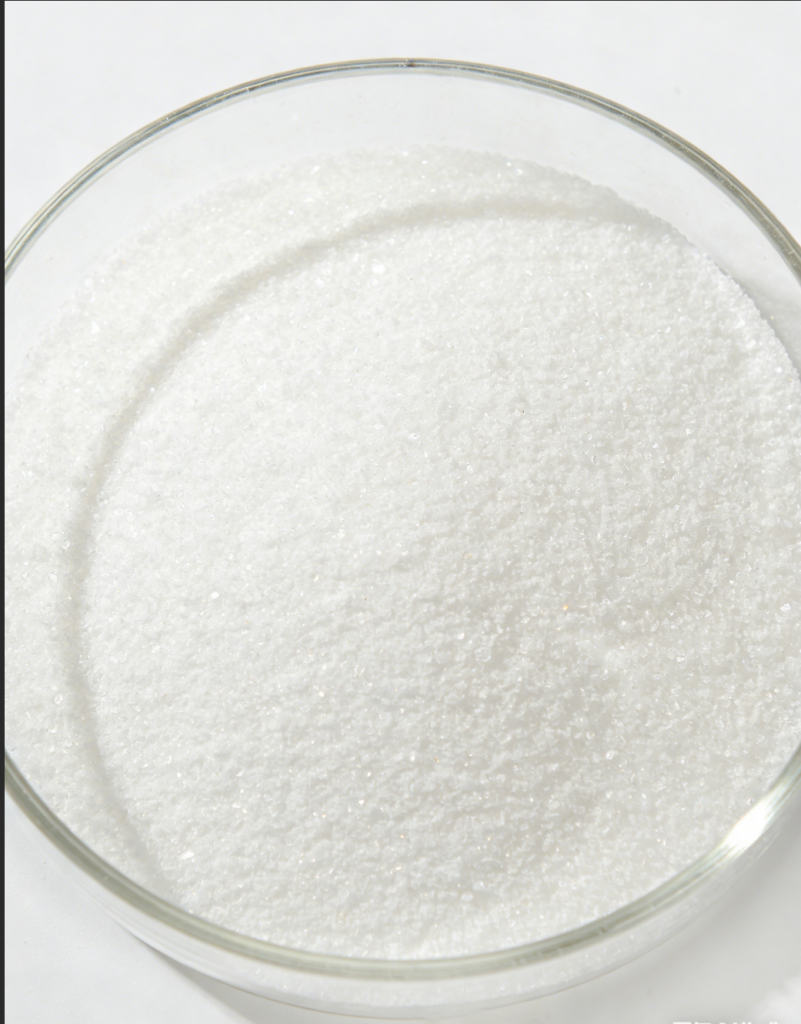
Microcrystalline cellulose is a purified cellulose obtained through controlled processing of plant-derived cellulose, usually wood pulp. It consists of partially depolymerized cellulose with a high proportion of crystalline regions. ACTA’s MCC product range includes grades with different particle-size profiles. Manufacturer-reported nominal average particle sizes vary by grade, with reference values of approximately 20–200 μm [1]. These values do not represent a universal particle-size distribution or a guaranteed specification for every grade.ACTA’s product page also reports manufacturer-reported ranges for crystallinity index (about 55–80%) and degree of polymerization (about 150–300) [1]. However, these figures represent ACTA’s product data rather than industry-wide definitions, and their values depend on the measurement or calculation method. Therefore, buyers should confirm the applicable method in the current grade-specific TDS.
In pharmaceutical manufacturing, MCC is a leading direct-compression excipient. MCC particles undergo plastic deformation under compression, creating extensive interparticle contact and bonding that contribute to tablet strength. Its compactibility depends on particle size, morphology, moisture content, bulk density, and compression conditions. In food manufacturing, suitable MCC grades can serve as bulking agents, texture modifiers, and fat replacers. See ACTA’s Microcrystalline Cellulose (MCC) product page.
In the EU, MCC and sodium CMC are food additives E460(i) and E466 under Regulation (EC) No 1333/2008 [2]. Commission Regulation (EU) 2025/666 revised the specifications for cellulose additives E 460–E 466 and E 468–E 469 (applying from 27 October 2025) and withdraws the authorisation of E 466 in food categories 13.1.5.1 and 13.1.5.2 from 27 April 2027 [3][4].
Regulation (EU) 2025/2058 separately provides a time-limited authorisation for E 466 in nutrient preparations intended for foods for special medical purposes for infants and young children.
This use is subject to the maximum level permitted in the relevant food category and applies only until 26 April 2027. The regulation does not grant general authorisation for E 466 in the finished foods themselves [5]. This does not mean the EU bans E 466 across all food categories; manufacturers must assess its use against the applicable food category and current EU conditions of use. Section 5.4 explains the relevant dates, transitional provisions, and EU purchasing checklist.
In the United States, the FDA inventory entry cited here concerns microcrystalline cellulose [6], and sodium CMC is addressed separately in 21 CFR § 182.1745 [7]. A database entry is not blanket authorization for every use or for any supplier’s product.
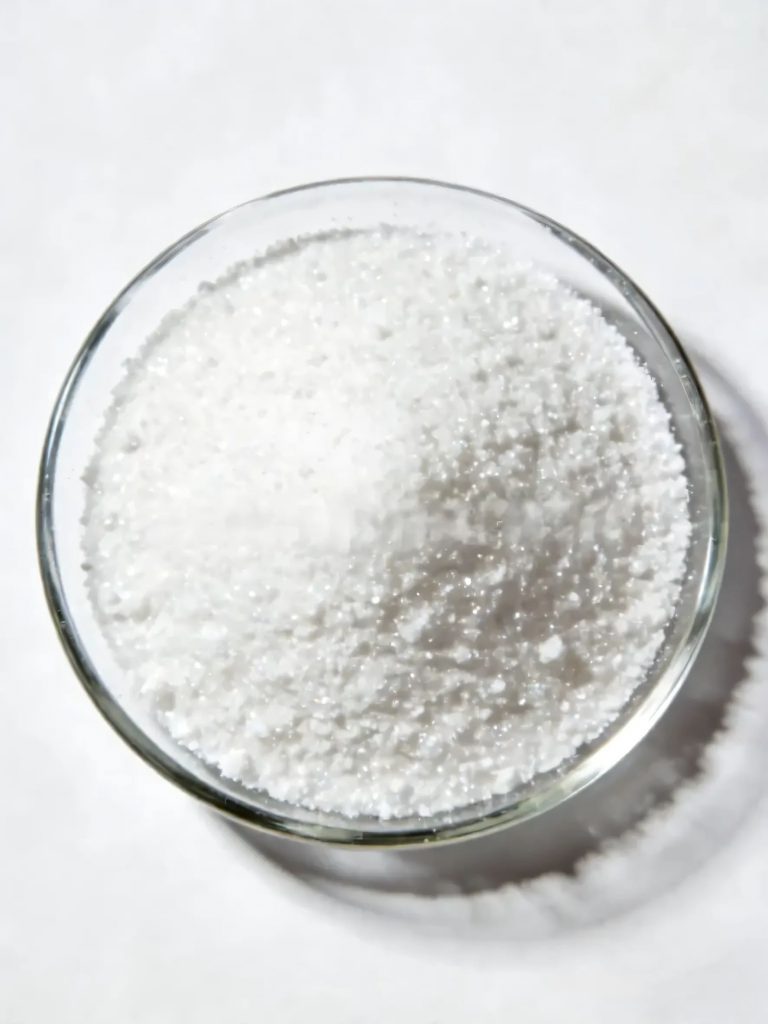
Carboxymethyl cellulose is a chemically modified cellulose derivative made by introducing carboxymethyl groups into the cellulose backbone. The commercial product is usually sodium CMC, used in food, pharmaceutical, personal care, and industrial formulations. See ACTA’s Sodium Carboxymethyl Cellulose (CMC) page.
Unlike MCC, sodium CMC hydrates in water and can form a viscous aqueous solution under suitable preparation conditions. Its hydration rate and final viscosity depend on the grade, concentration, water quality, and mixing procedure. ACTA’s CMC product information states a degree of substitution (DS) of 0.65–1.20 for its food-grade range and 0.65–0.95 for its pharmaceutical-grade range [8]. These are ACTA product data, not an industry-wide standard.
Neither ingredient offers a universal advantage. Instead, choose MCC when your formulation requires tablet compression or particulate functionality, sodium CMC when it needs water-soluble thickening, and colloidal MCC when it requires structured suspension. Furthermore, you can combine MCC and CMC when your formulation needs both particulate functionality and dissolved-polymer viscosity. However, a physical blend does not deliver the same properties as a co-processed colloidal MCC grade. For more details, see Section 4 for practical guidance on substitution and combination.
MCC and CMC both start as cellulose, yet their manufacturing routes create major differences in molecular structure, crystallinity, water interaction, and rheology.
Cellulose consists of repeating anhydroglucose units linked by β-(1→4) glycosidic bonds. Each unit carries three hydroxyl groups that form hydrogen bonds between chains. Natural cellulose contains ordered crystalline regions and less ordered amorphous regions, and their balance affects mechanical properties, water accessibility, and reactivity.
MCC. MCC manufacturers produce the material by controlled depolymerization of purified cellulose, commonly through acid hydrolysis. This process preferentially removes less ordered regions without adding functional groups. However, commercial MCC is not perfectly crystalline; its properties also depend on particle morphology, size distribution, porosity, and moisture. As a result, its crystalline character and extensive hydrogen bonding limit its dissolution in water. MCC therefore disperses in water without forming a molecular solution.
CMC. Etherification replaces some hydroxyl groups with carboxymethyl groups. Sodium CMC carries negatively charged carboxylate groups (-CH₂COO⁻) paired with sodium ions, which raise affinity for water and promote hydration. As the chains hydrate, they expand and generate viscosity.
MCC production typically involves controlled acid hydrolysis of purified cellulose, followed by neutralization, washing, drying, and classification. Importantly, manufacturers must carefully control these conditions for pharmaceutical applications because MCC grades with identical chemical compositions can still differ in compactibility and flowability.
Manufacturers generally produce CMC by alkalizing purified cellulose and etherifying it with an agent such as sodium monochloroacetate. They then neutralize, purify, dry, and mill the product. Throughout this process, manufacturers must control operating conditions because they affect substitution uniformity, purity, molecular weight, and solution behavior.
Consequently, the two production routes require different quality controls. For MCC, buyers evaluate particle size distribution, bulk density, loss on drying, residue on ignition, and compressibility. By comparison, CMC buyers examine viscosity, degree of substitution (DS), purity, moisture, pH, and particle size.
Crystallinity in MCC. Crystallinity influences particle rigidity, but it does not define MCC quality on its own. In fact, two MCC grades with similar purity may perform differently because their morphology, size distribution, moisture, porosity, and processing history differ.
Degree of substitution in CMC. DS represents the average number of hydroxyl groups that manufacturers replace per anhydroglucose unit (theoretical range: 0 to 3). A higher DS generally introduces more hydrophilic and ionic groups, although this relationship does not always translate directly into better performance. More importantly, average DS does not show how carboxymethyl groups distribute along the cellulose chain. Distribution, molecular weight, residual salts, and purity also affect hydration, viscosity, and compatibility [9][10].
Molecular weight and viscosity. Higher-molecular-weight grades generally produce higher viscosity under comparable conditions. Nevertheless, DS, concentration, temperature, pH, ionic strength, and testing methods also affect viscosity. Therefore, buyers should not directly compare a grade specified at 1,000 to 2,000 mPa·s with another grade tested under different conditions.
What These Parameters Mean for Buyers
When evaluating sodium CMC, buyers should consider DS alongside viscosity, molecular characteristics, purity, and hydration behavior. In particular, two suppliers may offer similar DS values but deliver different solution viscosities or hydration performance. For this reason, buyers should treat DS as one indicator of CMC structure rather than as a standalone predictor of viscosity, hydration speed, or formulation compatibility.
When comparing MCC vs CMC solubility, buyers should first understand that MCC is insoluble in water. Hydrogen bonding and tight molecular packing keep MCC chains together, allowing water to reach only accessible surface hydroxyl groups. As a result, MCC forms a suspension whose behavior depends on particle size, surface characteristics, and mixing intensity. Therefore, buyers should remember that dispersing particles does not mean dissolving an ingredient.
By contrast, sodium CMC dissolves in water under suitable conditions, although its hydration and dissolution behavior depends on its molecular characteristics, degree of substitution, concentration, temperature, and water quality. To achieve proper dispersion, operators can prevent surface gel formation and undispersed lumps (“fish eyes”) by wetting the powder properly and adding it gradually. Alternatively, they can use a pre-dispersion method to improve powder dispersion. Furthermore, buyers should distinguish hydration from complete dissolution when evaluating CMC performance. This distinction becomes particularly important when selecting between MCC and CMC because the two ingredients interact with water through fundamentally different mechanisms.
Rheology describes how a material flows and deforms under force, which affects mixing, pumping, filling, mouthfeel, and stability. In particular, when comparing MCC vs CMC viscosity, buyers should understand that the two materials build viscosity through different mechanisms.
CMC builds viscosity through polymer hydration. As a result, many CMC solutions exhibit shear-thinning behavior, meaning their apparent viscosity falls as the shear rate rises. However, shear-thinning is not necessarily thixotropy, so operators must confirm structural recovery after shear through rheological testing.
By contrast, colloidal MCC develops a structured particulate dispersion. When properly processed and dispersed, MCC particles can form a three-dimensional colloidal structure, while a hydrophilic dispersant (commonly sodium CMC in co-processed grades) helps maintain particle dispersion [11][12]. Consequently, depending on the grade and formulation, the structure may resist particle movement at low shear and change in apparent viscosity as shear increases. Nevertheless, manufacturers and formulators should establish the presence and magnitude of yield stress through appropriate rheological measurements rather than infer them solely from the apparent viscosity of a prepared dispersion.
For beverage manufacturers, yield stress can be relevant when evaluating whether a structured dispersion can resist the movement of suspended particles during storage. However, a higher yield stress is not automatically better. Excessive structure may increase pumping resistance, affect filling, or produce an undesirable mouthfeel.
Furthermore, buyers should not assume that yield stress, shear response, and structural recovery remain identical across grades. Published studies of MCC/NaCMC systems report thixotropic behavior [13]; however, those findings describe the systems tested, not the measured performance of any specific ACTA grade. Therefore, viscosity alone cannot fully describe suspension performance.
To evaluate a colloidal MCC or CMC-based suspension system, manufacturers should assess more than a single viscosity result. Depending on the application, the test program may include:
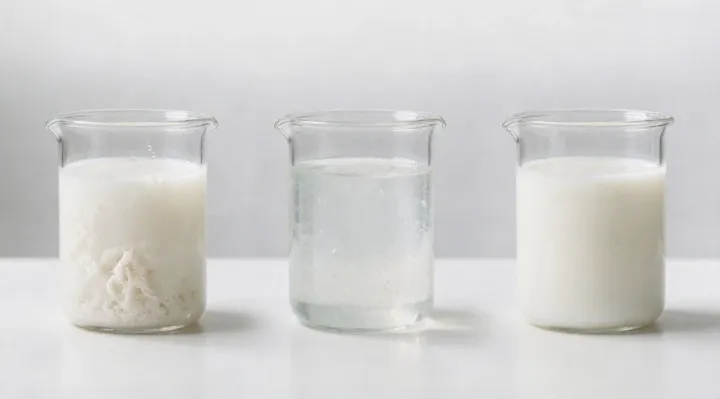
Many commercial colloidal MCC grades are produced by co-processing microcrystalline cellulose with sodium carboxymethyl cellulose. However, the term “colloidal MCC” does not automatically establish a specific manufacturing process, composition, or pharmacopoeial status.
The USP–NF monograph for Microcrystalline Cellulose and Carboxymethylcellulose Sodium defines a specific colloid-forming, attrited mixture, with requirements for labeled CMC content and dispersion viscosity [14]. Buyers should verify whether a commercial grade complies with this monograph rather than assuming equivalence based on its product name alone. In practice, “commercial colloidal MCC” is a product category, whereas the USP–NF material is a specific product with defined pharmacopoeial requirements. Furthermore, published research shows that composition and added polymers influence the rheology of co-processed MCC/NaCMC systems [11].
During hydration, sodium CMC acts as a hydrophilic dispersing component that helps keep MCC particles separated, allowing a structure to develop under suitable conditions. However, performance also depends on the process, MCC-to-CMC ratio, particle characteristics, dispersion energy, hydration conditions, and formulation environment. Therefore, colloidal MCC vs CMC is fundamentally a comparison of structure-forming and polymer-thickening mechanisms. When evaluating a colloidal MCC manufacturer, buyers should ask which of these factors the grade-specific TDS controls.
ACTA’s technical information describes typical MCC-to-sodium CMC composition ratios of approximately 85:15 to 90:10 across selected colloidal MCC grades [1][15]. However, these figures are manufacturer-specific reference values. For an accurate comparison, buyers should confirm the calculation basis and exact composition in the current grade-specific TDS before comparing the product directly with other suppliers’ grades.
In addition, high ionic strength, mineral salts, and acidic conditions can alter hydration and rheology, although the effects depend on the ingredient, grade, and formulation. Therefore, where compatible, formulators should hydrate the colloidal MCC dispersion in low-mineral water before adding acid or minerals. They should also follow the grade-specific TDS and validate the addition sequence in the actual product.Distinguish the stock-dispersion concentration from the dosage on a finished-product basis. See ACTA’s colloidal MCC stabilizer page.
MCC vs CMC uses differ by dosage form and by product matrix. MCC excels in solid pharmaceutical forms, CMC in water-soluble thickening, and colloidal MCC in products with insoluble ingredients.
Figures below are starting points for laboratory trials, not validated recommendations.
ACTA’s CMC product information lists applications in protein drinks, plant-based milk, cocoa beverages, and dairy drinks. In these systems, CMC can contribute to continuous-phase viscosity control, mouthfeel, and water retention [8]. However, viscosity retention and formulation stability after pasteurization or UHT processing depend on the selected grade and the complete formulation. Therefore, manufacturers should validate performance under their actual thermal-processing conditions.
In addition, two further risks deserve testing. At low pH, protonation of carboxymethyl groups can reduce sodium CMC solubility and change its viscosity behavior. The extent depends on DS, molecular characteristics, concentration, and the overall formulation. For this reason, manufacturers should test highly acidic beverages with the selected grade rather than rely on DS alone. Similarly, divalent cations such as calcium can alter CMC hydration and solution rheology, depending on ion concentration, grade, and formulation. Consequently, manufacturers should evaluate this effect in calcium-fortified beverages and dairy systems.
Conventional MCC powder is used as a bulking agent, fat replacer, and texturizer in reduced-fat dressings, dairy products, spreads, and frozen desserts. For example, ACTA’s MCC page cites typical starting levels of about 0.5–1.5% for fat replacement [1]. However, this is a reference starting level for laboratory trials, not a universal recommended dosage. By contrast, beverage suspension requires a colloidal grade because conventional MCC powder does not form a functional network on its own.
Oat, soy, and almond beverages contain proteins, fibers, oil droplets, and other insoluble components that may separate during storage. Meanwhile, proteins in nutritional drinks may aggregate or settle. CMC raises continuous-phase viscosity and supports protein stabilization, depending on pH, ionic strength, and protein type. Therefore, if the main problem is low continuous-phase viscosity, sodium CMC may be the first ingredient to evaluate. However, if the main challenge is maintaining insoluble particles in suspension, manufacturers should also consider a suitable colloidal MCC grade.
ACTA’s product information provides a reference screening range of approximately 0.3–1.2% colloidal MCC on a finished-product weight basis [1]. Nevertheless, this range is intended only for initial laboratory evaluation. Manufacturers must establish the required dosage through formulation trials, as not every protein drink is necessarily suited to colloidal MCC.
In practical terms, CMC primarily modifies the continuous aqueous phase, whereas colloidal MCC can contribute a structured particulate network. Therefore, for beverages containing insoluble plant particles, cocoa, minerals, or other suspended components, manufacturers should compare both systems through sedimentation, redispersibility, and sensory testing rather than rely on viscosity measurements alone. See plant-based milk stabilizers and protein beverage stabilizers.
CMC raises serum-phase viscosity and improves water management, which may help control ice crystal growth. However, this effect also depends on solids, sugars, fat, protein, and freezing conditions. By comparison, conventional MCC powder is not a complete ice cream stabilizer. See ice cream stabilizers.
Similarly, in sauces and dressings, CMC controls viscosity and water retention. However, excessive viscosity can impair pourability and reduce sensory acceptance.
If your oat milk, soy milk, protein drink, or other beverage shows sedimentation or phase separation, ACTA can help you evaluate suitable colloidal MCC grades.
To support a preliminary evaluation, share your beverage type, target viscosity, and main processing challenge. Based on these details, we can review your requirements and provide available TDS documents and batch COAs for preliminary technical evaluation.
Importantly, you do not need to disclose your complete commercial formulation.
Request Colloidal MCC Grades, TDS & COA →
Direct compression lets manufacturers blend excipients with the API and compress the mixture without wet granulation. In this process, MCC acts as a filler, dry binder, or compression aid because it deforms plastically under compression (Section 1.2). However, grades differ in particle size, bulk density, and compression behavior. Therefore, buyers should check the specification against the relevant pharmacopoeial monograph rather than rely only on the product name [16].
Sodium CMC hydrates into viscous solutions and works as a viscosity modifier, thickener, and stabilizer in selected oral liquid and topical preparations. For example, it can thicken the vehicle of a drug suspension and slow particle settling. However, viscosity alone does not guarantee stability. Buyers should also consider particle size, density difference, redispersibility, pH, and storage conditions. More importantly, they should not confuse sodium CMC with croscarmellose sodium, a cross-linked material primarily used as a tablet disintegrant. These two materials are not interchangeable.
Certain pharmaceutical-grade colloidal MCC systems may provide structured suspension properties in selected formulations. Nevertheless, their suitability depends on the applicable pharmacopoeial requirements, product composition, quality specifications, and compatibility with the active pharmaceutical ingredient (API). Accordingly, buyers should verify the specific grade’s documentation and conduct formulation testing before selecting it for pharmaceutical use. In particular, they should not assume that a food-grade colloidal MCC is suitable for pharmaceutical applications.
Buyers should not assume that two PH-101 or PH-102 products will perform identically. Instead, they should compare particle size distribution, bulk density, moisture, flow properties, and compaction behavior under the same test conditions, together with identification and the applicable pharmacopoeial tests. Furthermore, a supplier’s product designation alone does not establish USP–NF, Ph. Eur., or BP compliance; buyers need supporting documentation to verify such claims. Ultimately, a technically similar specification provides a starting point for supplier qualification, not proof of formulation equivalence.
Send your current TDS or COA for a preliminary specification comparison.
Share your target grade, pharmacopoeial requirements, particle size distribution, and bulk density specifications. ACTA can review the available product information and provide a relevant TDS and recent batch COA for preliminary supplier qualification.
Request MCC PH-101 / PH-102 Specifications & COA →
In personal care, CMC acts as a thickener, film former, and rheology modifier in creams, lotions, and gels, while MCC serves as a bulking agent or texture modifier. Industrially, CMC modifies water-based systems in paper, textile, ceramics, coatings, adhesives, and drilling fluids [8]. Conventional MCC does not substitute for these soluble functions.
| Application | First material to evaluate | Key reason |
|---|---|---|
| Direct-compression tablets | MCC | Compactibility and particle bonding |
| Water-soluble thickening | Sodium CMC | Polymer hydration and viscosity development |
| Plant-based beverage suspension | Colloidal MCC | Structured particulate dispersion |
| Sauces and dressings | Sodium CMC or colloidal MCC | Depends on thickening or suspension requirements |
| Pharmaceutical oral liquids | Sodium CMC or qualified colloidal MCC | Depends on viscosity, suspension, and grade compliance |
| Industrial water-based systems | Sodium CMC | Soluble thickening and rheology modification |
All entries describe typical suitability, which is grade dependent and not guaranteed performance.This MCC vs CMC application comparison describes typical suitability, which is grade dependent and does not guarantee performance in every formulation.
This chapter helps you decide whether to replace or combine ingredients and how to verify the result.
In MCC vs CMC substitution, conventional MCC cannot directly replace sodium CMC when the formulation requires water-soluble thickening, because MCC does not hydrate into a polymer solution. A suitable colloidal MCC grade may replace or reduce part of a CMC-based system when the main objective is suspension structure. This is a functional substitution, not a one-to-one replacement by weight.
CMC can take over part of the thickening and water-retention role in some food formulations, but not MCC’s compression behavior. Sodium CMC lacks MCC’s deformation and compactibility mechanism, so it is not a one-to-one replacement in direct-compression tablets.
A physical blend of MCC powder and CMC powder is not equivalent to a co-processed colloidal MCC grade. In a blend, the two powders remain separate ingredients: CMC hydrates and thickens the water phase, while MCC powder may not disperse fully without dedicated processing. A co-processed grade is manufactured so that sodium CMC supports the dispersion of MCC particles (Section 2.6).
Dosage, hydration behavior, and performance of a blend should therefore not be assumed to match a co-processed grade. If a formulation needs suspension structure, evaluate an application-specific colloidal MCC grade first, and add CMC only when additional dissolved-polymer viscosity is required. A combination is not always necessary: if one ingredient meets the target, adding another only raises complexity and cost.
Step 1: Match the primary requirement. Use the table in Section 3.4 to pick the first candidate.
Step 2: Evaluate the formulation environment. Check pH, ionic strength, minerals, protein and fat, total solids, heat treatment, and other hydrocolloids. Test the ingredient in your actual product matrix, not only in a supplier’s standard water test.
Step 3: Consider equipment and production sequence. CMC needs proper wetting, colloidal MCC needs suitable dispersion energy, and pharmaceutical MCC depends on blending, lubrication, moisture, and compression conditions.
Step 4: Consider HPMC when the formulation requires different functionality. HPMC is a non-ionic cellulose ether used for film formation, thermal gelation, and viscosity modification. It may be evaluated when these functions are required, but it does not directly replace MCC’s tablet-compression properties or sodium CMC’s specific anionic thickening behavior.
Step 5: Define finished-product performance. Set measurable criteria before changing a stabilizer, such as viscosity under stated conditions, sedimentation, redispersibility, tablet hardness and friability, sensory properties, and storage stability.
A practical MCC vs CMC selection should always be based on measurable finished-product performance rather than ingredient names or viscosity values alone.
This is a testing protocol. It contains no test data and does not describe a customer result. Run small-scale trials in which only the stabilizer system changes.
| Trial | Stabilizer system | Evaluation objective |
|---|---|---|
| A | Existing CMC system | Reference performance |
| B | Colloidal MCC | Alternative suspension and texture performance |
| C | Colloidal MCC plus selected CMC grade | Combined rheological and stabilization effects |
A. Fix the test conditions. Use the same base formulation, water quality, heat treatment, homogenization conditions, storage temperature, and observation intervals for all candidates. Test each candidate at technically appropriate concentrations, not equal weight, and include a concentration series to distinguish an unsuitable grade from an unsuitable use level. Follow the supplier’s TDS for shear, hydration time, and equipment. For tablets, examine blend properties, compression behavior, hardness, friability, and disintegration.
B. Evaluate performance separately. One viscosity number is not enough:
| Evaluation | What to record |
|---|---|
| Viscosity | Apparent viscosity at defined shear rates |
| Suspension | Sediment height or phase separation at set intervals |
| Redispersibility | Mixing effort and time after storage |
| Sensory | Mouthfeel and drinking quality |
| Processing | Dispersion time and equipment requirements |
C. Record the final results. Fill in your own measured results; the blank cells are intentionally left empty. After laboratory trials, move to pilot and production-line validation, because behavior in a beaker may differ from a large mixing tank.
| Trial group | Stabilizer and dosage | Apparent viscosity (shear rate, temperature, instrument) | Sediment / phase separation per interval | Redispersion (inversions or time) | Sensory notes | Cost per MT of finished product | Overall assessment |
|---|---|---|---|---|---|---|---|
| A (reference) | |||||||
| B | |||||||
| C |
| Observed problem | Possible cause | What to check first |
|---|---|---|
| CMC forms lumps | Poor wetting or rapid surface hydration | Addition sequence and pre-dispersion |
| MCC powder settles | Conventional MCC lacks the required structured dispersion | Evaluate a suitable colloidal MCC grade |
| CMC viscosity is too high | Grade or dosage is unsuitable | Test a lower-viscosity grade or lower dosage |
| Colloidal MCC develops insufficient structure | Inadequate dispersion or unsuitable formulation conditions | Dispersion energy, hydration, and water quality |
| Stability declines during storage | Initial viscosity does not reflect long-term suspension performance | Sedimentation and redispersibility over time |
Judge total formulation cost, not price per kilogram: a cheaper ingredient may need a higher dosage, longer processing, extra stabilizers, or stricter quality control, and pharmaceutical buyers should add compaction performance, documentation, and validation cost. Buyers often ask about MCC and CMC price. There is no general answer, because cost depends on grade, the functional dosage actually needed, processing steps, and the finished-product quality required.
| Comparison | MCC | Sodium CMC | Colloidal MCC |
|---|---|---|---|
| Purchase price | Grade dependent | Grade dependent | Grade dependent |
| Functional dosage | Application dependent | Application dependent | Application dependent |
| Processing | Dispersion or powder blending | Hydration | Controlled dispersion |
| Main cost consideration | Compression and formulation performance | Viscosity efficiency | Suspension efficiency and processing |
Total stabilizer cost per MT of finished product
Total stabilizer cost = Ingredient cost + Additional processing cost
Ingredient cost = Dosage (kg/MT) × Purchase price (USD/kg)
This comparison should also account for dispersion time, energy consumption, additional stabilizers, production losses, and finished-product stability. A lower purchase price does not necessarily result in a lower total formulation cost.
Grades vary in particle size, viscosity, moisture, bulk density, DS, and purity, and these variations affect processing efficiency, batch consistency, and cost. This chapter moves from grade selection to specifications, supplier qualification, and inquiry.
Grade designations are commonly used in the market, but a name alone does not establish equivalence between manufacturers. When comparing a microcrystalline cellulose supplier or an MCC supplier more broadly, start with these common pharmaceutical grades:
These designations describe commonly recognized commercial grade profiles, not universal performance guarantees. Actual flowability and compactibility should be confirmed through manufacturer-specific specifications and formulation testing.
ACTA’s product data gives nominal average particle sizes of about 50 μm (PH-101), 100 μm (PH-102), and 180 μm (PH-200) [1]. These are ACTA’s own averages, not a market standard, and they do not describe the full distribution. A PH-grade name alone should not be used to describe a pharmaceutical grade MCC as USP, Ph. Eur., or BP grade. Compare supplier-specific particle size distribution, flow, moisture, bulk density, and compaction behavior in the TDS and batch COA.
Food-grade MCC. Consider food-grade regulatory requirements, identity and purity, particle characteristics, loss on drying, residue on ignition, heavy metals, microbiological specifications, and batch consistency for your target market.
CMC viscosity grades are supplier-specific and should not be compared by labels such as low, medium, or high alone. When comparing any CMC supplier, define the target viscosity range first, then confirm the test concentration, temperature, instrument, spindle, speed, and sample preparation.
A similar DS value does not necessarily indicate equivalent CMC performance. Molecular weight, substitution distribution, residual salts, and manufacturing conditions can influence hydration rate and solution viscosity. Buyers should compare actual viscosity results under identical test conditions rather than selecting a grade based on DS alone.
ACTA’s sodium CMC range includes multiple viscosity grades. The applicable viscosity specification and test conditions should be confirmed in the current grade-specific TDS.
The following values are selected ACTA product specifications [8]. They are not a complete USP–NF or Ph. Eur. monograph comparison and must be supported by the current TDS. Pharmacopoeial compliance must be established through the applicable monograph tests and supporting documentation for the specific grade and batch, not inferred from the term “pharmaceutical grade.”
| Parameter | ACTA food-grade specification | ACTA pharmaceutical-grade specification |
|---|---|---|
| Degree of substitution | 0.65–1.20 | 0.65–0.95 |
| Sodium CMC content (dry basis) | ≥ 99.5%, according to ACTA’s specified test method | ≥ 99.5%, according to ACTA’s specified test method |
| Moisture | ≤ 10% | ≤ 10% |
| Heavy metals (as Pb) | ≤ 10 ppm | ≤ 10 ppm |
| NaCl content | ≤ 0.5% | ≤ 0.2% |
| pH (1% solution) | 6.5–8.5 | 6.5–8.0 |
The sodium CMC content above reflects ACTA’s manufacturer specification. Buyers should not treat this value as equivalent to a pharmacopoeial monograph’s assay requirement unless they confirm that both use the same test method and acceptance criteria.
ACTA specifications are not EU specifications. For comparison, selected EU purity requirements introduced by Regulation (EU) 2025/666 [3] are listed below, additive by additive:
| EU specification item | E 460(i) microcrystalline cellulose | E 466 sodium CMC |
|---|---|---|
| Arsenic | ≤ 0.1 mg/kg | ≤ 0.1 mg/kg |
| Lead | ≤ 0.1 mg/kg | ≤ 0.1 mg/kg |
| Mercury | ≤ 0.1 mg/kg | ≤ 0.1 mg/kg |
| Cadmium | ≤ 0.1 mg/kg | ≤ 0.1 mg/kg |
| Loss on drying | ≤ 7% (105 °C, 3 hours) | ≤ 12% (105 °C to constant weight) |
| Degree of substitution | Not applicable | 0.2–1.5 carboxymethyl groups per anhydroglucose unit |
This table lists selected EU purity limits only; it does not cover all legal specifications. The applicable requirements also include identification tests, additional purity parameters, and specified analytical methods. For E 466, regulators express the degree of substitution on the dried basis. Buyers should consult the full legal text and verify the test methods and acceptance criteria for the exact additive.
Each additive has its own specification, so buyers must not apply one additive’s limits to another. ACTA reports “Heavy metals (as Pb) ≤ 10 ppm” using a different analytical basis from the element-specific limits above. This result alone does not demonstrate compliance with those limits. EU buyers should request element-specific results in the current COA. Buyers must also check pharmacopoeial requirements (USP–NF and Ph. Eur.) separately because these standards establish a third, independent set of requirements.
For colloidal MCC applications, ACTA offers five grades (ACT591, ACT3212, ACT611, ACT538, and ACT521) with different viscosity specification ranges at 1.2% concentration. This allows buyers to shortlist candidate grades according to their initial viscosity requirements before conducting application-specific testing. When comparing a colloidal MCC manufacturer, check that the grade-specific TDS states the test conditions behind each range.
| ACTA grade | Viscosity specification range at 1.2% (mPa·s) |
|---|---|
| ACT591 | 39 to 91 |
| ACT3212 | 50 to 200 |
| ACT611 | 50 to 151 |
| ACT538 | 39 to 175 |
| ACT521 | 50 to 100 |
These figures represent ACTA’s manufacturer specification ranges [15], not batch results. ACTA reports the measured result for each individual lot in its batch COA. Before comparing viscosity values, review the test method in the current TDS, including sample preparation, hydration time, temperature, instrument, spindle, and rotational speed. Compare ACTA’s values with other manufacturers’ specifications only when both parties use equivalent test methods and preparation conditions.
ACTA measures the viscosity ranges below under its stated test conditions. Do not compare these values directly with other suppliers’ results unless they use equivalent test methods and preparation conditions.
| Parameter | ACTA specification |
|---|---|
| Loss on drying | ≤ 7.0% |
| Residue on ignition | ≤ 5.0% |
| 60-mesh retained fraction | < 1.0% |
| Heavy metals | ≤ 10 mg/kg |
| Total aerobic microbial count | ≤ 1,000 cfu/g |
This is a selection of common parameters [15], not a complete specification. Yeast and mould counts and specified pathogens are covered in the grade-specific TDS. Request the current specification and a batch COA to confirm all limits, methods, and element-specific heavy-metal results.
For an initial laboratory evaluation, buyers can shortlist ACT591, ACT521, ACT611, ACT538, and ACT3212 according to their target viscosity range and dispersion requirements. However, because the specified viscosity ranges overlap, buyers should not select a grade based solely on its upper or lower viscosity limit. Instead, they should compare two or three candidate grades under identical preparation conditions and then assess dispersion uniformity, sedimentation, redispersibility, and processing performance in the actual formulation.
When comparing colloidal MCC grades, viscosity is only one part of the evaluation. More importantly, two grades with similar apparent viscosity may still behave differently in a finished beverage because their particle characteristics, dispersion conditions, and formulation compatibility differ. Therefore, buyers should evaluate overall performance rather than rely on viscosity values alone.
ACTA recommends evaluating candidate grades under consistent preparation conditions and recording:
For this reason, ACTA’s five colloidal MCC grades should be shortlisted according to the target application and then verified through formulation trials rather than ranked by viscosity alone.
This section covers which parameters and regulatory points to check. Section 5.5 covers how to audit a supplier. When comparing MCC and CMC specifications, keep the following parameters side by side:
| Quality parameter | MCC | Sodium CMC | Colloidal MCC |
|---|---|---|---|
| Identification, purity | Required / important | Required / important | Required / important |
| Particle size | Relevant to flow and compaction | Relevant to dispersion and hydration | Relevant to dispersion |
| Moisture / LOD | Important | Important | Important |
| Bulk density | Important for powder handling | Application dependent | Application dependent |
| Viscosity | Not usually primary | Critical | Important under defined conditions |
| Degree of substitution | Not applicable | Critical | Relevant to the CMC component where disclosed |
| Residue on ignition, heavy metals | Applicable limits | Applicable limits | Applicable limits |
| Functional testing | Compression and powder properties | Hydration and solution viscosity | Dispersion, rheology, suspension performance |
Not every parameter applies equally to every product, so request a product-specific specification. A COA reports one production batch. For critical parameters, compare the specification limit, the test method, and the actual batch result together.
This article presents four types of figures and distinguishes them clearly. First, ACTA product specifications come from current TDS documents or product pages. Second, ACTA reports batch results only in the relevant COA. Third, literature, pharmacopoeias, and regulations support general industry data. Finally, application suggestions serve as screening guidelines rather than customer-validated formulations.
Two separate legal acts are involved, and buyers should not treat them as a single rule. Regulation (EU) 2025/666 covers the adjustment of the E 466 authorisation in specific food categories and the revision of specifications for cellulose additives. Regulation (EU) 2025/2058 updates the headings and classification of the related food categories and separately lists a time-limited E 466 authorisation for specified nutrient-preparation uses in foods for special medical purposes intended for infants and young children [3][5]. The key dates are:
| Date | Regulatory change | What buyers should check |
|---|---|---|
| 27 Oct 2025 | Revised specifications for cellulose additives E 460–E 466 and E 468–E 469 apply under Regulation (EU) 2025/666 (Article 3) | Confirm the element-specific limits for arsenic, lead, mercury, and cadmium under the current specification for the exact additive. Do not use one cellulose additive’s limits as a substitute for another’s |
| 27 Apr 2027 | On 27 April 2027, the withdrawal of E 466 authorisation in food categories 13.1.5.1 and 13.1.5.2 under Regulation (EU) 2025/666 takes effect. Separately, Regulation (EU) 2025/2058 permits E 466 in specified nutrient preparations for foods for special medical purposes intended for infants and young children only until 26 April 2027. These provisions have different legal scopes and should be assessed separately. | Buyers should distinguish between direct use in the finished food and use in nutrient preparations |
This is not a general ban on E466 across all food categories. Its use must be assessed against the applicable food category and current EU conditions of use.
Article 4 of Regulation (EU) 2025/666 sets out three separate arrangements, each with stated conditions:
These are specific transitional arrangements, not permission to use all material produced before those dates without conditions.
Before approving an MCC or CMC supplier for the EU market, request:
For E466, check the specific use restrictions that Regulation (EU) 2025/666 introduced instead of relying solely on a supplier’s general food-grade declaration. Because regulatory requirements may vary by food category, product composition, and intended use, buyers should verify the current consolidated EU legislation and applicable national requirements before approving an additive for a specific finished product. When evaluating products intended for infants and young children with special medical purposes, buyers should distinguish between provisions governing direct E 466 use in finished foods and those governing its use in nutrient preparations, as the two uses have different regulatory conditions and implementation dates. For CMC documentation, visit ACTA’s sodium CMC page.
A practical qualification for an MCC supplier or CMC supplier follows five steps, in this order:
Cellulose product portfolio. ACTA focuses on cellulose-based ingredients for food, pharmaceutical, and industrial applications. The portfolio includes conventional MCC, five colloidal MCC grades with different specified viscosity ranges, sodium CMC, HPMC, and HEMC.
Application-oriented technical support. Preliminary grade recommendations are based on the buyer’s target specifications, application, and processing requirements, and buyers can start from an existing TDS or COA for a specification comparison.
Quality traceability and supply. ACTA provides grade-specific technical specifications and batch COAs covering the quality parameters applicable to each product. Available testing items, batch information, and traceability details can be reviewed during supplier qualification.
Rather than recommending a grade based on its name alone, ACTA encourages buyers to compare the relevant specifications, test conditions, and batch documentation before proceeding to sample evaluation.
Choose the route that fits your project, and each one asks only for what that project needs:
| Customer type | Route | Where |
|---|---|---|
| Food and beverage | Path A: Request Colloidal MCC Grades, TDS & COA | Section 3.1 |
| Pharmaceutical | Path B: Request MCC PH-101 / PH-102 Specifications & COA | Section 3.2 |
| Distributors and general buyers | Path C: Request MCC / CMC Specifications & Quotation | Below |
Path C: General buyers and distributors
Looking for an MCC, CMC or Colloidal MCC Supplier?
Whether you are sourcing a new ingredient or evaluating an alternative supplier, ACTA can help you compare product specifications and identify suitable grades.
To receive a relevant product recommendation and quotation, please share:
If you currently use another manufacturer’s product, you can also send its TDS or COA for a preliminary specification comparison. You do not need to disclose your complete formulation.
After reviewing your requirements, ACTA can provide available product specifications, relevant batch COAs, packaging information, sample arrangements, and a quantity-based quotation. Final product suitability and commercial terms will be confirmed before order placement.
Request MCC / CMC Specifications & Quotation →
Email: wangpengfei@actabiotechnology.com · Phone: +86 532 85693212 · WhatsApp: +86 182 6365 3583
MCC is an insoluble particulate cellulose used mainly as a tablet filler-binder and in selected food applications; sodium CMC is a water-soluble derivative used for thickening, viscosity control, and water retention. They work by different mechanisms and are not one-to-one substitutes (Section 1.1).
No. Cellulose gum is sodium CMC, a water-soluble thickener. MCC is an insoluble particulate cellulose used for tablet compression, bulking, and texture.
No. MCC disperses as particles rather than dissolving, whereas sodium CMC hydrates and can form a viscous solution under suitable conditions (see Section 2.4).
In oat milk, sodium CMC mainly modifies continuous-phase viscosity and water retention, while colloidal MCC can provide a structured particulate dispersion to support suspension. Conventional MCC powder is not equivalent to colloidal MCC (Section 3.1).
Yes, when a formulation needs both particulate functionality and water-soluble viscosity control. A co-processed colloidal MCC grade is not the same as a powder blend (Section 4.3); establish the combination and dosage through formulation testing.
Possibly in part, as a functional substitution rather than a one-to-one swap. Compare each system, and a combination, on sedimentation, mouthfeel, and stability after processing (Section 4.1).
Croscarmellose sodium is a cross-linked derivative used as a tablet disintegrant. Ordinary sodium CMC is not cross-linked and is not interchangeable with it.
PH-101 generally has a finer particle size, whereas PH-102 has a coarser profile and typically offers better powder flow. However, buyers should compare manufacturer-specific TDS documents and batch COAs rather than assume that the same designation guarantees identical products (Section 5.1).
Food-grade MCC is selected according to applicable food additive specifications and the requirements of the intended food application. By contrast, pharmaceutical-grade MCC must meet the relevant pharmaceutical excipient specifications and applicable pharmacopoeial requirements. Therefore, buyers should compare product identity, purity, particle size, moisture, testing methods, and supporting documentation rather than assume that the two grades are interchangeable.
Shortlist two or three grades using their viscosity specification ranges as an initial screen, then test them under identical dispersion and formulation conditions. Viscosity alone does not predict suspension performance (Section 5.3).
Request comparable quotations stating grade, quantity, packaging, destination country, and the same trade terms (for example FOB or CIF), then compare cost per metric ton of finished product rather than price per kilogram (Section 4.7).
Confirm the grade and target pharmacopoeia, then compare particle size distribution, bulk density, loss on drying, identification, residue on ignition, microbiological limits, and compression performance in your formulation. Request the TDS, recent batch COAs, and the documents that support any pharmacopoeial claim.
Request a current grade-specific TDS, a recent batch COA, SDS, applicable food or pharmaceutical compliance documents, and relevant quality-system documentation. For critical applications, compare actual batch results with specification limits and verify the applicable pharmacopoeial or regulatory requirements.
Yes. Some manufacturers and suppliers offer both microcrystalline cellulose and sodium carboxymethyl cellulose. However, buyers should still qualify each product separately by reviewing its grade-specific TDS, batch COA, applicable regulatory documents, and formulation performance. In addition, a supplier’s ability to offer both ingredients does not automatically establish that either product meets a particular application requirement.
Contact ACTA with your required grade, target specifications, estimated quantity, and destination country. Our team can review your requirements and provide relevant product information for preliminary evaluation.
Bracketed numbers match the citations in the text and follow the order of first citation.
[1] Qingdao ACTA Biotechnology Co., Ltd. Microcrystalline Cellulose (MCC) product page and technical information. Accessed November 2026. actabiotechnology.com/product/microcrystalline-cellulose/ (ACTA manufacturer data, not independent validation.)
[3] Commission Regulation (EU) 2025/666 of 4 April 2025, amending Annex II and Annex III to Regulation (EC) No 1333/2008 as regards the use of sodium carboxy methyl cellulose (E 466), and the Annex to Regulation (EU) No 231/2012 as regards specifications for cellulose additives E 460 to E 466 and E 468 to E 469. EUR-Lex, 2025. https://eur-lex.europa.eu/eli/reg/2025/666/oj/eng
[5] Commission Regulation (EU) 2025/2058 of 14 October 2025 amending Annexes II and III and correcting Annex II to Regulation (EC) No 1333/2008 as regards foods intended for particular nutritional uses. EUR-Lex, 2025. https://eur-lex.europa.eu/legal-content/EN/TXT/?uri=OJ:L_202502058 (A separate act from Regulation (EU) 2025/666 [3]; cited for its time-limited E 466 entry for nutrient preparations.)
[6] U.S. Food and Drug Administration. Substances Added to Food (formerly EAFUS), entry “Cellulose, Microcrystalline”. Accessed November 2026. https://www.hfpappexternal.fda.gov/scripts/fdcc/index.cfm?set=FoodSubstances&id=CELLULOSEMICROCRYSTALLINE. The inventory provides substance and technical-effect information and is not blanket authorization for every food use or product.
[7] U.S. FDA. 21 CFR § 182.1745 Sodium carboxymethylcellulose. eCFR. https://www.ecfr.gov/current/title-21/chapter-I/subchapter-B/part-182/subpart-B
[8] Qingdao ACTA Biotechnology Co., Ltd. Carboxymethyl Cellulose (CMC) product page and technical information. Accessed November 2026. actabiotechnology.com/product/carboxymethyl-cellulose/ (ACTA manufacturer data, not independent validation.)
[10] Lopez CG. Rheological properties of carboxymethyl cellulose solutions and gels: an overview. J Appl Polym Sci. 2026;143(40):e71303. Published October 20, 2026. https://doi.org/10.1002/app.71303
[11] Zhang Y, Tocce E, Bertrand H, McIntyre K, Onofre F, Faham A. Polymer influence on the rheological properties of co-processed microcrystalline cellulose and sodium carboxymethylcellulose. Pharmaceutical Technology. 2022;46(2):40–44. Supports general findings on a representative pharmaceutical-grade co-processed system, not all food-grade colloidal MCC and not any ACTA grade.
[12] Rudraraju VS, Wyandt CM. Rheological characterization of microcrystalline cellulose/sodium carboxymethyl cellulose hydrogels using a controlled stress rheometer: Part I. Int J Pharm. 2005;292(1–2):53–61. https://doi.org/10.1016/j.ijpharm.2004.10.011. Supports the test method and general MCC/NaCMC rheology, not any ACTA grade.
[13] Dolz M, Roldán C, Herráez JV, Belda R, Sobrino P. Rheological behaviour of microcrystalline cellulose hydrogels. J Dispersion Sci Technol. 1992;13(1):95–113. https://doi.org/10.1080/01932699208943298. Supports thixotropy in the MCC gels tested, not any ACTA grade.
[15] Qingdao ACTA Biotechnology Co., Ltd. Colloidal MCC Technical Data Sheets for ACT591, ACT3212, ACT611, ACT538, and ACT521. Current versions available on request; batch-specific COAs for relevant lots. (ACTA manufacturer data, not independent validation.)
[16] Sheskey PJ, Hancock BC, Moss GP, Goldfarb DJ (eds.). Handbook of Pharmaceutical Excipients, 9th ed. London: Pharmaceutical Press; 2020.
