

By Richard Wang, Qingdao ACTA Biotechnology Co., Ltd about Tablet Excipients
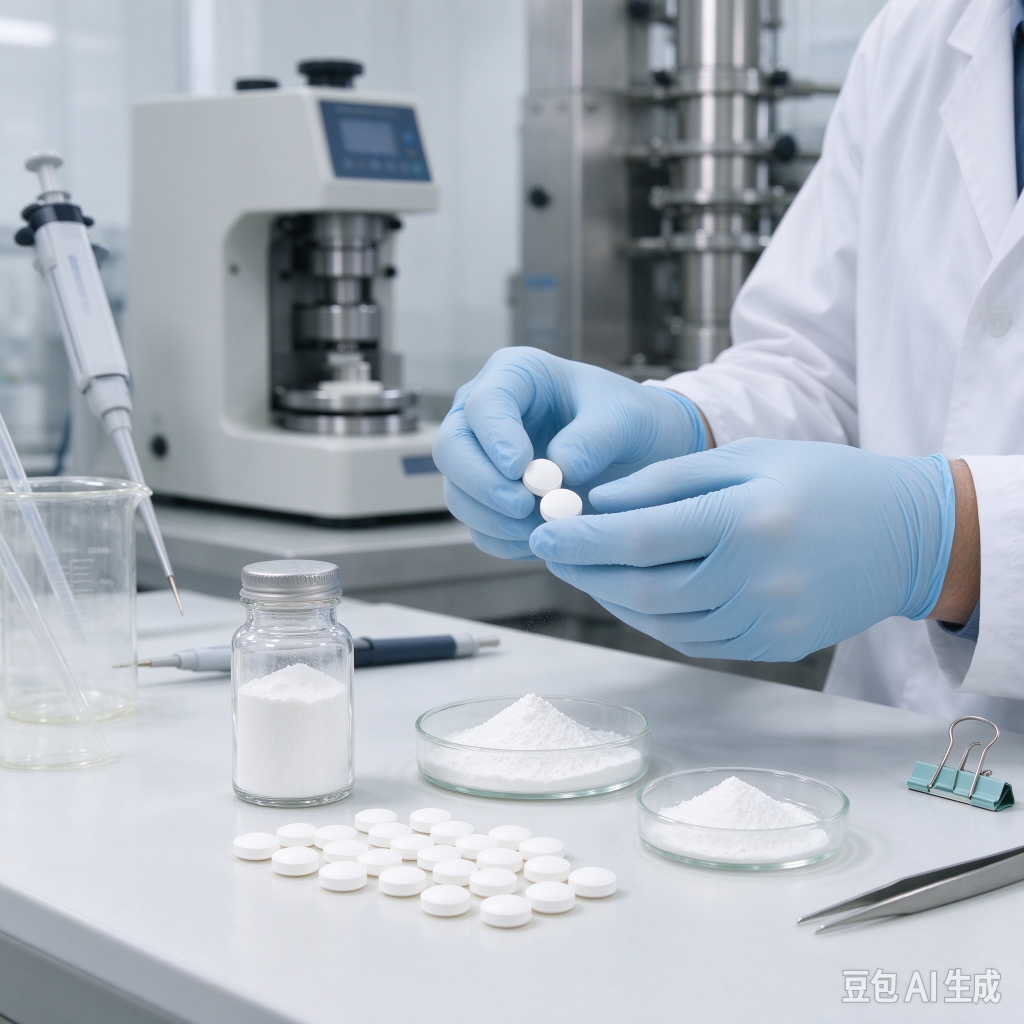
Caption:Tablet excipients influence powder processing, tablet strength, disintegration, and drug-release performance.
Tablet excipients are essential ingredients in pharmaceutical tablet formulations. They do more than fill space: they improve powder flow, support tablet strength, control disintegration, and influence drug release. Selecting the right excipients is critical to consistent manufacturing and finished-product quality.
This guide covers the main types of tablet excipients, including fillers, binders, disintegrants, lubricants, and coating agents. It also explains formulation selection, compatibility, quality requirements, manufacturing challenges, and how to evaluate pharmaceutical excipient suppliers.
In this guide, you will learn:
Tablet excipients are pharmaceutical ingredients, other than the API, that formulators intentionally include in a tablet to perform a specific technological or functional role. They add bulk, improve flow, promote particle bonding, assist disintegration, reduce friction, protect the tablet surface, or control drug release.
The number and type of excipients depend on the API, the dosage form, the manufacturing method, and the target performance. For example, a directly compressed immediate-release tablet may need only a diluent, a binder, a disintegrant, and a lubricant. In contrast, a modified-release tablet may also require a polymer that forms a matrix or regulates water movement and drug diffusion.
Most APIs cannot become acceptable tablets on their own. Some flow poorly, which makes uniform die filling difficult. Others compress poorly and form weak tablets. Still others appear at very low doses, which complicates content uniformity. Excipients solve these problems in several ways:
Excipients lack pharmacological activity, yet they are not functionally inert. A release-controlling polymer, for instance, directly changes the rate at which the API becomes available. Similarly, a lubricant can weaken tablets and slow dissolution when the formulator uses too much or blends it too long. Therefore, you should select tablet excipients for their function, their material characteristics, and their compatibility with the API.
Batch variation also matters. Differences in moisture, particle size distribution, bulk density, or viscosity between batches can change processing behavior and finished-product performance. As a result, the goal is not to find one excipient that performs one job in isolation. Instead, the goal is to build a system in which every component works together consistently.
Tablet excipients are grouped according to the roles they perform during manufacturing, storage, and drug release. A typical tablet combines several categories, although few formulations need every type. A typical tablet combines several categories, although few formulations need all of them.
| Excipient category | Main function | Common examples |
|---|---|---|
| Fillers / diluents | Add volume and bulk | MCC, lactose, starch, mannitol, dibasic calcium phosphate |
| Binders | Improve particle adhesion and tablet strength | Povidone, HPMC, HPC, pregelatinized starch, gelatin |
| Disintegrants | Promote tablet breakup in liquid | Crospovidone, croscarmellose sodium, sodium starch glycolate, starch |
| Lubricants | Reduce friction during compression and ejection | Magnesium stearate, stearic acid, sodium stearyl fumarate |
| Glidants | Improve powder flow | Colloidal silicon dioxide, talc |
| Anti-adherents | Reduce sticking to punches and dies | Talc, magnesium stearate |
| Coating agents | Form a protective or functional outer layer | HPMC, HPC, PVA-based systems, ethylcellulose, methacrylate polymers |
| Release-modifying agents | Control the drug-release profile | HPMC, ethylcellulose, selected polymers |
| Colorants and opacifiers | Provide identification or opacity | Approved iron oxides; titanium dioxide where permitted |
| Sweeteners and flavors | Improve palatability in chewable tablets | Sucralose, approved flavors |
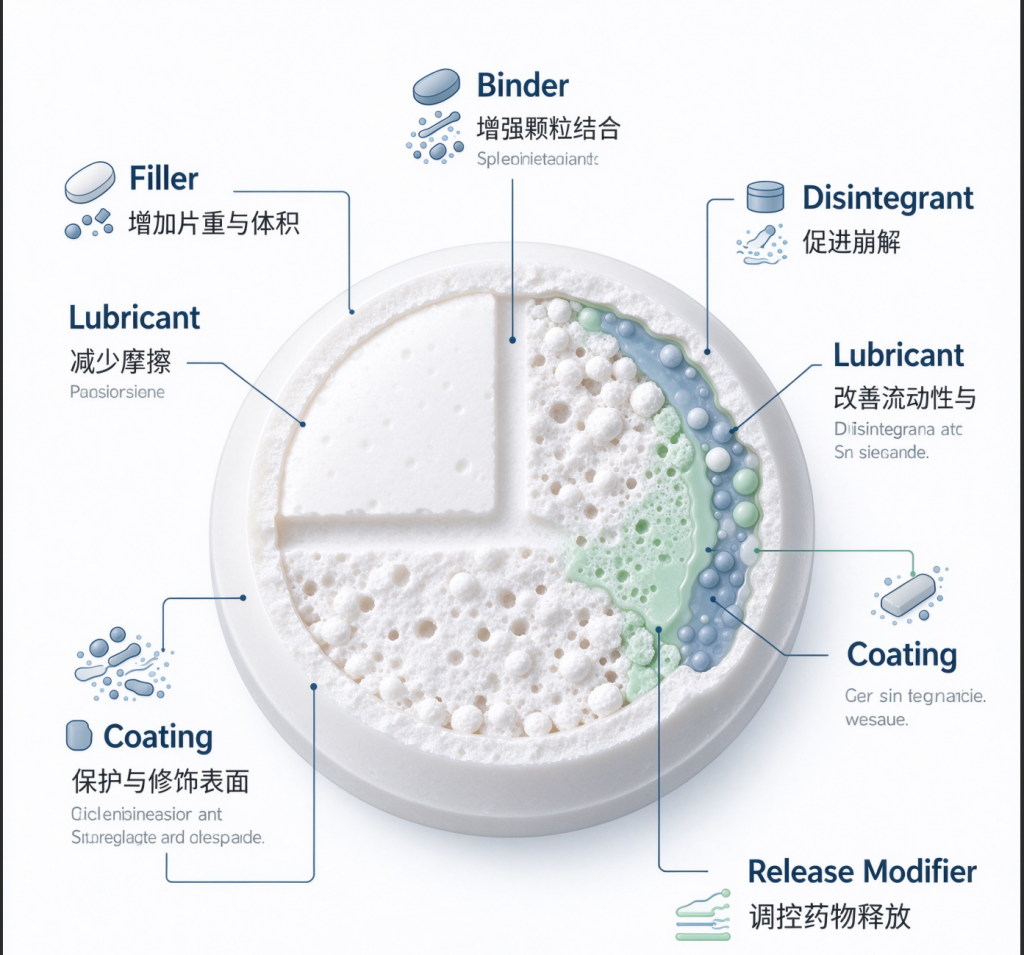
Caption:Different tablet excipients perform complementary functions in formulation, compression, disintegration, and drug release.
Importantly, many materials perform more than one role. MCC works as both a filler and a dry binder. Pregelatinized starch can contribute to binding and disintegration. HPMC can act as a binder, a film former, or a matrix former. This versatility gives formulators flexibility. Nevertheless, it also makes grade selection and compatibility testing essential.
These categories are not absolute. Talc, for example, appears as both a glidant and an anti-adherent, and the function of any material depends on its grade and the formulation context. Regulatory status of colorants and opacifiers also differs between markets, so verify the requirements of your target market.
The functional role of a tablet excipient depends not only on its chemical identity but also on its grade, physical properties, and formulation conditions. For example, microcrystalline cellulose (MCC) can function as a filler and dry binder, while hydroxypropyl methylcellulose (HPMC) may serve as a binder, film former, or release-modifying polymer. However, these functions are not interchangeable across all grades. Formulators should evaluate the material’s specifications and performance in the intended manufacturing process before assigning it a specific role.
Choosing suitable tablet excipients is particularly important when selecting fillers because these materials influence not only tablet bulk but also flow, compressibility, hardness, disintegration, and moisture behavior.
Fillers provide bulk when the API alone cannot form a practical tablet. However, they also influence flow, compressibility, hardness, disintegration, and moisture behavior. Consequently, you should treat a filler as a functional ingredient rather than a simple volume adjuster.
Formulators typically evaluate six properties:
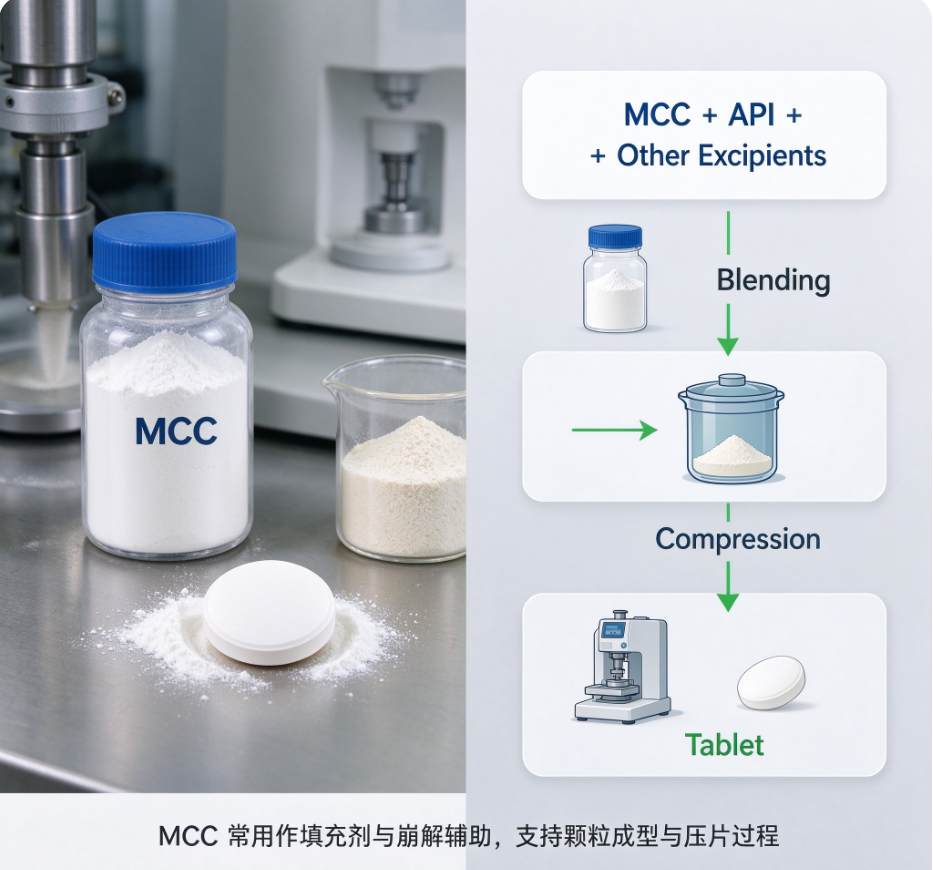
Caption:Selected MCC grades can support direct compression through their compactibility and dry-binding properties.
Microcrystalline Cellulose (MCC) ranks among the most widely used excipients in solid oral dosage forms. It serves as both a diluent and a dry binder, because its particles deform plastically under pressure and form strong interparticle bonds. As a result, selected MCC grades are widely used in direct-compression formulations. However, not every MCC grade has the same flow, compactibility, or tabletability characteristics. Formulators should confirm the suitability of the exact grade through technical data and formulation trials.
MCC offers several practical advantages. First, it provides good compressibility. Second, it binds without a separate liquid binder, which can simplify the formulation. Third, its porous structure can help liquid penetrate the tablet, although it does not replace a disintegrant in every formulation. Finally, different grades vary in particle size, bulk density, and moisture, so formulators can match a grade to their process.
Grade selection deserves careful evaluation. Match the formulation challenge to the relevant material properties. For example, when a direct-compression blend has poor flow, evaluate particle size distribution, bulk density, flow characteristics, and the behavior of the complete blend. When compactibility is inadequate, compare compression and tabletability data under controlled conditions. For moisture-sensitive APIs, review the MCC moisture specification and evaluate its effect on formulation stability.
These are formulation considerations rather than universal grade classifications. Always confirm the actual properties in the supplier’s TDS and assess performance through application-specific trials. Bulk density or particle size alone cannot establish whether an MCC grade is suitable for direct compression.
When evaluating two MCC suppliers, pharmaceutical manufacturers should compare both material specifications and actual formulation performance. Treat Supplier A and Supplier B below as a template, and record only your own measured results.
| Evaluation area | Supplier A | Supplier B | Evaluation method |
|---|---|---|---|
| Particle-size distribution | Record actual data | Record actual data | Compare D10, D50, D90 or sieve results |
| Bulk density | Record actual data | Record actual data | Use the same test method |
| Moisture content | Record COA result | Record COA result | Compare under the same specification |
| Powder flow | Record test results | Record test results | Use a consistent flow test |
| Compression behavior | Record tabletability data | Record tabletability data | Same press, tooling, and compression force range |
| Tablet hardness | Record test results | Record test results | Use the same formulation and compression conditions |
| Friability | Record test results | Record test results | Apply the same testing procedure |
| Disintegration | Record test results | Record test results | Use the same test conditions |
| Batch consistency | Review multiple COAs | Review multiple COAs | Compare several production batches |
For a reliable comparison, test both suppliers’ MCC grades using the same formulation, compression force, lubricant concentration, blending time, and testing procedures. Record the results across multiple batches before making a supplier qualification decision.
A meaningful comparison requires equivalent test conditions. For example, differences in tablet hardness should not automatically be attributed to MCC quality if the compression force, lubricant level, blending time, or formulation composition also differ. The final decision should consider specification compliance, manufacturing performance, batch consistency, and total procurement cost rather than a single parameter.
Lactose is a long-established filler available in crystalline, spray-dried, and other grades. Spray-dried grades suit direct compression, while other grades suit granulation. However, lactose is a reducing sugar, so it may react with APIs that contain reactive primary amine groups (the Maillard reaction), although not every amine-containing API reacts to the same degree. In addition, lactose-free labeling requirements may rule it out.
Starch can act as a filler, binder, or disintegrant depending on its source and processing. Native starch, pregelatinized starch, and chemically modified starch behave differently, so you cannot treat them as interchangeable. Moreover, food-grade modified starch does not automatically qualify for pharmaceutical tablets.
Mannitol and sorbitol are polyols that suit chewable and orally disintegrating tablets because of their mouthfeel and sweetness. Nevertheless, the two do not behave identically in compression or in moisture uptake, so evaluate the moisture behavior and compression performance of each one.
Dibasic calcium phosphate is a dense, inorganic filler available in anhydrous and dihydrate forms. Because of its density, it may segregate when blended with lighter materials, and its chemistry may not suit every API.
| Filler | Main strength | Key consideration |
|---|---|---|
| MCC | Compressibility and dry binding | Grade, moisture, lubricant sensitivity |
| Lactose | Multiple established grades | API compatibility, moisture |
| Starch | Versatile; may aid disintegration | Source and grade dependence |
| Mannitol | Pleasant mouthfeel | Cost and grade-dependent compression |
| Dibasic calcium phosphate | Density; direct-compression grades | API compatibility, segregation |
No filler is universally best. Instead, the right choice depends on the API, the process, and the target tablet properties.
Binders help powder particles adhere during granulation and compression. Consequently, they reduce friability and improve tablet integrity. However, too much binder can delay disintegration or alter dissolution, so formulators must balance strength against release.
Binder concentration directly shapes tablet performance. Too little binder produces weak granules, low hardness, and high friability. Conversely, too much binder creates dense granules and slower disintegration. Therefore, optimize the level experimentally and evaluate hardness, friability, disintegration, and dissolution together. Increasing hardness alone never proves a better formulation.
HPMC performs several roles: binder, film former, matrix former, and thickener. However, a grade chosen for film coating or controlled-release matrices does not automatically suit wet-granulation binding. Likewise, viscosity alone does not determine suitability, because substitution characteristics and hydration behavior also matter. Consequently, buyers should request the viscosity specification with its test conditions, substitution data, and relevant documentation.
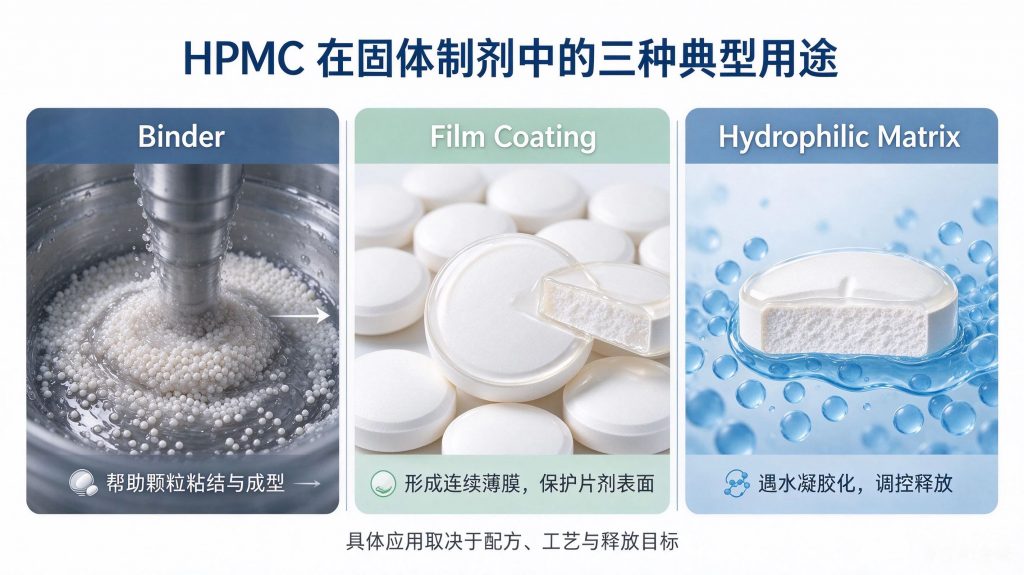
Caption:HPMC can perform different functions in tablet formulations depending on its grade and formulation conditions.
Disintegrants help tablets break into smaller particles after contact with liquid, which exposes the API to the dissolution medium. Importantly, disintegration and dissolution are different processes. A tablet can disintegrate quickly yet dissolve slowly if the API has poor solubility.
| Disintegrant | Main mechanism | Note |
|---|---|---|
| Native starch | Water uptake and swelling | Traditional; grade-dependent |
| Sodium starch glycolate | Swelling | Modified-starch superdisintegrant |
| Croscarmellose sodium | Wicking and swelling | Cross-linked cellulose derivative |
| Crospovidone | Wicking and strain recovery | Insoluble, porous, cross-linked polymer |
Three mechanisms drive disintegration: swelling, wicking (capillary liquid uptake), and strain recovery. In practice, they often work together. Moreover, tablet porosity, compression force, binder level, and lubricant exposure all influence the outcome.
Croscarmellose sodium and ordinary sodium carboxymethyl cellulose (CMC) are different materials. Croscarmellose is cross-linked and engineered as a superdisintegrant. Ordinary CMC lacks that cross-linking, so you should not substitute it for croscarmellose in a tablet formulation. Buyers who confuse similar names risk serious performance problems.
In granulated formulations, formulators may add the disintegrant inside the granules, outside them, or both. Intragranular addition helps granules break apart, whereas extragranular addition helps the compressed tablet separate. Because the best split depends on the API and process, compare the options in trials.
These three groups address different problems, so do not confuse them.
| Category | Primary function | Common examples |
|---|---|---|
| Lubricants | Reduce friction and ejection force | Magnesium stearate, sodium stearyl fumarate, stearic acid |
| Glidants | Improve powder flow | Colloidal silicon dioxide, talc |
| Anti-adherents | Reduce sticking to tooling | Talc, magnesium stearate |
Magnesium stearate is the most common lubricant. Nevertheless, it is hydrophobic, so excessive amounts or long blending can coat particles, weaken bonding, slow disintegration, and delay dissolution. Therefore, optimize both concentration and mixing time instead of simply adding more lubricant. Likewise, add glidants such as colloidal silicon dioxide only as far as flow improves, because more is not always better.
Diagnose the actual problem first. If powder flows poorly, evaluate a glidant. When ejection force runs high, evaluate a lubricant. If material sticks to punch faces, do not rely on magnesium stearate or any single anti-adherent alone; also check moisture, material tackiness, and the condition of the punches and dies.
Coatings improve appearance, mask taste, ease swallowing, protect the core, and, in functional systems, control release. Polymer choice must match the coating objective.
Plasticizers such as PEG or triethyl citrate improve film flexibility, and pigments or opacifiers provide color and opacity. Regulatory status for some opacifiers, including titanium dioxide, varies by market, so confirm local requirements. Finally, validate functional coatings through dissolution testing, because coating weight gain alone does not prove performance.
Cellulose-based and starch-based excipients appear throughout tablet formulations. Nevertheless, each plays a distinct role, and each section below has a single job: Section 9.1 explains the roles, Section 9.2 shows what ACTA supplies, and Section 9.3 tells buyers what to verify.
| Material | Typical tablet role | Key point for buyers |
|---|---|---|
| MCC | Filler and dry binder | Verify particle size, bulk density, moisture, and compression performance |
| HPMC | Binder, film coating, matrix former | Verify viscosity (with test conditions) and substitution |
| CMC | Selected formulation-specific functions in certain pharmaceutical systems | Verify the exact grade, viscosity, degree of substitution, intended function, and pharmaceutical suitability; ordinary CMC is not a substitute for croscarmellose sodium |
| Modified starch | Binder, filler, or disintegrant, depending on modification | Confirm pharmaceutical suitability; food grade differs |
CMC deserves a separate note. CMC grades differ in viscosity and degree of substitution, so buyers should define both parameters, together with the intended use, before they request a quotation. Ordinary CMC should not be presented as a universal or standard tablet excipient. Its suitability depends on the specific formulation, grade, and intended function.
Qingdao ACTA Biotechnology Co., Ltd. supplies cellulose-based materials, including microcrystalline cellulose (MCC), HPMC, CMC, and colloidal MCC. Each material should be evaluated according to its intended application, grade-specific specifications, and regulatory requirements.
| Product | Key parameters to evaluate | Application considerations |
|---|---|---|
| Microcrystalline Cellulose (MCC) | Particle size distribution, moisture, bulk density, flowability, and compression performance | Evaluate the exact grade for the intended tablet formulation and manufacturing process |
| Hydroxypropyl Methylcellulose (HPMC) | Viscosity, test concentration, temperature, test method, and substitution characteristics | Assess suitability for the specific binding, film-forming, or matrix application |
| Carboxymethyl Cellulose (CMC) | Viscosity, degree of substitution, moisture, purity, and application-specific specifications | Confirm that the exact grade is appropriate for the intended formulation |
| Colloidal MCC | MCC/CMC composition, dispersion behavior, hydration, and suspension performance | Primarily intended for liquid dispersion and suspension systems, not as a direct replacement for conventional tablet MCC |
For buyers comparing cellulose-based material suppliers, the most useful starting point is a grade-specific technical discussion covering target specifications, intended function, documentation requirements, and sample evaluation criteria.
ACTA’s portfolio should not be interpreted as a blanket declaration of pharmaceutical-grade status or pharmacopeial compliance. Suitability must be confirmed for each grade through technical documentation, sample testing, and the buyer’s qualification procedures.
For product information or a technical discussion, please share your target specifications, intended application, required documentation, estimated quantity, and destination market. ACTA can review the available product information against your requirements.
A product name alone is not sufficient for pharmaceutical material qualification. Identify the intended application, then request the technical specification, batch-specific COA, TDS, SDS, and applicable pharmacopeial or regulatory documentation for the exact grade under consideration (Section 13 explains each document). For any pharmaceutical tablet use, base your decision on the specific product’s documented compliance, your quality documents, and your own validation results rather than on the product name.
Once the required documents have been reviewed, buyers can proceed to supplier evaluation and sample testing using the practical checklist in Section 16.
Excipient selection depends on the manufacturing process as well as the API. A material suitable for direct compression may behave differently after wet granulation or roller compaction. Therefore, evaluate excipients under the intended production conditions.
| Factor | Direct compression | Wet granulation | Dry granulation |
|---|---|---|---|
| Liquid addition | No | Yes | No |
| Drying stage | Usually not required | Usually required | No wet-drying stage |
| Flow requirement | Blend must provide suitable flow for die filling | Granulation can improve flow, depending on granule properties | Compaction and milling can improve flow, depending on granule properties |
| Moisture exposure | Low | Higher | Low |
| Typical process complexity | Often fewer processing steps | Usually involves additional granulation and drying steps | Requires compaction and milling; complexity depends on equipment and process control |
| Main concern | Flow and compressibility | Granule formation and drying | Compactibility after compaction |
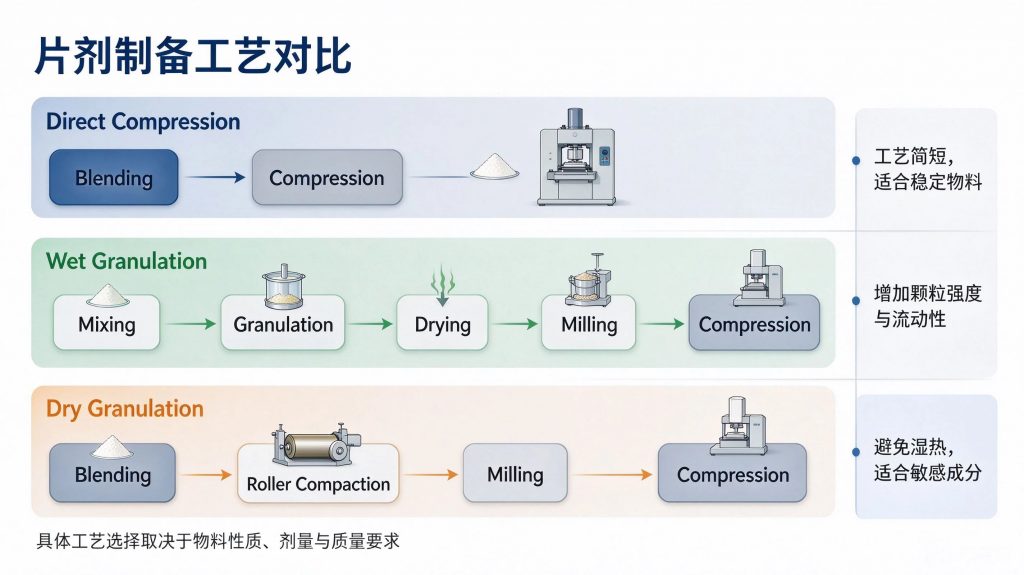
Caption:The manufacturing route affects excipient selection, moisture exposure, powder flow, and compression performance.
Direct compression combines the API and excipients before compression. MCC, directly compressible lactose, and mannitol are common filler options. The complete blend must provide suitable flow, compressibility, and content uniformity.
Wet granulation uses a liquid binder to form granules, which are then dried, sized, blended, and compressed. It can improve powder flow and reduce segregation but introduces moisture, heat, and additional processing steps. Common binders include PVP, HPMC, HPC, and pregelatinized starch.
Dry granulation uses roller compaction or slugging to form granules without liquid addition. It is useful for moisture-sensitive APIs, but repeated compaction may reduce the compactibility of materials such as MCC through work hardening. Therefore, evaluate MCC after compaction rather than relying only on its initial performance.
For continuous tablet manufacturing, refer to ICH Q13 [7], which addresses control strategies for material attributes, process parameters, and material flow. It is specifically focused on continuous manufacturing, not a general requirement for conventional batch tableting.
Selecting tablet excipients works best as a structured process. The selection should consider API properties, dosage-form requirements, manufacturing conditions, and the quality attributes of the finished tablet. The selection should consider API properties, dosage-form requirements, manufacturing conditions, and the quality attributes of the finished tablet. Follow these steps, which are consistent with the science-based pharmaceutical development and quality-by-design principles described in ICH Q8(R2) [3], to reduce formulation rework and development costs. This section covers the selection decision only; Sections 12 to 16 cover compatibility, quality documents, troubleshooting, supplier evaluation, and sampling in detail.
Notably, price should enter the decision only after technical suitability is established. A cheaper material that triggers repeated formulation adjustments or batch rejections usually costs more overall.
An excipient may perform its function perfectly and still harm the API. Therefore, compatibility screening belongs in early development, and ICH Q9(R1) [4] provides a framework for assessing such risks. This section covers only how the API and the excipients interact.
Chemical interactions include oxidation, hydrolysis, acid-base reactions, and Maillard reactions. Lactose, for instance, may react with APIs that contain reactive primary amine groups and produce discoloration. Likewise, reactive impurities in some excipients, such as peroxides in certain povidone grades, can oxidize sensitive APIs.
Moisture presents another major risk. Excipients differ in how much water they contain and absorb, and that water can drive hydrolysis, soften tablets, or change dissolution. Consequently, check loss on drying or water content, select suitable packaging, and test under relevant humidity conditions. Do not describe any excipient, MCC included, as universally moisture-protective.
Physical interactions include adsorption onto excipient surfaces, segregation caused by particle-size differences, and changes in API crystallinity.
A practical study follows four stages. First, review the API’s functional groups and known degradation pathways. Next, prepare API–excipient mixtures and apply justified stress conditions such as heat, humidity, or light. Then, analyze the samples using appropriate analytical methods, which may include HPLC, DSC, FTIR, XRPD, Karl Fischer titration, or visual inspection, depending on the suspected interaction and study objectives. Finally, confirm the findings in the complete formulation. Remember that a binary-mixture study screens risks but does not replace finished-product stability studies, and accelerated results do not directly equal shelf life.
Method selection should reflect the suspected interaction and the purpose of the study. Chromatographic methods can help investigate chemical degradation, while thermal and spectroscopic techniques may provide supporting evidence of physical or chemical interactions. No single analytical technique is sufficient for every compatibility assessment.
Tablet excipient quality directly affects manufacturing performance, finished-product consistency, and formulation stability. Therefore, pharmaceutical buyers should verify specifications, standards, and documents before purchasing.Therefore, pharmaceutical buyers should verify specifications, standards, and documents before they purchase. This section covers material quality and documentation; Section 15 covers how to judge the supplier itself.
Standards. Depending on the target market, manufacturers refer to USP–NF [1], the European Pharmacopoeia (Ph. Eur.) [2], the Japanese Pharmacopoeia (JP), the Chinese Pharmacopoeia (ChP), or other requirements. However, a chemical name alone never establishes pharmaceutical suitability. When a supplier claims compliance with a monograph, ask for evidence that covers the exact grade, and check the current edition.
Do not accept a general claim such as “complies with USP/EP.” Instead, confirm whether an applicable monograph exists for the specific material, which exact grade the supplier’s statement covers, which edition it refers to, and whether test results and supporting documents back the claim.
Use this checklist for every grade you evaluate. Each document answers a different question.
| Document | Purpose | Question it answers |
|---|---|---|
| COA (batch-specific) | Reports actual test results for one batch | Does this batch meet the specification? |
| TDS | Describes typical properties and applications | What are the product’s typical technical characteristics? |
| SDS | Covers hazards, handling, and storage | How do we handle the material safely? |
| Purchase specification | Defines the acceptance criteria agreed between buyer and supplier | What must every delivered batch meet? |
| Pharmacopeial compliance statement | States compliance with a named monograph for the exact grade | Which standard does this grade meet, and which edition? |
| Regulatory declarations (where relevant) | Allergen, GMO, TSE/BSE, residual solvent, and elemental impurity statements | Does the material meet our market and product requirements? |
| Change-control agreement | Commits the supplier to notify you of raw-material, process, or site changes | Will we learn about changes before they reach our line? |
A COA reports the actual test results for a specific batch. A TDS describes the product’s typical technical characteristics and may include general application information. A purchase specification defines the agreed acceptance criteria. Buyers should not assume that every typical TDS value is a guaranteed batch-release limit. Before approving a material, confirm the applicable specification, test methods, acceptance limits, and batch-specific COA results, and agree on any critical quality attributes during supplier qualification.
Pharmaceutical excipient qualification is not established by a COA alone. A supplier qualification process should consider more than a passing COA. Pharmaceutical manufacturers may also need to review manufacturing-site information, quality-system controls, traceability, change-control procedures, deviation management, and applicable regulatory documentation. The depth of qualification should reflect the material’s intended use and the manufacturer’s quality-risk assessment. A supplier’s ISO 9001 certificate, where available, does not by itself establish that a specific excipient grade complies with USP–NF, Ph. Eur., or another pharmaceutical monograph.
In practice, these questions matter as much as the product specification: Where exactly is the product made? Can raw materials and batches be traced? Will the supplier notify you when the process or site changes? How does the supplier handle deviations and complaints?
MCC: review identification, loss on drying, particle size distribution, bulk density, pH, residue on ignition, microbial limits, and elemental impurities, together with compression performance. The relevant monograph, grade specification, and intended use should determine the applicable tests and acceptance limits. Requirements differ between pharmacopeias, grades, and uses, so treat this list as a review guide, not as a uniform standard that every MCC must meet.
HPMC: review identification, viscosity (including concentration, temperature, and method), methoxy and hydroxypropoxy content, moisture, and microbial limits. Importantly, a viscosity value means little without its test conditions.
CMC: review identification, viscosity under clearly defined test conditions, degree of substitution where specified, moisture content, purity, pH, and other applicable material requirements. The appropriate parameters depend on the exact CMC grade and its intended pharmaceutical application. Compare viscosity results only when the concentration, temperature, sample preparation, and test method match. Moreover, never apply food-grade CMC specifications as the quality standard for a pharmaceutical CMC.
Batch-to-Batch Consistency. Review COAs from multiple production batches rather than relying on a single passing result. Compare critical material attributes against the agreed purchase specification and investigate meaningful variations in particle size, moisture, viscosity, or other application-relevant parameters. For pharmaceutical manufacturing, consistent incoming materials support reproducible processing and finished-product quality. Establish acceptance criteria through material qualification and the manufacturer’s quality-risk management procedures.
Systematic troubleshooting prevents unnecessary formulation changes. The table lists production problems and the excipient checks that follow from them; the earlier sections explain the underlying mechanisms. Review process records and equipment conditions before attributing a problem to an excipient. Where practical, investigate one major variable at a time; for more complex formulation problems, a structured design of experiments (DoE) may help identify interactions between multiple factors.
| Problem | Possible causes | Excipient-related checks |
|---|---|---|
| Low hardness | Poor compactibility, over-lubrication, low compression force | Filler or MCC grade, binder level, lubricant level and blending time |
| High friability | Weak bonding, poor granules | Binder performance, moisture, lubricant exposure |
| Slow disintegration | Dense tablet, excess binder, hydrophobic lubricant | Disintegrant type and level, binder level, magnesium stearate |
| Capping or lamination | Air entrapment, elastic recovery | Filler selection, granule properties, binder |
| Sticking or picking | Moisture, tacky ingredients, tooling | Anti-adherent strategy, moisture content |
| Weight variation | Poor flow, segregation | Glidant, particle size, filler grade |
| Poor content uniformity | Segregation, inadequate blending | Particle size and density match |
| Dissolution drift | API form, tablet porosity, polymer variation | Disintegrant, polymer viscosity, lubricant |
| Discoloration on storage | Maillard reaction, oxidation | Filler choice, impurities, packaging |
| High ejection force | Insufficient lubrication, excessive die-wall friction, formulation or tooling issues | Lubricant type and level, blending conditions, material properties, and tooling condition |
Troubleshooting should begin with a review of process parameters, equipment condition, and in-process test results. Changing an excipient without identifying the underlying cause may introduce additional formulation problems.
Choosing a supplier involves far more than comparing prices. A low quotation does not help when batches vary, information lacks detail, or deliveries slip. Instead, evaluate every tablet excipient supplier through documented evidence. ICH Q10 [5] provides a pharmaceutical quality system framework that includes the management of purchased materials and outsourced activities. Therefore, supplier evaluation should form part of the manufacturer’s overall quality system. This section covers the supplier itself; Section 13 covers the documents.
The following mistakes appear most often during supplier selection:
| Common mistake | Better approach |
|---|---|
| Choosing only by price | Compare total procurement cost |
| Accepting a generic COA | Request batch-specific documents |
| Ignoring the manufacturing source | Confirm the actual source and traceability |
| Treating typical TDS values as guarantees | Distinguish typical values from release specifications |
| Skipping sample evaluation | Test the exact grade in your formulation |
| Overlooking change control | Agree on notification requirements |
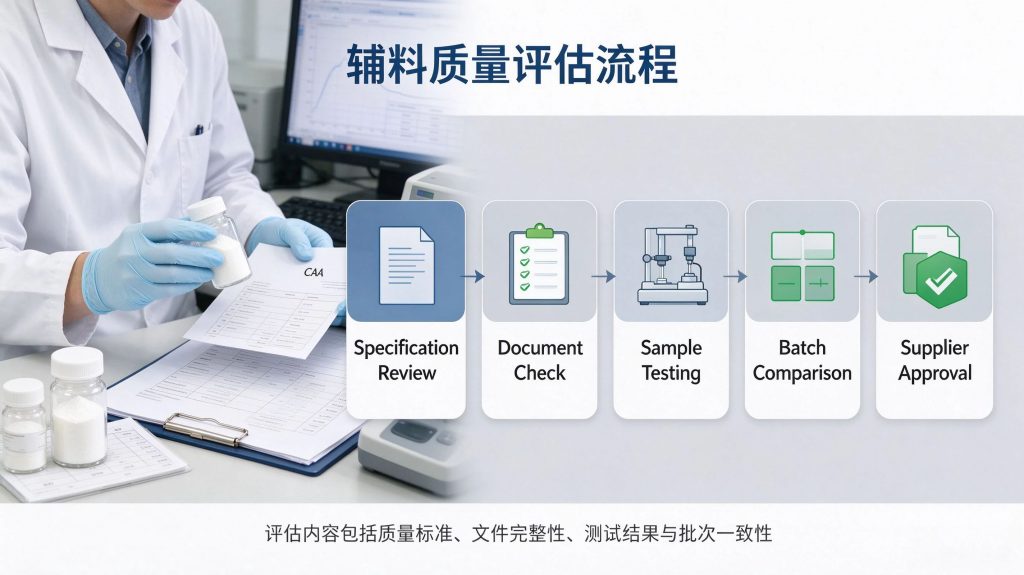
Caption:A structured supplier qualification process combines document review, sample testing, and batch consistency assessment.
This section gives you two practical tools: an inquiry template that speeds up quotations, and a record sheet that keeps your sample evaluation consistent.
Copy the template below, complete each field, and send it to any supplier, ACTA included.
Subject: Inquiry for Pharmaceutical Tablet Excipient
Dear Sales Team,
We are evaluating a new supplier for the following pharmaceutical excipient:
Please provide your available technical specifications, a representative COA, relevant regulatory documentation, MOQ, lead time, and quotation. We would also appreciate information about sample availability for our initial formulation evaluation.
Best regards,
On receipt, confirm the material identity, review the batch-specific COA, and perform the required incoming tests. Then compare the new sample with the currently approved material under equivalent test conditions.
| Record item | New sample | Current approved material |
|---|---|---|
| Supplier / manufacturer | ||
| Product name and grade | ||
| Manufacturing batch number | ||
| COA and document review | ||
| Identity test result | ||
| Moisture / loss on drying | ||
| Particle size distribution | ||
| Bulk density | ||
| Powder flow result | ||
| Formulation and blend details | ||
| Lubricant level and blending time | ||
| Compression equipment and tooling | ||
| Compression force | ||
| Tablet weight variation | ||
| Tablet hardness | ||
| Friability | ||
| Disintegration time | ||
| Assay / content uniformity (where applicable) | ||
| Dissolution profile | ||
| Overall evaluation | ||
| Approval status / next action |
Record all results under comparable test conditions. A new excipient should not be approved based on a single test result. Assess specification compliance, formulation performance, documentation, and batch consistency together.
The final approval decision should follow the pharmaceutical manufacturer’s established material qualification and quality procedures.
Tablet excipients are ingredients other than the API that formulators add to provide bulk, strength, flow, disintegration, lubrication, coating, or controlled-release properties.
The main types are fillers, binders, disintegrants, lubricants, glidants, anti-adherents, coating agents, release-modifying polymers, colorants, and sweeteners or flavors.
MCC combines filler and dry-binder functions and compresses well, so it supports direct compression. However, grade, API properties, lubrication, and compression conditions all influence the result.
It can serve all three roles. Nevertheless, you must choose the viscosity grade and specification for the specific application.
No, not automatically. Croscarmellose sodium is a cross-linked superdisintegrant, whereas ordinary CMC is a different material with different functionality.
Request a batch-specific COA, the TDS, the SDS, the current specification, and any regulatory or pharmacopeial documents your market requires (see the checklist in Section 13).
Not automatically. Particle size, moisture, bulk density, and compression behavior can differ, so qualify any new source through testing and change control.
Pharmaceutical and food applications may involve different specifications, documentation, quality systems, and regulatory requirements. Buyers should verify the exact grade and applicable standards rather than assume that the materials are interchangeable.
Compare product specifications, batch-specific COAs, particle-size distribution, bulk density, moisture, relevant functional data, documentation, and supply consistency. Where appropriate, conduct comparative formulation trials (see the worksheet in Section 4.2).
Can one MCC grade serve all tablet manufacturing processes?
No. MCC suitability depends on the grade, the API properties, the manufacturing process, and the required tablet performance. A grade that works in direct compression should not automatically be assumed suitable for every wet- or dry-granulation formulation.
Provide the required grade or specifications, the intended application, the manufacturing process, the documentation requirements, the estimated quantity, the destination, and your sample requirements.
Tablet excipients determine whether a formulation manufactures smoothly, performs as intended, and stays stable. Fillers supply bulk and compressibility, binders build strength, disintegrants release the API, lubricants and glidants keep the press running, and coatings and polymers shape appearance and release. Together, these materials form a system, and the system succeeds only when each component suits the API, the process, and the quality requirements.
Therefore, select excipients by function, validate them through trials, screen them for compatibility, and verify them through batch-specific documents. Above all, choose a supplier that proves consistency instead of merely promising it. That approach reduces development risk, protects product quality, and lowers the total cost of production.
Selecting a suitable cellulose-based excipient requires more than comparing product names and prices. The exact grade, technical specifications, batch consistency, documentation, and intended application all influence material suitability.
Qingdao ACTA Biotechnology Co., Ltd. supplies cellulose-based materials, including:
To help us understand your requirements, please include:
Our team can discuss available product information, applicable technical documents, and sample evaluation arrangements according to your requirements.
Contact ACTA to discuss your specifications, sample requirements, and quotation.
These sources support the technical points above. Always check the current edition and scope before you apply them. Note that ICH Q8(R2), Q9(R1), and Q10 are general guidelines on pharmaceutical development, quality risk management, and the pharmaceutical quality system; none of them sets a specific test limit for any individual excipient. Excipient limits come from the pharmacopeial monograph and your agreed specification.
| Ref. | Organization and full title | Version or date | Official source | Supports |
|---|---|---|---|---|
| 1 | United States Pharmacopeia (USP): United States Pharmacopeia–National Formulary (USP–NF) | Current official edition; check the specific excipient monograph and general chapters | https://www.uspnf.com | Section 13: pharmacopeial and excipient quality standards |
| 2 | EDQM, Council of Europe: European Pharmacopoeia (Ph. Eur.) | 12th Edition (online only); check the specific monograph | https://www.edqm.eu (Ph. Eur. 12th Edition page) | Section 13: European pharmacopeial requirements |
| 3 | ICH: Q8(R2) Pharmaceutical Development | Step 4, August 2009 | https://www.ich.org/page/quality-guidelines | Section 11: science-based pharmaceutical development and quality by design |
| 4 | ICH: Q9(R1) Quality Risk Management | Step 4, January 2023 | https://www.ich.org/page/quality-guidelines | Section 12: risk assessment and compatibility |
| 5 | ICH: Q10 Pharmaceutical Quality System | Step 4, June 2008 | https://www.ich.org/page/quality-guidelines | Section 15: management of purchased materials |
| 6 | U.S. FDA: Process Validation: General Principles and Practices (Guidance for Industry) | January 2011 | https://www.fda.gov/regulatory-information/search-fda-guidance-documents/process-validation-general-principles-and-practices | Background reading: process lifecycle and ongoing control (not a raw-material consistency standard) |
| 7 | ICH: Q13 Continuous Manufacturing of Drug Substances and Drug Products | Step 4, 16 November 2022 | https://www.ich.org/page/quality-guidelines | Section 10: continuous manufacturing (not a requirement for conventional batch tableting) |
