

Written by Richard Wang, International Sales & Technical Content, Qingdao ACTA Biotechnology Co., Ltd about HPMC E15
Technical Review: Alice Meng
Last Updated: November 2026
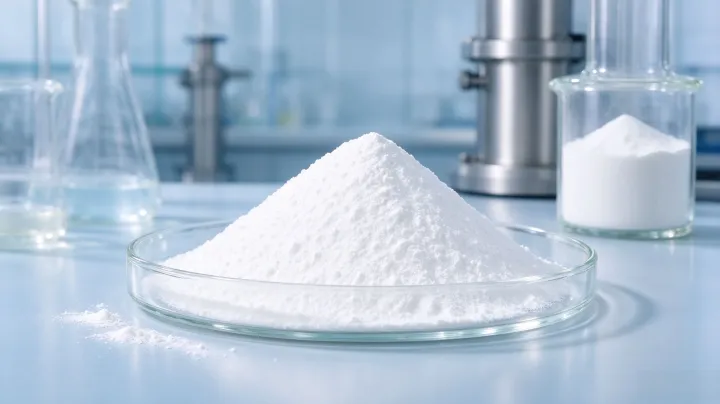
Caption:HPMC E15 is a low-viscosity hydroxypropyl methylcellulose grade used in selected pharmaceutical formulations.
Hydroxypropyl methylcellulose (HPMC), also known as hypromellose, is a non-ionic cellulose ether used in pharmaceutical formulations, food processing, dietary supplements, and industrial products. The main HPMC E15 uses in pharmaceutical manufacturing are aqueous tablet film coating and binding in selected wet-granulation formulations. As a low-viscosity grade, E15 lets formulators prepare coating liquids and binder solutions that stay easy to pump, spray, and distribute, while still delivering film-forming and binding functionality. Actual performance depends on the grade specification, preparation method, and process conditions. Looking for materials rather than background? See ACTA’s HPMC products.
Choosing HPMC E15 takes more than knowing its nominal viscosity. Two products sold as E15 can differ in substitution type, viscosity range, particle characteristics, moisture, documentation, and manufacturing source. Buyers who compare products by grade name alone often discover those differences only after a trial fails or a batch behaves differently. For that reason, this guide treats the technical data sheet, the batch COA, and your own application trials as the real basis for selection.
This guide explains what HPMC E15 is, how its properties shape performance, where manufacturers use it, how it differs from E5 and E50, how to prepare and troubleshoot it, and how to evaluate a supplier. We wrote it for formulation scientists, quality teams, pharmaceutical manufacturers, distributors, and purchasing managers. Throughout, we separate what supplier literature typically supports from what you must confirm through your own testing.
[IMAGE 1 – place here] File:
hpmc-e15-pharmaceutical-grade-powder.webp| Alt: HPMC E15 hydroxypropyl methylcellulose powder for pharmaceutical useCaption: HPMC E15 is a low-viscosity hydroxypropyl methylcellulose grade used in selected pharmaceutical formulations.
Description: HPMC E15 powder, a low-viscosity cellulose ether evaluated for tablet film coating and wet-granulation binding. Actual suitability depends on the product specification and quality requirements. Use a real ACTA product photo if available.
| Item | Summary |
|---|---|
| Material | Hydroxypropyl methylcellulose (hypromellose), non-ionic cellulose ether |
| Nominal viscosity | Approx. 15 mPa·s (some specifications: 12–18 mPa·s, 2% solution, 20°C) |
| Main applications | Tablet film coating; binder in selected wet-granulation formulations |
| Other uses | Evaluated in solid dispersions; supplement and food coatings; selected industrial systems |
| Solubility | Hydrates in cold water to form a colloidal solution; practically insoluble in hot water |
| Substitution type | Commonly 2910 in pharmaceutical ranges; verify in the supplier specification |
| Not suitable by default for | Enteric coating, sustained-release matrices, capsule shells |
Typical commercial description only. The actual viscosity range, substitution type, and compliance status must be verified against the exact manufacturer’s specification.
Looking for HPMC E15 for Pharmaceutical Applications? ACTA can help review your target viscosity, substitution type, intended application, and available technical documentation. Request product specifications and sample availability, or explore ACTA’s HPMC product range.
HPMC E15 is mainly used as a low-viscosity film-forming polymer for pharmaceutical tablet coating and as a binder in selected wet-granulation formulations. Its suitability depends on the substitution type, viscosity specification, solution preparation, and manufacturing process. It should not be assumed to provide enteric or sustained-release performance without a specifically validated formulation.
HPMC E15, also written as Hypromellose E15, is a low-viscosity grade of hydroxypropyl methylcellulose, a cellulose polymer chemically modified with methoxy and hydroxypropoxy groups. These substituents give HPMC its characteristic behavior in water: cold-water hydration, solution viscosity, thermal gelation, and film formation.
Three terms are easy to confuse, so keep them separate:
A product described as “HPMC 2910 E15” should therefore be verified on both counts: substitution type and viscosity. The E15 name alone guarantees neither.
Manufacturers make HPMC by treating purified cellulose with alkali and then reacting it with methylating and hydroxypropylating agents, which replace some hydroxyl groups on the cellulose chain. Each part of the structure contributes something different:
Because substitution level and chain length can be controlled independently, manufacturers can offer many HPMC grades. That is why formulators can match a grade to a coating, binding, or thickening requirement, and why two grades with similar viscosity can still behave differently.
The table below shows representative information for a pharmaceutical-oriented E15. Treat these figures as reference values, not as universal acceptance limits.
| Parameter | Typical reference |
|---|---|
| Chemical name | Hydroxypropyl methylcellulose (hypromellose) |
| CAS number | 9004-65-3 |
| Appearance | White or off-white powder |
| Substitution type | Commonly 2910 (verify) |
| Methoxy content (Type 2910) | 28.0–30.0% |
| Hydroxypropoxy content (Type 2910) | 7.0–12.0% |
| Nominal viscosity | Approx. 15 mPa·s |
| Common viscosity range | 12–18 mPa·s (supplier-specific) |
| Water behavior | Forms a colloidal solution in cold water |
| Main applications | Tablet coating; wet-granulation binding |
For viscosity comparison, manufacturers commonly measure a 2% aqueous solution at 20°C. Confirm the concentration, temperature, instrument, and method before comparing results from different suppliers. Section 4 explains how to read a full specification.
Three practical reasons explain E15’s place in solid-dosage manufacturing:
Importantly, E15 does not automatically provide enteric protection or sustained release. Those functions need a polymer system and formulation validated for that purpose.
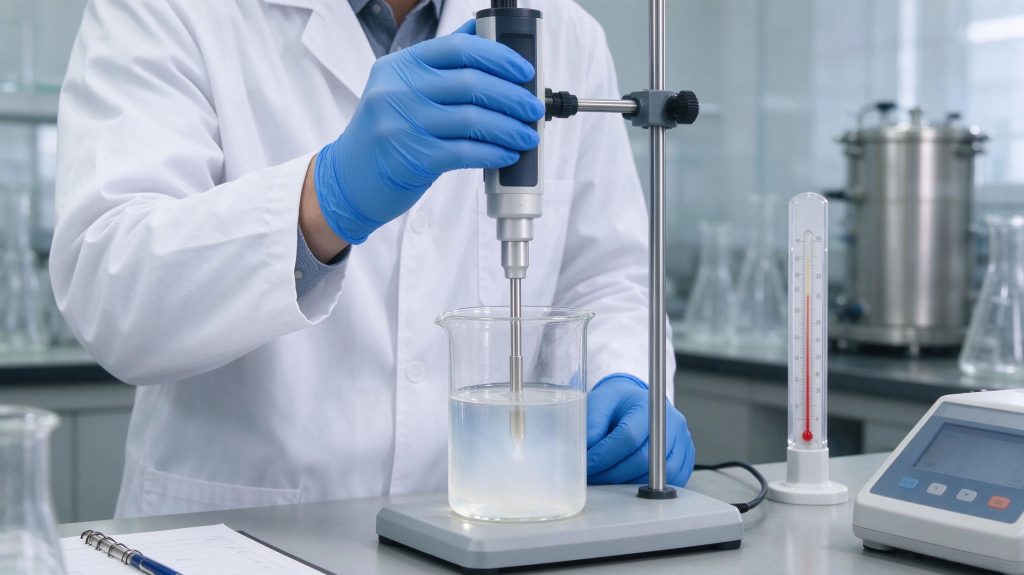
Caption: HPMC E15 viscosity should always be evaluated together with the test concentration, temperature, and method.
HPMC E15’s usefulness comes from five linked properties: viscosity, hydration behavior, thermal gelation, film formation, and compatibility. Formulators should never judge the grade on viscosity alone, because substitution type, particle size, solution concentration, and preparation conditions all affect performance.
Viscosity decides how an HPMC solution flows during mixing, pumping, spraying, and application. Within one substitution type, nominal viscosity reflects the polymer’s average molecular weight: longer chains give more viscous solutions at the same concentration. E15 sits among the lower-viscosity pharmaceutical grades, with a nominal value near 15 mPa·s for a 2% solution at 20°C, and some suppliers specify 12–18 mPa·s.
That low viscosity offers practical advantages:
Lower viscosity does not automatically mean better performance, though. An unsuitable concentration can still cause poor film coverage, inadequate binding, or inconsistent coating. Evaluate viscosity together with solids content, application requirements, and process conditions rather than treating the nominal E15 value as the only selection criterion.
HPMC E15 hydrates in cold water and forms a colloidal solution after proper dispersion. Water molecules interact with the polymer chains, which swell, separate, and spread through the liquid. Because the polymer is practically insoluble in hot water, temperature controls how the powder behaves at each stage of preparation.
The main risk is lump formation. If powder is added too quickly or mixed poorly, the outer surface of each particle hydrates first and forms a gel layer that traps dry powder inside. These lumps can take a long time to disperse. Manufacturers therefore choose between hot-water dispersion followed by cooling and direct cold-water dispersion, depending on particle characteristics, equipment, and batch size. Section 7 covers both methods step by step.
HPMC solutions can move from a liquid-like state toward a gel as temperature rises. As the solution warms, the polymer gradually loses part of its water shell and chains begin to associate with one another. Several factors influence the gelation temperature:
For E15 users this matters during preparation, storage, transfer, and application, because unexpected temperature changes can alter viscosity. Treat gelation temperature as a grade-specific parameter and establish limits through testing rather than assuming every E15 product behaves identically.
When an aqueous HPMC E15 solution is applied to a suitable surface and dried under controlled conditions, the polymer forms a continuous film. In tablet coating, that film can:
The polymer alone does not determine coating quality. Plasticizer selection, pigment loading, spray rate, atomization, drying temperature, and equipment all matter. For example, too little plasticizer can produce brittle films that crack, while too much can reduce film hardness or increase tackiness. Optimize the complete coating formulation, not just the polymer.
HPMC E15 is non-ionic, so formulators can use it with many pharmaceutical excipients without the charge-related interactions that ionic polymers may cause. Typical companions include lactose and other fillers, microcrystalline cellulose (MCC), starch and modified starch, polyethylene glycol (PEG) plasticizers, titanium dioxide and other pigments, and selected APIs. For a wider view of how binders, fillers, and disintegrants work together, see ACTA’s tablet excipients guide.
Compatibility does not mean every combination will work. Formulation pH, electrolyte concentration, moisture content, temperature, and ingredient characteristics can all affect the system. Study how plasticizers change film flexibility, how pigments affect suspension stability, and how the API behaves in the complete formulation.
Storage matters too. HPMC powder absorbs moisture, so keep it in tightly sealed packaging in a cool, dry place and follow the supplier’s storage conditions. Before commercial use, quality teams should confirm appearance, moisture content, viscosity, and other specification parameters for each batch.
HPMC E15 is a low-viscosity grade of hydroxypropyl methylcellulose (hypromellose) commonly used in aqueous tablet film coating and selected wet-granulation formulations. Its nominal viscosity is approximately 15 mPa·s in certain commercial grade systems, although the actual specification depends on the manufacturer and test conditions. Buyers should verify the substitution type, viscosity range, and pharmaceutical documentation before selecting a product.
HPMC E15 serves several functions in pharmaceutical manufacturing because it combines relatively low solution viscosity with film-forming and binding properties. Manufacturers mainly use it for tablet film coating and wet granulation, and they may evaluate it for a few specialized applications. Evaluate each application separately, because one grade rarely meets every formulation requirement.
| Application | Role of E15 | What to confirm |
|---|---|---|
| Tablet film coating (core use) | Film-forming polymer | Solution viscosity at working solids, plasticizer, spray and drying program |
| Wet-granulation binding (core use) | Binder | Binder level, liquid addition, granule strength, disintegration |
| Solid dispersions | Possible polymeric carrier | API–polymer compatibility, drug loading, dissolution |
| Hard capsules | Not a default choice | Dedicated capsule-grade specification |
| Food and dietary supplements | Grade-dependent | Food-grade documentation and destination-market rules |
| Industrial systems | Selective | Whether low viscosity meets the water-retention or rheology need |
[IMAGE 2 – place here] File:
hpmc-e15-tablet-film-coating-process.webp| Alt: HPMC E15 aqueous film coating applied to pharmaceutical tabletsCaption: HPMC E15 can serve as the film-forming polymer in suitable aqueous tablet coating formulations.
Description: Film-coated pharmaceutical tablets, illustrating one application of low-viscosity HPMC. Coating performance depends on polymer grade, plasticizer, pigments, and process conditions.
HPMC E15 tablet coating is the application most associated with low-viscosity HPMC. Operators prepare an aqueous HPMC solution, combine it with additives, and spray it onto tablets in a coating pan or fluid-bed system. Controlled drying lets the polymer form a continuous film. A well-designed system can improve tablet appearance, support color application, protect cores during handling, and help the liquid distribute uniformly during spraying. The degree of protection against moisture or light depends on the complete formulation and its validated performance.
A typical coating formulation contains several components:
| Ingredient | Main function |
|---|---|
| HPMC E15 | Film-forming polymer |
| PEG or glycerol | Plasticizer |
| Titanium dioxide | Opacifier, where permitted |
| Iron oxides and other colorants | Color |
| Purified water | Processing medium |
The actual composition depends on the tablet core, equipment, desired appearance, and regulatory requirements. Formulators may raise plasticizer to improve flexibility and reduce brittleness, or adjust pigment loading to reach the required color and opacity. Even so, E15 does not independently provide enteric protection. Enteric coating requires a dedicated enteric polymer system, such as HPMCP or another validated material. Likewise, an immediate-release coating must not unintentionally delay disintegration, so always confirm disintegration and dissolution results.
[IMAGE 3 – place here] File:
hpmc-e15-wet-granulation-binder.webp| Alt: HPMC E15 as a binder in pharmaceutical wet granulationCaption: HPMC E15 may be evaluated as a binder in wet granulation, depending on the formulation.
Description: Wet granulation of a pharmaceutical powder blend. The suitability of a specific HPMC E15 grade as a binder should be confirmed through formulation and process trials.
Wet granulation converts fine powder blends into granules with better flowability, compressibility, and resistance to segregation. As an HPMC E15 binder, the polymer helps particles adhere. Its suitability as a binder should be confirmed through supplier documentation and formulation-specific trials, especially when you change from an established binder.
A typical process runs as follows:
Manufacturers value E15 here because it improves particle adhesion, allows binder concentration and liquid addition to be adjusted, and gives binder solutions that are convenient to prepare. The trade-off is familiar: too much binder produces hard, dense granules and can slow disintegration, while too little leaves weak granules, excessive fines, and poor tablet strength. Optimize binder level, liquid addition rate, granulation time, and drying through trials, and judge success on granule size distribution, flow, compressibility, hardness, friability, and disintegration together.
Need HPMC E15 for Tablet Coating or Wet Granulation? Share your current HPMC grade, target viscosity, coating solids or binder level, target coating weight gain, estimated consumption, and required documentation. ACTA can review them against available sourcing options and discuss suitable specifications and sample arrangements. Contact ACTA with your requirements.
For commercial amorphous solid dispersion development, formulators should compare HPMC E15 with polymers specifically designed or selected for the intended manufacturing process and drug-release objective. A low-viscosity E15 grade should not be assumed to provide the same functionality as specialized polymers such as hypromellose acetate succinate (HPMC-AS), or as higher-viscosity HPMC grades used in particular formulation systems. Final selection should depend on API compatibility, drug loading, process conditions, stability, and dissolution results.
HPMC is widely used for vegetarian hard capsules, but capsule-shell production has its own requirements: suitable gelation behavior, mechanical strength, flexibility, drying behavior, and finished-shell quality. Capsule makers generally use dedicated capsule-grade HPMC formulations. Buyers should not assume that a general-purpose E15 meets those requirements, and should evaluate it against the specific capsule process before considering it.
Depending on regulatory status and specification, suitable HPMC grades can serve as thickeners, stabilizers, film-forming agents, or formulation aids in supplements, selected food coatings, and plant-based products. In the EU, food-grade HPMC is listed as additive E464. A pharmaceutical-grade product is not automatically food grade, and the reverse also holds. Verify the intended-use approval, the relevant food-grade specification, and whether the supplier can provide the TDS, COA, SDS, and regulatory declarations your market requires. For food-system context, see ACTA’s food stabilizers and food thickeners pages.
HPMC also serves industrial functions thanks to its water retention, thickening, and film-forming behavior, for example in water-based coatings, adhesives, and some specialty products. However, E15 has a low viscosity compared with many construction-grade HPMC products. Tile adhesives and cement-based dry-mix systems usually need grades with different viscosity and functional profiles, so do not select E15 simply because it belongs to the HPMC family. Check that its viscosity and water-retention behavior meet the actual requirement. ACTA lists construction-grade HPMC for tile adhesive and dry-mix mortar on its HPMC product page, and HEMC mortar additives on its HEMC page.
Choosing a pharmaceutical raw material means evaluating chemical composition, substitution type, viscosity, moisture, purity, and documentation, not just the nominal viscosity. Products with similar grade names can differ in specification and manufacturing control, and those differences can affect solution preparation, coating behavior, granulation, and batch-to-batch consistency.
This table is an illustrative reference for evaluating a pharmaceutical-oriented E15. It is not a universal specification and not a commitment by any specific manufacturer.
| Parameter | Typical reference |
|---|---|
| Product name | HPMC E15 |
| CAS number | 9004-65-3 |
| Appearance | White or off-white powder |
| Substitution type | 2910 (where specified) |
| Methoxy content | 28.0–30.0% (Type 2910) |
| Hydroxypropoxy content | 7.0–12.0% (Type 2910) |
| Viscosity | 12–18 mPa·s (supplier-specific) |
| Test concentration / temperature | 2% aqueous solution / 20°C (confirm) |
| Loss on drying | Supplier-specific limit |
| Residue on ignition | Supplier-specific limit |
| pH | Supplier-specific range (state test concentration) |
| Impurities | Heavy metals / elemental impurities per the applicable specification |
| Packaging | Supplier-specific (commonly 25 kg units) |
Do not assume that every E15 uses substitution type 2910. Confirm the exact designation and its composition limits in the manufacturer’s specification, and request the actual TDS and COA for the product you plan to buy.
The following substitution ranges are expressed on a dried basis and illustrate the classifications used in the cited pharmacopeial descriptions of hypromellose. Always consult the current applicable monograph for official requirements in your target market.
Viscosity is one of the most important quality indicators for E15. A supplier may specify, for example, a 2% solution at 20°C, a nominal 15 mPa·s, and an acceptance range of 12–18 mPa·s. Compare results across suppliers only when the test conditions are equivalent, because several factors move the measured value:
| Substitution type | Methoxy (%), dried basis | Hydroxypropoxy (%), dried basis |
|---|---|---|
| 1828 | 16.5–20.0 | 23.0–32.0 |
| 2208 | 19.0–24.0 | 4.0–12.0 |
| 2906 | 27.0–30.0 | 4.0–7.5 |
| 2910 | 28.0–30.0 | 7.0–12.0 |
A nominal E15 label cannot replace a verified viscosity result under stated conditions.
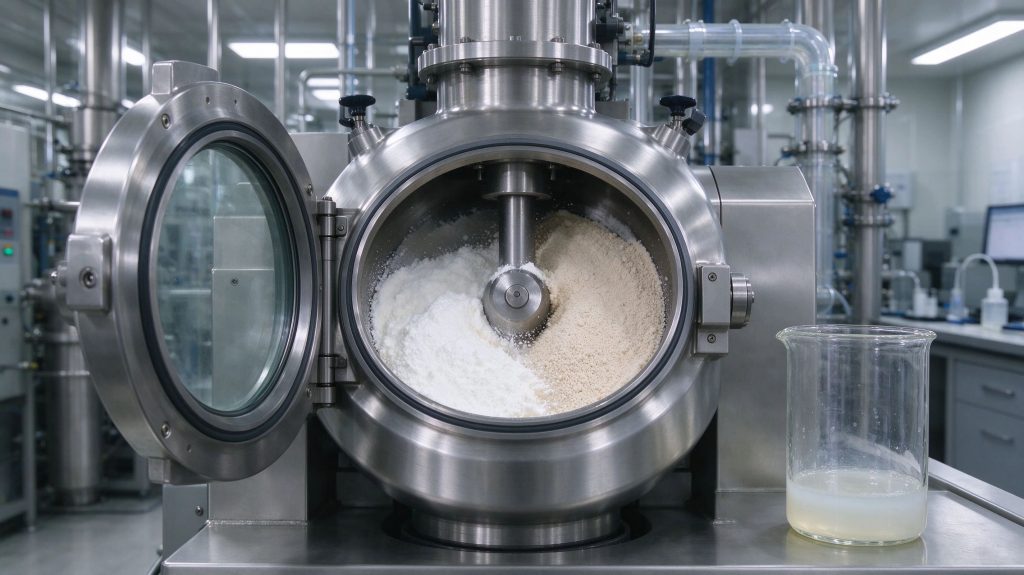
Caption: Review the specification and batch-specific COA before approving an HPMC E15 shipment.
Methoxy and hydroxypropoxy contents influence solubility, hydration, thermal gelation, and other functional properties. Hypromellose substitution types are defined by these contents, and they are not interchangeable just because viscosity grades look similar. The USP hypromellose monograph describes the following ranges (verify against the current edition):
| Substitution type | Methoxy (%) | Hydroxypropoxy (%) |
|---|---|---|
| 1828 | 16.5–20.0 | 23.0–32.0 |
| 2208 | 19.0–24.0 | 4.0–12.0 |
| 2906 | 27.0–30.0 | 4.0–7.5 |
| 2910 | 28.0–30.0 | 7.0–12.0 |
When comparing suppliers, review methoxy content, hydroxypropoxy content, nominal viscosity, the substitution classification, and the relevant pharmacopeial requirement together.
Depending on the target market, buyers may need to evaluate compliance with USP–NF, the European Pharmacopoeia, the Japanese Pharmacopoeia, the Chinese Pharmacopoeia, or other national requirements.
A general claim of pharmaceutical quality is not the same as documented compliance with a named standard. Ask for a statement that identifies the monograph, the edition, and the exact grade it covers, and confirm that test results support it. ISO 9001 certification alone does not prove that a specific HPMC product meets a pharmacopeial monograph, and neither do food-safety or religious-compliance certificates such as BRC or Halal, which address different requirements. For risk-based guidance on excipient and supplier qualification, see the IPEC Federation qualification of excipients guide and the USP hypromellose monograph; for Japan, check the current Japanese Pharmacopoeia hypromellose monograph. Monograph compliance of the material also does not equal approval of the finished product, so confirm requirements with your regulatory and quality teams.
| Document | What buyers should check |
|---|---|
| TDS | Product specification and typical properties (not guaranteed limits) |
| Batch-specific COA | Actual results for one production batch |
| SDS | Handling, storage, and safety information |
| Pharmacopeial compliance statement | Named monograph, edition, and grade |
| GMP-related documentation | Manufacturing quality controls, where relevant |
| ISO certificate | Scope and validity |
| Stability information | Shelf life and storage conditions |
| Sample specification | Confirmation of the grade supplied for testing |
| Change-control commitment | Notification of raw-material, process, or site changes |
Compare the COA against the approved specification rather than a general brochure, and confirm that product name, batch number, manufacturer, and specification match across documents.
Two suppliers can offer E15 with similar specifications and still deliver different practical performance. Quality teams should track viscosity consistency between batches, methoxy and hydroxypropoxy content, moisture, particle-size distribution, appearance and foreign matter, and solution clarity and hydration behavior where relevant. For example, two batches may meet the same viscosity specification but hydrate differently during coating preparation because of particle characteristics. Evaluate both laboratory specifications and application performance before approving a supplier for regular procurement.
Use this table to compare suppliers on the same basis. Every field should come from the specification or the batch COA, not from marketing material.
| Parameter | What to verify | Supplier A | Supplier B |
|---|---|---|---|
| Viscosity | Nominal value and acceptance range | ||
| Test concentration and temperature | As stated by the supplier | ||
| Substitution type | 2910 or other type | ||
| Methoxy / hydroxypropoxy | Manufacturer’s specified ranges | ||
| Loss on drying | Maximum acceptance limit | ||
| Particle size | Mesh size or distribution | ||
| Pharmacopeial compliance | Monograph, edition, grade | ||
| Batch COAs | Number of batches reviewed |
A batch-specific certificate of analysis (COA) shows the measured results for one production batch. Receiving a COA is only the first step: check that the results match the exact grade, the agreed specification, and the batch actually shipped.
| COA field | What the buyer should check |
|---|---|
| Product name and grade | Does it identify the exact HPMC E15 product? |
| Batch or lot number | Does it match the delivered material and the shipping documents? |
| Viscosity | Is the result inside the agreed range? |
| Test conditions | Are concentration, temperature, and method stated? |
| Methoxy and hydroxypropoxy content | Do the results meet the required substitution specification? |
| Loss on drying | Is the result within the agreed limit? |
| pH | Are the test condition and result consistent with the specification? |
| Test and release dates | Are release information and dates provided? |
| Issuing company | Which company issued the COA, and is it the manufacturer? |
Compare three items together: the agreed purchase specification, the batch COA, and the identification of the supplied batch. A COA should not be accepted just because it contains numbers. Confirm its source, the test methods, and its consistency with your approved material requirements.
A viscosity result confirms one important characteristic, but it cannot replace a complete purchase specification. Two batches can both fall inside 12–18 mPa·s and still differ in loss on drying, particle size, or substitution results. Keep three kinds of information apart:
Before a repeat order, agree which parameters belong to the purchase specification, how they are tested, and which documents accompany every batch. This prevents disputes between product descriptions, technical expectations, and incoming inspection.
E5, E15, and E50 are viscosity grades of the same polymer family. Their solutions behave differently, which influences preparation, processing, and application suitability. Understanding the differences helps buyers avoid unnecessary formulation adjustments. For the low-viscosity neighbor of this grade, see ACTA’s HPMC E5 uses guide. ACTA’s HPMC product page describes viscosity grades from 3 to 200,000 mPa·s (2% solution, 20°C), so grade availability and exact specifications should be confirmed per inquiry.
| Parameter | HPMC E5 | HPMC E15 | HPMC E50 |
|---|---|---|---|
| Nominal viscosity | Approx. 5 mPa·s | Approx. 15 mPa·s | Approx. 50 mPa·s |
| Relative viscosity | Very low | Low | Higher |
| Solution flow | Easiest-flowing | Relatively easy-flowing | More viscous |
| Film formation | Yes | Yes | Yes |
| Tablet coating | Suitable grades available | Suitable grades available | Formulation-dependent |
| Wet granulation | Grade-dependent | Grade-dependent | Grade-dependent |
These values are nominal designations used in certain commercial product ranges, not guaranteed universal specifications. Verify the actual viscosity range, test concentration, temperature, and substitution type with each manufacturer.
Both grades are low-viscosity, but under equivalent conditions E15 gives a higher-viscosity solution than E5. Formulators may choose E5 when they need a very thin solution and easy liquid handling, and E15 when they can accept somewhat higher viscosity in exchange for the polymer’s other characteristics. In an aqueous coating project, comparing both grades is reasonable, but neither is automatically better: polymer concentration, plasticizer, spray conditions, drying, and tablet characteristics decide the result.
| Requirement | Grade to evaluate |
|---|---|
| Very low solution viscosity | HPMC E5 |
| Low viscosity with a somewhat higher nominal grade | HPMC E15 |
| Aqueous film coating | Evaluate both E5 and E15 |
| Wet-granulation binding | Run formulation trials |
The gap between E15 and E50 is more noticeable. At the same concentration and temperature, E50 gives a more viscous solution, which can change liquid transfer, mixing and dispersion, coating solution preparation, spray characteristics, and binder distribution in granulation. E15 may suit processes that need a relatively thin solution; E50 may suit formulations that call for a thicker one. Do not assume E50 always binds better or forms better films, because those properties depend on concentration and the complete formulation.
If a coating solution is too viscous at the chosen concentration, mixing, pumping, and spraying conditions need adjusting. If the polymer gives unsuitable film characteristics, the team may have to raise concentration or reformulate. In wet granulation, binder viscosity affects liquid distribution and wet mass formation. Evaluate target solution viscosity, required polymer concentration, equipment, film or granule performance, and total formulation cost together.
Treat grade substitution as a formulation change. Even within the same substitution type, viscosity differences change processing behavior and finished-product characteristics. Before switching:
When buyers ask ACTA for E15, we recommend asking about the intended application, required viscosity range, substitution type, and applicable pharmacopeial standard before comparing quotations, so that prices are not compared across technically different products.
A product can meet the nominal viscosity and still fail in a specific formulation. A systematic selection process, from application through trials, reduces formulation risk and supports consistent supply. Section 9 covers the supplier and commercial side.
State the function you expect E15 to perform before requesting quotations. Suppliers can then recommend suitable specifications and flag differences between products.
| Application | Important selection factors |
|---|---|
| Tablet film coating | Film formation, solution viscosity, coating uniformity |
| Wet granulation | Binding performance, hydration, granule properties |
| Solid dispersions | API compatibility, polymer characteristics, dissolution |
| Hard capsules | Shell formation, gelation, mechanical properties |
| Food applications | Food-grade specification and regulatory compliance |
Before comparing suppliers, confirm the solution concentration, test temperature, measurement method and instrument, specified viscosity range, and sample preparation and hydration procedure. For example, Supplier A may specify 12–18 mPa·s while Supplier B advertises a nominal 15 mPa·s with no acceptance range. In that case, request the full test specification before deciding which offers better value.
Confirm methoxy and hydroxypropoxy contents, the substitution classification (such as Hypromellose 2910, if your formulation requires it), the viscosity range, and the relevant pharmacopeial compliance. Do not assume two products sharing the E15 name have the same composition.
Laboratory testing is the most reliable way to judge whether a specific E15 suits a formulation, so request representative samples before placing large orders.
Illustrative, hypothetical values only. This does not describe any real product, supplier, or customer.
| Evaluation parameter | Supplier A (illustrative) | Supplier B (illustrative) |
|---|---|---|
| Nominal viscosity | 15 mPa·s | 15 mPa·s |
| Technical documentation | Complete | Partial |
| Sample dispersion | Uniform | Some lump formation |
| Film appearance | Uniform | Uneven in initial trial |
| Batch traceability | Available | Requires confirmation |
| Application result | Meets trial requirements | Requires further testing |
Both suppliers advertise the same nominal viscosity, yet Supplier A performs better in this trial. To compare fairly, use the same tablet core, coating formulation, solids content, plasticizer level, coating weight gain, and process conditions for both. The root cause of Supplier B’s result needs investigation, since particle characteristics, hydration behavior, or preparation could all contribute. The buyer should still verify batch specifications and repeatability before approving either supplier.
Repeat key trials with a second batch of the same grade to confirm consistency, then record the decision through your quality system. Reassess whenever the manufacturing site, grade, specification, or another critical condition changes.
Viscosity is a useful comparison parameter, but it does not describe every characteristic of the polymer. Several factors can make two products behave differently even when both report about 15 mPa·s:
For a fair comparison, test both products under the same conditions and a defined application procedure, and review viscosity, substitution, physical properties, and formulation performance together.
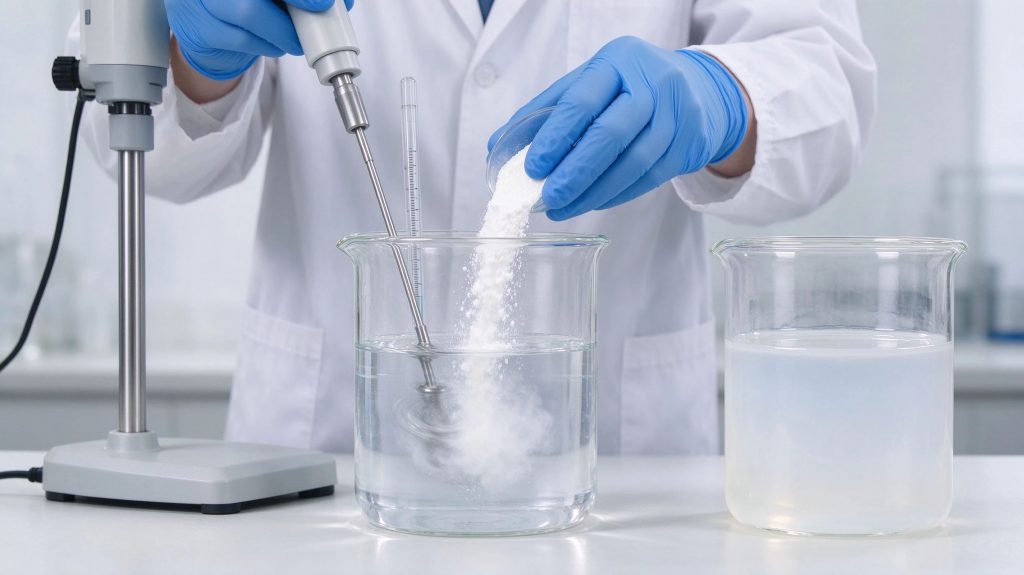
Caption: Controlled powder addition, mixing, and hydration help prepare a uniform HPMC E15 solution.
E15 hydrates in cold water, but consistent results still depend on controlled powder addition, mixing, water temperature, and hydration time. Poor preparation causes lumps, uneven dispersion, and inconsistent viscosity, which then show up as problems in coating or granulation. A standardized, validated procedure prevents most of them.
Method 1: hot-water dispersion followed by cooling. Because HPMC does not readily dissolve in hot water, the powder stays dispersed instead of hydrating at once.
Method 2: direct cold-water dispersion.
The better method depends on particle characteristics, equipment, batch size, and supplier recommendations. Validate it at production scale before routine use.
If powder goes in too fast, hydrated outer layers trap dry powder, and the lumps resist further dispersion. Too little agitation leaves undispersed particles. Control the addition rate, agitation intensity, impeller and vessel selection, batch volume, and hydration time. Higher speed is not always better: excessive agitation introduces air, creates foam, and can disturb later coating operations. Equipment-specific trials should set the final conditions.
HPMC hydration is temperature-dependent. Hot water lets the powder disperse without hydrating its surface immediately, and cooling then allows the polymer to hydrate. Monitor initial water temperature, dispersion temperature, cooling conditions, final solution temperature, and temperature during storage and use. Unexpected changes can alter viscosity, so write the limits into your SOPs.
Bubbles interfere with pumping, filtration, and spray consistency. Reduce them by controlling mixer speed, choosing a suitable impeller, avoiding a deep vortex, skipping unnecessary agitation after hydration, and giving the solution time to deaerate. If the formulation needs a defoaming agent, check its compatibility with the whole coating system and its regulatory acceptability before use.
A properly prepared solution looks reasonably uniform, with no visible undispersed powder or foreign particles. Depending on the process, quality teams may check the following:
| Parameter | Purpose |
|---|---|
| Appearance | Spot lumps and foreign particles |
| Viscosity | Confirm solution consistency |
| pH | Check formulation requirements |
| Temperature | Verify processing conditions |
| Undispersed particles | Assess dispersion quality |
| Foam | Evaluate air entrainment |
If the process needs filtration, choose filter material and mesh according to the formulation and equipment so that you avoid polymer loss or blockage.
HPMC powder is moisture-sensitive. Keep it in the original sealed packaging, in a cool, dry place, away from direct sunlight, excess heat, and contamination. Reseal opened bags promptly, apply first-in, first-out inventory control, and follow the supplier’s shelf life and storage conditions. For pharmaceutical use, also follow your internal raw-material handling procedures and applicable GMP requirements.
| Parameter | Information to record |
|---|---|
| Product identification | Grade and batch number |
| Water quantity | Total preparation volume |
| Water temperature | Initial and final |
| Powder addition | Rate and duration |
| Mixing conditions | Equipment and speed |
| Hydration time | Total period |
| Solution concentration | Final polymer concentration |
| Final inspection | Appearance and viscosity |
Recording these values lets you compare batches prepared with different addition rates and see which procedure gives more consistent solutions. Set final operating parameters through validation, not from a universal mixing speed or hydration time.
Problems during dispersion, coating, or granulation do not always mean poor polymer quality. Raw-material specifications, preparation methods, equipment settings, and formulation conditions usually combine to produce the result. Find the root cause first; changing the grade without diagnosis can create new problems.
Lumps are the most common preparation problem. Typical causes include adding too much powder at once, pouring into poorly agitated water, using an unsuitable water temperature, weak circulation during addition, and partially hydrated material collecting in the vessel. Add the powder gradually under controlled agitation, follow the supplier’s preferred dispersion method, and give the solution enough hydration time before judging it. Raising mixer speed alone rarely helps and can add air.
When viscosity reads low, check for incorrect polymer concentration, incomplete hydration, a wrong measurement temperature, a different test method, a different viscosity grade, or interactions with other ingredients. When it reads high, check for too much polymer, too little water, or different measurement conditions. Standardize concentration, solution temperature, hydration time and method, viscometer type, and sample handling. A nominal 15 mPa·s grade cannot be compared with another supplier’s product unless both sides use equivalent conditions.
Symptoms include uneven thickness, rough surfaces, poor adhesion, cracking, and inconsistent appearance. Likely causes are incorrect solution concentration, poor dispersion, unsuitable plasticizer level, inconsistent spray rate or atomization, unsuitable inlet air temperature, uneven tablet movement in the pan, and too much or too little coating liquid. Inspect the prepared solution first: lumps, foam, or inconsistent viscosity will carry into spraying. If the film cracks, review the plasticizer system and drying conditions before assuming a higher-viscosity grade is needed.
Causes include excessive mixing speed, wrong impeller choice, a deep vortex, high-shear mixing after hydration, and heavy recirculation. Adjust mixer speed, impeller position, and addition rate, avoid agitation after full hydration, and allow the solution to rest so air escapes.
Weak granules come from too little binder, poor binder distribution, short wet massing, an unsuitable liquid addition rate, or poor compatibility. Overly hard granules come from too much binder or liquid, over-granulation, or inappropriate drying. Optimize binder concentration, liquid addition, mixing time, and drying through trials, and evaluate granule size distribution, flow, compressibility, tablet hardness, and disintegration time together.
Opened bags left in humid conditions can absorb moisture, form lumps, and disperse less easily. Keep material sealed, store it cool and dry, and inspect packaging, appearance, batch number, and COA information before use. If the powder shows unusual discoloration, contamination, or physical change, have quality investigate before releasing it.
| Problem | Possible causes | Recommended checks and actions |
|---|---|---|
| Powder forms lumps | Rapid addition, poor dispersion, unsuitable water temperature | Add gradually, improve circulation, review dispersion method |
| Low solution viscosity | Wrong concentration, incomplete hydration, testing differences | Verify concentration, hydration time, temperature, method |
| High solution viscosity | Excess polymer, wrong water quantity | Recheck weighing records and preparation procedure |
| Uneven tablet coating | Poor solution quality, inconsistent spraying, unsuitable drying | Check viscosity, atomization, spray rate, coating conditions |
| Cracked coating film | Insufficient plasticization, unsuitable drying | Review plasticizer compatibility and drying parameters |
| Excessive foam | High mixing speed, vortex, heavy recirculation | Adjust agitation; allow deaeration |
| Weak granules | Insufficient binder, poor distribution | Optimize binder concentration and liquid addition |
| Overly hard granules | Excess binder or liquid, over-granulation | Reduce binder or liquid; review mixing time |
| Lumps in stored powder | Moisture exposure, damaged packaging | Inspect packaging and storage; consult quality control |
A systematic review combines raw-material inspection, preparation records, process parameters, and finished-product testing. That is how teams separate material-related issues from process-related ones.
A low quotation does not help when batches vary, information lacks detail, or deliveries slip. Evaluate every supplier through documented evidence, and treat supplier evaluation as part of your quality system. This section covers qualification and commercial factors; Sections 4 and 6 cover the specification and trial work.
Determine whether you are dealing with a manufacturer, an authorized distributor, or a trading company. Each model carries different supply arrangements and quality responsibilities. Identify the actual production site, because a change in source can alter viscosity, particle size, or moisture. A supplier that is transparent about its role and source is easier to qualify.
| Checkpoint | What the buyer needs to confirm |
|---|---|
| Manufacturing site | The actual production site and address |
| Specification | The exact E15 grade, viscosity range, test method, and substitution type |
| Pharmacopeial compliance | Which monograph and edition apply to which exact grade |
| Batch consistency | COAs from several batches, with variability compared |
| Traceability | Raw-material and batch traceability |
| Change control | Written notification of process, raw-material, and site changes |
| Regulatory support | Documents required by your destination market |
| Sample verification | Test results in your own formulation |
Never infer compliance from a certificate that covers a different scope, and ask for batch-specific COAs rather than a generic one.
Look beyond price at raw-material controls, batch testing, quality-management documentation, production capacity and lead time, packaging and export experience, and the supplier’s ability to answer technical questions on dissolution, viscosity testing, and application suitability. A supplier that explains specifications clearly and supports sample evaluation reduces your qualification effort.
Supplier qualification should also cover how problems and changes are handled. Depending on your quality requirements, ask:
Evaluate the evidence against your own supplier qualification requirements. A general quality certificate is not proof that every pharmaceutical requirement has been met.
Do not judge a quotation by unit price alone. Before comparing offers, make sure suppliers quote on an equivalent basis.
| Commercial factor | What to compare |
|---|---|
| Product specification | Same grade and agreed technical requirements |
| Unit price | Same currency and price unit |
| Order quantity and MOQ | Same quantity, or clearly stated price breaks |
| Packaging | Bag size, packaging material, pallet requirements, labeling |
| Delivery term | FOB, CIF, CFR, or another agreed Incoterm |
| Destination | Same port or delivery location |
| Lead time | Production and shipment schedule |
| Payment terms | Advance payment, balance, and agreed method |
| Documents | Commercial, shipping, and quality documents required |
| Quotation validity | Validity period and conditions for price changes |
An FOB quotation cannot be compared directly with a CIF quotation without adding freight, insurance where applicable, and other charges. For a new supplier, some buyers start with a sample or a smaller order before moving to regular volumes, subject to the supplier’s arrangements. Confirm that the same specification and manufacturing source can be maintained for repeat orders, and treat any quoted lead time as firm only once its conditions are agreed in writing.
E15 pricing is not a single figure. It depends on the specification and the commercial terms of each inquiry, so request quotations against a defined RFQ. The main factors are:
Compare quotations on the same delivery term and unit basis; a low FOB price cannot be compared directly with a CIF price. Also remember that a cheaper product that needs extra formulation adjustment, more testing, or a longer qualification period may cost more overall. For regular pharmaceutical production, consistent quality and reliable delivery often outweigh a small unit-price difference.
| Common mistake | Better approach |
|---|---|
| Choosing only by price | Compare total procurement cost, including freight, testing, and supply risk |
| Accepting a generic COA | Request batch-specific results for the exact grade |
| Comparing viscosity without test conditions | Match concentration, temperature, and method first |
| Ignoring the manufacturing source | Confirm the actual source and traceability |
| Skipping sample evaluation | Test the exact grade in your own formulation |
| Overlooking change control | Agree on notification requirements in writing |
Reassess whenever the manufacturing site, grade, specification, or another critical condition changes. For a wider view of sourcing, see ACTA’s HPMC supplier guide and its overview of global cellulose supplier partners for MCC, HPMC and CMC.
If you do not yet have a complete specification, share your application, current HPMC grade, target viscosity, and any technical documents you have. Those details help a supplier identify potentially suitable products, though final selection still depends on specification verification and application testing.
Qingdao ACTA Biotechnology Co., Ltd. works as a technical sourcing partner for international buyers of cellulose derivatives, including HPMC. For E15 inquiries, we review the intended application, viscosity and substitution requirements, available specifications, manufacturing source, and supporting documentation before discussing samples or quotations.
| Service | Value for the buyer |
|---|---|
| Grade matching | Screening available products by viscosity, substitution type, and intended use |
| Documentation review | Helping check TDS, COA, SDS, and related documents |
| Sample coordination | Discussing sample arrangements based on confirmed specifications |
| Export support | International trade communication, packaging, documents, and export coordination |
Product availability, manufacturing source, documentation, and suitability must be confirmed for each inquiry before quotation or purchase.
ACTA’s HPMC product page describes viscosity grades from 3 to 200,000 mPa·s (2% solution, 20°C) in food, pharmaceutical, and construction variants, with custom particle size distributions available. It places low-viscosity grades in the 3–15 mPa·s region for pharmaceutical coatings and similar uses, which is where E15 sits. Whether a specific E15 specification is available, and which documents accompany it, is confirmed for each inquiry.
| Topic | What ACTA lists | What buyers should still confirm |
|---|---|---|
| Certifications | BRC food-safety certification and Halal certification (see Our Certificates) | These cover food safety and Halal compliance. They do not by themselves establish pharmacopeial compliance of a specific HPMC grade. |
| Documents | COA, TDS, SDS/MSDS, allergen declaration, heavy-metals and microbiological reports, Halal and BRC statements, non-GMO declaration where applicable; the product page also mentions compliance declarations and DMF support letters | Which documents exist for the exact E15 grade and batch |
| Quality control | Viscosity under standardized conditions, particle size, moisture, pH, ash, microbiological and heavy-metal testing | Which tests are in the agreed specification and appear on the COA |
| Pharmaceutical standards | Pharmaceutical grades described as supplied to USP, EP, and JP specifications | The exact monograph, edition, and grade for your E15 inquiry |
| Supply model | ACTA works with selected manufacturing partners and coordinates specifications, samples, packaging, and export (see Our Facility) | The manufacturing site and responsible company for your grade |
| Export support | Shipping coordination, flexible and customized packaging, container-loading coordination, sample arrangements, COA/TDS/MSDS support | Packaging, delivery term, and document set for your destination |
Buyers in regulated markets should treat this table as a starting point for questions, not as a substitute for the grade-specific documents they receive.
Request HPMC E15 TDS, COA and Sample Availability Compare more than the nominal viscosity. Discuss manufacturing source, batch COA, technical specifications, documentation, packaging, and export requirements with ACTA. Send your inquiry.
[IMAGE 6 – place here] File:
hpmc-e15-industrial-packaging-supply.webp| Alt: HPMC E15 cellulose ether packaging for pharmaceutical manufacturersCaption: Packaging, labeling, and export documents should be agreed before the first HPMC E15 order.
Description: Sealed, moisture-protective packaging for cellulose ether powder prepared for international shipment. Packaging options and export documents are confirmed per inquiry. Use real ACTA packaging or warehouse photos where possible.
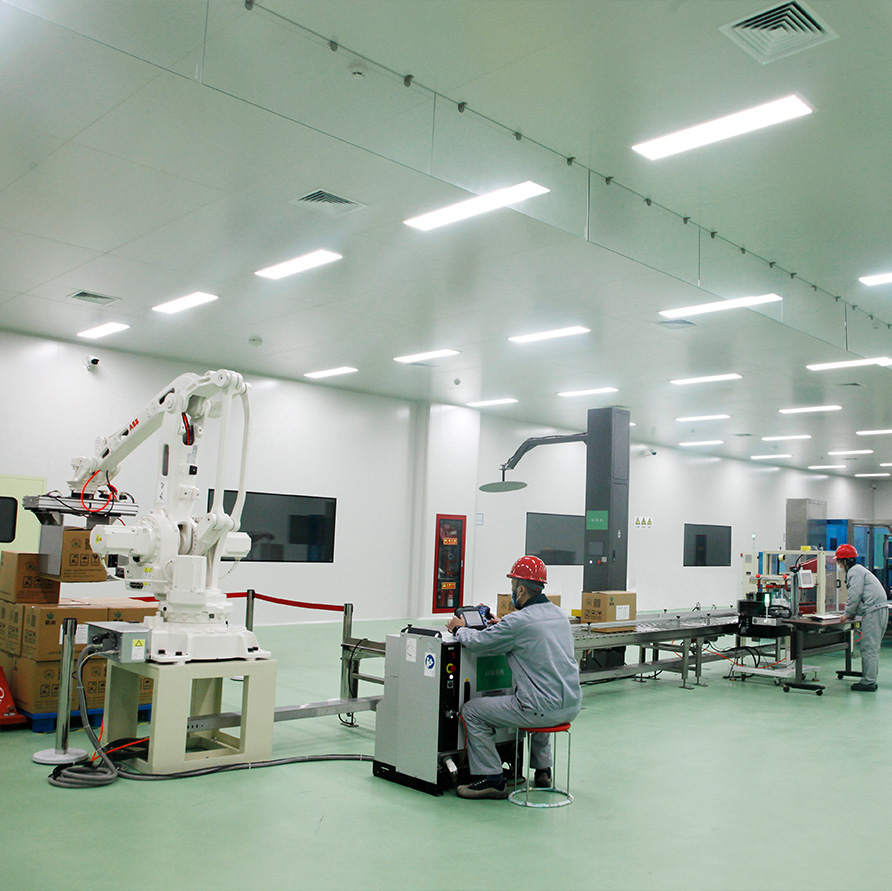
Caption: Packaging, labeling, and export documents should be agreed before the first HPMC E15 order.
Mainly as a film-forming polymer in pharmaceutical tablet coating and as a binder in selected wet-granulation formulations. Depending on grade and regulatory status, manufacturers may also evaluate it in solid dispersions, supplements, and some industrial systems. The right application depends on viscosity, substitution type, purity, regulatory status, and performance in the final formulation.
It is a low-viscosity grade with a nominal viscosity of approximately 15 mPa·s. Some suppliers specify 12–18 mPa·s for a 2% aqueous solution at 20°C, but that is an example specification, not a universal requirement. Always confirm the concentration, temperature, method, and guaranteed range.
Not necessarily. E15 is a commercial viscosity grade and does not itself confirm pharmaceutical quality or compliance with a pharmacopoeia. Request the TDS, batch COA, SDS, a compliance statement naming the monograph and edition, and traceability information.
Mainly nominal viscosity: about 5 mPa·s versus about 15 mPa·s. Under comparable conditions E15 gives a higher-viscosity solution, which can affect solution preparation, flow, and film properties. Run comparative trials before switching.
Yes, it can serve as the film-forming polymer in suitable aqueous coating formulations. Results depend on concentration, plasticizer, pigments, spray conditions, drying, and tablet surface, not on viscosity alone.
It can be evaluated as a binder in selected wet-granulation formulations. Determine the concentration through controlled trials, since too much slows disintegration and too little gives weak granules.
Either disperse the powder in hot water and then cool while mixing, or add it gradually to cold water under agitation and allow enough hydration time. Section 7 gives the steps; validate the method for your equipment and batch size.
Yes, it hydrates in cold water to form a colloidal solution, but dispersion and complete hydration are different. Rapid addition or weak mixing creates lumps with dry powder inside, so use a controlled procedure.
A substitution type defined by methoxy content (about 28.0–30.0%) and hydroxypropoxy content (about 7.0–12.0%). It is not another name for E15: 2910 describes substitution, and E15 describes a commercial viscosity grade. A product can be 2910 with an E15 viscosity, so verify both.
Not by default. HPMC E15 is commonly evaluated for film coating and selected binding applications. Certain specially selected HPMC grades can be used in sustained-release matrix formulations, but formulators should not assume that a low-viscosity E15 grade will provide the required release profile on its own. Enteric performance also requires a suitable enteric polymer system. Both functions must be confirmed through formulation development and dissolution testing.
Check the specification, quality documents, batch consistency, manufacturing transparency, technical support, supply reliability, and total cost, and always test samples in your own process. Section 9 explains the full process.
Hypromellose is the pharmacopeial name for HPMC, so both terms usually describe the same cellulose ether with an E15 viscosity grade. Still verify the substitution type (such as 2910) and the viscosity range in the manufacturer’s specification, because the name alone guarantees neither.
Ask for the specification, TDS, batch-specific COA, SDS, a pharmacopeial compliance statement naming the monograph and edition, and traceability and change-control information. ACTA lists COA, TDS, SDS, and other declarations among its documentation; availability for the exact E15 grade is confirmed per inquiry.
Does ACTA offer HPMC E15 samples?
ACTA offers sample support for product evaluation and application testing. Send your application, target viscosity, substitution type, estimated quantity, and destination through the contact page, and ACTA will confirm E15 availability and sample arrangements.
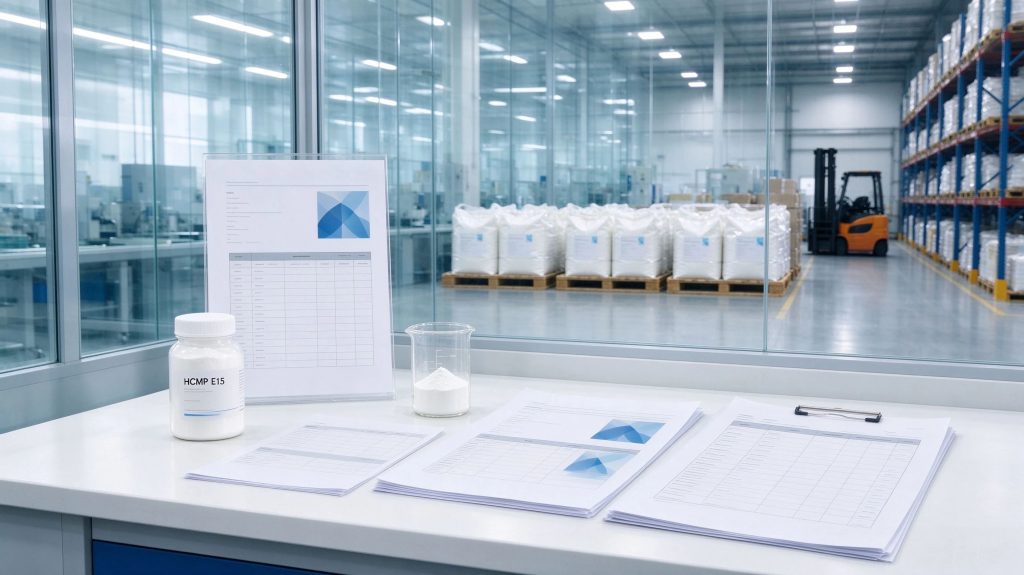
Caption: Reliable HPMC E15 sourcing starts with verified specifications, batch documentation, and application testing.
HPMC E15 is a low-viscosity hydroxypropyl methylcellulose grade that serves tablet film coating and selected wet-granulation processes, and it may fit other formulations after specific evaluation. Its combination of cold-water hydration, manageable solution viscosity, film-forming ability, and binding performance makes it a practical choice, but only when you select it on evidence.
Before buying, confirm these points:
The distinction between viscosity grade and substitution type is the one buyers most often miss. E15 does not by itself indicate a pharmacopeial classification, and a product that meets the viscosity specification can still behave differently depending on hydration characteristics, preparation, excipients, equipment, and conditions. The best approach is to define the specification first, obtain representative samples, and run application-specific trials before approving a material for commercial production.
Looking for a Reliable HPMC E15 Supplier? Qingdao ACTA Biotechnology Co., Ltd. works with international customers seeking cellulose-based ingredients for pharmaceutical, food, and industrial applications. To help us evaluate your inquiry, please provide: required viscosity grade or range; application (tablet film coating, wet granulation, or other); required substitution type, such as Hypromellose 2910; required pharmacopeial or regulatory standards; estimated purchasing quantity; and destination country or port.
Contact Qingdao ACTA Biotechnology Co., Ltd. or explore the HPMC product range. Phone: 86-532-85693212 · WhatsApp: +86 18263653583 · Email: wangpengfei@actabiotechnology.com
Verify the current edition, product specification, and applicable regulatory requirements before making qualification decisions.
These sources provide technical and regulatory context. The suitability of a specific HPMC E15 product must still be confirmed using its actual technical specification, batch-specific documentation, and application testing.
