

CMC Sodium Carboxymethyl Cellulose is a versatile food stabilizer widely used in beverages, dairy, and processed food systems. Its unique functional properties improve texture, consistency, and shelf life, making it an essential ingredient for food manufacturers.
Carboxymethyl cellulose (CMC) plays a critical role across food, pharmaceutical, and industrial applications, and its uses continue to expand across multiple industries. As one of the most widely used cellulose derivatives, CMC acts as a stabilizer in beverages, serves as a binder in tablet formulations, and functions as a rheology modifier in drilling fluids. This guide explains the most important carboxymethyl cellulose uses, and it also describes how CMC works while helping you select the right grade for different applications.
First, CMC functions as a thickener, stabilizer, binder, and water-retention agent in a wide range of systems. In the food industry, it prevents phase separation and improves texture in beverages, dairy products, ice cream, and sauces.
In addition, in pharmaceutical applications, CMC binds tablet ingredients effectively, and it stabilizes oral suspensions to ensure uniform dosing. Meanwhile, in industrial systems, it controls fluid loss in oil drilling, strengthens paper and textile products, and also prevents soil redeposition in detergent formulations.
Furthermore, regulatory authorities recognize CMC as a safe ingredient: it is FDA GRAS-approved, it is listed as E466 in the EU, and it is derived from renewable plant-based cellulose. As a result, manufacturers widely adopt CMC as a reliable and cost-effective functional ingredient across multiple industries.
CMC Sodium Carboxymethyl Cellulose — commonly abbreviated as CMC or Na-CMC — stands as one of the most widely used water-soluble polymers in the world. It belongs to the cellulose ether family, and manufacturers produce it by chemically modifying natural cellulose, which forms the structural polymer in plant cell walls. As a result, this process creates a versatile, anionic, and water-soluble ingredient, and it delivers critical functional performance across hundreds of product categories in food, pharmaceutical, personal care, and industrial manufacturing.
In practical terms, CMC uses and applications revolve around three core capabilities that no other single ingredient delivers as cost-effectively at commercial scale:
Water binding: CMC absorbs and retains water within its polymer chains, preventing moisture migration and controlling texture throughout product shelf life. This mechanism is what prevents ice cream from becoming icy, stops sauces from separating, and keeps pharmaceutical tablets from crumbling.
Viscosity control: When CMC dissolves in water, its polymer chains entangle and resist flow, thereby increasing the viscosity of aqueous systems in a predictable and concentration-dependent manner. Formulators use this property to achieve specific texture targets in everything from salad dressing to industrial drilling mud.
Stabilization: CMC’s anionic charge creates electrostatic repulsion between dispersed particles or droplets, reducing the tendency for aggregation, flocculation, and sedimentation. This is what keeps cocoa evenly distributed in chocolate milk and prevents active pharmaceutical ingredients from settling in oral suspension bottles.
To understand where and how CMC is used across industries, it helps to first understand the chemistry that makes it work.
👉 For detailed product specifications and available grades, visit our Carboxymethyl Cellulose Supplier Page.
CMC is produced through a reaction called carboxymethylation — the introduction of carboxymethyl (-CH₂-COOH) groups onto the hydroxyl groups of cellulose chains, using monochloroacetic acid in an alkaline environment. This reaction converts insoluble, inert cellulose into a water-soluble, functionally active polymer.
Two chemical parameters define the properties of any CMC grade:
DS measures how many of the available hydroxyl groups per glucose unit have been substituted with carboxymethyl groups. The theoretical maximum is 3.0 (all three hydroxyl groups substituted). Commercial CMC grades for food and pharmaceutical use typically have DS values between 0.65 and 1.45.
Why DS matters for formulators:
Molecular weight determines solution viscosity. Higher molecular weight = longer polymer chains = greater chain entanglement = higher viscosity at the same concentration. Commercial CMC is classified into viscosity grades based on the viscosity of a 1% or 2% aqueous solution, measured at 25°C:
| Grade | Viscosity of 1% Solution (mPa·s) | Typical Applications |
|---|---|---|
| Ultra-low viscosity | < 50 | Tablet coating, film applications |
| Low viscosity | 50–250 | Tablet binders, oil drilling, paper |
| Medium viscosity | 250–1,500 | Food beverages, dairy, sauces |
| High viscosity | 1,500–5,000 | Thickened pharmaceuticals, heavy-bodied sauces |
| Extra-high viscosity | > 5,000 | Specialty industrial applications |
Formulator takeaway: Selecting the wrong CMC grade is one of the most common sources of formulation failure. A high-viscosity grade used in a beverage application will produce an unacceptably thick, heavy texture. A low-viscosity grade used in a sauce will fail to deliver the body the product requires. Grade selection is not interchangeable — it must be matched to your specific application.
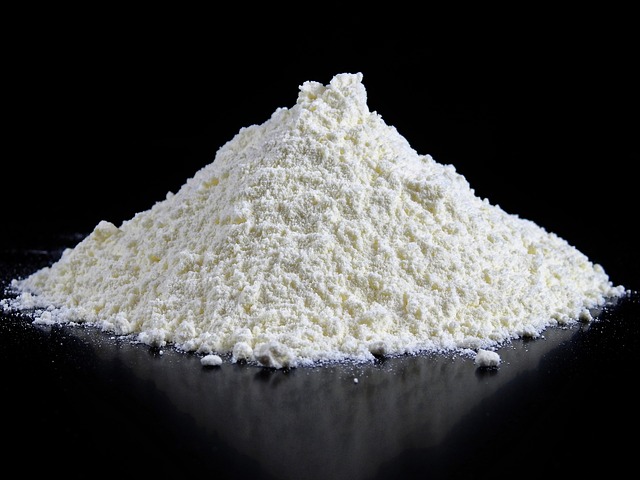
Among all carboxymethyl cellulose uses, food applications represent the largest global demand for carboxymethyl cellulose uses. CMC is approved as a food additive under FDA 21 CFR 182.90 and classified as E466 in the European Union. Its combination of performance versatility and regulatory acceptance makes it a foundational ingredient across virtually every food category that involves water.
Beverages present three stabilization challenges that CMC addresses effectively: particle sedimentation, emulsion breakdown, and mouthfeel management.
In protein-fortified drinks and meal replacement shakes, protein particles and fiber naturally tend to settle. CMC at 0.1%–0.3% increases solution viscosity sufficiently to slow settling, extending the suspension time and reducing the visible sedimentation that consumers associate with low quality.
In cocoa and chocolate milk, cocoa particles (hydrophobic, density > water) sediment rapidly without stabilization. CMC at 0.2%–0.4% provides the viscosity and electrostatic repulsion needed to maintain uniform dispersion through the expected shelf life.
In fruit juice and flavored water, CMC contributes to mouthfeel — a property that consumers describe as “body” or “richness.” Low-viscosity CMC grades at 0.05%–0.15% improve consumer perception of quality in beverages where fruit content or sugar has been reduced.
Critical processing consideration: CMC must be fully hydrated before use; therefore, operators should add CMC powder slowly into water under continuous agitation to prevent lump formation. In addition, sufficient hydration time must be allowed—typically 20–40 minutes under gentle stirring—before measuring viscosity or introducing other ingredients.
Typical dosage in beverages: 0.1%–0.5% depending on target viscosity and particle load.
Dairy applications are among the most technically demanding for CMC because the dairy matrix—milk proteins, calcium, fats, and live cultures in fermented products—creates multiple potential interaction points.
In acidified milk drinks and drinking yogurt, the primary challenge arises during protein destabilization in the acidification process. Specifically, as pH decreases toward the isoelectric point of casein (~4.6), milk proteins naturally tend to aggregate and sediment. However, CMC—acting as a negatively charged polymer—adsorbs onto the positively charged surfaces of casein particles at low pH, and it therefore creates electrostatic repulsion that helps prevent aggregation and maintains a smooth, stable suspension.
In this way, the mechanism of CMC as a protein stabilizer in acidified dairy systems differs significantly from its simple viscosity-building function, and this is precisely why CMC has become indispensable in global acidified milk drink formulations. Typically, formulators use it at 0.15%–0.35%, while the degree of substitution (DS) plays a critical role; in most cases, DS ≥ 0.9 is recommended to ensure stable performance under acidification conditions.
In addition, in ice cream and frozen dessert systems, CMC controls ice crystal growth by interfering with recrystallization during freeze–thaw cycles, and as a result, it helps maintain a smoother texture and improves overall product stability during temperature fluctuations.At 0.1%–0.2%, it works synergistically with locust bean gum or carrageenan to maintain smooth texture through freeze-thaw cycles — a critical quality parameter for products distributed through temperature-variable cold chains.
For cheese analogues and processed cheese, CMC improves meltability, slice integrity, and water retention. In low-fat cheese formulations where fat reduction creates textural deficits, CMC partially compensates for lost creaminess.
Typical dosage in dairy: 0.1%–0.5% depending on product category and target function.
In emulsified and viscous food systems, carboxymethyl cellulose uses center on viscosity delivery, phase stability, and fat reduction.
About salad dressings and vinaigrettes, CMC at 0.2%–0.6% prevents oil–water separation, and it therefore contributes body while also stabilizing suspended particulates such as herbs, spice fragments, and vegetable pieces. In addition, for low-fat dressings specifically, CMC partially replaces the texture contribution lost due to fat reduction, and it consequently helps maintain a creamy and appealing mouthfeel.
Similarly, in tomato-based sauces, pasta sauces, and gravies, CMC improves consistency and prevents water bleed during storage. As a result, this function becomes particularly important in refrigerated and aseptic sauce products, where separation during storage directly affects perceived quality and consumer acceptance.
In bakery fillings and fruit preparations, CMC controls water migration from the filling into the pastry or bread, extending product shelf life and maintaining clean bite characteristics.
Typical dosage in sauces and dressings: 0.2%–0.8%.
CMC has significant applications in baked goods, and it functions both as a texture improver and as an anti-staling agent.
In gluten-free bread and bakery products, CMC acts as one of the key network-forming agents, and it therefore partially compensates for the absence of gluten. When used at 0.5%–2.0%, it improves dough cohesiveness, enhances gas retention during proofing, and increases final product volume. As a result, it delivers properties that rice flour or corn starch dough alone cannot achieve without a hydrocolloid network.
In addition, in industrial bread production, CMC at 0.1%–0.3% helps retard staling by binding water and slowing starch retrogradation, and as a result, it extends the soft crumb texture that consumers expect in packaged bread.
👉 Looking for food-grade CMC for beverage or dairy stabilization?
Explore our Carboxymethyl Cellulose product range with stable viscosity and global export support.
We supply:
👉 Request samples or technical support
As a fat replacer, CMC’s water-binding and viscosity properties allow it to partially reproduce the mouthfeel and texture of fat in reduced-calorie formulations. Applications include low-fat mayonnaise, light cream-based products, and reduced-fat ice cream where CMC contributes body and creaminess at a fraction of the caloric cost of the fat it displaces.

In pharmaceuticals, carboxymethyl cellulose uses require higher purity and greater precision compared with its applications in food or industrial systems, because pharmaceutical formulations demand stricter quality control and more consistent performance standards. Dosing consistency, stability across two-year shelf lives, and compatibility with active pharmaceutical ingredients are non-negotiable.
In direct compression and wet granulation tablet manufacturing, CMC acts as a binder — the ingredient that holds all the powder components of a tablet together under the mechanical forces of compression.
Low-viscosity CMC grades are preferred for tablet binding because they distribute uniformly through the tablet matrix without creating excessive hardness that would impair disintegration. At typical usage levels of 1%–5% in the tablet formulation, CMC:
Please check our CMC Uses in Pharmaceuticals: Tablet Binder, Suspensions & Drug Delivery
Oral suspensions—liquid pharmaceutical products in which an insoluble active ingredient is suspended in an aqueous medium—require a stabilizer that not only prevents API sedimentation but also allows easy redispersion with gentle shaking.
CMC at 0.5%–2.0% achieves this by increasing the viscosity of the continuous phase, and as a result, it slows the rate at which API particles settle (following Stokes’ Law, which states that sedimentation rate is inversely proportional to continuous phase viscosity). Moreover, for applications where a simple viscosity increase is insufficient, formulators often combine CMC with colloidal MCC to provide enhanced structural suspension.
Common pharmaceutical suspensions that use CMC include antacid suspensions, pediatric antibiotic suspensions, antifungal oral liquids, and vitamin and mineral suspensions.
In gels, creams, and ointments, CMC provides:
High-viscosity CMC grades are typically preferred in topical applications to provide the appropriate consistency for skin application without excessive runniness.
CMC, specifically in the form of a 0.5% sodium carboxymethyl cellulose solution, serves as the active ingredient in numerous over-the-counter artificial tear products, and it therefore helps lubricate and protect the eyes. In addition, in this application, CMC functions as a viscoelastic agent that mimics the mucin layer of natural tears, thereby providing lubrication, retaining moisture, and relieving dry eye symptoms.
At higher molecular weights and DS values, CMC is used as a matrix former in controlled-release tablet formulations, where it creates a swellable polymer network that slows API diffusion and extends the duration of drug release.

Industrial carboxymethyl cellulose uses focus on rheology control, making these carboxymethyl cellulose uses critical in drilling and construction.Beyond food and pharmaceuticals, carboxymethyl cellulose uses extend across a broad range of industrial sectors. These industrial applications collectively represent a significant share of global CMC production.
The oil and gas industry is one of the largest consumers of industrial-grade CMC worldwide. In water-based drilling fluids, CMC performs two critical functions:
Fluid loss control: CMC forms a filter cake on the borehole wall that prevents drilling fluid from penetrating the surrounding rock formation. Uncontrolled fluid loss causes formation damage, stuck drill pipe, and well control problems. CMC-based fluid loss control is a standard practice in drilling operations globally.
Rheology modification: CMC contributes viscosity to drilling fluid, and this viscosity helps carry rock cuttings to the surface during drilling—a process known as hole cleaning. At the same time, the balance between sufficient viscosity for cuttings transport and low enough viscosity for pump efficiency is controlled through careful selection of CMC grade and concentration.
In addition, industrial CMC grades used in drilling typically have lower DS requirements than food or pharmaceutical grades, and their purity requirements are less stringent, which makes this application suitable for lower-cost production without compromising performance.
In textile manufacturing, CMC is used as a sizing agent, and it is applied to warp yarns before weaving. As a result, sizing increases yarn strength, reduces breakage during high-speed weaving, and improves overall weavability. After weaving, the sizing agent is removed by washing, and because of CMC’s water solubility, it is easily washed out without damaging the fabric or requiring harsh desizing chemicals.
In addition, CMC is also used in textile printing as a thickener for dye pastes, and it therefore helps control the viscosity and flow behavior of the paste during screen or roller printing, ensuring sharp print definition and consistent pattern quality.
In paper and board manufacturing, CMC is applied to the paper surface as a surface sizing agent that:
CMC is applied in the size press at concentrations of 0.5%–3% and penetrates the paper surface to bond with cellulose fibers — a natural affinity that results from their shared chemical origin.
In laundry detergents, CMC functions as an anti-redeposition agent, and it achieves this by adsorbing onto both the textile fiber surface and the surface of suspended soil particles, thereby creating a charge barrier that prevents loose soil from re-attaching to fabric during the wash cycle. As a result, detergent formulations containing CMC deliver whiter, brighter wash results compared to those without it.
In addition, CMC is used in dishwashing detergents, household cleaners, and industrial cleaning formulations as a thickener, stabilizer, and suspension aid, which further enhances the overall performance and consistency of these cleaning products.
In tile adhesives, cement-based mortars, and gypsum-based products, CMC acts as a water retention agent that prevents rapid moisture loss to porous substrates (walls, floors, tiles). Without water retention, cement-based products can lose water too quickly for proper hydration and curing, resulting in weakened bonding strength. CMC at 0.1%–0.5% maintains optimal moisture levels during the critical curing window.
In personal care, CMC is widely used in:
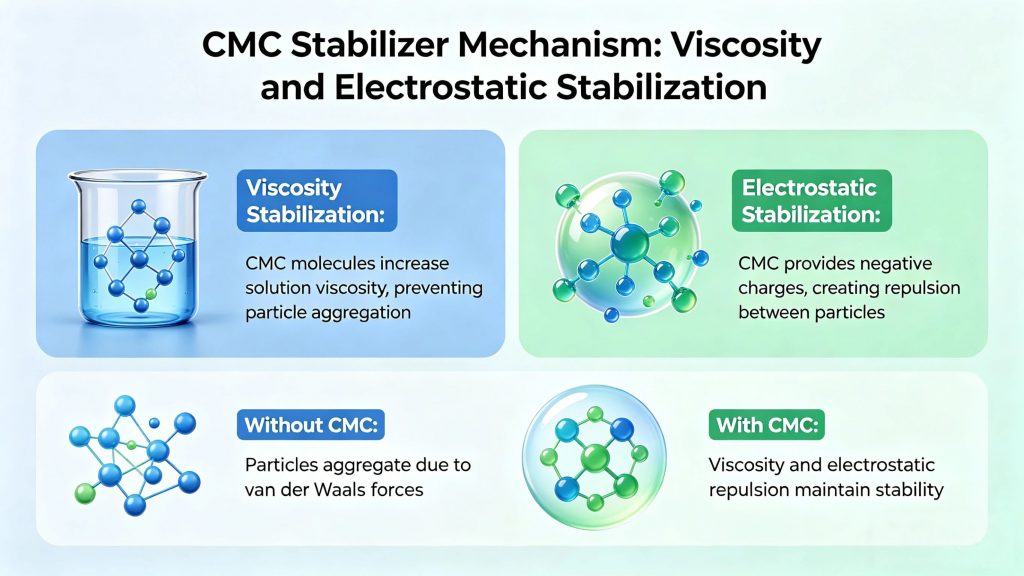
Understanding carboxymethyl cellulose uses requires knowing how CMC stabilizer mechanisms work.To formulate with CMC effectively, it is not enough to know what it does — understanding the underlying mechanisms enables you to predict behavior, troubleshoot failures, and optimize performance.
When CMC dissolves in water, its polymer chains expand and entangle, and as a result, they create resistance to flow. This increased viscosity then slows the movement of dispersed particles through the continuous phase. In addition, the relationship between particle settling velocity and continuous phase viscosity follows Stokes’ Law, which means that doubling the viscosity effectively halves the settling rate. Therefore, this viscosity-driven mechanism represents CMC’s primary stabilization function in most food and pharmaceutical applications.
However, this approach has an important limitation. Specifically, viscosity-based stabilization is passive, and although it slows down sedimentation, it does not completely prevent it. As a result, given sufficient time, particles will still settle even in high-viscosity CMC systems. Therefore, for products that require very long suspension stability (18–24 months), formulators often combine CMC with a structural stabilizer such as colloidal MCC to achieve a more robust, network-based stabilization system.
CMC is an anionic polymer, and therefore it carries a negative charge at neutral and slightly acidic pH. When CMC adsorbs onto positively charged particle surfaces—such as casein proteins in acidified dairy systems at pH 3.8–4.5, or certain mineral particles in fortified beverages—it introduces a negative surface charge. As a result, this generates electrostatic repulsion between particles and helps maintain system stability. Consequently, it prevents aggregation and flocculation, which are the primary precursors to visible sedimentation.
In addition, this electrostatic stabilization mechanism is fundamentally different from simple viscosity increase, and it plays a particularly critical role in acidified dairy applications. In these systems, CMC stabilizes proteins near their isoelectric point, and for this reason its function cannot be fully replaced by other thickeners.
When choosing CMC over xanthan, formulators should opt for it when mouthfeel is critical, such as in dairy beverages or acidified milk drinks, and also when cost optimization is a priority, or when the electrostatic protein-stabilization mechanism of CMC is specifically needed, as in acidified dairy applications.
Conversely, formulators should choose xanthan over CMC when suspending coarse particles requires strong yield stress behavior, and also when very low usage levels are necessary, or when the formulation environment is particularly challenging, such as under very high temperatures or extreme pH conditions.
For the best strategy, many commercially successful formulations combine CMC (0.2–0.3%) with xanthan gum (0.05–0.1%), and this combination not only delivers superior performance compared to using maximum doses of either ingredient alone but also reduces the total hydrocolloid cost.
| Property | CMC | Colloidal MCC |
|---|---|---|
| Mechanism | Viscosity + electrostatics | 3D gel network (physical trapping) |
| Stability type | Passive slowing of sedimentation | Active particle immobilization |
| Shear sensitivity | Moderate | Thixotropic (network rebuilds) |
| Long-term stability | Good to moderate | Excellent |
| pH sensitivity | Reduced below pH 3.5 | Stable pH 3.5–8.5 |
| Best application | Short-to-medium shelf life beverages, dairy, pharma | Long shelf life suspensions, challenging matrices |
In practice, many commercial formulations combine CMC and colloidal MCC to exploit both mechanisms simultaneously — CMC contributes electrostatic protein stabilization and additional viscosity, while colloidal MCC provides the structural network for long-term particle suspension.
👉 Learn more about combined stabilizer systems: Colloidal MCC vs CMC Stabilizer Guide
Xanthan gum is the most commonly compared alternative to CMC because both are widely used for viscosity and suspension in food applications.
| Property | CMC | Xanthan Gum |
|---|---|---|
| Origin | Plant cellulose (chemical modification) | Microbial fermentation |
| Suspension strength | Moderate (viscosity-based) | Strong (pseudoplastic network) |
| Minimum effective dose | 0.2%–0.5% | 0.05%–0.2% |
| Mouthfeel | Clean, smooth | Can be stringy/slimy at higher doses |
| Acid stability | Good (DS-dependent) | Excellent |
| Temperature stability | Good | Very good |
| Freeze-thaw stability | Good | Moderate |
| Cost | Lower | Higher |
| Clean label | Generally accepted | Generally accepted |
| Synergy | Excellent when combined at sub-optimal doses each | Same |
When choosing CMC over xanthan, opt for it when mouthfeel is critical, such as in dairy beverages or acidified milk drinks, when cost optimization is a priority, or when the electrostatic protein-stabilization mechanism of CMC is specifically needed, as in acidified dairy applications.
Conversely, choose xanthan over CMC when suspending coarse particles requires strong yield stress behavior, when very low usage levels are necessary, or when the formulation environment is particularly challenging, such as under very high temperatures or extreme pH conditions.
For the best strategy, many commercially successful formulations combine CMC (0.2–0.3%) with xanthan gum (0.05–0.1%), and this combination delivers superior performance compared to using maximum doses of either ingredient alone, while simultaneously reducing the total hydrocolloid cost.
HPMC is another cellulose ether with significant overlap in applications, particularly in pharmaceuticals and food.
| Property | CMC | HPMC |
|---|---|---|
| Solubility | Cold water soluble | Cold water soluble (some grades) |
| Thermal gelation | No | Yes (gels on heating, dissolves on cooling) |
| Film-forming | Moderate | Excellent |
| Pharmaceutical tablets | Binder | Binder, controlled release matrix, coating |
| Oral suspensions | Preferred | Secondary |
| Gluten-free baking | Good | Better (stronger film network) |
| Cost | Lower | Moderate to higher |
When CMC is preferred over HPMC, it is typically used in oral suspension stabilization, acidified food systems, and most standard food applications, and this preference is mainly due to its reliable solubility and electrostatic stabilization performance. In addition, HPMC’s thermal gelation behavior becomes a functional limitation in applications that are processed at elevated temperatures.
Conversely, when HPMC is preferred over CMC, it is commonly used in tablet coating and controlled-release formulations, as well as in high-temperature food applications where thermal gelation is desirable. Furthermore, it is also preferred in gluten-free baking where stronger film formation and structural integrity are required.
Guar gum is a galactomannan polysaccharide from guar bean seeds, widely used as a low-cost thickener.
| Property | CMC | Guar Gum |
|---|---|---|
| Viscosity efficiency | Moderate | High (very effective at low concentration) |
| Clarity of solution | Good | Slightly hazy |
| Acid stability | Good | Limited (hydrolyzes at low pH) |
| Electrostatic function | Yes (anionic) | No |
| Pharmaceutical grade | Widely available | Limited pharmaceutical applications |
| Cost | Moderate | Low to moderate |
In food applications, guar gum often provides more economical thickening per unit weight, but CMC offers superior stability at low pH, electrostatic protein-stabilization capability, and broader pharmaceutical acceptance.
Grade selection is the most technically consequential decision when specifying CMC. The wrong grade produces formulation failures that are difficult to diagnose if the root cause is not understood.
Low viscosity CMC (50–250 mPa·s at 1%)
Medium viscosity CMC (250–1,500 mPa·s at 1%)
High viscosity CMC (1,500–5,000 mPa·s at 1%)
Very high viscosity CMC (> 5,000 mPa·s at 1%)
DS 0.65–0.80 (lower): Lower solubility in cold water; may be acceptable for industrial applications; less stable in high-ionic-strength systems. Not recommended for pharmaceutical use.
DS 0.85–1.05 (standard): Fully water-soluble; suitable for most food and pharmaceutical applications; good balance of performance and cost.
DS 1.10–1.45 (higher): Best water solubility and clarity; superior stability at low pH and in high-ionic-strength dairy systems; preferred for acidified dairy applications and pharmaceutical formulations requiring maximum purity and consistency.
| Grade | Purity | Applicable Standards | Typical Use |
|---|---|---|---|
| Industrial grade | 70–80% | Internal specifications | Drilling, construction, textiles |
| Food grade | ≥ 99% | FDA 21 CFR 182.90; EU E466 | Food and beverage |
| Pharmaceutical grade | ≥ 99.5% | USP-NF; Ph. Eur. 9.0 | Drugs, medical devices |
Critical warning: Never substitute industrial-grade CMC in food or pharmaceutical applications. Industrial grades may contain residual solvents, heavy metals, or microbiological contaminants that exceed food and pharmaceutical limits.
The sustained global demand for CMC uses and applications across diverse industries reflects a set of functional advantages that few ingredients can match at an equivalent cost.
First, CMC dissolves in cold water without heating, unlike many natural gums that require elevated temperatures for full hydration. As a result, it provides a significant processing advantage in heat-sensitive applications, and it also helps manufacturers reduce energy consumption in large-scale production.
In addition, CMC maintains stable viscosity across a wide pH range, and it performs effectively from pH 4 to pH 11. Therefore, formulators use it in acidified food products, neutral pharmaceutical systems, and alkaline industrial applications. However, below pH 3.5, its performance declines, so formulators adjust the system accordingly when working in strongly acidic conditions.
Furthermore, CMC shows good compatibility with most hydrocolloids, and it works synergistically with xanthan gum, carrageenan, pectin, locust bean gum, modified starches, and colloidal MCC. Consequently, formulators build blended stabilizer systems to achieve optimized texture, stability, and performance targets.
From a cost perspective, CMC delivers economical performance, and it offers one of the most cost-effective options on a cost-per-unit-viscosity basis among hydrocolloids. In many systems, it outperforms guar gum in acid stability and provides better mouthfeel control than xanthan gum, while it remains significantly more economical than specialty gums.
In addition, CMC supports clean-label positioning because manufacturers derive it from plant cellulose, and they often label it as “cellulose gum” in consumer-facing markets. As a result, it meets clean-label expectations in many regions and remains gluten-free, vegan, and non-GMO.
Finally, global regulatory authorities have approved CMC for food and pharmaceutical use, and this broad acceptance simplifies product development and multi-market commercialization across different regions.
The majority of CMC formulation failures trace back to a small number of preventable errors. Understanding these mistakes is as important as understanding the ingredient itself.
What happens: Adding CMC powder directly to water without proper dispersion creates lumps — partially hydrated aggregates where dry CMC is trapped inside a hydrated gel shell. These lumps appear as white specks in the final product and create inconsistent viscosity.
Root cause: CMC particles hydrate their surfaces instantly upon contact with water. If particles are in contact with each other when they meet water, they hydrate together and trap dry powder inside.
Solution: Use one of these proven dispersion methods:
What happens: The final product has the wrong viscosity — too thin (causing separation or consumer rejection) or too thick (creating process problems or unacceptable mouthfeel).
Root cause: Different applications require different viscosity contributions from CMC. Using a standard medium-viscosity grade for all applications is a common shortcut that produces inconsistent results.
Solution: Build a grade selection decision tree during development. Test at minimum two grades (one grade above and below your expected target) before finalizing the specification. Document the selected grade’s commercial designation so that supplier switches require re-validation.
What happens: CMC solutions often perform well in deionized water during lab development, but they can exhibit reduced viscosity and stability in the actual production formulation, which typically contains minerals, salts, or proteins.
Root cause: This reduction occurs because cations—particularly divalent calcium and magnesium—screen the electrostatic repulsion between CMC chains and between CMC and stabilized particles. As a result, high ionic strength causes CMC chains to contract, which reduces their viscosity contribution.
Solution: Therefore, always conduct development trials using the actual production water and the complete ingredient matrix. In addition, if the mineral content is high, formulators should increase the CMC grade to a higher DS value (DS ≥ 0.9) and/or increase the concentration. Moreover, consider sequential addition by fully dispersing CMC before introducing mineral-rich ingredients to ensure optimal viscosity and stability.
What happens: In acidified beverages and dressings, CMC added after acidification may not fully dissolve or may precipitate partially, resulting in poor viscosity and visible turbidity.
Root cause: Below pH 3.5, the carboxyl groups of CMC become protonated and lose their charge. The polymer becomes less water-soluble and collapses toward its uncharged form, reducing viscosity dramatically.
Solution: Always disperse and fully hydrate CMC in water at pH > 4.0 before acidification. Add acidulants slowly while monitoring viscosity. For very low pH systems (pH 3.0–3.5), evaluate higher DS grades and validate performance at the final target pH throughout shelf life.
What happens: Products pass stability testing at 4 weeks but show visible sedimentation at 12–24 weeks during shelf life validation.
Root cause: CMC stabilizes suspensions through viscosity — a passive mechanism. Given sufficient time, even high-viscosity CMC systems can show sedimentation in dense particle systems.
Solution: For products requiring long shelf life (>6 months), evaluate CMC in combination with structural stabilizers (colloidal MCC, gellan gum, or xanthan gum) that provide active particle immobilization. Test at the target shelf life, not just at accelerated 4-week conditions.
What happens: A supplier switch results in unexpected viscosity changes or reduced performance, despite nominally identical specifications.CMC does not undergo digestion or absorption in the human gastrointestinal tract, and it moves through the digestive system intact as the body excretes it in feces. As a result, it provides no caloric value, while it also contributes to total dietary fiber intake. In addition, researchers have conducted extensive studies and have not identified any systemic toxicity at exposure levels typically achieved through normal food consumption.
Every major global food and pharmaceutical regulatory authority has evaluated sodium carboxymethyl cellulose, and these evaluations show that it has one of the most thoroughly documented safety profiles of any food additive.
| Regulatory Authority | Status | Reference |
|---|---|---|
| U.S. FDA | GRAS; 21 CFR 182.90 | Food; 21 CFR for pharmaceutical applications |
| European Union EFSA | Approved food additive | E466 |
| JECFA (FAO/WHO) | ADI: 0–25 mg/kg body weight/day | JECFA Monograph Series |
| Japan | Approved | Japanese Food Sanitation Law |
| China | Approved | GB 2760 |
| USP-NF / Ph. Eur. | Official excipient monograph | Pharmaceutical-grade specification |
On the JECFA ADI: JECFA established an ADI of 0–25 mg/kg body weight/day for CMC based on chronic feeding studies in animals at high doses. Estimated dietary exposure from typical food use is far below this limit, providing a substantial safety margin.
For authoritative regulatory reference: FDA microcrystalline cellulose GRAS status | EFSA food additive database
CMC does not undergo digestion or absorption in the human gastrointestinal tract, and the body passes it through the digestive system intact before excreting it in feces. As a result, it provides no caloric value, and it contributes to total dietary fiber intake. In addition, extensive studies have not identified any systemic toxicity at exposure levels typically achieved through normal food consumption.
On food ingredient labels, CMC may appear as:
The “cellulose gum” labeling designation is broadly accepted by clean label frameworks and is favored by marketing teams in consumer-facing food products.
For B2B procurement teams, CMC supplier selection determines not just product quality but supply chain stability across production runs measured in years, not months.
| Specification | Acceptable Range / Notes |
|---|---|
| Assay (purity) | ≥ 99.0% for food; ≥ 99.5% for pharmaceutical |
| Viscosity of 1% solution (mPa·s) | Must match your grade requirement; critical for lot consistency |
| Degree of substitution (DS) | Specify for your application; critical for acid stability and dairy use |
| pH of 1% solution | Typically 6.5–8.5 for food grade |
| Moisture content | ≤ 10% typical; affects flowability and actual active content |
| Chloride content (%) | ≤ 0.5% for food; lower for pharmaceutical |
| Heavy metals | Must comply with applicable pharmacopeia limits |
| Microbial limits | Total plate count, yeast & mold; absence of Salmonella and E. coli |
| Particle size distribution | Affects dissolution rate; specify if critical for your process |
From any reputable CMC supplier, request:
Ask prospective suppliers:
A CMC supplier who provides genuine technical application support is an asset to your development team, not just a commodity vendor. The cost of formulation failures that could have been prevented by qualified technical guidance far exceeds any savings from choosing the lowest-price supplier.
We provide food-grade and pharmaceutical-grade CMC with stable viscosity, verified batch consistency, global export support, and in-house technical formulation guidance for customers across food, beverage, and pharmaceutical industries.
👉 Request samples or a quotation for CMC supply: Carboxymethyl Cellulose Product Page
CMC acts as a thickener, stabilizer, binder, and water-retention agent, and it plays a key role across food, pharmaceutical, and industrial applications. Specifically, it stabilizes beverages and dairy products, binds pharmaceutical tablets, lubricates artificial tear eye drops, controls fluid loss in oil drilling, sizes yarns in textile manufacturing, enhances surface strength in paper production, and prevents soil redeposition in laundry detergents. As a result, manufacturers widely adopt CMC to improve product performance and consistency across multiple industries.
Yes, CMC is widely recognized as safe for food applications. The U.S. FDA grants it GRAS status under 21 CFR 182.90, and the European Union classifies it as E466. In addition, JECFA establishes an acceptable daily intake (ADI) of 0–25 mg/kg body weight per day, while typical dietary exposure remains far below this level.
Moreover, the human body does not absorb CMC, and regulators classify it as dietary fiber. It also shows no identified allergenic effects, which further supports its broad approval and safe use in global food systems.
In beverage systems, CMC prevents sedimentation of suspended particles such as protein, cocoa, and insoluble fibers. At the same time, it improves mouthfeel, enhances body, stabilizes emulsions, and maintains consistent texture throughout shelf life.
Therefore, manufacturers widely use CMC in chocolate milk, protein shakes, flavored dairy beverages, plant-based milk alternatives, and fortified drinks to ensure stable quality and consumer-friendly texture.
CMC can partially replace xanthan gum depending on the formulation requirements. For example, CMC provides a smoother mouthfeel and performs better in acidified dairy systems where electrostatic protein stabilization is required.
In contrast, xanthan gum delivers stronger suspension at lower dosage levels. Therefore, formulators often combine both ingredients. In many systems, using CMC (0.2–0.3%) together with xanthan gum (0.05–0.1%) produces better stability and texture than using either alone, while also optimizing total stabilizer cost.
CMC (carboxymethyl cellulose) dissolves in water and functions as a thickener and electrostatic stabilizer in liquid systems. In contrast, MCC (microcrystalline cellulose) remains insoluble and works as a binder and filler in solid pharmaceutical tablets.
In addition, colloidal MCC — a co-processed system combining MCC and CMC — forms a three-dimensional physical network. This structure provides suspension stability through a physical gel network, which differs fundamentally from the viscosity-based stabilization mechanism of CMC alone.
CMC is available in low, medium, high, and very-high viscosity grades, which manufacturers measure based on the viscosity of a 1% solution. It also varies in degree of substitution (DS), typically ranging from 0.65 to 1.45.
For example, in food beverages and dairy products, formulators usually start with medium viscosity grades with DS ≥ 0.85. In pharmaceutical oral suspensions, they typically select high viscosity pharmaceutical-grade CMC with DS ≥ 0.9 to ensure purity and stability.
Meanwhile, in oil drilling and construction applications, low viscosity industrial-grade CMC is commonly used due to its flow performance. However, manufacturers should always validate the selected grade through formulation testing before finalizing commercial specifications, since performance depends on the full system, not only the polymer itself.
Carboxymethyl cellulose (CMC) continues to expand across global industries due to its remarkable versatility. Its applications span some of the most critical and commercially significant product categories — from beverages and dairy consumed daily by billions, to pharmaceutical suspensions delivering life-saving medications, and even oil drilling operations supporting global energy infrastructure.
What makes CMC Sodium Carboxymethyl Cellulose enduringly valuable is its combination of proven functionality, reliable safety, broad regulatory acceptance, formulation versatility, and cost efficiency. Few ingredients match its performance across such a diverse range of applications.
For formulators, success with CMC requires moving beyond treating it as a simple commodity. Understanding its chemistry is key:
Selecting a CMC supplier is a strategic decision. Technical capability, consistent quality documentation, and strong application support should weigh heavily alongside price to ensure optimal performance and regulatory compliance.
Whether you are stabilizing an oat milk beverage, developing a pediatric antibiotic suspension, improving the surface of industrial paper, or formulating a high-performance drilling fluid, CMC is likely part of the optimal solution. A deep understanding of this ingredient is the foundation of using it effectively.
👉 Ready to source food-grade or pharmaceutical-grade CMC? View specifications, grades, and supply options →
Authority References:
Internal Links:
This guide is intended for food scientists, pharmaceutical formulators, industrial chemists, and B2B procurement professionals. For regulatory compliance, consult qualified regulatory affairs specialists and refer to current regional regulations in your target markets.
