

CMC vs Guar Gum is a common comparison for food manufacturers selecting the right stabilizer for beverages, dairy products, sauces and other food formulations.
Food manufacturers widely use both CMC (Carboxymethyl Cellulose, E466) and Guar Gum (E412) as plant-based hydrocolloids, but they provide different functional benefits. They mainly value CMC for its suspension stability, smooth texture, and processing resistance, while they recognize Guar Gum for its strong thickening ability and creamy mouthfeel.
Choosing between CMC vs Guar Gum depends on the application requirements, processing conditions, desired texture and long-term stability of the final product.Understanding the functional differences between CMC vs Guar Gum helps manufacturers select the most suitable stabilizer system for their products.
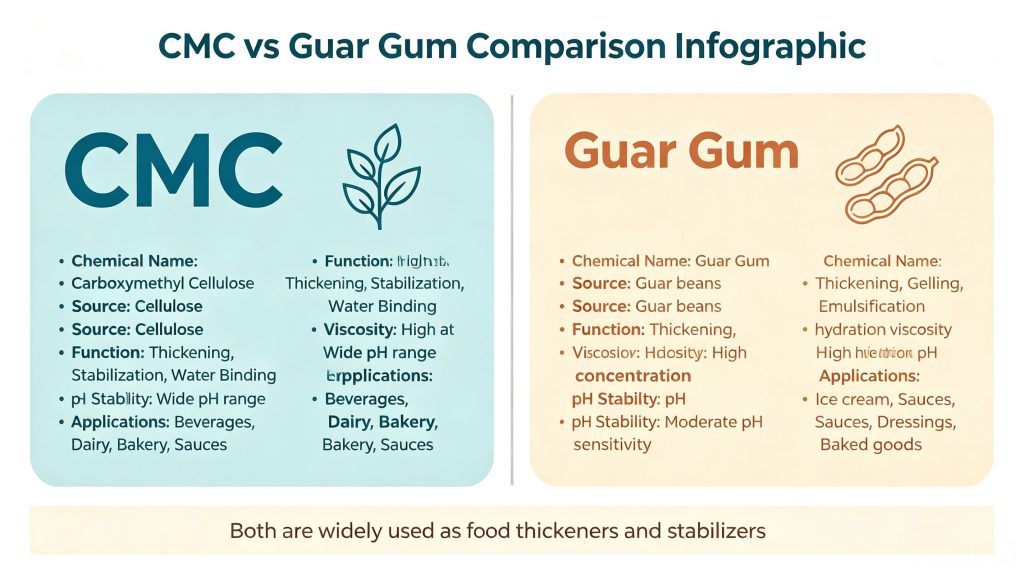
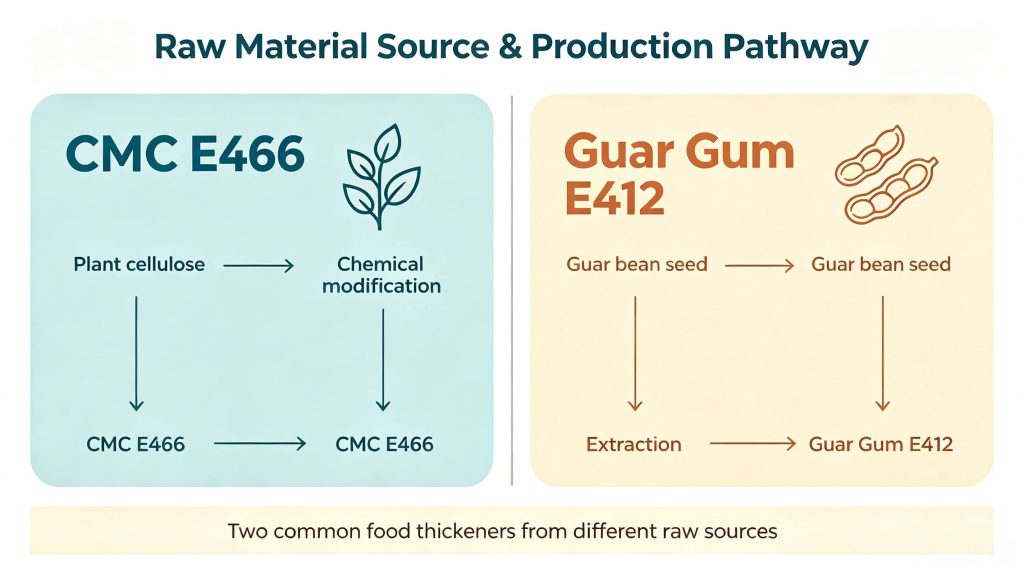
Before comparing how they perform in food applications, it’s worth understanding what CMC and guar gum actually are — because their different origins are the root cause of their different functional behavior.
In simple terms, CMC starts as plant fiber and is engineered at the molecular level to become water-soluble, giving it the ability to bind water, build a stable network, and control viscosity precisely — the foundation of its role as a stabilizer.
Because guar gum is used in a form much closer to its natural, unprocessed state, it’s often perceived as a simpler, more “traditional” clean-label hydrocolloid — though its strong, fast-acting thickening power is also what makes dosage control so important in delicate applications like beverages.
CMC and guar gum are both plant-based, but one is a chemically engineered cellulose derivative optimized for controlled stabilization, while the other is a naturally occurring plant polysaccharide optimized for rapid, powerful thickening. That fundamental difference in origin and molecular structure is exactly why the two ingredients behave so differently in food systems — a theme explored in depth throughout the rest of this guide.
Selecting the right hydrocolloid is one of the most important decisions in food formulation.
Among plant-based stabilizers, CMC (Carboxymethyl Cellulose, E466) and Guar Gum (E412) are two widely used ingredients for improving viscosity, texture, water retention and product stability.
However, they are not interchangeable.
CMC and guar gum provide different functional benefits:
For manufacturers producing beverages, dairy products, sauces, ice cream and bakery products, choosing between CMC and guar gum depends on the final product requirements, processing conditions and desired texture.
Based on ACTA’s experience supplying cellulose-based stabilizers to food manufacturers worldwide, selecting the correct CMC grade requires more than simply comparing viscosity values.
Factors including:
all influence the final formulation performance.
This guide explains the differences between CMC and guar gum, their advantages, limitations and application suitability, helping food manufacturers select the most effective stabilizer system.
When comparing CMC vs Guar Gum, the better choice depends on the required function. CMC is generally preferred for suspension stability and smooth texture, while Guar Gum is often selected for higher viscosity and creamy mouthfeel.
| Requirement | Recommended Stabilizer |
|---|---|
| Beverage suspension | ✅ CMC |
| Plant-based milk stability | ✅ CMC |
| Protein drink stabilization | ✅ CMC |
| Smooth mouthfeel | ✅ CMC |
| High viscosity requirement | ✅ Guar Gum |
| Thick sauces | ✅ Guar Gum |
| Creamy texture | ✅ Guar Gum |
| Freeze-thaw stability | ✅ CMC |
| High shear processing | ✅ CMC |
| Water binding | CMC / Guar Gum |
| Ice cream creaminess | Guar Gum + CMC combination |
Choose CMC when stability, suspension and smooth texture are the priority.
Choose guar gum when strong thickening and creamy body are more important.
In many industrial formulations, manufacturers combine CMC with guar gum to achieve balanced texture and stability.
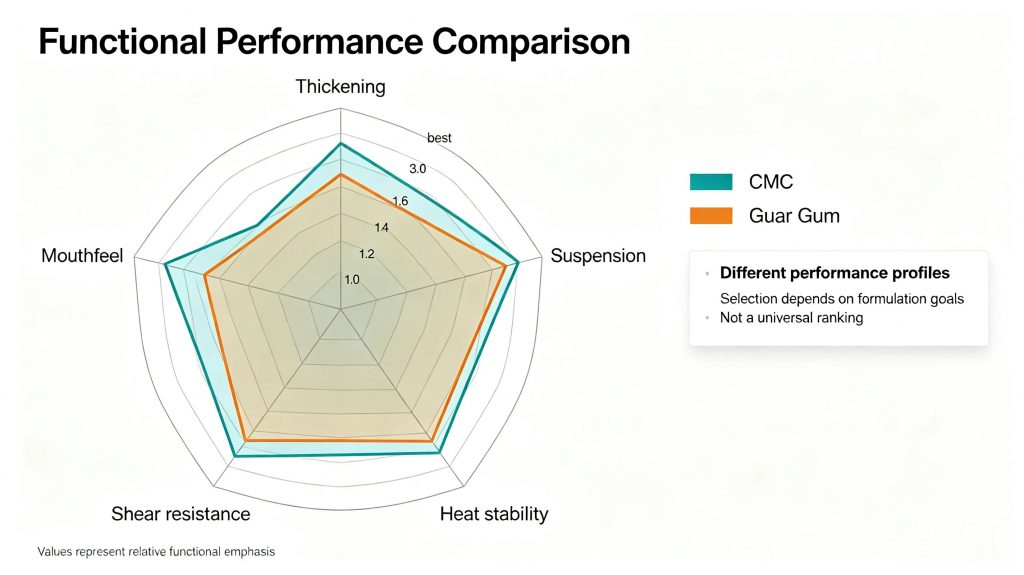
Choosing the right stabilizer is one of the most critical decisions in food formulation, since it shapes texture, shelf life and consumer perception all at once. Modern manufacturers face several pressures simultaneously: consumers expect better mouthfeel, plant-based products need improved stability, protein beverages need better suspension, clean-label trends are reshaping ingredient selection, and products must stay stable throughout their entire shelf life.
Among the many hydrocolloids available today, Carboxymethyl Cellulose (CMC) and Guar Gum are two of the most widely used ingredients in the global food industry. Both increase viscosity and stabilize food systems, yet they are not interchangeable. The biggest difference lies in functional mechanism: CMC mainly provides stabilization, suspension control and texture improvement, while guar gum mainly delivers strong thickening and body enhancement. Understanding this difference helps manufacturers select the right ingredient for beverages, dairy products, sauces, frozen foods and plant-based alternatives.
CMC, also known as Sodium Carboxymethyl Cellulose, is a cellulose-derived functional ingredient produced by chemically modifying natural cellulose. In food applications, it commonly appears on labels as Sodium Carboxymethyl Cellulose (E466). Manufacturers use it as a food stabilizer, thickener, suspension agent, water-retention agent and texture modifier, and because it derives from cellulose, it offers excellent compatibility across dairy beverages, plant-based milk, protein drinks, ice cream, sauces, bakery products and nutritional foods.
CMC’s main advantage is its ability to interact with water and create a stable polymer network, which delivers three core benefits.
1. It increases water-binding capacity. CMC absorbs and holds water molecules, reducing free water movement and therefore preventing separation, syneresis and texture deterioration during storage. In yogurt drinks or plant-based milk, for example, unstable water distribution often causes sedimentation; CMC keeps the structure uniform throughout shelf life.
2. It improves suspension stability. Many modern beverages contain ingredients that naturally settle — cocoa particles, protein particles, calcium salts, fruit pulp and dietary fiber. CMC strengthens the continuous phase so these particles stay suspended, giving manufacturers better visual appearance, longer shelf stability and a more consistent consumer experience.
3. It controls viscosity without a heavy mouthfeel. Unlike many strong thickening gums, CMC provides stability without making the product excessively thick — important for ready-to-drink beverages, functional drinks and plant-based beverages, since consumers usually prefer a smooth, natural drink over a thick or gummy one.
Guar gum is a natural hydrocolloid extracted from guar beans and belongs to the galactomannan family. Food manufacturers widely use it as a thickening agent to increase viscosity, improve body and create a creamy texture, so it appears frequently in sauces, dressings, bakery fillings, ice cream and dairy desserts.
Guar gum has strong water-absorption ability. Once hydrated, it rapidly increases viscosity and creates a thick solution, which makes it highly effective wherever manufacturers need high thickness, rich texture or strong body. However, this same characteristic can become a limitation in beverages: excessive guar gum usage may result in a heavy mouthfeel, a slimy texture and reduced drinkability. Consequently, guar gum tends to suit products where thickness itself is a core quality requirement, rather than beverages where lightness matters most.
The following CMC vs Guar Gum comparison highlights the main functional differences between these two food stabilizers.
| Property | CMC | Guar Gum |
|---|---|---|
| Source | Cellulose | Guar bean |
| E Number | E466 | E412 |
| Main role | Stabilization | Thickening |
| Suspension ability | Excellent | Moderate |
| Viscosity increase | Controlled | Strong |
| Mouthfeel | Smooth | Creamy / heavy |
| Beverage suitability | Excellent | Limited |
| Sauce suitability | Good | Excellent |
| Freeze-thaw stability | Excellent | Moderate |
| Processing tolerance | High | Medium |
Guar gum’s job, in one sentence, is to “make the product thicker.” Its main effect is increasing viscosity. CMC’s job, by contrast, is to “make the product more stable.” Its main effects are suspension, water control and texture consistency. This distinction explains why CMC dominates beverage applications while guar gum remains the preferred choice for thick sauces.
Although formulators sometimes view CMC and Guar Gum as alternatives, they are not identical ingredients. The development team should base the final selection on the formulation objective rather than on viscosity performance alone.
CMC can replace guar gum in many food applications, but we do not recommend a direct 1:1 substitution. The two ingredients build texture through different mechanisms — guar gum thickens rapidly through strong water absorption, while CMC stabilizes through suspension and controlled water binding. Whether CMC serves as a suitable replacement depends heavily on what the formulator originally used the guar gum to achieve in the product.
In beverages, replacing guar gum with CMC is usually a clear improvement rather than just an alternative. Guar gum’s strong thickening effect can create a heavy, gummy mouthfeel and slow flavor release at the dosages needed for adequate suspension. CMC solves the actual problem — keeping particles suspended — without adding unwanted thickness.
Switching to CMC in plant-based milk, protein drinks, cocoa beverages and fruit drinks typically delivers:
For beverage reformulation, CMC is generally the recommended direction.
In thick sauces, dressings and fillings, replacing guar gum with CMC is more difficult, since these applications rely on guar gum’s core strength — high viscosity at low dosage. CMC alone often can’t match the same body, cling and thickness without a significantly higher dosage, which changes cost and processing behavior.
In these cases, guar gum’s advantages usually hold:
Unless the goal is specifically to reduce thickness or improve pourability, guar gum typically remains the better fit for this category.
In dairy applications — yogurt drinks, ice cream, dairy desserts — full replacement isn’t always necessary or ideal. CMC and guar gum often work better together than either does alone: CMC provides suspension stability and reduces syneresis, while guar gum contributes the creamy body and richness consumers expect.
Rather than asking “which one replaces the other,” many dairy formulators ask “what’s the right ratio of both” — using CMC to solve stability issues and guar gum to preserve the desired texture.

| Property | CMC | Guar Gum |
|---|---|---|
| Source | Cellulose | Guar bean |
| E Number | E466 | E412 |
| Main role | Stabilization | Thickening |
| Suspension ability | Excellent | Moderate |
| Viscosity increase | Controlled | Strong |
| Mouthfeel | Smooth | Creamy / heavy |
| Beverage suitability | Excellent | Limited |
| Sauce suitability | Good | Excellent |
| Freeze-thaw stability | Excellent | Moderate |
| Processing tolerance | High | Medium |
Guar gum’s job, in one sentence, is to “make the product thicker.” Its main effect is increasing viscosity.
CMC’s job, by contrast, is to “make the product more stable.” Its main effects are suspension, water control and texture consistency.
This distinction explains why CMC dominates beverage applications while guar gum remains the preferred choice for thick sauces.
Choosing between CMC and guar gum depends largely on the final product’s requirements. Because their functional behaviors differ, the smarter question isn’t simply “which ingredient is thicker?” Instead, formulators should ask: Does the product need viscosity or suspension stability? Is a smooth mouthfeel required? Will the product experience heating, pumping or shear during processing? Does the formulation contain protein, oil, minerals or particles? And does clean-label positioning matter for the target market?
Beverage formulation is one of the most challenging areas for hydrocolloid selection, because it requires a very specific balance: enough stabilization to prevent sedimentation, enough body to improve mouthfeel, and low enough viscosity for easy drinking. This balance matters most for modern functional beverages containing protein, calcium, vitamins, dietary fiber, cocoa, fruit particles or plant-based ingredients — products consumers expect to be smooth, stable, refreshing and easy to drink, not thick or gummy.
everage manufacturers often face challenges such as protein sedimentation, cocoa settling and poor suspension stability. Choosing the right beverage stabilizer depends on the product system, processing conditions and desired mouthfeel.
CMC’s core strength is stabilization — keeping a formulation uniform, smooth and visually consistent from production through the end of shelf life. Here’s how that plays out across the categories where CMC performs best.
Many modern food and beverage products contain ingredients that naturally want to settle: cocoa particles, protein particles, calcium salts, fruit pulp, dietary fiber and mineral fortificants. Without proper stabilization, these ingredients sink or separate during storage, leading to an uneven appearance, inconsistent flavor delivery and a shorter perceived shelf life.This makes CMC widely used as a food suspension agent in beverages, plant-based milk and other liquid food systems.
CMC works by strengthening the continuous (water) phase, building a stable network that keeps particles evenly distributed throughout the product. This gives manufacturers:
This is CMC’s single most valuable function, and it’s the reason CMC — rather than a stronger thickener — is usually the first choice wherever particles need to stay suspended rather than simply thickened.
Protein beverages are notoriously difficult to stabilize, since proteins interact with minerals, acids, heat and other hydrocolloids in ways that often trigger sedimentation, a chalky texture and poor shelf stability.
CMC addresses this in three ways:
This makes CMC especially well suited to ready-to-drink protein beverages, sports nutrition drinks and meal-replacement liquids where drinkability matters as much as stability.
Plant-based milk — oat, soy, almond, coconut, pea protein and others — is one of the fastest-growing categories facing serious stabilization challenges. These beverages contain plant protein particles, natural fibers, minerals and oil droplets that separate during storage due to density differences, causing sedimentation, layer separation and an uneven pour.
CMC strengthens the water phase’s structure to keep these components suspended, delivering:
A common formulation mistake is trying to solve plant-milk instability by simply adding more viscosity. CMC solves the actual problem — suspension — rather than masking it with thickness.
In dairy applications, CMC’s water-binding ability directly addresses two of the most common quality problems: whey separation and syneresis.
While sauces generally call for higher viscosity than beverages, CMC still plays an important supporting role even in categories where a stronger thickener typically leads:
In many commercial sauce formulations, CMC is combined with a stronger thickener to get the best of both — CMC’s stability and smoothness, plus the thickener’s body and cling.
Guar gum’s core strength is thickening power — building strong viscosity and rich body quickly, even at low usage levels. Here’s how that plays out across the categories where guar gum performs best.
Guar gum has exceptionally strong water-absorption ability. Once hydrated, its highly branched galactomannan structure rapidly binds water and builds viscosity, making it one of the most efficient thickeners available at low dosage.
This gives manufacturers:
This same strength is also guar gum’s main limitation in delicate applications — in beverages, excessive viscosity can quickly tip into a heavy, gummy mouthfeel. That’s why guar gum performs best in products where thickness is the goal rather than a side effect.
Beyond raw thickening, guar gum contributes a rich, creamy body that improves the overall eating or drinking experience in higher-viscosity products:
This makes guar gum a natural fit for smoothies, meal-replacement shakes, creamy dips and thick dairy beverages — applications where body and richness are selling points rather than drawbacks.
Ice cream is one of guar gum’s most established applications. Manufacturers rely on it for:
Formulators frequently combine guar gum with other stabilizers — CMC, carrageenan or locust bean gum — since each contributes a different benefit: guar gum brings body and melting resistance, while the others contribute ice‑crystal control and freeze‑thaw stability. Together, they achieve a more complete texture profile than any single ingredient could deliver alone.
Guar gum plays a distinctive role in bakery applications, particularly where gluten is reduced or absent:
This makes guar gum a standard ingredient in gluten-free bakery lines, where achieving an acceptable texture without wheat gluten is one of the biggest formulation challenges.
| Requirement | CMC | Guar Gum |
|---|---|---|
| Particle suspension | Excellent | Moderate |
| Thickening ability | Medium | Very high |
| Smooth mouthfeel | Excellent | Good |
| Low-viscosity beverage | Excellent | Limited |
| Protein beverage stability | Excellent | Good |
| Mineral beverage stability | Excellent | Moderate |
| Heavy creamy texture | Moderate | Excellent |
Recommendation: For plant-based milk, protein drinks, cocoa beverages, calcium drinks and fruit beverages, CMC is usually the preferred choice. For high-body smoothies, meal-replacement drinks and creamy nutritional beverages, guar gum can provide the stronger viscosity these products need.
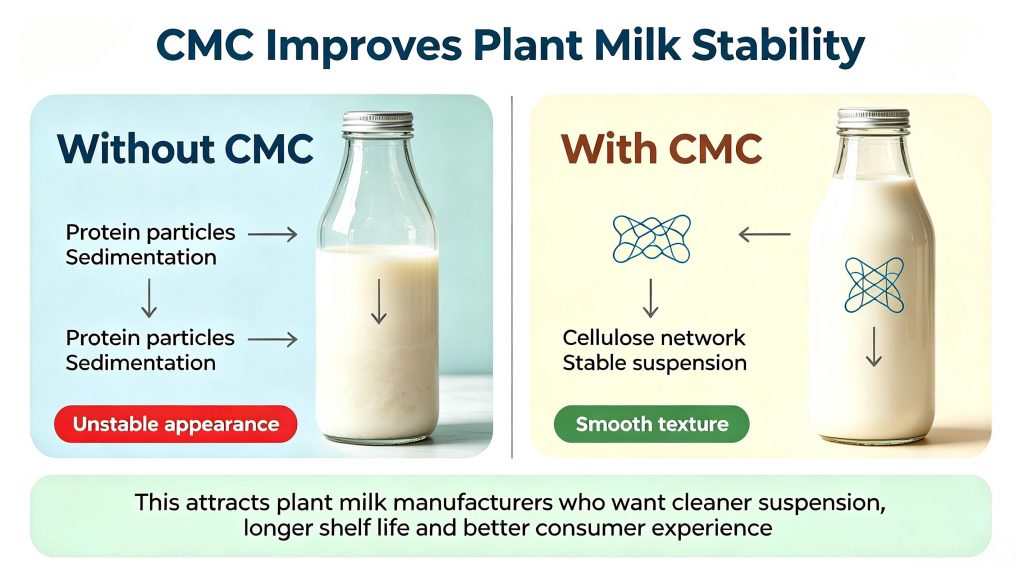
The rapid global growth of plant-based milk has created new stabilization challenges. Products such as oat milk, soy milk, almond milk, coconut beverages and pea protein drinks often contain unstable components — plant protein particles, natural fibers, minerals and oil droplets — that separate during storage due to density differences, causing sedimentation, layer separation and uneven texture. A common mistake is trying to solve this by increasing viscosity alone; however, a thicker beverage is not automatically a more stable one.
CMC strengthens the water phase’s structure and improves particle suspension, delivering reduced sedimentation (particles stay evenly distributed, improving shelf-life appearance and consistency), improved mouthfeel (smooth and natural, with less gumminess than high levels of guar gum), and better processing stability through homogenization, heat treatment and long storage.
Guar gum can also work in plant-based beverages because of its strong thickening ability, but formulators must control dosage carefully, since high levels create excessive thickness and a slippery mouthfeel. Premium plant-based beverages therefore often use a balanced stabilizer system rather than relying on guar gum alone.Guar gum generally provides stronger thickening performance compared with CMC. Therefore, it is commonly selected when manufacturers require higher viscosity. For more information about hydrocolloids used for viscosity control, see our guide to food thickeners.
Protein beverages are growing rapidly across sports nutrition and meal-replacement markets, yet protein systems are hard to stabilize because proteins interact with minerals, acids, heat and other hydrocolloids, often causing sedimentation, a chalky texture and poor shelf stability.
CMC helps in three ways: it maintains protein suspension by creating a stable continuous phase that reduces sediment formation; it improves texture, addressing the rough or powdery mouthfeel protein drinks often have; and it supports low-viscosity formulations, so the drink stays stable without turning into a shake.
Guar gum can add body and creaminess, but excessive usage creates a heavy, thick drinking experience with lower consumer acceptance — making it more suitable for thicker formats such as protein puddings and meal-replacement desserts.
Cocoa beverages are a classic example of why suspension ability differs from simple thickening. Cocoa particles are naturally difficult to keep suspended, and without proper stabilization, manufacturers experience cocoa settling, uneven flavor distribution and poor appearance.
CMC helps suspend cocoa particles by improving the structure of the liquid phase. The goal is not to make the beverage thick — the goal is to keep cocoa particles suspended while maintaining a pleasant drinking experience. This makes CMC well suited to chocolate milk, cocoa drinks and functional cocoa beverages.
Dairy products require careful control of protein interactions, water distribution and texture, across yogurt drinks, fermented dairy beverages, ice cream and dairy desserts.
CMC advantages: improved water retention (less whey separation and syneresis), texture stability and freeze-thaw stability — important for frozen dairy products, since CMC reduces texture damage from repeated temperature changes.
Guar gum advantages: a creamier texture, increased body and improved richness, common in ice cream, frozen desserts and thick dairy products. Correct dosage stays critical, since excessive guar gum can reduce the clean mouthfeel consumers expect.
| Performance | CMC | Guar Gum |
|---|---|---|
| Water binding | Excellent | Excellent |
| Viscosity increase | Medium and controllable | Very strong |
| Drinking yogurt | ⭐⭐⭐⭐⭐ | ⭐⭐⭐ |
| Ice cream body | ⭐⭐⭐⭐ | ⭐⭐⭐⭐⭐ |
| Prevent whey separation | Excellent | Good |
| Creamy texture | Good | Excellent |
| Clean mouthfeel | Better | Lower at high dosage |
Conclusion: For liquid dairy beverages, CMC is usually the better choice. For frozen desserts requiring maximum creaminess, guar gum can provide stronger thickening effects, and in many premium formulations, manufacturers combine CMC with other stabilizers instead of relying only on guar gum.
Unlike beverages, sauces usually need higher viscosity, better cling and a richer body — think salad dressings, tomato sauces, chili sauces and mayonnaise-style products.
Guar gum is effective here because it delivers strong thickening, a creamy texture, improved body and better flow control, making it an excellent choice for thick sauces.
CMC contributes water management, texture stability, emulsion support and shelf-life improvement, and it provides viscosity control without an overly sticky texture — helping manufacturers achieve smooth pouring and stable appearance. Many commercial formulations combine CMC with other hydrocolloids to hit the exact profile they want.
| Requirement | CMC | Guar Gum |
|---|---|---|
| Water retention | Excellent | Excellent |
| Thickening strength | Moderate | Very high |
| Smooth texture | Excellent | Moderate |
| Sauce cling | Good | Excellent |
| Freeze-thaw stability | Excellent | Moderate |
| Oil separation control | Excellent | Good |
Recommendation: For salad dressing, chili sauce, cooking sauces and emulsion systems, CMC is often preferred. For thick sauces, creamy fillings and high-viscosity products, guar gum may provide the stronger texture needed.
Ice cream is an application where guar gum has traditionally been very popular, since manufacturers need smooth texture, reduced ice-crystal growth, better melting resistance and creamy mouthfeel. Guar gum delivers strong water binding and slower melting, while CMC contributes ice-crystal control and better freeze-thaw stability. Many industrial formulations therefore combine CMC with guar gum, carrageenan or locust bean gum, since each hydrocolloid provides a different benefit.
Guar gum is widely used in bakery applications because it improves dough handling, moisture retention and shelf life, and it can partially replace gluten functionality in gluten-free breads, cakes and cookies by improving water binding and elasticity. CMC pairs with starch in bakery fillings and sauces, adding stability and water retention while starch supplies thickness and structure.
Industrial production involves many steps — high shear mixing, pumping, homogenization, heating and storage — and the stabilizer must hold up throughout.
| Processing Factor | CMC | Guar Gum |
|---|---|---|
| High shear mixing | Good | Moderate |
| Homogenization | Good | Moderate |
| Heat processing | Good | Depends on system |
| Freeze-thaw cycles | Excellent | Moderate |
| Long shelf storage | Excellent | Good |
| Suspension stability | Excellent | Moderate |
CMC generally shows better stability under mechanical processing, maintaining suspension, texture and uniformity. Guar gum can lose viscosity after strong shear, since its thickening effect depends heavily on molecular structure and shifts with temperature, pH and processing time. For heat-treated beverages, CMC is usually easier to control.
Although CMC and guar gum are often compared as alternatives, they can also work together. A combined system may improve viscosity control, stability, mouthfeel and dosage efficiency at once — CMC supplies suspension and stability, while guar gum supplies creaminess and body. This pairing works well in dairy beverages, nutritional drinks, sauces and frozen desserts, though optimization still requires testing, since pH, protein content, salt concentration and processing conditions all affect performance.
| Function | CMC | Guar Gum |
|---|---|---|
| Suspension stability | ⭐⭐⭐⭐⭐ | ⭐⭐⭐ |
| Thickening power | ⭐⭐⭐ | ⭐⭐⭐⭐⭐ |
| Smooth mouthfeel | ⭐⭐⭐⭐⭐ | ⭐⭐⭐ |
| Water binding | ⭐⭐⭐⭐⭐ | ⭐⭐⭐⭐ |
| Protein beverage applications | Excellent | Limited |
| Sauce applications | Excellent | Excellent |
| Clean-label positioning | Strong | Strong |
Typical combination systems:
Selecting a stabilizer is not only a technical decision. Food manufacturers should evaluate hydrocolloids based on total formulation performance — including cost, dosage efficiency, consumer perception, regulatory requirements, processing conditions, supply stability and product positioning — not only the price per kilogram.
At first glance, guar gum looks cheaper because it builds viscosity strongly at a low dosage. However, actual formulation cost depends on required dosage, processing performance, product stability, rework rate and shelf-life performance — so a cheaper raw ingredient doesn’t always create the lowest production cost. Higher guar gum usage can create excessive thickness and processing difficulties, and reducing dosage to protect mouthfeel erodes its apparent cost advantage in beverages.
CMC may carry a higher price per kilogram, yet it often provides additional functionality — suspension stabilization, water retention, texture improvement and shelf-life extension — which reduces the need for other corrective ingredients. A plant-based milk manufacturer trying to prevent protein sedimentation, mineral settling and phase separation at once will find that a strong thickener alone won’t solve these problems, while CMC can provide stability while keeping the texture drinkable.
| Factor | CMC | Guar Gum |
|---|---|---|
| Price per kg | Medium | Usually lower |
| Thickening efficiency | Medium-high | Very high |
| Suspension ability | Excellent | Moderate |
| Required dosage | Medium | Low |
| Beverage suitability | Excellent | Moderate |
| Total formulation value | High | Depends on application |
Conclusion: For high-viscosity products such as sauces, guar gum can be very cost-effective. For beverages, protein products and suspension systems, CMC may provide better overall value because it solves more formulation challenges.
Clean label has become one of the most important trends in the global food industry, as consumers increasingly prefer simple, recognizable, plant-derived ingredients. Both CMC and guar gum qualify as plant-derived, but perception differs slightly: guar gum (labeled as guar gum or E412) reads as a familiar hydrocolloid, though multiple gums together on a label can suggest heavy processing. CMC (labeled as cellulose gum, sodium carboxymethyl cellulose or E466) comes from renewable plant cellulose and delivers functional benefits at low dosage, which appeals to manufacturers wanting stable texture without excessive thickness.
Both ingredients are approved food additives in many countries with established global safety records. CMC (E466) is used in beverage stabilization, dairy products, sauces, bakery products and frozen foods. Guar Gum (E412) is used in ice cream, sauces, bakery and dairy products. Because both enjoy wide regulatory acceptance, the final selection depends mainly on functionality rather than compliance concerns.
Not all CMC products deliver the same performance, so manufacturers should evaluate four parameters: viscosity grade (low viscosity suits beverages and suspension systems; medium suits dairy beverages, sauces and dressings; high suits thick sauces, fillings and industrial uses); degree of substitution (DS), which affects solubility, stability and compatibility; particle size, which affects hydration speed and dispersion (fine particles hydrate faster but need proper dispersion to avoid lumps); and purity and food compliance — buyers should request a COA, TDS, SDS, a food-grade declaration, heavy-metal testing and microbiological specifications.
When purchasing guar gum, manufacturers should weigh viscosity (higher grades build stronger thickening and water binding, though excessive viscosity can hurt texture), hydration rate (fast hydration matters for beverages, instant products and powder mixes) and purity (moisture, protein content, ash content and microbial limits).
Choosing the right supplier matters as much as choosing the right ingredient. Evaluate four areas: technical capability (complete specifications, application recommendations and trial support); quality control (COA, SDS, TDS and quality certificates); supply reliability (production capacity, export experience, packaging options, lead time and batch consistency); and application support — the best suppliers don’t just sell ingredients, they help solve formulation problems. A beverage manufacturer fighting sedimentation, for instance, may not need a higher-viscosity product at all; they may just need better stabilizer selection, a proper hydration procedure or an optimized dosage.
| Application | Recommended Choice |
|---|---|
| Plant-based milk | CMC |
| Protein beverage | CMC |
| Drinking yogurt | CMC |
| Cocoa / chocolate beverage | CMC |
| Fruit beverage | CMC |
| Ice cream | Guar Gum or CMC + Guar Gum |
| Thick sauces | Guar Gum |
| Salad dressing | CMC + Guar / Xanthan Gum |
| Bakery fillings | Guar Gum |
| Gluten-free bakery | Guar Gum |
| High-viscosity products | Guar Gum |
CMC and guar gum aren’t direct replacements for each other — they offer different functional advantages. Choose CMC for suspension stability, smooth texture, beverage performance or processing tolerance. Choose guar gum for strong thickening, creaminess or cost-efficient viscosity building. For many modern formulations, the best solution isn’t one ingredient alone, but a stabilizer system that blends hydrocolloids to match the product’s requirement.
Selecting between CMC and guar gum is only the first step — getting the dosage, hydration procedure and processing conditions right is what determines whether the ingredient actually performs as expected in a commercial production environment.
Both ingredients are effective at relatively low usage levels, but the correct starting point depends heavily on the application:
In both cases, published dosage ranges are a starting point, not a final answer. The actual optimal level depends on product composition, pH, mineral content, processing method and the specific texture target, and should always be confirmed through lab-scale and pilot trials before scaling to commercial production. Over-dosing guar gum in particular is one of the most common formulation mistakes, since it quickly tips a product from “stable” into “heavy and gummy.”
Both CMC and guar gum need proper hydration to perform correctly — poor hydration is one of the most common causes of lumping, inconsistent viscosity and batch-to-batch variation.
For both ingredients, pre-blending the powder with sugar or another dry ingredient before adding it to water — rather than sprinkling it directly onto the liquid surface — is a simple, effective way to prevent lumping at both lab and production scale.
Industrial production involves multiple stress points — high-shear mixing, pumping, homogenization, heat treatment and extended storage — and the two ingredients respond differently to each:
| Processing Factor | CMC | Guar Gum |
|---|---|---|
| High shear mixing | Good | Moderate |
| Homogenization | Good | Moderate |
| Heat processing | Good | Depends on system |
| Freeze-thaw cycles | Excellent | Moderate |
| Long shelf storage | Excellent | Good |
CMC generally holds up better under mechanical and thermal processing, maintaining suspension, texture and viscosity consistency through homogenization and heat treatment. Guar gum’s viscosity is more sensitive to processing conditions — strong shear can reduce its thickening effect, and its behavior shifts more noticeably with changes in temperature, pH and processing time.
For heat-treated beverages and products with a long, variable distribution chain, CMC is usually easier to control and more forgiving of real-world processing variation. For thick, less thermally intensive applications like sauces and fillings, guar gum’s processing sensitivity is less of a practical concern, since it rarely faces the same combination of high shear and extended heat exposure.
Dosage, hydration and processing aren’t separate decisions — they interact. A dosage that looks correct on paper can underperform if hydration is rushed, and a hydration method that works at bench scale can behave differently once high-shear industrial mixing and heat treatment are introduced. This is why supplier-recommended starting ranges should always be validated with a pilot batch under the actual production conditions the ingredient will face, rather than assumed to transfer directly from a lab trial.

ACTA specializes in cellulose-based functional ingredients, including:
Food Grade CMC (E466)
Microcrystalline Cellulose (MCC)
Other cellulose and hydrocolloid solutions
Our technical support covers:
Grade selection
Application recommendations
Hydration guidance
Formulation optimization
Sample evaluation support
With experience supporting:
For manufacturers comparing CMC and guar gum, the best solution depends on the complete formulation system, processing conditions and final product requirements.
Everything covered so far — the difference between CMC and guar gum, where each performs best, and how dosage, hydration and processing affect real-world results — reflects the kind of formulation problem-solving that food manufacturers deal with every day when selecting a stabilizer system. Getting the right answer usually depends less on the ingredient itself, and more on the technical support behind it.
Qingdao ACTA Biotechnology Co., Ltd specializes in cellulose-based food ingredients, including Sodium CMC, Microcrystalline Cellulose (MCC), Colloidal MCC (MCC Gel), HPMC and modified starch solutions. Food manufacturers across beverage, dairy, plant-based and sauce categories work with us not just to source raw material, but to solve specific formulation challenges — sedimentation in a protein drink, syneresis in a yogurt line, mouthfeel issues in a plant-based milk reformulation.
What that support looks like in practice:
This is the same principle that runs through this entire guide: the “best” stabilizer isn’t a fixed answer, it’s the one that fits a specific product, process and target texture. That’s the perspective we bring to every formulation conversation.
Choosing between CMC, guar gum, xanthan gum or MCC Gel depends on your product type, processing conditions, desired texture and stability requirements. Our technical team can help you select the most suitable stabilizer grade and provide samples for testing.
Neither wins universally. CMC is generally better when the formulation needs suspension stability, smooth mouthfeel, controlled viscosity, processing tolerance or long-term storage stability. Guar gum is usually preferred when the objective is strong thickening, high viscosity or increased body. A protein-drink or plant-based-milk manufacturer usually prefers CMC; a sauce manufacturer chasing body and cling often prefers guar gum. The real question isn’t “which is better,” but “which hydrocolloid fits this specific application?”
Yes, in many applications, though a direct 1:1 swap isn’t recommended because the two ingredients work through different mechanisms. When replacing guar gum with CMC, evaluate target viscosity, texture requirements, processing conditions and storage stability. In beverages, this swap often improves drinkability and suspension; in thick sauces, additional viscosity adjustment may be needed. Pilot testing before commercial production is always worthwhile.
Guar gum generally builds stronger viscosity at a lower dosage, since its highly branched molecules absorb large amounts of water and thicken rapidly. CMC develops viscosity more slowly but with better control and stability. If maximum thickness is the goal, guar gum usually wins; if balanced stability and texture matter more, CMC is often the better fit.
CMC is usually the preferred choice. Beverages such as plant-based milk, protein drinks, functional beverages, cocoa drinks and fruit drinks need particles kept suspended, sedimentation prevented and a smooth texture maintained without excessive thickness. Guar gum can increase viscosity effectively, but overuse risks a gummy sensation, reduced flavor release and a heavy mouthfeel.
Both are widely used, but for different reasons. CMC controls ice-crystal growth, improves melting resistance, enhances storage stability and reduces water migration. Guar gum adds creaminess, improves body and increases viscosity. Many ice cream manufacturers combine CMC, guar gum and other stabilizers to achieve optimal texture.
Yes. Combining them creates a more balanced stabilizer system that improves stability, texture, water retention and viscosity while reducing syneresis. In dairy beverages, CMC provides suspension stability while guar gum improves body; in sauces, CMC improves stability while guar gum adds thickness and cling. The right ratio depends on product type, processing conditions and desired texture.
Yes. CMC is widely accepted as a cellulose-based food ingredient derived from plant cellulose. Depending on regional labeling rules, it may appear as Carboxymethyl Cellulose, Sodium Carboxymethyl Cellulose or Cellulose Gum, and it’s commonly used in dairy products, beverages, bakery products, sauces and frozen desserts.
CMC is generally the better fit. Plant-based beverages often contain protein particles, minerals, fiber and oil droplets that settle during storage, and CMC helps stabilize particles, improve suspension, reduce sedimentation and maintain a smooth texture in soy milk, almond milk, oat milk and pea protein beverages. Premium formulations often pair CMC with other stabilizers for the desired sensory profile.
Typical ranges run 0.1–0.5% for beverages, 0.2–0.8% for dairy drinks, 0.3–1.0% for sauces and dressings, 0.1–0.5% for ice cream, and 0.2–0.8% for bakery products. The optimal dosage should be confirmed through laboratory and pilot-scale testing, since product composition, pH, processing method and desired viscosity all influence the right level.
Evaluate product consistency (stable viscosity, batch-to-batch reliability, complete COA documentation), technical support (grade selection, application testing, dosage optimization, troubleshooting) and regulatory documentation (TDS, SDS/MSDS, COA, food-safety certificates, and Halal/Kosher certificates where required).
CMC mainly works by improving suspension stability, binding water, building a stable structure and controlling viscosity. Guar gum mainly works through rapid water absorption that increases viscosity and thickness. In simple terms, CMC is mainly a stabilizer while guar gum is mainly a thickener — though their functions can overlap depending on the formulation.
Usually not. Guar gum generally builds higher viscosity at the same dosage. But higher viscosity doesn’t always mean better performance — in beverages especially, excessive thickness can hurt mouthfeel, flavor release and consumer acceptance. CMC provides more controlled viscosity, which suits products that need stability without a heavy texture.
Beverages need suspension without excessive thickness, a smooth drinking texture and long-term stability. Protein drinks, plant-based milk, fruit beverages and cocoa drinks all need particles evenly distributed while the mouthfeel stays refreshing — a balance CMC achieves more reliably than many high-viscosity gums.
Yes, if overused. Guar gum’s strong hydration ability can create a sticky texture, reduced drinkability and slower flavor release at high dosage, which is why beverage manufacturers control it carefully or blend it with other stabilizers.
Not directly like a preservative, but it improves physical stability during storage by reducing sedimentation, phase separation, water separation and texture changes — helping products hold their quality for longer.
CMC is generally preferred, since dairy beverages contain milk proteins, minerals and fat droplets that need suspension stability, smooth texture and even protein dispersion. Guar gum can also be used, but excessive amounts risk a heavier mouthfeel.
Both work, depending on the texture target. CMC improves water retention, smoothness and reduces syneresis; guar gum improves thickness, creaminess and body. Many yogurt manufacturers use both together for the best result.
Partially. CMC provides thickening, stabilization and water binding, but gelatin offers unique protein-based gel formation and elastic texture that CMC alone can’t fully replicate. For vegetarian or vegan products, CMC is often part of a broader plant-based stabilization system.
Yes. CMC is derived from cellulose, a plant-based material, and is commonly used in vegan beverages, plant-based dairy alternatives, vegan sauces and meat alternatives.
Yes. Guar gum is also plant-derived, obtained from guar beans, and is commonly used in vegan foods, gluten-free products and other plant-based formulations.
CMC generally performs better, since it builds a stable structure that keeps cocoa particles, calcium minerals, protein particles and fruit pulp evenly distributed. Guar gum mainly raises viscosity, which can slow sedimentation but doesn’t provide the same suspension mechanism.
CMC is usually preferred, since protein drinks often face sedimentation, a chalky mouthfeel and phase separation. CMC helps maintain a smooth texture, particle stability and a better overall drinking experience.
Yes, both can. CMC improves continuous-phase stability, water binding and particle suspension; guar gum improves viscosity and body. For oil-in-water emulsions like dressings and sauces, combinations of the two are common.
CMC generally offers better processing stability across many thermal conditions. Heat stability for both ingredients depends on pH, temperature, processing time and concentration, so testing under actual production conditions is recommended.
CMC is commonly used in acidic beverage systems containing fruit acids, low pH conditions or mineral ingredients. Correct grade selection matters, since CMC performance depends on degree of substitution, viscosity grade and the formulation environment.
CMC requires proper hydration — adding the powder slowly, avoiding lump formation and allowing sufficient hydration time. High-shear mixing improves dispersion.
Guar gum hydrates rapidly thanks to its strong water-absorption ability, but rapid hydration can create lumps or uneven dispersion if mixing technique isn’t controlled carefully.
It depends on the application. Guar gum may look cheaper because of its strong thickening efficiency, but CMC can offer better cost performance once you factor in lower required dosage, better stability and reduced product-failure risk. The lowest-priced ingredient isn’t always the lowest total formulation cost.
Yes. CMC is widely used to reduce syneresis by improving water retention in yogurt, sauces, dairy desserts and frozen foods.
Yes, by increasing viscosity, though CMC generally offers more controlled water management.
Both can work. CMC contributes smooth texture, stability and reduced water separation, while guar gum contributes higher viscosity and thick body. Many sauce manufacturers blend the two.
Both CMC and guar gum can be used, depending on desired viscosity, oil content and texture target. CMC is often chosen when smoothness and stability matter most.
A combination is common: CMC improves ice-crystal control and storage stability, while guar gum improves creaminess and body.
Properly selected CMC has minimal flavor impact and can actually improve flavor perception by maintaining a consistent texture.
High levels of guar gum can slow flavor release because of increased viscosity — one reason beverage manufacturers often lean toward CMC instead.
Viscosity grade, concentration, temperature, pH, salt content and processing conditions all influence how CMC performs in a formulation.
Hydration conditions, temperature, pH, the presence of other hydrocolloids and processing shear all affect guar gum’s behavior.
Yes. CMC improves stability and water retention while starch supplies thickness and structure — a common pairing in bakery fillings and sauces.
Yes, this combination is common in bakery products, sauces and fillings.
Both CMC and guar gum can fit clean-label strategies, depending on regional regulations, product positioning and market preference.
No special equipment is strictly required, but good mixing equipment helps achieve faster hydration, better dispersion and more consistent quality.
Typical evaluation includes viscosity testing, stability observation, sedimentation evaluation and sensory testing, ideally backed by pilot trials.
A proper comparison uses the same dosage, the same processing conditions and the same storage conditions. Testing viscosity alone isn’t enough to judge real-world performance.
No. Different applications need different viscosity levels — a beverage needs flowability, while a sauce needs thickness.
Because different hydrocolloids serve different functions. A combined system can achieve better stability, better texture, a lower total dosage and improved cost efficiency.
The correct grade depends on the application, required viscosity, processing method and regulatory requirements — professional technical support is recommended before finalizing a grade.
Yes. CMC is widely used in plant-based milk because it helps stabilize protein particles, minerals, fiber and oil droplets that would otherwise settle over time.
Professional suppliers should provide a TDS, COA, SDS, food-safety certificates and a Halal certificate if required.
Key factors include manufacturing capability, quality consistency, technical support, export experience and documentation support.
Demand for both will keep growing alongside clean-label products, plant-based foods, functional beverages and protein nutrition products. CMC is likely to see increasing adoption wherever manufacturers need stability, smooth texture and consumer-friendly sensory performance, while guar gum will keep playing an important role in products that need strong thickening and rich body.
Degree of substitution (DS) describes how many hydroxyl groups on the cellulose backbone have been chemically modified. A higher DS generally improves water solubility, salt tolerance and clarity, while a lower DS gives stronger thickening at lower cost. Suppliers select DS based on the target application — beverage-grade CMC typically uses a higher DS for clean solubility.
Most food-grade CMC grades disperse in cold water, though full hydration and viscosity development take longer than in warm water. Fine-mesh, cold-water-dispersible grades are available for instant powder mixes and quick-prep applications.
Yes. Guar gum hydrates readily in cold water and builds viscosity faster than CMC at room temperature, which is part of why it’s popular in instant mixes, though slow, controlled addition is still needed to prevent lumping.
CMC can be dispersed across a wide temperature range, but moderate warm water (40–60°C) generally speeds hydration and reduces clumping compared with cold water, while still avoiding the degradation risk of very high temperatures.
Yes. CMC performs well across a broad pH range (roughly pH 4–10) but works best in mildly acidic to neutral systems; performance can decline in strongly acidic beverages below pH 3 unless a suitable grade and dosage are selected.
Guar gum is relatively pH-stable across a wide range, though extreme acidity or strongly alkaline conditions combined with heat can reduce its viscosity-building efficiency over time.
Yes, with the right grade. Acid-stable CMC grades are formulated specifically for low-pH beverages, helping maintain suspension of pulp and fortificants without breaking down under acidic conditions.
Properly stored CMC (cool, dry conditions, sealed packaging) typically maintains functional performance for around 2–3 years, though buyers should always check the supplier’s TDS for the specific shelf-life claim.
Manufacturers should store both in a cool, dry warehouse away from direct sunlight and moisture, in tightly sealed original packaging, since both are hygroscopic and can absorb ambient humidity, affecting flow and hydration behavior.
CMC, being cellulose‑derived, does not constitute a recognised major allergen. Guar gum derives from guar beans (a legume) and generally does not rank among the top food allergens, but manufacturers with legume‑sensitive consumers should still check regional labelling requirements.
Guar gum comes from the guar plant, which is part of the legume family, the same broad family as peanuts and soy. While guar gum itself does not constitute a recognised major allergen in most jurisdictions, some sensitive individuals or regulatory frameworks may still flag legume‑derived ingredients, so manufacturers should check with recipients about specific dietary concerns.
CMC derives from wood pulp or cotton cellulose and is inherently non‑GMO. Guar gum comes from the guar bean plant; its non‑GMO status depends on the specific cultivation source, so buyers seeking a non‑GMO claim should request supporting documentation from the supplier.
Certified‑organic versions of both exist but are less common than conventional food‑grade material, and availability depends on the specific supplier’s certification scope. Buyers seeking organic‑certified stabilisers should confirm certification body and scope directly with the supplier.
Both generally come with Halal and Kosher certification, since they are plant‑derived ingredients. Buyers should request the specific certificates from their supplier, as certification varies by manufacturing facility and batch.
CMC is an approved food additive (E466) with an extensive global safety record, and manufacturers use it at low dosages typical of food stabiliser applications. As with any additive, actual safety and regulatory acceptable daily intake depend on the applicable food‑safety authority in each market.
Guar gum (E412) is an approved food additive with a long history of use in food products worldwide. Some regulatory bodies note that very high intakes of guar gum in non‑food (e.g., diet‑aid) contexts have raised concerns historically, but they consider typical food‑application dosages safe under normal use.
The U.S. FDA recognises both CMC and guar gum as safe (GRAS) food ingredients for use in a range of food categories, subject to specified usage conditions and limits.
Yes, the EU authorises both as food additives, listing them as E466 (CMC) and E412 (guar gum), each with defined acceptable daily intake and usage conditions under EU food additive regulations.
Food‑grade designation means the ingredient meets purity, heavy‑metal, microbiological and compositional specifications suitable for direct use in food products, as distinct from industrial or pharmaceutical grades that may have different purity profiles or that manufacturers do not intend for consumption.
Yes. Industrial‑grade CMC (which manufacturers use in detergents, paper, textiles or oil drilling) typically has looser purity specifications and manufacturers do not test or certify it for food safety, while food‑grade CMC must meet strict purity, heavy‑metal and microbiological limits.
Manufacturers can use CMC in some food categories for infants and young children, but regulatory bodies tightly regulate usage and it varies significantly by country. Manufacturers should consult the specific regulatory framework for infant and follow‑on formula in their target market before using any stabiliser in this category.
As with CMC, strict, market‑specific regulation governs guar gum’s use in infant and toddler food categories. Manufacturers should verify permitted usage levels and category restrictions with local food‑safety authorities.
Formulators often favour guar gum for body and spreadability in plant‑based cheese alternatives, while CMC contributes water retention and helps prevent syneresis. Many formulations blend the two along with other hydrocolloids like carrageenan or locust bean gum for the right melt and texture.
Manufacturers commonly use CMC in liquid coffee creamers for suspension stability and to prevent feathering or separation, while guar gum can add body in richer, cream‑style formulations. The right choice depends on whether the creamer is liquid, powdered or a barista‑style formulation.
Guar gum’s strong water‑binding and viscosity‑building properties support foam stability in whipped toppings, while CMC can help control ice‑crystal formation and texture if manufacturers freeze the product. Combinations are common in commercial whipped topping systems.
Manufacturers often use CMC in processed meats and meat alternatives for water retention, texture and reduced cook loss, while guar gum can contribute binding and moisture retention in sausages, patties and similar formats. Selection depends on the specific processing method and desired bite.
Guar gum’s strong thickening at low dosage makes it popular in instant soups, noodle seasoning packets and dehydrated mixes, since it rehydrates quickly. Manufacturers can use CMC where they need a smoother, less starchy mouthfeel or better reheating stability.
Manufacturers prefer finer mesh CMC (e.g., 80–100 mesh or finer) for beverages and instant applications because it hydrates faster, while they can use coarser mesh where hydration time is less critical, such as in some bakery or industrial uses. They should match particle size to the available mixing equipment and process time.
Yes. Finer guar gum particles hydrate and thicken faster, which is useful for instant mixes and quick-process beverages, but very fine particles can also be more prone to clumping if not dispersed carefully during mixing.
A stabilizer system is a pre-blended combination of two or more hydrocolloids (and sometimes emulsifiers) designed to deliver a specific texture and stability profile more efficiently than any single ingredient alone. CMC and guar gum are common building blocks within such systems, especially for dairy, plant-based and beverage applications.
Because CMC and guar gum build viscosity through different mechanisms, dosage isn’t a simple 1:1 conversion. Start with the CMC supplier’s recommended starting range for the application category, then adjust based on lab-scale viscosity and sensory testing rather than matching guar gum’s percentage directly.
Common options include multiwall paper bags with a plastic liner (typically 20–25 kg), and bulk options such as jumbo bags for larger-volume industrial buyers. Buyers should confirm moisture-barrier packaging, especially for humid shipping routes or long storage periods.
MOQs vary by supplier and product grade, ranging from small trial quantities (a few kilograms for sampling) to full container loads for commercial production. Manufacturers evaluating a new supplier should ask about sample availability before committing to a larger order.
Lead times depend on origin, destination and shipping method, but typically range from a few weeks for sea freight to a few days for air freight on smaller sample or urgent orders. Buyers should factor in customs clearance time for their specific country when planning production schedules.
Both are generally stable during normal shipping and storage conditions, but prolonged exposure to high humidity, heat or damaged packaging can reduce functional performance. Proper sealed packaging and dry warehouse conditions at both ends of the supply chain help preserve quality.
Common pre-shipment checks include viscosity testing (using the buyer’s own process water and conditions where possible), moisture content, pH, particle size distribution and a review of the COA against the agreed specification, ideally supported by a small trial batch.
Both ingredients are used across all production scales. Many suppliers offer smaller sample quantities and formulation support specifically to help startups and mid-size brands validate a stabilizer system before committing to larger production volumes.
Manufacturers use “Cellulose gum” as an alternative common name for Sodium Carboxymethyl Cellulose (CMC) on some ingredient labels, particularly in the United States, while they use “CMC,” “sodium CMC,” and “E466” interchangeably elsewhere.
Reputable ingredient suppliers offer application-specific technical support, including grade recommendations, sample evaluation and trial-batch guidance based on the target product category, processing conditions and desired texture — this is usually more reliable than choosing based on price or viscosity numbers alone.
Choosing between CMC, guar gum, xanthan gum or MCC Gel depends on your product type, processing conditions, desired texture and stability requirements. Our technical team can help you select the most suitable stabilizer grade and provide samples for testing.
There is no universal winner between CMC and guar gum — the better choice depends on the application goal. Choose CMC for superior suspension stability, a smooth mouthfeel, better processing tolerance and long shelf-life performance. Choose Guar Gum for strong thickening, high viscosity and creamy body enhancement.
For many advanced formulations — especially beverages, dairy alternatives and functional foods — a carefully designed CMC-based stabilizer system delivers the best balance between stability, texture and consumer acceptance. As manufacturers keep moving toward clean-label, plant-based and functional products, selecting the right hydrocolloid system will only grow more important for consistent quality and long-term market success.In conclusion, CMC vs Guar Gum is not about choosing a universally better ingredient. Food manufacturers should select the stabilizer based on suspension requirements, texture expectations and processing conditions.
