

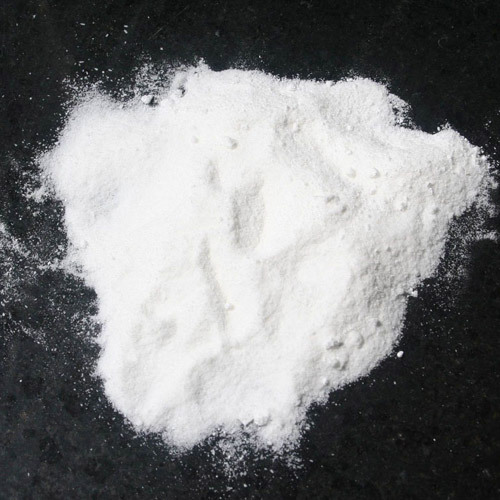
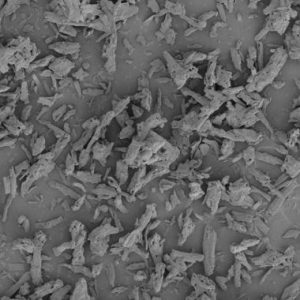
Colloidal systems are often combined with HPMC and CMC to optimize viscosity and stability.
Colloidal MCC is a high-performance thixotropic stabilizer that forms a three-dimensional cellulose gel network in water.
This structure enables it to function as an effective colloidal microcrystalline cellulose stabilizer, providing suspension stability, controlled viscosity, and texture enhancement across food, pharmaceutical, and industrial formulations.
Unlike conventional thickeners, colloidal MCC builds a physical cellulose gel network that stabilizes particles without excessive thickening, making it ideal for modern clean-label formulations.
This thixotropic behavior allows colloidal microcrystalline cellulose to flow under shear and recover its structure at rest, providing excellent suspension stability and texture control. The rheological and thixotropic behavior of colloidal MCC has been widely studied in scientific literature.
As a thixotropic stabilizer, colloidal MCC flows under shear and quickly rebuilds its structure at rest.
colloidal microcrystalline cellulose functions through a unique cellulose gel network mechanism rather than simple viscosity increase.
As a thixotropic stabilizer, it forms a three-dimensional structure that traps water and particles, allowing it to act as both a colloidal MCC stabilizer and an MCC suspension stabilizer.
• Colloidal MCC viscosity control without excessive thickening
• Uniform particle suspension in liquid systems
• Shear-thinning flow behavior under processing
• Rapid structural recovery at rest
This mechanism differentiates colloidal microcrystalline cellulose from traditional hydrocolloids such as xanthan gum or guar gum.
• Suspension of insoluble particles
• Emulsion stabilization
• Fat replacement in low-fat foods
• Viscosity control without excessive thickening
Typical use level: 0.1%–1.5%
It is widely used for colloidal MCC viscosity control in liquid and semi-solid formulations.
Due to its thixotropic stabilizer behavior, colloidal microcrystalline cellulose provides stable particle suspension without excessive thickening, making it ideal for modern clean-label formulations.
Colloidal Microcrystalline Cellulose (Colloidal MCC) is a finely dispersed form of microcrystalline cellulose that, when hydrated, forms a stable thixotropic gel network in aqueous systems. Unlike standard powder MCC, this stabilizer is engineered to disperse uniformly in liquid matrices, creating a three-dimensional network of cellulose microfibrils that provides exceptional suspension stability, controlled viscosity, and enhanced texture.
The term “colloidal” refers to the particle size range and the behavior of these cellulose particles in suspension — they remain evenly distributed without settling, even under gravity, due to the network structure they form. This makes colloidal microcrystalline cellulose one of the most versatile functional ingredients across food, pharmaceutical, and industrial applications.
Colloidal MCC is typically co-processed with a dispersing agent — most commonly sodium carboxymethylcellulose (CMC) — which helps the cellulose particles deflocculate and fully hydrate in water. The resulting gel is shear-thinning: it flows easily under mechanical stress (such as stirring or pumping) but recovers its structured, viscous state once the force is removed. This thixotropic behavior is the defining functional property of colloidal microcrystalline cellulose.
| TEST ITEMS | ACT591 | ACT3212 | ACT611 | ACT538 | ACT521 |
| Loss on drying,w/% | ≤7.0 | ≤7.0 | ≤7.0 | ≤7.0 | ≤7.0 |
| Residue on ignition,w/% | ≤5.0 | ≤5.0 | ≤5.0 | ≤5.0 | ≤5.0 |
| Viscosity,1.2%,mpa.s | 39-91 | 50-200 | 50-151 | 39-175 | 50-100 |
| Particle Size retained on 60 mesh sieve | <1 | <1 | <1 | <1 | <1 |
| Heavy Metal,mg/kg | ≤10 | ≤10 | ≤10 | ≤10 | ≤10 |
| Total aerobic microbial count,cfu/g | ≤1000 | ≤1000 | ≤1000 | ≤1000 | ≤1000 |
| Total moulds and yeasts count,cfu/g | ≤100 | ≤100 | ≤100 | ≤100 | ≤100 |
| Escherichia coli | Not detected/10g | Not detected/10g | Not detected/10g | Not detected/10g | Not detected/10g |
| Salmonella species | Not detected/10g | Not detected/10g | Not detected/10g | Not detected/10g | Not detected/10g |
| Staphylococcus aureus | Not detected/10g | Not detected/10g | Not detected/10g | Not detected/10g | Not detected/10g |
| Pseudomonas aeruginosa | Not detected/10g | Not detected/10g | Not detected/10g | Not detected/10g | Not detected/10g |
| Application | food and beverage | Milk shake, sauce | food and beverage | Neutral milk drinks, vegetable protein drinks |
food and beverage |
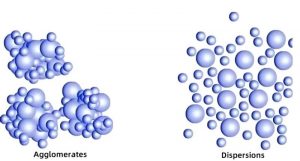
| Parameter | Colloidal MCC | MCC Powder |
|---|---|---|
| Physical Form | Co-processed with CMC; dispersible gel-forming powder | Free-flowing dry powder |
| Particle Size | D90 ≤ 40 µm (colloidal range) | D90: 50–200 µm (varies by grade) |
| Moisture Content | ≤ 8% | ≤ 5% |
| Bulk Density | 0.25–0.45 g/cm³ | 0.28–0.50 g/cm³ |
| Viscosity in Water | 50–1,500 mPa·s (2% dispersion, 25°C) | Minimal viscosity; non-gelling |
| Dispersibility | Forms stable colloidal gel network when hydrated | Does not form gel; remains particulate |
| Water Activation | Requires high-shear mixing at 500–3,000 rpm | Disperses easily with low-shear mixing |
| Hydration Temperature | 70–85°C recommended for full activation | Ambient to 60°C |
| Suspension Stability | Excellent — thixotropic network prevents sedimentation | Poor — particles settle without gelling agents |
| Emulsification | Strong oil-in-water emulsion stabilization | Limited emulsification capacity |
| Typical Usage Level | 0.3–1.5% | 1.0–10% (tablet / food application dependent) |
| pH Stability | 3.0–9.0 | 4.0–8.5 |
| Heat Stability | UHT compatible (up to 135°C) | Stable up to 120°C |
| Freeze-Thaw Stability | Good (with proper formulation) | Moderate |
| Primary Applications | Beverages, dairy drinks, sauces, dressings, creams, suspensions, nutraceutical liquids | Tablets, capsules, dry mixes, bakery, low-moisture food systems |
| Function in Formula | Thickener, stabilizer, suspending agent, fat replacer | Binder, filler, disintegrant, anti-caking agent |
| Regulatory Status | FDA 21 CFR / EU E460ii / USP-NF | FDA 21 CFR / EU E460i / USP-NF |
| Typical Co-processing | MCC + CMC (85:15 to 75:25 ratio) | Pure MCC; no co-processing required |
| Shelf Life | 24 months (≤25°C, RH ≤65%) | 36 months (≤25°C, RH ≤60%) |
| Packaging Form | 25 kg multi-layer moisture-barrier bags | 25 kg PE-lined kraft bags |
| Price Point | Higher (due to co-processing & colloidal functionality) | Lower (standard processing) |
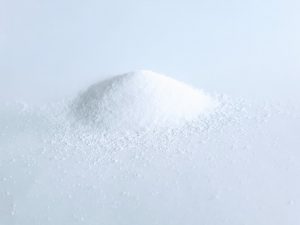
Powder MCC is produced by acid hydrolysis of cellulose, followed by drying and milling to a fine white powder. It is primarily used in solid dosage forms such as pharmaceutical tablets, where it acts as a direct compression binder, disintegrant, and diluent. Its dry, free-flowing nature makes it ideal for blending with active pharmaceutical ingredients (APIs) before compression. Powder MCC is also used in food applications as a bulking agent and fat replacer in dry mixes and baked goods.
Colloidal MCC, by contrast, is produced through a wet attrition or high-shear process that breaks cellulose down to a sub-micron colloidal particle size. It is typically co-processed with CMC or other dispersants and supplied either as a ready-to-use aqueous suspension or as a spray-dried powder that reconstitutes in water. Once hydrated, it forms the characteristic gel network that gives it its unique functional profile.
The core differences can be summarized as follows:
Understanding this distinction is critical for formulators selecting the right grade of MCC for their application. If your product is a tablet or dry blend, powder MCC is the standard choice. If your product is a suspension, sauce, oral liquid, or coating, microcrystalline cellulose gel is the appropriate functional ingredient.
Looking to buy colloidal MCC in bulk?
We provide factory-direct supply with stable quality, competitive pricing, and fast global delivery. MOQ starts from 1 ton with flexible customization options.
As a professional colloidal MCC supplier, we provide:
• Custom viscosity grades
• Food-grade and pharmaceutical-grade options
• Fast global delivery and technical support
Looking for a reliable microcrystalline cellulose gel supplier for your formulation?
We provide customized viscosity grades, technical formulation support, and stable bulk supply for global food, pharmaceutical, and industrial manufacturers.
Request samples or technical consultation today to optimize your formulation performance.
Looking for a reliable colloidal MCC supplier? Contact us for samples and pricing.
Compared to xanthan gum, colloidal MCC provides a cleaner mouthfeel, better suspension stability, and improved freeze-thaw performance. While xanthan gum delivers higher viscosity at low dosage, microcrystalline cellulose gel offers superior particle suspension and thixotropic recovery, making it ideal for beverage and dairy applications.This makes colloidal MCC a preferred microcrystalline cellulose gel stabilizer for applications requiring both suspension stability and controlled viscosity.
| Parameter | Colloidal MCC | Xanthan Gum | Carrageenan (Kappa/Iota) | Guar Gum |
|---|---|---|---|---|
| Chemical Origin | Purified plant cellulose + CMC | Bacterial fermentation (Xanthomonas campestris) | Red seaweed (Rhodophyta) | Guar bean endosperm |
| Typical Usage Level | 0.3–1.5% | 0.05–0.3% | 0.01–0.5% | 0.1–0.5% |
| Viscosity at 1% (25°C) | 200–800 mPa·s | 1,000–2,000 mPa·s | 50–500 mPa·s (gel-dependent) | 2,000–4,000 mPa·s |
| Suspension Performance | ★★★★★ Excellent — thixotropic 3D network | ★★★★☆ Very good — pseudoplastic flow | ★★★☆☆ Moderate — relies on gel formation | ★★★☆☆ Moderate — viscosity-dependent |
| Emulsification Stability | ★★★★☆ Strong oil-in-water stabilization | ★★★☆☆ Moderate | ★★★☆☆ Moderate | ★★☆☆☆ Limited |
| Heat Stability | ✅ UHT compatible up to 135°C | ✅ Stable up to 120°C | ⚠️ Degrades above 80°C (Kappa) | ⚠️ Viscosity loss above 80°C |
| pH Stability | ✅ pH 3.0–9.0 | ✅ pH 3.5–9.0 | ⚠️ pH 4.0–8.0 (acid-sensitive) | ⚠️ pH 5.0–8.5 |
| Freeze-Thaw Stability | ✅ Good | ✅ Good | ❌ Poor — syneresis risk | ⚠️ Moderate |
| Mouthfeel / Texture | Clean, fat-like creaminess | Slightly slimy at high dosage | Firm gel, can feel heavy | Thick, slightly mucilaginous |
| Caloric Contribution | ~0 kcal/g (insoluble fiber) | ~0 kcal/g | ~0 kcal/g | ~2 kcal/g |
| Clean Label Perception | ✅ Natural cellulose — widely accepted | ⚠️ Microbial origin — some consumer concern | ⚠️ Seaweed-derived — regional sensitivity | ✅ Bean-derived — generally accepted |
| Allergen Risk | None | None | None | ⚠️ Legume cross-reactivity (rare) |
| Regulatory Status | FDA / EU E460ii / USP-NF / Halal / Kosher | FDA / EU E415 / Halal / Kosher | FDA / EU E407 / Halal / Kosher | FDA / EU E412 / Halal / Kosher |
| Supply Chain Stability | ✅ High — cellulose widely available | ⚠️ Medium — fermentation capacity dependent | ⚠️ Medium — seaweed harvest variability | ⚠️ Medium — crop yield fluctuation |
| Typical Price Range (USD/kg) | $4.5–8.0 | $8.0–15.0 | $6.0–20.0 | $2.5–5.0 |
| Best For | Beverages, dairy, sauces, creams, pharma suspensions | Dressings, sauces, gluten-free bakery | Dairy gels, chocolate milk, meat systems | Ice cream, bakery, pet food |
Compared to traditional CMC-based systems, colloidal MCC offers improved structural stability and better suspension performance.
| Application | Best Choice | Reason |
|---|---|---|
| UHT Dairy Beverages | ✅ Colloidal MCC | Superior heat stability up to 135°C; clean mouthfeel |
| Acidic Fruit Drinks (pH 3–4) | ✅ Colloidal MCC | Stable across low pH; xanthan and carrageenan degrade |
| Thick Salad Dressings | Xanthan Gum | Very low dosage needed; strong shear-thinning behavior |
| Chocolate Milk / Cocoa Drinks | Colloidal MCC or Carrageenan | MCC for heat-processed; carrageenan for chilled systems |
| Freeze-Thaw Stable Products | ✅ Colloidal MCC | Avoids syneresis seen in carrageenan systems |
| Pharma Oral Suspensions | ✅ Colloidal MCC | USP-NF compliant; chemically inert; no microbial origin |
| Fat-Reduced Creams & Spreads | ✅ Colloidal MCC | Mimics fat structure; other gums lack this functionality |
| Budget-Sensitive Dry Mixes | Guar Gum | Lowest cost per kg; adequate for simple viscosity building |
Unlike xanthan gum or carrageenan, which build viscosity through polymer chain entanglement or ionic gelation, colloidal MCC forms a three-dimensional cellulose network upon hydration. This physical matrix:
Colloidal MCC is not just a hydrocolloid — it is a structural stabilizer with a unique particle-network mechanism that outperforms traditional gums in heat-processed, acidic, and freeze-thaw demanding applications. For formulators seeking a cost-effective, clean-label, and regulatory-compliant alternative to xanthan or carrageenan, microcrystalline cellulose gel deserves serious evaluation.
Colloidal MCC’s unique combination of thixotropy, suspension stability, and chemical inertness makes it a multifunctional additive across three major industries: food, pharmaceuticals, and industrial/chemical manufacturing.For ready-to-use systems, explore our MCC gel solutions for beverages and dairy applications.
In food systems, colloidal MCC functions as a multifunctional MCC food additive, acting as a stabilizer, fat replacer, and texture modifier in beverages, dairy products, and sauces. For ready-to-use systems, explore our MCC gel for food solutions designed for beverage, dairy, and sauce applications.

Salad dressings and sauces: Colloidal MCC stabilizes oil-water emulsions and keeps particulates (herbs, spices, vegetable pieces) evenly suspended throughout the product’s shelf life. It provides a clean, natural texture without the gumminess sometimes associated with hydrocolloids like xanthan gum.
Low-fat and reduced-calorie products: Because microcrystalline cellulose gel contributes body, creaminess, and mouthfeel without adding calories, it is widely used as a fat mimetic in low-fat dairy products, spreads, and dressings. It simulates the textural richness of fat in the absence of lipid content.
Dairy and dairy alternatives:microcrystalline cellulose gel is widely used as a plant-based milk stabilizer, helping prevent sedimentation and improve mouthfeel in dairy alternative beverages.It is also used in yogurt, ice cream, and cream cheese to improve body and reduce syneresis. In plant-based drinks, microcrystalline cellulose gel ensures suspension stability,Explore our MCC gel for food solutions for beverage applications.
Baked goods and fillings: Colloidal MCC adds moisture retention and shelf-life extension to fillings, frostings, and cream-based products.
In pharmaceutical applications, colloidal MCC is primarily used in liquid and semi-solid dosage forms where suspension stability and controlled rheology are essential.microcrystalline cellulose gel is often used alongside HPMC to achieve precise viscosity control and improved stability.
Oral suspensions: Many pharmaceutical actives are poorly soluble in water and must be formulated as suspensions rather than solutions. Colloidal MCC provides the structured gel network needed to keep these particles uniformly suspended, preventing caking and ensuring accurate dose delivery every time the patient shakes the bottle.
Antacids and indigestion products: Colloidal MCC is a standard component in antacid suspension formulations, stabilizing the active mineral particles (such as calcium carbonate or magnesium hydroxide) throughout the product’s shelf life.
Topical and ophthalmic formulations: In creams, gels, and certain ophthalmic preparations, colloidal MCC contributes viscosity and structural stability without affecting the active ingredient’s bioavailability.
Controlled viscosity tuning: Pharmaceutical formulators use microcrystalline cellulose gel to achieve precise viscosity targets in liquid formulations, enabling optimal pourability, syringeability, or coating performance depending on the application.
Regulatory compliance: Colloidal MCC is listed in major pharmacopeias including the United States Pharmacopeia (USP), the European Pharmacopoeia (Ph. Eur.), and the Japanese Pharmacopoeia (JP), confirming its acceptance as an excipient in pharmaceutical manufacturing worldwide.
In pharmaceutical suspensions, colloidal microcrystalline cellulose is frequently used together with HPMC as a viscosity modifier and film-forming stabilizer. This combination enables precise rheology control and improved formulation stability.
Beyond food and pharma, colloidal MCC finds significant application in industrial and specialty chemical formulations.
Paints and coatings: microcrystalline cellulose gel acts as a rheology modifier and anti-settling agent in water-based paints. Its thixotropic properties allow the paint to flow easily during application (brush or roller) but resist sagging or dripping once applied to a vertical surface. It also keeps pigment particles evenly distributed in the can.
Adhesives: In water-based adhesive systems, colloidal MCC improves open time, controls penetration into substrates, and prevents separation of adhesive components during storage.
Cosmetics and personal care: MCC system is used in lotions, creams, sunscreens, and hair care products as a thickener, stabilizer, and emulsion stabilizer. It provides a smooth, non-greasy skin feel and helps maintain product homogeneity. Its natural origin and clean-label profile are additional advantages in the growing natural cosmetics market.
Agricultural formulations: In pesticide and herbicide suspensions, colloidal MCC prevents active ingredient sedimentation, ensuring consistent dosing when the product is applied.
Colloidal MCC is available in several commercial grades, differentiated primarily by particle size, CMC content (in co-processed grades), viscosity profile, and intended application. Common grade designations follow USP/NF or Ph. Eur. monograph specifications.
Typical technical parameters include:
When specifying colloidal MCC for a formulation, it is important to match the grade to the application’s viscosity requirements, pH range, processing conditions (temperature, shear), and regulatory jurisdiction.
Proper hydration is essential to unlock the full functional performance of microcrystalline cellulose gel . The following guidelines apply to most commercial dry grades:
Once properly hydrated, colloidal MCC dispersions can be processed through standard food or pharmaceutical manufacturing equipment including homogenizers, pumps, and heat exchangers.
Q: Is colloidal MCC safe to use in food and pharmaceuticals? A: Yes. Colloidal MCC is approved by the FDA as GRAS (Generally Recognized as Safe) and is widely used in food and pharmaceutical applications worldwide. Colloidal MCC is widely recognized in both academic research and regulatory frameworks as a safe and effective thixotropic stabilizer for food and pharmaceutical applications.
Q: What industries use colloidal MCC? A: Colloidal MCC is widely used in the food industry (as a stabilizer and fat replacer), the pharmaceutical industry (in oral suspensions and topical formulations), and the industrial/chemical sector (in paints, adhesives, and cosmetics).
Q: Can colloidal MCC replace xanthan gum or carrageenan? A: In many applications, colloidal MCC can partially or fully replace traditional hydrocolloids such as xanthan gum, carrageenan, or CMC. It offers advantages including a clean-label natural origin, excellent freeze-thaw stability, and heat resistance. The optimal choice depends on the specific formulation and desired texture profile.
Q: What concentration of colloidal MCC is typically used? A: Usage levels typically range from 0.1% to 1.5% in food and pharmaceutical formulations, depending on the desired viscosity and gel strength. Industrial applications may use higher concentrations. Always refer to the specific grade’s technical data sheet for recommended use levels.
Q: Is colloidal MCC the same as microcrystalline cellulose gel? A: Colloidal MCC and MCC gel refer to closely related materials. MCC gel typically describes the hydrated, ready-to-use suspension form, while microcrystalline cellulose gel may refer to either the dry co-processed powder or the activated suspension. In practice, the terms are often used interchangeably in industry literature.
Regular MCC powder is a free-flowing dry powder primarily used as a binder and filler in tablet manufacturing. Colloidal MCC is co-processed with CMC and forms a stable colloidal gel when hydrated, making it suitable for liquid and semi-solid systems such as beverages, sauces, and creams. Colloidal MCC provides viscosity of 50–1,500 mPa·s at 2% dispersion, suspension stability, and emulsification — functions that regular MCC powder cannot perform.
What is the typical usage level of colloidal MCC in food applications?
The typical usage level ranges from 0.3% to 1.5% depending on the application. Low-viscosity applications such as beverages and dairy drinks generally require 0.3–0.6%. Medium-viscosity applications such as sauces and dressings require 0.5–1.0%. High-viscosity applications such as creams and suspensions require 0.8–1.5%.
Is colloidal MCC stable under UHT processing conditions?
Yes. microcrystalline cellulose gel is fully compatible with UHT processing at temperatures up to 135°C. Its cellulose-based network structure does not degrade under high heat, making it a preferred stabilizer for UHT dairy beverages, plant-based drinks, and other heat-processed liquid products.
What is the pH stability range of colloidal MCC?
Colloidal MCC maintains stable performance across a pH range of 3.0 to 9.0, making it suitable for acidic beverages, fermented dairy products, and neutral or alkaline systems. This broad pH tolerance gives it a significant advantage over carrageenan, which is stable only at pH 4.0–8.0, and guar gum, which is stable only at pH 5.0–8.5.
How does colloidal MCC compare to xanthan gum?
Both are effective stabilizers but differ in mechanism and performance. Colloidal MCC forms a physical cellulose network that is heat-stable up to 135°C, pH-stable from 3.0–9.0, and delivers a clean, fat-like mouthfeel at usage levels of 0.3–1.5%. Xanthan gum achieves viscosity through polymer chain entanglement at lower dosages of 0.05–0.3% but can impart a slimy mouthfeel at higher concentrations and is derived from bacterial fermentation, which may raise clean-label concerns. microcrystalline cellulose gel is generally preferred in UHT-processed, acidic, and freeze-thaw demanding applications.
Colloidal MCC is widely used across food and beverage categories including dairy and plant-based beverages, flavored milk and cocoa drinks, salad dressings and sauces, low-fat creams and spreads, fruit juice suspensions, nutritional and protein drinks, ice cream and frozen desserts, and pharmaceutical oral suspensions. Its key functions are thickening, suspension stabilization, emulsification, and fat replacement.
Is colloidal MCC approved by FDA and EU regulations?
Yes. microcrystalline cellulose gel holds full regulatory approval under US FDA 21 CFR with GRAS status, EU regulation as food additive E460ii, and USP-NF monograph for pharmaceutical applications. It is also certified Halal and Kosher and complies with Food Chemicals Codex (FCC) standards, making it suitable for global food, beverage, nutraceutical, and pharmaceutical markets.
What mixing conditions are required to properly activate colloidal MCC?
Colloidal MCC requires high-shear mixing for full activation. Recommended conditions are a mixing speed of 500–3,000 rpm, a hydration temperature of 70–85°C, and a hydration time of 15–30 minutes. Insufficient shear or low temperature may result in incomplete network formation and reduced stabilization performance. A rotor-stator homogenizer or high-shear inline mixer is recommended for optimal results.
What is the shelf life of colloidal MCC powder?
Colloidal MCC powder has a shelf life of 24 months from the date of manufacture when stored under proper conditions: temperature ≤25°C and relative humidity ≤65%. It should be kept in its original sealed, moisture-barrier packaging and stored away from direct sunlight and strong odors.
• 10+ years export experience in cellulose stabilizers
• Stable supply capacity over 5000 tons/year
• OEM viscosity customization available
• Full certification: ISO, Halal, Kosher
• Technical support from formulation engineers
Colloidal MCC is a multifunctional stabilizer system combining colloidal MCC stabilizer performance, suspension stabilization, and precise viscosity control in one ingredient.
For bulk supply and technical support, work with a professional colloidal MCC supplier to ensure consistent quality and performance.
Our products are widely exported to Europe, Southeast Asia, and North America, with consistent quality verified by COA, TDS, and third-party testing.
We are a reliable microcrystalline cellulose supplier offering customized solutions.
Technical Expertise
This content is reviewed by senior formulation engineers with over 10 years of experience in food hydrocolloids and pharmaceutical excipients.
Our team has supported formulation development for dairy beverages, plant-based drinks, oral suspensions, and industrial coatings across global markets, ensuring both technical accuracy and real-world applicability.
• Microcrystalline Cellulose Supplier
• MCC Gel for Food Applications
• CMC Thickener for Food & Pharma
• HPMC for Pharmaceutical Formulations
Reviews
There are no reviews yet.